

Global Catalyst Market Research Report: Forecast (2026-2032)
By Catalyst System (Heterogeneous Catalyst, Homogeneous Catalyst, Biocatalysts), By Material Composition (Zeolites, Metals (Precious Metals, Base metals), Chemical Compounds (Perox ... ides, Acids, Amines & Others), Enzymes, Organometallic Materials), By Catalyst Lifecycle Services (Recycling, Regeneration, Rejuvenation, Disposal & Waste Management), By End use (Oil & Gas (Fluid Catalytic Cracking, Alkylation, Hydro treating, Hydro Cracking, Catalytic Reforming, Isomerization, Others), Chemicals & Petrochemicals (Ammonia Production, Methanol Production, Hydrogen Production, Syngas Production, Fine Chemicals & Specialty Chemicals, Others), Polymers & Plastics (Zeigler Natta Catalysts, Metallocene Catalysts, Chromium Catalysts, Free radical initiators, Polyurethane Catalysts, Others), Automotive (Light Duty Vehicles, Motorcycles, Heavy-duty vehicles), Environmental Services (Industrial Emission Control, Marine Emission Control, Waste Treatment & Air Purification, Others), Pharmaceuticals, Renewable Energy & Clean Energy (Green hydrogen production, Electrolysers, Fuel cells, Power-to-X Technology), Water Treatment (Photo-catalysis, Waste water remediation), Agriculture (Fertiliser Production Catalysts, Crop Protection Chemical Synthesis), & Beverage), By Function (Oxidation Catalysts, Reduction Catalysts, Acid-Base Catalysts, Others), and others Read more
- Chemicals
- Jun 2026
- Pages 340
- Report Format: PDF, Excel, PPT
Global Catalyst Market
Projected 6.11% CAGR from 2026 to 2032
Study Period
2026-2032
Market Size (2026)
USD 33.89 Billion
Market Size (2032)
USD 48.37 Billion
Largest Region
Asia-Pacific
Projected CAGR
6.11%
Leading Segments
By Type: Heterogeneous Catalysts
Catalyst Market Key Takeaways
- Global Catalyst Market size was valued at USD 31.48 billion in 2025 and is projected to grow from USD 33.89 billion in 2026 to USD 48.37 billion by 2032.
- The market is projected to register a CAGR of 6.11% during 2026-2032.
- Asia-Pacific holds the largest share of about 41% in 2026.
- By type, the heterogeneous catalysts hold a significant share of about 75% in 2026.
- By application, the petroleum refining segment seized a significant share of about 33% in 2026.
- The industry is moderately fragmented. However, the top five players collectively account for nearly 10% share.
Catalyst Market Size and Outlook
The Global Catalyst Market size was valued at USD 31.48 billion in 2025 and is projected to grow from USD 33.89 billion in 2026 to USD 48.37 billion by 2032. Along with this, the market is estimated to grow at a CAGR of around 6.11% during the forecast period, i.e., 2026-32, driven by continuous expansion in refining capacity and rising adoption of advanced catalytic technologies across energy and chemical sectors. According to the International Energy Agency, global refining capacity is projected to increase by more than 3 million barrels per day between 2023 and 2030, reflecting ongoing investments in downstream oil infrastructure to meet rising fuel demand and improve processing efficiency. This expansion is directly increasing demand for catalysts used in cracking, hydro treating, and upgrading processes across global refineries.
A major growth driver is the rapid innovation in biofuel and renewable catalytic systems. This shift is evidenced by accelerating commercial partnerships aimed at scaling renewable catalyst infrastructure. For example, a March 2026 collaboration between Clariant and Vertimass highlights the deployment of advanced zeolite catalysts to convert renewable alcohols into sustainable liquid fuels compatible with existing transport infrastructure. This development highlights the growing integration of catalyst technologies into renewable energy pathways, expanding their application beyond traditional fossil-based refining systems.
In addition, advancements in petrochemical catalyst technologies are strengthening the market. Simultaneously, Tier-1 catalyst producers are focusing on severe-service efficiency gains to capture high-margin petrochemical demand. Recent product rollouts, such as new propane dehydrogenation (PDH) catalysts launched in early 2026, specifically target operational stability, reducing tar formation and fouling by up to 20% to optimize olefin plant performance
Overall, the market indicates strong growth supported by refinery expansion, renewable fuel transition, and continuous innovation in high-performance catalyst systems. Increasing demand across petrochemical and sustainable fuel applications will further reinforce long-term catalyst consumption globally.
Catalyst Market Key Indicators
- The global oil refining industry continues to operate at a massive scale, with the U.S. alone maintaining 18.4 million barrels per day (bpd) of operable refining capacity in 2025. Refining processes such as fluid catalytic cracking (FCC), hydrocracking, catalytic reforming, and hydrotreating depend extensively on catalysts to improve fuel yields and comply with stringent fuel-quality regulations. Therefore, sustained refining activity directly drives catalyst consumption and replacement demand.
- According to the IEA, announced low-emission hydrogen projects could increase production capacity to nearly 49 Mt per annum by 2030, while global electrolyzer capacity announcements approach 520 GW. Many hydrogen production, fuel-cell, and electrolysis technologies rely on advanced catalysts such as platinum, iridium, nickel, and ruthenium. The rapid expansion of the hydrogen economy is therefore creating new demand avenues for catalyst manufacturers.
- The global petrochemical industry continues to expand, driven by rising demand for plastics, synthetic fibers, packaging materials, and specialty chemicals. For example, Sinopec reported 15.28 million tonnes of ethylene production in 2025, representing a 13.5% increase from the previous year. Petrochemical production processes, including polymerization, oxidation, and cracking, require large volumes of heterogeneous and homogeneous catalysts, making petrochemical capacity expansion a major growth driver for the catalyst market.
- More than 90% of industrial chemical manufacturing processes utilize catalysts to improve reaction efficiency, selectivity, and energy utilization. Catalysts play a critical role in the production of fertilizers, methanol, ammonia, polymers, and specialty chemicals. As global chemical output expands to meet industrial and consumer demand, catalyst consumption rises proportionately, reinforcing long-term market growth.
- Global refining investments remain substantial, with industry reports indicating 914,000 bpd of new refining capacity additions during 2025. New refinery projects and upgrades require significant volumes of fresh catalysts during commissioning and ongoing operations. As countries invest in fuel security and cleaner fuel production, catalyst demand from refinery expansion projects continues to increase.
Catalyst Market Scope
| Category | Segments |
|---|---|
| By Catalyst System | Heterogeneous Catalyst, Homogeneous Catalyst, Biocatalysts |
| By Material Composition | Zeolites, Metals (Precious Metals, Base metals), Chemical Compounds (Peroxides, Acids, Amines & Others), Enzymes, Organometallic Materials |
| By Catalyst Lifecycle Services | Recycling, Regeneration, Rejuvenation, Disposal & Waste Management |
| By End use | Oil & Gas (Fluid Catalytic Cracking, Alkylation, Hydro treating, Hydro Cracking, Catalytic Reforming, Isomerization, Others), Chemicals & Petrochemicals (Ammonia Production, Methanol Production, Hydrogen Production, Syngas Production, Fine Chemicals & Specialty Chemicals, Others), Polymers & Plastics (Zeigler Natta Catalysts, Metallocene Catalysts, Chromium Catalysts, Free radical initiators, Polyurethane Catalysts, Others), Automotive (Light Duty Vehicles, Motorcycles, Heavy-duty vehicles), Environmental Services (Industrial Emission Control, Marine Emission Control, Waste Treatment & Air Purification, Others), Pharmaceuticals, Renewable Energy & Clean Energy (Green hydrogen production, Electrolysers, Fuel cells, Power-to-X Technology), Water Treatment (Photo-catalysis, Waste water remediation), Agriculture (Fertiliser Production Catalysts, Crop Protection Chemical Synthesis), & Beverage |
| By Function | Oxidation Catalysts, Reduction Catalysts, Acid-Base Catalysts, Others |
Catalyst Market Growth Drivers
Strong Demand for Clean & Sustainable Industrial Processes
The global catalyst market is being strongly driven by tightening environmental regulations and the accelerated transition toward low-emission industrial systems. Governments across major economies are enforcing stricter emission standards for refining, chemicals, and transportation sectors, pushing industries to adopt cleaner production pathways. Catalysts play a central role in reducing NOx, SOx, and CO₂ emissions, as well as improving process efficiency in waste management, fuel upgrading, and chemical synthesis. The global hydrogen demand has reached nearly 95 million tons per year, with most production still carbon-intensive, reinforcing the urgent need for catalytic solutions in clean hydrogen and decarbonized industrial systems.
A recent example of this transition is the European Union’s Renewable Energy Directive III (RED III), which mandates higher renewable fuel adoption and is driving large-scale investments in green hydrogen and low-carbon refinery upgrades. This policy has triggered multi-billion-dollar industrial commitments across Europe toward hydrogen production and sustainable fuel infrastructure, directly increasing demand for advanced catalyst systems used in electrolysis, fuel cells, and biomass conversion processes.
Looking ahead beyond 2025, national hydrogen strategies in the EU, U.S., and Asia are expected to accelerate the deployment of green hydrogen capacity and sustainable fuel technologies. These developments will significantly expand the need for high-performance catalysts in clean energy production, emission control systems, and renewable chemical processes, strengthening long-term catalyst market growth globally.
Recent Trends
Advanced Zeolite-Based Isodewaxing Catalysts Driving Refining Efficiency
The catalyst market is increasingly shifting toward advanced zeolite-based catalyst systems that improve hydro processing efficiency, maximize fuel and lubricant yields, and support the production of lower-carbon fuels and renewable feedstocks. Rising demand for cleaner fuels, improved yield optimization, and lower carbon intensity is pushing refiners to adopt catalysts that deliver higher selectivity while reducing unwanted cracking reactions. This is especially relevant in hydro processing and dewaxing operations, where catalyst performance directly impacts product quality and energy consumption.
A recent example is Evonik’s 2026 launch of high-performance Isodewaxing catalysts developed in collaboration with Zeopore Technologies. The system integrates mesoporized zeolite structures, improving access to active sites and significantly enhancing isomerization efficiency in refining processes. The development demonstrates how catalyst suppliers are increasingly engineering hierarchical zeolite structures to deliver higher selectivity, lower energy requirements, and improved processing economics, creating new value opportunities in the refining catalyst segment.
As a result, catalyst technology in refining is moving toward advanced zeolite platforms that optimize molecular diffusion and improve operational stability. Consequently, refiners are increasingly investing in these next-generation catalyst systems to enhance feedstock flexibility, improve process efficiency, and support lower-carbon fuel production. This trend is expected to expand demand for premium refining catalysts as the industry prioritizes efficiency gains, emissions reduction, and renewable fuel integration.
Catalyst Market Opportunities and Challenges
Precious Metal Supply Constraints Accelerating Catalyst Recycling and Circular Economy Adoption
The global catalyst market is increasingly under pressure due to strong reliance on platinum group metals such as platinum, palladium, and rhodium, which remain geographically concentrated and highly volatile in pricing. This dependency is raising overall production costs across refinery, automotive, and chemical industries, where catalyst demand continues to grow for emission control and process efficiency. At the same time, tightening environmental regulations and large-scale industrial operations are intensifying the need for high-performance systems with reduced metal intensity, creating structural cost challenges for manufacturers.
This constraint is accelerating the shift toward advanced recycling and recovery ecosystems, where spent catalysts are no longer treated as waste but as secondary raw material sources. A key example is pH7 Technologies’ commercial recycling plant in Vancouver, which processed over 250 tons of end-of-life catalyst materials and successfully recovered platinum group metals at industrial scale. This demonstrates how catalyst recycling systems are becoming an essential part of industrial supply chains, reducing dependence on virgin mining and improving resource efficiency.
As a result, the market is moving toward a circular ecosystem supported by catalyst manufacturers, integrating recycling, recovery, and substitution strategies. This transition is strengthening supply security, stabilizing raw material costs, and enabling long-term sustainable growth across global refining and chemical processing industries.
Segmentation Insights
Heterogeneous Catalysts Driving Industrial Dominance Through High Efficiency and Reusability
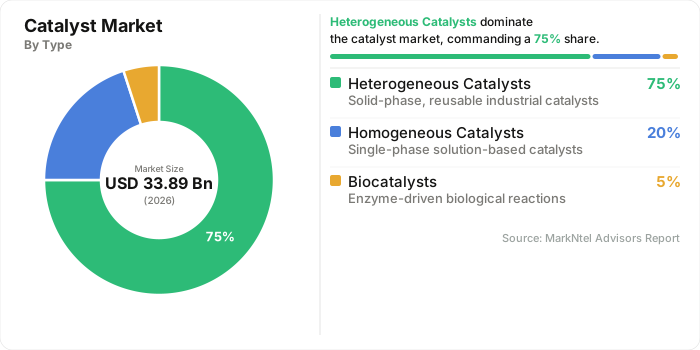
Heterogeneous catalysts dominate the catalyst market with approximately 75% share, primarily due to their high thermal stability, reusability, and ease of separation from reaction mixtures. These solid-phase catalysts are widely preferred in continuous industrial operations where durability, efficiency, and long operational cycles are essential. Their compatibility with large-scale reactor systems makes them highly effective for high-pressure and high-temperature chemical processes across multiple industries.
They are extensively used in petroleum refining, chemical synthesis, and emission control applications, where solid catalysts such as zeolites, metal oxides, and supported metals enable efficient reaction conversion and improved selectivity. Their ability to operate without dissolving in the reaction medium significantly reduces process contamination and enhances operational efficiency, making them a preferred choice in large industrial setups.
Ongoing advancements in catalyst engineering, including improved surface area design, nanostructured materials, and optimized pore architecture, are further enhancing reaction performance and energy efficiency. As a result, heterogeneous catalysts continue to serve as the backbone of industrial catalysis, supported by their scalability, cost-effectiveness, and widespread adoption across global refining and chemical manufacturing sectors. Based on type, the scope has been segmented into
- Heterogeneous Catalysts
- Homogeneous Catalysts
- Biocatalysts
Oil & Gas End-User Segment Leading Catalyst Demand Through Sustained Fuel Consumption and Refinery Optimization
The Oil & Gas segment accounts for approximately 33% of the catalyst market, driven by sustained demand for transportation fuels and petrochemical feedstocks. Refining operations, including fluid catalytic cracking, hydrocracking, and hydrotreating, rely extensively on catalysts to improve conversion efficiency, reduce sulfur content, and maximize product yields. Increasingly stringent fuel quality specifications and emission regulations continue to reinforce catalyst consumption, positioning Oil & Gas as the largest end-user industry for catalytic technologies globally.
According to the International Energy Agency (IEA), global oil demand is projected to remain around 104 million barrels per day in 2026, sustaining high refinery utilization rates worldwide. Continued demand for petrochemicals ensures consistent catalyst consumption across refinery operations. Additionally, increasing complexity in crude oil sources is driving adoption of advanced catalytic formulations capable of efficiently processing heavier feedstocks. Consequently, the Oil & Gas sector remains the leading end-user segment, supported by refinery expansions and process optimization investments. Based on end users, the market has been further classified as
- Oil & Gas
- Chemicals & Petrochemicals
- Polymers & Plastics
- Automotive
- Environmental Services
- Pharmaceuticals
- Renewable Energy & Clean Energy
- Water Treatment
- Agriculture
- Food & Beverage
- Others
Catalyst Industry Geographical Analysis
The catalyst industry is dominated by the Asia-Pacific region, accounting for approximately 41% of total market share. This dominance is driven by the strong presence of large-scale refining, petrochemical, and chemical manufacturing industries across China, India, Japan, and South Korea. The region benefits from rapid industrialization, expanding energy demand, and continuous capacity additions in downstream processing industries, which significantly increase catalyst consumption across multiple applications.
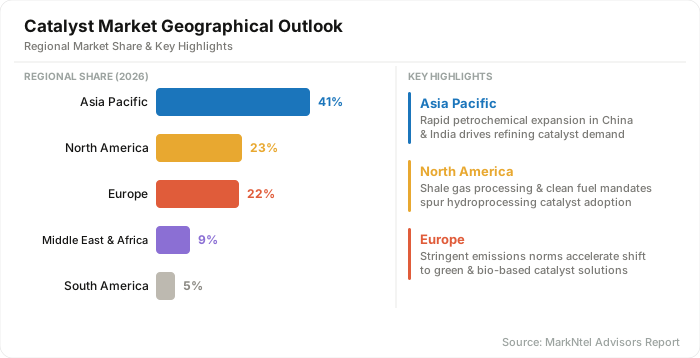
China leads regional demand due to its extensive refinery network and large petrochemical complexes, while India is expanding refining capacity through state-backed projects such as the expansion of Indian Oil Corporation’s refining and petrochemical integration facilities. Similarly, Japan and South Korea contribute through advanced chemical production and high-performance catalyst adoption in specialty applications. Major industrial hubs such as Shanghai, Gujarat, and Ulsan serve as key catalyst consumption centers due to their dense concentration of chemical clusters and export-oriented manufacturing bases.
Strong government support for energy security, combined with investments in cleaner fuel technologies and hydrogen development, continues to reinforce Asia-Pacific leadership in catalyst consumption. As industrial output grows, the region’s demand for advanced catalytic systems is expected to remain the highest globally, sustaining long-term market dominance.
Catalyst Industry Competitive Analysis
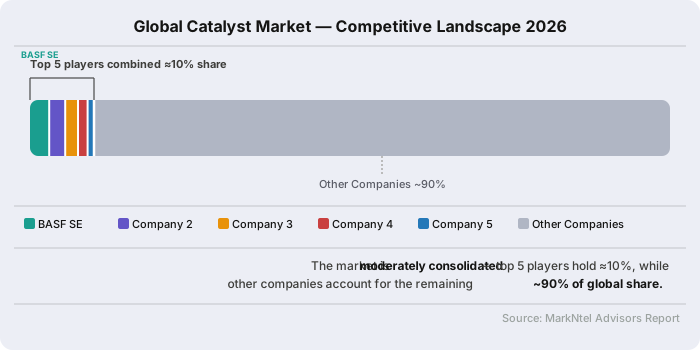
The catalyst market is moderately consolidated, with a mix of multinational chemical companies and specialized catalyst manufacturers competing across refining, petrochemical, and chemical synthesis applications. The top five companies, including BASF SE, Topsoe, Clariant AG, Honeywell UOP, and Albemarle Corporation, collectively account for approximately 10% of the total market share, reflecting a highly dispersed competitive landscape characterized by strong regional participation, diverse application demand, and broad technology specialization.
Key Companies in Catalyst Market
- Albemarle Corporation
- Topsoe A/S
- BASF SE
- Evonik Industries AG
- LyondellBasell Industries Holdings B.V.
- Arkema S.A.
- Dow Inc.
- Clariant AG
- Standard Industries Holdings Inc. (W. R. Grace & Co.-Conn)
- Johnson Matthey Plc
- IFP Energies nouvelles (Axens S.A.)
- Honeywell International Inc. (Honeywell UOP / UOP LLC)
- Ecovyst Inc. and Shell plc (Zeolyst International).
- Exxon Mobil Corporation
- Umicore NV/SA
Catalyst Industry News and Recent Developments
May 2025: Honeywell Acquires Johnson Matthey’s Catalyst Technologies Business to Strengthen Global Catalyst and Renewable Fuels Portfolio
Honeywell announced the acquisition of Johnson Matthey’s Catalyst Technologies business to expand its catalyst and process technology capabilities. The deal enhances Honeywell’s portfolio in refining, petrochemicals, and renewable fuels such as sustainable aviation fuel and hydrogen. It strengthens integration between catalyst manufacturing and process licensing, enabling broader adoption of advanced catalytic solutions across global industrial energy transition applications.
Impact Analysis: The acquisition significantly consolidates the global catalyst industry by combining two major technology providers, strengthening Honeywell’s position in refining and energy transition markets. It is expected to accelerate innovation in low-emission fuel production and improve deployment of high-performance catalyst systems across industrial processes. The deal also increases competitive pressure among catalyst manufacturers, encouraging further consolidation, R&D investment, and expansion into renewable fuel technologies and sustainable chemical production worldwide.
May 2025: Umicore Expands Homogeneous Catalyst Production Capacity to Strengthen Industrial Supply Chain in the U.S.
Umicore announced the expansion of its homogeneous catalyst production facility at its Catoosa plant in Oklahoma, United States. The project involves adding a new facility to increase output capacity and secure long-term supply agreements across specialty chemical applications. Production is expected to begin in early 2027, enhancing availability of advanced catalytic materials for industrial processes.
Impact Analysis: This expansion strengthens Umicore’s position in the global catalyst industry by improving supply reliability for homogeneous catalysts used in pharmaceuticals, polymers, and fine chemicals. It supports growing industrial demand for high-selectivity catalytic processes that improve efficiency and reduce waste. The investment also reflects increasing geographic diversification of catalyst manufacturing between Europe and North America, reducing supply chain risks and enhancing responsiveness to regional demand in high-value chemical production sectors.
Frequently Asked Questions
- Market Segmentation
- Introduction
- Product Definition
- Research Process
- Assumptions
- Executive Summary
- Global Catalyst Market Policies, Regulations, and Product Standards
- Global Catalyst Market Trends & Developments
- Global Catalyst Market Dynamics
- Growth Factors
- Challenges
- Global Catalyst Market Hotspot & Opportunities
- Global Catalyst Market Outlook, 2022-2032F
- Market Size & Outlook
- By Revenues (USD Million)
- Market Share & Analysis
- By Catalyst System- Market Size & Forecast 2022-2032, USD Million
- Heterogeneous Catalyst
- Homogeneous Catalyst
- Biocatalysts
- By Material Composition- Market Size & Forecast 2022-2032, USD Million
- Zeolites
- Metals
- Precious Metals
- Base metals
- Chemical Compounds
- Peroxides
- Acids
- Amines & Others
- Enzymes
- Organometallic Materials
- By Catalyst Lifecycle Services- Market Size & Forecast 2022-2032, USD Million
- Recycling
- Regeneration
- Rejuvenation
- Disposal & Waste Management
- By End use - Market Size & Forecast 2022-2032, USD Million
- Oil & Gas
- Fluid Catalytic Cracking
- Alkylation
- Hydro treating
- Hydro Cracking
- Catalytic Reforming
- Isomerization
- Others
- Chemicals & Petrochemicals
- Ammonia Production
- Methanol Production
- Hydrogen Production
- Syngas Production
- Fine Chemicals & Specialty Chemicals
- Others
- Polymers & Plastics
- Zeigler Natta Catalysts
- Metallocene Catalysts
- Chromium Catalysts
- Free radical initiators
- Polyurethane Catalysts
- Others
- Automotive
- Light Duty Vehicles
- Motorcycles
- Heavy-duty vehicles
- Environmental Services
- Industrial Emission Control
- Marine Emission Control
- Waste Treatment & Air Purification
- Others
- Pharmaceuticals
- Renewable Energy & Clean Energy
- Green hydrogen production
- Electrolysers
- Fuel cells
- Power-to-X Technology
- Water Treatment
- Photo-catalysis
- Waste water remediation
- Agriculture
- Fertiliser Production Catalysts
- Crop Protection Chemical Synthesis
- Food & Beverage
- Others
- Oil & Gas
- By Function- Market Size & Forecast 2022-2032, USD Million
- Oxidation Catalysts
- Reduction Catalysts
- Acid-Base Catalysts
- Others
- By Region
- North America
- South America
- Europe
- The Middle East & Africa
- Asia-Pacific
- By Company
- Competition Characteristics
- Market Share & Analysis
- By Catalyst System- Market Size & Forecast 2022-2032, USD Million
- Market Size & Outlook
- North America Catalyst Market Outlook, 2022-2032F
- Market Size & Outlook
- By Revenues (USD Million)
- Market Share & Analysis
- By Catalyst System- Market Size & Forecast 2022-2032, USD Million
- By Material Composition- Market Size & Forecast 2022-2032, USD Million
- By Catalyst Lifecycle Services- Market Size & Forecast 2022-2032, USD Million
- By End use - Market Size & Forecast 2022-2032, USD Million
- By Function- Market Size & Forecast 2022-2032, USD Million
- By Country
- The US
- Canada
- Mexico
- The US Catalyst Market Outlook, 2022-2032F
- Market Size & Outlook
- By Revenues (USD Million)
- Market Share & Analysis
- By Catalyst System- Market Size & Forecast 2022-2032, USD Million
- By Material Composition- Market Size & Forecast 2022-2032, USD Million
- By Catalyst Lifecycle Services- Market Size & Forecast 2022-2032, USD Million
- By End use - Market Size & Forecast 2022-2032, USD Million
- By Function- Market Size & Forecast 2022-2032, USD Million
- Market Size & Outlook
- Canada Catalyst Market Outlook, 2022-2032F
- Market Size & Outlook
- By Revenues (USD Million)
- Market Share & Analysis
- By Catalyst System- Market Size & Forecast 2022-2032, USD Million
- By Material Composition- Market Size & Forecast 2022-2032, USD Million
- By Catalyst Lifecycle Services- Market Size & Forecast 2022-2032, USD Million
- By End use - Market Size & Forecast 2022-2032, USD Million
- By Function- Market Size & Forecast 2022-2032, USD Million
- Market Size & Outlook
- Mexico Catalyst Market Outlook, 2022-2032F
- Market Size & Outlook
- By Revenues (USD Million)
- Market Share & Analysis
- By Catalyst System- Market Size & Forecast 2022-2032, USD Million
- By Material Composition- Market Size & Forecast 2022-2032, USD Million
- By Catalyst Lifecycle Services- Market Size & Forecast 2022-2032, USD Million
- By End use - Market Size & Forecast 2022-2032, USD Million
- By Function- Market Size & Forecast 2022-2032, USD Million
- Market Size & Outlook
- Market Size & Outlook
- South America Catalyst Market Outlook, 2022-2032F
- Market Size & Outlook
- By Revenues (USD Million)
- Market Share & Analysis
- By Catalyst System- Market Size & Forecast 2022-2032, USD Million
- By Material Composition- Market Size & Forecast 2022-2032, USD Million
- By Catalyst Lifecycle Services- Market Size & Forecast 2022-2032, USD Million
- By End use - Market Size & Forecast 2022-2032, USD Million
- By Function- Market Size & Forecast 2022-2032, USD Million
- By Country
- Brazil
- Argentina
- Rest of South America
- Brazil Catalyst Market Outlook, 2022-2032F
- Market Size & Outlook
- By Revenues (USD Million)
- Market Share & Analysis
- By Catalyst System- Market Size & Forecast 2022-2032, USD Million
- By Material Composition- Market Size & Forecast 2022-2032, USD Million
- By Catalyst Lifecycle Services- Market Size & Forecast 2022-2032, USD Million
- By End use - Market Size & Forecast 2022-2032, USD Million
- By Function- Market Size & Forecast 2022-2032, USD Million
- Market Size & Outlook
- Argentina Catalyst Market Outlook, 2022-2032F
- Market Size & Outlook
- By Revenues (USD Million)
- Market Share & Analysis
- By Catalyst System- Market Size & Forecast 2022-2032, USD Million
- By Material Composition- Market Size & Forecast 2022-2032, USD Million
- By Catalyst Lifecycle Services- Market Size & Forecast 2022-2032, USD Million
- By End use - Market Size & Forecast 2022-2032, USD Million
- By Function- Market Size & Forecast 2022-2032, USD Million
- Market Size & Outlook
- Market Size & Outlook
- Europe Catalyst Market Outlook, 2022-2032F
- Market Size & Outlook
- By Revenues (USD Million)
- Market Share & Analysis
- By Catalyst System- Market Size & Forecast 2022-2032, USD Million
- By Material Composition- Market Size & Forecast 2022-2032, USD Million
- By Catalyst Lifecycle Services- Market Size & Forecast 2022-2032, USD Million
- By End use - Market Size & Forecast 2022-2032, USD Million
- By Function- Market Size & Forecast 2022-2032, USD Million
- By Country
- The UK
- Germany
- France
- Italy
- Spain
- Rest of Europe
- The UK Catalyst Market Outlook, 2022-2032F
- Market Size & Outlook
- By Revenues (USD Million)
- Market Share & Analysis
- By Catalyst System- Market Size & Forecast 2022-2032, USD Million
- By Material Composition- Market Size & Forecast 2022-2032, USD Million
- By Catalyst Lifecycle Services- Market Size & Forecast 2022-2032, USD Million
- By End use - Market Size & Forecast 2022-2032, USD Million
- By Function- Market Size & Forecast 2022-2032, USD Million
- Market Size & Outlook
- Germany Catalyst Market Outlook, 2022-2032F
- Market Size & Outlook
- By Revenues (USD Million)
- Market Share & Analysis
- By Catalyst System- Market Size & Forecast 2022-2032, USD Million
- By Material Composition- Market Size & Forecast 2022-2032, USD Million
- By Catalyst Lifecycle Services- Market Size & Forecast 2022-2032, USD Million
- By End use - Market Size & Forecast 2022-2032, USD Million
- By Function- Market Size & Forecast 2022-2032, USD Million
- Market Size & Outlook
- France Catalyst Market Outlook, 2022-2032F
- Market Size & Outlook
- By Revenues (USD Million)
- Market Share & Analysis
- By Catalyst System- Market Size & Forecast 2022-2032, USD Million
- By Material Composition- Market Size & Forecast 2022-2032, USD Million
- By Catalyst Lifecycle Services- Market Size & Forecast 2022-2032, USD Million
- By End use - Market Size & Forecast 2022-2032, USD Million
- By Function- Market Size & Forecast 2022-2032, USD Million
- Market Size & Outlook
- Italy Catalyst Market Outlook, 2022-2032F
- Market Size & Outlook
- By Revenues (USD Million)
- Market Share & Analysis
- By Catalyst System- Market Size & Forecast 2022-2032, USD Million
- By Material Composition- Market Size & Forecast 2022-2032, USD Million
- By Catalyst Lifecycle Services- Market Size & Forecast 2022-2032, USD Million
- By End use - Market Size & Forecast 2022-2032, USD Million
- By Function- Market Size & Forecast 2022-2032, USD Million
- Market Size & Outlook
- Spain Catalyst Market Outlook, 2022-2032F
- Market Size & Outlook
- By Revenues (USD Million)
- Market Share & Analysis
- By Catalyst System- Market Size & Forecast 2022-2032, USD Million
- By Material Composition- Market Size & Forecast 2022-2032, USD Million
- By Catalyst Lifecycle Services- Market Size & Forecast 2022-2032, USD Million
- By End use - Market Size & Forecast 2022-2032, USD Million
- By Function- Market Size & Forecast 2022-2032, USD Million
- Market Size & Outlook
- Market Size & Outlook
- The Middle East & Africa Catalyst Market Outlook, 2022-2032F
- Market Size & Outlook
- By Revenues (USD Million)
- Market Share & Analysis
- By Catalyst System- Market Size & Forecast 2022-2032, USD Million
- By Material Composition- Market Size & Forecast 2022-2032, USD Million
- By Catalyst Lifecycle Services- Market Size & Forecast 2022-2032, USD Million
- By End use - Market Size & Forecast 2022-2032, USD Million
- By Function- Market Size & Forecast 2022-2032, USD Million
- By Country
- Saudi Arabia
- The UAE
- South Africa
- Rest of Middle East & Africa
- Saudi Arabia Catalyst Market Outlook, 2022-2032F
- Market Size & Outlook
- By Revenues (USD Million)
- Market Share & Analysis
- By Catalyst System- Market Size & Forecast 2022-2032, USD Million
- By Material Composition- Market Size & Forecast 2022-2032, USD Million
- By Catalyst Lifecycle Services- Market Size & Forecast 2022-2032, USD Million
- By End use - Market Size & Forecast 2022-2032, USD Million
- By Function- Market Size & Forecast 2022-2032, USD Million
- Market Size & Outlook
- The UAE Catalyst Market Outlook, 2022-2032F
- Market Size & Outlook
- By Revenues (USD Million)
- Market Share & Analysis
- By Catalyst System- Market Size & Forecast 2022-2032, USD Million
- By Material Composition- Market Size & Forecast 2022-2032, USD Million
- By Catalyst Lifecycle Services- Market Size & Forecast 2022-2032, USD Million
- By End use - Market Size & Forecast 2022-2032, USD Million
- By Function- Market Size & Forecast 2022-2032, USD Million
- Market Size & Outlook
- South Africa Catalyst Market Outlook, 2022-2032F
- Market Size & Outlook
- By Revenues (USD Million)
- Market Share & Analysis
- By Catalyst System- Market Size & Forecast 2022-2032, USD Million
- By Material Composition- Market Size & Forecast 2022-2032, USD Million
- By Catalyst Lifecycle Services- Market Size & Forecast 2022-2032, USD Million
- By End use - Market Size & Forecast 2022-2032, USD Million
- By Function- Market Size & Forecast 2022-2032, USD Million
- Market Size & Outlook
- Market Size & Outlook
- Asia-Pacific Catalyst Market Outlook, 2022-2032F
- Market Size & Outlook
- By Revenues (USD Million)
- Market Share & Analysis
- By Catalyst System- Market Size & Forecast 2022-2032, USD Million
- By Material Composition- Market Size & Forecast 2022-2032, USD Million
- By Catalyst Lifecycle Services- Market Size & Forecast 2022-2032, USD Million
- By End use - Market Size & Forecast 2022-2032, USD Million
- By Function- Market Size & Forecast 2022-2032, USD Million
- By Country
- China
- Japan
- India
- South Korea
- Australia
- Rest of Asia-Pacific
- China Catalyst Market Outlook, 2022-2032F
- Market Size & Outlook
- By Revenues (USD Million)
- Market Share & Analysis
- By Catalyst System- Market Size & Forecast 2022-2032, USD Million
- By Material Composition- Market Size & Forecast 2022-2032, USD Million
- By Catalyst Lifecycle Services- Market Size & Forecast 2022-2032, USD Million
- By End use - Market Size & Forecast 2022-2032, USD Million
- By Function- Market Size & Forecast 2022-2032, USD Million
- Market Size & Outlook
- Japan Catalyst Market Outlook, 2022-2032F
- Market Size & Outlook
- By Revenues (USD Million)
- Market Share & Analysis
- By Catalyst System- Market Size & Forecast 2022-2032, USD Million
- By Material Composition- Market Size & Forecast 2022-2032, USD Million
- By Catalyst Lifecycle Services- Market Size & Forecast 2022-2032, USD Million
- By End use - Market Size & Forecast 2022-2032, USD Million
- By Function- Market Size & Forecast 2022-2032, USD Million
- Market Size & Outlook
- India Catalyst Market Outlook, 2022-2032F
- Market Size & Outlook
- By Revenues (USD Million)
- Market Share & Analysis
- By Catalyst System- Market Size & Forecast 2022-2032, USD Million
- By Material Composition- Market Size & Forecast 2022-2032, USD Million
- By Catalyst Lifecycle Services- Market Size & Forecast 2022-2032, USD Million
- By End use - Market Size & Forecast 2022-2032, USD Million
- By Function- Market Size & Forecast 2022-2032, USD Million
- Market Size & Outlook
- South Korea Catalyst Market Outlook, 2022-2032F
- Market Size & Outlook
- By Revenues (USD Million)
- Market Share & Analysis
- By Catalyst System- Market Size & Forecast 2022-2032, USD Million
- By Material Composition- Market Size & Forecast 2022-2032, USD Million
- By Catalyst Lifecycle Services- Market Size & Forecast 2022-2032, USD Million
- By End use - Market Size & Forecast 2022-2032, USD Million
- By Function- Market Size & Forecast 2022-2032, USD Million
- Market Size & Outlook
- Australia Catalyst Market Outlook, 2022-2032F
- Market Size & Outlook
- By Revenues (USD Million)
- Market Share & Analysis
- By Catalyst System- Market Size & Forecast 2022-2032, USD Million
- By Material Composition- Market Size & Forecast 2022-2032, USD Million
- By Catalyst Lifecycle Services- Market Size & Forecast 2022-2032, USD Million
- By End use - Market Size & Forecast 2022-2032, USD Million
- By Function- Market Size & Forecast 2022-2032, USD Million
- Market Size & Outlook
- Market Size & Outlook
- Global Catalyst Market Key Strategic Imperatives for Success & Growth
- Competitive Outlook
- Company Profiles
- Albemarle Corporation
- Business Description
- Product Portfolio
- Collaborations & Alliances
- Recent Developments
- Financial Details
- Others
- Topsoe A/S
- Business Description
- Product Portfolio
- Collaborations & Alliances
- Recent Developments
- Financial Details
- Others
- BASF SE
- Business Description
- Product Portfolio
- Collaborations & Alliances
- Recent Developments
- Financial Details
- Others
- Evonik Industries AG
- Business Description
- Product Portfolio
- Collaborations & Alliances
- Recent Developments
- Financial Details
- Others
- LyondellBasell Industries Holdings B.V.
- Business Description
- Product Portfolio
- Collaborations & Alliances
- Recent Developments
- Financial Details
- Others
- Arkema S.A.
- Business Description
- Product Portfolio
- Collaborations & Alliances
- Recent Developments
- Financial Details
- Others
- Dow Inc.
- Business Description
- Product Portfolio
- Collaborations & Alliances
- Recent Developments
- Financial Details
- Others
- Clariant AG
- Business Description
- Product Portfolio
- Collaborations & Alliances
- Recent Developments
- Financial Details
- Others
- Standard Industries Holdings Inc. (W. R. Grace & Co.-Conn)
- Business Description
- Product Portfolio
- Collaborations & Alliances
- Recent Developments
- Financial Details
- Others
- Johnson Matthey Plc
- Business Description
- Product Portfolio
- Collaborations & Alliances
- Recent Developments
- Financial Details
- Others
- IFP Energies nouvelles (Axens S.A.)
- Business Description
- Product Portfolio
- Collaborations & Alliances
- Recent Developments
- Financial Details
- Others
- Honeywell International Inc. (Honeywell UOP / UOP LLC)
- Business Description
- Product Portfolio
- Collaborations & Alliances
- Recent Developments
- Financial Details
- Others
- Ecovyst Inc. and Shell plc (Zeolyst International).
- Business Description
- Product Portfolio
- Collaborations & Alliances
- Recent Developments
- Financial Details
- Others
- Exxon Mobil Corporation
- Business Description
- Product Portfolio
- Collaborations & Alliances
- Recent Developments
- Financial Details
- Others
- Umicore NV/SA
- Business Description
- Product Portfolio
- Collaborations & Alliances
- Recent Developments
- Financial Details
- Others
- Albemarle Corporation
- Company Profiles
- Disclaimer
MarkNtel Advisors follows a robust and iterative research methodology designed to ensure maximum accuracy and minimize deviation in market estimates and forecasts. Our approach combines both bottom-up and top-down techniques to effectively segment and quantify various aspects of the market. A consistent feature across all our research reports is data triangulation, which examines the market from three distinct perspectives to validate findings. Key components of our research process include:
1. Scope & Research Design At the outset, MarkNtel Advisors define the research objectives and formulate pertinent questions. This phase involves determining the type of research—qualitative or quantitative—and designing a methodology that outlines data collection methods, target demographics, and analytical tools. They also establish timelines and budgets to ensure the research aligns with client goals.
2. Sample Selection and Data Collection In this stage, the firm identifies the target audience and determines the appropriate sample size to ensure representativeness. They employ various sampling methods, such as random or stratified sampling, based on the research objectives. Data collection is carried out using tools like surveys, interviews, and observations, ensuring the gathered data is reliable and relevant.
3. Data Analysis and Validation Once data is collected, MarkNtel Advisors undertake a rigorous analysis process. This includes cleaning the data to remove inconsistencies, employing statistical software for quantitative analysis, and thematic analysis for qualitative data. Validation steps are taken to ensure the accuracy and reliability of the findings, minimizing biases and errors.

4. Data Forecast and FinalizationThe final phase involves forecasting future market trends based on the analyzed data. MarkNtel Advisors utilize predictive modeling and time series analysis to anticipate market behaviors. The insights are then compiled into comprehensive reports, featuring visual aids like charts and graphs, and include strategic recommendations to inform client decision-making
We offer flexible licensing options to cater to varying organizational needs. Choose the pricing pack that best suits your requirements:
Buy Now Inquire Before Buying
 Request Customization
 Talk to our Consultant







