Saudi Arabia Bottled Water Market Research Report: Forecast (2026-2032)
By Category (Still Bottled Water, Functional Bottled Water, Flavoured Bottled Water, Carbonated Bottled Water), By Packaging (Flexible Packaging, Glass, Rigid Plastic (PET Bottles, ... Thin Wall Plastic Containers)), By Sub Types (Purified, Mineral, Other (Spring, Alkaline, Other) ), By Price Category (Budget, Economy, Premium), By Pack Size (100 ml, 125 ml, 200 ml, 250 ml, 330 ml, 370 ml, 450 ml, 500 ml, 591 ml, ml, ml, ml, ml, ml), By Sales Channel (Direct Sales/On Trade, Restaurants (Hotels, Cafes, Other), Retail Sales (Grocery Retailers, Convenience Retail, Supermarkets, Hypermarkets, Small Local Grocer), Non-Grocery Retailers (General Merchandise Stores, Health and Beauty Specialists, Vending), E-commerce), and others Read more
- Environment
- Jul 2026
- Pages 140
- Report Format: PDF, Excel, PPT
Saudi Arabia Bottled Water Market
Projected 10.82% CAGR from 2026 to 2032
Study Period
2026-2032
Market Size (2026)
USD 2.12 Billion
Market Size (2032)
USD 3.92 Billion
Base Year
2025
Projected CAGR
10.82%
Leading Segments
By Category: Still Bottled Water
Saudi Arabia Bottled Water Market Key Takeaways
- The Saudi Arabia bottled water market size was valued at around USD 1.91 billion in 2025 and currently is at USD 2.12 billion in 2026 and is projected to reach USD 3.92 billion by 2032.
- The estimated CAGR is around 10.82%, indicating strong growth for the forecasted period i.e. 2026-32.
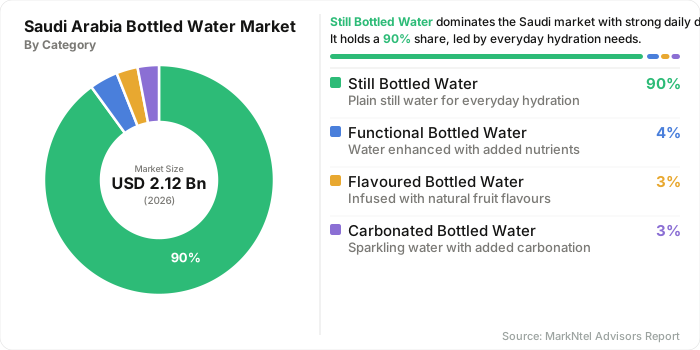
- By category, the still bottled water segment holds 90% share of the market in 2026.
- By packaging, the rigid plastic packaging represented a 70% share of the market in 2026.
- The market is moderately fragmented, with leading bottled water companies accounting for 45% share in the market as of 2026.
Saudi Arabia Bottled Water Market Size and Outlook
The bottled water market size in Saudi Arabia was valued at around USD 1.91 billion in 2025 and is projected to reach USD 3.92 billion by 2032. Along with this, the market is estimated to grow at a CAGR of around 10.82% during the forecast period, i.e., 2026-32. The market is witnessing sustained expansion as bottled water continues to serve as a primary source of safe drinking water across the Kingdom. Rising urbanization, population growth, increasing health awareness, and limited natural freshwater resources continue to reinforce long-term demand.
Government oversight of water quality is reinforcing that demand base. The Saudi food and drug authority withdrew Shtine bottled water from retail shelves in January 2025 after laboratory testing found bromate levels exceeding limits, one of several such enforcement actions the authority has taken against non-compliant producers. This continued monitoring is tightening compliance standards across smaller regional bottlers and reinforcing consumer confidence in nationally regulated brands.
Capital activity within the sector points to rising confidence in long-term demand. In June 2025, Almarai agreed to acquire a pure beverages industry company, for USD 277 million. Separately, Naqi Water expanded a Riyadh production-line contract in December 2025 to USD 11.3 million, lifting planned capacity to 120,000 bottles per hour. Both moves signal manufacturers positioning for sustained volume growth rather than near-term consolidation alone.
Packaging strategy is also being reshaped by national policy. Under Vision 2030, the national centre for waste management has set a target of diverting 90% of waste from landfills by 2040, a mandate that is pushing bottlers toward recyclable and lightweight PET formats. Combined with steady population growth, tightening quality enforcement, and active reinvestment by leading players, these dynamics point to a structurally supported, policy-reinforced growth path for bottled water consumption through 2032.
Saudi Arabia Bottled Water Market Key Indicators
- Saudi Arabia increased its national water supply to more than 16 million m³ per day during 2025, reinforcing long-term water security and supporting reliable raw water availability for downstream bottled water production.
- Saudi Arabia welcomed 116 million domestic and international tourists in 2024, while Hajj and Umrah pilgrims reached approximately 18.5 million during the year. Religious tourism creates exceptionally high short-term demand for packaged drinking water across Makkah, Madinah, airports, hotels, transport hubs, and pilgrimage routes. This recurring influx of visitors significantly increases bottled water consumption, supporting the sustained growth of the Saudi Arabian bottled water market.
- Saudi Arabia remains the world's largest producer of desalinated water, with an annual desalination capacity of 4.19 million cubic meters per day under the Ministry of Environment, Water, and Agriculture. The country also operates 14,210 km of water transmission pipelines and manages 19.42 million cubic meters of water daily. Since desalinated water serves as the primary drinking water source across the Kingdom, the continuous expansion of water infrastructure strengthens raw water availability and supports bottled water production and distribution.
- During the 2026 Hajj season, the Saudi Water Authority distributed more than 7.2 million cubic meters of water between the 1st and 9th of Dhu Al-Hijjah, including 828,113 cubic meters on the Day of Arafah alone. Such massive seasonal water demand drives higher procurement of packaged drinking water by hotels, retailers, transport operators, and event organizers, creating recurring sales opportunities for bottled water manufacturers.
Saudi Arabia Bottled Water Market Scope
| Category | Segments |
|---|---|
| By Category | Still Bottled Water, Functional Bottled Water, Flavoured Bottled Water, Carbonated Bottled Water |
| By Packaging | Flexible Packaging, Glass, Rigid Plastic (PET Bottles, Thin Wall Plastic Containers |
| By Sub Types | Purified, Mineral, Other (Spring, Alkaline, Other |
| By Price Category | Budget, Economy, Premium |
| By Pack Size | 100 ml, 125 ml, 200 ml, 250 ml, 330 ml, 370 ml, 450 ml, 500 ml, 591 ml |
| By Sales Channel | Direct Sales/On Trade, Restaurants (Hotels, Cafes, Other), Retail Sales (Grocery Retailers, Convenience Retail, Supermarkets, Hypermarkets, Small Local Grocer), Non-Grocery Retailers (General Merchandise Stores, Health and Beauty Specialists, Vending), E-commerce |
Saudi Arabia Bottled Water Market Growth Drivers
Rising Preference for Safe and Reliable Drinking Water
Health and hydration awareness remains the primary structural driver of demand in the market. GASTAT's household environment statistics show that 47% of Saudi households identify bottled water as their primary drinking source, ahead of public network supply at 36% and tanker water at 16%. This sustained preference reflects consumer confidence in bottled water as a safe, convenient, and reliable source of daily hydration, particularly under the Kingdom's arid climate and high temperatures.
Growing awareness of safe hydration is also extending beyond households into institutional settings. Hotels, serviced apartments, and tourism establishments routinely provide bottled water as a standard guest amenity, reinforcing demand across commercial channels. According to GASTAT's tourism establishments statistics for Q3 2025, the number of licensed tourism establishments increased to 5,622, up 40.6%, while hotel occupancy reached 49.1%, highlighting the continued expansion of hospitality infrastructure and associated bottled water consumption.
Together, sustained household dependence and expanding institutional consumption are reinforcing long-term demand for bottled water across the Kingdom. As tourism infrastructure grows alongside population expansion and rising health consciousness, bottled water is expected to remain the preferred source of daily hydration across both residential and commercial settings, supporting market growth through 2032.
Recent Trends
Advanced Water Treatment Technologies Enhancing Production Quality and Operational Efficiency
Saudi Arabia's bottled water industry is witnessing increased investment in advanced water treatment technologies as manufacturers strengthen production quality and operational efficiency. In April 2025, Sama Health Water Factory Company signed a USD 10.27 million agreement with Krones AG to establish two new bottled water production lines incorporating high-quality production equipment and advanced processing technologies, supporting both capacity expansion and higher product quality standards.
The shift is being reinforced at the national level through innovation initiatives supporting next-generation water treatment. In September 2025, the Ministry of Environment, Water, and Agriculture identified 40 priority technologies for water treatment and reuse, including AI-assisted treatment, nanobubbles, advanced membrane systems, and zero liquid discharge solutions, reflecting the Kingdom's broader focus on modernizing water processing technologies under Vision 2030.
As production capacity expands, investment in precision filtration, advanced membrane technologies, automated process control, and real-time quality monitoring is expected to become increasingly important across the bottled water value chain. These technologies can improve operational efficiency, strengthen product consistency, and support higher quality standards, enabling manufacturers to enhance competitiveness while responding to evolving consumer expectations and regulatory requirements through 2032.
Saudi Arabia Bottled Water Market Challenges and Opportunities
Plastic Waste Challenges Accelerating Circular Packaging Investments
The widespread use of single-use PET bottles continues to pose a significant challenge for the industry by increasing pressure on waste management systems and environmental sustainability. According to the Ministry of Environment, Water and Agriculture (MEWA), Saudi Arabia generates approximately 7 million tonnes of plastic waste annually, while less than 10% is recycled, leaving a substantial volume of plastic waste destined for landfills or the natural environment.
With annual bottled water consumption exceeding 200 litres per capita, the industry remains a major contributor to post-consumer PET waste, intensifying pressure on collection and recycling infrastructure. At the same time, the lower production cost of virgin plastic compared with recycled materials continues to limit wider adoption of sustainable packaging, requiring manufacturers to balance environmental commitments with cost competitiveness and evolving regulatory expectations.
These challenges are accelerating the development of Saudi Arabia's circular packaging ecosystem, creating new investment opportunities across PET collection, recycling, and food-grade recycled material production. In November 2025, Riyadh Municipality partnered with the Saudi investment recycling company (SIRC) to deploy smart reverse vending machines across public facilities, enabling automated PET bottle collection while generating traceable recycling data that supports closed-loop recovery systems.
The initiative complements Vision 2030 and the national center for waste management's objective of significantly reducing landfill dependence, while encouraging greater investment in bottle-to-bottle recycling infrastructure and food-grade recycled PET (rPET) production. As municipal collection networks and domestic recycling capacity continue to expand, bottled water manufacturers are expected to secure more reliable access to recycled packaging materials, reduce long-term dependence on virgin plastics, and strengthen supply chain resilience.
Early adoption of circular packaging solutions is also expected to enhance regulatory compliance, improve operational sustainability, and strengthen brand competitiveness as demand for environmentally responsible products continues to increase.
Segmentation Insights
Still Bottled Water Holds the Largest Share Owing to Daily Hydration Needs and High Household Consumption
Still bottled water dominates the Saudi Arabian bottled water industry with an estimated 90% market share, largely due to its role as a daily necessity rather than a discretionary beverage. Saudi Arabia’s arid climate, high temperatures, and limited renewable freshwater sources make consistent hydration essential, positioning still water as the most trusted and widely consumed option. It is extensively used across households, workplaces, educational institutions, and religious gatherings, where simple, non-carbonated water is preferred for frequent consumption.
Government data indicating a strong household reliance on bottled water further reinforces this dominance. Still bottled water is also more affordable compared to flavored or functional variants, making it accessible across income groups. Its compatibility with bulk pack sizes, including 1.5-liter and 5-liter bottles, supports high-volume consumption patterns common in Saudi households. Additionally, strict quality monitoring by authorities strengthens consumer confidence in plain bottled water, sustaining its leadership over other specialized categories. Based on category, the market is further bifurcated into:
- Still Bottled Water
- Functional Bottled Water
- Flavoured Bottled Water
- Carbonated Bottled Water
Rigid Plastic Packaging Leads the Market Backed by Cost and Logistics Benefits
Rigid plastic packaging accounts for around 70% of bottled water sales in Saudi Arabia due to its practicality, cost efficiency, and widespread availability. PET bottles, in particular, are lightweight, durable, and suitable for both single-use and bulk formats, making them ideal for Saudi Arabia’s high consumption environment. Their resistance to breakage during transportation and storage supports efficient nationwide distribution, including remote regions. Rigid plastic packaging also aligns well with high-demand pack sizes such as 500 ml, 1 liter, and large-capacity containers used for household storage. From a consumer perspective, resealability and portability enhance convenience for daily use, travel, and outdoor activities.
Importantly, Saudi Arabia’s Vision-led expansion of plastic recycling infrastructure is improving the sustainability profile of PET bottles, reducing environmental concerns associated with plastic use. These combined logistical, economic, and infrastructural advantages continue to reinforce rigid plastic packaging as the preferred format. Based on packaging, the market is further segmented into:
- Flexible Packaging
- Aluminum
- Pouches
- Glass
- Rigid Plastic
- PET Bottles
- Thin Wall Plastic Containers
Saudi Arabia Bottled Water Market Competitive Analysis
The Saudi Arabia bottled water market is moderately fragmented, with domestic manufacturers and multinational beverage companies competing across still, functional, flavoured, and carbonated bottled water segments. Competition is primarily based on brand recognition, production capacity, nationwide distribution networks, product quality, pricing, packaging innovation, and compliance with Saudi food safety and quality regulations.
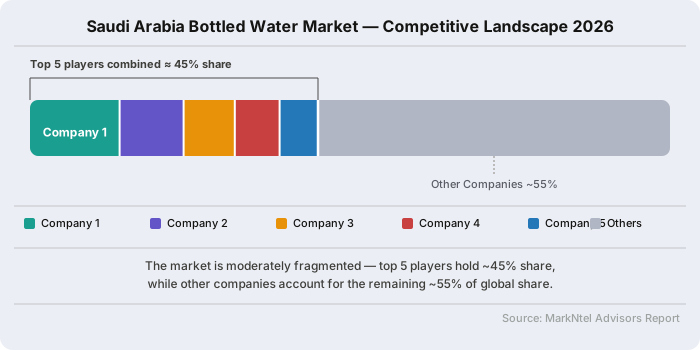
Major participants include Health Water Bottling Co. Ltd., Hana Food Industries Company, PepsiCo Inc., Nestlé Middle East FZE, and The Coca-Cola Bottling Company of Saudi Arabia Limited. The top five players collectively account for approximately 45% of the Saudi Arabia bottled water market.
Key Companies in the Saudi Arabia Bottled Water Market
- Health Water Bottling Co. Ltd. (Nova)
- Hana Food Industries Company
- PepsiCo Inc. (Aquafina)
- Nestlé Middle East FZE (Al Manhal, Nestlé Pure Life, Springs)
- The Coca-Cola Bottling Company of Saudi Arabia Limited (Arwa)
- Agthia Group PJSC (Al Ain)
- Bin Zomah Group Trading & Manufacturing (Safa, Makkah Water)
- Berain Water & Beverages Factory
- Aloyoun Water Factory Inc.
- Naqi Water Co.
Saudi Arabia Bottled Water Industry News and Recent Developments
2025: Almarai Acquires Pure Beverages Industry to Expand Bottled Water Portfolio
Almarai announced in June 2025 that it had agreed to acquire Pure Beverages Industry Co. for approximately USD 277 million. Pure Beverages is a Saudi bottled water producer recognized for its Ival and Oska brands. The acquisition broadens Almarai's beverage portfolio while strengthening its presence in Saudi Arabia's expanding bottled water segment.
Impact Analysis: The acquisition is expected to accelerate market consolidation within Saudi Arabia's bottled water industry by enhancing Almarai's brand portfolio and production capabilities. It also strengthens the company's competitive position in the premium and mass bottled water categories while supporting long term growth through a wider distribution network and increased product diversification.
2025: Naqi Water Company Expands Riyadh Production Capacity
Naqi Water Company announced in July 2025 that it had signed a contract worth approximately USD 9.3 million to install a new bottled water production line at its Riyadh facility. The investment is expected to increase manufacturing capacity by around 700 million bottles annually, enabling the company to address rising domestic demand.
Impact Analysis: The expansion is expected to improve local production capacity and supply chain resilience while reducing potential supply constraints amid growing bottled water consumption. It also reflects continued capital investment by regional manufacturers to scale operations, improve production efficiency, and strengthen their competitive position in the Saudi bottled water market.
Frequently Asked Questions
- Market Segmentation
- Introduction
- Product Definition
- Research Process
- Assumptions
- Executive Summary
- Saudi Arabia Bottled Water Market Policies, Regulations, and Product Standards
- Saudi Arabia Bottled Water Market Trends & Developments
- Saudi Arabia Bottled Water Market Dynamics
- Growth Factors
- Challenges
- Saudi Arabia Bottled Water Market Hotspot & Opportunities
- Saudi Arabia Bottled Water Market Outlook, 2022-2032F
- Market Size & Outlook
- By Revenues (USD Million)
- By Quantity Sold (Thousand Units)
- Market Segmentation & Outlook
- By Category- Market Size & Forecast 2022-2032, USD Million & Thousand Units
- Still Bottled Water
- Functional Bottled Water
- Flavoured Bottled Water
- Carbonated Bottled Water
- By Packaging- Market Size & Forecast 2022-2032, USD Million & Thousand Units
- Flexible Packaging
- Glass
- Rigid Plastic
- PET Bottles
- Thin Wall Plastic Containers
- By Sub Types- Market Size & Forecast 2022-2032, USD Million & Thousand Units
- Purified
- Mineral
- Other (Spring, Alkaline, Other)
- By Price Category- Market Size & Forecast 2022-2032, USD Million & Thousand Units
- Budget
- Economy
- Premium
- By Pack Size- Market Size & Forecast 2022-2032, USD Million & Thousand Units
- 100 ml
- 125 ml
- 200 ml
- 250 ml
- 330 ml
- 370 ml
- 450 ml
- 500 ml
- 591 ml
- 750 ml
- 1,000 ml
- 1,500 ml
- 4,000 ml
- 5,000 ml
- Others
- By Sales Channel- Market Size & Forecast 2022-2032, USD Million & Thousand Units
- Direct Sales/On Trade
- Restaurants
- Hotels
- Cafes
- Other
- Retail Sales
- Grocery Retailers
- Convenience Retail
- Supermarkets
- Hypermarkets
- Small Local Grocer
- Non-Grocery Retailers
- General Merchandise Stores
- Health and Beauty Specialists
- Vending
- E-commerce
- By Region- Market Size & Forecast 2022-2032, USD Million & Thousand Units
- Riyadh
- Jeddah
- Damam
- Others
- By Company
- Competition Characteristics
- Market Share & Analysis
- By Category- Market Size & Forecast 2022-2032, USD Million & Thousand Units
- Market Size & Outlook
- Saudi Arabia Still Bottled Water Market Outlook, 2022-2032
- Market Size & Outlook
- By Revenues (USD Million)
- By Quantity Sold (Thousand Units)
- Market Segmentation & Outlook
- By Packaging- Market Size & Forecast 2022-2032, USD Million & Thousand Units
- By Sub Types- Market Size & Forecast 2022-2032, USD Million & Thousand Units
- By Price Category- Market Size & Forecast 2022-2032, USD Million & Thousand Units
- By Pack Size- Market Size & Forecast 2022-2032, USD Million & Thousand Units
- By Sales Channel- Market Size & Forecast 2022-2032, USD Million & Thousand Units
- By Region- Market Size & Forecast 2022-2032, USD Million & Thousand Units
- Market Size & Outlook
- Saudi Arabia Functional Bottled Water Market Outlook, 2022-2032
- Market Size & Outlook
- By Revenues (USD Million)
- By Quantity Sold (Thousand Units)
- Market Segmentation & Outlook
- By Packaging- Market Size & Forecast 2022-2032, USD Million & Thousand Units
- By Sub Types- Market Size & Forecast 2022-2032, USD Million & Thousand Units
- By Price Category- Market Size & Forecast 2022-2032, USD Million & Thousand Units
- By Pack Size- Market Size & Forecast 2022-2032, USD Million & Thousand Units
- By Sales Channel- Market Size & Forecast 2022-2032, USD Million & Thousand Units
- By Region- Market Size & Forecast 2022-2032, USD Million & Thousand Units
- Market Size & Outlook
- Saudi Arabia Carbonated Bottled Water Market Outlook, 2022-2032
- Market Size & Outlook
- By Revenues (USD Million)
- By Quantity Sold (Thousand Units)
- Market Segmentation & Outlook
- By Packaging- Market Size & Forecast 2022-2032, USD Million & Thousand Units
- By Sub Types- Market Size & Forecast 2022-2032, USD Million & Thousand Units
- By Price Category- Market Size & Forecast 2022-2032, USD Million & Thousand Units
- By Pack Size- Market Size & Forecast 2022-2032, USD Million & Thousand Units
- By Sales Channel- Market Size & Forecast 2022-2032, USD Million & Thousand Units
- By Region- Market Size & Forecast 2022-2032, USD Million & Thousand Units
- Market Size & Outlook
- Saudi Arabia Flavored Bottled Water Market Outlook, 2022-2032
- Market Size & Outlook
- By Revenues (USD Million)
- By Quantity Sold (Thousand Units)
- Market Segmentation & Outlook
- By Packaging- Market Size & Forecast 2022-2032, USD Million & Thousand Units
- By Sub Types- Market Size & Forecast 2022-2032, USD Million & Thousand Units
- By Price Category- Market Size & Forecast 2022-2032, USD Million & Thousand Units
- By Pack Size- Market Size & Forecast 2022-2032, USD Million & Thousand Units
- By Sales Channel- Market Size & Forecast 2022-2032, USD Million & Thousand Units
- By Region- Market Size & Forecast 2022-2032, USD Million & Thousand Units
- Market Size & Outlook
- Saudi Arabia Thin Wall Plastic Containers Market Outlook, 2022-2032
- Market Size & Outlook
- By Revenues (USD Million)
- By Quantity Sold (Thousand Units)
- Market Segmentation & Outlook
- By Packaging- Market Size & Forecast 2022-2032, USD Million & Thousand Units
- By Sub Types- Market Size & Forecast 2022-2032, USD Million & Thousand Units
- By Price Category- Market Size & Forecast 2022-2032, USD Million & Thousand Units
- By Pack Size- Market Size & Forecast 2022-2032, USD Million & Thousand Units
- By Sales Channel- Market Size & Forecast 2022-2032, USD Million & Thousand Units
- By Region- Market Size & Forecast 2022-2032, USD Million & Thousand Units
- Market Size & Outlook
- Saudi Arabia Bottled Water Market Key Strategic Imperatives for Success & Growth
- Competitive Outlook
- Company Profiles
- Health Water Bottling Co. Ltd. (Nova)
- Business Description
- Product Portfolio
- Collaborations & Alliances
- Recent Developments
- Financial Details
- Others
- Hana Food Industries Company
- Business Description
- Product Portfolio
- Collaborations & Alliances
- Recent Developments
- Financial Details
- Others
- PepsiCo Inc. (Aquafina)
- Business Description
- Product Portfolio
- Collaborations & Alliances
- Recent Developments
- Financial Details
- Others
- Nestlé Middle East FZE (Al Manhal, Nestlé Pure Life, Springs)
- Business Description
- Product Portfolio
- Collaborations & Alliances
- Recent Developments
- Financial Details
- Others
- The Coca-Cola Bottling Company of Saudi Arabia Limited (Arwa)
- Business Description
- Product Portfolio
- Collaborations & Alliances
- Recent Developments
- Financial Details
- Others
- Agthia Group PJSC (Al Ain)
- Business Description
- Product Portfolio
- Collaborations & Alliances
- Recent Developments
- Financial Details
- Others
- Bin Zomah Group Trading & Manufacturing (Safa, Makkah Water)
- Business Description
- Product Portfolio
- Collaborations & Alliances
- Recent Developments
- Financial Details
- Others
- Berain Water & Beverages Factory
- Business Description
- Product Portfolio
- Collaborations & Alliances
- Recent Developments
- Financial Details
- Others
- Aloyoun Water Factory Inc.
- Business Description
- Product Portfolio
- Collaborations & Alliances
- Recent Developments
- Financial Details
- Others
- Naqi Water Co.
- Business Description
- Product Portfolio
- Collaborations & Alliances
- Recent Developments
- Financial Details
- Others
- Health Water Bottling Co. Ltd. (Nova)
- Company Profiles
- Disclaimer
MarkNtel Advisors follows a robust and iterative research methodology designed to ensure maximum accuracy and minimize deviation in market estimates and forecasts. Our approach combines both bottom-up and top-down techniques to effectively segment and quantify various aspects of the market. A consistent feature across all our research reports is data triangulation, which examines the market from three distinct perspectives to validate findings. Key components of our research process include:
1. Scope & Research Design At the outset, MarkNtel Advisors define the research objectives and formulate pertinent questions. This phase involves determining the type of research—qualitative or quantitative—and designing a methodology that outlines data collection methods, target demographics, and analytical tools. They also establish timelines and budgets to ensure the research aligns with client goals.
2. Sample Selection and Data Collection In this stage, the firm identifies the target audience and determines the appropriate sample size to ensure representativeness. They employ various sampling methods, such as random or stratified sampling, based on the research objectives. Data collection is carried out using tools like surveys, interviews, and observations, ensuring the gathered data is reliable and relevant.
3. Data Analysis and Validation Once data is collected, MarkNtel Advisors undertake a rigorous analysis process. This includes cleaning the data to remove inconsistencies, employing statistical software for quantitative analysis, and thematic analysis for qualitative data. Validation steps are taken to ensure the accuracy and reliability of the findings, minimizing biases and errors.

4. Data Forecast and FinalizationThe final phase involves forecasting future market trends based on the analyzed data. MarkNtel Advisors utilize predictive modeling and time series analysis to anticipate market behaviors. The insights are then compiled into comprehensive reports, featuring visual aids like charts and graphs, and include strategic recommendations to inform client decision-making
We offer flexible licensing options to cater to varying organizational needs. Choose the pricing pack that best suits your requirements:
Buy Now Inquire Before Buying
 Request Customization
 Talk to our Consultant