

Bio-based Paints and Coatings Market Research Report: Forecast (2026-2032)
By Resin Type (Alkyd (bio-based alkyds included), Acrylic, Polyurethane, Epoxy (bio-based or hybrid epoxy systems), Others (Cellulose-based, PLA, natural oil-based binders, hybrid ... bio-resins)), By Application (Architectural coatings, Automotive coatings, Industrial coatings, Wood & furniture coatings, Packaging coatings & inks, Marine coatings), and others Read more
- Chemicals
- Jun 2026
- Pages 340
- Report Format: PDF, Excel, PPT
Bio-based Paints and Coatings Market
Projected 6.3% CAGR from 2026 to 2032
Study Period
2026-2032
Market Size (2026)
USD 13.21 Billion
Market Size (2032)
USD 19.28 Billion
Largest Region
2025
Projected CAGR
6.3%
Leading Segments
By Application Type: Architectural coatings
Bio-Based Paints and Coatings Market Key Takeaways
- The Bio-Based Paints and Coatings market was valued at USD 12.11 billion in 2025, projected to grow from USD 13.21 billion in 2026 to USD 19.28 billion by 2032.
- The market is expected to register a CAGR of approximately 6.3% during 2026–2032.
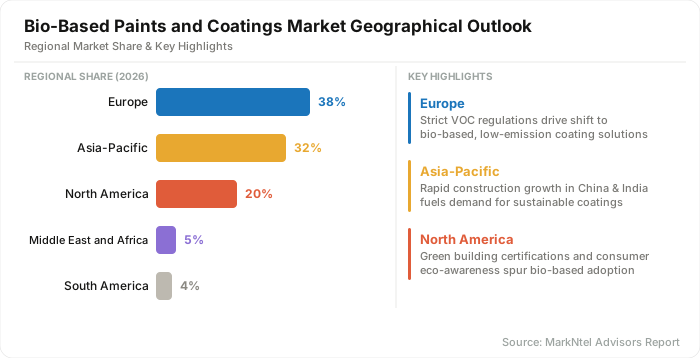
- Europe dominated the market in 2026, accounting for approximately 38% share.
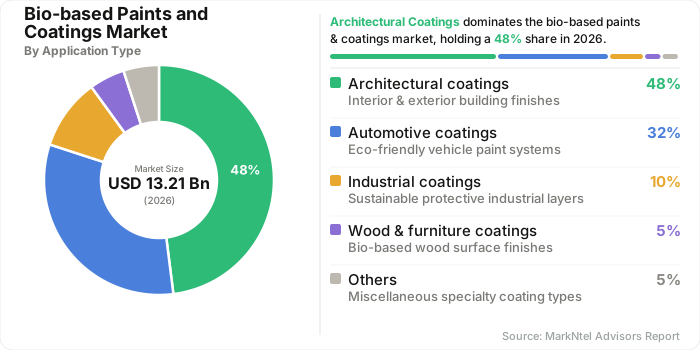
- Architectural Coatings held the largest application segment share at approximately 48% in 2026.
- Acrylic Resins led the resin type segment with approximately 42% share in 2026.
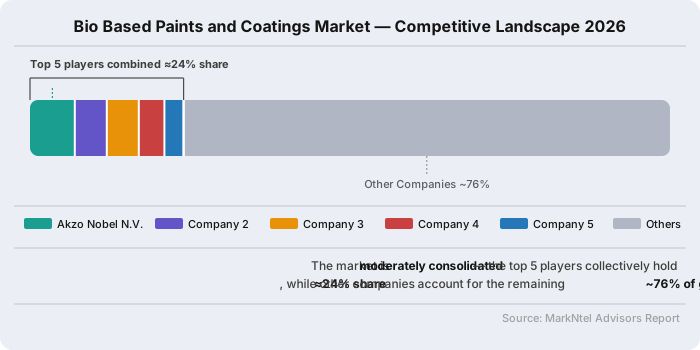
- The market is moderately consolidated, with the top five players collectively accounting for approximately 24% of global market share.
Bio-Based Paints and Coatings Market Size and Outlook
The Bio-Based Paints and Coatings market size was valued at USD 12.11 billion in 2025 and is projected to grow from USD 13.21 billion in 2026 to USD 19.28 billion by 2032, registering a CAGR of around 6.3% during the forecast period (2026–32). The market outlook reflects a structural transition in the coatings industry toward renewable carbon-based formulations, supported by regulatory enforcement, industrial decarbonization, and expanding end-use diversification.
A key demand-side driver shaping the outlook is the tightening regulatory framework governing industrial emissions and chemical safety across developed economies. The U.S. Environmental Protection Agency continues to regulate volatile organic compound emissions from coating products under the Clean Air Act framework, reinforcing long-term substitution of solvent-based systems with low-emission and bio-based alternatives. Similar regulatory approaches in European markets are accelerating reformulation activity across architectural, automotive, and industrial coatings.
On the supply side, innovation in renewable chemistry is expanding the feasibility of large-scale bio-based coating production. The U.S. Department of Energy actively supports bio-based chemical pathways through its Bioenergy Technologies Office, promoting the conversion of lignocellulosic biomass, agricultural residues, and renewable feedstocks into industrial intermediates. This is strengthening the upstream availability of bio-derived resins, binders, and functional additives used in coating formulations.
In addition, industrial demand for sustainable surface protection solutions is expanding beyond construction into automotive refinishing, marine coatings, industrial equipment protection, and packaging applications. Manufacturers are increasingly integrating bio-based content into hybrid coating systems to balance performance requirements with sustainability goals. Overall, the market outlook remains positive, driven by regulatory compliance pressures, advancements in bio-refining technologies, and widening industrial adoption of renewable coating materials across global manufacturing and infrastructure sectors.
Bio-Based Paints and Coatings Market Key Indicators
- The Global Status Report for Buildings and Construction 2025–2026 states that the buildings and construction sector accounts for approximately 37% of global CO₂ emissions and nearly 50% of global material extraction. Increasing pressure to decarbonize buildings is accelerating the adoption of sustainable construction materials, including bio-based paints and coatings.
- According to the International Energy Agency, global investment in building construction exceeded USD 7 trillion in 2024. Rising residential, commercial, and infrastructure development increases demand for architectural paints and coatings, while sustainability initiatives are encouraging the transition toward bio-based coating solutions with lower environmental impact.
- Global certified green building floor area continues to expand, with the World Green Building Council reporting rapid growth in sustainable building certifications worldwide. Buildings account for nearly 37% of global energy-related carbon emissions, increasing the emphasis on low-carbon construction materials, including bio-based paints and coatings that contribute to sustainable building standards.
Bio-Based Paints and Coatings Market Scope
| Category | Segments |
|---|---|
| By Resin Type | Alkyd (bio-based alkyds included), Acrylic, Polyurethane, Epoxy (bio-based or hybrid epoxy systems), Others (Cellulose-based, PLA, natural oil-based binders, hybrid bio-resins |
| By Application | Architectural coatings, Automotive coatings, Industrial coatings, Wood & furniture coatings, Packaging coatings & inks, Marine coatings |
Bio-Based Paints and Coatings Market Growth Drivers
Expansion of Sustainable Construction and Green Building Practices Driving Bio-based Coatings Demand
The rapid expansion of sustainable construction practices is a key structural growth driver for the global bio-based paints and coatings market. Governments and urban planning authorities are increasingly prioritizing energy-efficient buildings and low-carbon construction materials to reduce the environmental footprint of the built environment. This shift is directly increasing demand for environmentally friendly coatings, including bio-based and low-emission formulations used in residential, commercial, and infrastructure projects. According to the U.S. Census Bureau, construction activity in the United States remains at a multi-trillion-dollar scale annually, with residential and non-residential development forming a major share of material consumption, including paints and coatings.
Additionally, the European Commission’s energy efficiency framework for buildings highlights that the building sector accounts for a significant portion of total energy use and emissions, reinforcing the need for sustainable building materials. The World Bank also emphasizes that rapid urbanization is accelerating global construction demand, particularly in emerging economies, further expanding the application base for architectural coatings. Collectively, these structural factors are driving long-term growth in bio-based coating adoption.
Recent Trends
Regulatory-Driven Shift Toward Low-VOC and Bio-Based Coatings Holds the Strongest Market Influence
The regulatory-driven transition toward low-VOC and bio-based coatings is the most influential trend shaping the global bio-based paints and coatings market. Governments across major economies are enforcing stricter controls on volatile organic compound (VOC) emissions, which are released during the application and drying of coatings. This is accelerating the substitution of solvent-based systems with waterborne and partially bio-based alternatives. Regulatory frameworks are increasingly positioning coatings as a key target for air quality improvement due to their contribution to urban ozone formation.
According to the U.S. Environmental Protection Agency (EPA), coatings and related chemical products are significant contributors to VOC emissions under the Clean Air Act regulatory framework. The EPA identifies VOC reduction as a critical measure for controlling ground-level ozone formation, which is linked to respiratory health risks and urban air pollution. Similarly, the European Environment Agency (EEA) highlights industrial solvent use, including coatings, as an important contributor to air pollution in Europe, reinforcing the need for regulatory intervention and cleaner formulation technologies.
The impact of these regulations extends across architectural, automotive, and industrial coating applications, making it a cross-sector structural driver. Unlike demand-side trends such as construction growth or green building adoption, regulatory pressure creates mandatory compliance requirements, forcing large-scale reformulation across the entire coatings value chain.
Bio-Based Paints and Coatings Market Opportunities and Challenges
Regulatory Compliance Barriers Creating Long-Term Opportunities in Sustainable Procurement Markets
Regulatory certification and compliance requirements present a significant challenge for manufacturers operating in the bio-based paints and coatings market. To qualify for government procurement programs and sustainability-focused purchasing initiatives, products must undergo bio-based content verification, testing, and certification processes that can increase development costs and extend commercialization timelines. These requirements are particularly demanding for smaller manufacturers, which often face resource constraints in meeting evolving regulatory standards, labeling obligations, and documentation requirements across multiple markets.
Despite these challenges, compliance frameworks are creating substantial long-term growth opportunities. The USDA BioPreferred Program has designated 143 bio-based product categories eligible for federal purchasing preference, establishing a structured demand channel for certified products. As governments and public institutions increasingly prioritize sustainable procurement, certified bio-based coatings gain enhanced access to infrastructure, construction, and facility maintenance projects. Consequently, regulatory compliance is becoming a competitive differentiator, encouraging investment in product validation and innovation while supporting the broader commercialization of bio-based paints and coatings.
Segmentation Insights
Architectural Coatings Lead the Industry with Potential Market Shares
Architectural coatings account for the largest share of the global bio-based paints and coatings market, representing approximately 48% of total demand. This dominance is driven by the extensive use of paints and coatings in residential, commercial, and infrastructure construction activities. The segment benefits significantly from the shift toward low-VOC and bio-based interior wall coatings, particularly in urban housing and renovation projects.
According to the U.S. Census Bureau (Construction Spending Report, 2025), total annual construction spending in the United States exceeded USD 2.0 trillion, with residential construction contributing a major share of coating consumption. Similarly, the European Commission’s Construction and Demolition Waste and Sustainable Built Environment data highlights that buildings account for nearly 36% of CO₂ emissions in the EU, accelerating regulatory push toward sustainable and bio-based building materials, including coatings.
The increasing adoption of green building standards such as LEED and BREEAM, along with government-led energy efficiency programs, is further strengthening demand for environmentally sustainable coatings. In addition, rapid urbanization and housing development in emerging economies are expanding the application base for architectural coatings globally. Based on application type, the scope has been divided into:
- Architectural coatings
- Automotive coatings
- Industrial coatings
- Wood & furniture coatings
- Packaging coatings & inks
- Marine coatings
- Others (agriculture equipment, electronics, etc.)
Acrylic Resins Lead the Global Bio-Based Paints & Coatings Resin Segment
Acrylic resins represent the largest share of the global bio-based paints and coatings resin segment, accounting for approximately 42% of total resin demand. This leadership is primarily attributed to their wide compatibility with waterborne and low-VOC formulations, which are central to bio-based coating development. According to the U.S. Environmental Protection Agency, VOC Emissions Standards for Architectural Coatings, regulatory tightening on volatile organic compounds has significantly increased adoption of waterborne acrylic systems as replacements for solvent-based coatings.
The EPA identifies coatings as a key contributor to VOC emissions in urban air pollution, driving continuous reformulation toward water-based acrylic emulsion. Additionally, the European Environment Agency highlights that industrial solvent emissions remain a significant contributor to ground-level ozone formation in Europe, reinforcing policy-driven substitution toward waterborne and partially bio-based acrylic systems. Acrylic resins are also highly adaptable to bio-based monomers and hybrid renewable feedstock integration, enabling partial substitution without compromising performance. This makes them the preferred resin system for large-scale commercialization of bio-based coatings across architectural, wood, and decorative applications. Based on resin type, the scope has been divided into:
- Alkyd (bio-based alkyds included)
- Acrylic
- Polyurethane
- Epoxy (bio-based or hybrid epoxy systems)
- Others (Cellulose-based, PLA, natural oil-based binders, hybrid bio-resins)
Bio-Based Paints and Coatings Market Geographical
Europe accounts for approximately 38% of the global bio-based paints and coatings market, making it the leading regional market. The region's dominance is primarily driven by stringent environmental legislation, including the EU VOC Solvents Emissions Directive, REACH Regulation, and the European Green Deal, which continue to accelerate the replacement of conventional solvent-based coatings with bio-based and low-VOC alternatives across construction, automotive, industrial, and wood coating applications. Europe also benefits from a mature chemical manufacturing ecosystem and strong policy support for circular economy initiatives, creating favorable conditions for commercial-scale adoption of renewable coating technologies.
The region continues to witness significant innovation from leading coating manufacturers. In May 2025, AkzoNobel announced the use of BASF's biomass balance-certified raw materials for decorative paint production across its EMEA operations, substantially lowering the carbon footprint of high-volume paint products. The company also upgraded its Dulux Easycare range in the UK to incorporate reduced-carbon raw materials while remaining 99.9% VOC-free, reinforcing Europe's leadership in commercializing sustainable coating technologies. Such product innovations, combined with rising investments in green buildings and sustainable renovation projects, are expected to further strengthen Europe's position in the global bio-based paints and coatings market
Bio-Based Paints and Coatings Market Competitive Analysis
The competitive landscape of the global bio-based paints and coatings market is moderately consolidated, with leading players such as Akzo Nobel, PPG Industries, Sherwin-Williams, Nippon Paint, and BASF collectively accounting for around 24% market share, supported by strong R&D and sustainable coating portfolios. The remaining market is fragmented among regional and specialty bio-based chemical producers.
Key Companies in the Bio-Based Paints and Coatings Market
- Akzo Nobel N.V
- PPG Industries, Inc
- The Sherwin-Williams Company
- Nippon Paint Holdings Co. Ltd.
- BASF SE
- Cargill Incorporated
- Covestro AG
- Stora Enso Oyj
- Axalta Coating Systems
- Hempel A/S
- Jotun A/S
- Kansai Paint Co. Ltd.
- SK Chemicals Co. Ltd.
- Tremco CPG Inc.
- Cortec Corporation
- Others
Bio-Based Paints and Coatings Industry News and Recent Developments
2026: Covestro Launches Bio4PURConti Initiative to Develop Bio-Based Polyurethane Feedstock
Covestro kicked off the Bio4PURConti project with the goal of developing the world's first continuous industrial production process for bio-based aniline a key precursor for polyurethane coatings used across automotive, construction, and consumer applications. The project carries a total budget of approximately $9.2 million, including approximately $7.7 million in EU funding, and will run for 42 months. The resulting bio-based aniline is fully compatible with existing polyurethane manufacturing processes and meets MDI specifications without requiring changes to downstream operations.
Impact Analysis: This upstream feedstock initiative carries significant implications for the bio-based polyurethane coatings segment. By de-fossilizing aniline one of the most carbon-intensive inputs in PU production without disrupting existing manufacturing infrastructure, Covestro addresses both the cost and scalability barriers that have historically constrained bio-PU adoption. Successful commercialization of continuous bio-aniline production could materially reduce the carbon footprint of polyurethane coatings across automotive, textile, and industrial applications, while strengthening Europe's strategic independence in sustainable chemical feedstocks.
2026: Cortec Launches EcoLine 3860 First Bio-Based Acrylic Anticorrosion Coating
Cortec announced the release of EcoLine 3860, its first water-based acrylic coating to incorporate renewably sourced resins, containing 27% USDA-certified biobased content and designed for industrial users seeking to increase their use of renewable content. EcoLine 3860 remains within Green Seal and EPA guidelines for low-VOC coatings, registering at 0.6 lbs/gal, and when applied at a dry film thickness of 1.5–3.0 mils, provides corrosion protection for metal parts, equipment, and structures while introducing renewable content.
Impact Analysis: EcoLine 3860 marks a meaningful milestone in the industrial coatings space representing the first commercialization of bio-based acrylic resin technology specifically for metal corrosion protection. By qualifying under the USDA BioPreferred program and meeting EPA low-VOC standards, the product positions Cortec to capture share in federally mandated sustainable procurement markets across the United States. The launch also sets a precedent for future bio-based anticorrosion formulations, signaling an expanding frontier for renewable content in the industrial and protective coatings segment.
2026: AkzoNobel Launches RUBBOL WF 3350 Bio-Based Waterborne Wood Coating
AkzoNobel introduced RUBBOL WF 3350, a waterborne wood coating with 20% bio-based content developed under its Sikkens Wood Coatings brand, designed to enhance sustainability without compromising performance by integrating renewable raw materials and supporting a circular economy in wood coatings. The product targets the professional wood and furniture coatings segment, offering manufacturers a credible sustainable alternative aligned with tightening European VOC and embodied carbon regulations.
Impact Analysis: RUBBOL WF 3350 reinforces AkzoNobel's strategic emphasis on bio-based product development across its professional coatings portfolio. By incorporating 20% bio-based content into a commercially proven waterborne wood coating system under the trusted Sikkens brand, AkzoNobel lowers adoption risk for professional applicators while advancing its sustainability credentials. The product also strengthens AkzoNobel's competitive position in the European wood and furniture coatings segment a fast-growing application area ahead of its anticipated merger with Axalta, which is expected to further amplify the combined entity's bio-based product innovation capacity.
Frequently Asked Questions
- Market Segmentation
- Introduction
- Product Definition
- Research Process
- Assumptions
- Executive Summary
- Global Bio-Based Paints and Coatings Supply Chain Analysis 2022-2032
- Global Bio-Based Paints and Coatings Production (Thousand Ton) Trend 2022-2032
- Bio-Based Paints and Coatings Production (Thousand Ton) Trend By Resin Type
- Alkyd (bio-based alkyds included)
- Acrylic
- Polyurethane
- Epoxy (bio-based or hybrid epoxy systems)
- Others (Cellulose-based, PLA, natural oil-based binders, hybrid bio-resins)
- Company-Wise Production Plants and Statistics
- Installed Production Capacity
- Actual Production
- Planned Production Target
- Bio-Based Paints and Coatings Production (Thousand Ton) Trend By Resin Type
- Global Bio-Based Paints and Coatings Pricing Analysis 2022-2032
- Global Bio-Based Paints and Coatings Pricing Trend (USD/Ton) 2022-2032
- Global Bio-Based Paints and Coatings Pricing Trend (USD/Ton) By Regions 2022-2032
- North America
- South America
- Europe
- Middle East & Africa
- Asia Pacific
- Global Bio-based Paints and Coatings Market Porter’s Five Force Analysis
- Global Bio-Based Paints and Coatings Market Policies, Regulations, and Product Standards
- Global Bio-Based Paints and Coatings Market Trends & Developments
- Global Bio-Based Paints and Coatings Market Dynamics
- Growth Factors
- Challenges
- Global Bio-Based Paints and Coatings Market Hotspot & Opportunities
- Global Bio-Based Paints and Coatings Market Outlook, 2022-2032F
- Market Size & Outlook
- By Revenues (USD Million)
- By Quantity Sold (Thousand Tons)
- Market Segmentation and Outlook
- By Resin Type- Market Size & Forecast 2022-2032, USD Million
- Alkyd (bio-based alkyds included)
- Acrylic
- Polyurethane
- Epoxy (bio-based or hybrid epoxy systems)
- Others (Cellulose-based, PLA, natural oil-based binders, hybrid bio-resins)
- By Application- Market Size & Forecast 2022-2032, USD Million
- Architectural coatings
- Automotive coatings
- Industrial coatings
- Wood & furniture coatings
- Packaging coatings & inks
- Marine coatings
- Others (agriculture equipment, electronics, etc.)
- By Region
- North America
- Europe
- Asia-Pacific
- Latin America
- Middle East & Africa
- By Company
- Competition Characteristics
- Market Segmentation and Outlook
- By Resin Type- Market Size & Forecast 2022-2032, USD Million
- Market Size & Outlook
- North America Bio-Based Paints and Coatings Market Outlook, 2022-2032F
- Market Size & Outlook
- By Revenues (USD Million)
- By Quantity Sold (Thousand Tons)
- Market Segmentation and Outlook
- By Resin Type- Market Size & Forecast 2022-2032, USD Million
- By Application- Market Size & Forecast 2022-2032, USD Million
- By Country
- The US
- Canada
- Mexico
- The US Bio-Based Paints and Coatings Market Outlook, 2022-2032F
- Market Size & Outlook
- By Revenues (USD Million)
- By Quantity Sold (Thousand Tons)
- Market Segmentation and Outlook
- By Resin Type- Market Size & Forecast 2022-2032, USD Million
- By Application- Market Size & Forecast 2022-2032, USD Million
- Market Size & Outlook
- Canada Bio-Based Paints and Coatings Market Outlook, 2022-2032F
- Market Size & Outlook
- By Revenues (USD Million)
- By Quantity Sold (Thousand Tons)
- Market Segmentation and Outlook
- By Resin Type- Market Size & Forecast 2022-2032, USD Million
- By Application- Market Size & Forecast 2022-2032, USD Million
- Market Size & Outlook
- Mexico Bio-Based Paints and Coatings Market Outlook, 2022-2032F
- Market Size & Outlook
- By Revenues (USD Million)
- By Quantity Sold (Thousand Tons)
- Market Segmentation and Outlook
- By Resin Type- Market Size & Forecast 2022-2032, USD Million
- By Application- Market Size & Forecast 2022-2032, USD Million
- Market Size & Outlook
- Market Size & Outlook
- South America Bio-Based Paints and Coatings Market Outlook, 2022-2032F
- Market Size & Outlook
- By Revenues (USD Million)
- By Quantity Sold (Thousand Tons)
- Market Segmentation and Outlook
- By Resin Type- Market Size & Forecast 2022-2032, USD Million
- By Application- Market Size & Forecast 2022-2032, USD Million
- By Country
- Brazil
- Argentina
- Chile
- Colombia
- Peru
- Ecuador
- Rest of South America
- Brazil Bio-Based Paints and Coatings Market Outlook, 2022-2032F
- Market Size & Outlook
- By Revenues (USD Million)
- By Quantity Sold (Thousand Tons)
- Market Segmentation and Outlook
- By Resin Type- Market Size & Forecast 2022-2032, USD Million
- By Application- Market Size & Forecast 2022-2032, USD Million
- Market Size & Outlook
- Argentina Bio-Based Paints and Coatings Market Outlook, 2022-2032F
- Market Size & Outlook
- By Revenues (USD Million)
- By Quantity Sold (Thousand Tons)
- Market Segmentation and Outlook
- By Resin Type- Market Size & Forecast 2022-2032, USD Million
- By Application- Market Size & Forecast 2022-2032, USD Million
- Market Size & Outlook
- Chile Bio-Based Paints and Coatings Market Outlook, 2022-2032F
- Market Size & Outlook
- By Revenues (USD Million)
- By Quantity Sold (Thousand Tons)
- Market Segmentation and Outlook
- By Resin Type- Market Size & Forecast 2022-2032, USD Million
- By Application- Market Size & Forecast 2022-2032, USD Million
- Market Size & Outlook
- Colombia Bio-Based Paints and Coatings Market Outlook, 2022-2032F
- Market Size & Outlook
- By Revenues (USD Million)
- By Quantity Sold (Thousand Tons)
- Market Segmentation and Outlook
- By Resin Type- Market Size & Forecast 2022-2032, USD Million
- By Application- Market Size & Forecast 2022-2032, USD Million
- Market Size & Outlook
- Peru Bio-Based Paints and Coatings Market Outlook, 2022-2032F
- Market Size & Outlook
- By Revenues (USD Million)
- By Quantity Sold (Thousand Tons)
- Market Segmentation and Outlook
- By Resin Type- Market Size & Forecast 2022-2032, USD Million
- By Application- Market Size & Forecast 2022-2032, USD Million
- Market Size & Outlook
- Ecuador Bio-Based Paints and Coatings Market Outlook, 2022-2032F
- Market Size & Outlook
- By Revenues (USD Million)
- By Quantity Sold (Thousand Tons)
- Market Segmentation and Outlook
- By Resin Type- Market Size & Forecast 2022-2032, USD Million
- By Application- Market Size & Forecast 2022-2032, USD Million
- Market Size & Outlook
- Market Size & Outlook
- Europe Bio-Based Paints and Coatings Market Outlook, 2022-2032F
- Market Size & Outlook
- By Revenues (USD Million)
- By Quantity Sold (Thousand Tons)
- Market Segmentation and Outlook
- By Resin Type- Market Size & Forecast 2022-2032, USD Million
- By Application- Market Size & Forecast 2022-2032, USD Million
- By Country
- The UK
- Germany
- France
- Italy
- Spain
- Nordic
- Benelux
- Rest of Europe
- The UK Bio-Based Paints and Coatings Market Outlook, 2022-2032F
- Market Size & Outlook
- By Revenues (USD Million)
- By Quantity Sold (Thousand Tons)
- Market Segmentation and Outlook
- By Resin Type- Market Size & Forecast 2022-2032, USD Million
- By Application- Market Size & Forecast 2022-2032, USD Million
- Market Size & Outlook
- Germany Bio-Based Paints and Coatings Market Outlook, 2022-2032F
- Market Size & Outlook
- By Revenues (USD Million)
- By Quantity Sold (Thousand Tons)
- Market Segmentation and Outlook
- By Resin Type- Market Size & Forecast 2022-2032, USD Million
- By Application- Market Size & Forecast 2022-2032, USD Million
- Market Size & Outlook
- France Bio-Based Paints and Coatings Market Outlook, 2022-2032F
- Market Size & Outlook
- By Revenues (USD Million)
- By Quantity Sold (Thousand Tons)
- Market Segmentation and Outlook
- By Resin Type- Market Size & Forecast 2022-2032, USD Million
- By Application- Market Size & Forecast 2022-2032, USD Million
- Market Size & Outlook
- Italy Bio-Based Paints and Coatings Market Outlook, 2022-2032F
- Market Size & Outlook
- By Revenues (USD Million)
- By Quantity Sold (Thousand Tons)
- Market Segmentation and Outlook
- By Resin Type- Market Size & Forecast 2022-2032, USD Million
- By Application- Market Size & Forecast 2022-2032, USD Million
- Market Size & Outlook
- Spain Bio-Based Paints and Coatings Market Outlook, 2022-2032F
- Market Size & Outlook
- By Revenues (USD Million)
- By Quantity Sold (Thousand Tons)
- Market Segmentation and Outlook
- By Resin Type- Market Size & Forecast 2022-2032, USD Million
- By Application- Market Size & Forecast 2022-2032, USD Million
- Market Size & Outlook
- Nordic Bio-Based Paints and Coatings Market Outlook, 2022-2032F
- Market Size & Outlook
- By Revenues (USD Million)
- By Quantity Sold (Thousand Tons)
- Market Segmentation and Outlook
- By Resin Type- Market Size & Forecast 2022-2032, USD Million
- By Application- Market Size & Forecast 2022-2032, USD Million
- Market Size & Outlook
- Benelux Bio-Based Paints and Coatings Market Outlook, 2022-2032F
- Market Size & Outlook
- By Revenues (USD Million)
- By Quantity Sold (Thousand Tons)
- Market Segmentation and Outlook
- By Resin Type- Market Size & Forecast 2022-2032, USD Million
- By Application- Market Size & Forecast 2022-2032, USD Million
- Market Size & Outlook
- Market Size & Outlook
- Middle East and Africa Bio-Based Paints and Coatings Market Outlook, 2022-2032F
- Market Size & Outlook
- By Revenues (USD Million)
- By Quantity Sold (Thousand Tons)
- Market Segmentation and Outlook
- By Resin Type- Market Size & Forecast 2022-2032, USD Million
- By Application- Market Size & Forecast 2022-2032, USD Million
- By Country
- Saudi Arabia
- The UAE
- South Africa
- Egypt
- Qatar
- Kuwait
- Oman
- Nigeria
- Saudi Arabia Bio-Based Paints and Coatings Market Outlook, 2022-2032F
- Market Size & Outlook
- By Revenues (USD Million)
- By Quantity Sold (Thousand Tons)
- Market Segmentation and Outlook
- By Resin Type- Market Size & Forecast 2022-2032, USD Million
- By Application- Market Size & Forecast 2022-2032, USD Million
- Market Size & Outlook
- The UAE Bio-Based Paints and Coatings Market Outlook, 2022-2032F
- Market Size & Outlook
- By Revenues (USD Million)
- By Quantity Sold (Thousand Tons)
- Market Segmentation and Outlook
- By Resin Type- Market Size & Forecast 2022-2032, USD Million
- By Application- Market Size & Forecast 2022-2032, USD Million
- Market Size & Outlook
- South Africa Bio-Based Paints and Coatings Market Outlook, 2022-2032F
- Market Size & Outlook
- By Revenues (USD Million)
- By Quantity Sold (Thousand Tons)
- Market Segmentation and Outlook
- By Resin Type- Market Size & Forecast 2022-2032, USD Million
- By Application- Market Size & Forecast 2022-2032, USD Million
- Market Size & Outlook
- Egypt Bio-Based Paints and Coatings Market Outlook, 2022-2032F
- Market Size & Outlook
- By Revenues (USD Million)
- By Quantity Sold (Thousand Tons)
- Market Segmentation and Outlook
- By Resin Type- Market Size & Forecast 2022-2032, USD Million
- By Application- Market Size & Forecast 2022-2032, USD Million
- Market Size & Outlook
- Qatar Bio-Based Paints and Coatings Market Outlook, 2022-2032F
- Market Size & Outlook
- By Revenues (USD Million)
- By Quantity Sold (Thousand Tons)
- Market Segmentation and Outlook
- By Resin Type- Market Size & Forecast 2022-2032, USD Million
- By Application- Market Size & Forecast 2022-2032, USD Million
- Market Size & Outlook
- Kuwait Bio-Based Paints and Coatings Market Outlook, 2022-2032F
- Market Size & Outlook
- By Revenues (USD Million)
- By Quantity Sold (Thousand Tons)
- Market Segmentation and Outlook
- By Resin Type- Market Size & Forecast 2022-2032, USD Million
- By Application- Market Size & Forecast 2022-2032, USD Million
- Market Size & Outlook
- Oman Bio-Based Paints and Coatings Market Outlook, 2022-2032F
- Market Size & Outlook
- By Revenues (USD Million)
- By Quantity Sold (Thousand Tons)
- Market Segmentation and Outlook
- By Resin Type- Market Size & Forecast 2022-2032, USD Million
- By Application- Market Size & Forecast 2022-2032, USD Million
- Market Size & Outlook
- Nigeria Bio-Based Paints and Coatings Market Outlook, 2022-2032F
- Market Size & Outlook
- By Revenues (USD Million)
- By Quantity Sold (Thousand Tons)
- Market Segmentation and Outlook
- By Resin Type- Market Size & Forecast 2022-2032, USD Million
- By Application- Market Size & Forecast 2022-2032, USD Million
- Market Size & Outlook
- Market Size & Outlook
- Asia Pacific Bio-Based Paints and Coatings Market Outlook, 2022-2032F
- Market Size & Outlook
- By Revenues (USD Million)
- By Quantity Sold (Thousand Tons)
- Market Segmentation and Outlook
- By Resin Type- Market Size & Forecast 2022-2032, USD Million
- By Application- Market Size & Forecast 2022-2032, USD Million
- By Country
- China
- Japan
- India
- South Korea
- Australia
- Indonesia
- Thailand
- Vietnam
- New Zealand
- Rest of Asia-Pacific
- China Bio-Based Paints and Coatings Market Outlook, 2022-2032F
- Market Size & Outlook
- By Revenues (USD Million)
- By Quantity Sold (Thousand Tons)
- Market Segmentation and Outlook
- By Resin Type- Market Size & Forecast 2022-2032, USD Million
- By Application- Market Size & Forecast 2022-2032, USD Million
- Market Size & Outlook
- Japan Bio-Based Paints and Coatings Market Outlook, 2022-2032F
- Market Size & Outlook
- By Revenues (USD Million)
- By Quantity Sold (Thousand Tons)
- Market Segmentation and Outlook
- By Resin Type- Market Size & Forecast 2022-2032, USD Million
- By Application- Market Size & Forecast 2022-2032, USD Million
- Market Size & Outlook
- India Bio-Based Paints and Coatings Market Outlook, 2022-2032F
- Market Size & Outlook
- By Revenues (USD Million)
- By Quantity Sold (Thousand Tons)
- Market Segmentation and Outlook
- By Resin Type- Market Size & Forecast 2022-2032, USD Million
- By Application- Market Size & Forecast 2022-2032, USD Million
- Market Size & Outlook
- South Korea Bio-Based Paints and Coatings Market Outlook, 2022-2032F
- Market Size & Outlook
- By Revenues (USD Million)
- By Quantity Sold (Thousand Tons)
- Market Segmentation and Outlook
- By Resin Type- Market Size & Forecast 2022-2032, USD Million
- By Application- Market Size & Forecast 2022-2032, USD Million
- Market Size & Outlook
- Australia Bio-Based Paints and Coatings Market Outlook, 2022-2032F
- Market Size & Outlook
- By Revenues (USD Million)
- By Quantity Sold (Thousand Tons)
- Market Segmentation and Outlook
- By Resin Type- Market Size & Forecast 2022-2032, USD Million
- By Application- Market Size & Forecast 2022-2032, USD Million
- Market Size & Outlook
- Indonesia Bio-Based Paints and Coatings Market Outlook, 2022-2032F
- Market Size & Outlook
- By Revenues (USD Million)
- By Quantity Sold (Thousand Tons)
- Market Segmentation and Outlook
- By Resin Type- Market Size & Forecast 2022-2032, USD Million
- By Application- Market Size & Forecast 2022-2032, USD Million
- Market Size & Outlook
- Thailand Bio-Based Paints and Coatings Market Outlook, 2022-2032F
- Market Size & Outlook
- By Revenues (USD Million)
- By Quantity Sold (Thousand Tons)
- Market Segmentation and Outlook
- By Resin Type- Market Size & Forecast 2022-2032, USD Million
- By Application- Market Size & Forecast 2022-2032, USD Million
- Market Size & Outlook
- Vietnam Bio-Based Paints and Coatings Market Outlook, 2022-2032F
- Market Size & Outlook
- By Revenues (USD Million)
- By Quantity Sold (Thousand Tons)
- Market Segmentation and Outlook
- By Resin Type- Market Size & Forecast 2022-2032, USD Million
- By Application- Market Size & Forecast 2022-2032, USD Million
- Market Size & Outlook
- New Zealand Bio-Based Paints and Coatings Market Outlook, 2022-2032F
- Market Size & Outlook
- By Revenues (USD Million)
- By Quantity Sold (Thousand Tons)
- Market Segmentation and Outlook
- By Resin Type- Market Size & Forecast 2022-2032, USD Million
- By Application- Market Size & Forecast 2022-2032, USD Million
- Market Size & Outlook
- Market Size & Outlook
- Global Bio-Based Paints and Coatings Market Key Strategic Imperatives for Success & Growth
- Competitive Outlook
- Company Profiles
- Akzo Nobel N.V.
- Business Description
- Product Portfolio
- Collaborations & Alliances
- Recent Developments
- Financial Details
- Others
- PPG Industries, Inc
- Business Description
- Product Portfolio
- Collaborations & Alliances
- Recent Developments
- Financial Details
- Others
- The Sherwin-Williams Company
- Business Description
- Product Portfolio
- Collaborations & Alliances
- Recent Developments
- Financial Details
- Others
- Nippon Paint Holdings Co. Ltd.
- Business Description
- Product Portfolio
- Collaborations & Alliances
- Recent Developments
- Financial Details
- Others
- BASF SE
- Business Description
- Product Portfolio
- Collaborations & Alliances
- Recent Developments
- Financial Details
- Others
- Cargill Incorporated
- Business Description
- Product Portfolio
- Collaborations & Alliances
- Recent Developments
- Financial Details
- Others
- Covestro AG
- Business Description
- Product Portfolio
- Collaborations & Alliances
- Recent Developments
- Financial Details
- Others
- Stora Enso Oyj
- Business Description
- Product Portfolio
- Collaborations & Alliances
- Recent Developments
- Financial Details
- Others
- Axalta Coating Systems
- Business Description
- Product Portfolio
- Collaborations & Alliances
- Recent Developments
- Financial Details
- Others
- Hempel A/S
- Business Description
- Product Portfolio
- Collaborations & Alliances
- Recent Developments
- Financial Details
- Others
- Jotun A/S
- Business Description
- Product Portfolio
- Collaborations & Alliances
- Recent Developments
- Financial Details
- Others
- Kansai Paint Co. Ltd.
- Business Description
- Product Portfolio
- Collaborations & Alliances
- Recent Developments
- Financial Details
- Others
- SK Chemicals Co. Ltd.
- Business Description
- Product Portfolio
- Collaborations & Alliances
- Recent Developments
- Financial Details
- Others
- Tremco CPG Inc.
- Business Description
- Product Portfolio
- Collaborations & Alliances
- Recent Developments
- Financial Details
- Others
- Cortec Corporation
- Business Description
- Product Portfolio
- Collaborations & Alliances
- Recent Developments
- Financial Details
- Others
- Others
- Akzo Nobel N.V.
- Company Profiles
- Disclaimer
MarkNtel Advisors follows a robust and iterative research methodology designed to ensure maximum accuracy and minimize deviation in market estimates and forecasts. Our approach combines both bottom-up and top-down techniques to effectively segment and quantify various aspects of the market. A consistent feature across all our research reports is data triangulation, which examines the market from three distinct perspectives to validate findings. Key components of our research process include:
1. Scope & Research Design At the outset, MarkNtel Advisors define the research objectives and formulate pertinent questions. This phase involves determining the type of research—qualitative or quantitative—and designing a methodology that outlines data collection methods, target demographics, and analytical tools. They also establish timelines and budgets to ensure the research aligns with client goals.
2. Sample Selection and Data Collection In this stage, the firm identifies the target audience and determines the appropriate sample size to ensure representativeness. They employ various sampling methods, such as random or stratified sampling, based on the research objectives. Data collection is carried out using tools like surveys, interviews, and observations, ensuring the gathered data is reliable and relevant.
3. Data Analysis and Validation Once data is collected, MarkNtel Advisors undertake a rigorous analysis process. This includes cleaning the data to remove inconsistencies, employing statistical software for quantitative analysis, and thematic analysis for qualitative data. Validation steps are taken to ensure the accuracy and reliability of the findings, minimizing biases and errors.

4. Data Forecast and FinalizationThe final phase involves forecasting future market trends based on the analyzed data. MarkNtel Advisors utilize predictive modeling and time series analysis to anticipate market behaviors. The insights are then compiled into comprehensive reports, featuring visual aids like charts and graphs, and include strategic recommendations to inform client decision-making
We offer flexible licensing options to cater to varying organizational needs. Choose the pricing pack that best suits your requirements:
Buy Now Inquire Before Buying
 Request Customization
 Talk to our Consultant







