

Australia Water and Wastewater Pump Market Research Report: Trends & Forecast (2026-2032)
By Pump Types (Centrifugal Pump (Overhung Pump (Vertical Inline, Horizontal End Suction), Split Case Pump (Single/Two Stage, Multistage), Vertical Pump (Turbine (Solid handling, No ... nsolid handling), Axial, Mixed Flow), Submersible Pump (Solid Handling, Non-solid Handling)), Positive Displacement Pump (Diaphragm Pump, Piston Pump, Gear Pump, Lobe Pump, Progressive Cavity Pump, Screw Pump, Vane Pump, Peristaltic Pump)), By End User (Municipal water and wastewater, Industrial water and wastewater), By Application (Water, Wastewater) Read more
- Environment
- Apr 2026
- Pages 135
- Report Format: PDF, Excel, PPT
Australia Water and Wastewater Pump Market
Projected 3.7% CAGR from 2026 to 2032
Study Period
2026-2032
Market Size (2026)
USD 313 Million
Market Size (2032)
USD 389 Million
Base Year
2025
Projected CAGR
3.7%
Leading Segments
By End User: Municipal water and wastewater
Australia Water and Wastewater Pump Market Report Key Takeaways:
- Australia Water and Wastewater Pump Market size was valued at around USD 291 million in 2025 and is projected to grow from USD 313 million in 2026 to USD 389 million by 2032, exhibiting a CAGR of 3.7% during 2026-2032.
- In 2025, Centrifugal pumps lead Australia water and wastewater pump market due to their versatility and efficiency in handling large volumes of water and suspended solids.
- In 2025, the municipal water & wastewater segment captured 65.46% of the Australia water and wastewater pump market. Meanwhile, the industrial water and wastewater segment is poised to be the fastest-growing end-user category, with a projected 4.71% CAGR during 2026-32.
- Leading companies in the Australia water and wastewater pump industry are ITT, IDEX, Dover, Flowserve, Sulzer AG, KSB, Xylem, Grundfos, Ebara, Wilo, and others.
Market Insights & Analysis: Australia Water and Wastewater Pump Market (2026-32):
The Australia Water and Wastewater Pump Market size was valued at around USD 291 million in 2025 and is projected to grow from USD 313 million in 2026 to USD 389 million by 2032, exhibiting a CAGR of 3.7% during 2026-2032. The industry is shaped by sustained public investment in water security, wastewater modernization, and long-term utility asset renewal. A large share of Australia’s water and sewerage infrastructure dates back several decades, creating steady replacement demand for transfer, sludge, and treatment pumps. Also, climate variability, particularly droughts and flooding, has increased the emphasis on resilient, pump-intensive infrastructure rather than gravity-based systems.
Public infrastructure funding directly translates into predictable, multi-year pump procurement cycles, making government and utility capex the primary demand anchor for the Australian water and wastewater pump market. Additionally, National Water Grid–funded projects, such as the USD 60.3 million allocated across 23 water infrastructure projects, typically involve new or upgraded pump stations for raw water transfer, treatment inflow, and distribution networks, creating immediate demand for medium- to high-capacity pumps. Moreover, capital-intensive desalination assets such as the Sydney Desalination Plant (USD 1,260 million) and the Victorian Desalination Plant (USD 2,810 million) structurally increase demand for high-pressure intake, booster, and reverse-osmosis feed pumps, both during construction and ongoing operations. Furthermore, rising electricity costs are reshaping replacement demand, accelerating the shift toward energy-efficient, variable-speed, and digitally monitored pumps, thereby increasing average selling prices and favoring technologically advanced pump suppliers over low-cost commodity manufacturers.
Moreover, sustained population growth in metropolitan regions is pushing networks beyond original design capacities, driving capacity augmentation projects that require higher-capacity and additional pump installations rather than routine maintenance. Furthermore, policy-driven emphasis on water reuse, energy efficiency, and asset resilience is accelerating the adoption of advanced, higher-value pumping systems, thereby lifting water and wastewater pump market revenue growth in the upcoming years.
Australia Water and Wastewater Pump Industry Recent Developments:
- 2025: Franklin Electric acquired Australia's PumpEng Pty Ltd, enhancing its submersible dewatering pump portfolio (JetGuard, Guardian, Raptor brands) for mining and wastewater-adjacent applications. This USD 8.89 million deal strengthens Franklin's presence in harsh Australian environments, supporting solids-handling in industrial water management through expanded facilities in Kalgoorlie, Townsville, and Adelaide. It reflects ongoing M&A consolidation in the water and wastewater pump sector.
- 2025: KSB Australia Pty Ltd expanded its Bundamba, Queensland site to strengthen its service and supply capabilities for the growing Australian market. The investment includes larger warehouse capacity for water and wastewater products, modernised and digitalised test facilities, and enhanced service workshops, shortening delivery and repair times and increasing supply reliability. The expansion also features new energy-efficient pump products like the AmaRex Pro submersible pump and plans for further capacity increases in Western Australia to meet rising demand in wastewater infrastructure and services.
- 2024: Sydney Water awarded a USD170 million contract to the Jacobs and Seymour Whyte joint venture for the Upper South Creek Networks Programme's initial phase, including nine new wastewater pumping stations and 96 km of pipelines.
| Category | Segments |
|---|---|
| By Pump Types | (Centrifugal Pump (Overhung Pump (Vertical Inline, Horizontal End Suction), Split Case Pump (Single/Two Stage, Multistage), Vertical Pump (Turbine (Solid handling, Nonsolid handling), Axial, Mixed Flow), Submersible Pump (Solid Handling, Non-solid Handling)), Positive Displacement Pump (Diaphragm Pump, Piston Pump, Gear Pump, Lobe Pump, Progressive Cavity Pump, Screw Pump, Vane Pump, Peristaltic Pump)), |
| By End User | (Municipal water and wastewater, Industrial water and wastewater), |
| By Application | (Water, Wastewater) |
Australia Water and Wastewater Pump Market Driver:
Climate-Driven Reengineering of Water and Wastewater Networks
Australia’s water and wastewater pump market is being fundamentally driven by the reengineering of water infrastructure to withstand climate volatility, rather than routine capacity expansion. Increasingly erratic rainfall patterns, characterized by prolonged droughts followed by short, high-intensity storm events, have reduced the effectiveness of gravity-based conveyance systems across urban and regional networks. As a result, utilities are structurally shifting toward pump-intensive water transfer, flood mitigation, and wastewater conveyance systems to maintain service continuity. This transition is already visible across major climate-resilient infrastructure programs, including:
- Melbourne Water’s flood mitigation upgrades (2023–2025), which involve expanded stormwater pump stations in low-lying catchments to manage extreme rainfall events linked to La Niña-driven flooding.
- Sydney Water’s wastewater network resilience program, where multiple aging gravity sewers are being supplemented with new lift stations and high-capacity pumps to handle peak wet-weather inflows.
This structural shift is expanding the number of lift stations, booster pumping points, and high-head wastewater pumps per network, directly increasing pump consumption. In parallel, wastewater systems are facing higher inflow variability and solids loading, necessitating robust pumps capable of operating under fluctuating hydraulic and mechanical stress. The climate adaptation measures are now embedded in long-term utility planning and capital allocation. This makes pump deployment a non-negotiable investment, positioning climate-driven system redesign as the single most influential driver sustaining demand growth in Australia water and wastewater pump market.
Australia Water and Wastewater Pump Market Trend:
Integration of Smart and Condition-Monitored Pumping Systems
A defining trend in Australia’s water and wastewater pump market is the rapid integration of digital intelligence into pumping assets, transforming pumps from mechanical components into monitored network nodes. Utilities are increasingly adopting pumps equipped with embedded sensors that track vibration, temperature, flow deviations, and seal performance to reduce unplanned failures and optimize maintenance schedules. This trend is particularly pronounced in wastewater applications, where pump failures pose environmental, regulatory, and service risks.
The shift aligns with broader utility-level digital asset management programs aimed at reducing operating expenditure across geographically dispersed infrastructure. Rather than replacing pumps solely based on age, utilities are now prioritizing condition-based maintenance and performance optimization, which is accelerating demand for digitally compatible pump systems. This trend is also reshaping procurement behavior, with greater emphasis on reliability, monitoring capability, and long-term operational visibility. As a result, smart pump adoption is increasing average equipment value and strengthening aftermarket service demand, substantially accelerating market penetration beyond traditional mechanical pump replacement cycles.
Australia Water and Wastewater Pump Market Opportunity:
Expansion of Recycled Water and Decentralized Treatment Systems
The accelerating shift toward recycled water and decentralized wastewater treatment represents a structurally important long-term opportunity for Australia’s water and wastewater pump market. Water security strategies at both national and state levels increasingly position recycled water as a critical supply source for industrial, agricultural, and non-potable urban use, particularly in regions facing population growth and climate stress. The recycled water networks are inherently pump-dependent, as treated effluent must be transferred across non-gravity-aligned distribution corridors while maintaining strict pressure and quality control. For instance:
- Sydney Water’s Upper South Creek Advanced Water Recycling Centre, scheduled for commissioning in 2026, which will supply high-quality recycled water to Western Sydney’s Aerotropolis through high-pressure transfer pumping and distributed delivery stations.
- SA Water’s Bolivar recycled water expansion, advancing during 2024–2025 to increase reuse volumes for agriculture and industry, requiring corrosion-resistant and multi-stage pumping systems.
- Water Corporation’s recycled water strategy, supported by a target to recycle 35% of wastewater by 2035, sustains ongoing investment in decentralized treatment plants and pump-intensive distribution networks across Perth’s growth corridors.
This momentum is underpinned by the Australian Guidelines for Water Recycling, which provide the technical and risk-management framework for recycled water schemes, and are enforced through state-level health and environmental licensing regimes. While the Water Act 2007 (Cth) establishes overarching water governance principles, recycled water deployment is effectively enabled through these guidelines and state adoption mechanisms rather than direct federal mandates. As reuse targets intensify, utilities will increasingly require application-specific pump solutions capable of handling variable water quality, pressure regimes, and continuous operation. This positions recycled water and decentralized treatment as a durable growth engine for advanced pump technologies over the coming decade.
Australia Water and Wastewater Pump Market Challenge:
Public Utility Cost Sensitivity and Procurement Constraints
A significant challenge restraining growth in Australia’s water and wastewater pump market is the strong emphasis on upfront capital cost minimization within public utility procurement frameworks. Despite pumps being long-life assets with substantial operating and energy cost implications, purchasing decisions are frequently driven by initial pricing rather than total lifecycle value. This procurement approach limits the adoption of energy-efficient, digitally enabled, and high-performance pump systems, even when long-term cost benefits are clearly demonstrated. Budgetary constraints and rigid approval cycles further discourage utilities from investing in premium technologies, particularly at the municipal and regional council level. As a result, lower-cost equipment is often selected, leading to higher maintenance frequency, increased downtime, and earlier-than-expected replacements. However, these operational inefficiencies do not always translate into immediate procurement reform. This challenge compresses supplier margins and slows market transition toward advanced pump solutions, acting as a structural constraint on technology-driven growth despite rising operational complexity.
Australia Water and Wastewater Pump Market (2026-32): Segmentation Analysis
The Australia Water and Wastewater Pump Market study of MarkNtel Advisors evaluates & highlights the major trends and influencing factors in each segment. It includes predictions for the period 2026–2032 at the country level. Based on the analysis, the market has been further classified as:
Based on Pump Types:
- Centrifugal Pump
- Overhung Pump
- Vertical Inline
- Horizontal End Suction
- Split Case Pump
- Single/Two Stage
- Multistage
- Vertical Pump
- Turbine
- Overhung Pump
- Solid Handling
- Non-Solid Handling
-
- Axial
- Mixed Flow
- Submersible Pump
- Solid Handling
- Non-solid Handling
-
- Positive Displacement Pump
- Diaphragm Pump
- Piston Pump
- Gear Pump
- Lobe Pump
- Progressive Cavity Pump
- Screw Pump
- Vane Pump
- Peristaltic Pump
- Others
Centrifugal pumps dominate the Australia water and wastewater pump industry in 2025, primarily due to their high efficiency in handling large water volumes and suspended solids. Their widespread adoption across municipal water supply, wastewater treatment plants, stormwater management, and desalination facilities underpins this leadership. Additionally, centrifugal pumps offer lower lifecycle costs, ease of maintenance, and strong compatibility with automated and energy-efficient systems, aligning well with Australia’s sustainability and infrastructure modernization goals.
Furthermore, continued investments in urban water networks, climate-resilient drainage systems, and large-scale treatment facilities are expected to further reinforce the dominance of centrifugal pumps, ensuring they remain the leading pump type throughout the forecast period.
Based on End User:
- Municipal water and wastewater
- Industrial water and wastewater
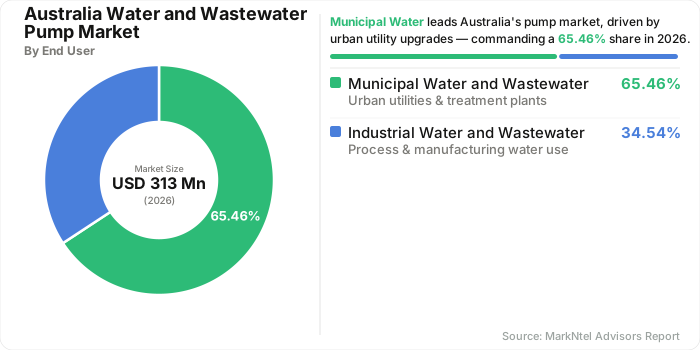
In 2025, the municipal water & wastewater segment emerged as the leading end user in the Australia water and wastewater pump market, accounting for 65.46% of the total market share. This dominance is primarily driven by sustained government spending on urban water supply systems, wastewater treatment plant expansions, and stormwater management infrastructure. Additionally, population growth in metropolitan regions, tightening environmental regulations, and ongoing replacement of aging pumping assets continue to support stable municipal demand.
Looking ahead, the industrial water & wastewater segment is projected to be the fastest-growing end-user category, registering a 4.71% CAGR during 2026–2032. Growth is underpinned by increasing water-intensive activities in mining, food and beverage processing, pharmaceuticals, and manufacturing, alongside rising adoption of on-site water treatment and reuse systems. Over the forecast period, expanding industrial compliance requirements and higher private-sector capital investments are expected to strengthen this segment’s market presence.
Gain a Competitive Edge with Our Australia Water and Wastewater Pump Market Report:
- Australia Water and Wastewater Pump Market Report by MarkNtel Advisors provides a detailed & thorough analysis of market size & share, growth rate, competitive landscape, and key players. This comprehensive analysis helps businesses gain a holistic understanding of the market dynamics & make informed decisions.
- This report also highlights current market trends & future projections, allowing businesses to identify emerging opportunities & potential challenges. By understanding market forecasts, companies can align their strategies & stay ahead of the competition.
- Australia Water and Wastewater Pump Market Report aids in assessing & mitigating risks associated with entering or operating in the market. By understanding market dynamics, regulatory frameworks, and potential challenges, businesses can develop strategies to minimize risks & optimize their operations.
*Reports Delivery Format - Market research studies from MarkNtel Advisors are offered in PDF, Excel and PowerPoint formats. Within 24 hours of the payment being successfully received, the report will be sent to your email address.
Frequently Asked Questions
- Market Segmentation
- Introduction
- Product Definition
- Research Process
- Assumptions
- Executive Summary
- Australia Water and Wastewater Pump Market Policies, Regulations, and Product Standards
- Australia Water and Wastewater Pump Market Trends & Developments
- Australia Water and Wastewater Pump Market Dynamics
- Growth Factors
- Challenges
- Australia Water and Wastewater Pump Market Hotspot & Opportunities
- Australia Water and Wastewater Pump Market Outlook, 2022-2032F
- Market Size & Outlook
- By Revenues (USD Million)
- Market Share & Outlook
- By Pump Types- Market Size & Forecast 2022-2032, USD Million
- Centrifugal Pump
- Overhung Pump
- Vertical Inline
- Horizontal End Suction
- Split Case Pump
- Single/Two Stage
- Multistage
- Vertical Pump
- Turbine
- Solid handling
- Nonsolid handling
- Axial
- Mixed Flow
- Turbine
- Submersible Pump
- Solid Handling
- Non-solid Handling
- Overhung Pump
- Positive Displacement Pump
- Diaphragm Pump
- Piston Pump
- Gear Pump
- Lobe Pump
- Progressive Cavity Pump
- Screw Pump
- Vane Pump
- Peristaltic Pump
- Centrifugal Pump
- By End User- Market Size & Forecast 2022-2032, USD Million
- Municipal water and wastewater
- Industrial water and wastewater
- By Application- Market Size & Forecast 2022-2032, USD Million
- Water
- Wastewater
- By Company
- Competition Characteristics
- Market Share & Analysis
- By Pump Types- Market Size & Forecast 2022-2032, USD Million
- Market Size & Outlook
- Australia Centrifugal Water and Wastewater Pump Market Outlook, 2022-2032
- Market Size & Outlook
- By Revenues (USD Million)
- Market Share & Outlook
- By End User- Market Size & Forecast 2022-2032, USD Million
- By Application- Market Size & Forecast 2022-2032, USD Million
- Market Size & Outlook
- Australia Positive Displacement Water and Wastewater Pump Market Outlook, 2022-2032
- Market Size & Outlook
- By Revenues (USD Million)
- Market Share & Outlook
- By End User- Market Size & Forecast 2022-2032, USD Million
- By Application- Market Size & Forecast 2022-2032, USD Million
- Market Size & Outlook
- Australia Water and Wastewater Pump Market Key Strategic Imperatives for Success & Growth
- Competitive Outlook
- Company Profiles
- ITT
- Business Description
- Product Portfolio
- Collaborations & Alliances
- Recent Developments
- Financial Details
- Others
- IDEX
- Business Description
- Product Portfolio
- Collaborations & Alliances
- Recent Developments
- Financial Details
- Others
- Dover
- Business Description
- Product Portfolio
- Collaborations & Alliances
- Recent Developments
- Financial Details
- Others
- Flowserve
- Business Description
- Product Portfolio
- Collaborations & Alliances
- Recent Developments
- Financial Details
- Others
- Sulzer AG
- Business Description
- Product Portfolio
- Collaborations & Alliances
- Recent Developments
- Financial Details
- Others
- KSB
- Business Description
- Product Portfolio
- Collaborations & Alliances
- Recent Developments
- Financial Details
- Others
- Xylem
- Business Description
- Product Portfolio
- Collaborations & Alliances
- Recent Developments
- Financial Details
- Others
- Grundfos
- Business Description
- Product Portfolio
- Collaborations & Alliances
- Recent Developments
- Financial Details
- Others
- Ebara
- Business Description
- Product Portfolio
- Collaborations & Alliances
- Recent Developments
- Financial Details
- Others
- Wilo
- Business Description
- Product Portfolio
- Collaborations & Alliances
- Recent Developments
- Financial Details
- Others
- ITT
- Company Profiles
- Disclaimer
MarkNtel Advisors follows a robust and iterative research methodology designed to ensure maximum accuracy and minimize deviation in market estimates and forecasts. Our approach combines both bottom-up and top-down techniques to effectively segment and quantify various aspects of the market. A consistent feature across all our research reports is data triangulation, which examines the market from three distinct perspectives to validate findings. Key components of our research process include:
1. Scope & Research Design At the outset, MarkNtel Advisors define the research objectives and formulate pertinent questions. This phase involves determining the type of research—qualitative or quantitative—and designing a methodology that outlines data collection methods, target demographics, and analytical tools. They also establish timelines and budgets to ensure the research aligns with client goals.
2. Sample Selection and Data Collection In this stage, the firm identifies the target audience and determines the appropriate sample size to ensure representativeness. They employ various sampling methods, such as random or stratified sampling, based on the research objectives. Data collection is carried out using tools like surveys, interviews, and observations, ensuring the gathered data is reliable and relevant.
3. Data Analysis and Validation Once data is collected, MarkNtel Advisors undertake a rigorous analysis process. This includes cleaning the data to remove inconsistencies, employing statistical software for quantitative analysis, and thematic analysis for qualitative data. Validation steps are taken to ensure the accuracy and reliability of the findings, minimizing biases and errors.

4. Data Forecast and FinalizationThe final phase involves forecasting future market trends based on the analyzed data. MarkNtel Advisors utilize predictive modeling and time series analysis to anticipate market behaviors. The insights are then compiled into comprehensive reports, featuring visual aids like charts and graphs, and include strategic recommendations to inform client decision-making
We offer flexible licensing options to cater to varying organizational needs. Choose the pricing pack that best suits your requirements:
Buy Now Inquire Before Buying
 Request Customization
 Talk to our Consultant







