

By Product Type (Hydrolyzed Collagen, Gelatin Collagen, Native Collagen), By Collagen Type (Type I, Type II, Type III, Others), By Source (Bovine (Cattle), Marine (Fish), Porcine (Pig), Poultry (Chick... ... Pig), Poultry (Chicken), Plant-based / Vegan), By Form (Powder, Capsules & Tablets, Gummies & Chews, Liquid / Drinks), By Distribution Channel (Online Retail, Pharmacies/Drug Stores, Supermarkets/Hypermarkets, Specialty Stores), By Application (Nutraceuticals, Food & Beverages, Cosmetics & Personal Care, Healthcare & Pharmaceuticals), By End-User (Adults, Geriatric Population, Athletes / Fitness Consumers, Others), and others Read more
- Healthcare
- May 2026
- 165
- PDF, Excel, PPT
United States Collagen Supplement Market Key Takeaways
- The U.S. collagen supplement market was valued at USD 425.82 million in 2025 and is projected to reach USD 460.21 million in 2026, further expanding to USD 608.56 million by 2032, registering a CAGR of 4.77% during 2026–2032.
- The South region dominates the market, accounting for approximately 40% of the total share.
- In terms of product type, hydrolyzed collagen leads the segment, holding around 65% of the market share.
- Based on end users, the adult population accounted for nearly 50% of the market share in 2026, making it the largest segment.
- The market remains highly fragmented, with the top five players collectively holding close to 40% of the market share.
United States Collagen Supplement Market Size and Outlook
The U.S. collagen supplement market is expected to grow at a CAGR of approximately 4.77% during 2026–2032, supported by a rapidly expanding aging population and the increasing adoption of lifestyle-integrated collagen products, which are driving sustained demand across preventive health, wellness, and daily nutrition applications.
Additionally, the demand for collagen supplements in the USA is strongly accelerated due to the rising aging population. The individuals aged 65 and above reached approximately 61.2 million in 2024, up from nearly 59.3 million in 2023, as stated by the U.S. Census Bureau, reflecting consistent year-on-year growth. Health-related factors are also reinforcing demand, as the data from the Centers for Disease Control and Prevention shows that approximately 93.0% of adults aged 65+ had at least one chronic condition in 2023, while 78.8% suffered from multiple conditions. In addition, nearly 85% of older adults live with at least one chronic illness, driving increased reliance on preventive healthcare and nutritional supplementation. This trend is further supported by rising healthcare expenditures, with annual spending per senior averaging USD 22,356 and increasing to nearly USD 36,000 for individuals aged 85 and above, indicating a strong inclination toward health maintenance and wellness solutions.
Simultaneously, the collagen supplement industry in the U.S., valued at USD 425.82 million in 2025, is undergoing a transformation driven by innovation in product development and evolving consumption formats. Manufacturers are increasingly incorporating bioactive collagen peptides into formulations to enhance absorption and efficacy. In parallel, there is a growing demand for beauty-from-within supplements, reflecting a broader shift toward holistic wellness and aesthetic health. Furthermore, collagen is being integrated into functional wellness products, enabling consumers to incorporate supplementation seamlessly into daily routines, thereby increasing usage frequency and overall consumer engagement.
Long-term projections further reinforce a positive growth outlook, with the 65+ population expected to rise from 58 million to 82 million by 2050, accounting for nearly 23% of the U.S. population. This demographic transition is significantly influencing collagen supplement demand, as aging consumers increasingly prioritize joint support, bone health, and overall physical well-being. In line with this evolving landscape, the demand for collagen supplements is projected to reach USD 460.21 million in 2026 and further expand to USD 608.56 million by 2032.
Overall, the convergence of demographic expansion, rising chronic disease prevalence, and ongoing product innovation is expected to sustain long-term market growth. The industry is progressively evolving toward targeted applications and lifestyle-integrated consumption, creating a robust foundation for future expansion.
United States Collagen Supplement Market Key Indicators
- According to the Centers for Disease Control and Prevention, nearly 32.5 million U.S. adults are affected by osteoarthritis, the most common form of arthritis. Progressive cartilage degradation associated with this condition is accelerating demand for collagen for joint support, particularly among aging populations seeking improved mobility, reduced discomfort, and enhanced connective tissue function.
- Data from the U.S. Department of Health and Human Services indicates that around 10 million Americans aged 50+ have osteoporosis, while an additional 43 million have low bone mass, creating a high-risk pool of over 53 million individuals. This is driving demand for type I, II, and III collagen supplements, which support bone density through essential amino acids required for skeletal structure.
- A 2025 meta-analysis published on PubMed covering 23 randomized controlled trials (1,474 participants) reported measurable improvements in skin hydration, elasticity, and wrinkle reduction with collagen intake . These findings are strengthening demand for collagen for skin health, particularly within collagen supplements for women focused on anti-aging and aesthetic benefits.
- The U.S. Bureau of Labor Statistics reported that 94% of Americans aged 15+ participated in daily leisure or sports activities in 2024. Rising engagement in fitness and high-impact exercise is increasing strain on connective tissues, thereby boosting demand for sports nutrition collagen supplements among fitness enthusiast nutrition supplements seeking recovery, joint protection, and performance support.
United States Collagen Supplement Market Scope
| Category | Segments |
|---|---|
| By Product Type | Hydrolyzed Collagen, Gelatin Collagen, Native Collagen |
| By Collagen Type | Type I, Type II, Type III, Others |
| By Source | Bovine (Cattle), Marine (Fish), Porcine (Pig), Poultry (Chicken), Plant-based / Vegan |
| By Form | Powder, Capsules & Tablets, Gummies & Chews, Liquid / Drinks |
| By Distribution Channel | Online Retail, Pharmacies/Drug Stores, Supermarkets/Hypermarkets, Specialty Stores |
| By Application | Nutraceuticals, Food & Beverages, Cosmetics & Personal Care, Healthcare & Pharmaceuticals |
| By End-User | Adults, Geriatric Population, Athletes / Fitness Consumers, Others |
United States Collagen Supplement Market Growth Drivers
Rapidly Growing Aging Population
The U.S. collagen supplement industry is significantly influenced by the rapid acceleration in population aging, which is reshaping long-term consumption patterns. The pace of aging has intensified, with the older population expanding by approximately 13% between 2020 and 2024, largely driven by the retirement of the baby boomer generation. This demographic shift is increasingly visible, as older adults now outnumber children in 11 U.S. states and nearly half of all counties, indicating a structural and irreversible transformation in population composition .
The impact becomes more pronounced within the oldest age groups. The population aged 85 and above reached 6.1 million in 2023 and is projected to more than double to 13.7 million by 2040 , creating a high-dependency segment with elevated healthcare and nutritional needs. This cohort represents a key consumer base for collagen for joint support and collagen for anti-aging benefits, as individuals in this age bracket are more susceptible to mobility limitations, reduced skin elasticity, and overall physiological decline.
As longevity increases, the focus is shifting toward aging population dietary supplements that support functional health, independence, and quality of life. Collagen supplements are gaining traction due to their role in maintaining connective tissue integrity and promoting healthy aging outcomes.
The rapid expansion of the aging population is expected to sustain long-term demand, positioning collagen supplements as a critical component of preventive and age-supportive nutrition in the U.S. market.
Recent Trends
Shift Toward Lifestyle-Integrated Collagen Products
A noticeable transformation in the U.S. collagen supplement sector is the repositioning of collagen from a traditional supplement into a lifestyle-centric ingredient embedded across daily consumption habits. Rather than relying solely on powders or capsules, brands are reengineering product formats to align with convenience, personalization, and experiential consumption.
A recent example is ArcticCollagen, which introduced a marine collagen-based formulation combined with hyaluronic acid and vitamin C, expanding its footprint in the U.S. through digital and retail channels. This reflects rising traction for marine collagen supplements, particularly among consumers seeking premium, bioavailable options.
From a strategic standpoint, the market is witnessing a shift toward application-specific product development, where formulations are designed to address targeted outcomes rather than broad wellness claims. This is evident in the increasing prominence of anti-aging collagen formulations, which focus on measurable benefits such as skin hydration, elasticity, and visible rejuvenation. Such targeted positioning supports product differentiation and enables premiumization across the category.
In parallel, collagen is increasingly being incorporated into functional food products, including beverages and nutritionally enhanced snacks. This integration facilitates seamless inclusion into everyday dietary routines, reducing reliance on traditional supplement formats.
Consequently, the market is evolving toward routine-based consumption models, where convenience, efficacy, and format innovation collectively drive sustained consumer engagement and long-term category expansion.
United States Collagen Supplement Market Opportunities and Challenges
Quality Variability Creating Growth Opportunities for Certified Collagen Brands
Quality variability and adulteration risks continue to challenge the U.S. collagen supplement market, largely due to the lack of compulsory pre-market approval under the U.S. Food and Drug Administration framework. This regulatory gap elevates the likelihood of mislabeling, contamination, and inconsistent ingredient quality, particularly in commonly used formats such as hydrolyzed collagen peptides.
At the same time, this challenge is creating a clear opportunity for certified collagen brands that prioritize transparency and regulatory compliance. Certification bodies such as NSF International are observing rising engagement from manufacturers seeking validation for ingredient integrity, contaminant-free composition, and adherence to stringent quality standards. This shift is closely aligned with the increasing demand for clean-label supplements, where traceability and verified safety claims are becoming critical decision-making factors.
As consumer awareness continues to rise, particularly among health-conscious groups, purchasing behavior is increasingly favoring independently tested and certified products, allowing brands to differentiate through credibility and premium positioning.
Although quality uncertainty presents a constraint, it is simultaneously accelerating certification-driven differentiation, reinforcing trust, and unlocking scalable growth opportunities in the U.S. collagen supplement industry.
Segmentation Insights
Hydrolyzed Collagen is the Predominant Form Adopted in the US Market
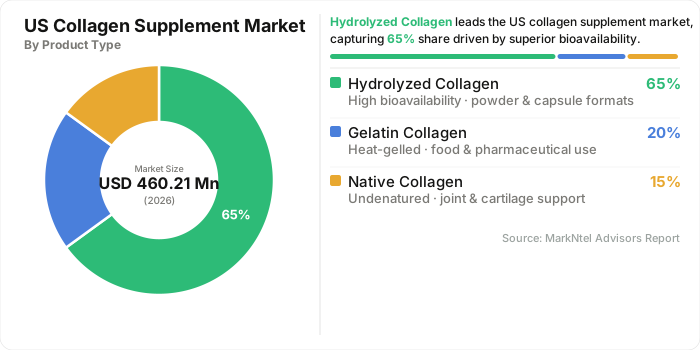
Hydrolyzed collagen accounts for approximately 65% of the total share in the U.S. collagen supplement industry, establishing itself as the leading product type due to its superior functional properties and consumer preference. The dominance of this segment is primarily driven by the enhanced bioavailability of collagen supplements, as hydrolyzed forms are broken down into smaller peptides that are more easily absorbed and utilized by the body.
From an application perspective, hydrolyzed collagen is widely incorporated into collagen protein powder and liquid collagen supplements, making it highly versatile across multiple consumption formats. Its neutral taste, high solubility, and ease of integration into beverages and foods further strengthen its adoption among wellness and preventive healthcare consumers seeking convenient daily supplementation.
In contrast, gelatin, collagen, and native collagen have relatively limited applications. Gelatin is mainly used in culinary and industrial applications, while native collagen has lower digestibility and absorption efficiency, restricting its usage in mainstream nutraceutical formulations. Additionally, hydrolyzed collagen aligns with evolving functional wellness products trends, where consumers demand targeted health benefits such as joint, skin, and bone support in easy-to-consume formats.
The segment’s strong absorption profile, formulation flexibility, and alignment with modern consumption habits position hydrolyzed collagen as the cornerstone of product innovation and volume leadership in the U.S. market. On the basis of product type, the market is categorized into:
- Hydrolyzed Collagen
- Gelatin Collagen
- Native Collagen
The End User Category is led by the Adult Population
Accounting for nearly 50% of the total market share, the adult population represents the largest consumer base in the U.S. collagen supplement industry, driven by its wide demographic span and evolving wellness priorities. Individuals in this segment, typically aged between 25 and 60, are increasingly integrating supplements into their daily routines to support both preventive health and aesthetic enhancement.
A major growth factor is the rising inclination toward collagen for skin health, as consumers aim to maintain a youthful appearance and delay visible aging signs. In parallel, increasing interest in collagen for hair and nail growth is further strengthening adoption among this group. Unlike older populations that rely on supplements for medical or therapeutic purposes, adults primarily use collagen as part of a proactive lifestyle and beauty management.
Additionally, growing engagement in fitness and active routines is supporting demand for sports nutrition collagen supplements, particularly for recovery, joint flexibility, and overall physical performance. The segment also benefits from high digital adoption, with strong traction across online collagen supplement sales and direct-to-consumer channels, enhancing accessibility and product awareness. While geriatric and athletic segments continue to grow, the adult population remains the most influential due to its scale and diverse consumption patterns.
The combination of preventive healthcare adoption, beauty-focused consumption, and lifestyle integration firmly establishes adults as the dominant segment in the U.S. collagen supplement market. The study identifies the following key end-user segments:
- Adults
- Geriatric Population
- Athletes / Fitness Consumers
- Others
United States Collagen Supplement Market Geographical Outlook
The South region represents around 40% of total collagen supplement demand in the U.S., supported by its unmatched population size and accelerating demographic growth. Data from the U.S. Census Bureau shows that the region led national population expansion during 2023–2024, with cities growing at an average rate of approximately 1.0%, higher than in other regions.
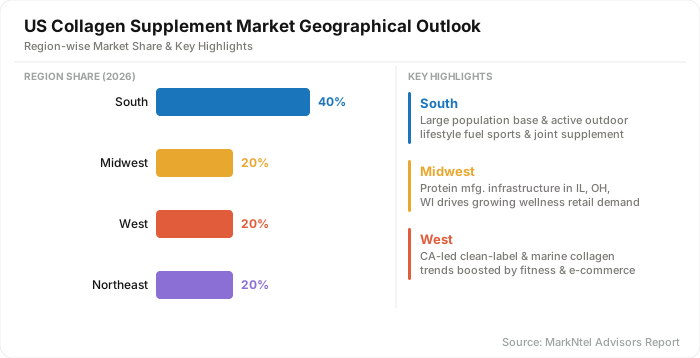
With a population surpassing 132.6 million in 2024, the South stands as the largest regional consumer base in the United States . This substantial scale creates a strong foundation for increased consumption of dietary supplements, particularly those linked to aging and preventive healthcare.
A key factor strengthening this dominance is the continued influx of retirees into states such as Florida and Texas, which is significantly increasing the 65+ population segment. This demographic shift directly supports rising demand for targeted wellness solutions.
As a result, there is growing adoption of collagen for skin health among aging consumers seeking anti-aging benefits. At the same time, increasing concerns around mobility and bone density are driving demand for collagen for joint support and collagen for bone health. Collectively, these factors position the South as the most influential and demand-intensive region in the U.S. collagen supplement industry.
United States Collagen Supplement Market Competitive Analysis
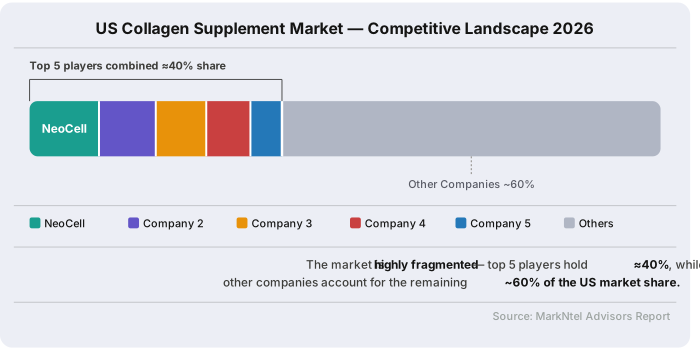
The U.S. collagen supplement industry exhibits a highly fragmented structure, characterized by the presence of both well-established brands and emerging companies competing across various formats such as powders, capsules, gummies, and ready-to-drink products. Leading players, including Vital Proteins LLC, Sports Research Corporation, Great Lakes Wellness LLC, NeoCell Corporation, and Ancient Nutrition Inc., together hold an estimated 40% share of the overall market.
Leading Collagen Supplement Companies in US
- Vital Proteins LLC
- Sports Research Corporation
- Great Lakes Wellness LLC
- NeoCell Corporation
- Ancient Nutrition, Inc.
- Further Food Inc.
- Codeage LLC
- BUBS Naturals LLC
- Momentous, Inc.
- Swanson Health Products, Inc.
- Others
United States Collagen Supplement Industry News and Recent Developments
April 2026: Vital Proteins Introduces Collagen Sparkling Water
Vital Proteins expanded into the beverage category with the launch of a collagen-infused sparkling water across the U.S. The product combines hydrolyzed collagen peptides with vitamin C in a zero-sugar format, targeting consumers seeking on-the-go nutritional hydration through convenient retail and e-commerce availability.
Impact Analysis: This development highlights the shift toward collagen-enriched drinks and functional hydration products in the U.S. market. It broadens collagen’s application beyond traditional supplements, increasing the number of daily intake occasions. The innovation also supports rising demand for clean-label wellness beverages, prompting brands to diversify into ready-to-consume formats and accelerating competitive intensity within the evolving nutraceutical beverage space.
August 2025: Vital Proteins Launches Ready-to-Drink Collagen Protein Shake
Vital Proteins introduced its first ready-to-drink collagen protein shake in the U.S., expanding beyond powders into convenient beverage formats. The product combines collagen peptides with high protein content to support daily wellness, targeting consumers seeking on-the-go nutrition solutions aligned with functional health trends.
Impact Analysis: This launch accelerates the shift toward collagen-based functional beverages, increasing product accessibility and consumption frequency. It strengthens mainstream retail presence and positions collagen as an everyday nutrition product. The move also intensifies competition, pushing brands to innovate in convenience, multi-functionality, and premium formulations, thereby expanding the overall U.S. collagen supplement market.
January 2025: GNC Introduces Premier Collagen Luxury Beauty Supplement Range
GNC launched its Premier Collagen supplement line across the U.S., combining marine and bovine collagen with added nutrients like vitamin C. The range is positioned around ingestible beauty benefits and is distributed through GNC’s nationwide retail network and online platforms, targeting consumers seeking advanced skincare nutrition.
Impact Analysis: The launch highlights rising premiumization in collagen for skin health, with brands moving toward high-value, beauty-focused formulations. It strengthens the nutricosmetics segment while leveraging GNC’s wide retail reach to boost accessibility. This development is expected to intensify product innovation and competition, encouraging more brands to introduce differentiated, science-backed collagen offerings in the U.S. market.
- Market Segmentation
- Introduction
- Product Definition
- Research Process
- Assumptions
- Executive Summary
- United States Collagen Supplement Market Policies, Regulations, and Product Standards
- United States Collagen Supplement Market Trends & Developments
- United States Collagen Supplement Market Dynamics
- Growth Factors
- Challenges
- United States Collagen Supplement Market Hotspot & Opportunities
- United States Collagen Supplement Market Outlook, 2022-2032F
- Market Size & Outlook
- By Revenues (USD Million)
- Market Share & Outlook
- By Product Type- Market Size & Forecast 2022-2032, USD Million
- Hydrolyzed Collagen
- Gelatin Collagen
- Native Collagen
- By Collagen Type- Market Size & Forecast 2022-2032, USD Million
- Type I
- Type II
- Type III
- Others
- By Source- Market Size & Forecast 2022-2032, USD Million
- Bovine (Cattle)
- Marine (Fish)
- Porcine (Pig)
- Poultry (Chicken)
- Plant-based / Vegan
- By Form- Market Size & Forecast 2022-2032, USD Million
- Powder
- Capsules & Tablets
- Gummies & Chews
- Liquid / Drinks
- By Distribution Channel- Market Size & Forecast 2022-2032, USD Million
- Online Retail
- Pharmacies/Drug Stores
- Supermarkets/Hypermarkets
- Specialty Stores
- By Application- Market Size & Forecast 2022-2032, USD Million
- Nutraceuticals
- Food & Beverages
- Cosmetics & Personal Care
- Healthcare & Pharmaceuticals
- By End-User- Market Size & Forecast 2022-2032, USD Million
- Adults
- Geriatric Population
- Athletes / Fitness Consumers
- Others
- By Region- Market Size & Forecast 2022-2032, USD Million
- Northeast
- Midwest
- South
- West
- By Company
- Competition Characteristics
- Market Share & Analysis
- By Product Type- Market Size & Forecast 2022-2032, USD Million
- Market Size & Outlook
- United States Hydrolyzed Collagen Market Outlook, 2022-2032
- Market Size & Outlook
- By Revenues (USD Million)
- Market Share & Outlook
- By Collagen Type- Market Size & Forecast 2022-2032, USD Million
- By Source- Market Size & Forecast 2022-2032, USD Million
- By Form- Market Size & Forecast 2022-2032, USD Million
- By Distribution Channel- Market Size & Forecast 2022-2032, USD Million
- By Application- Market Size & Forecast 2022-2032, USD Million
- By End-User- Market Size & Forecast 2022-2032, USD Million
- By Region- Market Size & Forecast 2022-2032, USD Million
- Market Size & Outlook
- United States Gelatin Collagen Market Outlook, 2022-2032
- Market Size & Outlook
- By Revenues (USD Million)
- Market Share & Outlook
- By Collagen Type- Market Size & Forecast 2022-2032, USD Million
- By Source- Market Size & Forecast 2022-2032, USD Million
- By Form- Market Size & Forecast 2022-2032, USD Million
- By Distribution Channel- Market Size & Forecast 2022-2032, USD Million
- By Application- Market Size & Forecast 2022-2032, USD Million
- By End-User- Market Size & Forecast 2022-2032, USD Million
- By Region- Market Size & Forecast 2022-2032, USD Million
- Market Size & Outlook
- United States Native Collagen Market Outlook, 2022-2032
- Market Size & Outlook
- By Revenues (USD Million)
- Market Share & Outlook
- By Collagen Type- Market Size & Forecast 2022-2032, USD Million
- By Source- Market Size & Forecast 2022-2032, USD Million
- By Form- Market Size & Forecast 2022-2032, USD Million
- By Distribution Channel- Market Size & Forecast 2022-2032, USD Million
- By Application- Market Size & Forecast 2022-2032, USD Million
- By End-User- Market Size & Forecast 2022-2032, USD Million
- By Region- Market Size & Forecast 2022-2032, USD Million
- Market Size & Outlook
- United States Collagen Supplement Market Key Strategic Imperatives for Success & Growth
- Competitive Outlook
- Company Profiles
- Vital Proteins LLC
- Business Description
- Product Portfolio
- Collaborations & Alliances
- Recent Developments
- Financial Details
- Others
- Sports Research Corporation
- Business Description
- Product Portfolio
- Collaborations & Alliances
- Recent Developments
- Financial Details
- Others
- Great Lakes Wellness LLC
- Business Description
- Product Portfolio
- Collaborations & Alliances
- Recent Developments
- Financial Details
- Others
- NeoCell Corporation
- Business Description
- Product Portfolio
- Collaborations & Alliances
- Recent Developments
- Financial Details
- Others
- Ancient Nutrition, Inc.
- Business Description
- Product Portfolio
- Collaborations & Alliances
- Recent Developments
- Financial Details
- Others
- Further Food Inc.
- Business Description
- Product Portfolio
- Collaborations & Alliances
- Recent Developments
- Financial Details
- Others
- Codeage LLC
- Business Description
- Product Portfolio
- Collaborations & Alliances
- Recent Developments
- Financial Details
- Others
- BUBS Naturals LLC
- Business Description
- Product Portfolio
- Collaborations & Alliances
- Recent Developments
- Financial Details
- Others
- Momentous, Inc.
- Business Description
- Product Portfolio
- Collaborations & Alliances
- Recent Developments
- Financial Details
- Others
- Swanson Health Products, Inc.
- Business Description
- Product Portfolio
- Collaborations & Alliances
- Recent Developments
- Financial Details
- Others
- Others
- Business Description
- Product Portfolio
- Collaborations & Alliances
- Recent Developments
- Financial Details
- Others
- Vital Proteins LLC
- Company Profiles
- Disclaimer

MarkNtel Advisors follows a robust and iterative research methodology designed to ensure maximum accuracy and minimize deviation in market estimates and forecasts. Our approach combines both bottom-up and top-down techniques to effectively segment and quantify various aspects of the market. A consistent feature across all our research reports is data triangulation, which examines the market from three distinct perspectives to validate findings. Key components of our research process include:
1. Scope & Research Design At the outset, MarkNtel Advisors define the research objectives and formulate pertinent questions. This phase involves determining the type of research—qualitative or quantitative—and designing a methodology that outlines data collection methods, target demographics, and analytical tools. They also establish timelines and budgets to ensure the research aligns with client goals.
2. Sample Selection and Data Collection In this stage, the firm identifies the target audience and determines the appropriate sample size to ensure representativeness. They employ various sampling methods, such as random or stratified sampling, based on the research objectives. Data collection is carried out using tools like surveys, interviews, and observations, ensuring the gathered data is reliable and relevant.
3. Data Analysis and Validation Once data is collected, MarkNtel Advisors undertake a rigorous analysis process. This includes cleaning the data to remove inconsistencies, employing statistical software for quantitative analysis, and thematic analysis for qualitative data. Validation steps are taken to ensure the accuracy and reliability of the findings, minimizing biases and errors.

4. Data Forecast and FinalizationThe final phase involves forecasting future market trends based on the analyzed data. MarkNtel Advisors utilize predictive modeling and time series analysis to anticipate market behaviors. The insights are then compiled into comprehensive reports, featuring visual aids like charts and graphs, and include strategic recommendations to inform client decision-making
We offer flexible licensing options to cater to varying organizational needs. Choose the pricing pack that best suits your requirements:
Buy Now Inquire Before Buying
 Request Customization