

By Product Type (Arabic Ethnic Wear, Pakistani Ethnic Wear, Indian Ethnic Wear, Bangladeshi), By Fabric Type (Cotton, Silk, Chiffon, Linen, Blended & Synthetic Fabrics), By Price Range (USD Million) (... ... ange (USD Million) (Up to USD 15, USD 15–30, USD 31–70, USD 71–140, Above USD 140, Premium / Luxury), By End User (Women, Men, Kids), By Market Structure (Organized, Un-Organized), By Seasonality (Eid, Diwali, Navratri, Wedding Cycles), By Distribution Channel (Offline Retail, Online Retail), and others Read more
- FMCG
- Jun 2026
- 155
- PDF, Excel, PPT
UAE Ethnic Wear Market Key Takeaways
- UAE Ethnic Wear market was estimated at USD 781 million in 2025, reaching USD 804 million in 2026 and USD 903 million by 2032.
- The industry is projected to witness steady growth at a CAGR of 1.95% during the forecast period i.e., 2026-32.
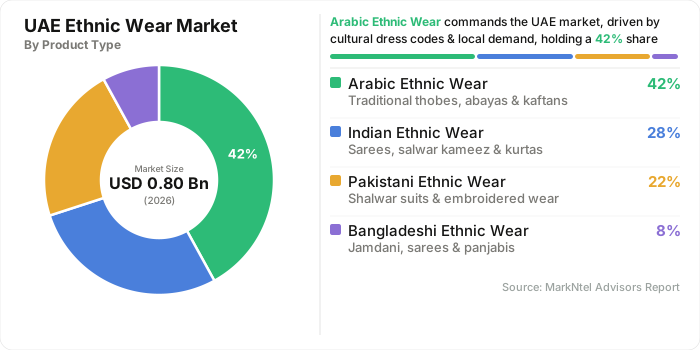
- Arabic ethnic wear leads the product landscape, accounting for approximately 42% share in 2026.
- The women segment dominates end-user demand with nearly a 62% share in 2026.
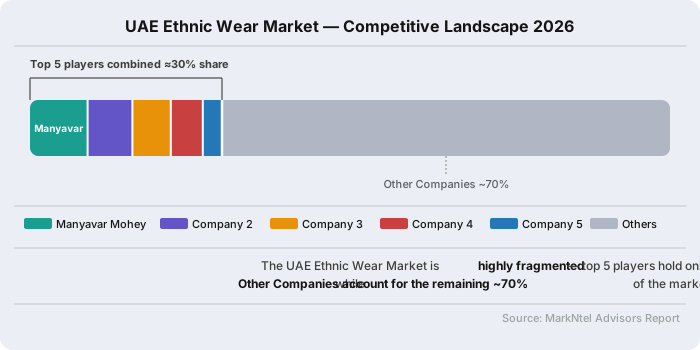
- The industry is moderately fragmented, with the top five players holding nearly 30% share.
UAE Ethnic Wear Market Size and Outlook
The ethnic wear market size in the UAE was valued at USD 781 million in 2025 and is projected to grow from USD 804 million in 2026 to USD 903 million by 2032, reflecting steady expansion over the forecast period. Growth is supported by strong demographic fundamentals, trade integration, and evolving fashion preferences. Government-led retail festivals and the increasing adoption of fusion wear are strengthening ethnic clothing demand, enabling brands to diversify product offerings.
A key structural factor underpinning growth is the UAE’s diverse population base, which reached approximately 10.1 million in 2024, with Indian (27.5%), Pakistani (12.7%), and Bangladeshi (7.4%). South Asian communities form a substantial share of the population, sustaining recurring demand for sarees, salwar kameez, abayas, and festive collections. This demographic concentration supports the long-term expansion of traditional apparel, while consistent spending on weddings, religious events, and cultural celebrations reinforces retail sales stability across both organized and unorganized channels.
On the supply side, strong bilateral trade linkages are enhancing product availability and pricing efficiency. India–UAE non-oil trade reached approximately USD 38 billion in H1 2025, facilitating the seamless inflow of garments, fabrics, and accessories into UAE retail channels . This expanding corridor strengthens inventory diversity and supports competitive pricing, reinforcing the ethnic garment supply ecosystem while enabling retailers to respond effectively to changing consumer preferences.
Additionally, the UAE’s robust retail infrastructure continues to support market expansion. Dubai Mall recorded 57 million visitors in H1 2024, alongside retail sales growth of 8%–15%, reflecting strong consumer engagement. Rising footfall enhances brand visibility and impulse purchases across ethnic categories. Collectively, fusion fashion adoption and localization opportunities are expected to sustain long-term growth, supported by strong demand fundamentals and an evolving fashion retail industry in the UAE landscape.
UAE Ethnic Wear Market Key Indicators
- Dubai welcomed 18.72 million international overnight visitors in 2024, reflecting a 9% year-on-year increase, according to the Department of Economy and Tourism. This sustained tourism growth significantly supports the ethnic fashion, as international visitors actively purchase abayas, kaftans, sarees, and culturally inspired apparel from malls and traditional souks. The rising tourist inflow expands the customer base beyond residents and reinforces demand for ethnic wear as both fashion and souvenir purchases.
- The UAE’s non-oil foreign trade reached approximately USD 816.7 billion in 2024, marking a 14.6% increase, highlighting the strength of the apparel industry and its global trade integration. As a major re-export hub, the country ensures efficient import flows of textiles and garments, enabling retailers to maintain consistent inventory across ethnic wear categories. This robust trade infrastructure plays a critical role in sustaining product availability and supply chain efficiency in the retail apparel market.
- Pakistan exported approximately USD 128 million in knitted apparel and USD 164 million in non-knitted apparel to the UAE in 2024, reflecting strong bilateral trade in clothing categories. These inflows significantly contribute to ethnic garment imports, supporting the availability of South Asian apparel across UAE retail outlets. The steady import pipeline enables retailers to cater to diaspora-driven demand while maintaining a diverse product assortment within the ethnic wear segment.
- The UAE accounted for 19.2% of India’s total remittance inflows, while India received approximately USD 129 billion in remittances in 2024, indicating strong earning capacity among expatriates . This financial strength directly supports festive wear demand, as consumers allocate higher spending toward weddings, cultural celebrations, and religious occasions. Such spending behavior sustains demand for premium ethnic apparel, including sarees, lehengas, and traditional garments.
UAE Ethnic Wear Market Scope
| Category | Segments |
|---|---|
| By Product Type | Arabic Ethnic Wear, Pakistani Ethnic Wear, Indian Ethnic Wear, Bangladeshi |
| By Fabric Type | Cotton, Silk, Chiffon, Linen, Blended & Synthetic Fabrics |
| By Price Range | Up to USD 15, USD 15–30, USD 31–70, USD 71–140, Above USD 140, Premium / Luxury |
| By End User | Women, Men, Kids |
| By Market Structure | Organized, Un-Organized |
| By Seasonality | Eid, Diwali, Navratri, Wedding Cycles |
| By Distribution Channel | Offline Retail, Online Retail |
UAE Ethnic Wear Market Growth Drivers
Government-Led Retail Festivals Accelerating Ethnic Wear Demand
Government-backed retail initiatives are a major demand driver for the UAE ethnic wear market, as structured promotional calendars directly stimulate consumer spending across fashion categories. The Dubai Festivals and Retail Establishment, under the Department of Economy and Tourism, reported that its 2025 campaigns delivered an average 144% increase in consumer spending across more than 1,300 brands and 4,000 outlets . This surge significantly strengthens occasional wear, particularly for abayas, festive collections, and South Asian ethnic apparel.
The impact is further amplified through flagship retail events aligned with the Dubai Economic Agenda (D33), which convert seasonal demand into structured consumption cycles. The 30th Dubai Shopping Festival extended over 38 days across more than 60 venues and 3,500 outlets, while the Great Dubai Summer Sale generated over USD 40.8 million in retail sales. These high-intensity shopping periods accelerate ethnic clothing demand by increasing footfall, promotional activity, and product visibility across malls and retail destinations.
Additionally, these recurring retail cycles align with cultural occasions such as Eid, Diwali, and wedding seasons, converting them into predictable and high-margin sales windows. This structured ecosystem enhances demand visibility, enabling brands to optimize assortments, pricing strategies, and inventory planning within the UAE Ethnic Wear industry, while reinforcing growth in the broader festival shopping landscape.
Recent Trends
Fusion Wear and Indo-Western Styling Redefining Ethnic Fashion Preferences
Fusion wear and indo-western styling are gaining strong traction in the UAE ethnic wear market, as consumers increasingly prefer apparel that blends cultural authenticity with contemporary versatility. Demand is shifting beyond ceremonial usage toward outfits suited for workplaces, social gatherings, and lifestyle occasions. This transition is encouraging brands to integrate traditional embroidery, modest silhouettes, and modern tailoring, supporting the rise of fusion fashion and multi-functional ethnic apparel categories.
The commercial momentum behind this trend is reinforced by Dubai’s expanding role as a global fashion convergence hub. The Spring/Summer 2026 edition of Dubai Fashion Week featured 40 designers, with approximately 68% from outside the UAE, reflecting rising cross-border design participation and international influence. Additionally, the Autumn/Winter 2026/27 edition brought together designers from the UAE, India, Italy, France, the UK, the US, and Vietnam, accelerating the adoption of cross-cultural styling concepts across the retail sector.
These developments are driving demand for both Indo-Western apparel and modern ethnic wear in the UAE, including contemporary kurtas, fusion dresses, and versatile abayas that cater to both casual and occasion-based usage. As consumers increasingly prioritize adaptability, comfort, and style diversity, fusion fashion is expected to remain a key trend, encouraging continuous product innovation, wider assortment strategies, and stronger retail positioning across premium and mid-market segments.
UAE Ethnic Wear Market Opportunities and Challenges
Supply Chain Constraints Accelerating Local Fashion Manufacturing in the UAE
The UAE ethnic wear market remains structurally dependent on imported garments, with a substantial share of ethnic and modest apparel sourced from South Asia and other global manufacturing hubs. The scale of this dependency is reflected in the UAE’s trade infrastructure, with Jebel Ali Port handling approximately 15.5 million TEU in 2024, underscoring the country’s position as a leading re-export hub rather than a domestic production center, thereby constraining localized value creation.
However, this structural gap presents a significant opportunity to expand localized design capabilities and value-added production within the UAE Ethnic Wear industry. Dubai Design District (d3), backed by TECOM Group, continues to strengthen the regional fashion ecosystem, with Dubai Fashion Week Autumn/Winter 2025–26 showcasing collections from over 25 regional and international designers. This growing ecosystem reflects increasing investment modestly and supports the development of a more integrated fashion value chain.
Furthermore, rising participation from global designers and cross-cultural collections indicates expanding scope for local fashion manufacturing in the UAE and design-led differentiation. Strengthening capabilities in ethnic apparel production can enable domestic brands to reduce import reliance, improve lead-time efficiency, and capture higher margins, thereby enhancing long-term competitiveness and resilience within the UAE ethnic wear industry.
Segmentation Insights
Arabic Ethnic Wear is Widely Preferred Among Consumers
Arabic ethnic wear dominates the UAE Ethnic Wear industry, contributing approximately 42% of total revenue, driven by strong cultural relevance and consistent year-round demand. Categories such as abayas, kanduras, kaftans, and hijabs are deeply embedded in daily wear as well as formal and religious occasions, ensuring stable consumption across both men and women, supported by the UAE’s emphasis on modest dressing.
This dominance is further reinforced by the widespread adoption of traditional attire across national and expatriate Arab populations, strengthening the Arabic fashion. In contrast, Indian and Pakistani ethnic wear segments demonstrate strong growth potential, driven by large South Asian expatriate communities and increased spending during weddings and festive occasions across urban centers.
Products such as sarees, lehengas, salwar kameez, and lawn suits contribute significantly to seasonal demand, particularly during Eid, Diwali, and wedding cycles. Additionally, the rising popularity of fusion ethnic wear is bridging traditional and modern styling preferences, while South Asian apparel continues expanding through improved retail availability and online distribution, supporting overall market diversification. The market is segmented based on product type into the following categories:
- Arabic Ethnic Wear
- Pakistani Ethnic Wear
- Indian Ethnic Wear
- Bangladeshi
Women Segment Leading Demand Across the End-Use Vertical
The women segment dominates the UAE ethnic wear industry, accounting for approximately 62% of total revenue, driven by higher purchasing frequency and wider product variety. Women’s ethnic wear spans daily modest clothing and occasion-based apparel such as abayas, kaftans, sarees, and lehengas, ensuring consistent demand across seasons and events, while supporting strong retail performance.
This dominance is further reinforced by increasing workforce participation and rising disposable income among women across the UAE. According to the Ministry of Human Resources and Emiratisation, women’s workforce participation rose by 20.95% in 2024, with over 1.039 million employed in the private sector by Q3 2025, strengthening spending capacity within the female apparel sector.
In comparison, men’s and kids’ segments contribute smaller shares but remain important for market diversification. Men’s ethnic wear demand is largely occasion-driven, while kids’ wear sees higher sales during festivals and weddings. However, the growing preference for coordinated outfits is supporting expansion in the family fashion, alongside rising demand within the clothing retail sector in the UAE. From an end-user perspective, the market is segmented into the following groups:
- Women
- Men
- Kids
UAE Ethnic Wear Market Competitive Analysis
The UAE ethnic wear industry remains moderately fragmented, with the top five players, like Manyavar Mohey, Kalyan Silks, Nalli Silk Sarees, Al Jaber Gallery, and Khaadi, collectively accounting for an estimated 30% of total market share. While these brands benefit from strong regional presence, brand recognition, and diversified product portfolios, a large portion of the market is still occupied by independent boutiques, designer labels, and unorganized retailers. Overall, the competitive landscape is characterized by high product diversity, localized competition, and growing opportunities for premium and fusion-focused brands.
Prominent Companies in the UAE Ethnic Wear Market
- Manyavar Mohey (India)
- Kalyan Silks
- Nalli Silk Sarees
- Ritu Kumar
- W for Woman (TCNS Clothing)
- Al Jaber Gallery (UAE, Arabic Wear)
- Reem Al Kanani (UAE, Abaya Designer)
- Khaadi (Pakistan)
- Sana Safinaz (Pakistan)
- Gul Ahmed Textile Mills (Pakistan)
- Al Hamra Fashion (UAE)
- Bossini Ethnic Line
- Meena Bazaar Multi-Brand Retailers
- Others
UAE Ethnic Wear Industry News and Recent Developments:
March 2026: Gul Ahmed Accelerates UAE Expansion to Target Premium Ethnic Fashion Consumers
Pakistan-based Gul Ahmed Textile Mills announced plans to strengthen its UAE presence as part of its international growth strategy. The company highlighted its existing warehousing and distribution operations in the UAE while outlining plans for a product development center, design studio, and exhibition facility. The expansion aims to enhance access to premium consumers and strengthen the brand’s regional footprint.
Impact Analysis: The development is expected to increase the availability of Pakistani ethnic apparel, including lawn suits, ready-to-wear collections, and occasion wear across UAE retail channels. Enhanced local design and distribution capabilities could shorten product lead times and improve responsiveness to consumer preferences. The expansion also reinforces the UAE's role as a regional hub for South Asian fashion brands, supporting greater competition, wider product assortment, and premiumization within the ethnic wear sector.
April 2025: DP World Commences Construction of Bharat Mart in Dubai
DP World began construction of Bharat Mart, a major trade and distribution marketplace in Dubai's Jebel Ali Free Zone. Scheduled to open by the end of 2026, the project will span approximately 2.7 million sq. ft. and include more than 1,500 showrooms, warehousing facilities, offices, and business-support infrastructure for Indian exporters.
Impact Analysis: Bharat Mart is expected to strengthen the supply chain for Indian ethnic apparel, textiles, and fashion accessories entering the UAE. Improved sourcing infrastructure can enhance product availability, reduce distribution inefficiencies, and support broader market access for Indian brands. The project is also likely to reinforce Dubai's position as a regional re-export and fashion-trade hub, benefiting retailers serving Indian ethnic wear, wedding apparel, and fusion-fashion categories.
February 2025: Manish Malhotra Unveils “The World Collection: Dubai” at Dubai Fashion Week
Indian couturier Manish Malhotra showcased his first international runway presentation at Dubai Fashion Week through “The World Collection: Dubai.” The collection blended Indian craftsmanship with contemporary global silhouettes and Middle Eastern influences, attracting significant international attention and expanding the visibility of luxury ethnic and fusion fashion.
Impact Analysis: The launch highlights growing consumer interest in premium fusion wear and cross-cultural fashion aesthetics. By combining traditional ethnic elements with modern styling, the collection supports the rising demand for Indo-Western apparel and occasion wear among younger and affluent consumers. The event also strengthens Dubai Fashion Week’s role as a platform connecting regional and international fashion ecosystems, encouraging further investment and innovation.
- Market Segmentation
- Introduction
- Product Definition
- Research Process
- Assumptions
- Executive Summary
- UAE Macroeconomic Outlook, 2026
- Region Wise Tourist Footfall
- Population Mix (Expatriates Vs Locals)
- South Asian Population Clusters
- Geographic Distribution Across Emirates
- High-Density Micro-Markets (e.g., Deira, Karama, Rolla)
- Income Segmentation within Clusters
- Catchment-Level Demand Intensity
- UAE Ethnic Wear Market Risk Assessment
- Market and Macroeconomic Risks
- Operational and Regulatory Risks
- Investment and Downside Scenarios
- UAE Ethnic Wear Market Regulatory & Compliance Overview
- Mainland Vs Free Zone Considerations
- Licensing and Ownership Requirements
- Import Duties and Customs
- Employment/Visa Norms
- Product Compliance (Labeling, Textile Standards, Certifications)
- UAE Retail Landscape Overview, 2026
- Role of Malls Vs High-Street Retail
- Consumer Spending Patterns and Seasonality
- Impact of Tourism Vs Resident Demand
- UAE Retail & Ethnic Wear Store Format & Location Benchmarking
- Mall Presence by Brand (Tier 1 vs Tier 2 malls)
- Store Size, Layout, and Experience Design
- Cluster-Based Retail Presence (e.g., ethnic hubs)
- UAE Ethnic Wear Market Pricing Analysis
- UAE Ethnic Wear Market Key Stakeholders and their Margin Analysis
- UAE Ethnic Wear Market Trends & Developments
- UAE Ethnic Wear Market Dynamics
- Growth Drivers
- Challenges
- UAE Ethnic Wear Market Hotspots & Opportunities
- White Space & Saturation Analysis
- Overcrowded Segments (Price/Category/Location)
- Underserved Customer Segments
- Gaps in Product Assortment
- Opportunity Mapping for Differentiation
- Location Shortlisting Framework & Revenue Assessment
-
- Selection Criteria (Demand, Cost, Competition, Accessibility)
- Longlist to Shortlist Filtering Approach
- Revenue Potential Assessment
- Sales per Store Estimates
- Sales Density by Location Type
- Sensitivity to Footfall and Conversion
-
- Commercial Feasibility & Financial Inputs
- Benchmarking of Store Economics
- Sales per Sq. Ft. (Comparable Brands)
- Average Transaction Value and Conversion Rates
- Category Contribution to Revenue
- Cost Structure Analysis
- Rental Benchmarks by Mall Tier and Emirate
- Fit-Out and Capex Considerations
- Staffing and Operating Costs
- Multi-store expansion outlook
- Working capital & cash cycle considerations
- Revenue ramp-up assumptions
- Benchmarking of Store Economics
- UAE Ethnic Wear Market Outlook 2022-2032F
- Market Size & Analysis
- By Revenues (USD Million)
- Market Share & Analysis
- By Product Type- (USD Million)
- Arabic Ethnic Wear
- Abayas
- Kanduras
- Kaftans & Jalabiyas
- Hijabs
- Others
- Pakistani Ethnic Wear
- Salwar Kameez
- Anarkali Suits
- Lawn Suits
- Sharara & Gharara Sets
- Dupattas
- Indian Ethnic Wear
- Sarees
- Lehenga Choli
- Kurta Sets
- Sherwanis
- Indo-Western Fusion Wear
- Bangladeshi
- Arabic Ethnic Wear
- By Fabric Type- (USD Million)
- Cotton
- Silk
- Chiffon
- Linen
- Blended & Synthetic Fabrics
- By Price Range (USD Million)
- Up to USD 15
- USD 15–30
- USD 31–70
- USD 71–140
- Above USD 140
- Premium / Luxury
- By End User- (USD Million)
- Women
- Men
- Kids
- By Market Structure- (USD Million)
- Organized
- Un-Organized
- By Seasonality- (USD Million)
- Eid
- Diwali
- Navratri
- Wedding Cycles
- By Distribution Channel- (USD Million)
- Offline Retail
- Malls
- Boutiques
- Designer Stores
- Others
- Online Retail
- E-commerce Platforms
- Brand Websites
- Offline Retail
- By Region
- Dubai
- Abu Dhabi & Al Ain
- Sharjah & Northern Emirates
- By Company
- Market Shares
- Competition Characteristics
- Competitive Positioning Analysis
- Price Architecture Across Brands
- Value Proposition (Design, Fabric, Brand Equity)
- Target Customer Segments by Brand
- Channel Strategy (Mall vs Street Vs Online)
- By Product Type- (USD Million)
- Market Size & Analysis
- Dubai Ethnic Wear Market Outlook 2022-2032F
- Market Size & Analysis
- By Revenues (USD Million)
- Market Share & Analysis
- By Product Type- (USD Million)
- By Fabric Type- (USD Million)
- By Price Range- (USD Million)
- By End User- (USD Million)
- By Market Structure- (USD Million)
- By Seasonality- (USD Million)
- By Distribution Channel- (USD Million)
- Market Size & Analysis
- Abu Dhabi & Al Ain Ethnic Wear Market Outlook 2022-2032F
- Market Size & Analysis
- By Revenues (USD Million)
- Market Share & Analysis
- By Product Type- (USD Million)
- By Fabric Type- (USD Million)
- By Price Range- (USD Million)
- By End User- (USD Million)
- By Market Structure- (USD Million)
- By Seasonality- (USD Million)
- By Distribution Channel- (USD Million)
- Market Size & Analysis
- Sharjah & Northern Emirates Ethnic Wear Market Outlook 2022-2032F
- Market Size & Analysis
- By Revenues (USD Million)
- Market Share & Analysis
- By Product Type- (USD Million)
- By Fabric Type- (USD Million)
- By Price Range- (USD Million)
- By End User- (USD Million)
- By Market Structure- (USD Million)
- By Seasonality- (USD Million)
- By Distribution Channel- (USD Million)
- Market Size & Analysis
- Competition Outlook
- Company Profiles
- Manyavar Mohey (India)
- Business Description
- Product Portfolio
- Strategic Alliances or Partnerships
- Recent Developments
- Financial Details
- Others
- Kalyan Silks
- Business Description
- Product Portfolio
- Strategic Alliances or Partnerships
- Recent Developments
- Financial Details
- Others
- Nalli Silk Sarees
- Business Description
- Product Portfolio
- Strategic Alliances or Partnerships
- Recent Developments
- Financial Details
- Others
- Ritu Kumar
- Business Description
- Product Portfolio
- Strategic Alliances or Partnerships
- Recent Developments
- Financial Details
- Others
- W for Woman (TCNS Clothing)
- Business Description
- Product Portfolio
- Strategic Alliances or Partnerships
- Recent Developments
- Financial Details
- Others
- Al Jaber Gallery (UAE, Arabic Wear)
- Business Description
- Product Portfolio
- Strategic Alliances or Partnerships
- Recent Developments
- Financial Details
- Others
- Reem Al Kanani (UAE, Abaya Designer)
- Business Description
- Product Portfolio
- Strategic Alliances or Partnerships
- Recent Developments
- Financial Details
- Others
- Khaadi (Pakistan)
- Business Description
- Product Portfolio
- Strategic Alliances or Partnerships
- Recent Developments
- Financial Details
- Others
- Sana Safinaz (Pakistan)
- Business Description
- Product Portfolio
- Strategic Alliances or Partnerships
- Recent Developments
- Financial Details
- Others
- Gul Ahmed Textile Mills (Pakistan)
- Business Description
- Product Portfolio
- Strategic Alliances or Partnerships
- Recent Developments
- Financial Details
- Others
- Al Hamra Fashion (UAE)
- Business Description
- Product Segments
- Strategic Alliances or Partnerships
- Recent Developments
- Financial Details
- Others
- Bossini Ethnic Line
- Business Description
- Product Segments
- Strategic Alliances or Partnerships
- Recent Developments
- Financial Details
- Others
- Meena Bazaar Multi-Brand Retailers
- Business Description
- Product Segments
- Strategic Alliances or Partnerships
- Recent Developments
- Financial Details
- Others
- Others
- Manyavar Mohey (India)
- Company Profiles
- Disclaimer

MarkNtel Advisors follows a robust and iterative research methodology designed to ensure maximum accuracy and minimize deviation in market estimates and forecasts. Our approach combines both bottom-up and top-down techniques to effectively segment and quantify various aspects of the market. A consistent feature across all our research reports is data triangulation, which examines the market from three distinct perspectives to validate findings. Key components of our research process include:
1. Scope & Research Design At the outset, MarkNtel Advisors define the research objectives and formulate pertinent questions. This phase involves determining the type of research—qualitative or quantitative—and designing a methodology that outlines data collection methods, target demographics, and analytical tools. They also establish timelines and budgets to ensure the research aligns with client goals.
2. Sample Selection and Data Collection In this stage, the firm identifies the target audience and determines the appropriate sample size to ensure representativeness. They employ various sampling methods, such as random or stratified sampling, based on the research objectives. Data collection is carried out using tools like surveys, interviews, and observations, ensuring the gathered data is reliable and relevant.
3. Data Analysis and Validation Once data is collected, MarkNtel Advisors undertake a rigorous analysis process. This includes cleaning the data to remove inconsistencies, employing statistical software for quantitative analysis, and thematic analysis for qualitative data. Validation steps are taken to ensure the accuracy and reliability of the findings, minimizing biases and errors.

4. Data Forecast and FinalizationThe final phase involves forecasting future market trends based on the analyzed data. MarkNtel Advisors utilize predictive modeling and time series analysis to anticipate market behaviors. The insights are then compiled into comprehensive reports, featuring visual aids like charts and graphs, and include strategic recommendations to inform client decision-making
We offer flexible licensing options to cater to varying organizational needs. Choose the pricing pack that best suits your requirements:
Buy Now Inquire Before Buying
 Request Customization