

By Product Type (Helmets, Jackets, Gloves, Boots & Footwear, Riding Suits/Apparel, Body Armor & Protection Gear, Knee & Elbow Guards, Rain Gear, Others), By Material Type (Leather, Synthetic/Textile,... ... Synthetic/Textile, Mesh Fabric, Carbon Fiber, Kevlar & Reinforced Materials, Others), By Vehicle Type (Motorcycle Riding Gear, Bicycle Riding Gear, Off-Road/ATV Riding Gear, Equestrian Riding Gear, Others), By End User (Men, Women, Kids), By Distribution Channel (Online Stores/E-commerce, Specialty Stores, Brand Outlets, Supermarkets/Hypermarkets, Others), By Application (Sports & Racing, Adventure Touring, Daily Commuting, Off-Road Riding, Recreational Riding), and others Read more
- FMCG
- Jun 2026
- 485
- PDF, Excel, PPT
Southeast Asia Ride Gear Market Key Takeaways
- The Southeast Asia Ride Gear Market was valued at around USD 119 million in 2025 and is anticipated to expand from USD 137 million in 2026 to USD 265 million by 2032, reflecting a CAGR of 11.62% over the forecast period.
- Indonesia maintained its position as the largest contributor to the Market in 2026, capturing approximately 22% share.
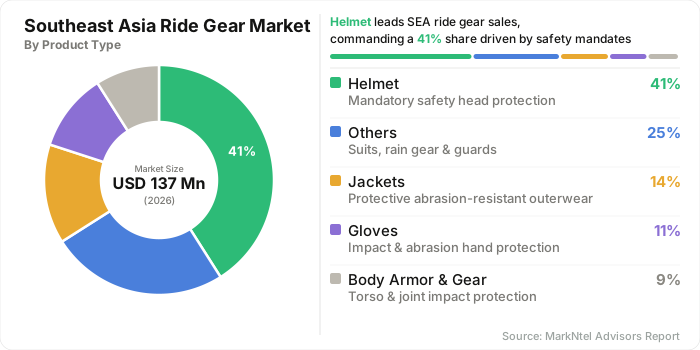
- Helmets dominated the product type segment with nearly 41% share in 2026.
- By vehicle type, Motorcycle riding gear accounted for approximately 70% share in 2026.
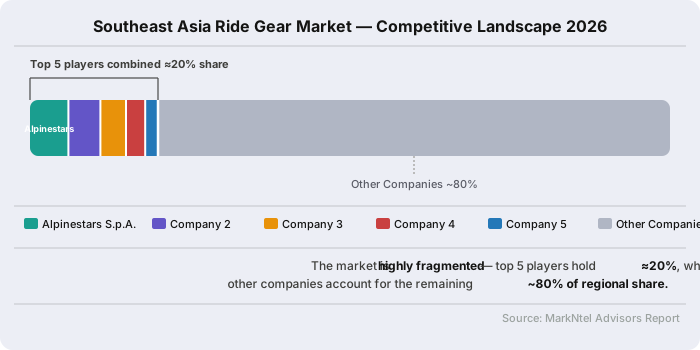
- The industry is moderately fragmented, with the top five leading players accounting for approximately 18% of the total market share.
Southeast Asia Ride Gear Market Size and Outlook
The Southeast Asia ride gear market is expected to grow at a CAGR of 11.62% during the forecast period, i.e., 2026-32.
A strong culture of motorcycle-based transportation continues to support demand for riding gear across Southeast Asia. Indonesia, Vietnam, Thailand, and the Philippines rely extensively on motorcycles for daily mobility, while ASEAN motorcycle sales remained above 15 million units in 2025. Rising urbanization, improving disposable incomes, and growing awareness of road safety have encouraged consumers to invest in helmets, jackets, gloves, boots, and other protective equipment. As a result, demand for certified and higher-quality riding gear has continued to strengthen across the region.
The market has also benefited from the expanding role of motorcycles in commercial activities. While residential users remain the largest customer group, the rapid growth of ride-hailing services, food delivery platforms, and courier operations has significantly increased the number of professional riders. These riders require durable protective equipment that can withstand frequent use, creating recurring replacement demand. At the same time, the continued expansion of e-commerce ecosystems has improved product accessibility through both specialty stores and online sales channels.
Complementing these demand drivers, governments and regional organizations have intensified efforts to improve road safety standards. Several ASEAN countries continue promoting helmet compliance, rider education, and accident prevention programs to reduce road injuries and fatalities. Thailand strengthened helmet enforcement measures in 2025, while broader ASEAN road safety frameworks continue encouraging the use of certified protective equipment . These initiatives have increased consumer confidence in quality riding gear and supported the transition toward products that meet recognized safety standards.
As motorcycle ownership continues to expand across Southeast Asia, ongoing regulatory efforts and product innovation are expected to reinforce demand for certified riding gear, with the market projected to grow from USD 137 million in 2026 to USD 265 million by 2032. The United Nations Road Safety Fund’s motorcycle safety programs across Indonesia, Vietnam, Thailand, and Malaysia are helping strengthen safety awareness and policy implementation through 2028.
Simultaneously, manufacturers are introducing lightweight materials, improved ventilation systems, and enhanced impact-protection technologies tailored to tropical climates, supporting broader adoption among commuters, delivery riders, touring enthusiasts, and recreational motorcyclists.
Southeast Asia Ride Gear Market Key Indicators
- Vietnam had more than 77 million registered motorcycles by 2024, making it one of the highest motorcycle ownership markets globally. Such a large two-wheeler fleet generates continuous demand for helmets, protective apparel, gloves, and riding accessories, as riders regularly replace safety equipment to maintain protection, comfort, and regulatory compliance .
- Indonesia recorded approximately 6.41 million motorcycle sales in 2025, according to the Indonesian Motorcycle Industry Association (AISI), reinforcing its position as Southeast Asia’s largest motorcycle market. The large volume of new motorcycle purchases expands the consumer base for helmets, riding apparel, gloves, footwear, and protective accessories, while also supporting recurring replacement demand for safety equipment .
Southeast Asia Ride Gear Market Scope
| Category | Segments |
|---|---|
| By Product Type | Helmets, Jackets, Gloves, Boots & Footwear, Riding Suits/Apparel, Body Armor & Protection Gear, Knee & Elbow Guards, Rain Gear, Others |
| By Material Type | Leather, Synthetic/Textile, Mesh Fabric, Carbon Fiber, Kevlar & Reinforced Materials, Others |
| By Vehicle Type | Motorcycle Riding Gear, Bicycle Riding Gear, Off-Road/ATV Riding Gear, Equestrian Riding Gear, Others |
| By End User | Men, Women, Kids |
| By Distribution Channel | Online Stores/E-commerce, Specialty Stores, Brand Outlets, Supermarkets/Hypermarkets, Others |
| By Application | Sports & Racing, Adventure Touring, Daily Commuting, Off-Road Riding, Recreational Riding |
Southeast Asia Ride Gear Market Growth Drivers
Growing Motorcycle Ownership and Expanding Personal Mobility Demand
The rapid expansion of motorcycle ownership across Southeast Asia continues to support demand for ride gear products. Motorcycles remain a preferred transportation option due to their affordability, fuel efficiency, and ability to navigate congested urban environments. This dependence on two-wheelers is expected to strengthen further as cities continue to expand and mobility requirements increase. According to the Asian Development Bank (ADB), urbanization in Asia and the Pacific is projected to rise from 54% of the population today to 64% by 2050 , creating favorable conditions for continued motorcycle adoption and a growing consumer base for rider safety products.
As motorcycle usage becomes increasingly integrated into daily transportation, greater emphasis is being placed on rider protection and safety awareness. Reflecting the strength of this trend, Honda Philippines announced in 2025 that it had surpassed one million motorcycle sales during the year, highlighting the continued importance of two-wheelers for everyday mobility . In parallel, Thailand's Department of Land Transport continues promoting helmet usage and road safety initiatives aimed at reducing motorcycle-related fatalities. Together, these developments are encouraging broader adoption of protective riding equipment, while a steadily expanding rider population continues to generate recurring demand for replacement and upgraded safety products across the region.
Recent Trends
Rising Demand for Connected and Advanced Rider Protection Solutions
The ride gear industry is gradually evolving beyond conventional protective equipment as riders increasingly seek enhanced safety, connectivity, and real-time awareness during travel. Growing smartphone penetration, expanding digital ecosystems, and rising road-safety awareness are encouraging demand for products that combine protection with intelligent functionality. This shift is prompting manufacturers and technology developers to integrate communication, monitoring, and emergency-response features into rider safety products, reflecting changing consumer expectations across the region.
The transformation is becoming more visible through innovations emerging within Southeast Asia's rider safety ecosystem. A Singapore-based startup introduced a dual-camera smart motorcycle helmet attachment system designed to improve visibility and situational awareness, while a Filipino-developed AI-powered Smart Helmet gained international recognition for incorporating accident detection, drowsiness monitoring, alcohol detection, and emergency alert capabilities. These developments demonstrate how advanced rider protection technologies are expanding the role of rider safety products beyond traditional impact protection.
As connected mobility becomes increasingly integrated into everyday transportation, demand for technologically advanced rider protection solutions is expected to strengthen. Ongoing road-safety initiatives and growing consumer interest in feature-rich products are encouraging continued innovation across the industry. This trend is supporting the development of smarter and more functional riding gear while creating opportunities for product differentiation and premiumization throughout the Southeast Asian market.
Southeast Asia Ride Gear Market Opportunities and Challenges
Proliferation of Counterfeit Riding Accessories Driving Demand for Safety-Certified Premium Products
The growing availability of counterfeit and non-certified riding accessories is emerging as a significant challenge across Southeast Asia's ride gear industry. Low-cost imitation helmets and protective products often fail to meet recognized safety standards, increasing risks for riders while undermining confidence in product quality. Reflecting the scale of the issue, Malaysian authorities seized 268 counterfeit Arai motorcycle helmets in 2024 during an enforcement operation targeting intellectual property violations and unsafe products . Such incidents are drawing greater attention to the safety implications of counterfeit gear and reinforcing the importance of verified motorcycle safety equipment.
As awareness of these risks continues to increase, the challenge is creating a meaningful opportunity for manufacturers of safety-certified premium products. Governments and road-safety organizations are actively encouraging the use of compliant protective equipment, with Vietnam continuing to promote helmet safety initiatives aimed at reducing traffic-related fatalities and improving rider protection . These efforts are encouraging consumers to place greater emphasis on product authenticity, safety certifications, and proven performance standards, increasing demand for certified rider protection systems across the region. Consequently, purchasing preferences are gradually shifting toward premium helmets, branded protective apparel, and trusted safety accessories, creating new growth opportunities for manufacturers focused on quality, compliance, and rider safety.
Segmentation Insights
Helmets Dominate the Market Owing to Mandatory Safety Regulations and High Replacement Demand
Accounting for approximately 41% of total market revenue, Helmets represent the largest product category within the Southeast Asia ride gear industry. The segment’s leadership is primarily supported by mandatory helmet regulations across most Southeast Asian countries, making helmets the first and most essential protective equipment purchase for motorcycle riders. Unlike other protective products that may remain discretionary for some consumers, helmet usage is often legally required, ensuring consistent demand across both commuter and recreational rider segments.
Beyond regulatory compliance, the segment is increasingly benefiting from rising replacement demand and growing consumer preference for advanced safety features. Manufacturers are introducing lightweight composite shells, improved ventilation systems, integrated communication technologies, and enhanced impact protection designs to attract safety-conscious consumers. At the same time, growing demand for full-face and modular helmets among touring and sports riders is supporting premium product adoption. Increasing awareness of international safety certifications is also encouraging consumers to upgrade from basic products to higher-value certified alternatives, further reinforcing the segment’s market leadership. Based on product type, the market has been segmented into:
- Helmets
- Jackets
- Gloves
- Boots & Footwear
- Riding Suits/Apparel
- Body Armor & Protection Gear
- Knee & Elbow Guards
- Rain Gear
- Others
Motorcycle Riding Gear Dominates the Vehicle Type Segment Due to Southeast Asia’s Extensive Motorcycle Population
Motorcycle Riding Gear accounted for approximately 70% share of the Southeast Asia ride gear market, driven by the region’s exceptionally large motorcycle user base. Motorcycles continue to serve as the primary mode of transportation across Indonesia, Vietnam, Thailand, the Philippines, and Malaysia due to their affordability and practicality. This widespread dependence on two-wheelers creates sustained demand for helmets, gloves, jackets, footwear, and weather-protection equipment across a diverse range of rider categories.
The extensive motorcycle population is also generating demand beyond personal commuting, particularly through the expansion of delivery services, ride-hailing operations, recreational riding, and motorcycle tourism activities. As motorcycles are increasingly used for both commercial and leisure purposes, riders often replace protective equipment more frequently, while enthusiasts continue upgrading to premium products that offer enhanced safety and comfort. In addition, the growing ownership of premium motorcycles is encouraging wider adoption of advanced protective apparel and specialized riding accessories, further strengthening the segment’s leadership position. Based on vehicle type, the market is categorized into:
- Motorcycle Riding Gear
- Bicycle Riding Gear
- Off-Road/ATV Riding Gear
- Equestrian Riding Gear
- Others
Southeast Asia Ride Gear Market Geographical Outlook
As the largest motorcycle market in Southeast Asia, Indonesia accounted for approximately 22% share of the regional ride gear market. The country benefits from an extensive motorcycle population and a strong reliance on two-wheelers for daily transportation across both urban and semi-urban areas. Moreover, motorcycles play a critical role in ride-hailing, delivery, and logistics operations, generating substantial recurring demand for helmets, jackets, gloves, rain gear, and other rider protection products. This widespread dependence on motorcycles continues to provide a strong foundation for the country's market leadership.
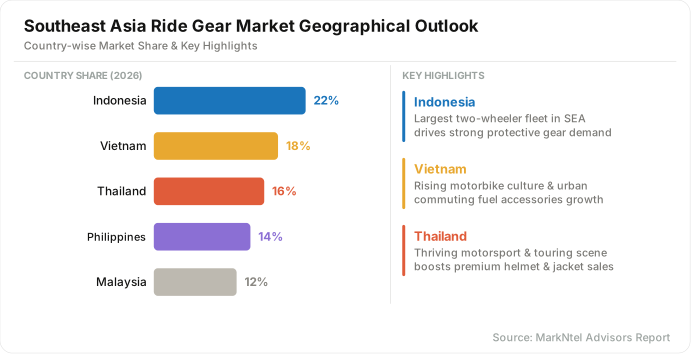
Supporting this position further is Indonesia’s deeply rooted motorcycle culture, which continues to encourage spending on riding products and safety accessories. Major industry events such as the Indonesia Motorcycle Show (IMOS) bring together motorcycle manufacturers, accessory suppliers, apparel brands, and rider communities, increasing consumer exposure to motorcycles, riding accessories, and safety-related products .
At the same time, the expansion of e-commerce platforms and specialized motorcycle retailers is improving product accessibility across secondary cities and emerging consumer markets. Combined with rising middle-class purchasing power and growing safety awareness, these factors are expected to help Indonesia maintain its leading position throughout the forecast period.
Southeast Asia Ride Gear Market Competitive Analysis
Market competition across the Southeast Asia Ride Gear Market remains moderately fragmented, with leading manufacturers including Alpinestars S.p.A., Dainese S.p.A., Shoei Co., Ltd., Arai Helmet, Ltd., and Tech Design Team, S.L. (LS2) collectively accounting for approximately 18% of total market revenue.
Key Players of Ride Gear in Southeast Asia
- Alpinestars S.p.A.
- Dainese S.p.A.
- REV'IT! Sport International B.V.
- Shoei Co., Ltd.
- Arai Helmet, Ltd.
- HJC Corp.
- Tech Design Team, S.L.
- Shark SAS
- OGK Kabuto Co., Ltd.
- RS TAICHI Inc
- Komine Co., Ltd.
- Rynox Gears Private Limited.
- Others
Southeast Asia Ride Gear Industry News and Recent Developments
May 2025: LS2 Expands Manufacturing Capacity Through Vietnam Factory Acquisition
LS2 acquired a production facility in Vietnam to strengthen its manufacturing capabilities for motorcycle helmets, riding apparel, and protective equipment. The acquisition is expected to improve production efficiency, enhance supply-chain resilience, and support broader distribution of ride gear products across Southeast Asia.
Impact Analysis: The development reflects a growing industry focus on expanding manufacturing capacity within Southeast Asia to better serve major motorcycle markets. Increased investment in regional production facilities is expected to improve product availability, reduce lead times, and strengthen distribution networks. The move also highlights manufacturers’ confidence in the region’s long-term demand for rider protection products and premium riding gear.
- Market Segmentation
- Introduction
- Product Definition
- Research Process
- Assumptions
- Executive Summary
- Southeast Asia Ride Gear Market Policies, Regulations, and Product Standards
- Southeast Asia Ride Gear Market Trends & Developments
- Southeast Asia Ride Gear Market Dynamics
- Growth Factors
- Challenges
- Southeast Asia Ride Gear Market Hotspot & Opportunities
- Southeast Asia Ride Gear Market Outlook, 2022-2032F
- Market Size & Outlook
- By Revenues (USD Million)
- Market Share & Analysis
- By Product Type- Market Size & Forecast 2022-2032, USD Million
- Helmets
- Jackets
- Gloves
- Boots & Footwear
- Riding Suits/Apparel
- Body Armor & Protection Gear
- Knee & Elbow Guards
- Rain Gear
- Others
- By Material Type- Market Size & Forecast 2022-2032, USD Million
- Leather
- Synthetic/Textile
- Mesh Fabric
- Carbon Fiber
- Kevlar & Reinforced Materials
- Others
- By Vehicle Type- Market Size & Forecast 2022-2032, USD Million
- Motorcycle Riding Gear
- Bicycle Riding Gear
- Off-Road/ATV Riding Gear
- Equestrian Riding Gear
- Others
- By End User- Market Size & Forecast 2022-2032, USD Million
- Men
- Women
- Kids
- By Distribution Channel- Market Size & Forecast 2022-2032, USD Million
- Online Stores/E-commerce
- Specialty Stores
- Brand Outlets
- Supermarkets/Hypermarkets
- Others
- By Application- Market Size & Forecast 2022-2032, USD Million
- Sports & Racing
- Adventure Touring
- Daily Commuting
- Off-Road Riding
- Recreational Riding
- By Country
- Malaysia
- Indonesia
- Singapore
- Cambodia
- Vietnam
- Thailand
- Philippines
- Rest of Southeast Asia
- By Company
- Competition Characteristics
- Market Share & Analysis
- By Product Type- Market Size & Forecast 2022-2032, USD Million
- Market Size & Outlook
- Malaysia Ride Gear Market Outlook, 2022-2032F
- Market Size & Outlook
- By Revenues (USD Million)
- Market Share & Analysis
- By Product Type- Market Size & Forecast 2022-2032, USD Million
- By Material Type- Market Size & Forecast 2022-2032, USD Million
- By Vehicle Type- Market Size & Forecast 2022-2032, USD Million
- By End User- Market Size & Forecast 2022-2032, USD Million
- By Distribution Channel- Market Size & Forecast 2022-2032, USD Million
- By Application- Market Size & Forecast 2022-2032, USD Million
- Market Size & Outlook
- Indonesia Ride Gear Market Outlook, 2022-2032F
- Market Size & Outlook
- By Revenues (USD Million)
- Market Share & Analysis
- By Product Type- Market Size & Forecast 2022-2032, USD Million
- By Material Type- Market Size & Forecast 2022-2032, USD Million
- By Vehicle Type- Market Size & Forecast 2022-2032, USD Million
- By End User- Market Size & Forecast 2022-2032, USD Million
- By Distribution Channel- Market Size & Forecast 2022-2032, USD Million
- By Application- Market Size & Forecast 2022-2032, USD Million
- Market Size & Outlook
- Singapore Ride Gear Market Outlook, 2022-2032F
- Market Size & Outlook
- By Revenues (USD Million)
- Market Share & Analysis
- By Product Type- Market Size & Forecast 2022-2032, USD Million
- By Material Type- Market Size & Forecast 2022-2032, USD Million
- By Vehicle Type- Market Size & Forecast 2022-2032, USD Million
- By End User- Market Size & Forecast 2022-2032, USD Million
- By Distribution Channel- Market Size & Forecast 2022-2032, USD Million
- By Application- Market Size & Forecast 2022-2032, USD Million
- Market Size & Outlook
- Cambodia Ride Gear Market Outlook, 2022-2032F
- Market Size & Outlook
- By Revenues (USD Million)
- Market Share & Analysis
- By Product Type- Market Size & Forecast 2022-2032, USD Million
- By Material Type- Market Size & Forecast 2022-2032, USD Million
- By Vehicle Type- Market Size & Forecast 2022-2032, USD Million
- By End User- Market Size & Forecast 2022-2032, USD Million
- By Distribution Channel- Market Size & Forecast 2022-2032, USD Million
- By Application- Market Size & Forecast 2022-2032, USD Million
- Market Size & Outlook
- Vietnam Ride Gear Market Outlook, 2022-2032F
- Market Size & Outlook
- By Revenues (USD Million)
- Market Share & Analysis
- By Product Type- Market Size & Forecast 2022-2032, USD Million
- By Material Type- Market Size & Forecast 2022-2032, USD Million
- By Vehicle Type- Market Size & Forecast 2022-2032, USD Million
- By End User- Market Size & Forecast 2022-2032, USD Million
- By Distribution Channel- Market Size & Forecast 2022-2032, USD Million
- By Application- Market Size & Forecast 2022-2032, USD Million
- Market Size & Outlook
- Thailand Ride Gear Market Outlook, 2022-2032F
- Market Size & Outlook
- By Revenues (USD Million)
- Market Share & Analysis
- By Product Type- Market Size & Forecast 2022-2032, USD Million
- By Material Type- Market Size & Forecast 2022-2032, USD Million
- By Vehicle Type- Market Size & Forecast 2022-2032, USD Million
- By End User- Market Size & Forecast 2022-2032, USD Million
- By Distribution Channel- Market Size & Forecast 2022-2032, USD Million
- By Application- Market Size & Forecast 2022-2032, USD Million
- Market Size & Outlook
- Philippines Ride Gear Market Outlook, 2022-2032F
- Market Size & Outlook
- By Revenues (USD Million)
- Market Share & Analysis
- By Product Type- Market Size & Forecast 2022-2032, USD Million
- By Material Type- Market Size & Forecast 2022-2032, USD Million
- By Vehicle Type- Market Size & Forecast 2022-2032, USD Million
- By End User- Market Size & Forecast 2022-2032, USD Million
- By Distribution Channel- Market Size & Forecast 2022-2032, USD Million
- By Application- Market Size & Forecast 2022-2032, USD Million
- Market Size & Outlook
- Southeast Asia Ride Gear Market Key Strategic Imperatives for Success & Growth
- Competitive Outlook
- Company Profiles
- Alpinestars S.p.A.
- Business Description
- Product Portfolio
- Collaborations & Alliances
- Recent Developments
- Financial Details
- Others
- Dainese S.p.A.
- Business Description
- Product Portfolio
- Collaborations & Alliances
- Recent Developments
- Financial Details
- Others
- REV'IT! Sport International B.V.
- Business Description
- Product Portfolio
- Collaborations & Alliances
- Recent Developments
- Financial Details
- Others
- Shoei Co., Ltd.
- Business Description
- Product Portfolio
- Collaborations & Alliances
- Recent Developments
- Financial Details
- Others
- Arai Helmet, Ltd.
- Business Description
- Product Portfolio
- Collaborations & Alliances
- Recent Developments
- Financial Details
- Others
- HJC Corp.
- Business Description
- Product Portfolio
- Collaborations & Alliances
- Recent Developments
- Financial Details
- Others
- Tech Design Team, S.L.
- Business Description
- Product Portfolio
- Collaborations & Alliances
- Recent Developments
- Financial Details
- Others
- Shark SAS
- Business Description
- Product Portfolio
- Collaborations & Alliances
- Recent Developments
- Financial Details
- Others
- OGK Kabuto Co., Ltd.
- Business Description
- Product Portfolio
- Collaborations & Alliances
- Recent Developments
- Financial Details
- Others
- RS TAICHI Inc
- Business Description
- Product Portfolio
- Collaborations & Alliances
- Recent Developments
- Financial Details
- Others
- Komine Co., Ltd.
- Business Description
- Product Portfolio
- Collaborations & Alliances
- Recent Developments
- Financial Details
- Others
- Rynox Gears Private Limited
- Business Description
- Product Portfolio
- Collaborations & Alliances
- Recent Developments
- Financial Details
- Others
- Alpinestars S.p.A.
- Company Profiles
- Disclaimer

MarkNtel Advisors follows a robust and iterative research methodology designed to ensure maximum accuracy and minimize deviation in market estimates and forecasts. Our approach combines both bottom-up and top-down techniques to effectively segment and quantify various aspects of the market. A consistent feature across all our research reports is data triangulation, which examines the market from three distinct perspectives to validate findings. Key components of our research process include:
1. Scope & Research Design At the outset, MarkNtel Advisors define the research objectives and formulate pertinent questions. This phase involves determining the type of research—qualitative or quantitative—and designing a methodology that outlines data collection methods, target demographics, and analytical tools. They also establish timelines and budgets to ensure the research aligns with client goals.
2. Sample Selection and Data Collection In this stage, the firm identifies the target audience and determines the appropriate sample size to ensure representativeness. They employ various sampling methods, such as random or stratified sampling, based on the research objectives. Data collection is carried out using tools like surveys, interviews, and observations, ensuring the gathered data is reliable and relevant.
3. Data Analysis and Validation Once data is collected, MarkNtel Advisors undertake a rigorous analysis process. This includes cleaning the data to remove inconsistencies, employing statistical software for quantitative analysis, and thematic analysis for qualitative data. Validation steps are taken to ensure the accuracy and reliability of the findings, minimizing biases and errors.

4. Data Forecast and FinalizationThe final phase involves forecasting future market trends based on the analyzed data. MarkNtel Advisors utilize predictive modeling and time series analysis to anticipate market behaviors. The insights are then compiled into comprehensive reports, featuring visual aids like charts and graphs, and include strategic recommendations to inform client decision-making
We offer flexible licensing options to cater to varying organizational needs. Choose the pricing pack that best suits your requirements:
Buy Now Inquire Before Buying
 Request Customization