

By Type (Centrifugal Pump (Overhung Pump (Horizontal End Suction, Vertical Inline), Between Bearing Pump (Split Case Pump, Single-Stage, Multi-Stage), Vertical Pump (Vertical Turbine), Solid Handling... ... ne), Solid Handling Pump, Non-Solid Handling Pump, Axial Flow Pump, Mixed Flow Pump), Positive Displacement Pump (Diaphragm Pump, Progressive Cavity Pump, Peristaltic Pump, Screw Pump)), By Power Source (Electric Pump, Diesel/Fuel-Based Pump, Hydraulic Pump), By Capacity (Up to 3 HP, 3 to 10 HP, 10 to 50 HP, Above 50 HP), By Operation Type (Portable Pump, Stationary Pump), By Application (Construction Sites, Mining Industry, Municipal & Urban Drainage, Industrial Plants, Oil & Gas Sites), By Distribution Channel (Direct Sales (Project-Based Sales, EPC Contractor Sales), Indirect Sales (Authorized Dealers & Distributors, Rental Equipment Providers, Industrial Supply Stores, Online B2B Platforms)), and others Read more
- Environment
- Jul 2026
- 240
- PDF, Excel, PPT
Southeast Asia Dewatering Pump Market Key Takeaways
- The Southeast Asia Dewatering Pump Market was valued at USD 1.13 billion in 2025, to 1.24 billion in 2026, and is projected to reach USD 2.67 billion by 2032.
- The industry is projected to witness steady growth at a robust CAGR of 13.64% during 2026–2032.
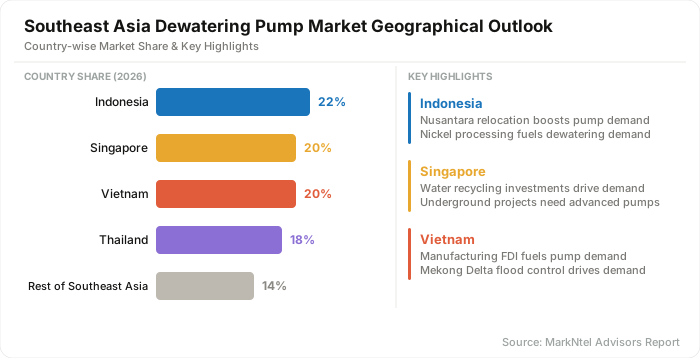
- Indonesia leads the regional market, accounting for approximately 22% of total revenue.
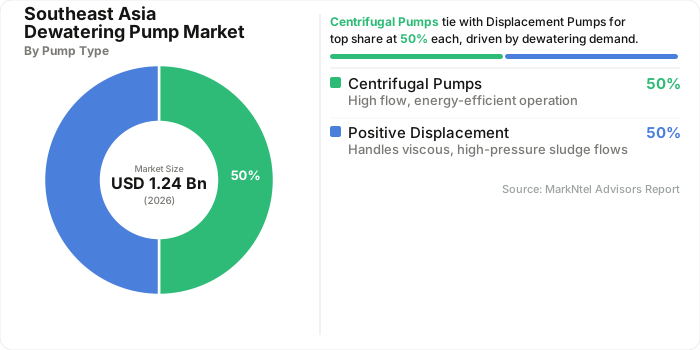
- By pump type, centrifugal dewatering pumps dominate the market with nearly 50% in 2026.
- By operation type, portable dewatering pumps hold around 65% of the market in 2026.
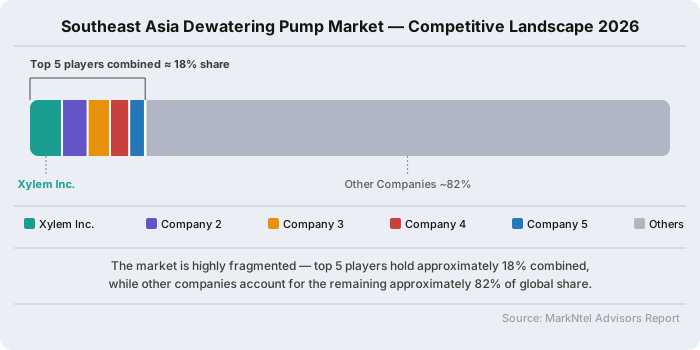
- The market remains moderately fragmented, with the top five companies collectively accounting for approximately 18% market share
Southeast Asia Dewatering Pump Market Size & Outlook
The Southeast Asia dewatering pump market was valued at USD 1.13 billion in 2025 and is projected to reach USD 2.67 billion by 2032, expanding at a CAGR of 13.64% during the forecast period.
This growth is anchored in three intersecting demand vectors: accelerating construction dewatering activity across the region's urban and transport infrastructure pipelines, sustained expansion in mine drainage requirements driven by Indonesia's dominance in global nickel supply, and a rising institutional imperative for flood control infrastructure triggered by escalating monsoon-season damage across the region.
Southeast Asia entered 2025–26 with sustained economic resilience and strong infrastructure pipelines, and governments across Indonesia, Vietnam, Thailand, Malaysia, and the Philippines have accelerated investments in energy, transportation, and urban infrastructure, all of which generate direct and recurring demand for industrial dewatering systems.
The mining dewatering segment represents a structurally embedded demand driver. Indonesia, the world's largest nickel producer, recorded production of 2.6 million tonnes in 2025, a 13.9% year-on-year increase, with output expected to rise a further 11.9% to 2.9 million tonnes in 2026. As of early 2025, Indonesia operated 44 active nickel smelters with 21 additional facilities under construction, each requiring continuous groundwater control systems and water table control across open-pit and underground operations.
Atlas Copco's dedicated deployment of PAC H high-head submersible dewatering pumps across Indonesian mining sites, and parallel deployments of WEDA-series pumps at the Philippines' Surigao del Norte gold mine, reflect the active commercial penetration of pumping equipment into the region's extractive sector.
Flood mitigation expenditure across Southeast Asia is accelerating demand for portable dewatering pumps and high-capacity pumps at the municipal and public works level. The Philippines' administration implemented over 5,500 flood control projects between July 2022 and May 2025, with the proposed 2026 national budget allocating USD 5.06 billion in infrastructure funds that include drainage and pumping systems.
Malaysia's Civil Defense teams mobilized pump-equipped response fleets during the November 2025 flooding across Kelantan. Collectively, these structural forces, active mining expansion, government-mandated infrastructure water management, and climate-driven flood mitigation urgency, position the region for sustained, broad-based demand growth in dewatering technology well beyond 2026, reinforcing the market's high-growth trajectory through the forecast period.
Southeast Asia Dewatering Pump Market Key Indicators
- The Asian Development Bank estimates that Asia and the Pacific require approximately USD 600 billion in annual investment for water-related infrastructure and services. As governments across Southeast Asia accelerate investments in drainage, sanitation, and water management projects to address this funding gap, demand for dewatering pumps and related pumping equipment is increasing. These systems play a critical role in construction-phase groundwater control, supporting excavation, foundation work, and infrastructure development activities.
- The Mines and Geosciences Bureau of the Philippines reported a metallic mineral production value of 1.47 billion USD in Q1 2026, a 28.6% increase year-on-year, driven by higher nickel ore output. Thereby, expanding open-pit and underground mine operations across Luzon and Mindanao directly raises procurement of mine drainage systems and submersible dewatering pumps.
- According to IRENA’s Renewable Power Capacity Highlights 2026, Vietnam and Indonesia each added more than 0.5 GW of hydropower capacity in 2025, while the Philippines and Indonesia each contributed approximately 0.1 GW of new geothermal capacity. The development of these large-scale renewable energy projects involves extensive excavation, foundation construction, dam development, tunneling, and groundwater management activities. As a result, the expansion of hydropower and geothermal infrastructure is creating additional demand for dewatering pumps, which are essential for site preparation, water control, and safe construction operations.
Southeast Asia Dewatering Pump Market Scope
| Category | Segments |
|---|---|
| By Type | Centrifugal Pump (Overhung Pump (Horizontal End Suction, Vertical Inline), Between Bearing Pump (Split Case Pump, Single-Stage, Multi-Stage), Vertical Pump (Vertical Turbine), Solid Handling Pump, Non-Solid Handling Pump, Axial Flow Pump, Mixed Flow Pump), Positive Displacement Pump (Diaphragm Pump, Progressive Cavity Pump, Peristaltic Pump, Screw Pump |
| By Power Source | Electric Pump, Diesel/Fuel-Based Pump, Hydraulic Pump |
| By Capacity | Up to 3 HP, 3 to 10 HP, 10 to 50 HP, Above 50 HP |
| By Operation Type | Portable Pump, Stationary Pump |
| By Application | Construction Sites, Mining Industry, Municipal & Urban Drainage, Industrial Plants, Oil & Gas Sites |
| By Distribution Channel | Direct Sales (Project-Based Sales, EPC Contractor Sales), Indirect Sales (Authorized Dealers & Distributors, Rental Equipment Providers, Industrial Supply Stores, Online B2B Platforms |
Southeast Asia Dewatering Pump Market Growth Drivers
Rapid Expansion of Nickel, Copper, and Coal Mining Across Indonesia and the Philippines Driving Sustained Dewatering Demand
The continued expansion of mining activities across Southeast Asia is a major driver of demand for dewatering pumps. Mining operations require continuous groundwater and surface water removal to maintain safe and efficient production, making dewatering systems an essential component of both open-pit and underground mines. Water ingress from rainfall, aquifers, and runoff can disrupt operations, damage equipment, and compromise worker safety, creating a constant need for reliable pumping solutions throughout a mine's operational life.
Indonesia, the region's largest mining market, remains a key source of demand. According to the U.S. Geological Survey's Mineral Commodity Summaries 2025, Indonesia was the world's largest nickel producer, with mine output reaching approximately 2.28 million metric tons in 2024. The country also produced around 983,000 metric tons of copper during the same year, supported by ongoing investments in new mining projects. Similarly, the Philippines' Mines and Geosciences Bureau reported a 28.6% year-on-year increase in metallic mineral production value in Q1 2026. As mining activity expands across the region, demand for submersible dewatering pumps and mine drainage systems continues to grow.
Recent Trends
Rising Adoption of Abrasion-Resistant, Anti-Clogging Pump Technology Across Southeast Asia's Mining Dewatering Operations
Across Southeast Asia's open-pit and underground mining sites, operators are shifting from standard-material dewatering equipment toward purpose-engineered abrasion-resistant systems capable of handling thick silt, heavy slurry, and solid-laden discharge without clogging or premature wear. The region's nickel, gold, and coal mines, concentrated in Kalimantan, Sulawesi, and Mindanao, operate in tropical conditions where groundwater influx carries abrasive fine particles that rapidly degrade conventional pump components, making wear resistance a procurement priority rather than a premium specification.
In March 2025, Xylem launched the Flygt 2450, the first fully submersible high-head mining dewatering pump featuring a Hard-Iron™ hydraulic end and Dura-Spin™ diffuser technology, extending service intervals to 6,000 hours, three times the standard for comparable submersible equipment, without requiring pre-treatment infrastructure for abrasive mines water.
Weir Minerals' Multiflo MF-420(EX) HV pumps, engineered for high-capacity operation in heavy-solids environments, were actively deployed at Indonesian coal mining operations through 22-unit deliveries to one of the world's largest coal mining contractors in the country.
As mine depths increase and abrasive groundwater conditions intensify through 2032, wear-resistant dewatering systems are set to become the baseline specification across Southeast Asia's extractive sector.
Opportunities and Challenges
High Operational and Fuel Costs in Remote Mining Sites Creating Demand for Solar-Hybrid and Energy-Efficient Dewatering Systems
Volatile diesel prices and absent grid connectivity across remote mining zones in Indonesia, the Philippines, and Vietnam make diesel-driven dewatering among the costliest operational items at isolated sites. For open-pit mines in Kalimantan and Sulawesi, where fuel must be trucked across difficult terrain, pump operating costs constrain profitability and create direct vulnerability to fuel price volatility. Indonesia's energy import bill is projected to reach USD 80 billion in 2026, reflecting the structural fossil-fuel exposure of remote industrial operations across the region.
This cost pressure creates a durable commercial opening for solar-hybrid and energy-efficient dewatering system manufacturers. According to the IEA, clean energy investment in Southeast Asia reached USD 47 billion in 2025, up 60% since 2015, with investments in renewables, electrification, and efficiency generating an estimated USD 30 billion in fossil fuel import cost savings across the region in 2025.
Indonesia launched its first integrated solar-plus battery energy storage system at the new capital IKN Nusantara in 2025, signaling direct government investment in off-grid clean energy infrastructure applicable to remote pump deployments. As solar-hybrid pump economics improve and fuel costs remain structurally elevated through 2032, manufacturers offering IE3/IE4 motor-driven and solar-integrated dewatering systems are positioned to capture accelerating demand across Southeast Asia's off-grid industrial corridors.
Segmentation Insights
Centrifugal Pumps Dominate the Market Due to their Superior Hydraulic Efficiency and High-Volume Water Handling Capability
Centrifugal pumps account for 50% of the Southeast Asia dewatering pump market, maintaining their dominant position owing to their ability to deliver high flow rates, superior hydraulic efficiency, and cost-effective continuous water removal across mining, construction, municipal drainage, and industrial dewatering applications. Their simple mechanical design, lower maintenance requirements, and capability to handle large volumes of water make them the preferred technology for both temporary and permanent dewatering systems throughout the region.
Across Indonesia's nickel and coal mines, Vietnam's metro and industrial construction projects, Thailand's flood-control infrastructure, and municipal drainage networks in Malaysia and the Philippines, horizontal end suction, split-case, multistage, vertical turbine, and other centrifugal pump configurations remain the primary procurement choice for rapidly removing groundwater, stormwater, and process water while ensuring uninterrupted site operations. In March 2025, Xylem launched the Flygt 2450 high-head dewatering pump, featuring Hard-Iron™ hydraulics and Dura-Spin™ diffuser technology to enhance wear resistance and extend service intervals in abrasive mining environments.
The combination of high hydraulic performance, energy-efficient operation, application versatility, and continuous technological advancements in durability and digital monitoring ensures centrifugal pumps retain their market leadership and further strengthen their position in the Southeast Asia dewatering pump market through 2032. By type of pumps, the market is further segmented into the following sub-categories:
- Centrifugal Pumps
- Overhung Pumps
- Horizontal End Suction
- Vertical Inline
- Between Bearing Pumps
- Split Case Pumps
- Single-Stage
- Multi-Stage
- Vertical Pumps
- Vertical Turbine
- Overhung Pumps
- Solid Handling Pumps
- Non-Solid Handling Pumps
- Axial Flow Pumps
- Mixed Flow Pumps
- Positive Displacement Pumps
- Diaphragm Pumps
- Progressive Cavity Pumps
- Peristaltic Pumps
- Screw Pumps
Portable Dewatering Pumps Lead the Market Owing to Their Deployment Flexibility
Portable pumps command 65% of the Southeast Asia dewatering pump market by operation type, driven by the fundamental character of the region's construction and mining activity, which is project-based, geographically dispersed, and frequently remote. Across Kalimantan's coal and nickel mining corridors, Vietnam's highway and expressway construction zones, and the Philippines' flood-prone municipal drainage projects, operators require equipment that can be rapidly repositioned between sumps, excavation faces, and site locations without fixed civil infrastructure.
In February 2025, Gorman-Rupp expanded its 6400 Series with new 6" and 8" self-priming centrifugal end suction pumps for construction, mining, and municipal dewatering — capable of up to 2,740 GPM flow and 170 ft head, handling solids up to 4" diameter, engineered specifically for the flooded suction and portable deployment conditions characteristic of active construction and mine site environments.
As infrastructure and mining pipelines across Southeast Asia deepen through 2032, the multi-site versatility and low deployment cost of portable systems will continue consolidating their dominant position. By operation type, the market is further segmented into the following sub-categories:
- Portable Pumps
- Stationary Pumps
Southeast Asia Dewatering Pump Market Geographical Analysis
Indonesia accounts for approximately 22% of the Southeast Asia dewatering pump market, making it the region's largest country-level market. This leadership is driven by the simultaneous presence of large-scale open-pit and underground mining operations, extensive urban infrastructure development, and flood-prone delta regions, an industrial combination unmatched by any other Southeast Asian economy.
The country's robust construction activity is a key demand driver. According to BPS (Statistics Indonesia), the construction sector contributed more than 10% of Indonesia's GDP in Q4 2024, reflecting sustained excavation, foundation work, and groundwater management across major infrastructure projects in Java, Kalimantan, and Sulawesi. These activities require continuous deployment of dewatering pumps to maintain safe and efficient construction sites.
Mining further reinforces equipment demand. The Ministry of Energy and Mineral Resources has set a 2025 coal production target of 739.7 million tonnes, following record output of 836 million tonnes in 2024. A significant share of this production originates from open-pit mines in East and South Kalimantan, where high groundwater levels and heavy seasonal rainfall make continuous mine dewatering essential for uninterrupted operations.
Looking ahead, Indonesia's RUPTL 2025–2034 power development plan, which aims to add 69.5 GW of new electricity generation capacity, including geothermal and hydropower projects in high-rainfall and remote locations, will further strengthen long-term demand for dewatering pumps. The large-scale excavation and site preparation required for these projects are expected to create a sustained pipeline of dewatering equipment demand through 2032.
Southeast Asia Dewatering Pump Market Competitive Landscape
The dewatering pump market in Southeast Asia is moderately fragmented, characterized by the presence of several global pump manufacturers alongside regional and local suppliers competing across construction, mining, municipal drainage, industrial, and infrastructure applications. The market is led by Xylem Inc., Atlas Copco AB, Grundfos Holding A/S, Sulzer Ltd., and The Weir Group PLC, which collectively account for a significant share of 18% of the regional market.
Major Players in the Southeast Asia Dewatering Pump Market
- Xylem Inc.
- Atlas Copco AB
- Sulzer Ltd.
- Grundfos Holding A/S
- KSB SE & Co. KGaA
- EBARA Corporation
- Flowserve Corporation
- The Weir Group PLC
- WILO SE
- Tsurumi Manufacturing Co., Ltd.
- Kirloskar Brothers Limited
- Gorman-Rupp Company
Southeast Asia Dewatering Pump Market News and Recent Developments
2024: Southeast Asia Partnership for Adaptation through Water (SEAPAW) Launched
The Singapore International Foundation and the World Economic Forum launched SEAPAW, a regional collaboration platform focused on strengthening water resilience, climate adaptation, and cross-border water infrastructure projects in Southeast Asia.
Market Impact Analysis: Increased focus on water management and climate-resilience projects is expected to create new opportunities for dewatering pump suppliers involved in flood mitigation, drainage, and municipal water infrastructure developments.
2025: Weir Launches WARMAN® SHW-XTR Heavy-Duty Submersible Slurry Pump
In September 2025, Weir introduced the WARMAN® SHW-XTR heavy-duty submersible slurry pump, featuring enhanced bearing systems, improved sealing technology, and greater durability for demanding mining dewatering applications. The launch is particularly relevant for mining-intensive Southeast Asian markets such as Indonesia and the Philippines.
Market Impact Analysis: The launch strengthens the availability of advanced dewatering solutions for regional mining operations, accelerating equipment modernization and increasing demand for high-performance submersible pumps across Southeast Asia.
2025: DAYUAN PUMP Invests USD 30 Million in Southeast Asia Expansion
DAYUAN PUMP announced a USD 30 million investment to establish subsidiaries in Singapore and Thailand, including a new manufacturing base to strengthen pump production and distribution capabilities across Southeast Asia.
Market Impact Analysis: The investment is expected to improve regional supply chain efficiency, enhance local pump availability, and intensify competition among dewatering pump suppliers serving infrastructure, mining, and construction projects.
- Market Segmentation
- Introduction
- Product Definition
- Research Process
- Assumptions
- Executive Summary
- Southeast Asia Dewatering Pump Market Policies, Regulations, and Product Standards
- Southeast Asia Dewatering Pump Market Trends & Developments
- Southeast Asia Dewatering Pump Market Dynamics
- Growth Factors
- Challenges
- Southeast Asia Dewatering Pump Market Hotspot & Opportunities
- Southeast Asia Dewatering Pump Market Outlook, 2022-2032F
- Market Size & Outlook
- By Revenues (USD Million)
- Market Segmentation & Outlook
- By Type- Market Size & Forecast 2022-2032, USD Million
- Centrifugal Pump
- Overhung Pump
- Horizontal End Suction
- Vertical Inline
- Between Bearing Pump
- Split Case Pump
- Single-Stage
- Multi-Stage
- Vertical Pump
- Vertical Turbine
- Solid Handling Pump
- Non-Solid Handling Pump
- Axial Flow Pump
- Mixed Flow Pump
- Overhung Pump
- Positive Displacement Pump
- Diaphragm Pump
- Progressive Cavity Pump
- Peristaltic Pump
- Screw Pump
- Centrifugal Pump
- By Power Source- Market Size & Forecast 2022-2032, USD Million
- Electric Pump
- Diesel/Fuel-Based Pump
- Hydraulic Pump
- By Capacity- Market Size & Forecast 2022-2032, USD Million
- Up to 3 HP
- 3 to 10 HP
- 10 to 50 HP
- Above 50 HP
- By Operation Type- Market Size & Forecast 2022-2032, USD Million
- Portable Pump
- Stationary Pump
- By Application- Market Size & Forecast 2022-2032, USD Million
- Construction Sites
- Mining Industry
- Municipal & Urban Drainage
- Industrial Plants
- Oil & Gas Sites
- By Distribution Channel- Market Size & Forecast 2022-2032, USD Million
- Direct Sales
- Project-Based Sales
- EPC Contractor Sales
- Indirect Sales
- Authorized Dealers & Distributors
- Rental Equipment Providers
- Industrial Supply Stores
- Online B2B Platforms
- Direct Sales
- By Country
- Vietnam
- Thailand
- Indonesia
- Singapore
- Malaysia
- Cambodia
- Philippines
- Rest of Southeast Asia
- By Company
- Competition Characteristics
- Market Share & Analysis
- By Type- Market Size & Forecast 2022-2032, USD Million
- Market Size & Outlook
- Vietnam Dewatering Pump Market Outlook, 2022-2032F
- Market Size & Outlook
- By Revenues (USD Million)
- Market Segmentation & Outlook
- By Type- Market Size & Forecast 2022-2032, USD Million
- By Power Source- Market Size & Forecast 2022-2032, USD Million
- By Capacity- Market Size & Forecast 2022-2032, USD Million
- By Operation Type- Market Size & Forecast 2022-2032, USD Million
- By Application- Market Size & Forecast 2022-2032, USD Million
- By Distribution Channel- Market Size & Forecast 2022-2032, USD Million
- Market Size & Outlook
- Thailand Dewatering Pump Market Outlook, 2022-2032F
- Market Size & Outlook
- By Revenues (USD Million)
- Market Segmentation & Outlook
- By Type- Market Size & Forecast 2022-2032, USD Million
- By Power Source- Market Size & Forecast 2022-2032, USD Million
- By Capacity- Market Size & Forecast 2022-2032, USD Million
- By Operation Type- Market Size & Forecast 2022-2032, USD Million
- By Application- Market Size & Forecast 2022-2032, USD Million
- By Distribution Channel- Market Size & Forecast 2022-2032, USD Million
- Market Size & Outlook
- Indonesia Dewatering Pump Market Outlook, 2022-2032F
- Market Size & Outlook
- By Revenues (USD Million)
- Market Segmentation & Outlook
- By Type- Market Size & Forecast 2022-2032, USD Million
- By Power Source- Market Size & Forecast 2022-2032, USD Million
- By Capacity- Market Size & Forecast 2022-2032, USD Million
- By Operation Type- Market Size & Forecast 2022-2032, USD Million
- By Application- Market Size & Forecast 2022-2032, USD Million
- By Distribution Channel- Market Size & Forecast 2022-2032, USD Million
- Market Size & Outlook
- Singapore Dewatering Pump Market Outlook, 2022-2032F
- Market Size & Outlook
- By Revenues (USD Million)
- Market Segmentation & Outlook
- By Type- Market Size & Forecast 2022-2032, USD Million
- By Power Source- Market Size & Forecast 2022-2032, USD Million
- By Capacity- Market Size & Forecast 2022-2032, USD Million
- By Operation Type- Market Size & Forecast 2022-2032, USD Million
- By Application- Market Size & Forecast 2022-2032, USD Million
- By Distribution Channel- Market Size & Forecast 2022-2032, USD Million
- Market Size & Outlook
- Malaysia Dewatering Pump Market Outlook, 2022-2032F
- Market Size & Outlook
- By Revenues (USD Million)
- Market Segmentation & Outlook
- By Type- Market Size & Forecast 2022-2032, USD Million
- By Power Source- Market Size & Forecast 2022-2032, USD Million
- By Capacity- Market Size & Forecast 2022-2032, USD Million
- By Operation Type- Market Size & Forecast 2022-2032, USD Million
- By Application- Market Size & Forecast 2022-2032, USD Million
- By Distribution Channel- Market Size & Forecast 2022-2032, USD Million
- Market Size & Outlook
- Cambodia Dewatering Pump Market Outlook, 2022-2032F
- Market Size & Outlook
- By Revenues (USD Million)
- Market Segmentation & Outlook
- By Type- Market Size & Forecast 2022-2032, USD Million
- By Power Source- Market Size & Forecast 2022-2032, USD Million
- By Capacity- Market Size & Forecast 2022-2032, USD Million
- By Operation Type- Market Size & Forecast 2022-2032, USD Million
- By Application- Market Size & Forecast 2022-2032, USD Million
- By Distribution Channel- Market Size & Forecast 2022-2032, USD Million
- Market Size & Outlook
- Philippines Dewatering Pump Market Outlook, 2022-2032F
- Market Size & Outlook
- By Revenues (USD Million)
- Market Segmentation & Outlook
- By Type- Market Size & Forecast 2022-2032, USD Million
- By Power Source- Market Size & Forecast 2022-2032, USD Million
- By Capacity- Market Size & Forecast 2022-2032, USD Million
- By Operation Type- Market Size & Forecast 2022-2032, USD Million
- By Application- Market Size & Forecast 2022-2032, USD Million
- By Distribution Channel- Market Size & Forecast 2022-2032, USD Million
- Market Size & Outlook
- Southeast Asia Dewatering Pump Market Key Strategic Imperatives for Success & Growth
- Competitive Outlook
- Company Profiles
- Xylem Inc.
- Business Description
- Product Portfolio
- Collaborations & Alliances
- Recent Developments
- Financial Details
- Others
- Atlas Copco AB
- Business Description
- Product Portfolio
- Collaborations & Alliances
- Recent Developments
- Financial Details
- Others
- Sulzer Ltd.
- Business Description
- Product Portfolio
- Collaborations & Alliances
- Recent Developments
- Financial Details
- Others
- Grundfos Holding A/S
- Business Description
- Product Portfolio
- Collaborations & Alliances
- Recent Developments
- Financial Details
- Others
- KSB SE & Co. KGaA
- Business Description
- Product Portfolio
- Collaborations & Alliances
- Recent Developments
- Financial Details
- Others
- EBARA Corporation
- Business Description
- Product Portfolio
- Collaborations & Alliances
- Recent Developments
- Financial Details
- Others
- Flowserve Corporation
- Business Description
- Product Portfolio
- Collaborations & Alliances
- Recent Developments
- Financial Details
- Others
- The Weir Group PLC
- Business Description
- Product Portfolio
- Collaborations & Alliances
- Recent Developments
- Financial Details
- Others
- WILO SE
- Business Description
- Product Portfolio
- Collaborations & Alliances
- Recent Developments
- Financial Details
- Others
- Tsurumi Manufacturing Co., Ltd.
- Business Description
- Product Portfolio
- Collaborations & Alliances
- Recent Developments
- Financial Details
- Others
- Kirloskar Brothers Limited
- Business Description
- Product Portfolio
- Collaborations & Alliances
- Recent Developments
- Financial Details
- Others
- Gorman-Rupp Company
- Business Description
- Product Portfolio
- Collaborations & Alliances
- Recent Developments
- Financial Details
- Others
- Xylem Inc.
- Company Profiles
- Disclaimer

MarkNtel Advisors follows a robust and iterative research methodology designed to ensure maximum accuracy and minimize deviation in market estimates and forecasts. Our approach combines both bottom-up and top-down techniques to effectively segment and quantify various aspects of the market. A consistent feature across all our research reports is data triangulation, which examines the market from three distinct perspectives to validate findings. Key components of our research process include:
1. Scope & Research Design At the outset, MarkNtel Advisors define the research objectives and formulate pertinent questions. This phase involves determining the type of research—qualitative or quantitative—and designing a methodology that outlines data collection methods, target demographics, and analytical tools. They also establish timelines and budgets to ensure the research aligns with client goals.
2. Sample Selection and Data Collection In this stage, the firm identifies the target audience and determines the appropriate sample size to ensure representativeness. They employ various sampling methods, such as random or stratified sampling, based on the research objectives. Data collection is carried out using tools like surveys, interviews, and observations, ensuring the gathered data is reliable and relevant.
3. Data Analysis and Validation Once data is collected, MarkNtel Advisors undertake a rigorous analysis process. This includes cleaning the data to remove inconsistencies, employing statistical software for quantitative analysis, and thematic analysis for qualitative data. Validation steps are taken to ensure the accuracy and reliability of the findings, minimizing biases and errors.

4. Data Forecast and FinalizationThe final phase involves forecasting future market trends based on the analyzed data. MarkNtel Advisors utilize predictive modeling and time series analysis to anticipate market behaviors. The insights are then compiled into comprehensive reports, featuring visual aids like charts and graphs, and include strategic recommendations to inform client decision-making
We offer flexible licensing options to cater to varying organizational needs. Choose the pricing pack that best suits your requirements:
Buy Now Inquire Before Buying
 Request Customization