

By Film Type (Dyed Films, Metalized Films, Ceramic Films, Spectrally Selective / Nano Films), By Application (Automotive, Residential Buildings, Commercial Buildings, Marine & Others), By End-User (Co... ... rs), By End-User (Construction, Automotive, Industrial & Institutional), and others Read more
- Energy
- May 2026
- 400
- PDF, Excel, PPT
Global Solar Control Window Films Market Key Takeaways
- The global solar control window films market was valued at approximately USD 0.9 billion in 2025 and is projected to grow from USD 0.94 billion in 2026 to nearly USD 1.22 billion by 2032, registering a CAGR of around 4.5% during the forecast period.
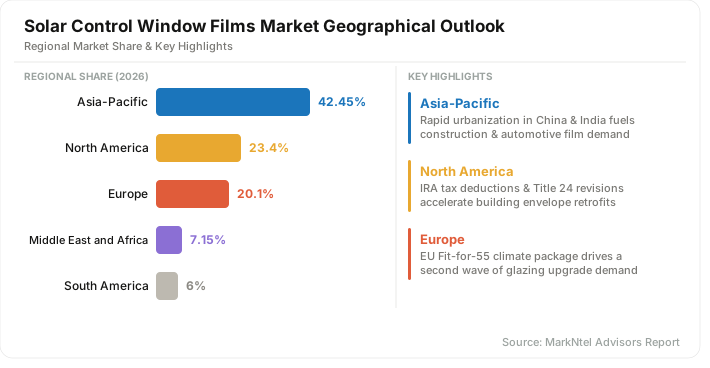
- Asia Pacific is expected to remain the dominant region, accounting for approximately 42.45% of the overall market share in 2026.
- By film type, dyed films are projected to lead the segment, contributing around 37% of total demand in 2026, driven by their cost-effectiveness and broad applicability.
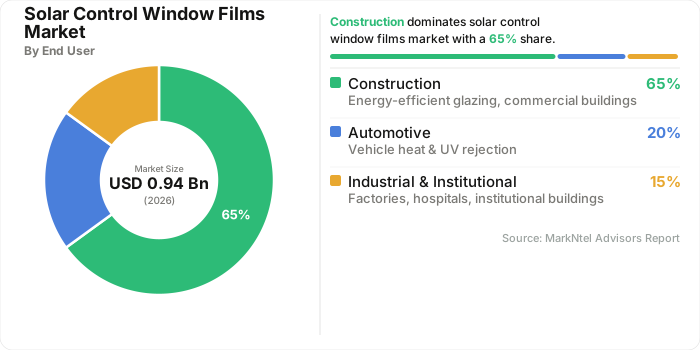
- By end user, the construction segment is anticipated to dominate, holding nearly 65% share in 2026, supported by extensive usage in residential and commercial buildings.
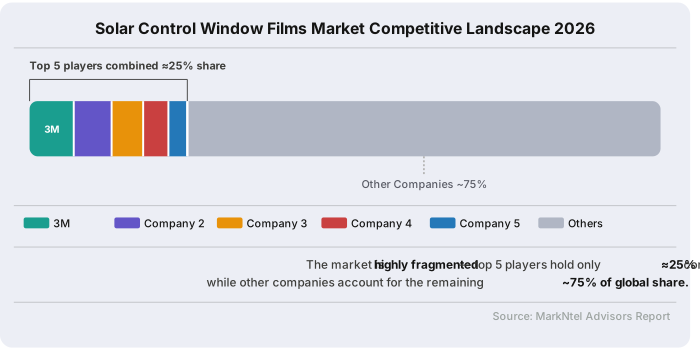
- The market remains highly fragmented, with the presence of numerous global and regional players. However, leading companies collectively account for approximately 25% of the overall market share.
Global Solar Control Window Films Market Size and Outlook
Growth in the global solar control window films market is projected at a CAGR of approximately 4.5% during the forecast period, reflecting steady expansion supported by multiple structural factors. This significant expansion is primarily driven by the rising energy demand from residential and commercial buildings, which is increasing the adoption of energy-efficient solutions such as solar control films to reduce heat gain and lower cooling costs.
According to the International Energy Agency, buildings accounted for around 30% of global energy demand in 2024, highlighting the need for effective thermal management solutions. At the same time, rapid urbanization across India and China has expanded the use of glass-intensive structures. This has supported the adoption of solar heat rejection films as practical and cost-efficient retrofit solutions.
This trend is further supported by increasing infrastructure investments across developing economies, which continue to strengthen overall market conditions. Private participation in infrastructure reached USD 100.7 billion in 2024, reflecting a 16% increase from the previous year, as reported by the World Bank. This sustained investment is driving demand in commercial buildings, which dominate due to larger façade areas and higher energy-saving potential. Residential usage is also expanding gradually due to increasing electricity costs, while automotive aftermarket demand supports the uptake of window tinting solutions.
In parallel, regulatory frameworks and national programs are accelerating the adoption of energy-efficient building solutions across key regions. The U.S. Department of Energy promotes building envelope improvements through targeted efficiency programs , while the European Commission enforces building energy performance regulations . Similarly, the Energy Conservation Building Code implemented by the Bureau of Energy Efficiency is encouraging the integration of heat-reducing technologies. These initiatives are increasingly shaping procurement decisions across commercial and institutional sectors.
Aligned with these developments, industry participants are focusing on innovation and regional expansion to strengthen market presence. Manufacturers are introducing advanced ceramic and spectrally selective films that enhance energy efficiency while maintaining optical clarity and durability. Expansion of production and distribution networks across Asia-Pacific and the Middle East is improving accessibility and supply efficiency. As infrastructure pipelines expand and policy frameworks continue to mature, increasing sustainability alignment among end users is expected to further drive market growth, with revenues projected to rise from USD 0.94 billion in 2026 to nearly USD 1.22 billion by 2032.
Global Solar Control Window Films Market Key Indicators
- According to the U.S. Department of Energy, heat gain and heat loss through windows account for approximately 25%–30% of residential heating and cooling energy use. This highlights the critical role of window efficiency solutions, thereby driving the adoption of solar control window films to improve thermal performance and reduce energy consumption in buildings.
- Global motor vehicle production reached approximately 92.7 million units in 2024 and increased to around 96.4 million units in 2025, reflecting continued expansion in automotive manufacturing activity, as reported by the International Organization of Motor Vehicle Manufacturers. Higher vehicle production increases the integration of automotive window films for heat reduction, UV protection, and passenger comfort, thereby supporting the growth of the solar control window films market.
- The World Bank reports that its active infrastructure portfolio includes 198 projects valued at approximately USD 36.6 billion in 2025, reflecting sustained infrastructure development. This drives the construction of glass-intensive buildings, thereby increasing demand for solar heat rejection films used for improving energy efficiency.
- Nearly 68% of the global population is projected to live in urban areas by 2050, reflecting rapid urbanization trends, as reported by the United Nations. Increasing urban population drives the construction of high-rise buildings and commercial complexes, thereby increasing demand for solar control window films in modern infrastructure.
Global Solar Control Window Films Market Scope
| Category | Segments |
|---|---|
| By Film Type | Dyed Films, Metalized Films, Ceramic Films, Spectrally Selective / Nano Films |
| By Application | Automotive, Residential Buildings, Commercial Buildings, Marine & Others |
| By End-User | Construction, Automotive, Industrial & Institutional |
Global Solar Control Window Films Market Growth Drivers
Rising Building Energy Consumption
Increasing construction activity and rising cooling needs have led to a notable surge in energy consumption across buildings in recent years. The International Energy Agency indicates that global building floor area is projected to increase by around 75% by 2050, reflecting sustained expansion in built infrastructure. In parallel, large-scale initiatives such as Abu Dhabi’s planned USD 54 billion investment in housing and urban development projects highlight continued growth in glass-intensive buildings. This expansion is increasing dependence on air conditioning systems, thereby strengthening demand for solar control window films across residential and commercial sectors.
In parallel, elevated global temperatures are contributing to higher cooling demand across regions. The National Oceanic and Atmospheric Administration confirmed that 2024 was the warmest year on record, intensifying heat exposure and increasing cooling loads in buildings . At the same time, the International Energy Agency projects that the number of air conditioning units worldwide will reach 5.6 billion by 2050, reflecting substantial growth in cooling demand . These developments are increasing operational energy consumption and reinforcing the need for solar heat rejection films as effective thermal management solutions.
As a result, rising building energy consumption is not a short-term fluctuation but a structural driver expanding overall market volume. Solar control window films offer immediate and scalable benefits by reducing HVAC loads without requiring major structural modifications, making them suitable for both new construction and retrofit applications. This has led to growing adoption across commercial offices, retail spaces, and residential complexes, where energy savings translate into measurable cost benefits. Consequently, sustained demand is expected to continue driving long-term market expansion, supported by increasing deployment of architectural window films across diverse end-user segments.
Recent Trends
Shift Toward Ceramic and Nano Films
The shift toward ceramic and nano-based films have accelerated due to growing emphasis on high-performance materials that enhance energy efficiency and optical clarity across building and automotive applications. The revised Energy Performance of Buildings Directive adopted by the European Commission in 2024 has strengthened requirements for improving building energy performance, encouraging the adoption of advanced heat-rejection solutions. In parallel, rising expectations for thermal comfort and UV protection are reinforcing the need for more efficient window film technologies. As a result, ceramic and nano films are gaining traction across both architectural and automotive segments, particularly in solar heat rejection films.
This ongoing transition is transforming the value chain, particularly by driving advancements in product development and evolving procurement patterns. In 2024, 3M Company introduced ceramic-based architectural window films with non-metalized technology to enhance infrared heat rejection and clarity . This was followed in 2025 by Avery Dennison launching its Encore™ nanoceramic window film portfolio featuring high infrared blocking and metal-free construction . Together, these developments highlight a clear shift toward advanced coating technologies delivering superior durability and performance.
As this evolution continues, the trend is expected to persist due to tightening energy efficiency standards and rising performance expectations across end-user segments. Advanced films provide scalable solutions that reduce cooling loads while maintaining transparency and aesthetics, making them suitable for both new installations and retrofit applications. Their versatility across residential, commercial, and automotive use cases further supports sustained adoption. In this context, the growing preference for ceramic and nano films is influencing material selection decisions and elevating performance benchmarks across the industry.
Global Solar Control Window Films Market Opportunities and Challenges
High Initial Cost Driving Adoption of Cost-Effective Retrofit Solutions
High upfront costs associated with advanced glazing systems and full window replacement are emerging as a key challenge in achieving building energy efficiency. Installation of solutions such as smart glass can cost between USD 50–150 per square foot, with additional expenses for control systems and specialized installation, thereby requiring significant capital investment and limiting adoption across existing building stock. At the same time, a large share of global buildings remains energy inefficient, creating pressure for upgrades without imposing high capital burdens. This cost-performance gap is restricting large-scale adoption of high-cost solutions, particularly in retrofit-dominant markets.
In response to this challenge, cost-effective retrofit solutions such as solar control window films are gaining increasing attention. The International Energy Agency highlights that policy measures, including retrofit incentives and energy performance standards, are being implemented globally to improve efficiency in existing buildings. Building on this, the U.S. Department of Energy notes that programs under the Inflation Reduction Act provide financial incentives for energy-efficient upgrades, further encouraging adoption of low-cost retrofit solutions. As a result, demand for solar heat rejection films is rising steadily, with retrofit-driven applications emerging as a key pathway for broader market adoption.
Segmentation Insights
Dyed Films is Widely Used Film Type
Dyed films account for approximately 37% share, making them the leading segment within the solar control window films industry. This dominance is primarily driven by their cost-effectiveness and broad applicability across automotive and residential segments. Compared to advanced alternatives such as ceramic or spectrally selective films, dyed films offer adequate heat and glare reduction at a significantly lower price point, making them well-suited for cost-sensitive consumers. In addition, their non-reflective appearance and ease of installation further support widespread adoption, particularly in applications where affordability and basic performance remain key considerations.
The dominance of dyed films is further reinforced by sustained demand across high-volume application areas. They are widely preferred in entry-level automotive installations and large-scale residential projects, where budget constraints often outweigh the need for premium performance features. At the same time, their relatively simple manufacturing process and lower material costs improve availability and support broader market penetration compared to advanced film types. As a result, this combination of affordability, accessibility, and sufficient functional performance ensures sustained adoption, maintaining the segment’s dominant position in the infrared-blocking films market. Based on film type, the market is segmented into:
- Dyed Films
- Metalized Films
- Ceramic Films
- Spectrally Selective / Nano Films
- Others
Construction Emerges as the Dominant End User Segment
With a market share of around 65%, the construction sector represents the largest end-user of solar control window films, largely due to the scale and nature of glass usage in modern buildings. Contemporary architectural designs increasingly rely on glass façades, which significantly increase solar heat gain and indoor temperature fluctuations. In such environments, solar control window films provide a practical solution to manage heat, glare, and UV exposure without altering structural design. This makes them highly relevant across offices, residential complexes, hospitals, and retail spaces, where both comfort and energy efficiency are key considerations.
The dominance of this segment is further supported by the continuous need to improve building performance across both new developments and existing infrastructure. Unlike automotive applications, where usage is limited to individual units, construction projects involve extensive surface areas, resulting in higher material consumption per project. At the same time, retrofit activity in older buildings is increasing, as property owners seek cost-effective ways to enhance energy efficiency without undertaking expensive glazing replacements. This dual demand from new construction and renovation, combined with the scalability of architectural window films, ensures that the construction segment continues to anchor overall solar control window films market demand. Based on end user, the market is segmented into:
- Construction
- Automotive
- Industrial & Institutional
Global Solar Control Window Films Market Geographical Outlook
Asia Pacific holds approximately 42.45% share, making it the dominant regional market for solar control window films. This leadership is largely driven by rapid urbanization and extensive construction activity across countries such as China, India, and Southeast Asian economies. The region continues to witness large-scale development of residential complexes, commercial buildings, and urban infrastructure, which is steadily increasing the use of glass in modern architecture. In turn, this is driving demand for effective heat and glare control solutions, including solar heat rejection films, across high-density urban environments.
This strong position is further supported by the scale of construction activity within the region, particularly in China, which remains the world’s largest construction market valued at approximately USD 4.52 trillion in 2025, as highlighted by the International Trade Administration. Such large-scale development naturally increases the need for energy-efficient window solutions across both commercial and residential sectors. At the same time, high solar exposure and rising cooling requirements across Asia Pacific continue to reinforce adoption. Collectively, these factors create sustained, high-volume demand, firmly establishing the region’s leading position in the global market.
Global Solar Control Window Films Market Competitive Analysis
The Global Solar Control Window Films industry exhibits a highly fragmented competitive structure, with a wide mix of global leaders, regional manufacturers, and local players catering to automotive, residential, and commercial applications. Key companies such as 3M Company, Eastman Chemical Company, Compagnie de Saint-Gobain, and Avery Dennison Corporation together hold an estimated 25% share of the market. Their position is reinforced by extensive global reach, well-established distribution channels, and ongoing innovation in advanced window film technologies.
Major Companies in the Global Solar Control Window Films Industry
- 3M Company
- Eastman Chemical Company
- Compagnie de Saint-Gobain
- Avery Dennison Corporation
- Lintec Corporation
- Garware Hi-Tech Films Limited
- Dexerials Corporation
- Madico Inc.
- Johnson Window Films
- Solar Screen International SA
- Nexfil Co., Ltd.
- Reflectiv SA
- Huper Optik International
- Armolan Window Films
- Toray Industries, Inc.
- Others
Global Solar Control Window Films Industry News and Recent Developments
February 2025: Luminous Expands Portfolio with Carbon-Based Window Film
Luminous introduced a new carbon-based window film designed to enhance heat rejection, UV protection, and long-term durability. The product strengthens its presence in high-performance automotive window films and offers an advanced alternative to traditional dyed films.
Impact Analysis: This development highlights the growing shift toward higher-performance film technologies beyond conventional dyed films. It is expected to accelerate adoption of carbon-based solutions, improve product durability standards, and increase demand for advanced window tinting solutions across automotive applications.
July 2025: Lintec Corporation Launches Recycled PET-Based Solar Control Film
Lintec Corporation introduced a solar control window film under its WINCOS brand using 100% recycled PET resin. The product offers effective solar heat reduction, blocks over 99% of UV rays, and lowers CO₂ emissions by approximately 17.5%.
Impact Analysis: This development reflects the increasing integration of sustainability into window film manufacturing. It is expected to support adoption of eco-friendly film solutions, promote circular material usage, and strengthen demand for energy-efficient and low-emission solar control technologies across building and automotive sectors.
- Market Segmentation
- Introduction
- Product Definition
- Research Process
- Assumptions
- Executive Summary
- Global Solar Control Window Films Market Policies, Regulations, and Product Standards
- Global Solar Control Window Films Market Trends & Developments
- Global Solar Control Window Films Market Dynamics
- Growth Factors
- Challenges
- Global Solar Control Window Films Market Hotspot & Opportunities
- Global Solar Control Window Films Market Outlook, 2022-2032F
- Market Size & Outlook
- By Revenues (USD Million)
- Market Share & Analysis
- By Film Type- Market Size & Forecast 2022-2032, USD Million
- Dyed Films
- Metalized Films
- Ceramic Films
- Spectrally Selective / Nano Films
- By Application- Market Size & Forecast 2022-2032, USD Million
- Automotive
- Residential Buildings
- Commercial Buildings
- Marine & Others
- By End-User- Market Size & Forecast 2022-2032, USD Million
- Construction
- Automotive
- Industrial & Institutional
- By Region
- North America
- South America
- Europe
- The Middle East & Africa
- Asia Pacific
- By Company
- Competition Characteristics
- Market Share & Analysis
- By Film Type- Market Size & Forecast 2022-2032, USD Million
- Market Size & Outlook
- North America Solar Control Window Films Market Outlook, 2022-2032F
- Market Size & Outlook
- By Revenues (USD Million)
- Market Share & Analysis
- By Film Type- Market Size & Forecast 2022-2032, USD Million
- By Application- Market Size & Forecast 2022-2032, USD Million
- By End-User- Market Size & Forecast 2022-2032, USD Million
- By Country
- The US
- Canada
- Mexico
- Rest of North America
- The US Solar Control Window Films Market Outlook, 2022-2032F
- Market Size & Outlook
- By Revenues (USD Million)
- Market Share & Analysis
- By Film Type- Market Size & Forecast 2022-2032, USD Million
- By Application- Market Size & Forecast 2022-2032, USD Million
- By End-User- Market Size & Forecast 2022-2032, USD Million
- Market Size & Outlook
- Canada Solar Control Window Films Market Outlook, 2022-2032F
- Market Size & Outlook
- By Revenues (USD Million)
- Market Share & Analysis
- By Film Type- Market Size & Forecast 2022-2032, USD Million
- By Application- Market Size & Forecast 2022-2032, USD Million
- By End-User- Market Size & Forecast 2022-2032, USD Million
- Market Size & Outlook
- Mexico Solar Control Window Films Market Outlook, 2022-2032F
- Market Size & Outlook
- By Revenues (USD Million)
- Market Share & Analysis
- By Film Type- Market Size & Forecast 2022-2032, USD Million
- By Application- Market Size & Forecast 2022-2032, USD Million
- By End-User- Market Size & Forecast 2022-2032, USD Million
- Market Size & Outlook
- Market Size & Outlook
- South America Solar Control Window Films Market Outlook, 2022-2032F
- Market Size & Outlook
- By Revenues (USD Million)
- Market Share & Analysis
- By Film Type- Market Size & Forecast 2022-2032, USD Million
- By Application- Market Size & Forecast 2022-2032, USD Million
- By End-User- Market Size & Forecast 2022-2032, USD Million
- By Country
- Brazil
- Argentina
- Chile
- Colombia
- Peru
- Ecuador
- Rest of South America
- Brazil Solar Control Window Films Market Outlook, 2022-2032F
- Market Size & Outlook
- By Revenues (USD Million)
- Market Share & Analysis
- By Film Type- Market Size & Forecast 2022-2032, USD Million
- By Application- Market Size & Forecast 2022-2032, USD Million
- By End-User- Market Size & Forecast 2022-2032, USD Million
- Market Size & Outlook
- Argentina Solar Control Window Films Market Outlook, 2022-2032F
- Market Size & Outlook
- By Revenues (USD Million)
- Market Share & Analysis
- By Film Type- Market Size & Forecast 2022-2032, USD Million
- By Application- Market Size & Forecast 2022-2032, USD Million
- By End-User- Market Size & Forecast 2022-2032, USD Million
- Market Size & Outlook
- Chile Solar Control Window Films Market Outlook, 2022-2032F
- Market Size & Outlook
- By Revenues (USD Million)
- Market Share & Analysis
- By Film Type- Market Size & Forecast 2022-2032, USD Million
- By Application- Market Size & Forecast 2022-2032, USD Million
- By End-User- Market Size & Forecast 2022-2032, USD Million
- Market Size & Outlook
- Colombia Solar Control Window Films Market Outlook, 2022-2032F
- Market Size & Outlook
- By Revenues (USD Million)
- Market Share & Analysis
- By Film Type- Market Size & Forecast 2022-2032, USD Million
- By Application- Market Size & Forecast 2022-2032, USD Million
- By End-User- Market Size & Forecast 2022-2032, USD Million
- Market Size & Outlook
- Peru Solar Control Window Films Market Outlook, 2022-2032F
- Market Size & Outlook
- By Revenues (USD Million)
- Market Share & Analysis
- By Film Type- Market Size & Forecast 2022-2032, USD Million
- By Application- Market Size & Forecast 2022-2032, USD Million
- By End-User- Market Size & Forecast 2022-2032, USD Million
- Market Size & Outlook
- Ecuador Solar Control Window Films Market Outlook, 2022-2032F
- Market Size & Outlook
- By Revenues (USD Million)
- Market Share & Analysis
- By Film Type- Market Size & Forecast 2022-2032, USD Million
- By Application- Market Size & Forecast 2022-2032, USD Million
- By End-User- Market Size & Forecast 2022-2032, USD Million
- Market Size & Outlook
- Market Size & Outlook
- Europe Solar Control Window Films Market Outlook, 2022-2032F
- Market Size & Outlook
- By Revenues (USD Million)
- Market Share & Analysis
- By Film Type- Market Size & Forecast 2022-2032, USD Million
- By Application- Market Size & Forecast 2022-2032, USD Million
- By End-User- Market Size & Forecast 2022-2032, USD Million
- By Country
- The UK
- Germany
- France
- Italy
- Spain
- Netherlands
- Switzerland
- Sweden
- Belgium
- Poland
- Rest of Europe
- The UK Solar Control Window Films Market Outlook, 2022-2032F
- Market Size & Outlook
- By Revenues (USD Million)
- Market Share & Analysis
- By Film Type- Market Size & Forecast 2022-2032, USD Million
- By Application- Market Size & Forecast 2022-2032, USD Million
- By End-User- Market Size & Forecast 2022-2032, USD Million
- Market Size & Outlook
- Germany Solar Control Window Films Market Outlook, 2022-2032F
- Market Size & Outlook
- By Revenues (USD Million)
- Market Share & Analysis
- By Film Type- Market Size & Forecast 2022-2032, USD Million
- By Application- Market Size & Forecast 2022-2032, USD Million
- By End-User- Market Size & Forecast 2022-2032, USD Million
- Market Size & Outlook
- France Solar Control Window Films Market Outlook, 2022-2032F
- Market Size & Outlook
- By Revenues (USD Million)
- Market Share & Analysis
- By Film Type- Market Size & Forecast 2022-2032, USD Million
- By Application- Market Size & Forecast 2022-2032, USD Million
- By End-User- Market Size & Forecast 2022-2032, USD Million
- Market Size & Outlook
- Italy Solar Control Window Films Market Outlook, 2022-2032F
- Market Size & Outlook
- By Revenues (USD Million)
- Market Share & Analysis
- By Film Type- Market Size & Forecast 2022-2032, USD Million
- By Application- Market Size & Forecast 2022-2032, USD Million
- By End-User- Market Size & Forecast 2022-2032, USD Million
- Market Size & Outlook
- Spain Solar Control Window Films Market Outlook, 2022-2032F
- Market Size & Outlook
- By Revenues (USD Million)
- Market Share & Analysis
- By Film Type- Market Size & Forecast 2022-2032, USD Million
- By Application- Market Size & Forecast 2022-2032, USD Million
- By End-User- Market Size & Forecast 2022-2032, USD Million
- Market Size & Outlook
- Netherlands Solar Control Window Films Market Outlook, 2022-2032F
- Market Size & Outlook
- By Revenues (USD Million)
- Market Share & Analysis
- By Film Type- Market Size & Forecast 2022-2032, USD Million
- By Application- Market Size & Forecast 2022-2032, USD Million
- By End-User- Market Size & Forecast 2022-2032, USD Million
- Market Size & Outlook
- Switzerland Solar Control Window Films Market Outlook, 2022-2032F
- Market Size & Outlook
- By Revenues (USD Million)
- Market Share & Analysis
- By Film Type- Market Size & Forecast 2022-2032, USD Million
- By Application- Market Size & Forecast 2022-2032, USD Million
- By End-User- Market Size & Forecast 2022-2032, USD Million
- Market Size & Outlook
- Sweden Solar Control Window Films Market Outlook, 2022-2032F
- Market Size & Outlook
- By Revenues (USD Million)
- Market Share & Analysis
- By Film Type- Market Size & Forecast 2022-2032, USD Million
- By Application- Market Size & Forecast 2022-2032, USD Million
- By End-User- Market Size & Forecast 2022-2032, USD Million
- Market Size & Outlook
- Belgium Solar Control Window Films Market Outlook, 2022-2032F
- Market Size & Outlook
- By Revenues (USD Million)
- Market Share & Analysis
- By Film Type- Market Size & Forecast 2022-2032, USD Million
- By Application- Market Size & Forecast 2022-2032, USD Million
- By End-User- Market Size & Forecast 2022-2032, USD Million
- Market Size & Outlook
- Poland Solar Control Window Films Market Outlook, 2022-2032F
- Market Size & Outlook
- By Revenues (USD Million)
- Market Share & Analysis
- By Film Type- Market Size & Forecast 2022-2032, USD Million
- By Application- Market Size & Forecast 2022-2032, USD Million
- By End-User- Market Size & Forecast 2022-2032, USD Million
- Market Size & Outlook
- Market Size & Outlook
- The Middle East & Africa Solar Control Window Films Market Outlook, 2022-2032F
- Market Size & Outlook
- By Revenues (USD Million)
- Market Share & Analysis
- By Film Type- Market Size & Forecast 2022-2032, USD Million
- By Application- Market Size & Forecast 2022-2032, USD Million
- By End-User- Market Size & Forecast 2022-2032, USD Million
- By Country
- Saudi Arabia
- The UAE
- South Africa
- Egypt
- Qatar
- Kuwait
- Oman
- Bahrain
- Rest of Middle East & Africa
- Saudi Arabia Solar Control Window Films Market Outlook, 2022-2032F
- Market Size & Outlook
- By Revenues (USD Million)
- Market Share & Analysis
- By Film Type- Market Size & Forecast 2022-2032, USD Million
- By Application- Market Size & Forecast 2022-2032, USD Million
- By End-User- Market Size & Forecast 2022-2032, USD Million
- Market Size & Outlook
- The UAE Solar Control Window Films Market Outlook, 2022-2032F
- Market Size & Outlook
- By Revenues (USD Million)
- Market Share & Analysis
- By Film Type- Market Size & Forecast 2022-2032, USD Million
- By Application- Market Size & Forecast 2022-2032, USD Million
- By End-User- Market Size & Forecast 2022-2032, USD Million
- Market Size & Outlook
- South Africa Solar Control Window Films Market Outlook, 2022-2032F
- Market Size & Outlook
- By Revenues (USD Million)
- Market Share & Analysis
- By Film Type- Market Size & Forecast 2022-2032, USD Million
- By Application- Market Size & Forecast 2022-2032, USD Million
- By End-User- Market Size & Forecast 2022-2032, USD Million
- Market Size & Outlook
- Egypt Solar Control Window Films Market Outlook, 2022-2032F
- Market Size & Outlook
- By Revenues (USD Million)
- Market Share & Analysis
- By Film Type- Market Size & Forecast 2022-2032, USD Million
- By Application- Market Size & Forecast 2022-2032, USD Million
- By End-User- Market Size & Forecast 2022-2032, USD Million
- Market Size & Outlook
- Qatar Solar Control Window Films Market Outlook, 2022-2032F
- Market Size & Outlook
- By Revenues (USD Million)
- Market Share & Analysis
- By Film Type- Market Size & Forecast 2022-2032, USD Million
- By Application- Market Size & Forecast 2022-2032, USD Million
- By End-User- Market Size & Forecast 2022-2032, USD Million
- Market Size & Outlook
- Kuwait Solar Control Window Films Market Outlook, 2022-2032F
- Market Size & Outlook
- By Revenues (USD Million)
- Market Share & Analysis
- By Film Type- Market Size & Forecast 2022-2032, USD Million
- By Application- Market Size & Forecast 2022-2032, USD Million
- By End-User- Market Size & Forecast 2022-2032, USD Million
- Market Size & Outlook
- Oman Solar Control Window Films Market Outlook, 2022-2032F
- Market Size & Outlook
- By Revenues (USD Million)
- Market Share & Analysis
- By Film Type- Market Size & Forecast 2022-2032, USD Million
- By Application- Market Size & Forecast 2022-2032, USD Million
- By End-User- Market Size & Forecast 2022-2032, USD Million
- Market Size & Outlook
- Bahrain Solar Control Window Films Market Outlook, 2022-2032F
- Market Size & Outlook
- By Revenues (USD Million)
- Market Share & Analysis
- By Film Type- Market Size & Forecast 2022-2032, USD Million
- By Application- Market Size & Forecast 2022-2032, USD Million
- By End-User- Market Size & Forecast 2022-2032, USD Million
- Market Size & Outlook
- Market Size & Outlook
- Asia Pacific Solar Control Window Films Market Outlook, 2022-2032F
- Market Size & Outlook
- By Revenues (USD Million)
- Market Share & Analysis
- By Film Type- Market Size & Forecast 2022-2032, USD Million
- By Application- Market Size & Forecast 2022-2032, USD Million
- By End-User- Market Size & Forecast 2022-2032, USD Million
- By Country
- China
- Japan
- India
- South Korea
- Australia
- Indonesia
- Thailand
- Malaysia
- Singapore
- Vietnam
- Philippines
- Rest of Asia-Pacific
- China Solar Control Window Films Market Outlook, 2022-2032F
- Market Size & Outlook
- By Revenues (USD Million)
- Market Share & Analysis
- By Film Type- Market Size & Forecast 2022-2032, USD Million
- By Application- Market Size & Forecast 2022-2032, USD Million
- By End-User- Market Size & Forecast 2022-2032, USD Million
- Market Size & Outlook
- Japan Solar Control Window Films Market Outlook, 2022-2032F
- Market Size & Outlook
- By Revenues (USD Million)
- Market Share & Analysis
- By Film Type- Market Size & Forecast 2022-2032, USD Million
- By Application- Market Size & Forecast 2022-2032, USD Million
- By End-User- Market Size & Forecast 2022-2032, USD Million
- Market Size & Outlook
- India Solar Control Window Films Market Outlook, 2022-2032F
- Market Size & Outlook
- By Revenues (USD Million)
- Market Share & Analysis
- By Film Type- Market Size & Forecast 2022-2032, USD Million
- By Application- Market Size & Forecast 2022-2032, USD Million
- By End-User- Market Size & Forecast 2022-2032, USD Million
- Market Size & Outlook
- South Korea Solar Control Window Films Market Outlook, 2022-2032F
- Market Size & Outlook
- By Revenues (USD Million)
- Market Share & Analysis
- By Film Type- Market Size & Forecast 2022-2032, USD Million
- By Application- Market Size & Forecast 2022-2032, USD Million
- By End-User- Market Size & Forecast 2022-2032, USD Million
- Market Size & Outlook
- Australia Solar Control Window Films Market Outlook, 2022-2032F
- Market Size & Outlook
- By Revenues (USD Million)
- Market Share & Analysis
- By Film Type- Market Size & Forecast 2022-2032, USD Million
- By Application- Market Size & Forecast 2022-2032, USD Million
- By End-User- Market Size & Forecast 2022-2032, USD Million
- Market Size & Outlook
- Indonesia Solar Control Window Films Market Outlook, 2022-2032F
- Market Size & Outlook
- By Revenues (USD Million)
- Market Share & Analysis
- By Film Type- Market Size & Forecast 2022-2032, USD Million
- By Application- Market Size & Forecast 2022-2032, USD Million
- By End-User- Market Size & Forecast 2022-2032, USD Million
- Market Size & Outlook
- Thailand Solar Control Window Films Market Outlook, 2022-2032F
- Market Size & Outlook
- By Revenues (USD Million)
- Market Share & Analysis
- By Film Type- Market Size & Forecast 2022-2032, USD Million
- By Application- Market Size & Forecast 2022-2032, USD Million
- By End-User- Market Size & Forecast 2022-2032, USD Million
- Market Size & Outlook
- Malaysia Solar Control Window Films Market Outlook, 2022-2032F
- Market Size & Outlook
- By Revenues (USD Million)
- Market Share & Analysis
- By Film Type- Market Size & Forecast 2022-2032, USD Million
- By Application- Market Size & Forecast 2022-2032, USD Million
- By End-User- Market Size & Forecast 2022-2032, USD Million
- Market Size & Outlook
- Singapore Solar Control Window Films Market Outlook, 2022-2032F
- Market Size & Outlook
- By Revenues (USD Million)
- Market Share & Analysis
- By Film Type- Market Size & Forecast 2022-2032, USD Million
- By Application- Market Size & Forecast 2022-2032, USD Million
- By End-User- Market Size & Forecast 2022-2032, USD Million
- Market Size & Outlook
- Vietnam Solar Control Window Films Market Outlook, 2022-2032F
- Market Size & Outlook
- By Revenues (USD Million)
- Market Share & Analysis
- By Film Type- Market Size & Forecast 2022-2032, USD Million
- By Application- Market Size & Forecast 2022-2032, USD Million
- By End-User- Market Size & Forecast 2022-2032, USD Million
- Market Size & Outlook
- Philippines Solar Control Window Films Market Outlook, 2022-2032F
- Market Size & Outlook
- By Revenues (USD Million)
- Market Share & Analysis
- By Film Type- Market Size & Forecast 2022-2032, USD Million
- By Application- Market Size & Forecast 2022-2032, USD Million
- By End-User- Market Size & Forecast 2022-2032, USD Million
- Market Size & Outlook
- Market Size & Outlook
- Global Solar Control Window Films Market Key Strategic Imperatives for Success & Growth
- Competitive Outlook
- Company Profiles
- 3M Company
- Business Description
- Product Portfolio
- Collaborations & Alliances
- Recent Developments
- Financial Details
- Others
- Eastman Chemical Company
- Business Description
- Product Portfolio
- Collaborations & Alliances
- Recent Developments
- Financial Details
- Others
- Compagnie de Saint-Gobain
- Business Description
- Product Portfolio
- Collaborations & Alliances
- Recent Developments
- Financial Details
- Others
- Avery Dennison Corporation
- Business Description
- Product Portfolio
- Collaborations & Alliances
- Recent Developments
- Financial Details
- Others
- Lintec Corporation
- Business Description
- Product Portfolio
- Collaborations & Alliances
- Recent Developments
- Financial Details
- Others
- Garware Hi-Tech Films Limited
- Business Description
- Product Portfolio
- Collaborations & Alliances
- Recent Developments
- Financial Details
- Others
- Dexerials Corporation
- Business Description
- Product Portfolio
- Collaborations & Alliances
- Recent Developments
- Financial Details
- Others
- Madico Inc.
- Business Description
- Product Portfolio
- Collaborations & Alliances
- Recent Developments
- Financial Details
- Others
- Johnson Window Films
- Business Description
- Product Portfolio
- Collaborations & Alliances
- Recent Developments
- Financial Details
- Others
- Solar Screen International SA
- Business Description
- Product Portfolio
- Collaborations & Alliances
- Recent Developments
- Financial Details
- Others
- Nexfil Co., Ltd.
- Business Description
- Product Portfolio
- Collaborations & Alliances
- Recent Developments
- Financial Details
- Others
- Reflectiv SA
- Business Description
- Product Portfolio
- Collaborations & Alliances
- Recent Developments
- Financial Details
- Others
- Huper Optik International
- Business Description
- Product Portfolio
- Collaborations & Alliances
- Recent Developments
- Financial Details
- Others
- Armolan Window Films
- Business Description
- Product Portfolio
- Collaborations & Alliances
- Recent Developments
- Financial Details
- Others
- Toray Industries, Inc.
- Business Description
- Product Portfolio
- Collaborations & Alliances
- Recent Developments
- Financial Details
- Others
- Others
- Business Description
- Product Portfolio
- Collaborations & Alliances
- Recent Developments
- Financial Details
- Others
- 3M Company
- Company Profiles
- Disclaimer

MarkNtel Advisors follows a robust and iterative research methodology designed to ensure maximum accuracy and minimize deviation in market estimates and forecasts. Our approach combines both bottom-up and top-down techniques to effectively segment and quantify various aspects of the market. A consistent feature across all our research reports is data triangulation, which examines the market from three distinct perspectives to validate findings. Key components of our research process include:
1. Scope & Research Design At the outset, MarkNtel Advisors define the research objectives and formulate pertinent questions. This phase involves determining the type of research—qualitative or quantitative—and designing a methodology that outlines data collection methods, target demographics, and analytical tools. They also establish timelines and budgets to ensure the research aligns with client goals.
2. Sample Selection and Data Collection In this stage, the firm identifies the target audience and determines the appropriate sample size to ensure representativeness. They employ various sampling methods, such as random or stratified sampling, based on the research objectives. Data collection is carried out using tools like surveys, interviews, and observations, ensuring the gathered data is reliable and relevant.
3. Data Analysis and Validation Once data is collected, MarkNtel Advisors undertake a rigorous analysis process. This includes cleaning the data to remove inconsistencies, employing statistical software for quantitative analysis, and thematic analysis for qualitative data. Validation steps are taken to ensure the accuracy and reliability of the findings, minimizing biases and errors.

4. Data Forecast and FinalizationThe final phase involves forecasting future market trends based on the analyzed data. MarkNtel Advisors utilize predictive modeling and time series analysis to anticipate market behaviors. The insights are then compiled into comprehensive reports, featuring visual aids like charts and graphs, and include strategic recommendations to inform client decision-making
We offer flexible licensing options to cater to varying organizational needs. Choose the pricing pack that best suits your requirements:
Buy Now Inquire Before Buying
 Request Customization