

By Technology (Spectroscopy (Mass Spectroscopy, NMR Spectroscopy, CD Spectroscopy), Chromatography (HPLC Chromatography, Affinity Chromatography, Supercritical Fluid Chromatography, Ion Exchange Chrom... ... , Ion Exchange Chromatography), Electrophoresis (Gel Electrophoresis, Capillary Electrophoresis), Protein Microarray (Biochip, Lab-on-Chip, Protein Chip, Microarray Instrument, Integrated System, Microarray Scanner, Arrayers), Crystallography, Surface Plasma Resonance, Fractionation, Others), By Reagent (Immunoassay Reagents, Spectroscopy Reagents, Chromatography Reagents, Protein Microarray Reagents, X-Ray Crystallography Reagents, Electrophoresis Reagents, Protein Fractionation Reagents, Others), By Offering (Core Proteomics Services (Protein Identification, Protein Characterization, Quantitative Proteomic, Protein Purification, Protein Sequencing, Custom Assay), Bioinformatics Software & Services (Bioinformatics Software, Bioinformatics Tools, Bioinformatics Databases)), By Application (Drug Discovery (Target Discovery, Lead Identification, Lead Optimization, Preclinical Studies), Clinical Diagnostics (Oncology, Infectious Diseases, Diabetes, Neurological Disorder, Autoimmune Diseases, Cardiovascular Diseases, Others), Others), By End-User (Academic & Research Institutes, Contract Research Organizations, Pharmaceutical & Biotechnology Companies, Others), and others Read more
- Healthcare
- May 2026
- 350
- PDF, Excel, PPT
Global Proteomics Market Report Key Takeaways
- The global proteomics market was valued at USD 33.45 billion in 2025 and is projected to reach USD 36.81 billion in 2026. By 2032, the market is expected to attain USD 67.55 billion.
- The market is anticipated to grow at a CAGR of 10.65% during 2026–2032, highlighting sustained long-term structural demand.
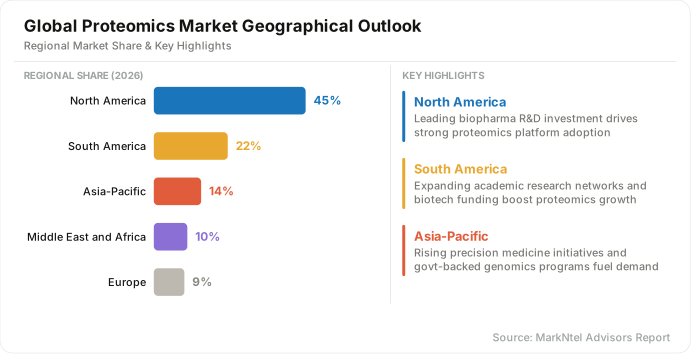
- North America leads the global market with a 45% share, driven by strong pharmaceutical R&D infrastructure and advanced research ecosystems.
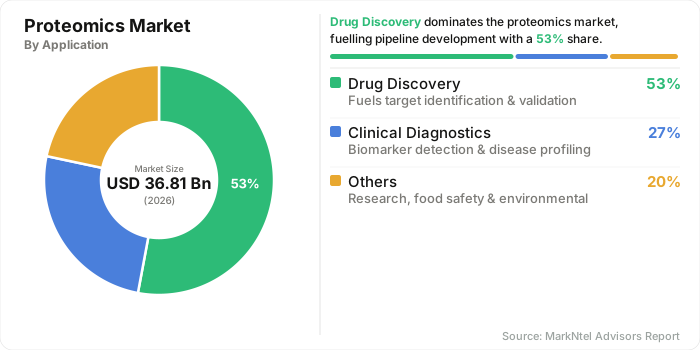
- Drug Discovery remains the dominant application segment with a 53% share, reflecting high reliance on analytical technologies in early-stage R&D pipelines.
- Spectroscopy accounts for 32% share by technology, supported by widespread adoption in molecular characterization and bioanalytical studies.
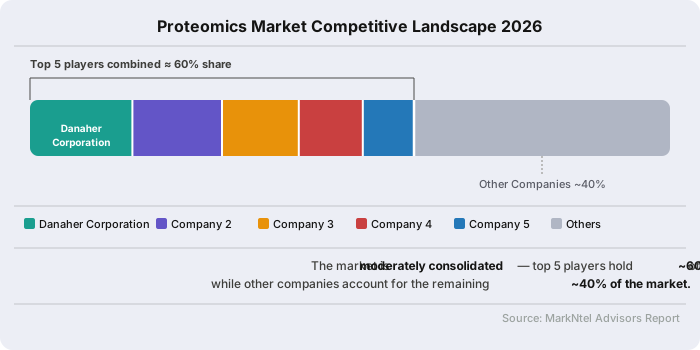
- The global market is moderately consolidated, with top five players collectively hold approximately 60% of global market share, indicating strong concentration among established industry leaders.
Global Proteomics Market Size and Outlook
The proteomics market is expected to witness steady growth at a CAGR of 10.65% during the forecast period (2026–2032).
The global proteomics market has evolved into a strategically important segment of life sciences research due to expanding applications in precision medicine, oncology diagnostics, and translational drug development. Rising investments from pharmaceutical and biotechnology companies in biomarker discovery and protein characterization continue to strengthen instrument utilization across academic laboratories, hospitals, and clinical research organizations. The US FDA increased regulatory emphasis on biomarker qualification and validation through updated guidance frameworks issued in 2025–2026, encouraging broader integration of proteomic data into therapeutic development pipelines.
Publicly funded precision medicine programs led by the US National Institutes of Health continue supporting multi-omics integration initiatives involving proteomic datasets for cardiovascular, cancer, and rare disease research. The NIH-backed TOPMed initiative expanded multi-omics data generation activities through proteomic and metabolomic profiling, strengthening long-term infrastructure for large-scale clinical proteomics adoption.
Industrial and commercial end users are contributing significantly to market expansion through increased procurement of high-resolution mass spectrometry systems and automated analytical platforms. In 2025, Thermo Fisher Scientific introduced the Orbitrap Astral Zoom and Orbitrap Excedion Pro systems, designed to improve throughput, multiplexing capacity, and analytical sensitivity for proteomics and biopharmaceutical applications. The company reported that the upgraded systems support deeper protein biomarker identification and accelerate precision oncology workflows, reflecting rising commercial demand for scalable proteomic analysis tools.
Government-backed biomedical innovation policies across North America, Europe, and Asia-Pacific are further strengthening long-term market fundamentals through research grants, genomic infrastructure investments, and clinical trial modernization initiatives. Future market prospects remain favorable as healthcare systems continue shifting toward predictive and precision-based care models requiring large-scale molecular profiling capabilities.
Expanding collaborations between biopharma firms, research universities, and instrumentation manufacturers are expected to accelerate innovation in protein sequencing, spatial proteomics, and AI-enabled proteomic interpretation, supporting market growth from USD 36.81 billion in 2026 to USD 67.55 billion by 2032. Increasing integration of proteomics into drug discovery, clinical diagnostics, and therapeutic monitoring is therefore expected to sustain strong global demand through the coming decade.
Global Proteomics Market Key Indicators
- The World Health Organization's International Agency for Research on Cancer (IARC) recorded 20 million new cancer cases globally in 2022, with the total projected to reach 35 million by 2050 a 77% increase driven by population ageing and growth. Cancer proteomics encompassing tumour biomarker discovery, protein expression profiling, and liquid biopsy development constitutes the largest single end-use application within the global proteomics market, with every incremental increase in cancer incidence generating corresponding demand for proteome-wide diagnostic and therapeutic research platforms.
- The International Diabetes Federation (IDF) 11th Diabetes Atlas estimated 589 million adults aged 20–79 years were living with diabetes in 2024 11.1% of the global adult population, with the figure projected to reach 853 million by 2050; diabetes-related health expenditure exceeded USD 1 trillion in 2024, accounting for 12% of global health expenditure. Glycoproteomic profiling and insulin-signalling pathway proteomics are central to diabetes complication monitoring and drug target identification, making this patient population a persistent structural driver of clinical proteomics demand.
- The U.S. Food and Drug Administration (FDA) approved 50 novel drugs in 2024, of which 16 were biologics including 13 monoclonal antibodies, Biologic development mandates protein characterisation at every stage of the regulatory pathway , from structural confirmation and post-translational modification mapping to comparability studies, generating non-discretionary proteomics expenditure across the pharmaceutical industry pipeline.
- According to WHO, global life expectancy reached 73.3 years in 2024 an increase of 8.4 years since 1995 while the population aged 60 and older is projected to grow from 1.1 billion in 2023 to 1.4 billion by 2030. Population ageing structurally expands the prevalence of neurodegenerative diseases including Alzheimer's disease and Parkinson's disease, where aberrant protein folding and aggregation are primary pathological mechanisms directly enlarging the addressable market for neuroproteomics research tools and clinical diagnostics.
Global Proteomics Market Scope
| Category | Segments |
|---|---|
| By Technology | Spectroscopy (Mass Spectroscopy, NMR Spectroscopy, CD Spectroscopy), Chromatography (HPLC Chromatography, Affinity Chromatography, Supercritical Fluid Chromatography, Ion Exchange Chromatography), Electrophoresis (Gel Electrophoresis, Capillary Electrophoresis), Protein Microarray (Biochip, Lab-on-Chip, Protein Chip, Microarray Instrument, Integrated System, Microarray Scanner, Arrayers), Crystallography, Surface Plasma Resonance, Fractionation, Others |
| By Reagent | Immunoassay Reagents, Spectroscopy Reagents, Chromatography Reagents, Protein Microarray Reagents, X-Ray Crystallography Reagents, Electrophoresis Reagents, Protein Fractionation Reagents, Others |
| By Offering | Core Proteomics Services (Protein Identification, Protein Characterization, Quantitative Proteomic, Protein Purification, Protein Sequencing, Custom Assay), Bioinformatics Software & Services (Bioinformatics Software, Bioinformatics Tools, Bioinformatics Databases |
| By Application | Drug Discovery (Target Discovery, Lead Identification, Lead Optimization, Preclinical Studies), Clinical Diagnostics (Oncology, Infectious Diseases, Diabetes, Neurological Disorder, Autoimmune Diseases, Cardiovascular Diseases, Others |
| By End-User | Academic & Research Institutes, Contract Research Organizations, Pharmaceutical & Biotechnology Companies, Others |
Global Proteomics Market Growth Drivers
Rising Demand for Personalized & Precision Medicine
The growing demand for personalized and precision medicine is significantly increasing demand in the global proteomics market because healthcare systems are moving away from uniform treatment models toward patient-specific therapies. Proteomics helps researchers and clinicians analyze protein behavior, disease pathways, and treatment response at a functional level, allowing therapies to be tailored according to individual biological profiles.
The increasing incidence of cancer and chronic diseases has intensified this need, as many therapies now require biomarker identification before treatment selection. According to the National Cancer Institute, precision oncology programs increasingly rely on molecular and protein-based profiling to improve therapeutic effectiveness and reduce adverse treatment outcomes.
Demand is rising materially because pharmaceutical companies are expanding the development of targeted drugs, biologics, and immunotherapies that require extensive protein analysis during discovery, validation, and clinical trials. For instance, In 2025, Bruker Corporation launched advanced proteomics platforms designed for high-throughput biomarker discovery and translational medicine applications, reflecting growing industry demand for faster and deeper protein analysis capabilities.
The driver is also strengthening market volume across hospitals and research institutions because precision medicine programs require continuous, large-scale testing and data generation rather than one-time equipment adoption. Governments and healthcare agencies are investing heavily in molecular diagnostics infrastructure to support personalized healthcare delivery.
Recent Trends
Increasing Integration of AI and Multi-Omics Platforms in Proteomics Research
The integration of artificial intelligence (AI) and multi-omics technologies has emerged as a major trend reshaping the proteomics market by improving the speed, scale, and accuracy of protein analysis. Proteomics studies generate highly complex biological datasets that are difficult to process through conventional analytical methods, therefore leading pharmaceutical companies and research institutes increasingly adopt AI-driven computational platforms. For instance, Google DeepMind AlphaFold 3 has accelerated this transition by enabling highly accurate prediction of protein structures and molecular interactions, significantly reducing the time required for biomarker identification and therapeutic research.
This trend is structurally transforming drug discovery and translational research workflows through the integration of genomics, transcriptomics, and proteomics into unified analytical systems. Several companies are also inculcating AI-supported multi-omics models to identify disease pathways and precision drug targets. These developments are increasing adoption of automated bioinformatics platforms across biopharmaceutical and clinical research environments. For instance, AstraZeneca used AI-driven multi-omics analysis on cancer patient datasets to identify protein pathways linked with tumor progression and drug resistance , helping researchers prioritize precision oncology drug targets with higher treatment-response potential.
The trend is expected to persist because healthcare systems and pharmaceutical companies are prioritizing data-driven precision medicine infrastructure and scalable molecular diagnostics capabilities. The adoption of AI-enabled proteomics platforms is improving clinical decision-making, accelerating drug discovery timelines, and enhancing predictive accuracy for complex diseases such as cancer and cardiovascular disorders. As integration deepens across laboratory, clinical, and computational ecosystems, proteomics is evolving into a core infrastructure for next-generation healthcare innovation.
Global Proteomics Market Opportunities and Challenges
Biomarker Validation Bottlenecks Creating Next-Generation Liquid Biopsy Opportunities
Biomarker validation bottlenecks represent a major translational constraint in the proteomics pipeline, often referred to as the “valley of death” in diagnostic development. Moving from candidate protein discovery to clinical validation requires large-scale screening across hundreds to thousands of samples in independent clinical cohorts, making the process both time-intensive and prone to high attrition rates at multiple stages. The National Cancer Institute (NCI) launched the Clinical Proteomic Technologies for Cancer (CPTC) initiative to directly address this gap, acknowledging that discovery-scale proteomics output has repeatedly exceeded the validation infrastructure needed to convert candidates into clinically approved diagnostics.
The mismatch between high-throughput proteomic discovery and limited validation infrastructure significantly reduces the rate at which biomarkers progress toward clinical use. In addition, pre-analytical variability such as differences in sample handling, ischemia time, processing delays, and freeze–thaw cycles introduces noise that can distort true biological signals
These limitations are accelerating investment in liquid biopsy technologies, which mitigate pre-analytical variability by analyzing circulating tumor-derived biomarkers from a single blood sample and enabling non-invasive, longitudinal disease monitoring without the need for tissue re-biopsy for instance, In July 2025, NeoGenomics introduced the NEO PanTracer™ LBx platform, designed for comprehensive genomic profiling to support therapy selection, clinical trial matching, and disease monitoring within a unified assay framework.
Regulatory momentum from the FDA is further strengthening the commercial outlook for next-generation liquid biopsy solutions. In May 2026, the FDA approved Guardant360 Liquid CDx as the most extensive liquid biopsy panel cleared to date, featuring a genomic coverage approximately 100 times broader than its earlier version and integrating genomic and epigenomic profiling from a single blood draw.
Segmentation Analysis
Drug Discovery Dominance Analysis in Worldwide Proteomics
Drug discovery dominates the global proteomics market with a share of 53%, as it represents the earliest and most strategically critical stage of therapeutic development, where protein-level insights directly influence target validation and downstream clinical success. The increasing complexity of diseases, particularly oncology, neurodegenerative disorders, and autoimmune conditions, has reduced the effectiveness of conventional target identification methods, encouraging pharmaceutical companies to adopt proteomics-based approaches for enhanced molecular characterization and biomarker identification.
The segment’s leadership is further reinforced by strong pharmaceutical integration and continuous capital inflows into biomarker-driven drug development. Major pharma companies such as Pfizer, have increasingly embedded proteomic profiling into target identification, lead validation, and patient stratification strategies to reduce late-stage clinical trial failures. A recent example is the strategic oncology research collaboration between Sarah Cannon Research Institute (SCRI) and Pfizer, which focuses on accelerating oncology clinical trials through improved patient access, operational efficiency, and data-driven trial design.
As a result, drug discovery is evolving into a precision-driven, data-intensive ecosystem where proteomics acts as a core decision-making layer rather than a supplementary research tool. This transition is significantly improving target validation accuracy, reducing R&D inefficiencies, and increasing pipeline success rates across pharmaceutical development. The continued integration of AI-driven protein analytics, multi-omics platforms, and spatial proteomics is expected to further consolidate the dominance of this segment. By application segment the market is further divided into following sub-categories:
- Drug Discovery
- Target Discovery
- Lead Identification
- Lead Optimization
- Preclinical Studies
- Clinical Diagnostics
- Oncology
- Infectious Diseases
- Diabetes
- Neurological Disorder
- Autoimmune Diseases
- Cardiovascular Diseases
- Others
- Others
Spectroscopy Dominance Analysis
Spectroscopy leads the technology segment in the proteomics solutions with a share of 32% due to its foundational role in protein identification, structural characterization, and quantitative analysis. Techniques such as mass spectrometry and optical spectroscopy enable high-resolution detection of protein composition, post-translational modifications, and molecular interactions, which are critical for both discovery and translational research. The increasing complexity of disease biology has strengthened reliance on spectroscopy-based platforms, particularly in oncology and neurodegenerative disease research.
The segment’s dominance is further reinforced by strong investment flows and continuous innovation from leading life science companies. Thermo Fisher Scientific, Bruker, and Agilent Technologies are continuously upgrading high-resolution mass spectrometry platforms to improve sensitivity, throughput, and clinical applicability. For example, Thermo Fisher’s Orbitrap-based systems have become widely adopted in pharmaceutical research for quantitative proteomics and biomarker validation.
In addition, chromatography–spectroscopy hybrid workflows are increasingly used in drug discovery pipelines to improve separation accuracy and protein profiling efficiency. For instance, Agilent 1290 Infinity II HPLC coupled with MS improves separation of complex biological samples before MS detection, improving accuracy in protein quantification and metabolite profiling, widely used in pharma ADME (Absorption, Distribution, Metabolism, Excretion) studies.
As a result, spectroscopy is transitioning from a purely analytical technique to a core enabling technology in precision medicine and drug development ecosystems. Its ability to deliver high-throughput, reproducible, and clinically relevant protein data is driving widespread adoption across pharmaceutical, biotechnology, and academic research sectors. By Technology, the market tis further segmented into following sub-categories:
- Spectroscopy
- Chromatography
- Electrophoresis
- Biochip
- Crystallography
- Surface Plasma Resonance
- Fractionation
- Others
Global Proteomics Industry Geographical Analysis
North America dominates the global proteomics market with 45% shares, due to its highly advanced life sciences infrastructure, strong R&D intensity, and concentrated presence of biotechnology and pharmaceutical ecosystems. The region benefits from a mature healthcare research network, particularly in the United States, where federal and private research funding consistently supports large-scale multi-omics and proteomics programs. The National Institutes of Health continues to allocate substantial funding toward precision medicine and proteomics-driven biomedical research, strengthening early-stage discovery capabilities and translational pipelines, one of the examples are NIH Human BioMolecular Atlas Program (HuBMAP) which is focused on mapping cellular and molecular structures of human tissues using multi-omics including proteomics.
Demand concentration is also a major driver of regional dominance, supported by the strong presence of leading pharmaceutical and biotechnology companies. Major industry players such as Pfizer, Merck, and Johnson & Johnson extensively utilize proteomics for target discovery, biomarker validation, and clinical trial optimization. High concentration of contract research organizations and academic medical centers further increases adoption intensity across drug discovery and clinical diagnostics workflows. This dense ecosystem ensures continuous demand for high-throughput proteomics platforms and analytical solutions.
Overall, North America’s leadership is sustained by a self-reinforcing ecosystem combining capital availability, regulatory support, and high-end industrial demand. The convergence of strong public funding, advanced healthcare infrastructure, and concentrated pharmaceutical activity positions the region as the primary hub for proteomics innovation and commercialization globally.
Global Proteomics Industry Competitive Landscape
The global proteomics market is moderately consolidated, with a small group of diversified life science and analytical instrumentation companies controlling a significant portion of revenues. The competitive structure is shaped by strong portfolios in chromatography, mass spectrometry, diagnostics, sequencing, and lab automation, with high entry barriers due to capital intensity, regulatory requirements, and long validation cycles in pharma and clinical research. The leading five players Thermo Fisher Scientific, Danaher Corporation, Agilent Technologies, Merck KGaA, and Waters Corporation collectively account for 60% of the global market share.
Major Key Players in Global Proteomics Market
- Thermo Fisher Scientific Inc.
- Agilent Technologies, Inc.
- Merck KGaA
- Danaher Corporation
- Shimadzu Corporation
- Waters Corporation
- Bio-Rad Laboratories, Inc.
- Bruker Corporation
- Revvity, Inc.
- Illumina, Inc.
- Promega Corporation
- Eurofins Scientific SE
- QIAGEN N.V.
- Charles River Laboratories International, Inc.
- Bio-Techne Corporation
- Quanterix Corporation
- Hamilton Company Inc.
Global Proteomics Industry News and Recent Developments
2026: Nautilus Biotechnology launches Early Access Program for novel single-molecule proteomics platform with Tau proteoforms assay
Nautilus Biotechnology introduced an Early Access Program giving select researchers access to its single-molecule proteomics platform based on Iterative Mapping technology.
The first application focuses on a tau proteoforms assay, enabling high-resolution mapping of protein variants linked to Alzheimer’s and neurodegenerative research
Impact analysis: This strengthens the shift toward single-molecule and ultra-high-resolution proteomics, reducing dependence on traditional mass spectrometry limits. It accelerates competition in next-gen proteomics platforms, especially against Thermo Fisher, Bruker, and Danaher ecosystems. Early-access commercialization signals a move toward platform-as-a-service proteomics models, increasing recurring revenue potential. It also boosts demand in neurodegenerative biomarker discovery and precision medicine workflows, expanding clinical proteomics applications.
2026: Quantum-Si releases two manuscripts demonstrating value of single-molecule protein sequencing in clinical proteomics and pathogen/toxin detection
Quantum-Si published two new manuscripts showing how its semiconductor-based single-molecule protein sequencing platform can identify proteins linked to disease and pathogens.
The studies demonstrate clinical applications in hemoglobin variant detection and rapid toxin/pathogen identification using improved proteomics workflows.
Impact Analysis: This strengthens the credibility of single-molecule proteomics as a competing technology to mass spectrometry-based systems. It expands clinical use cases into infectious disease, toxin detection, and precision diagnostics workflows. It accelerates competition among emerging players like Nautilus Biotechnology and established MS leaders (Thermo Fisher, Bruker). It signals a shift toward faster, benchtop, high-sensitivity proteome analysis platforms in clinical settings.
2026: Strand Life Sciences launches South Asia’s first Olink Explore HT proteomics service
Strand Life Sciences has introduced a high-throughput proteomics service using Olink Explore HT technology, enabling measurement of over 5,400 protein biomarkers from ultra-small sample volumes. The service supports large-scale multi-omics research by integrating proteomics with genomics and clinical datasets for disease and drug discovery studies.
Impact analysis: This expands Olink’s global adoption footprint into South Asia, strengthening regional proteomics infrastructure. It accelerates multi-omics integration (proteomics + genomics + clinical data) for precision medicine research. It increases competition among service providers offering high-throughput protein biomarker platforms globally. It also boosts demand for scalable, low-sample-volume proteomics technologies in emerging markets.
2025: Waters launch Charge Detection Mass Spectrometry (CDMS) technology to accelerate development of next-generation biotherapeutics
Waters introduced a new CDMS platform that enables direct measurement of very large biomolecules like protein complexes, viral vectors, and nucleic acids.
The system improves accuracy in analyzing complex biotherapeutics used in gene therapy and advanced drug development.
Impact analysis: This strengthens Waters’ position in high-mass proteomics and structural biology instrumentation, competing directly with Thermo Fisher and Bruker. It expands capabilities for large protein complex and gene therapy characterization, a growing proteomics sub-segment. The technology reduces sample complexity issues, increasing adoption in biopharma R&D and biologics manufacturing workflows. It signals a shift toward next-gen mass spectrometry platforms focused on large biomolecules rather than only peptide-level analysis.
2025: NATO Innovation Fund leads USD 35 million Series A in Portal Biotech to develop world’s first full-length single-molecule protein sequencer
Portal Biotech raised $35 million in Series A funding to commercialize its nanopore-based platform capable of sequencing full-length proteins at single-molecule resolution. The technology aims to improve drug discovery, precision medicine, and biosecurity by enabling complete protein structure and modification analysis.
Impact analysis: This marks a major disruption in proteomics sequencing, challenging traditional mass spectrometry-based protein analysis systems. It accelerates the shift toward direct protein sequencing technologies instead of peptide fragmentation methods. It increases competitive pressure on established players like Thermo Fisher, Bruker, and Waters in high-end proteomics. It also expands the market for portable, AI-enabled, next-generation proteomics platforms for clinical and field applications.
- Market Segmentation
- Introduction
- Product Definition
- Research Process
- Assumptions
- Executive Summary
- Global Proteomics Market Policies, Regulations, and Product Standards
- Global Proteomics Market Trends & Developments
- Global Proteomics Market Dynamics
- Growth Factors
- Challenges
- Global Proteomics Market Hotspot & Opportunities
- Global Proteomics Market Outlook, 2022-2032F
- Market Size & Outlook
- By Revenues (USD Million)
- Market Share & Analysis
- By Technology- Market Size & Forecast 2022-2032, USD Million
- Spectroscopy
- Mass Spectroscopy
- NMR Spectroscopy
- CD Spectroscopy
- Chromatography
- HPLC Chromatography
- Affinity Chromatography
- Supercritical Fluid Chromatography
- Ion Exchange Chromatography
- Electrophoresis
- Gel Electrophoresis
- Capillary Electrophoresis
- Protein Microarray
- Biochip
- Lab-on-Chip
- Protein Chip
- Microarray Instrument
- Integrated System
- Microarray Scanner
- Arrayers
- Crystallography
- Surface Plasma Resonance
- Fractionation
- Others
- Spectroscopy
- By Reagent- Market Size & Forecast 2022-2032, USD Million
- Immunoassay Reagents
- Spectroscopy Reagents
- Chromatography Reagents
- Protein Microarray Reagents
- X-Ray Crystallography Reagents
- Electrophoresis Reagents
- Protein Fractionation Reagents
- Others
- By Offering- Market Size & Forecast 2022-2032, USD Million
- Core Proteomics Services
- Protein Identification
- Protein Characterization
- Quantitative Proteomic
- Protein Purification
- Protein Sequencing
- Custom Assay
- Bioinformatics Software & Services
- Bioinformatics Software
- Bioinformatics Tools
- Bioinformatics Databases
- Core Proteomics Services
- By Application- Market Size & Forecast 2022-2032, USD Million
- Drug Discovery
- Target Discovery
- Lead Identification
- Lead Optimization
- Preclinical Studies
- Clinical Diagnostics
- Oncology
- Infectious Diseases
- Diabetes
- Neurological Disorder
- Autoimmune Diseases
- Cardiovascular Diseases
- Others
- Others
- Drug Discovery
- By End-User- Market Size & Forecast 2022-2032, USD Million
- Academic & Research Institutes
- Contract Research Organizations
- Pharmaceutical & Biotechnology Companies
- Others
- By Region
- North America
- South America
- Europe
- The Middle East & Africa
- Asia-Pacific
- By Company
- Competition Characteristics
- Market Share & Analysis
- By Technology- Market Size & Forecast 2022-2032, USD Million
- Market Size & Outlook
- North America Proteomics Market Outlook, 2022-2032F
- Market Size & Outlook
- By Revenues (USD Million)
- Market Share & Analysis
- By Technology- Market Size & Forecast 2022-2032, USD Million
- By Reagent- Market Size & Forecast 2022-2032, USD Million
- By Offering- Market Size & Forecast 2022-2032, USD Million
- By Application- Market Size & Forecast 2022-2032, USD Million
- By End-User- Market Size & Forecast 2022-2032, USD Million
- By Country
- The US
- Canada
- Mexico
- Cuba
- Rest of North America
- The US Proteomics Market Outlook, 2022-2032F
- Market Size & Outlook
- By Revenues (USD Million)
- Market Share & Analysis
- By Technology- Market Size & Forecast 2022-2032, USD Million
- By Reagent- Market Size & Forecast 2022-2032, USD Million
- By Offering- Market Size & Forecast 2022-2032, USD Million
- By Application- Market Size & Forecast 2022-2032, USD Million
- By End-User- Market Size & Forecast 2022-2032, USD Million
- Market Size & Outlook
- Canada Proteomics Market Outlook, 2022-2032F
- Market Size & Outlook
- By Revenues (USD Million)
- Market Share & Analysis
- By Technology- Market Size & Forecast 2022-2032, USD Million
- By Reagent- Market Size & Forecast 2022-2032, USD Million
- By Offering- Market Size & Forecast 2022-2032, USD Million
- By Application- Market Size & Forecast 2022-2032, USD Million
- By End-User- Market Size & Forecast 2022-2032, USD Million
- Market Size & Outlook
- Mexico Proteomics Market Outlook, 2022-2032F
- Market Size & Outlook
- By Revenues (USD Million)
- Market Share & Analysis
- By Technology- Market Size & Forecast 2022-2032, USD Million
- By Reagent- Market Size & Forecast 2022-2032, USD Million
- By Offering- Market Size & Forecast 2022-2032, USD Million
- By Application- Market Size & Forecast 2022-2032, USD Million
- By End-User- Market Size & Forecast 2022-2032, USD Million
- Market Size & Outlook
- Cuba Proteomics Market Outlook, 2022-2032F
- Market Size & Outlook
- By Revenues (USD Million)
- Market Share & Analysis
- By Technology- Market Size & Forecast 2022-2032, USD Million
- By Reagent- Market Size & Forecast 2022-2032, USD Million
- By Offering- Market Size & Forecast 2022-2032, USD Million
- By Application- Market Size & Forecast 2022-2032, USD Million
- By End-User- Market Size & Forecast 2022-2032, USD Million
- Market Size & Outlook
- Market Size & Outlook
- South America Proteomics Market Outlook, 2022-2032F
- Market Size & Outlook
- By Revenues (USD Million)
- Market Share & Analysis
- By Technology- Market Size & Forecast 2022-2032, USD Million
- By Reagent- Market Size & Forecast 2022-2032, USD Million
- By Offering- Market Size & Forecast 2022-2032, USD Million
- By Application- Market Size & Forecast 2022-2032, USD Million
- By End-User- Market Size & Forecast 2022-2032, USD Million
- By Country
- Brazil
- Argentina
- Chile
- Colombia
- Peru
- Ecuador
- Uruguay
- Rest of South America
- Brazil Proteomics Market Outlook, 2022-2032F
- Market Size & Outlook
- By Revenues (USD Million)
- Market Share & Analysis
- By Technology- Market Size & Forecast 2022-2032, USD Million
- By Reagent- Market Size & Forecast 2022-2032, USD Million
- By Offering- Market Size & Forecast 2022-2032, USD Million
- By Application- Market Size & Forecast 2022-2032, USD Million
- By End-User- Market Size & Forecast 2022-2032, USD Million
- Market Size & Outlook
- Argentina Proteomics Market Outlook, 2022-2032F
- Market Size & Outlook
- By Revenues (USD Million)
- Market Share & Analysis
- By Technology- Market Size & Forecast 2022-2032, USD Million
- By Reagent- Market Size & Forecast 2022-2032, USD Million
- By Offering- Market Size & Forecast 2022-2032, USD Million
- By Application- Market Size & Forecast 2022-2032, USD Million
- By End-User- Market Size & Forecast 2022-2032, USD Million
- Market Size & Outlook
- Chile Proteomics Market Outlook, 2022-2032F
- Market Size & Outlook
- By Revenues (USD Million)
- Market Share & Analysis
- By Technology- Market Size & Forecast 2022-2032, USD Million
- By Reagent- Market Size & Forecast 2022-2032, USD Million
- By Offering- Market Size & Forecast 2022-2032, USD Million
- By Application- Market Size & Forecast 2022-2032, USD Million
- By End-User- Market Size & Forecast 2022-2032, USD Million
- Market Size & Outlook
- Colombia Proteomics Market Outlook, 2022-2032F
- Market Size & Outlook
- By Revenues (USD Million)
- Market Share & Analysis
- By Technology- Market Size & Forecast 2022-2032, USD Million
- By Reagent- Market Size & Forecast 2022-2032, USD Million
- By Offering- Market Size & Forecast 2022-2032, USD Million
- By Application- Market Size & Forecast 2022-2032, USD Million
- By End-User- Market Size & Forecast 2022-2032, USD Million
- Market Size & Outlook
- Peru Proteomics Market Outlook, 2022-2032F
- Market Size & Outlook
- By Revenues (USD Million)
- Market Share & Analysis
- By Technology- Market Size & Forecast 2022-2032, USD Million
- By Reagent- Market Size & Forecast 2022-2032, USD Million
- By Offering- Market Size & Forecast 2022-2032, USD Million
- By Application- Market Size & Forecast 2022-2032, USD Million
- By End-User- Market Size & Forecast 2022-2032, USD Million
- Market Size & Outlook
- Ecuador Proteomics Market Outlook, 2022-2032F
- Market Size & Outlook
- By Revenues (USD Million)
- Market Share & Analysis
- By Technology- Market Size & Forecast 2022-2032, USD Million
- By Reagent- Market Size & Forecast 2022-2032, USD Million
- By Offering- Market Size & Forecast 2022-2032, USD Million
- By Application- Market Size & Forecast 2022-2032, USD Million
- By End-User- Market Size & Forecast 2022-2032, USD Million
- Market Size & Outlook
- Uruguay Proteomics Market Outlook, 2022-2032F
- Market Size & Outlook
- By Revenues (USD Million)
- Market Share & Analysis
- By Technology- Market Size & Forecast 2022-2032, USD Million
- By Reagent- Market Size & Forecast 2022-2032, USD Million
- By Offering- Market Size & Forecast 2022-2032, USD Million
- By Application- Market Size & Forecast 2022-2032, USD Million
- By End-User- Market Size & Forecast 2022-2032, USD Million
- Market Size & Outlook
- Market Size & Outlook
- Europe Proteomics Market Outlook, 2022-2032F
- Market Size & Outlook
- By Revenues (USD Million)
- Market Share & Analysis
- By Technology- Market Size & Forecast 2022-2032, USD Million
- By Reagent- Market Size & Forecast 2022-2032, USD Million
- By Offering- Market Size & Forecast 2022-2032, USD Million
- By Application- Market Size & Forecast 2022-2032, USD Million
- By End-User- Market Size & Forecast 2022-2032, USD Million
- By Country
- The UK
- Germany
- France
- Italy
- Spain
- Netherlands
- Switzerland
- Sweden
- Belgium
- Poland
- Norway
- Austria
- Denmark
- Ireland
- Portugal
- Rest of Europe
- The UK Proteomics Market Outlook, 2022-2032F
- Market Size & Outlook
- By Revenues (USD Million)
- Market Share & Analysis
- By Technology- Market Size & Forecast 2022-2032, USD Million
- By Reagent- Market Size & Forecast 2022-2032, USD Million
- By Offering- Market Size & Forecast 2022-2032, USD Million
- By Application- Market Size & Forecast 2022-2032, USD Million
- By End-User- Market Size & Forecast 2022-2032, USD Million
- Market Size & Outlook
- Germany Proteomics Market Outlook, 2022-2032F
- Market Size & Outlook
- By Revenues (USD Million)
- Market Share & Analysis
- By Technology- Market Size & Forecast 2022-2032, USD Million
- By Reagent- Market Size & Forecast 2022-2032, USD Million
- By Offering- Market Size & Forecast 2022-2032, USD Million
- By Application- Market Size & Forecast 2022-2032, USD Million
- By End-User- Market Size & Forecast 2022-2032, USD Million
- Market Size & Outlook
- France Proteomics Market Outlook, 2022-2032F
- Market Size & Outlook
- By Revenues (USD Million)
- Market Share & Analysis
- By Technology- Market Size & Forecast 2022-2032, USD Million
- By Reagent- Market Size & Forecast 2022-2032, USD Million
- By Offering- Market Size & Forecast 2022-2032, USD Million
- By Application- Market Size & Forecast 2022-2032, USD Million
- By End-User- Market Size & Forecast 2022-2032, USD Million
- Market Size & Outlook
- Italy Proteomics Market Outlook, 2022-2032F
- Market Size & Outlook
- By Revenues (USD Million)
- Market Share & Analysis
- By Technology- Market Size & Forecast 2022-2032, USD Million
- By Reagent- Market Size & Forecast 2022-2032, USD Million
- By Offering- Market Size & Forecast 2022-2032, USD Million
- By Application- Market Size & Forecast 2022-2032, USD Million
- By End-User- Market Size & Forecast 2022-2032, USD Million
- Market Size & Outlook
- Spain Proteomics Market Outlook, 2022-2032F
- Market Size & Outlook
- By Revenues (USD Million)
- Market Share & Analysis
- By Technology- Market Size & Forecast 2022-2032, USD Million
- By Reagent- Market Size & Forecast 2022-2032, USD Million
- By Offering- Market Size & Forecast 2022-2032, USD Million
- By Application- Market Size & Forecast 2022-2032, USD Million
- By End-User- Market Size & Forecast 2022-2032, USD Million
- Market Size & Outlook
- Netherlands Proteomics Market Outlook, 2022-2032F
- Market Size & Outlook
- By Revenues (USD Million)
- Market Share & Analysis
- By Technology- Market Size & Forecast 2022-2032, USD Million
- By Reagent- Market Size & Forecast 2022-2032, USD Million
- By Offering- Market Size & Forecast 2022-2032, USD Million
- By Application- Market Size & Forecast 2022-2032, USD Million
- By End-User- Market Size & Forecast 2022-2032, USD Million
- Market Size & Outlook
- Switzerland Proteomics Market Outlook, 2022-2032F
- Market Size & Outlook
- By Revenues (USD Million)
- Market Share & Analysis
- By Technology- Market Size & Forecast 2022-2032, USD Million
- By Reagent- Market Size & Forecast 2022-2032, USD Million
- By Offering- Market Size & Forecast 2022-2032, USD Million
- By Application- Market Size & Forecast 2022-2032, USD Million
- By End-User- Market Size & Forecast 2022-2032, USD Million
- Market Size & Outlook
- Sweden Proteomics Market Outlook, 2022-2032F
- Market Size & Outlook
- By Revenues (USD Million)
- Market Share & Analysis
- By Technology- Market Size & Forecast 2022-2032, USD Million
- By Reagent- Market Size & Forecast 2022-2032, USD Million
- By Offering- Market Size & Forecast 2022-2032, USD Million
- By Application- Market Size & Forecast 2022-2032, USD Million
- By End-User- Market Size & Forecast 2022-2032, USD Million
- Market Size & Outlook
- Belgium Proteomics Market Outlook, 2022-2032F
- Market Size & Outlook
- By Revenues (USD Million)
- Market Share & Analysis
- By Technology- Market Size & Forecast 2022-2032, USD Million
- By Reagent- Market Size & Forecast 2022-2032, USD Million
- By Offering- Market Size & Forecast 2022-2032, USD Million
- By Application- Market Size & Forecast 2022-2032, USD Million
- By End-User- Market Size & Forecast 2022-2032, USD Million
- Market Size & Outlook
- Poland Proteomics Market Outlook, 2022-2032F
- Market Size & Outlook
- By Revenues (USD Million)
- Market Share & Analysis
- By Technology- Market Size & Forecast 2022-2032, USD Million
- By Reagent- Market Size & Forecast 2022-2032, USD Million
- By Offering- Market Size & Forecast 2022-2032, USD Million
- By Application- Market Size & Forecast 2022-2032, USD Million
- By End-User- Market Size & Forecast 2022-2032, USD Million
- Market Size & Outlook
- Norway Proteomics Market Outlook, 2022-2032F
- Market Size & Outlook
- By Revenues (USD Million)
- Market Share & Analysis
- By Technology- Market Size & Forecast 2022-2032, USD Million
- By Reagent- Market Size & Forecast 2022-2032, USD Million
- By Offering- Market Size & Forecast 2022-2032, USD Million
- By Application- Market Size & Forecast 2022-2032, USD Million
- By End-User- Market Size & Forecast 2022-2032, USD Million
- Market Size & Outlook
- Austria Proteomics Market Outlook, 2022-2032F
- Market Size & Outlook
- By Revenues (USD Million)
- Market Share & Analysis
- By Technology- Market Size & Forecast 2022-2032, USD Million
- By Reagent- Market Size & Forecast 2022-2032, USD Million
- By Offering- Market Size & Forecast 2022-2032, USD Million
- By Application- Market Size & Forecast 2022-2032, USD Million
- By End-User- Market Size & Forecast 2022-2032, USD Million
- Market Size & Outlook
- Denmark Proteomics Market Outlook, 2022-2032F
- Market Size & Outlook
- By Revenues (USD Million)
- Market Share & Analysis
- By Technology- Market Size & Forecast 2022-2032, USD Million
- By Reagent- Market Size & Forecast 2022-2032, USD Million
- By Offering- Market Size & Forecast 2022-2032, USD Million
- By Application- Market Size & Forecast 2022-2032, USD Million
- By End-User- Market Size & Forecast 2022-2032, USD Million
- Market Size & Outlook
- Ireland Proteomics Market Outlook, 2022-2032F
- Market Size & Outlook
- By Revenues (USD Million)
- Market Share & Analysis
- By Technology- Market Size & Forecast 2022-2032, USD Million
- By Reagent- Market Size & Forecast 2022-2032, USD Million
- By Offering- Market Size & Forecast 2022-2032, USD Million
- By Application- Market Size & Forecast 2022-2032, USD Million
- By End-User- Market Size & Forecast 2022-2032, USD Million
- Market Size & Outlook
- Portugal Proteomics Market Outlook, 2022-2032F
- Market Size & Outlook
- By Revenues (USD Million)
- Market Share & Analysis
- By Technology- Market Size & Forecast 2022-2032, USD Million
- By Reagent- Market Size & Forecast 2022-2032, USD Million
- By Offering- Market Size & Forecast 2022-2032, USD Million
- By Application- Market Size & Forecast 2022-2032, USD Million
- By End-User- Market Size & Forecast 2022-2032, USD Million
- Market Size & Outlook
- Market Size & Outlook
- The Middle East & Africa Proteomics Market Outlook, 2022-2032F
- Market Size & Outlook
- By Revenues (USD Million)
- Market Share & Analysis
- By Technology- Market Size & Forecast 2022-2032, USD Million
- By Reagent- Market Size & Forecast 2022-2032, USD Million
- By Offering- Market Size & Forecast 2022-2032, USD Million
- By Application- Market Size & Forecast 2022-2032, USD Million
- By End-User- Market Size & Forecast 2022-2032, USD Million
- By Country
- Saudi Arabia
- The UAE
- South Africa
- Egypt
- Qatar
- Kuwait
- Oman
- Bahrain
- Morocco
- Algeria
- Ghana
- Ethiopia
- Rest of Middle East & Africa
- Saudi Arabia Proteomics Market Outlook, 2022-2032F
- Market Size & Outlook
- By Revenues (USD Million)
- Market Share & Analysis
- By Technology- Market Size & Forecast 2022-2032, USD Million
- By Reagent- Market Size & Forecast 2022-2032, USD Million
- By Offering- Market Size & Forecast 2022-2032, USD Million
- By Application- Market Size & Forecast 2022-2032, USD Million
- By End-User- Market Size & Forecast 2022-2032, USD Million
- Market Size & Outlook
- The UAE Proteomics Market Outlook, 2022-2032F
- Market Size & Outlook
- By Revenues (USD Million)
- Market Share & Analysis
- By Technology- Market Size & Forecast 2022-2032, USD Million
- By Reagent- Market Size & Forecast 2022-2032, USD Million
- By Offering- Market Size & Forecast 2022-2032, USD Million
- By Application- Market Size & Forecast 2022-2032, USD Million
- By End-User- Market Size & Forecast 2022-2032, USD Million
- Market Size & Outlook
- South Africa Proteomics Market Outlook, 2022-2032F
- Market Size & Outlook
- By Revenues (USD Million)
- Market Share & Analysis
- By Technology- Market Size & Forecast 2022-2032, USD Million
- By Reagent- Market Size & Forecast 2022-2032, USD Million
- By Offering- Market Size & Forecast 2022-2032, USD Million
- By Application- Market Size & Forecast 2022-2032, USD Million
- By End-User- Market Size & Forecast 2022-2032, USD Million
- Market Size & Outlook
- Egypt Proteomics Market Outlook, 2022-2032F
- Market Size & Outlook
- By Revenues (USD Million)
- Market Share & Analysis
- By Technology- Market Size & Forecast 2022-2032, USD Million
- By Reagent- Market Size & Forecast 2022-2032, USD Million
- By Offering- Market Size & Forecast 2022-2032, USD Million
- By Application- Market Size & Forecast 2022-2032, USD Million
- By End-User- Market Size & Forecast 2022-2032, USD Million
- Market Size & Outlook
- Qatar Proteomics Market Outlook, 2022-2032F
- Market Size & Outlook
- By Revenues (USD Million)
- Market Share & Analysis
- By Technology- Market Size & Forecast 2022-2032, USD Million
- By Reagent- Market Size & Forecast 2022-2032, USD Million
- By Offering- Market Size & Forecast 2022-2032, USD Million
- By Application- Market Size & Forecast 2022-2032, USD Million
- By End-User- Market Size & Forecast 2022-2032, USD Million
- Market Size & Outlook
- Kuwait Proteomics Market Outlook, 2022-2032F
- Market Size & Outlook
- By Revenues (USD Million)
- Market Share & Analysis
- By Technology- Market Size & Forecast 2022-2032, USD Million
- By Reagent- Market Size & Forecast 2022-2032, USD Million
- By Offering- Market Size & Forecast 2022-2032, USD Million
- By Application- Market Size & Forecast 2022-2032, USD Million
- By End-User- Market Size & Forecast 2022-2032, USD Million
- Market Size & Outlook
- Oman Proteomics Market Outlook, 2022-2032F
- Market Size & Outlook
- By Revenues (USD Million)
- Market Share & Analysis
- By Technology- Market Size & Forecast 2022-2032, USD Million
- By Reagent- Market Size & Forecast 2022-2032, USD Million
- By Offering- Market Size & Forecast 2022-2032, USD Million
- By Application- Market Size & Forecast 2022-2032, USD Million
- By End-User- Market Size & Forecast 2022-2032, USD Million
- Market Size & Outlook
- Bahrain Proteomics Market Outlook, 2022-2032F
- Market Size & Outlook
- By Revenues (USD Million)
- Market Share & Analysis
- By Technology- Market Size & Forecast 2022-2032, USD Million
- By Reagent- Market Size & Forecast 2022-2032, USD Million
- By Offering- Market Size & Forecast 2022-2032, USD Million
- By Application- Market Size & Forecast 2022-2032, USD Million
- By End-User- Market Size & Forecast 2022-2032, USD Million
- Market Size & Outlook
- Morocco Proteomics Market Outlook, 2022-2032F
- Market Size & Outlook
- By Revenues (USD Million)
- Market Share & Analysis
- By Technology- Market Size & Forecast 2022-2032, USD Million
- By Reagent- Market Size & Forecast 2022-2032, USD Million
- By Offering- Market Size & Forecast 2022-2032, USD Million
- By Application- Market Size & Forecast 2022-2032, USD Million
- By End-User- Market Size & Forecast 2022-2032, USD Million
- Market Size & Outlook
- Algeria Proteomics Market Outlook, 2022-2032F
- Market Size & Outlook
- By Revenues (USD Million)
- Market Share & Analysis
- By Technology- Market Size & Forecast 2022-2032, USD Million
- By Reagent- Market Size & Forecast 2022-2032, USD Million
- By Offering- Market Size & Forecast 2022-2032, USD Million
- By Application- Market Size & Forecast 2022-2032, USD Million
- By End-User- Market Size & Forecast 2022-2032, USD Million
- Market Size & Outlook
- Ghana Proteomics Market Outlook, 2022-2032F
- Market Size & Outlook
- By Revenues (USD Million)
- Market Share & Analysis
- By Technology- Market Size & Forecast 2022-2032, USD Million
- By Reagent- Market Size & Forecast 2022-2032, USD Million
- By Offering- Market Size & Forecast 2022-2032, USD Million
- By Application- Market Size & Forecast 2022-2032, USD Million
- By End-User- Market Size & Forecast 2022-2032, USD Million
- Market Size & Outlook
- Ethiopia Proteomics Market Outlook, 2022-2032F
- Market Size & Outlook
- By Revenues (USD Million)
- Market Share & Analysis
- By Technology- Market Size & Forecast 2022-2032, USD Million
- By Reagent- Market Size & Forecast 2022-2032, USD Million
- By Offering- Market Size & Forecast 2022-2032, USD Million
- By Application- Market Size & Forecast 2022-2032, USD Million
- By End-User- Market Size & Forecast 2022-2032, USD Million
- Market Size & Outlook
- Market Size & Outlook
- Asia-Pacific Proteomics Market Outlook, 2022-2032F
- Market Size & Outlook
- By Revenues (USD Million)
- Market Share & Analysis
- By Technology- Market Size & Forecast 2022-2032, USD Million
- By Reagent- Market Size & Forecast 2022-2032, USD Million
- By Offering- Market Size & Forecast 2022-2032, USD Million
- By Application- Market Size & Forecast 2022-2032, USD Million
- By End-User- Market Size & Forecast 2022-2032, USD Million
- By Country
- China
- Japan
- India
- South Korea
- Australia
- Indonesia
- Thailand
- Malaysia
- Singapore
- Vietnam
- Philippines
- Bangladesh
- Pakistan
- New Zealand
- Sri Lanka
- Rest of Asia-Pacific
- China Proteomics Market Outlook, 2022-2032F
- Market Size & Outlook
- By Revenues (USD Million)
- Market Share & Analysis
- By Technology- Market Size & Forecast 2022-2032, USD Million
- By Reagent- Market Size & Forecast 2022-2032, USD Million
- By Offering- Market Size & Forecast 2022-2032, USD Million
- By Application- Market Size & Forecast 2022-2032, USD Million
- By End-User- Market Size & Forecast 2022-2032, USD Million
- Market Size & Outlook
- Japan Proteomics Market Outlook, 2022-2032F
- Market Size & Outlook
- By Revenues (USD Million)
- Market Share & Analysis
- By Technology- Market Size & Forecast 2022-2032, USD Million
- By Reagent- Market Size & Forecast 2022-2032, USD Million
- By Offering- Market Size & Forecast 2022-2032, USD Million
- By Application- Market Size & Forecast 2022-2032, USD Million
- By End-User- Market Size & Forecast 2022-2032, USD Million
- Market Size & Outlook
- India Proteomics Market Outlook, 2022-2032F
- Market Size & Outlook
- By Revenues (USD Million)
- Market Share & Analysis
- By Technology- Market Size & Forecast 2022-2032, USD Million
- By Reagent- Market Size & Forecast 2022-2032, USD Million
- By Offering- Market Size & Forecast 2022-2032, USD Million
- By Application- Market Size & Forecast 2022-2032, USD Million
- By End-User- Market Size & Forecast 2022-2032, USD Million
- Market Size & Outlook
- South Korea Proteomics Market Outlook, 2022-2032F
- Market Size & Outlook
- By Revenues (USD Million)
- Market Share & Analysis
- By Technology- Market Size & Forecast 2022-2032, USD Million
- By Reagent- Market Size & Forecast 2022-2032, USD Million
- By Offering- Market Size & Forecast 2022-2032, USD Million
- By Application- Market Size & Forecast 2022-2032, USD Million
- By End-User- Market Size & Forecast 2022-2032, USD Million
- Market Size & Outlook
- Australia Proteomics Market Outlook, 2022-2032F
- Market Size & Outlook
- By Revenues (USD Million)
- Market Share & Analysis
- By Technology- Market Size & Forecast 2022-2032, USD Million
- By Reagent- Market Size & Forecast 2022-2032, USD Million
- By Offering- Market Size & Forecast 2022-2032, USD Million
- By Application- Market Size & Forecast 2022-2032, USD Million
- By End-User- Market Size & Forecast 2022-2032, USD Million
- Market Size & Outlook
- Indonesia Proteomics Market Outlook, 2022-2032F
- Market Size & Outlook
- By Revenues (USD Million)
- Market Share & Analysis
- By Technology- Market Size & Forecast 2022-2032, USD Million
- By Reagent- Market Size & Forecast 2022-2032, USD Million
- By Offering- Market Size & Forecast 2022-2032, USD Million
- By Application- Market Size & Forecast 2022-2032, USD Million
- By End-User- Market Size & Forecast 2022-2032, USD Million
- Market Size & Outlook
- Thailand Proteomics Market Outlook, 2022-2032F
- Market Size & Outlook
- By Revenues (USD Million)
- Market Share & Analysis
- By Technology- Market Size & Forecast 2022-2032, USD Million
- By Reagent- Market Size & Forecast 2022-2032, USD Million
- By Offering- Market Size & Forecast 2022-2032, USD Million
- By Application- Market Size & Forecast 2022-2032, USD Million
- By End-User- Market Size & Forecast 2022-2032, USD Million
- Market Size & Outlook
- Malaysia Proteomics Market Outlook, 2022-2032F
- Market Size & Outlook
- By Revenues (USD Million)
- Market Share & Analysis
- By Technology- Market Size & Forecast 2022-2032, USD Million
- By Reagent- Market Size & Forecast 2022-2032, USD Million
- By Offering- Market Size & Forecast 2022-2032, USD Million
- By Application- Market Size & Forecast 2022-2032, USD Million
- By End-User- Market Size & Forecast 2022-2032, USD Million
- Market Size & Outlook
- Singapore Proteomics Market Outlook, 2022-2032F
- Market Size & Outlook
- By Revenues (USD Million)
- Market Share & Analysis
- By Technology- Market Size & Forecast 2022-2032, USD Million
- By Reagent- Market Size & Forecast 2022-2032, USD Million
- By Offering- Market Size & Forecast 2022-2032, USD Million
- By Application- Market Size & Forecast 2022-2032, USD Million
- By End-User- Market Size & Forecast 2022-2032, USD Million
- Market Size & Outlook
- Vietnam Proteomics Market Outlook, 2022-2032F
- Market Size & Outlook
- By Revenues (USD Million)
- Market Share & Analysis
- By Technology- Market Size & Forecast 2022-2032, USD Million
- By Reagent- Market Size & Forecast 2022-2032, USD Million
- By Offering- Market Size & Forecast 2022-2032, USD Million
- By Application- Market Size & Forecast 2022-2032, USD Million
- By End-User- Market Size & Forecast 2022-2032, USD Million
- Market Size & Outlook
- Philippines Proteomics Market Outlook, 2022-2032F
- Market Size & Outlook
- By Revenues (USD Million)
- Market Share & Analysis
- By Technology- Market Size & Forecast 2022-2032, USD Million
- By Reagent- Market Size & Forecast 2022-2032, USD Million
- By Offering- Market Size & Forecast 2022-2032, USD Million
- By Application- Market Size & Forecast 2022-2032, USD Million
- By End-User- Market Size & Forecast 2022-2032, USD Million
- Market Size & Outlook
- Bangladesh Proteomics Market Outlook, 2022-2032F
- Market Size & Outlook
- By Revenues (USD Million)
- Market Share & Analysis
- By Technology- Market Size & Forecast 2022-2032, USD Million
- By Reagent- Market Size & Forecast 2022-2032, USD Million
- By Offering- Market Size & Forecast 2022-2032, USD Million
- By Application- Market Size & Forecast 2022-2032, USD Million
- By End-User- Market Size & Forecast 2022-2032, USD Million
- Market Size & Outlook
- Pakistan Proteomics Market Outlook, 2022-2032F
- Market Size & Outlook
- By Revenues (USD Million)
- Market Share & Analysis
- By Technology- Market Size & Forecast 2022-2032, USD Million
- By Reagent- Market Size & Forecast 2022-2032, USD Million
- By Offering- Market Size & Forecast 2022-2032, USD Million
- By Application- Market Size & Forecast 2022-2032, USD Million
- By End-User- Market Size & Forecast 2022-2032, USD Million
- Market Size & Outlook
- New Zealand Proteomics Market Outlook, 2022-2032F
- Market Size & Outlook
- By Revenues (USD Million)
- Market Share & Analysis
- By Technology- Market Size & Forecast 2022-2032, USD Million
- By Reagent- Market Size & Forecast 2022-2032, USD Million
- By Offering- Market Size & Forecast 2022-2032, USD Million
- By Application- Market Size & Forecast 2022-2032, USD Million
- By End-User- Market Size & Forecast 2022-2032, USD Million
- Market Size & Outlook
- Sri Lanka Proteomics Market Outlook, 2022-2032F
- Market Size & Outlook
- By Revenues (USD Million)
- Market Share & Analysis
- By Technology- Market Size & Forecast 2022-2032, USD Million
- By Reagent- Market Size & Forecast 2022-2032, USD Million
- By Offering- Market Size & Forecast 2022-2032, USD Million
- By Application- Market Size & Forecast 2022-2032, USD Million
- By End-User- Market Size & Forecast 2022-2032, USD Million
- Market Size & Outlook
- Market Size & Outlook
- Global Proteomics Market Key Strategic Imperatives for Success & Growth
- Competitive Outlook
- Company Profiles
- Thermo Fisher Scientific Inc.
- Business Description
- Product Portfolio
- Collaborations & Alliances
- Recent Developments
- Financial Details
- Others
- Agilent Technologies, Inc.
- Business Description
- Product Portfolio
- Collaborations & Alliances
- Recent Developments
- Financial Details
- Others
- Merck KGaA
- Business Description
- Product Portfolio
- Collaborations & Alliances
- Recent Developments
- Financial Details
- Others
- Danaher Corporation
- Business Description
- Product Portfolio
- Collaborations & Alliances
- Recent Developments
- Financial Details
- Others
- Shimadzu Corporation
- Business Description
- Product Portfolio
- Collaborations & Alliances
- Recent Developments
- Financial Details
- Others
- Waters Corporation
- Business Description
- Product Portfolio
- Collaborations & Alliances
- Recent Developments
- Financial Details
- Others
- Bio-Rad Laboratories, Inc.
- Business Description
- Product Portfolio
- Collaborations & Alliances
- Recent Developments
- Financial Details
- Others
- Bruker Corporation
- Business Description
- Product Portfolio
- Collaborations & Alliances
- Recent Developments
- Financial Details
- Others
- Revvity, Inc.
- Business Description
- Product Portfolio
- Collaborations & Alliances
- Recent Developments
- Financial Details
- Others
- Illumina, Inc.
- Business Description
- Product Portfolio
- Collaborations & Alliances
- Recent Developments
- Financial Details
- Others
- Promega Corporation
- Business Description
- Product Portfolio
- Collaborations & Alliances
- Recent Developments
- Financial Details
- Others
- Eurofins Scientific SE
- Business Description
- Product Portfolio
- Collaborations & Alliances
- Recent Developments
- Financial Details
- Others
- QIAGEN N.V.
- Business Description
- Product Portfolio
- Collaborations & Alliances
- Recent Developments
- Financial Details
- Others
- Charles River Laboratories International, Inc.
- Business Description
- Product Portfolio
- Collaborations & Alliances
- Recent Developments
- Financial Details
- Others
- Bio-Techne Corporation
- Business Description
- Product Portfolio
- Collaborations & Alliances
- Recent Developments
- Financial Details
- Others
- Azenta US Inc.
- Business Description
- Product Portfolio
- Collaborations & Alliances
- Recent Developments
- Financial Details
- Others
- Thermo Fisher Scientific Inc.
- Company Profiles
- Disclaimer

MarkNtel Advisors follows a robust and iterative research methodology designed to ensure maximum accuracy and minimize deviation in market estimates and forecasts. Our approach combines both bottom-up and top-down techniques to effectively segment and quantify various aspects of the market. A consistent feature across all our research reports is data triangulation, which examines the market from three distinct perspectives to validate findings. Key components of our research process include:
1. Scope & Research Design At the outset, MarkNtel Advisors define the research objectives and formulate pertinent questions. This phase involves determining the type of research—qualitative or quantitative—and designing a methodology that outlines data collection methods, target demographics, and analytical tools. They also establish timelines and budgets to ensure the research aligns with client goals.
2. Sample Selection and Data Collection In this stage, the firm identifies the target audience and determines the appropriate sample size to ensure representativeness. They employ various sampling methods, such as random or stratified sampling, based on the research objectives. Data collection is carried out using tools like surveys, interviews, and observations, ensuring the gathered data is reliable and relevant.
3. Data Analysis and Validation Once data is collected, MarkNtel Advisors undertake a rigorous analysis process. This includes cleaning the data to remove inconsistencies, employing statistical software for quantitative analysis, and thematic analysis for qualitative data. Validation steps are taken to ensure the accuracy and reliability of the findings, minimizing biases and errors.

4. Data Forecast and FinalizationThe final phase involves forecasting future market trends based on the analyzed data. MarkNtel Advisors utilize predictive modeling and time series analysis to anticipate market behaviors. The insights are then compiled into comprehensive reports, featuring visual aids like charts and graphs, and include strategic recommendations to inform client decision-making
We offer flexible licensing options to cater to varying organizational needs. Choose the pricing pack that best suits your requirements:
Buy Now Inquire Before Buying
 Request Customization