

By Product Type (Room Air Conditioners (Window AC (Upto 1 Ton, 1 Ton to 2 Ton, Above 2 Ton), Split AC (Upto 1 Ton, 1 Ton to 1.5 Ton, Above 1.6 to 2 Ton, Above 2 Ton)), Packaged Air Conditioners (Upto... ... Conditioners (Upto 5 Tons, 6 to 10 Tons, 11 to 20 Tons, Above 20 Tons), Ducted Split Systems (Upto 5 Tons, 6 to 10 Tons, 11 to 20 Tons, Above 20 Tons), Cassette Air Conditioners (Upto 2 Tons, 2.1 to 4 Tons, 4.1 to 5 Tons, Above 5 Tons), VRF Systems, Chillers (Air-cooled chillers, Water-cooled chillers, Others), Others), By Refrigerant Type (R32, R410A, R134a, R290, R1234ze / R1234yf, Others), By Distribution Channel (Direct Sales, Authorized Dealers & Distributors, Multi-Brand Stores, Online), By End User (Residential, Offices, Retail & Malls, Hotels & Hospitality, Hospitals & Healthcare, Educational Institutions, Manufacturing, Pharmaceuticals, Food & Beverage, Centres), and others Read more
- Environment
- Aug 2026
- 155
- PDF, Excel, PPT
Philippines Air Conditioner Market Key Takeaways
- The Philippines air conditioner market was valued at USD 0.87 billion in 2025 and is projected to reach USD 1.41 billion by 2032, up from USD 0.91 billion in 2026.
- The market is expected to grow at a CAGR of approximately 7.56% during 2026–2032.
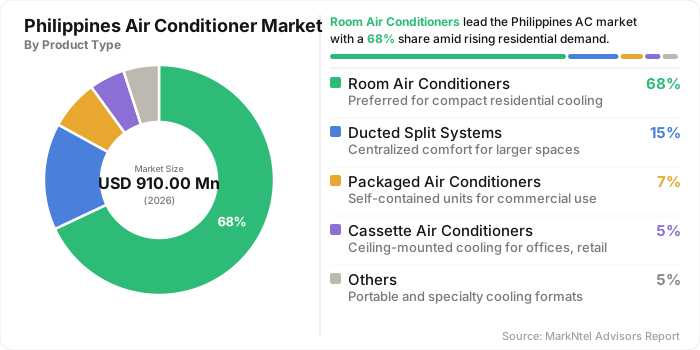
- By product type, room air conditioners held 68% of the market share in 2026.
- By refrigerant type, R32 accounts for approximately 44% of the market in 2026.
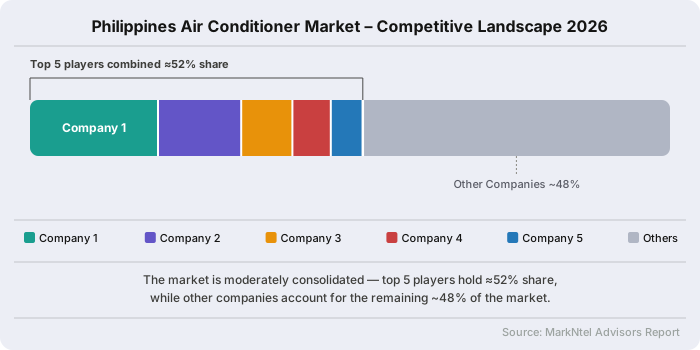
- The market remains moderately consolidated, with the top five players collectively accounting for approximately 52% of the total market share.
Philippines Air Conditioner Market Size & Outlook
The air conditioner market in the Philippines was valued at USD 0.87 billion in 2025 and is currently standing at USD 0.91 billion in 2026. The industry is projected to grow to USD 1.41 billion by 2032, showcasing a CAGR of around 7.56% during the forecast period, i.e., 2026–32.
The market is developing as demand for reliable and efficient cooling expands across residential, commercial, and institutional applications. Market conditions are being shaped by rising cooling requirements, residential construction activity, broader product availability, and growing attention to energy efficiency. The market is also supported by established distribution networks and continued product development, allowing air conditioner manufacturers to address different consumer needs as cooling becomes an increasingly important part of indoor comfort.
Government policies are also shaping the market's transition toward more efficient and environmentally responsible cooling. The Department of Energy's Philippine Energy Labeling Program establishes minimum energy performance and labelling requirements for covered air conditioners, encouraging consumers to consider efficiency when purchasing new units. In parallel, the Philippines' Kigali Amendment commitments are supporting the gradual adoption of lower global warming potential refrigerants. These developments are encouraging manufacturers to introduce more efficient products and supporting the market's longer-term shift toward energy-conscious cooling solutions.
Philippines Air Conditioner Market Key Indicators
- Extreme heat conditions continue to strengthen the underlying need for cooling equipment. In May 2026, danger-level heat indices reached 42°C to 48°C across multiple Philippine locations, reinforcing demand for residential and commercial air conditioning during hotter periods.
- Residential construction activity provides a direct installation base for air conditioners. Residential construction floor area reached 2.03 million square meters in February 2026, increasing 34.3% year on year and accounting for 56.7% of total construction floor area.
- The country's household base continues to expand, creating a larger potential consumer base for residential cooling products. The 2024 Census recorded 29.67 million households, 12.4% higher than in 2020, with an average household size of 3.8 persons.
- Tourism provides an additional demand base for air conditioning across hotels and other hospitality facilities, although growth remains modest. The Philippines recorded 6.48 million visitor arrivals in 2025, representing a 0.76% year-on-year increase and supporting gradual hospitality sector requirements.
Philippines Air Conditioner Market Scope
| Category | Segments |
|---|---|
| By Product Type | Room Air Conditioners (Window AC (Upto 1 Ton, 1 Ton to 2 Ton, Above 2 Ton), Split AC (Upto 1 Ton, 1 Ton to 1.5 Ton, Above 1.6 to 2 Ton, Above 2 Ton)), Packaged Air Conditioners (Upto 5 Tons, 6 to 10 Tons, 11 to 20 Tons, Above 20 Tons), Ducted Split Systems (Upto 5 Tons, 6 to 10 Tons, 11 to 20 Tons, Above 20 Tons), Cassette Air Conditioners (Upto 2 Tons, 2.1 to 4 Tons, 4.1 to 5 Tons, Above 5 Tons), VRF Systems, Chillers (Air-cooled chillers, Water-cooled chillers, Others), Others |
| By Refrigerant Type | R32, R410A, R134a, R290, R1234ze / R1234yf, Others |
| By Distribution Channel | Direct Sales, Authorized Dealers & Distributors, Multi-Brand Stores, Online |
| By End User | Residential, Offices, Retail & Malls, Hotels & Hospitality, Hospitals & Healthcare, Educational Institutions, Manufacturing, Pharmaceuticals, Food & Beverage, Centres |
Philippines Air Conditioner Market Growth Driver
Rising Heat Intensifies Demand for Air Conditioning
Rising heat intensity is strengthening demand for air conditioners across the Philippines as households and businesses increasingly require reliable indoor cooling. PAGASA recorded danger-level heat index readings of 42°C to 51°C across several provinces between April and June 2026, with Borongan, Eastern Samar reaching 48°C on May 11. The frequency of extreme heat conditions is encouraging consumers and commercial users to install or upgrade cooling systems, supporting both first-time purchases and replacement demand.
The pressure from rising temperatures is expected to remain relevant as electricity demand forecasts also reflect stronger cooling requirements during hotter periods. In January 2026, NGCP projected electricity demand growth of 13.32% in Luzon, 24.12% in Visayas, and 12.34% in Mindanao, while linking the increase partly to rising temperatures alongside population and economic growth. For the air conditioner industry, this points to a broader need for cooling capacity across residential and commercial settings, particularly during extended hot weather.
Government agencies are also taking measures to manage the effects of higher summer demand and maintain reliable electricity supply. In January 2026, the Department of Energy and NGCP highlighted potential summer capacity pressures and encouraged additional generation capacity to strengthen supply during peak periods. Earlier, a 42°C heat index in Isabela and Aurora contributed to a yellow alert in Luzon in March 2025. Continued government attention to heat and summer power requirements supports the need for efficient and dependable air conditioning solutions across the country.
Philippines Air Conditioner Market Trend
AI-Driven Smart Inverter Cooling
Air conditioner manufacturers in the Philippines are increasingly integrating artificial intelligence, smart connectivity, and inverter technology into residential cooling systems. In 2025, Samsung introduced AI-enabled system air conditioners for Southeast Asia and Oceania with built-in Wi-Fi, SmartThings connectivity, Bixby voice control, and AI Energy Mode. The company also reported more than 20% year-on-year growth in regional system air conditioner sales, indicating rising interest in connected and intelligent cooling solutions.
The trend gained further momentum in 2026 as manufacturers expanded AI-based features across consumer air conditioner portfolios. LG Electronics Philippines launched its DUALCOOL AI Aircon line in May 2026, combining dual inverter compressor technology with human and absence detection and ThinQ-based energy monitoring. Samsung Philippines also continued offering residential models with WindFree AI Auto Cooling and SmartThings controls. These developments are making automated temperature management and remote energy monitoring increasingly accessible to Philippine consumers.
The growing focus on AI-enabled inverter cooling is also encouraging manufacturers to differentiate products through convenience and energy management features rather than cooling performance alone. Automated operation can adjust cooling based on room conditions and user presence, while connected applications allow consumers to monitor usage and control units remotely. As these technologies become more widely incorporated into new models, smart functionality is becoming an increasingly important consideration in residential air conditioner purchases across the Philippines.
Philippines Air Conditioner Market Challenges & Opportunities
Window Type Dependence Creates an Efficiency Upgrade Opportunity
Window type air conditioners continue to account for a substantial share of room air conditioner sales in the Philippines despite their lower efficiency compared with split inverter systems. A DOE, GIZ, and IIEC market assessment presented in November 2025 found that window type units represented approximately 63% of room AC sales. A peer reviewed study published in May 2025 also cited JRAIA data showing a similar 62% share, confirming the continued dominance of this product category.
This product mix presents a challenge as the market gradually moves toward higher efficiency cooling solutions. During the November 2025 stakeholder consultation, industry participants agreed on a stepwise roadmap for minimum energy performance standards, including compliance, enforcement, and consumer awareness measures. However, the continued prevalence of conventional window units means that replacing or upgrading this installed base will require stronger consumer incentives and clearer awareness of the long term operating benefits of efficient alternatives.
These operating benefits are becoming increasingly relevant as electricity costs rise. Meralco's residential electricity rate increased from approximately USD 0.20 per kWh in May 2024 to USD 0.24 per kWh in April 2026, before reaching approximately USD 0.24 per kWh in June 2026. Higher electricity expenses can encourage households to consider split inverter systems that consume less energy during operation, creating a direct opportunity for manufacturers to accelerate efficiency focused product adoption.
Manufacturers are already positioning products around this opportunity, with LG and Samsung promoting inverter air conditioners featuring AI based energy management and kWh monitoring capabilities. Such features allow consumers to monitor electricity consumption and manage cooling more efficiently. As energy costs remain elevated and efficiency standards develop, the combination of lower operating costs, smart energy management, and improving product awareness can support a gradual shift from conventional window units toward higher efficiency split inverter air conditioners.
Segmentation Insights
Room Air Conditioners Leading Product Type Adoption
Room Air Conditioners dominate the market, accounting for approximately 68% share in 2026, supported by their broad application across residential and smaller commercial spaces. Their relatively straightforward installation, flexible capacity options, and suitability for individual rooms make them a practical cooling solution for households and businesses. Demand is further supported by the large installed base of room cooling systems and the need to replace older units with newer, more efficient models as consumers become increasingly conscious of operating costs.
The strong position of room air conditioners is also supported by their availability across different configurations and price ranges, allowing manufacturers and retailers to address a broad consumer base. Rising temperatures and growing requirements for indoor cooling continue to encourage adoption in homes, offices, retail establishments, and other small spaces. In addition, improvements in inverter technology, energy efficiency, and smart controls are increasing the attractiveness of newer room air conditioner models and supporting replacement demand within the segment. Based on product type, the market is further bifurcated into:
- Room Air Conditioners
- Packaged Air Conditioners
- Ducted Split Systems
- Cassette Air Conditioners
- VRF Systems
- Chillers
- Others
R32 Strengthening Its Position as the Leading Refrigerant
R32 accounts for approximately 44% of the market in 2026, making it the leading refrigerant type. Its growing adoption is supported by its lower global warming potential compared with several widely used legacy refrigerants, making it increasingly suitable as manufacturers transition toward more environmentally responsible cooling technologies. R32 is also being incorporated into newer residential and commercial air conditioning products, allowing manufacturers to align product development with evolving environmental requirements and consumer interest in efficient cooling solutions.
The position of R32 is being reinforced by the Philippines' broader transition toward lower global warming potential refrigerants under its commitments to the Kigali Amendment. Manufacturers are increasingly introducing R32-based systems across their product portfolios, while established air conditioner brands continue to expand their availability in the Philippine market. This transition is expected to support further R32 adoption as consumers replace older equipment and manufacturers increasingly prioritize refrigerant choices that combine effective cooling performance with improved environmental characteristics. Based on refrigerant type, the market is further bifurcated into:
- R32
- R410A
- R134a
- R290
- R1234ze / R1234yf
- Others
Philippines Air Conditioner Market Competitive Analysis
The Philippines air conditioner industry is moderately consolidated, with the top five companies accounting for approximately 52% of the total market share. The leading participants include Daikin Industries Ltd., LG Electronics, Samsung Electronics, Panasonic Holdings, and Carrier Global, reflecting the strong presence of established international air conditioning brands in the Philippine market.
Key Companies in Philippines Air Conditioner Market
- Daikin Industries Ltd.
- LG Electronics
- Samsung Electronics
- Panasonic Holdings
- Carrier Global
- Midea Group
- Gree Electric Appliances
- Haier Smart Home
- Johnson Controls Hitachi AC
- Fujitsu General
Philippines Air Conditioner Market Industry News & Recent Developments
2026: Samsung Introduces AI Inverter Air Conditioner in the Philippines
In July 2026, Samsung introduced its new AI Inverter Split type Air Conditioner in the Philippines, featuring AI based cooling, Wi Fi connectivity, and SmartThings integration. The new model strengthens Samsung's residential air conditioning portfolio by combining inverter technology with connected features designed to improve cooling convenience and energy management. The launch reflects the growing integration of smart technologies into residential cooling products in the Philippine market.
Impact Analysis: The launch strengthens the trend toward AI enabled and connected air conditioning solutions in the Philippines. By combining inverter technology with smart controls, Samsung is responding to growing consumer interest in convenient and energy conscious cooling. The introduction is expected to encourage wider adoption of smart air conditioners, intensify product differentiation among established manufacturers, and support the gradual transition toward technologically advanced residential cooling systems.
- Market Segmentation
- Introduction
- Product Definition
- Research Process
- Assumptions
- Executive Summary
- Philippines Air Conditioners Market Consumer Survey – Residential
- Current Product Usage
- Existing Air Conditioner Type
- Number of Units Installed
- Age of Equipment
- Brand Ownership & Competitive Assessment
- Current Brand Owned
- Brand Awareness
- Brand Preference
- Brand Switching Behaviour
- Reasons for Choosing or Switching Brands
- Purchase Decision Factors
- Key Purchase Drivers
- Purchase Channel
- Decision-Making Process
- Budget Considerations
- Customer Satisfaction
- Product Performance
- Energy Efficiency
- Reliability
- Installation Quality
- After-sales Service
- Future Purchase Intentions
- Replacement Plans
- Upgrade Intentions
- Purchase Timeline
- Preferred Brand for Next Purchase
- Future Customer Expectations & Innovation Opportunities
- Features Customers Wish Current Products Offered
- Pain Points with Existing Air Conditioners
- Desired Improvements in Performance and Comfort
- Interest in Smart & AI-enabled Features
- Expectations for Energy Savings
- Interest in Sustainable Refrigerants
- Importance of Indoor Air Quality Features
- Preferred Service & Warranty Models
- Willingness to Pay for Premium Features
- Features That Would Motivate Brand Switching
- Current Product Usage
- Philippines Air Conditioners Market Consumer Survey – Commercial
- Existing ACs
- Installed ACs Units
- Building Type
- Age of Equipment
- Brand Ownership & Competitive Assessment
- Current Brand Installed
- Brand Awareness
- Brand Preference
- Brand Switching Behaviour
- Competitive Benchmarking
- Purchase Decision Factors
- Procurement Process
- Decision Makers
- Budget Allocation
- Key Selection Criteria
- Customer Satisfaction
- System Performance
- Energy Efficiency
- Reliability
- Service Support
- Ease of Maintenance
- Future Investment Plans
- Planned Replacement
- Capacity Expansion
- Preferred Technologies
- Future Procurement Timeline
- Future Customer Expectations & Innovation Opportunities
- Unmet Needs in Existing Air Conditioner
- Desired Product Innovations
- Expectations for Lower Total Cost of Ownership
- Demand for AI-based Energy Optimization
- Interest in Predictive Maintenance
- Expectations for BMS & IoT Integration
- Indoor Air Quality & Healthy Building Requirements
- Sustainability & Low-Carbon Expectations
- Service Model Preferences
- Features That Would Influence Future Vendor Selection
- Market Opportunity Assessment (Highly Recommended)
- Unmet Customer Needs
- White Space Opportunities
- Untapped Customer Segments
- Customer Personas
- Emerging Use Cases
- Adoption Barriers
- Purchase Triggers
- Premiumization Potential
- Cross-selling Opportunities
- Customer Retention Drivers
- Product Innovation Priorities
- Future Technology Adoption Outlook
- Existing ACs
- Philippines Air Conditioner Market Policies, Regulations, and Product Standards
- Philippines Air Conditioner Market Trends & Developments
- Philippines Air Conditioner Market Dynamics
- Growth Factors
- Challenges
- Philippines Air Conditioner Market Hotspot & Opportunities
- Philippines Air Conditioner Market Outlook, 2022-2032F
- Market Size & Outlook
- By Revenues (USD Million)
- By Quantity Sold (Thousand Units)
- Market Segmentation & Outlook
- By Product Type- Market Size & Forecast 2022-2032, USD Million & Thousand Units
- Room Air Conditioners
- Window AC
- Upto 1 Ton
- 1 Ton to 2 Ton
- Above 2 Ton
- Split AC
- Upto 1 Ton
- 1 Ton to 1.5 Ton
- Above 1.6 to 2 Ton
- Above 2 Ton
- Window AC
- Packaged Air Conditioners
- Upto 5 Tons
- 6 to 10 Tons
- 11 to 20 Tons
- Above 20 Tons
- Ducted Split Systems
- Upto 5 Tons
- 6 to 10 Tons
- 11 to 20 Tons
- Above 20 Tons
- Cassette Air Conditioners
- Upto 2 Tons
- 2.1 to 4 Tons
- 4.1 to 5 Tons
- Above 5 Tons
- VRF Systems
- Chillers
- Air-cooled chillers
- Water-cooled chillers
- Others
- Others
- Room Air Conditioners
- By Refrigerant Type - Market Size & Forecast 2022-2032, USD Million & Thousand Units
- R32
- R410A
- R134a
- R290
- R1234ze / R1234yf
- Others
- By Distribution Channel - Market Size & Forecast 2022-2032, USD Million & Thousand Units
- Direct Sales
- Authorized Dealers & Distributors
- Multi-Brand Stores
- Online
- By End User - Market Size & Forecast 2022-2032, USD Million & Thousand Units
- Residential
- Offices
- Retail & Malls
- Hotels & Hospitality
- Hospitals & Healthcare
- Educational Institutions
- Manufacturing
- Pharmaceuticals
- Food & Beverage
- Data Centres
- Others
- By Region- Market Size & Forecast 2022-2032, USD Million & Thousand Units
- North
- South
- East
- West
- By Company
- Competition Characteristics
- Market Share & Analysis
- By Product Type- Market Size & Forecast 2022-2032, USD Million & Thousand Units
- Market Size & Outlook
- Philippines Room Air Conditioners Market Outlook, 2022-2032
- Market Size & Outlook
- By Revenues (USD Million)
- By Quantity Sold (Thousand Units)
- Market Segmentation & Outlook
- By Refrigerant Type - Market Size & Forecast 2022-2032, USD Million & Thousand Units
- By Distribution Channel - Market Size & Forecast 2022-2032, USD Million & Thousand Units
- By End User - Market Size & Forecast 2022-2032, USD Million & Thousand Units
- By Region- Market Size & Forecast 2022-2032, USD Million & Thousand Units
- Market Size & Outlook
- Philippines Packaged Air Conditioners Market Outlook, 2022-2032
- Market Size & Outlook
- By Revenues (USD Million)
- By Quantity Sold (Thousand Units)
- Market Segmentation & Outlook
- By Refrigerant Type - Market Size & Forecast 2022-2032, USD Million & Thousand Units
- By Distribution Channel - Market Size & Forecast 2022-2032, USD Million & Thousand Units
- By End User - Market Size & Forecast 2022-2032, USD Million & Thousand Units
- By Region- Market Size & Forecast 2022-2032, USD Million & Thousand Units
- Market Size & Outlook
- Philippines Ducted Split Systems Market Outlook, 2022-2032
- Market Size & Outlook
- By Revenues (USD Million)
- By Quantity Sold (Thousand Units)
- Market Segmentation & Outlook
- By Refrigerant Type - Market Size & Forecast 2022-2032, USD Million & Thousand Units
- By Distribution Channel - Market Size & Forecast 2022-2032, USD Million & Thousand Units
- By End User - Market Size & Forecast 2022-2032, USD Million & Thousand Units
- By Region- Market Size & Forecast 2022-2032, USD Million & Thousand Units
- Market Size & Outlook
- Philippines Cassette Air Conditioners Market Outlook, 2022-2032
- Market Size & Outlook
- By Revenues (USD Million)
- By Quantity Sold (Thousand Units)
- Market Segmentation & Outlook
- By Refrigerant Type - Market Size & Forecast 2022-2032, USD Million & Thousand Units
- By Distribution Channel - Market Size & Forecast 2022-2032, USD Million & Thousand Units
- By End User - Market Size & Forecast 2022-2032, USD Million & Thousand Units
- By Region- Market Size & Forecast 2022-2032, USD Million & Thousand Units
- Market Size & Outlook
- Philippines VRF Systems Market Outlook, 2022-2032
- Market Size & Outlook
- By Revenues (USD Million)
- By Quantity Sold (Thousand Units)
- Market Segmentation & Outlook
- By Refrigerant Type - Market Size & Forecast 2022-2032, USD Million & Thousand Units
- By Distribution Channel - Market Size & Forecast 2022-2032, USD Million & Thousand Units
- By End User - Market Size & Forecast 2022-2032, USD Million & Thousand Units
- By Region- Market Size & Forecast 2022-2032, USD Million & Thousand Units
- Market Size & Outlook
- Philippines Chillers Market Outlook, 2022-2032
- Market Size & Outlook
- By Revenues (USD Million)
- By Quantity Sold (Thousand Units)
- Market Segmentation & Outlook
- By Refrigerant Type - Market Size & Forecast 2022-2032, USD Million & Thousand Units
- By Distribution Channel - Market Size & Forecast 2022-2032, USD Million & Thousand Units
- By End User - Market Size & Forecast 2022-2032, USD Million & Thousand Units
- By Region- Market Size & Forecast 2022-2032, USD Million & Thousand Units
- Market Size & Outlook
- Philippines Air Conditioner Market Key Strategic Imperatives for Success & Growth
- Competitive Outlook
- Company Profiles
- Daikin Industries Ltd.
- Business Description
- Product Portfolio
- Collaborations & Alliances
- Recent Developments
- Financial Details
- Others
- LG Electronics
- Business Description
- Product Portfolio
- Collaborations & Alliances
- Recent Developments
- Financial Details
- Others
- Samsung Electronics
- Business Description
- Product Portfolio
- Collaborations & Alliances
- Recent Developments
- Financial Details
- Others
- Panasonic Holdings
- Business Description
- Product Portfolio
- Collaborations & Alliances
- Recent Developments
- Financial Details
- Others
- Carrier Global
- Business Description
- Product Portfolio
- Collaborations & Alliances
- Recent Developments
- Financial Details
- Others
- Midea Group
- Business Description
- Product Portfolio
- Collaborations & Alliances
- Recent Developments
- Financial Details
- Others
- Gree Electric Appliances
- Business Description
- Product Portfolio
- Collaborations & Alliances
- Recent Developments
- Financial Details
- Others
- Haier Smart Home
- Business Description
- Product Portfolio
- Collaborations & Alliances
- Recent Developments
- Financial Details
- Others
- Johnson Controls Hitachi AC
- Business Description
- Product Portfolio
- Collaborations & Alliances
- Recent Developments
- Financial Details
- Others
- Fujitsu General
- Business Description
- Product Portfolio
- Collaborations & Alliances
- Recent Developments
- Financial Details
- Others
- Daikin Industries Ltd.
- Company Profiles
- Disclaimer

MarkNtel Advisors follows a robust and iterative research methodology designed to ensure maximum accuracy and minimize deviation in market estimates and forecasts. Our approach combines both bottom-up and top-down techniques to effectively segment and quantify various aspects of the market. A consistent feature across all our research reports is data triangulation, which examines the market from three distinct perspectives to validate findings. Key components of our research process include:
1. Scope & Research Design At the outset, MarkNtel Advisors define the research objectives and formulate pertinent questions. This phase involves determining the type of research—qualitative or quantitative—and designing a methodology that outlines data collection methods, target demographics, and analytical tools. They also establish timelines and budgets to ensure the research aligns with client goals.
2. Sample Selection and Data Collection In this stage, the firm identifies the target audience and determines the appropriate sample size to ensure representativeness. They employ various sampling methods, such as random or stratified sampling, based on the research objectives. Data collection is carried out using tools like surveys, interviews, and observations, ensuring the gathered data is reliable and relevant.
3. Data Analysis and Validation Once data is collected, MarkNtel Advisors undertake a rigorous analysis process. This includes cleaning the data to remove inconsistencies, employing statistical software for quantitative analysis, and thematic analysis for qualitative data. Validation steps are taken to ensure the accuracy and reliability of the findings, minimizing biases and errors.

4. Data Forecast and FinalizationThe final phase involves forecasting future market trends based on the analyzed data. MarkNtel Advisors utilize predictive modeling and time series analysis to anticipate market behaviors. The insights are then compiled into comprehensive reports, featuring visual aids like charts and graphs, and include strategic recommendations to inform client decision-making
We offer flexible licensing options to cater to varying organizational needs. Choose the pricing pack that best suits your requirements:
Buy Now Inquire Before Buying
 Request Customization