

By Industry Type (Accommodation (Hotels (Luxury Hotels, Upper Mid-Scale Hotels, Mid-scale Hotels, Economy/Budget Hotels), Resorts (Beach Resorts, Hill/Mountain Resorts, Wellness Resorts), Alternative... ... sorts), Alternative Lodging (Vacation Rentals, Homestays, Serviced Apartments, Branded Residences), Hostels & Shared Accommodation), Food & Beverage (F&B) (Full-Service Restaurants, Quick Service Restaurants (QSR), Cafés & Coffee Chains, Bars, Lounges & Nightlife, Cloud Kitchens / Delivery-only kitchens, Catering Services), Travel & Tourism Services (Travel Agencies (Online & Offline), Tour Operators, Destination Management Companies (DMCs), Cruise Lines, Airline Hospitality (in-flight services, lounges), Rail & Luxury Train Hospitality), Entertainment & Leisure (Theme Parks & Amusement Parks, Casinos & Gaming, Events & Exhibitions (MICE), Nightclubs & Social Venues, Cultural & Experiential Attractions)), By Service Level (Economy, Mid-scale, Upper Mid-scale, Luxury, Ultra-Luxury), By Ownership (Chain / Branded Hospitality, Independent Operators, Franchise Model, Management Contract Model, Asset-Light Model), By Booking Channel (Online Travel Agencies (OTAs), Direct Booking (Websites & Apps), Corporate Booking Platforms, Offline Travel Agents), By Traveler Type (Domestic Travelers, International Travelers, Group Travelers, Solo Travelers), By Purpose of Travel (Leisure Travel, Business Travel, Religious Tourism, Adventure & Eco-Tourism, Wellness Tourism, Education Tourism), By End User (Individual Consumers, Corporate Clients, Government & Institutional Clients, Event Organizers), and others Read more
- FMCG
- Apr 2026
- 175
- PDF, Excel, PPT
India Hospitality Market Key Takeaways
- India Hospitality market size was valued at USD 60.83 billion in 2025 and is projected to grow from USD 65.45 billion in 2026 to USD 101.38 billion by 2032, exhibiting a CAGR of 7.57% during 2026-2032.
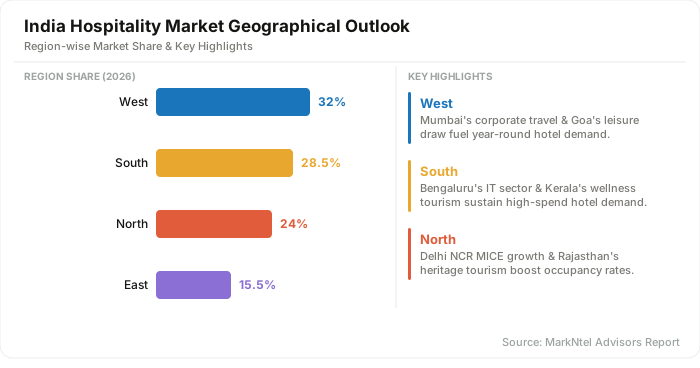
- West India holds the largest share of about 32%.
- By industry type, the accommodation holds a significant share of about 40%
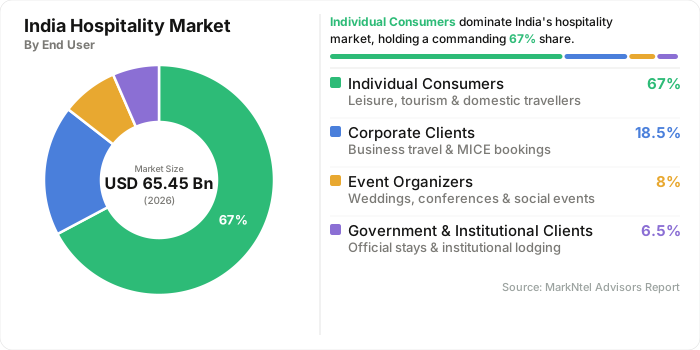
- By end user, the individual consumers segment seized a significant share of about 67% in 2026.
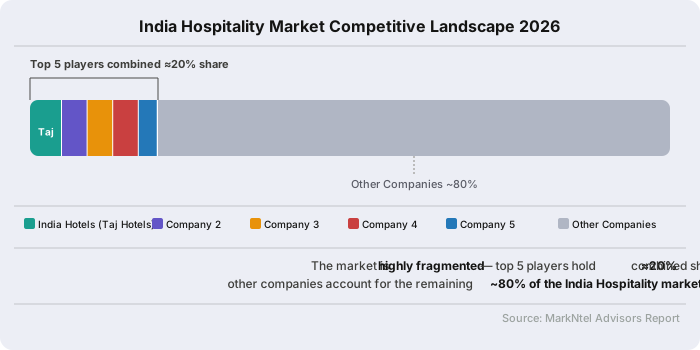
- The industry is moderately fragmented. However, the top five players collectively account for nearly 20% of the market size.
India Hospitality Market Size and Outlook
The market size of the hospitality sector in India was valued at USD 60.83 billion in 2025 and is projected to grow from USD 65.45 billion in 2026 to USD 101.38 billion by 2032. Additionally, the market is estimated to grow at a CAGR of around 7.57% during the forecast period, i.e., 2026-32.
The Hospitality market in India is projected to expand steadily, driven by increasing domestic and international tourism alongside rapid adoption of digital transformation and contactless technologies, enhancing operational efficiency, customer experience, and overall sector competitiveness in the coming years.
According to the Press Information Bureau, 3.04 billion domestic tourist visits were recorded by August 2025, along with 5.6 million foreign tourist arrivals (FTAs), underscoring robust demand across leisure, religious, and business travel segments . The surge in short-haul travel, weekend tourism, and experiential stays is further strengthening occupancy levels across hotel categories.
Regionally, North India remains the largest contributor, led by spiritual tourism. For instance, Uttar Pradesh recorded over 1.37 billion domestic tourist visits in 2025, supported by mega religious gatherings and well-developed pilgrimage circuits.
In contrast, South India is witnessing strong traction in leisure and wellness tourism. For example, Kerala reported 25.8 million tourist arrivals in 2025, including 25.0 million domestic visitors, reflecting 12.46% YoY growth. Similarly, Tiruchirappalli recorded 31.0 million tourist visits, with foreign arrivals increasing by 35%, highlighting rising international interest.
Western India is also emerging as a key tourism hub. As Goa recorded over 5.45 million tourists between January and June 2025, and exceeded 10 million total arrivals in 2025, driven largely by domestic travel demand. This tourism expansion is further supported by the growth of organized food services, which enhance overall hospitality spending and customer engagement.
The food and beverage sector is emerging as a key growth engine for the market. As Tata Starbucks surpassed 390+ stores across 54 cities by 2025 , while Jubilant FoodWorks expanded Domino’s to 2,000+ outlets, reflecting strong consumer demand for organized dining. This expansion is significantly boosting footfall and revenue generation across hotels, malls, and mixed-use hospitality developments.
Additionally, digital transformation is accelerating through initiatives such as the NIDHI (National Integrated Database of Hospitality Industry) and the Incredible India Digital Portal, enabling seamless hotel registration, classification, and digital service delivery across the ecosystem.
From a policy perspective, the government is actively strengthening tourism infrastructure and sustainability. Under the Swadesh Darshan 2.0 scheme, 53 projects worth USD 265 million have been sanctioned as of 2026, focusing on experience-driven and sustainable tourism development.
Overall, the convergence of strong tourism growth, regional diversification, organized food service expansion, and proactive government initiatives is driving the market forward. Going ahead, continued infrastructure investments, branding efforts, and digital adoption will enhance service quality, capacity, and global competitiveness, positioning India as a leading hospitality destination over the long term.
India Hospitality Market Key Indicators
- Tourism growth in Jammu & Kashmir serves as a strong key indicator of hospitality demand expansion. Under the Government of India’s Swadesh Darshan scheme, over USD 62 million has been invested in tourism infrastructure, contributing to a surge in domestic visits from 2.5 million to over 23.5 million (2024). This sharp rise in footfall highlights increasing hotel occupancy and accommodation demand.
- Pilgrimage tourism infrastructure is emerging as a key indicator of hospitality demand growth in India. According to the Press Information Bureau, under the PRASHAD scheme, 54 pilgrimage projects worth USD 207 million have been sanctioned, with 31 projects already completed, enhancing facilities at major religious destinations.
- McDonald’s expansion reflects a strong key indicator of organized hospitality and food service growth in India. The company plans to add 45–50 outlets annually until 2027, backed by investments of USD 168 million, while targeting 580–630 outlets in West & South India, signaling rising urban consumption, franchising activity, and sustained demand for organized dining infrastructure.
- The expansion of India’s organized hotel supply is a key indicator of market growth. As per an industry report, India had 192,000 chain-affiliated hotel rooms as of June 2024, reflecting rapid formalization and branded inventory expansion. This growth signals rising demand, improved occupancy potential, and increasing investments by organized players across key and emerging markets.
- The Indian Premier League 2025 Final serves as a strong key indicator of hospitality demand in India. The match at Narendra Modi Stadium attracted a massive crowd of 90,871 spectators, highlighting significant demand for hotels, transport, and food services in host cities. Such large-scale events directly boost occupancy rates and short-term tourism inflows.
India Hospitality Market Scope
| Category | Segments |
|---|---|
| By Industry Type | (Accommodation (Hotels (Luxury Hotels, Upper Mid-Scale Hotels, Mid-scale Hotels, Economy/Budget Hotels), Resorts (Beach Resorts, Hill/Mountain Resorts, Wellness Resorts), Alternative Lodging (Vacation Rentals, Homestays, Serviced Apartments, Branded Residences), Hostels & Shared Accommodation), Food & Beverage (F&B) (Full-Service Restaurants, Quick Service Restaurants (QSR), Cafés & Coffee Chains, Bars, Lounges & Nightlife, Cloud Kitchens / Delivery-only kitchens, Catering Services), Travel & Tourism Services (Travel Agencies (Online & Offline), Tour Operators, Destination Management Companies (DMCs), Cruise Lines, Airline Hospitality (in-flight services, lounges), Rail & Luxury Train Hospitality), Entertainment & Leisure (Theme Parks & Amusement Parks, Casinos & Gaming, Events & Exhibitions (MICE), Nightclubs & Social Venues, Cultural & Experiential Attractions)), |
| By Service Level | (Economy, Mid-scale, Upper Mid-scale, Luxury, Ultra-Luxury), |
| By Ownership | (Chain / Branded Hospitality, Independent Operators, Franchise Model, Management Contract Model, Asset-Light Model), |
| By Booking Channel | (Online Travel Agencies (OTAs), Direct Booking (Websites & Apps), Corporate Booking Platforms, Offline Travel Agents), |
| By Traveler Type | (Domestic Travelers, International Travelers, Group Travelers, Solo Travelers), |
| By Purpose of Travel | (Leisure Travel, Business Travel, Religious Tourism, Adventure & Eco-Tourism, Wellness Tourism, Education Tourism), |
| By End User | (Individual Consumers, Corporate Clients, Government & Institutional Clients, Event Organizers), |
India Hospitality Market Growth Drivers
Expanding Domestic & International Tourism
Rising domestic and international tourism and the emergence of new regional destinations are key drivers accelerating growth in the India hospitality market. According to the Ministry of Tourism, international tourist arrivals reached 20.57 million in 2024.
Simultaneously, foreign tourist arrivals (FTAs) stood at 9.95 million, reflecting a steady recovery in inbound travel and strengthening demand for hotels, resorts, and related services across major urban and leisure destinations.
Beyond traditional tourism hubs, East and Northeast India are rapidly gaining traction due to growing interest in heritage, eco-tourism, and offbeat travel experiences. Mizoram recorded 0.52 million tourist arrivals in 2024–25, registering a remarkable 139.5% growth, making it one of the fastest-growing tourism markets in the country. This surge highlights increasing infrastructure development and promotional efforts in previously underexplored regions. Similarly, Darjeeling witnessed a rise in tourist footfall from 0.17 million in 2024 to 0.21 million in 2025, reflecting renewed traveler interest in scenic and climate-based destinations.
The combined momentum of strong international inflows and rapid regional tourism diversification is significantly expanding the demand base for hospitality services. As new destinations gain visibility and global travel confidence improves, the market is expected to witness sustained growth, supported by infrastructure upgrades and evolving travel preferences.
Recent Trends
Digital Transformation and Contactless Hospitality Gaining Traction
A key trend shaping the India hospitality industry is the rapid adoption of digital technologies and contactless solutions aimed at enhancing guest experience and improving operational efficiency. Hotels across segments are increasingly integrating mobile-based check-ins and check-outs, digital room keys, contactless payment systems, and AI-driven customer service tools.
Leading players such as Indian Hotels Company Limited are actively investing in digital innovation to stay competitive. The company has introduced mobile-enabled check-in and check-out systems, digital concierge services, and AI-based guest engagement platforms across its properties . These solutions not only streamline operations but also enable personalized services, faster response times, and enhanced customer satisfaction. As a result, hotels are witnessing improved efficiency in front-office operations and better resource management.
Moreover, the integration of data analytics and automation is allowing hospitality providers to understand customer preferences more effectively and deliver tailored experiences. Contactless technologies are also helping reduce operational costs while ensuring higher hygiene standards, which remain a priority for travelers.
Overall, the increasing adoption of digital and contactless hospitality solutions is transforming service delivery models in India. As technology continues to evolve, this trend is expected to play a critical role in driving competitiveness, customer loyalty, and long-term growth in the hospitality sector.
India Hospitality Market Opportunities and Challenges
Seasonal Demand Volatility Driving Year-Round Tourism Diversification
India’s hospitality market continues to face seasonal demand volatility, where tourist inflows are concentrated in specific periods, leading to uneven occupancy and revenue cycles. For instance, data from the Goa Tourism Development Corporation and the Goa Department of Tourism highlights that tourist arrivals peak between November and February, while the monsoon season (June–September) witnesses a noticeable decline in occupancy levels. This cyclicality creates operational inefficiencies, as hotels struggle to maintain consistent room utilization and pricing stability during off-peak months.
However, this challenge is increasingly unlocking opportunities for year-round tourism diversification. The Ministry of Tourism, along with industry stakeholders, is actively promoting segments such as MICE (Meetings, Incentives, Conferences, and Exhibitions), wellness tourism, and spiritual tourism circuits to balance demand across seasons .
Business hubs like Hyderabad and Bengaluru are emerging as prominent MICE destinations, ensuring steady corporate travel throughout the year. Additionally, evolving travel behavior—particularly work-from-anywhere and long-stay tourism trends—is helping hotels sustain occupancy even during traditionally low-demand periods.
Overall, while seasonal fluctuations create demand instability, strategic diversification and policy support are enabling more balanced occupancy levels, improving revenue predictability, and fostering sustainable growth in India’s hospitality industry.
Segmentation Insights
Accommodation is the Leading Industry Vertical
The accommodation alone contributes approximately 40% share of the overall volume in the Hospitality market in India, supported by its extensive capacity, diverse offerings, and critical role in catering to both domestic and international travelers.
As of March 2024, India had approximately 3.4 million hotel rooms across all accommodation types, including hotels, guesthouses, homestays, and aggregator-based models . This large inventory base highlights the segment’s foundational importance in supporting the country’s rapidly growing tourism industry.
Within this, the organized/branded segment accounts for 375,000 rooms, representing nearly 11% of the total supply, indicating significant headroom for formalization and branded expansion. The premium end of the market also reflects strong demand dynamics, with 230 luxury hotels comprising around 29,000 rooms, catering to high-spending domestic and international travelers. This segment benefits from rising disposable incomes, growth in business travel, and increasing preference for premium experiences.
Additionally, the rise of alternative lodging formats such as vacation rentals, serviced apartments, and homestays is further strengthening the accommodation ecosystem by addressing diverse traveler needs across price points and geographies. Aggregator platforms have also improved accessibility and standardized services across unorganized inventory.
Overall, the dominance of the accommodation segment is driven by its scale, diversity, and continuous expansion across both organized and alternative formats, positioning it as the backbone of the market growth. Based on industry type, the scope has been segmented into
- Accommodation
- Food & Beverage (F&B)
- Travel & Tourism Services
- Entertainment & Leisure
Individual Consumers Lead the End-Use Vertical
The individual consumers segment accounts for approximately 67% share, making it the largest revenue contributor among end-use industries. This is primarily driven by the sheer volume of domestic travelers and evolving lifestyle preferences.
With rising disposable incomes, urbanization, and improved connectivity, individual travel covering leisure, religious, and short-duration trips has significantly increased across the country. This segment accounts for a substantial share of hotel stays, dining, and leisure activities, making it the primary demand generator for hospitality services.
A key factor supporting this dominance is the growing trend of frequent and experience-driven travel, including weekend getaways, staycations, and solo trips. Additionally, digital platforms and mobile applications have simplified booking processes, enabling individuals to easily access accommodation, food services, and travel experiences. The increasing influence of social media and travel content is also encouraging personalized and spontaneous travel decisions among consumers.
Furthermore, the expansion of budget hotels, homestays, and alternative lodging options has made hospitality services more accessible to a broader population base. This inclusivity, combined with affordable transportation and competitive pricing, continues to drive higher occupancy rates across regions.
Overall, the strong and consistent demand from individual consumers, supported by demographic and technological shifts, firmly establishes this segment as the leading contributor to the growth of the market. The key end users mapped in the study include:
- Individual Consumers
- Corporate Clients
- Government & Institutional Clients
- Event Organizers
India Hospitality Market Geographical Outlook
The West India region accounts for approximately 32% of Hospitality demand across the country, driven by strong tourism inflows, economic activity, and a well-developed urban and leisure ecosystem. The region benefits from a mix of business travel hubs and high-footfall leisure destinations, supported by robust infrastructure, international connectivity, and a diverse hospitality portfolio ranging from luxury hotels to budget accommodations.
According to the Press Information Bureau, Maharashtra recorded 189.37 million domestic tourist visits and 3.70 million foreign tourist visits in 2024, reflecting strong growth compared to 2023 . This highlights the state’s position as a major tourism and business hub, with cities like Mumbai and Pune driving demand for both corporate and leisure hospitality services.
In addition, destinations such as Goa continue to attract significant domestic and international tourists, further strengthening the region’s hospitality demand. The presence of major commercial centers, entertainment hubs, and event venues also boosts occupancy rates and average revenue per user (ARPU) across hotels and food service establishments.
Overall, the dominance of West India is attributed to its high tourist volumes, strong economic base, and balanced mix of business and leisure travel, making it a key revenue-generating region for the hospitality demand.
India Hospitality Market Competitive Analysis
The industry is moderately fragmented, with a large number of domestic and international players operating across multiple segments, including accommodation, food & beverage, travel services, and leisure. The top five companies, including Marriott International, Inc., Indian Hotels Company Limited, Hyatt Hotels Corporation, Accor S.A., and Radisson Hotel Group, collectively account for approximately 20% of the total market share, reflecting a competitive landscape characterized by strong brand presence, regional expansion strategies, and segment-specific specialization.
Major Companies in the Industry
- The Indian Hotels Company Limited (IHCL)
- EIH Limited (Oberoi Group)
- ITC Hotels Limited
- Hyatt Hotels Corporation
- Marriott International, Inc.
- Accor S.A.
- Radisson Hotel Group
- InterContinental Hotels Group PLC (IHG)
- Hilton Worldwide Holdings Inc.
- OYO Hotels & Homes
- Lemon Tree Hotels Limited
- Mahindra Holidays & Resorts India Limited
- Chalet Hotels Limited
- Royal Orchid Hotels Limited
- Sarovar Hotels Private Limited
- Others
India Hospitality Industry News and Recent Developments
April 2026: Rising Investments in Kushinagar Signal Spiritual Tourism Boom
At the Kushinagar International Buddhist Conclave 2026, investors expressed interest in projects worth USD 360 million across hotels, resorts, and tourism infrastructure. With over 8.2 million visitors to the Buddhist circuit in 2025, destinations like Kushinagar are witnessing rapid tourism-driven infrastructure development.
Impact Analysis: This surge highlights how spiritual tourism is driving hospitality growth in Tier-II cities. Increased visitor inflow boosts hotel occupancy, encourages new property development, and attracts both domestic and foreign investments. It also strengthens regional economies, improves connectivity, and diversifies India’s tourism portfolio beyond metros, supporting long-term, sustainable expansion of the hospitality market.
April 2026: Minor Hotels Plans Second Property in West Bengal
Thailand-based Minor Hotels announced plans to develop a 170-key luxury hotel in Kolkata, marking its second project in West Bengal. The company aims to expand aggressively in India with a long-term pipeline of multiple properties, supported by strong tourism growth and rising demand for premium hospitality offerings.
Impact Analysis: This expansion highlights increasing foreign direct investment in India’s hospitality sector, boosting premium hotel supply in key urban destinations like Kolkata. It strengthens India’s positioning as a global tourism hub, enhances employment generation, and accelerates infrastructure development, while intensifying competition among luxury hotel operators and improving overall service standards in the market.
October 2025: Chalet Hotels Launches Premium Lifestyle Brand ATHIVA
Chalet Hotels introduced its new lifestyle brand ATHIVA Hotels & Resorts, targeting modern travelers seeking experiential stays. The brand will launch with 900+ rooms across six properties, focusing on design-led hospitality, wellness, and curated guest experiences, aligning with evolving preferences of millennials and Gen Z travelers.
Impact Analysis: The launch signals a shift toward lifestyle and experience-driven hospitality in India, moving beyond traditional hotel formats. It strengthens brand diversification and enhances competition in the premium segment, encouraging innovation in service offerings. Additionally, it supports higher revenue per room and attracts younger demographics, thereby accelerating overall market growth and repositioning India’s hospitality landscape.
- Market Segmentation
- Introduction
- Product Definition
- Research Process
- Assumptions
- Executive Summary
- India Hospitality Market Policies, Regulations, and Product Standards
- India Hospitality Market Trends & Developments
- India Hospitality Market Dynamics
- Growth Factors
- Challenges
- India Hospitality Market Hotspot & Opportunities
- India Hospitality Market Outlook, 2022-2032F
- Market Size & Outlook
- By Revenues (USD Million)
- Market Share & Outlook
- By Industry Type- Market Size & Forecast 2022-2032, USD Million
- Accommodation
- Hotels
- Luxury Hotels
- Upper Mid-Scale Hotels
- Mid-scale Hotels
- Economy/Budget Hotels
- Resorts
- Beach Resorts
- Hill/Mountain Resorts
- Wellness Resorts
- Alternative Lodging
- Vacation Rentals
- Homestays
- Serviced Apartments
- Branded Residences
- Hostels & Shared Accommodation
- Hotels
- Food & Beverage (F&B)
- Full-Service Restaurants
- Quick Service Restaurants (QSR)
- Cafés & Coffee Chains
- Bars, Lounges & Nightlife
- Cloud Kitchens / Delivery-only kitchens
- Catering Services
- Travel & Tourism Services
- Travel Agencies (Online & Offline)
- Tour Operators
- Destination Management Companies (DMCs)
- Cruise Lines
- Airline Hospitality (in-flight services, lounges)
- Rail & Luxury Train Hospitality
- Entertainment & Leisure
- Theme Parks & Amusement Parks
- Casinos & Gaming
- Events & Exhibitions (MICE)
- Nightclubs & Social Venues
- Cultural & Experiential Attractions
- Accommodation
- By Service Level - Market Size & Forecast 2022-2032, USD Million
- Economy
- Mid-scale
- Upper Mid-scale
- Luxury
- Ultra-Luxury
- By Ownership- Market Size & Forecast 2022-2032, USD Million
- Chain / Branded Hospitality
- Independent Operators
- Franchise Model
- Management Contract Model
- Asset-Light Model
- By Booking Channel - Market Size & Forecast 2022-2032, USD Million
- Online Travel Agencies (OTAs)
- Direct Booking (Websites & Apps)
- Corporate Booking Platforms
- Offline Travel Agents
- By Traveler Type- Market Size & Forecast 2022-2032, USD Million
- Domestic Travelers
- International Travelers
- Group Travelers
- Solo Travelers
- By Purpose of Travel- Market Size & Forecast 2022-2032, USD Million
- Leisure Travel
- Business Travel
- Religious Tourism
- Adventure & Eco-Tourism
- Wellness Tourism
- Education Tourism
- By End User- Market Size & Forecast 2022-2032, USD Million
- Individual Consumers
- Corporate Clients
- Government & Institutional Clients
- Event Organizers
- By Region- Market Size & Forecast 2022-2032, USD Million
- North India
- South India
- East India
- West India
- By Company
- Competition Characteristics
- Market Share & Analysis
- By Industry Type- Market Size & Forecast 2022-2032, USD Million
- Market Size & Outlook
- North India Hospitality Market Outlook, 2022-2032
- Market Size & Outlook
- By Revenues (USD Million)
- Market Share & Outlook
- By Service Level - Market Size & Forecast 2022-2032, USD Million
- By Ownership- Market Size & Forecast 2022-2032, USD Million
- By Booking Channel - Market Size & Forecast 2022-2032, USD Million
- By Traveler Type- Market Size & Forecast 2022-2032, USD Million
- By Purpose of Travel- Market Size & Forecast 2022-2032, USD Million
- By End User- Market Size & Forecast 2022-2032, USD Million
- By Region- Market Size & Forecast 2022-2032, USD Million
- Market Size & Outlook
- South India Hospitality Market Outlook, 2022-2032
- Market Size & Outlook
- By Revenues (USD Million)
- Market Share & Outlook
- By Service Level - Market Size & Forecast 2022-2032, USD Million
- By Ownership- Market Size & Forecast 2022-2032, USD Million
- By Booking Channel - Market Size & Forecast 2022-2032, USD Million
- By Traveler Type- Market Size & Forecast 2022-2032, USD Million
- By Purpose of Travel- Market Size & Forecast 2022-2032, USD Million
- By End User- Market Size & Forecast 2022-2032, USD Million
- By Region- Market Size & Forecast 2022-2032, USD Million
- Market Size & Outlook
- East India Hospitality Market Outlook, 2022-2032
- Market Size & Outlook
- By Revenues (USD Million)
- Market Share & Outlook
- By Service Level - Market Size & Forecast 2022-2032, USD Million
- By Ownership- Market Size & Forecast 2022-2032, USD Million
- By Booking Channel - Market Size & Forecast 2022-2032, USD Million
- By Traveler Type- Market Size & Forecast 2022-2032, USD Million
- By Purpose of Travel- Market Size & Forecast 2022-2032, USD Million
- By End User- Market Size & Forecast 2022-2032, USD Million
- By Region- Market Size & Forecast 2022-2032, USD Million
- Market Size & Outlook
- West India Hospitality Market Outlook, 2022-2032
- Market Size & Outlook
- By Revenues (USD Million)
- Market Share & Outlook
- By Service Level - Market Size & Forecast 2022-2032, USD Million
- By Ownership- Market Size & Forecast 2022-2032, USD Million
- By Booking Channel - Market Size & Forecast 2022-2032, USD Million
- By Traveler Type- Market Size & Forecast 2022-2032, USD Million
- By Purpose of Travel- Market Size & Forecast 2022-2032, USD Million
- By End User- Market Size & Forecast 2022-2032, USD Million
- By Region- Market Size & Forecast 2022-2032, USD Million
- Market Size & Outlook
- India Hospitality Market Key Strategic Imperatives for Success & Growth
- Competitive Outlook
- Company Profiles
- The Indian Hotels Company Limited (IHCL)
- Business Description
- Product Portfolio
- Collaborations & Alliances
- Recent Developments
- Financial Details
- Others
- EIH Limited (Oberoi Group)
- Business Description
- Product Portfolio
- Collaborations & Alliances
- Recent Developments
- Financial Details
- Others
- ITC Hotels Limited
- Business Description
- Product Portfolio
- Collaborations & Alliances
- Recent Developments
- Financial Details
- Others
- Hyatt Hotels Corporation
- Business Description
- Product Portfolio
- Collaborations & Alliances
- Recent Developments
- Financial Details
- Others
- Marriott International, Inc.
- Business Description
- Product Portfolio
- Collaborations & Alliances
- Recent Developments
- Financial Details
- Others
- Accor S.A.
- Business Description
- Product Portfolio
- Collaborations & Alliances
- Recent Developments
- Financial Details
- Others
- Radisson Hotel Group
- Business Description
- Product Portfolio
- Collaborations & Alliances
- Recent Developments
- Financial Details
- Others
- InterContinental Hotels Group PLC (IHG)
- Business Description
- Product Portfolio
- Collaborations & Alliances
- Recent Developments
- Financial Details
- Others
- Hilton Worldwide Holdings Inc.
- Business Description
- Product Portfolio
- Collaborations & Alliances
- Recent Developments
- Financial Details
- Others
- OYO Hotels & Homes
- Business Description
- Product Portfolio
- Collaborations & Alliances
- Recent Developments
- Financial Details
- Others
- Lemon Tree Hotels Limited
- Business Description
- Product Portfolio
- Collaborations & Alliances
- Recent Developments
- Financial Details
- Others
- Mahindra Holidays & Resorts India Limited
- Business Description
- Product Portfolio
- Collaborations & Alliances
- Recent Developments
- Financial Details
- Others
- Chalet Hotels Limited
- Business Description
- Product Portfolio
- Collaborations & Alliances
- Recent Developments
- Financial Details
- Others
- Royal Orchid Hotels Limited
- Business Description
- Product Portfolio
- Collaborations & Alliances
- Recent Developments
- Financial Details
- Others
- Sarovar Hotels Private Limited
- Business Description
- Product Portfolio
- Collaborations & Alliances
- Recent Developments
- Financial Details
- Others
- The Indian Hotels Company Limited (IHCL)
- Company Profiles
- Disclaimer

MarkNtel Advisors follows a robust and iterative research methodology designed to ensure maximum accuracy and minimize deviation in market estimates and forecasts. Our approach combines both bottom-up and top-down techniques to effectively segment and quantify various aspects of the market. A consistent feature across all our research reports is data triangulation, which examines the market from three distinct perspectives to validate findings. Key components of our research process include:
1. Scope & Research Design At the outset, MarkNtel Advisors define the research objectives and formulate pertinent questions. This phase involves determining the type of research—qualitative or quantitative—and designing a methodology that outlines data collection methods, target demographics, and analytical tools. They also establish timelines and budgets to ensure the research aligns with client goals.
2. Sample Selection and Data Collection In this stage, the firm identifies the target audience and determines the appropriate sample size to ensure representativeness. They employ various sampling methods, such as random or stratified sampling, based on the research objectives. Data collection is carried out using tools like surveys, interviews, and observations, ensuring the gathered data is reliable and relevant.
3. Data Analysis and Validation Once data is collected, MarkNtel Advisors undertake a rigorous analysis process. This includes cleaning the data to remove inconsistencies, employing statistical software for quantitative analysis, and thematic analysis for qualitative data. Validation steps are taken to ensure the accuracy and reliability of the findings, minimizing biases and errors.

4. Data Forecast and FinalizationThe final phase involves forecasting future market trends based on the analyzed data. MarkNtel Advisors utilize predictive modeling and time series analysis to anticipate market behaviors. The insights are then compiled into comprehensive reports, featuring visual aids like charts and graphs, and include strategic recommendations to inform client decision-making
We offer flexible licensing options to cater to varying organizational needs. Choose the pricing pack that best suits your requirements:
Buy Now Inquire Before Buying
 Request Customization