

By Product Type (Fresh Cream, Whipping Cream, Cooking Cream, Heavy Cream, Light Cream, Sour Cream, UHT/Sterilized Cream, Others), By Fat Content (Low-Fat Cream, Medium-Fat Cream, High-Fat/Full-Fat Cre... ... igh-Fat/Full-Fat Cream), By Source (Cow Milk Cream, Buffalo Milk Cream, Mixed Milk Cream, Others), By Application (Bakery & Confectionery, Dairy & Frozen Desserts, Foodservice/HoReCa, Household Consumption, Beverages, Ready-to-Eat & Processed Foods, Others), By Distribution Channel (Supermarkets & Hypermarkets, Convenience Stores, Specialty Dairy Stores, Online Retail/E-Commerce, Institutional/B2B Sales, Others), By End User (Residential, Commercial (Bakeries, Restaurants, Cafés, Hotels, Ice Cream Manufacturers, Food Processors)), By Packaging Type (Cartons, Pouches, Bottles, Tubs, Bulk Packaging, Cans), and others Read more
- Food & Beverages
- May 2026
- 135
- PDF, Excel, PPT
India Dairy Cream Market Key Takeaways
- The India Dairy Cream Market was valued at around USD 230 million in 2025 and is anticipated to expand from USD 243.13 million in 2026 to USD 354.95 million by 2032.
- The industry is projected to reflect a CAGR of 6.51% over the forecast period.
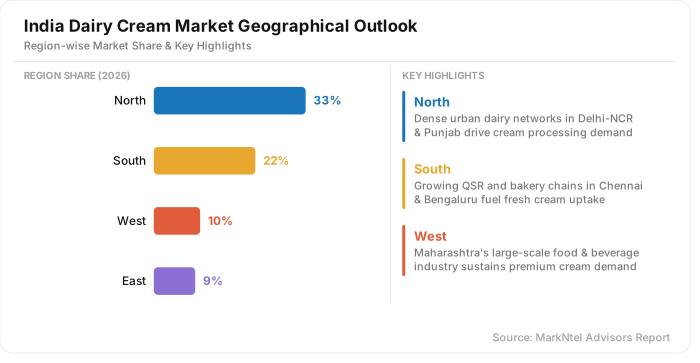
- North India accounted for the largest regional share of nearly 33% in 2026.
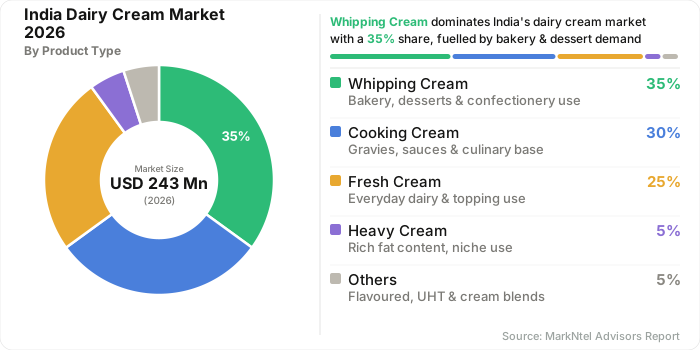
- Whipping Cream emerged as the leading product category with nearly 35% market share in 2026.
- Bakery & Confectionery held the dominant application share of around 32% in 2026.
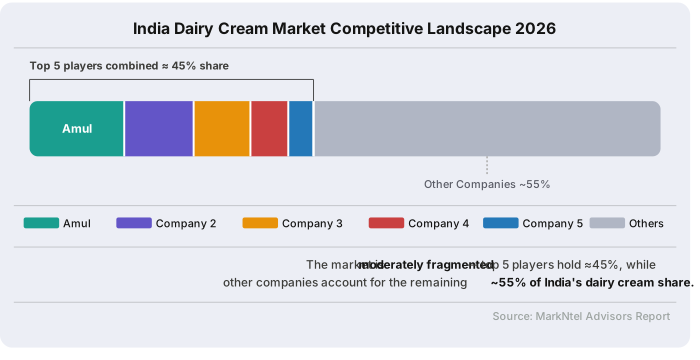
- The industry is moderately fragmented, with the top five leading players accounting for approximately 45% of the total market share.
India Dairy Cream Market Size and Outlook
The India dairy cream market is expected to witness sustainable growth with a compound annual growth rate of 6.51% during the forecast period. Increasing adoption of western-style food habits, along with strong growth in the hospitality and food processing sectors, has steadily supported the demand for dairy cream in India. Rising consumption of premium desserts, bakery products, café beverages, and ready-to-eat foods has increased demand for whipping cream, cooking cream, and fresh cream across both residential and commercial applications.
At the same time, India’s milk production reached 247.87 million tonnes during 2024–25, ensuring stable raw material availability for value-added dairy processing activities . Growing urbanization, higher disposable incomes, and expanding organized retail networks have further accelerated packaged dairy consumption across urban and semi-urban regions. As demand for processed and premium dairy products continues to rise, government-backed dairy modernization initiatives have strengthened India’s dairy processing ecosystem through investments in milk procurement systems, cold-chain infrastructure, quality testing laboratories, and processing facilities.
Programs such as the National Programme for Dairy Development and the Animal Husbandry Infrastructure Development Fund continue supporting dairy infrastructure expansion and value-added manufacturing capabilities across multiple states . These initiatives have improved supply-chain efficiency while enabling dairy manufacturers to expand cream production capacity, improve product quality, and strengthen nationwide distribution capabilities for retail and institutional consumers.
Supported by these infrastructure developments, commercial applications continue to account for the largest share of dairy cream demand, particularly across bakery, confectionery, HoReCa, frozen dessert, and processed food industries. India’s factory-use fluid milk consumption is projected to reach 125.5 million metric tonnes in 2025, reflecting rising industrial demand for processed dairy ingredients used in large-scale food production.
In response, leading companies including Amul, Mother Dairy, Milky Mist, and Parag Milk Foods have expanded their portfolios through whipping cream, UHT cream, and foodservice-oriented dairy products targeting bakeries, cafés, hotels, and institutional buyers. Several processors have also invested in automation technologies and cold-chain logistics during 2025–26 to improve operational efficiency and product shelf life.
The ongoing shift toward premium dairy consumption and the steady expansion of commercial foodservice operations are expected to strengthen the future growth outlook of the India dairy cream industry. Government projections indicate that India could contribute nearly 32% of global milk production during 2025–26, supporting long-term raw material availability for downstream dairy cream manufacturing activities .
Overall, the rising demand for premium bakery products, café beverages, convenience foods, and dessert applications is expected to sustain consumption across both residential and commercial end-user segments, supporting the growth of the India dairy market from USD 243.13 million in 2026 to USD 354.95 million by 2032. Simultaneously, continued investments in dairy digitization, livestock productivity enhancement, and cold-chain development are expected to strengthen domestic manufacturing capabilities and support long-term market expansion.
India Dairy Cream Market Key Indicators
- India’s per capita milk availability increased to nearly 485 grams per day in 2024–25, indicating rising dairy consumption levels nationwide. Increasing dairy intake and changing dietary preferences are supporting higher demand for premium dairy products, including packaged cream used in bakery, confectionery, and household applications.
- According to the India Brand Equity Foundation (IBEF), the Government of India is strengthening food processing and cold-storage infrastructure with approved cold-chain and storage projects supporting a total capacity of 24.25 lakh metric tonnes (LMT). Expanding cold-storage and food processing capabilities are improving the handling, transportation, and shelf-life management of perishable dairy products, including whipping cream and fresh cream, thereby supporting the long-term growth of the Indian processed dairy cream market.
- India’s food processing sector is projected to reach approximately USD 535 billion by FY26, as reported by the India Brand Equity Foundation (IBEF). Expanding production of bakery products, confectionery items, processed foods, and ready-to-eat meals is increasing the utilization of dairy cream in commercial food manufacturing, thereby accelerating demand for value-added dairy ingredients across India.
- India’s dairy sector continues to strengthen under the White Revolution 2.0 initiative, which focuses on expanding cooperative dairy infrastructure, increasing organized milk procurement, and improving value-added dairy processing capabilities. According to the Ministry of Cooperation, India produced 239.3 million metric tonnes of milk in 2023–24, with nearly 150 million metric tonnes available as marketable surplus, creating strong supply potential for dairy cream and other processed dairy products.
- India possesses one of the world’s largest dairy animal populations, with total livestock numbers reaching approximately 535.78 million, including over 302 million bovines, according to the 20th Livestock Census. The extensive cattle and buffalo population supports consistent milk production and higher milk fat availability, enabling large-scale cream extraction and expanding the supply base for value-added dairy products across India.
India Dairy Cream Market Scope
| Category | Segments |
|---|---|
| By Product Type | Fresh Cream, Whipping Cream, Cooking Cream, Heavy Cream, Light Cream, Sour Cream, UHT/Sterilized Cream, Others |
| By Fat Content | Low-Fat Cream, Medium-Fat Cream, High-Fat/Full-Fat Cream |
| By Source | Cow Milk Cream, Buffalo Milk Cream, Mixed Milk Cream, Others |
| By Application | Bakery & Confectionery, Dairy & Frozen Desserts, Foodservice/HoReCa, Household Consumption, Beverages, Ready-to-Eat & Processed Foods, Others |
| By Distribution Channel | Supermarkets & Hypermarkets, Convenience Stores, Specialty Dairy Stores, Online Retail/E-Commerce, Institutional/B2B Sales, Others |
| By End User | Residential, Commercial (Bakeries, Restaurants, Cafés, Hotels, Ice Cream Manufacturers, Food Processors |
| By Packaging Type | Cartons, Pouches, Bottles, Tubs, Bulk Packaging, Cans |
India Dairy Cream Market Growth Drivers
Rising Expansion of Bakery, Café, and Foodservice Industries
Expansion of organized bakery chains, premium cafés, and commercial foodservice establishments is significantly contributing to the rising demand for dairy cream products across India. Rising urbanization, evolving food preferences, and increasing exposure to western-style desserts and beverages are accelerating the consumption of whipping cream, cooking cream, and fresh cream across commercial food applications. India’s food services is projected to exceed approximately USD 120 billion by 2030, with the organized sector expected to contribute more than 60% of overall industry growth, according to the India Brand Equity Foundation (IBEF). The increasing penetration of organized dining formats, quick-service restaurants, and premium dessert outlets is generating sustained demand for cream-based ingredients across institutional food preparation activities.
This growth trend has strengthened further with continuous expansion of café chains, artisanal bakeries, dessert outlets, and food delivery platforms across India during 2025 and 2026. For instance, Barista Coffee announced plans to expand its network to nearly 900 stores by 2030 while increasing focus on tier-2 and tier-3 cities to capitalize on rising coffee culture and premium beverage consumption in India . Similarly, premium bakery chain Theobroma expanded to more than 225 stores across over 30 Indian cities, reflecting strong growth in organized bakery and dessert consumption . Increasing sales of cakes, pastries, brownies, and confectionery products are accelerating institutional utilization of whipping cream and specialty dairy ingredients across commercial bakery operations.
Alongside organized foodservice growth, the steady expansion of India’s celebration economy is further reinforcing dairy cream consumption across the country. Rising expenditure on birthdays, weddings, festivals, and social gatherings continues increasing demand for premium desserts and cream-based confectionery products. As bakery chains, cafés, and dessert outlets expand beyond metropolitan areas into tier-2 and tier-3 cities, commercial utilization of dairy cream products is expected to increase steadily across India’s food ecosystem. Continued growth in premium food consumption and organized dining infrastructure is likely to create long-term demand opportunities for value-added dairy cream products nationwide.
Recent Trends
Increasing Adoption of Low-Fat and Health-Oriented Dairy Cream Products
Growing consumer preference for balanced nutrition and healthier dietary habits is increasingly influencing purchasing patterns across India’s dairy industry, including the dairy cream segment. Rising awareness regarding calorie intake, protein consumption, and clean-label food products is encouraging consumers to shift toward low-fat, preservative-free, and health-oriented dairy offerings. This transition has accelerated with rising urbanization, improving disposable incomes, and wider access to wellness-focused food products through organized retail and digital commerce platforms. Consequently, dairy manufacturers are expanding portfolios with low-fat cream, protein-enriched dairy products, and functional dairy offerings targeting health-conscious consumers.
As consumer preferences continue evolving, the impact of this trend is becoming increasingly visible across product innovation and dairy processing activities. For instance, in 2026, Mother Dairy introduced its “Go-Low” product range featuring low-calorie dairy products while also expanding its high-protein dairy portfolio to address rising demand for healthier consumption choices in India . Similarly, Milky Mist announced expansion of its premium and protein-enriched dairy product portfolio, including plans to introduce high-protein milk products targeting wellness-focused consumers. These developments reflect how dairy companies are strengthening investments in value-added and health-oriented dairy product manufacturing capabilities.
Continued expansion of India’s health and wellness food segment, combined with growing preference for nutrition-focused consumption, is expected to support long-term demand for healthier dairy offerings. Rising participation of working professionals, fitness-conscious consumers, and younger demographics in premium food consumption is further strengthening demand for low-fat and functional dairy products across urban markets. At the same time, expanding availability of healthier dairy products through supermarkets, online grocery platforms, cafés, and premium foodservice establishments is improving product accessibility nationwide.
India Dairy Cream Market Opportunities and Challenges
Cold-Chain Limitations Accelerating Adoption of Shelf-Stable Dairy Cream Products
Inadequate cold-chain connectivity and the perishable nature of cream-based dairy products are creating operational and distribution-related challenges for dairy manufacturers across India. Dairy cream requires uninterrupted refrigerated storage and transportation to maintain product quality, shelf life, and food safety standards throughout the supply chain. However, uneven cold-storage infrastructure across rural and semi-urban regions continues limiting efficient nationwide distribution of cream products. As organized retail, cafés, bakeries, and food delivery platforms continue expanding across India, demand for dairy cream products with longer shelf life and easier transportation capabilities is increasing steadily across commercial and retail applications.
In response, dairy manufacturers are increasingly focusing on UHT processing, aseptic packaging, and shelf-stable dairy cream technologies that reduce dependency on continuous refrigeration and improve operational convenience for commercial buyers. For instance, Prime Minister Narendra Modi inaugurated Rajasthan’s first UHT aseptic packaging plant at Bhilwara Dairy in 2025, where products including Saras Cream are being processed using UHT technology capable of extending shelf life up to six months without refrigeration.
The development highlights growing industry focus on long-shelf-life dairy products and advanced packaging technologies aimed at improving nationwide distribution efficiency. As organized foodservice and modern retail infrastructure continue expanding beyond metropolitan regions, adoption of shelf-stable dairy cream products is expected to increase steadily across India over the coming years.
Segmentation Insights
Expansion of Café Culture and Celebration-Based Dessert Consumption Driving Growth of Whipping Cream Segment
Whipping Cream held nearly 35% share within the product type segment, making it the leading category in the India dairy cream market during 2026. The segment’s dominance is supported by strong demand from bakery chains, cafés, confectionery manufacturers, and premium dessert outlets across urban India. Whipping cream is widely used in cake decoration, pastries, mousse preparation, dessert toppings, specialty beverages, and frozen dessert applications due to its texture stability and versatility in commercial food preparation. Growing popularity of customized celebration cakes, artisanal desserts, and premium confectionery products is further accelerating product utilization across institutional and retail channels.
The segment is also benefiting from rising café culture and increasing consumption of western-style desserts across tier-1 and tier-2 cities. According to Swiggy’s 2026 Mother’s Day consumption report, the platform delivered an average of 13,039 cakes per hour across India, while fine-dining reservations increased by 71.8% year-on-year during the celebration period . Rising demand for customized cakes and indulgence-oriented dessert experiences is significantly increasing commercial utilization of whipping cream across bakery and confectionery operations. Manufacturers are also expanding portfolios with stabilized whipping cream, low-fat variants, and long-shelf-life UHT whipping cream products while improving availability through retail and quick-commerce channels across India. Based on product type, the market has been segmented into:
- Fresh Cream
- Whipping Cream
- Cooking Cream
- Heavy Cream
- Light Cream
- Sour Cream
- UHT/Sterilized Cream
- Others
Bakery & Confectionery Segment Dominates the Application Landscape Due to Rising Premium Dessert Consumption
Bakery & Confectionery held approximately 32% share within the application segment, positioning it as the leading application category in the India dairy cream market. The segment’s growth is largely supported by rising demand for cakes, pastries, donuts, dessert fillings, confectionery toppings, and premium baked products across India’s urban consumer base. Rapid growth of bakery chains, café dining culture, celebration-based consumption, and premium dessert trends is significantly increasing utilization of dairy cream products in commercial food preparation activities.Dairy cream remains an essential ingredient in bakery and confectionery manufacturing due to its texture enhancement, decorative applications, and flavor consistency in premium desserts and baked goods.
Growing adoption of online bakery delivery platforms and customized cake businesses is further accelerating institutional demand for whipping cream and fresh cream products across commercial kitchens. Rising consumer preference for western-style desserts and premium confectionery products during festivals, birthdays, weddings, and social gatherings is also reinforcing long-term consumption growth within the segment.
In addition, expansion of organized bakery infrastructure and premium dessert outlets across tier-2 cities is contributing to higher adoption of dairy cream products in commercial baking operations. Increasing availability of bakery ingredients through online retail channels and wholesale foodservice distributors is further improving accessibility of cream products for small and medium-sized bakery businesses across India. Based on application, the market is categorized into:
- Bakery & Confectionery
- Dairy & Frozen Desserts
- Foodservice/HoReCa
- Household Consumption
- Beverages
- Ready-to-Eat & Processed Foods
- Others
India Dairy Cream Market Geographical Outlook
Strong dairy consumption and extensive milk production infrastructure helped North India capture nearly 33% share of the India dairy cream market. The region’s leadership is supported by rising demand for bakery and confectionery products across major states including Uttar Pradesh, Punjab, Haryana, Rajasthan, and Delhi. High consumption of dairy-rich sweets, desserts, and cream-based food products continues strengthening demand for fresh cream, whipping cream, and related dairy applications across both household and commercial segments. This demand is further reinforced by a well-established dairy cooperative ecosystem and extensive milk procurement networks that support large-scale dairy processing and cream manufacturing operations throughout the region.
According to the Department of Animal Husbandry and Dairying, northern states remain among India’s leading milk-producing regions, ensuring stable raw material availability for organized dairy companies. Supported by this strong dairy production base, rapid urbanization and expansion of organized retail infrastructure across cities including Delhi NCR, Chandigarh, Jaipur, and Lucknow are steadily increasing penetration of packaged dairy cream products across urban consumer markets.
Simultaneously, the growing presence of cafés, bakery chains, hotels, quick-service restaurants, and premium dessert outlets is strengthening institutional demand for whipping cream and specialty dairy ingredients throughout the region. Expansion of refrigerated logistics networks, e-commerce grocery delivery platforms, and food processing infrastructure is further improving accessibility of premium dairy cream products across both metropolitan and semi-urban markets in North India.
India Dairy Cream Market Competitive Analysis
Competition within the dairy cream industry across India remains moderately fragmented due to the presence of large cooperative brands, private dairy companies, and regional dairy processors across the country. Leading companies, including Amul, Mother Dairy, Milky Mist, Hatsun Agro Product, and Parag Milk Foods, together hold approximately 45% share of the organized segment, benefiting from established dairy supply chains, advanced processing capabilities, and strong penetration across retail and institutional sales channels.
Key Dairy Cream Companies in India
- Amul
- Mother Dairy
- Milky Mist
- Hatsun Agro Product
- Karnataka Milk Federation (Nandini)
- Parag Milk Foods
- D'lecta Foods
- Heritage Foods
- Dodla Dairy
- Akshayakalpa Organic
- Others
India Dairy Cream Industry News and Recent Developments
May 2026: Magnum Plans Additional Manufacturing Facilities to Expand Premium Ice Cream Production in India
Premium ice cream brand Magnum announced plans to expand its manufacturing footprint in India by adding multiple production facilities to meet rising demand for premium ice cream products across urban markets. The expansion is aimed at strengthening supply capabilities and supporting growth in indulgence-oriented dessert categories.
Impact Analysis: The development highlights rising demand for cream-intensive dairy products within India’s premium ice cream segment. Since premium ice cream production relies heavily on dairy cream and milk fat, expansion of manufacturing capacity is expected to increase upstream demand for dairy cream products. The investment also reflects growing consumer preference for premium and indulgence-focused dairy consumption across retail and foodservice channels.
September 2025: Hatsun Agro Expands Protein-Enriched Dairy Product Portfolio
Hatsun Agro Product announced plans to introduce new protein-based dairy products to capitalize on rising health-conscious consumption trends in India. The company also plans to expand its HAP Daily retail network and strengthen exports, reflecting increasing focus on premium and nutrition-oriented dairy consumption across organized retail channels.
Impact Analysis: The development highlights rising consumer preference for health-oriented and value-added dairy products across India. Expansion of protein-enriched dairy offerings is expected to strengthen demand for premium dairy ingredients, including cream-based and functional dairy applications. The initiative also reflects increasing investments by organized dairy companies in premiumization, retail expansion, and nutrition-focused product innovation targeting urban and wellness-conscious consumers.
- Market Segmentation
- Introduction
- Product Definition
- Research Process
- Assumptions
- Executive Summary
- India Dairy Cream Market Policies, Regulations, and Product Standards
- India Dairy Cream Market Trends & Developments
- India Dairy Cream Market Dynamics
- Growth Factors
- Challenges
- India Dairy Cream Market Hotspot & Opportunities
- India Dairy Cream Market Outlook, 2022-2032F
- Market Size & Outlook
- By Revenues (USD Million)
- By Quantity Sold (Tons)
- Market Share & Outlook
- By Product Type- Market Size & Forecast 2022-2032, USD Million
- Fresh Cream
- Whipping Cream
- Cooking Cream
- Heavy Cream
- Light Cream
- Sour Cream
- UHT/Sterilized Cream
- Others
- By Fat Content- Market Size & Forecast 2022-2032, USD Million
- Low-Fat Cream
- Medium-Fat Cream
- High-Fat/Full-Fat Cream
- By Source- Market Size & Forecast 2022-2032, USD Million
- Cow Milk Cream
- Buffalo Milk Cream
- Mixed Milk Cream
- Others
- By Application- Market Size & Forecast 2022-2032, USD Million
- Bakery & Confectionery
- Dairy & Frozen Desserts
- Foodservice/HoReCa
- Household Consumption
- Beverages
- Ready-to-Eat & Processed Foods
- Others
- By Distribution Channel- Market Size & Forecast 2022-2032, USD Million
- Supermarkets & Hypermarkets
- Convenience Stores
- Specialty Dairy Stores
- Online Retail/E-Commerce
- Institutional/B2B Sales
- Others
- By End User- Market Size & Forecast 2022-2032, USD Million
- Residential
- Commercial
- Bakeries
- Restaurants
- Cafés
- Hotels
- Ice Cream Manufacturers
- Food Processors
- By Packaging Type- Market Size & Forecast 2022-2032, USD Million
- Cartons
- Pouches
- Bottles
- Tubs
- Bulk Packaging
- Cans
- By Region- Market Size & Forecast 2022-2032, USD Million
- North India
- South India
- East India
- West India
- By Company
- Competition Characteristics
- Market Share & Analysis
- By Product Type- Market Size & Forecast 2022-2032, USD Million
- Market Size & Outlook
- India Fresh Cream Market Outlook, 2022-2032
- Market Size & Outlook
- By Revenues (USD Million)
- By Quantity Sold (Tons)
- Market Share & Outlook
- By Fat Content- Market Size & Forecast 2022-2032, USD Million
- By Source- Market Size & Forecast 2022-2032, USD Million
- By Application- Market Size & Forecast 2022-2032, USD Million
- By Distribution Channel- Market Size & Forecast 2022-2032, USD Million
- By End User- Market Size & Forecast 2022-2032, USD Million
- By Packaging Type- Market Size & Forecast 2022-2032, USD Million
- By Region- Market Size & Forecast 2022-2032, USD Million
- Market Size & Outlook
- India Whipping Cream Market Outlook, 2022-2032
- Market Size & Outlook
- By Revenues (USD Million)
- By Quantity Sold (Tons)
- Market Share & Outlook
- By Fat Content- Market Size & Forecast 2022-2032, USD Million
- By Source- Market Size & Forecast 2022-2032, USD Million
- By Application- Market Size & Forecast 2022-2032, USD Million
- By Distribution Channel- Market Size & Forecast 2022-2032, USD Million
- By End User- Market Size & Forecast 2022-2032, USD Million
- By Packaging Type- Market Size & Forecast 2022-2032, USD Million
- By Region- Market Size & Forecast 2022-2032, USD Million
- Market Size & Outlook
- India Cooking Cream Market Outlook, 2022-2032
- Market Size & Outlook
- By Revenues (USD Million)
- By Quantity Sold (Tons)
- Market Share & Outlook
- By Fat Content- Market Size & Forecast 2022-2032, USD Million
- By Source- Market Size & Forecast 2022-2032, USD Million
- By Application- Market Size & Forecast 2022-2032, USD Million
- By Distribution Channel- Market Size & Forecast 2022-2032, USD Million
- By End User- Market Size & Forecast 2022-2032, USD Million
- By Packaging Type- Market Size & Forecast 2022-2032, USD Million
- By Region- Market Size & Forecast 2022-2032, USD Million
- Market Size & Outlook
- India Heavy Cream Market Outlook, 2022-2032
- Market Size & Outlook
- By Revenues (USD Million)
- By Quantity Sold (Tons)
- Market Share & Outlook
- By Fat Content- Market Size & Forecast 2022-2032, USD Million
- By Source- Market Size & Forecast 2022-2032, USD Million
- By Application- Market Size & Forecast 2022-2032, USD Million
- By Distribution Channel- Market Size & Forecast 2022-2032, USD Million
- By End User- Market Size & Forecast 2022-2032, USD Million
- By Packaging Type- Market Size & Forecast 2022-2032, USD Million
- By Region- Market Size & Forecast 2022-2032, USD Million
- Market Size & Outlook
- India Light Cream Market Outlook, 2022-2032
- Market Size & Outlook
- By Revenues (USD Million)
- By Quantity Sold (Tons)
- Market Share & Outlook
- By Fat Content- Market Size & Forecast 2022-2032, USD Million
- By Source- Market Size & Forecast 2022-2032, USD Million
- By Application- Market Size & Forecast 2022-2032, USD Million
- By Distribution Channel- Market Size & Forecast 2022-2032, USD Million
- By End User- Market Size & Forecast 2022-2032, USD Million
- By Packaging Type- Market Size & Forecast 2022-2032, USD Million
- By Region- Market Size & Forecast 2022-2032, USD Million
- Market Size & Outlook
- India Sour Cream Market Outlook, 2022-2032
- Market Size & Outlook
- By Revenues (USD Million)
- By Quantity Sold (Tons)
- Market Share & Outlook
- By Fat Content- Market Size & Forecast 2022-2032, USD Million
- By Source- Market Size & Forecast 2022-2032, USD Million
- By Application- Market Size & Forecast 2022-2032, USD Million
- By Distribution Channel- Market Size & Forecast 2022-2032, USD Million
- By End User- Market Size & Forecast 2022-2032, USD Million
- By Packaging Type- Market Size & Forecast 2022-2032, USD Million
- By Region- Market Size & Forecast 2022-2032, USD Million
- Market Size & Outlook
- India UHT/Sterilized Cream Market Outlook, 2022-2032
- Market Size & Outlook
- By Revenues (USD Million)
- By Quantity Sold (Tons)
- Market Share & Outlook
- By Fat Content- Market Size & Forecast 2022-2032, USD Million
- By Source- Market Size & Forecast 2022-2032, USD Million
- By Application- Market Size & Forecast 2022-2032, USD Million
- By Distribution Channel- Market Size & Forecast 2022-2032, USD Million
- By End User- Market Size & Forecast 2022-2032, USD Million
- By Packaging Type- Market Size & Forecast 2022-2032, USD Million
- By Region- Market Size & Forecast 2022-2032, USD Million
- Market Size & Outlook
- India Dairy Cream Market Key Strategic Imperatives for Success & Growth
- Competitive Outlook
- Company Profiles
- Amul
- Business Description
- Product Portfolio
- Collaborations & Alliances
- Recent Developments
- Financial Details
- Others
- Mother Dairy
- Business Description
- Product Portfolio
- Collaborations & Alliances
- Recent Developments
- Financial Details
- Others
- Milky Mist
- Business Description
- Product Portfolio
- Collaborations & Alliances
- Recent Developments
- Financial Details
- Others
- Hatsun Agro Product
- Business Description
- Product Portfolio
- Collaborations & Alliances
- Recent Developments
- Financial Details
- Others
- Karnataka Milk Federation (Nandini)
- Business Description
- Product Portfolio
- Collaborations & Alliances
- Recent Developments
- Financial Details
- Others
- Parag Milk Foods
- Business Description
- Product Portfolio
- Collaborations & Alliances
- Recent Developments
- Financial Details
- Others
- D'lecta Foods
- Business Description
- Product Portfolio
- Collaborations & Alliances
- Recent Developments
- Financial Details
- Others
- Heritage Foods
- Business Description
- Product Portfolio
- Collaborations & Alliances
- Recent Developments
- Financial Details
- Others
- Dodla Dairy
- Business Description
- Product Portfolio
- Collaborations & Alliances
- Recent Developments
- Financial Details
- Others
- Akshayakalpa Organic
- Business Description
- Product Portfolio
- Collaborations & Alliances
- Recent Developments
- Financial Details
- Others
- Amul
- Company Profiles
- Disclaimer

MarkNtel Advisors follows a robust and iterative research methodology designed to ensure maximum accuracy and minimize deviation in market estimates and forecasts. Our approach combines both bottom-up and top-down techniques to effectively segment and quantify various aspects of the market. A consistent feature across all our research reports is data triangulation, which examines the market from three distinct perspectives to validate findings. Key components of our research process include:
1. Scope & Research Design At the outset, MarkNtel Advisors define the research objectives and formulate pertinent questions. This phase involves determining the type of research—qualitative or quantitative—and designing a methodology that outlines data collection methods, target demographics, and analytical tools. They also establish timelines and budgets to ensure the research aligns with client goals.
2. Sample Selection and Data Collection In this stage, the firm identifies the target audience and determines the appropriate sample size to ensure representativeness. They employ various sampling methods, such as random or stratified sampling, based on the research objectives. Data collection is carried out using tools like surveys, interviews, and observations, ensuring the gathered data is reliable and relevant.
3. Data Analysis and Validation Once data is collected, MarkNtel Advisors undertake a rigorous analysis process. This includes cleaning the data to remove inconsistencies, employing statistical software for quantitative analysis, and thematic analysis for qualitative data. Validation steps are taken to ensure the accuracy and reliability of the findings, minimizing biases and errors.

4. Data Forecast and FinalizationThe final phase involves forecasting future market trends based on the analyzed data. MarkNtel Advisors utilize predictive modeling and time series analysis to anticipate market behaviors. The insights are then compiled into comprehensive reports, featuring visual aids like charts and graphs, and include strategic recommendations to inform client decision-making
We offer flexible licensing options to cater to varying organizational needs. Choose the pricing pack that best suits your requirements:
Buy Now Inquire Before Buying
 Request Customization