

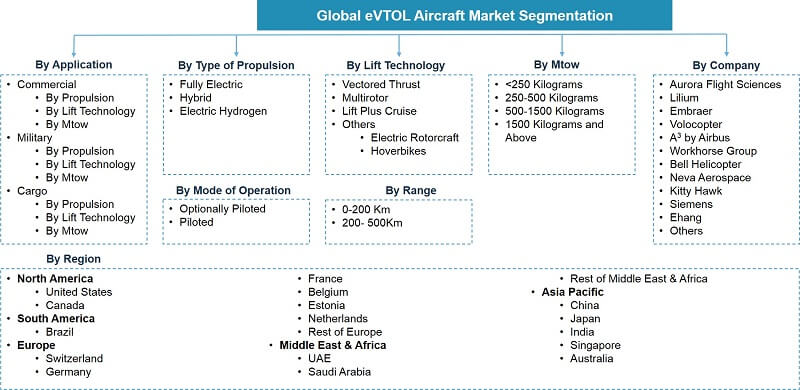
By Application (Commercial, Military, Cargo), By Lift Technology (Vectored Thrust, Multirotor, Lift Plus Cruise, Others), By Mtow (<250 Kilograms, 250-500 Kilograms, 500-1500 Kilograms, 1500 Kilograms... ... rams, 1500 Kilograms and Above), By Type of Propulsion (Fully Electric, Hybrid, Electric Hydrogen), By Mode of Operation (Optionally Piloted, Piloted), By Range (0-200 Km, 200- 500Km), By Region (North America, South America, Europe, Middle East and Africa, Asia- Pacific), By Country (US, Canada, Brazil, Germany, France, Switzerland, Belgium, Estonia, Netherlands, Saudi-Arabia, UAE, China, India, Japan, Australia, Singapore), By Company Read more
- Aerospace & Defense
- Jan 2020
- 261
- PDF, Excel, PPT
According to MarkNtel Advisors’ research report titled “Global eVTOL Aircraft Market Analysis, 2020”, the global eVTOL Aircraft market is anticipated to grow at a CAGR of around 20.50% during 2020-25, due to the increasing demand for alternative mode of transportation and growing need for operational efficiency. Moreover, the increasing degree of penetration of the eVTOL for commercial purposes such as carriage and passenger commutation both within and outside the terrestrial boundaries of the city, along with the growing investments on the development of supportive infrastructure and government participation in the formulation of operational policies, is expected to augment the overall market growth.
| Report Coverage | Details |
| Study Period | Historical Data: 2015-19 |
| Base Year: 2019 | |
| Forecast Period: 2020-25 | |
| Regions Covered | North America |
| Europe | |
| Asia-Pacific | |
| South America | |
| Middle East & Africa | |
| Unit Denominations | USD Million/Billion |
The 200-500 Kilometers Range Segment is Expected to Witness a Lucrative Growth Rate
Based on the range, the 200-500 kilometers range segment is set to dominate the global market during the forecast period. The segment is also expected to attain the highest CAGR growth during 2020-25, as stated in the MarkNtel Advisors’ research report “Global eVTOL Aircraft Market Analysis, 2020” owing to the rising adoption of the eVTOL aircraft service for the long-distance intercity transportation.
1. Introduction
1.1. Research Process
1.2. Assumption
1.3. Market Segmentation
1.4. Market Definition
2. Executive Summary
3. Expert Verbatim- What our Experts Say?
4. Global eVTOL Aircraft Market Outlook, 2015- 2025F
4.1. Market Size and Analysis
4.1.1. By Revenues
4.2. Market Share and Analysis
4.2.1. By Application
4.2.1.1. Commercial
4.2.1.1.1. By Propulsion
4.2.1.1.2. By Lift Technology
4.2.1.1.3. By Mtow
4.2.1.2. Military
4.2.1.2.1. By Propulsion
4.2.1.2.2. By Lift Technology
4.2.1.2.3. By Mtow
4.2.1.3. Cargo
4.2.1.3.1. By Propulsion
4.2.1.3.2. By Lift Technology
4.2.1.3.3. By Mtow
4.2.2. By Lift Technology
4.2.2.1. Vectored Thrust
4.2.2.2. Multirotor
4.2.2.3. Lift Plus Cruise
4.2.2.4. Others
4.2.2.4.1. Electric Rotorcraft
4.2.2.4.2. Hoverbikes
4.2.3. By Mtow
4.2.3.1. <250 Kilograms
4.2.3.2. 250-500 Kilograms
4.2.3.3. 500-1500 Kilograms
4.2.3.4. 1500 Kilograms and Above
4.2.4. By Type of Propulsion
4.2.4.1. Fully Electric
4.2.4.2. Hybrid
4.2.4.3. Electric Hydrogen
4.2.5. By Mode of Operation
4.2.5.1. Optionally Piloted
4.2.5.2. Piloted
4.2.6. By Range
4.2.6.1. 0-200 Km
4.2.6.2. 200- 500Km
4.2.7. By Region
4.2.7.1. North America
4.2.7.2. South America
4.2.7.3. Europe
4.2.7.4. Middle East & Africa
4.2.7.5. Asia-Pacific
4.2.8. By Company
4.2.8.1. Revenue Shares
4.2.8.2. Strategic Factorial Indexing
4.2.8.3. Competitor Placement in Markntel Quadrant
5. North America eVTOL Aircraft Market Outlook, 2015- 2025F
5.1. Market Size and Analysis
5.1.1. By Revenues
5.2. Market Share and Analysis
5.2.1. By Application
5.2.2. By Type of Propulsion
5.2.3. By Lift Technology
5.2.4. By Range
5.2.5. By Mtow
5.2.6. By Mode of Operation
5.2.7. By Country
5.2.7.1. US
5.2.7.2. Canada
5.3. The US eVTOL Aircraft Market Outlook, 2015- 2025F
5.3.1. Market Size and Analysis
5.3.1.1. By Revenues
5.3.2. Market Share and Analysis
5.3.2.1. By Application
5.3.2.2. By Type of Propulsion
5.3.2.3. By Lift Technology
5.3.2.4. By Range
5.3.2.5. By Mtow
5.3.2.6. By Mode of Operation
5.4. Canada eVTOL Aircraft Market Outlook, 2015- 2025F
5.4.1. Market Size and Analysis
5.4.1.1. By Revenues
5.4.2. Market Share and Analysis
5.4.2.1. By Application
5.4.2.2. By Type of Propulsion
5.4.2.3. By Lift Technology
5.4.2.4. By Range
5.4.2.5. By Mtow
5.4.2.6. By Mode of Operation
6. South America eVTOL Aircraft Market Outlook, 2015- 2025F
6.1. Market Size and Analysis
6.1.1. By Revenues
6.2. Market Share and Analysis
6.2.1. By Application
6.2.2. By Type of Propulsion
6.2.3. By Lift Technology
6.2.4. By Range
6.2.5. By Mtow
6.2.6. By Mode of Operation
6.2.7. By Country
6.2.7.1. Brazil
6.3. Brazil eVTOL Aircraft Market Outlook, 2015- 2025F
6.3.1. Market Size and Analysis
6.3.1.1. By Revenues
6.3.2. Market Share and Analysis
6.3.2.1. By Application
6.3.2.2. By Type of Propulsion
6.3.2.3. By Lift Technology
6.3.2.4. By Range
6.3.2.5. By Mtow
6.3.2.6. By Mode of Operation
7. Europe eVTOL Aircraft Market Outlook, 2015- 2025F
7.1. Market Size and Analysis
7.2. Market Size and Analysis
7.2.1. By Revenues
7.3. Market Share and Analysis
7.3.1. By Application
7.3.2. By Type of Propulsion
7.3.3. By Lift Technology
7.3.4. By Range
7.3.5. By Mtow
7.3.6. By Mode of Operation
7.3.7. By Country
7.3.7.1. Germany
7.3.7.2. Switzerland
7.3.7.3. France
7.3.7.4. Belgium
7.3.7.5. Estonia
7.3.7.6. Netherlands
7.4. Germany eVTOL Aircraft Market Outlook, 2015- 2025F
7.4.1. Market Size and Analysis
7.4.1.1. By Revenues
7.4.2. Market Share and Analysis
7.4.2.1. By Application
7.4.2.2. By Type of Propulsion
7.4.2.3. By Lift Technology
7.4.2.4. By Range
7.4.2.5. By Mtow
7.4.2.6. By Mode of Operation
7.5. Switzerland eVTOL Aircraft Market Outlook, 2015- 2025F
7.5.1. Market Size and Analysis
7.5.1.1. By Revenues
7.5.2. Market Share and Analysis
7.5.2.1. By Application
7.5.2.2. By Type of Propulsion
7.5.2.3. By Lift Technology
7.5.2.4. By Range
7.5.2.5. By Mtow
7.5.2.6. By Mode of Operation
7.6. France eVTOL Aircraft Market Outlook, 2015- 2025F
7.6.1. Market Size and Analysis
7.6.1.1. By Revenues
7.6.2. Market Share and Analysis
7.6.2.1. By Application
7.6.2.2. By Type of Propulsion
7.6.2.3. By Lift Technology
7.6.2.4. By Range
7.6.2.5. By Mtow
7.6.2.6. By Mode of Operation
7.7. Belgium eVTOL Aircraft Market Outlook, 2015- 2025F
7.7.1. Market Size and Analysis
7.7.1.1. By Revenues
7.7.2. Market Share and Analysis
7.7.2.1. By Application
7.7.2.2. By Type of Propulsion
7.7.2.3. By Lift Technology
7.7.2.4. By Range
7.7.2.5. By Mtow
7.7.2.6. By Mode of Operation
7.8. Estonia eVTOL Aircraft Market Outlook, 2015- 2025F
7.8.1. Market Size and Analysis
7.8.1.1. By Revenues
7.8.2. Market Share and Analysis
7.8.2.1. By Application
7.8.2.2. By Type of Propulsion
7.8.2.3. By Lift Technology
7.8.2.4. By Range
7.8.2.5. By Mtow
7.8.2.6. By Mode of Operation
7.9. Netherlands eVTOL Aircraft Market Outlook, 2015- 2025F
7.9.1. Market Size and Analysis
7.9.1.1. By Revenues
7.9.2. Market Share and Analysis
7.9.2.1. By Application
7.9.2.2. By Type of Propulsion
7.9.2.3. By Lift Technology
7.9.2.4. By Range
7.9.2.5. By Mtow
7.9.2.6. By Mode of Operation
8. Middle East & Africa eVTOL Aircraft Market Outlook, 2015- 2025F
8.1. Market Size and Analysis
8.1.1. By Revenues
8.2. Market Share and Analysis
8.2.1. By Application
8.2.2. By Type of Propulsion
8.2.3. By Lift Technology
8.2.4. By Range
8.2.5. By Mtow
8.2.6. By Mode of Operation
8.2.7. By Country
8.2.7.1. UAE
8.2.7.2. Saudi Arabia
8.3. UAE eVTOL Aircraft Market Outlook, 2015- 2025F
8.3.1. Market Size and Analysis
8.3.1.1. By Revenues
8.3.2. Market Share and Analysis
8.3.2.1. By Application
8.3.2.2. By Type of Propulsion
8.3.2.3. By Lift Technology
8.3.2.4. By Range
8.3.2.5. By Mtow
8.3.2.6. By Mode of Operation
8.4. Saudi Arabia eVTOL Aircraft Market Outlook, 2015- 2025F
8.4.1. Market Size and Analysis
8.4.1.1. By Revenues
8.4.2. Market Share and Analysis
8.4.2.1. By Application
8.4.2.2. By Type of Propulsion
8.4.2.3. By Lift Technology
8.4.2.4. By Range
8.4.2.5. By Mtow
8.4.2.6. By Mode of Operation
9. Asia-Pacific eVTOL Aircraft Market Outlook, 2015- 2025F
9.1. Market Size and Analysis
9.1.1. By Revenues
9.2. Market Share and Analysis
9.2.1. By Application
9.2.2. By Type of Propulsion
9.2.3. By Lift Technology
9.2.4. By Range
9.2.5. By Mtow
9.2.6. By Mode of Operation
9.2.7. By Country
9.2.7.1. India
9.2.7.2. Japan
9.2.7.3. Australia
9.2.7.4. Singapore
9.3. Singapore eVTOL Aircraft Market Outlook, 2015- 2025F
9.3.1. Market Size and Analysis
9.3.1.1. By Revenues
9.3.2. Market Share and Analysis
9.3.2.1. By Application
9.3.2.2. By Type of Propulsion
9.3.2.3. By Lift Technology
9.3.2.4. By Range
9.3.2.5. By Mtow
9.3.2.6. By Mode of Operation
9.4. China eVTOL Aircraft Market Outlook, 2015- 2025F
9.4.1. Market Size and Analysis
9.4.1.1. By Revenues
9.4.2. Market Share and Analysis
9.4.2.1. By Application
9.4.2.2. By Type of Propulsion
9.4.2.3. By Lift Technology
9.4.2.4. By Range
9.4.2.5. By Mtow
9.4.2.6. By Mode of Operation
9.5. India eVTOL Aircraft Market Outlook, 2015- 2025F
9.5.1. Market Size and Analysis
9.5.1.1. By Revenues
9.5.2. Market Share and Analysis
9.5.2.1. By Application
9.5.2.2. By Type of Propulsion
9.5.2.3. By Lift Technology
9.5.2.4. By Range
9.5.2.5. By Mtow
9.5.2.6. By Mode of Operation
9.6. Japan eVTOL Aircraft Market Outlook, 2015- 2025F
9.6.1. Market Size and Analysis
9.6.1.1. By Revenues
9.6.2. Market Share and Analysis
9.6.2.1. By Application
9.6.2.2. By Type of Propulsion
9.6.2.3. By Lift Technology
9.6.2.4. By Range
9.6.2.5. By Mtow
9.6.2.6. By Mode of Operation
9.7. Australia eVTOL Aircraft Market Outlook, 2015- 2025F
9.7.1. Market Size and Analysis
9.7.1.1. By Revenues
9.7.2. Market Share and Analysis
9.7.2.1. By Application
9.7.2.2. By Type of Propulsion
9.7.2.3. By Lift Technology
9.7.2.4. By Range
9.7.2.5. By Mtow
9.7.2.6. By Mode of Operation
10. Global eVTOL Aircraft Market Policies, Regulations, Application Standards
11. Global eVTOL Aircraft Market Trends & Insights
12. Global eVTOL Aircraft Market Dynamics
12.1.Growth Drivers
12.2.Challenges
12.3.Impact Analysis
13. Global eVTOL Aircraft Market Hotspot and Opportunities
14. Global eVTOL Aircraft Market Key Strategic Imperatives for Success and Growth
15. Competitive Outlook
15.1.Competition Matrix
15.1.1. Application Portfolio
15.1.2. Brand Specialization
15.1.3. Target Markets
15.1.4. Target Applications
15.1.5. Research & Development
15.1.6. Strategic Alliances
15.1.7. Strategic Initiatives
15.2.Company Profiles (Business Description, Application Segments, Business Segments, Financials, Strategic Alliances/ Partnerships, Future Plans)
15.2.1. Aurora Flight Sciences
15.2.2. Siemens
15.2.3. Embraer
15.2.4. Volocopter
15.2.5. A3 by Airbus
15.2.6. Workhorse Group
15.2.7. Pipistrel
15.2.8. Bell Helicopter
15.2.9. Neva Aerospace
15.2.10. Kitty Hawk
16. Disclaimer
MarkNtel Advisors follows a robust and iterative research methodology designed to ensure maximum accuracy and minimize deviation in market estimates and forecasts. Our approach combines both bottom-up and top-down techniques to effectively segment and quantify various aspects of the market. A consistent feature across all our research reports is data triangulation, which examines the market from three distinct perspectives to validate findings. Key components of our research process include:
1. Scope & Research Design At the outset, MarkNtel Advisors define the research objectives and formulate pertinent questions. This phase involves determining the type of research—qualitative or quantitative—and designing a methodology that outlines data collection methods, target demographics, and analytical tools. They also establish timelines and budgets to ensure the research aligns with client goals.
2. Sample Selection and Data Collection In this stage, the firm identifies the target audience and determines the appropriate sample size to ensure representativeness. They employ various sampling methods, such as random or stratified sampling, based on the research objectives. Data collection is carried out using tools like surveys, interviews, and observations, ensuring the gathered data is reliable and relevant.
3. Data Analysis and Validation Once data is collected, MarkNtel Advisors undertake a rigorous analysis process. This includes cleaning the data to remove inconsistencies, employing statistical software for quantitative analysis, and thematic analysis for qualitative data. Validation steps are taken to ensure the accuracy and reliability of the findings, minimizing biases and errors.

4. Data Forecast and FinalizationThe final phase involves forecasting future market trends based on the analyzed data. MarkNtel Advisors utilize predictive modeling and time series analysis to anticipate market behaviors. The insights are then compiled into comprehensive reports, featuring visual aids like charts and graphs, and include strategic recommendations to inform client decision-making
We offer flexible licensing options to cater to varying organizational needs. Choose the pricing pack that best suits your requirements:
Buy Now Inquire Before Buying
 Request Customization