

By Component (Software, Hardware, Services), By Technology (Telehealth (Teleconsultation, Telemonitoring, Tele-ICU), mHealth (Mobile Health Applications) (Health & Fitness Apps, Medical Apps), Health... ... dical Apps), Health Analytics (Predictive Analytics, Prescriptive Analytics, Descriptive Analytics), Digital Health Systems (Electronic Health Records (EHR), Health Information Exchange (HIE), Clinical Decision Support Systems (CDSS)), Wearable Devices (Fitness Trackers, Smartwatches, Medical Wearables)), By Deployment Mode (Cloud-based, On-premise), By Application (Telemedicine, Remote Patient Monitoring, Chronic Disease Management, Clinical Workflow Management, Population Health Management, Fitness & Wellness), By End User (Healthcare Providers, Healthcare Payers, Patients/Consumers, Pharmaceutical Companies, Government & Regulatory Bodies), and others Read more
- Healthcare
- Apr 2026
- 280
- PDF, Excel, PPT
GCC Digital Healthcare Market Key Takeaways
- GCC Digital Healthcare market size was valued at around USD 5.85 billion in 2025 and is projected to grow from USD 6.58 billion in 2026 to USD 13.34 billion by 2032, exhibiting a CAGR of 12.5 % during 2026-2032.
- In 2026, Saudi Arabia holds the largest share of about 48.70%.
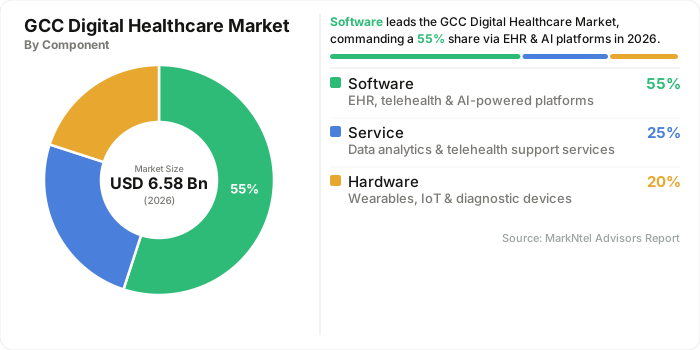
- Based on Component, the Software holds a significant share of about 55% in 2026.
- By Application, the Telemedicine segment seized a significant share of about 32% in 2026.
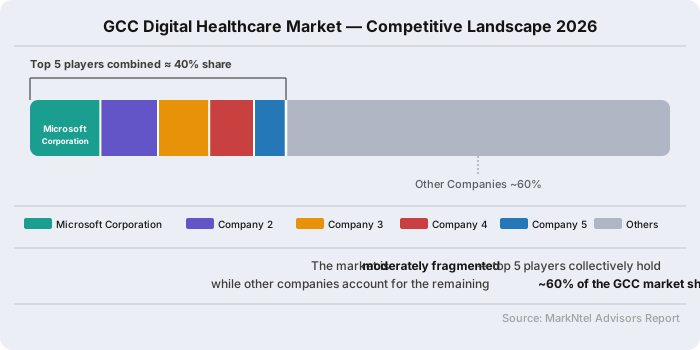
- The industry in GCC is moderately fragmented, with approximately 80–120 companies operating in the region. However, the top five players collectively account for approximately 40% share of the total market.
GCC Digital Healthcare Market Size and Outlook
The GCC Digital Healthcare market size was valued at USD 5.85 billion in 2025 and is projected to grow from USD 6.58 billion in 2026 to USD 13.34 billion by 2032. Along with this, the market is estimated to grow at a CAGR of around 12.5% during the forecast period, i.e., 2026-32.
The digital healthcare industry in GCC has developed on a strong foundation, supported by rising healthcare expenditure and system modernization across Saudi Arabia and the United Arab Emirates. According to the World Health Organization, healthcare spending across GCC countries ranges between approximately 2.6% and 6% of GDP, reflecting sustained public investment in health systems . In 2025, Saudi Arabia allocated approximately USD 74.4 billion to health and social development, highlighting the scale of government commitment. This funding has supported hospital digitization, expansion of eHealth platforms, and wider adoption of telehealth services.
Building on this base, governments are accelerating digital transformation through structured programs such as Saudi Vision 2030 and national strategies in the UAE. These initiatives focus on interoperability, data exchange, and smart healthcare infrastructure, while policy reforms are encouraging private sector participation. At the same time, regulatory frameworks around data protection and cloud adoption are enabling secure and scalable technology deployment. Together, these efforts are strengthening procurement activity and accelerating the adoption of advanced digital healthcare systems across the region.
As these developments progress, demand from end users is expanding steadily, particularly among healthcare providers. Hospitals and clinics are adopting remote patient monitoring, AI-enabled diagnostics, and integrated health systems to improve efficiency and manage increasing patient volumes. The World Health Organization indicates that non-communicable diseases account for approximately 70–80% of total mortality in GCC countries , reinforcing the need for continuous, technology-enabled care. At the same time, patients and insurers are contributing to demand through increased use of mobile health applications and digital insurance platforms.
In response, industry players are advancing capabilities through partnerships, cloud expansion, and localized innovation. Leading healthcare companies are collaborating with regional providers to expand digital infrastructure and developing AI-driven healthcare solutions. These initiatives are improving efficiency and supporting data-driven care delivery. Looking ahead to 2025 and beyond, continued alignment between policy, infrastructure, and innovation is expected to sustain stable growth across the GCC digital healthcare market.
GCC Digital Healthcare Market Key Indicators
- Internet penetration across GCC countries remains among the highest globally, with Qatar reaching nearly 100% penetration in 2025. Such high connectivity levels reflect strong digital infrastructure readiness across the region. This widespread access to high-speed internet enables seamless deployment of telehealth platforms, mobile health applications, and cloud-based healthcare systems, thereby accelerating adoption of digital healthcare solutions and supporting the expansion of the telehealth industry in the GCC.
- In 2025, the United Arab Emirates is advancing national digital health platforms that integrate healthcare entities into a unified system, enabling interoperability and seamless data exchange. This supports improved care coordination and adoption of AI-driven diagnostics, thereby contributing to digital healthcare market expansion .
- According to World Bank data based on UN urbanization estimates, GCC countries have urban population levels exceeding 85%, indicating a highly concentrated population in urban areas. This concentration supports efficient deployment of digital healthcare infrastructure such as smart hospitals, telemedicine networks, and integrated health systems, thereby strengthening market demand .
- A study published in Scientific report indicates that diabetes prevalence in GCC countries is among the highest globally, reaching approximately 25.45%, significantly higher than non-GCC regions. This high burden of chronic disease increases the need for continuous monitoring, digital therapeutics, and remote care solutions, thereby driving demand for digital healthcare technologies and supporting the expansion of the eHealth industry across the region.
GCC Digital Healthcare Market Scope
| Category | Segments |
|---|---|
| By Component | (Software, Hardware, Services), |
| By Technology | (Telehealth (Teleconsultation, Telemonitoring, Tele-ICU), mHealth (Mobile Health Applications) (Health & Fitness Apps, Medical Apps), Health Analytics (Predictive Analytics, Prescriptive Analytics, Descriptive Analytics), Digital Health Systems (Electronic Health Records (EHR), Health Information Exchange (HIE), Clinical Decision Support Systems (CDSS)), Wearable Devices (Fitness Trackers, Smartwatches, Medical Wearables)), |
| By Deployment Mode | (Cloud-based, On-premise), |
| By Application | (Telemedicine, Remote Patient Monitoring, Chronic Disease Management, Clinical Workflow Management, Population Health Management, Fitness & Wellness), |
| By End User | (Healthcare Providers, Healthcare Payers, Patients/Consumers, Pharmaceutical Companies, Government & Regulatory Bodies), |
GCC Digital Healthcare Market Growth Drivers
Rising Burden of Chronic Diseases
Chronic diseases are becoming more common across Saudi Arabia and the United Arab Emirates, driving higher demand for healthcare services due to evolving lifestyles and demographic changes. According to the World Bank, life expectancy across GCC countries reached approximately 79–85 years in 2024, indicating improving longevity and a growing aging population . At the same time, obesity rates exceed 30% in several GCC countries, significantly increasing the incidence of chronic conditions such as diabetes and cardiovascular diseases . These factors have intensified the disease burden over recent years, creating sustained and long-term healthcare demand.
This growing burden is directly translating into measurable demand across healthcare providers, which represent the primary end users of digital healthcare solutions. Hospitals and clinics are increasingly adopting remote patient monitoring, digital health records, and AI-enabled diagnostics to manage recurring patient interactions and long-term treatment cycles. For instance, Saudi Arabia has launched the Seha Virtual Hospital, one of the largest globally, connecting over 170 hospitals to deliver remote consultations and AI-supported care. Such large-scale deployments highlight how healthcare systems are integrating digital technologies to improve efficiency and manage rising patient volumes.
The impact of this driver extends beyond short-term adoption and is materially expanding healthcare service volumes and infrastructure investments across the region. Governments are reinforcing this trend through preventive healthcare strategies under programs such as Saudi Vision 2030, which emphasize early diagnosis and digital health integration. The continuous rise in chronic disease cases is driving recurring demand for monitoring, diagnostics, and data-driven care platforms. As a result, e-healthcare adoption is scaling alongside patient volumes, structurally expanding digital health market share and supporting long-term growth across the GCC region.
Recent Trends
Growth of Remote Patient Monitoring
The increasing need for ongoing care, along with the growing burden of chronic conditions, is driving the adoption of remote patient monitoring (RPM) across GCC countries. Governments across Saudi Arabia and United Arab Emirates are accelerating telehealth expansion through national healthcare digitization initiatives. At the same time, increasing adoption of wearable health technologies and IoT-enabled medical devices is enabling real-time tracking of patient vitals beyond hospital settings. This shift is steadily extending healthcare delivery into connected, home-based care environments.
As this trend continues to grow, healthcare is gradually moving away from traditional hospital-centric models toward more decentralized and patient-focused care, where services are delivered closer to patients and tailored to their individual needs. Healthcare providers are integrating RPM solutions with electronic health records and healthcare data analytics to enable proactive interventions and continuous monitoring. In the UAE, remote monitoring programs using connected wearable devices are enabling real-time patient tracking and early clinical intervention . Simultaneously, collaborations between Microsoft Corporation and M42, along with deployments by Philips Healthcare, are strengthening connected and AI-enabled healthcare ecosystems across the region.
The persistence of this trend is supported by long-term demographic and policy-driven factors, including increasing focus on preventive care and home-based treatment models. National healthcare digitization initiatives and expanding telemedicine adoption trends are reinforcing sustained demand for RPM solutions. Additionally, continuous advancements in wearable health technology and healthcare data analytics are further improving the scalability and accessibility of digital care services. Consequently, remote patient monitoring is expected to remain a core pillar shaping the long-term evolution of the digital healthcare market in GCC.
GCC Digital Healthcare Market Opportunities and Challenges
High Implementation Cost & Integration Issues Accelerating Adoption of Cloud-Based and Scalable Digital Healthcare Solutions
The adoption of advanced digital healthcare systems is increasingly constrained by the high capital investment and technical complexity required for implementation and integration. Deployment of solutions such as electronic health records, AI-driven diagnostics, and interoperable platforms involves substantial upfront costs, including software licensing, infrastructure upgrades, data migration, and workforce training. For instance, custom EHR systems can cost between USD 500,000 and 700,000 for mid-sized hospitals, along with additional expenses for hardware and ongoing maintenance. These multi-layered cost structures, combined with integration challenges with legacy systems, are creating barriers to rapid digital adoption across healthcare providers.
This challenge is simultaneously driving a strong shift toward cloud-based and scalable digital healthcare solutions across GCC countries. Healthcare systems are increasingly adopting cloud deployment models that reduce reliance on heavy upfront infrastructure and enable flexible, subscription-based cost structures. For instance, Microsoft Corporation and Core42 have highlighted the importance of sovereign cloud platforms designed for regulated sectors such as healthcare, ensuring data security, compliance, and scalability . These platforms allow sensitive healthcare data to be managed within national boundaries while enabling advanced digital operations. As a result, cloud-based solutions are emerging as a critical enabler to overcome cost and integration challenges, accelerating sustainable digital healthcare adoption across the GCC region.
Segmentation Insights
Software Accounts for the Highest Share by Component
Based on component, software accounts for approximately 55% share of the GCC digital healthcare industry, making it the leading segment across the ecosystem. This dominance is primarily driven by the critical role of software platforms such as electronic health records, telehealth systems, clinical decision support tools, and healthcare analytics solutions in enabling digital care delivery. These systems act as the backbone for patient data management, diagnostics, and care coordination, making them indispensable for healthcare providers. Furthermore, the increasing integration of AI-driven diagnostics and cloud-based applications is strengthening the reliance on software across both clinical and administrative operations.
The continued expansion of digital health infrastructure and the shift toward connected and remote care models are significantly accelerating software adoption across healthcare systems. Governments across GCC countries are prioritizing interoperable health information systems and unified digital platforms, which are inherently software-driven. At the same time, the growing use of telemedicine and remote patient monitoring is increasing the need for advanced software capable of handling real-time data processing and analytics. Combined with the scalability and cost-efficiency of cloud-based deployment models, software solutions continue to dominate by enabling flexible, data-driven, and efficient healthcare delivery across the healthcare IT industry in GCC. Based on component, the market is segmented into:
- Software
- Hardware
- Services
Telemedicine is the Most Preferred Healthcare Application
Telemedicine accounts for approximately 32% share of the market by application, making it the most widely adopted digital healthcare service across the region. This dominance is primarily attributed to its ability to provide real-time remote consultations, reduce hospital visits, and improve accessibility to healthcare services across diverse population groups. Telemedicine platforms enable patients to connect with healthcare professionals through video consultations, digital prescriptions, and follow-up care. For instance, the launch of TruDoc’s Super Health App across GCC countries offers 24/7 virtual consultations along with integrated digital prescriptions and follow-up services , reinforcing the growing adoption of virtual care solutions. This ensures continuity of treatment while enhancing patient convenience and engagement.
The increasing adoption of telemedicine is further supported by expanding digital infrastructure and government-led healthcare digitization initiatives. National strategies are actively promoting virtual care models to improve healthcare access and optimize system efficiency. Additionally, rising patient volumes and the growing need for chronic disease management are accelerating demand for remote consultation services. High internet and smartphone penetration across GCC countries further enable seamless access to telehealth platforms, supporting large-scale adoption. As a result, telemedicine continues to hold the largest share in the application segment, driven by its scalability, accessibility, and critical role in modern healthcare delivery. Based on application, the market is segmented into:
- Telemedicine
- Remote Patient Monitoring
- Chronic Disease Management
- Clinical Workflow Management
- Population Health Management
- Fitness & Wellness
GCC Digital Healthcare Market Geographical Outlook
Saudi Arabia accounts for approximately 48.70% share of the regional market, supported by its large-scale healthcare infrastructure and advanced digital health transformation initiatives. The country has developed a highly integrated ecosystem through national platforms such as NPHIES, which enables real-time data exchange and connectivity across healthcare providers, insurers, and regulatory bodies. This unified system improves operational efficiency, streamlines claims processing, and enhances patient care delivery at scale. Such system-wide integration is significantly accelerating the adoption of electronic health records, telehealth services, and healthcare data analytics, strengthening its position within the healthcare IT industry across the region.
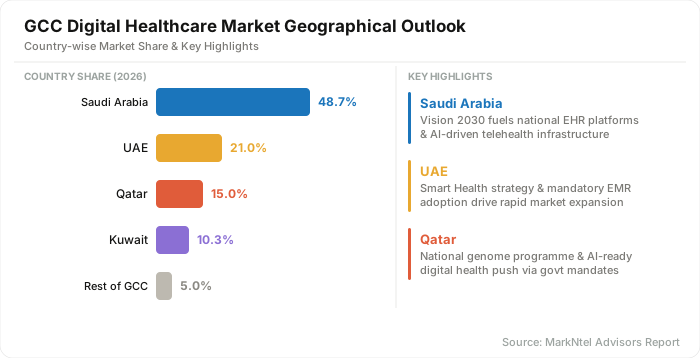
The country’s leadership is further reinforced by strong regulatory alignment and structured digital healthcare mandates across the value chain. Nationwide initiatives promoting interoperable health systems and standardized electronic records are ensuring consistent digital adoption across public and private healthcare players. According to official Ministry of Health programs, the ongoing development of the national eHealth infrastructure is enabling seamless data sharing and improving healthcare accessibility. Additionally, increasing approvals of AI-enabled medical technologies by the Saudi Food and Drug Authority are accelerating the deployment of advanced diagnostics and digital care solution s. These combined developments reflect a deeply embedded and scalable digital healthcare ecosystem, reinforcing Saudi Arabia’s dominant position across the GCC.
GCC Digital Healthcare Market Competitive Analysis
The digital healthcare industry in GCC is moderately fragmented, with approximately 80–120 companies operating in GCC, including a mix of global firms and regional players. The top five players, including Microsoft Corporation, Amazon Web Services, Oracle Health, Siemens Healthineers, and Philips Healthcare, collectively account for nearly 40% of the total share.
Top Digital Health Companies in GCC
- Philips Healthcare
- GE HealthCare
- Siemens Healthineers
- Oracle Health
- Epic Systems Corporation
- Microsoft Corporation
- Amazon Web Services
- Google Health
- Medtronic plc
- M42
- Others
GCC Digital Healthcare Industry News and Recent Developments
2025: Aster DM Healthcare launched the AI-enabled “myAster” digital health platform
Aster DM Healthcare expanded its presence in Saudi Arabia with the launch of the AI-enabled “myAster” digital health platform in 2025, offering virtual consultations, personalized health services, and Arabic voice-enabled interaction. The platform integrates AI technologies to enhance patient engagement and streamline access to healthcare services across digital channels.
Impact Analysis: The launch strengthens patient-centric digital healthcare delivery by improving accessibility, personalization, and user engagement. It supports the growing demand for mobile health solutions and teleconsultation services in Saudi Arabia. Additionally, the platform promotes localization of digital health services through Arabic-enabled interfaces, increasing adoption across diverse populations. This development contributes to the broader digital transformation of healthcare in the GCC by enhancing AI integration and expanding virtual care ecosystems.
2025: Saudi Arabia launched the world’s first digital diabetes command and control center
Saudi Arabia launched the world’s first digital diabetes command and control center in October 2025, utilizing real-time monitoring systems to track patient health indicators and enable proactive disease management. The initiative reflects the country’s focus on preventive healthcare and digital transformation, particularly in addressing chronic diseases such as diabetes, which have high prevalence in the region.
Impact Analysis: This development represents a major advancement in digital therapeutics and population health management. By leveraging real-time data analytics, the system enables early intervention, reduces hospital admissions, and improves long-term patient outcomes. It strengthens the integration of digital health technologies into chronic disease care and positions Saudi Arabia as a global leader in data-driven healthcare models, setting a benchmark for other GCC countries in managing high-burden diseases through digital innovation.
2024: Saudi Ministry of Health launched the Regulatory Healthcare Sandbox
Saudi Ministry of Health launched the Regulatory Healthcare Sandbox in August 2024, providing a controlled digital platform for companies and innovators to test AI, IoT, and other digital health solutions. The initiative enables safe experimentation, faster validation, and integration of new technologies into the national healthcare system, aligned with Vision 2030 objectives.
Impact Analysis: The sandbox significantly accelerates digital health innovation by reducing regulatory barriers and time-to-market for emerging technologies. It strengthens collaboration between startups, global firms, and healthcare providers while fostering investment in AI-driven healthcare solutions. The initiative also enhances Saudi Arabia’s position as a regional digital health hub, supporting scalable innovation and enabling the rapid deployment of advanced telehealth, diagnostics, and patient-centric digital healthcare services.
- Market Segmentation
- Introduction
- Product Definition
- Research Process
- Assumptions
- Executive Summary
- GCC Digital Healthcare Start-up & Venture Funding Ecosystem, 2022–2026
- Entrepreneurial Activity – By Number of Start-ups Registered
- YoY Rise in Funding & Purpose of Fund Raise
- Angel Investing
- Crowdfunding
- Venture Capital Investment
- Others
- Series-wise Funding Analysis, 2022–2026
- Top Investors Involved
- GCC Digital Healthcare Cybersecurity & Data Privacy Infrastructure, 2026
- GCC Digital Healthcare Market Policies, Regulations, and Product Standards
- GCC Digital Healthcare Market Trends & Developments
- GCC Digital Healthcare Market Dynamics
- Growth Factors
- Challenges
- GCC Digital Healthcare Market Hotspot & Opportunities
- GCC Digital Healthcare Market Outlook, 2022-2032F
- Market Size & Outlook
- By Revenues (USD Million)
- Market Share & Analysis
- By Component- Market Size & Forecast 2022-2032, USD Million
- Software
- Hardware
- Services
- By Technology- Market Size & Forecast 2022-2032, USD Million
- Telehealth
- Teleconsultation
- Telemonitoring
- Tele-ICU
- mHealth (Mobile Health Applications)
- Health & Fitness Apps
- Medical Apps
- Health Analytics
- Predictive Analytics
- Prescriptive Analytics
- Descriptive Analytics
- Digital Health Systems
- Electronic Health Records (EHR)
- Health Information Exchange (HIE)
- Clinical Decision Support Systems (CDSS)
- Wearable Devices
- Fitness Trackers
- Smartwatches
- Medical Wearables
- Telehealth
- By Deployment Mode- Market Size & Forecast 2022-2032, USD Million
- Cloud-based
- On-premise
- By Application- Market Size & Forecast 2022-2032, USD Million
- Telemedicine
- Remote Patient Monitoring
- Chronic Disease Management
- Clinical Workflow Management
- Population Health Management
- Fitness & Wellness
- By End User- Market Size & Forecast 2022-2032, USD Million
- Healthcare Providers
- Healthcare Payers
- Patients/Consumers
- Pharmaceutical Companies
- Government & Regulatory Bodies
- By Country
- The UAE
- Saudi Arabia
- Qatar
- Kuwait
- Oman
- Bahrain
- By Company
- Competition Characteristics
- Market Share & Analysis
- By Component- Market Size & Forecast 2022-2032, USD Million
- Market Size & Outlook
- The UAE Digital Healthcare Market Outlook, 2022-2032F
- Market Size & Outlook
- By Revenues (USD Million)
- Market Share & Analysis
- By Component- Market Size & Forecast 2022-2032, USD Million
- By Technology- Market Size & Forecast 2022-2032, USD Million
- By Deployment Mode- Market Size & Forecast 2022-2032, USD Million
- By Application- Market Size & Forecast 2022-2032, USD Million
- By End User- Market Size & Forecast 2022-2032, USD Million
- Market Size & Outlook
- Saudi Arabia Digital Healthcare Market Outlook, 2022-2032F
- Market Size & Outlook
- By Revenues (USD Million)
- Market Share & Analysis
- By Component- Market Size & Forecast 2022-2032, USD Million
- By Technology- Market Size & Forecast 2022-2032, USD Million
- By Deployment Mode- Market Size & Forecast 2022-2032, USD Million
- By Application- Market Size & Forecast 2022-2032, USD Million
- By End User- Market Size & Forecast 2022-2032, USD Million
- Market Size & Outlook
- Qatar Digital Healthcare Market Outlook, 2022-2032F
- Market Size & Outlook
- By Revenues (USD Million)
- Market Share & Analysis
- By Component- Market Size & Forecast 2022-2032, USD Million
- By Technology- Market Size & Forecast 2022-2032, USD Million
- By Deployment Mode- Market Size & Forecast 2022-2032, USD Million
- By Application- Market Size & Forecast 2022-2032, USD Million
- By End User- Market Size & Forecast 2022-2032, USD Million
- Market Size & Outlook
- Kuwait Digital Healthcare Market Outlook, 2022-2032F
- Market Size & Outlook
- By Revenues (USD Million)
- Market Share & Analysis
- By Component- Market Size & Forecast 2022-2032, USD Million
- By Technology- Market Size & Forecast 2022-2032, USD Million
- By Deployment Mode- Market Size & Forecast 2022-2032, USD Million
- By Application- Market Size & Forecast 2022-2032, USD Million
- By End User- Market Size & Forecast 2022-2032, USD Million
- Market Size & Outlook
- Oman Digital Healthcare Market Outlook, 2022-2032F
- Market Size & Outlook
- By Revenues (USD Million)
- Market Share & Analysis
- By Component- Market Size & Forecast 2022-2032, USD Million
- By Technology- Market Size & Forecast 2022-2032, USD Million
- By Deployment Mode- Market Size & Forecast 2022-2032, USD Million
- By Application- Market Size & Forecast 2022-2032, USD Million
- By End User- Market Size & Forecast 2022-2032, USD Million
- Market Size & Outlook
- GCC Digital Healthcare Market Key Strategic Imperatives for Success & Growth
- Competitive Outlook
- Company Profiles
- Philips Healthcare
- Business Description
- Product Portfolio
- Collaborations & Alliances
- Recent Developments
- Financial Details
- Others
- GE HealthCare
- Business Description
- Product Portfolio
- Collaborations & Alliances
- Recent Developments
- Financial Details
- Others
- Siemens Healthineers
- Business Description
- Product Portfolio
- Collaborations & Alliances
- Recent Developments
- Financial Details
- Others
- Oracle Health
- Business Description
- Product Portfolio
- Collaborations & Alliances
- Recent Developments
- Financial Details
- Others
- Epic Systems Corporation
- Business Description
- Product Portfolio
- Collaborations & Alliances
- Recent Developments
- Financial Details
- Others
- Microsoft Corporation
- Business Description
- Product Portfolio
- Collaborations & Alliances
- Recent Developments
- Financial Details
- Others
- Amazon Web Services
- Business Description
- Product Portfolio
- Collaborations & Alliances
- Recent Developments
- Financial Details
- Others
- Google Health
- Business Description
- Product Portfolio
- Collaborations & Alliances
- Recent Developments
- Financial Details
- Others
- Medtronic plc
- Business Description
- Product Portfolio
- Collaborations & Alliances
- Recent Developments
- Financial Details
- Others
- M42
- Business Description
- Product Portfolio
- Collaborations & Alliances
- Recent Developments
- Financial Details
- Others
- Philips Healthcare
- Company Profiles
- Disclaimer

MarkNtel Advisors follows a robust and iterative research methodology designed to ensure maximum accuracy and minimize deviation in market estimates and forecasts. Our approach combines both bottom-up and top-down techniques to effectively segment and quantify various aspects of the market. A consistent feature across all our research reports is data triangulation, which examines the market from three distinct perspectives to validate findings. Key components of our research process include:
1. Scope & Research Design At the outset, MarkNtel Advisors define the research objectives and formulate pertinent questions. This phase involves determining the type of research—qualitative or quantitative—and designing a methodology that outlines data collection methods, target demographics, and analytical tools. They also establish timelines and budgets to ensure the research aligns with client goals.
2. Sample Selection and Data Collection In this stage, the firm identifies the target audience and determines the appropriate sample size to ensure representativeness. They employ various sampling methods, such as random or stratified sampling, based on the research objectives. Data collection is carried out using tools like surveys, interviews, and observations, ensuring the gathered data is reliable and relevant.
3. Data Analysis and Validation Once data is collected, MarkNtel Advisors undertake a rigorous analysis process. This includes cleaning the data to remove inconsistencies, employing statistical software for quantitative analysis, and thematic analysis for qualitative data. Validation steps are taken to ensure the accuracy and reliability of the findings, minimizing biases and errors.

4. Data Forecast and FinalizationThe final phase involves forecasting future market trends based on the analyzed data. MarkNtel Advisors utilize predictive modeling and time series analysis to anticipate market behaviors. The insights are then compiled into comprehensive reports, featuring visual aids like charts and graphs, and include strategic recommendations to inform client decision-making
We offer flexible licensing options to cater to varying organizational needs. Choose the pricing pack that best suits your requirements:
Buy Now Inquire Before Buying
 Request Customization