

By Product Type (Polyvinyl Chloride (PVC), Polyethylene (PE), Polypropylene (PP), Polyurethane (PU), Expanded Polystyrene (EPS), Polycarbonate (PC), Acrylics, Composite Plastics, Others), By Applicati... ... thers), By Application (Pipes & Ducts, Insulation Materials, Roofing, Flooring & Decking, Doors & Windows, Wall Panels & Cladding, Sealants & Adhesives, Water Storage Systems, Others), By End-Use (Residential Construction, Commercial Construction, Industrial Construction, Infrastructure & Public Utilities), By Construction Type (New Construction, Renovation & Remodeling), and others Read more
- Buildings, Construction, Metals & Mining
- May 2026
- 440
- PDF, Excel, PPT
Global Construction Plastics Market Key Takeaways
- The Global Construction Plastics Market was valued at around USD 125.4 billion in 2025 and is forecast to expand steadily, reaching approximately USD 134.81 billion in 2026 and further advancing to nearly USD 208.05 billion by 2032.
- The industry is projected to reflect a considerable CAGR of about 7.5% during the forecast period i.e., 2026-32.
- In 2026, the Asia-Pacific hold the largest market share of approximately 41.37%, supported by rapid urbanization and increasing residential construction activities across China, India, and Southeast Asia.
- By Product Type, Polyvinyl Chloride (PVC) commands the dominant share of approximately 36% in 2026, driven by its unmatched deployment across underground pipes and fittings and exterior wall cladding in residential and commercial construction.
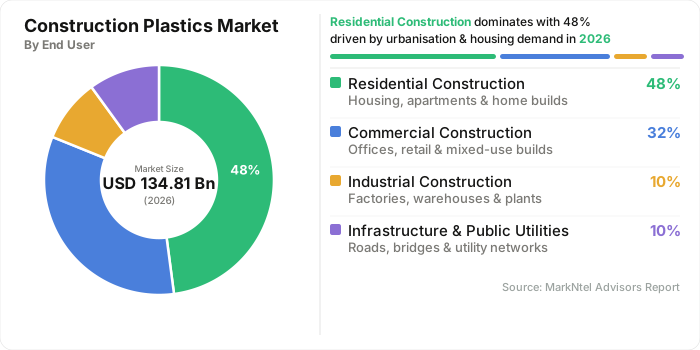
- By End Use, the Residential Construction segment accounts for approximately 48% of total market demand in 2026, reflecting persistent global housing shortfalls and government-backed affordable housing programmes across emerging economies.
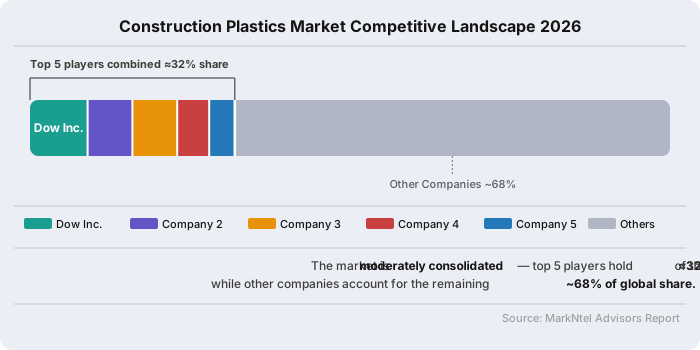
- The industry is moderately consolidated, with numerous global and regional players. However, leading companies collectively account for around 32% of the market.
Global Construction Plastics Market Size and Outlook
The global construction plastics market is projected to witness sustained growth at a CAGR of 7.5%, building on a 2025 valuation of USD 125.4 billion. Rising global infrastructure spending and accelerating urban development activities continue to create favorable growth demand for construction plastics.
Materials such as PVC, polyethylene, polypropylene, polyurethane, expanded polystyrene, and polycarbonate are witnessing broader adoption across residential, commercial, and industrial construction projects due to their durability, lightweight properties, thermal insulation capabilities, and reduced maintenance requirements. Their application has expanded significantly in piping systems, roofing membranes, flooring, doors & windows, wall panels, and waterproofing solutions as builders increasingly prioritize cost-efficient and long-lasting construction materials.
Alongside rising construction activity, supportive government policies and infrastructure modernization programs are playing a critical role in strengthening market demand worldwide. The European Commission continued advancing investments under the European Green Deal and Renovation Wave initiative during 2025 to improve energy-efficient buildings and sustainable urban infrastructure across member nations .
At the same time, India’s National Infrastructure Pipeline (NIP) and Smart Cities Mission are driving large-scale investments in transportation networks, residential developments, water management systems, and public utilities, thereby generating substantial demand for construction insulation materials, composite panels, and protective construction applications . These policy-driven developments continue to reinforce long-term consumption across both public and private sector construction projects.
Growing environmental concerns and stricter building efficiency regulations are further accelerating the integration of advanced plastic materials into modern construction practices. According to the International Energy Agency (IEA), buildings account for nearly 30% of global final energy consumption, encouraging governments and developers to improve thermal efficiency and reduce operational emissions through high-performance building materials .
As a result, polyurethane foams, EPS insulation materials, and engineered plastic composites are increasingly being incorporated into energy-efficient residential complexes, institutional facilities, and commercial buildings to comply with evolving sustainability standards and green building regulations. This transition toward environmentally responsible construction is expected to sustain stable demand for advanced construction plastics over the coming years.
Meanwhile, leading industry participants are actively expanding manufacturing capabilities and strengthening sustainable product portfolios to align with evolving regulatory and environmental requirements. In 2025, Dow Inc. announced initiatives focused on circular and low-carbon plastic materials for infrastructure and construction applications , while BASF SE continued investments in advanced polyurethane insulation technologies designed to improve building energy performance .
Several manufacturers are also emphasizing recyclable polymers, localized production strategies, and material innovation to support circular economy objectives and supply chain resilience. Supported by these sustainability-focused initiatives and continuous technological advancements, the Global Construction Plastics Market is projected to grow from USD 134.81 billion in 2026 to nearly USD 208.05 billion by 2032, creating strong long-term growth opportunities across the industry.
Global Construction Plastics Market Key Indicators
- Global infrastructure investment needs are projected to approach USD 94 trillion by 2040 across transportation, energy, water, and urban infrastructure sectors. Expanding infrastructure construction continues to increase demand for construction plastics used in pipes, insulation systems, waterproofing membranes, and composite building materials.
- The World Green Building Council states that green buildings can reduce energy consumption by up to 30%, highlighting the growing importance of sustainable construction materials. Rising adoption of recyclable insulation systems and advanced polymer-based building materials continues to support demand for construction plastics across residential and commercial infrastructure projects.
- India’s National Infrastructure Pipeline (NIP) involves investments of nearly USD 1.4 trillion across transportation, utilities, housing, and urban infrastructure projects. Expansion of smart cities and public infrastructure networks is significantly increasing demand for PVC pipes, insulation systems, and plastic-based construction materials.
- The European Union’s Renovation Wave initiative aims to renovate nearly 35 million buildings by 2030 while at least doubling the annual rate of energy renovations across the region. Expanding renovation activities are increasing demand for advanced insulation plastics, recyclable polymer materials, and energy-efficient construction products in residential and commercial buildings.
- Global renewable energy capacity reached more than 5,149 GW in 2025 following the addition of nearly 692 GW of new renewable power capacity worldwide. Expanding investments in solar parks, wind farms, and grid infrastructure projects continue to increase demand for construction plastics used in cable insulation, protective piping systems, waterproofing materials, and composite structural applications across renewable energy installations.
- Nearly 68% of the global population is projected to live in urban areas by 2050, reflecting accelerating urbanization and rising infrastructure demand worldwide. Expanding urban housing, commercial complexes, and public utility projects continue to increase the consumption of construction plastics used in pipes, insulation systems, roofing membranes, flooring, and window profiles .
Global Construction Plastics Market Scope
| Category | Segments |
|---|---|
| By Product Type | Polyvinyl Chloride (PVC), Polyethylene (PE), Polypropylene (PP), Polyurethane (PU), Expanded Polystyrene (EPS), Polycarbonate (PC), Acrylics, Composite Plastics, Others |
| By Application | Pipes & Ducts, Insulation Materials, Roofing, Flooring & Decking, Doors & Windows, Wall Panels & Cladding, Sealants & Adhesives, Water Storage Systems, Others |
| By End-Use | Residential Construction, Commercial Construction, Industrial Construction, Infrastructure & Public Utilities |
| By Construction Type | New Construction, Renovation & Remodeling |
Global Construction Plastics Market Growth Drivers
Rising Global Infrastructure Development and Urban Housing Expansion
Infrastructure modernization and rising urban housing requirements are steadily strengthening the adoption of advanced plastic-based construction materials worldwide. Materials such as PVC, polyethylene, polypropylene, and polyurethane are increasingly utilized in piping systems, insulation materials, roofing membranes, flooring, and wall panels due to their lightweight structure, durability, corrosion resistance, and lower installation costs. Growing investments in transportation networks, affordable housing, smart cities, and public utility infrastructure are continuing to expand demand for plastic infrastructure solutions across both developed and emerging economies.
Urbanization trends are further reinforcing long-term construction activity as governments intensify focus on housing accessibility and sustainable infrastructure development. UN-Habitat estimates that nearly 3 billion people will require adequate housing by 2030, highlighting substantial future demand for residential infrastructure and urban expansion globally . At the same time, U.S. construction spending remained above the USD 2 trillion level, reflecting strong activity across residential, commercial, and infrastructure sectors . Expanding renovation and new construction projects are steadily increasing demand for plastic-based flooring, roofing membranes, insulation materials, piping systems, and waterproofing products used in modern building polymer systems.
Alongside residential expansion, large government-backed infrastructure programs are generating significant growth opportunities for construction plastic manufacturers. In 2025, Saudi Arabia continued advancing Vision 2030 projects, including NEOM and The Line, involving the development of energy-efficient buildings, advanced utility networks, and smart urban infrastructure systems . Similarly, Indonesia accelerated development of its new capital city, Nusantara, through the USD 32 billion infrastructure project focused on transportation systems, housing, drainage networks, utilities, and public infrastructure modernization . These infrastructure modernization initiatives are driving broader adoption of plastic-based construction materials due to their durability, corrosion resistance, and suitability for large-scale utility and structural applications, which continues to strengthen market demand across global construction activities.
Recent Trends
Increasing Use of Advanced Composite Materials
The growing preference for lightweight, durable, and corrosion-resistant construction solutions is steadily accelerating the adoption of advanced composite materials across the global construction plastics market. Fiber-reinforced plastics, engineered polymer composites, and high-performance insulation materials are increasingly replacing conventional materials such as steel and wood due to their superior structural strength, thermal efficiency, and lower maintenance requirements. As infrastructure developers and construction companies continue prioritizing long-life and energy-efficient building solutions, utilization of advanced composites is expanding across transportation infrastructure, utility systems, commercial buildings, and modern residential construction projects supported by rising demand for advanced construction composites worldwide.
This transition has gained further momentum as governments increasingly emphasize sustainable infrastructure modernization and energy-efficient construction practices. In 2025, the European Union continued the implementation of the Renovation Wave initiative, focused on improving energy efficiency and accelerating the modernization of energy-intensive buildings across member nations. At the same time, large-scale smart city developments and infrastructure expansion projects across Asia and the Middle East are encouraging broader integration of advanced composite materials into structural reinforcement systems, utility infrastructure, and modern building applications to improve durability and operational performance over longer lifecycles. The shift toward high-performance construction materials is also supporting wider adoption of engineered composite technologies across large-scale infrastructure projects.
Alongside rising infrastructure investments, manufacturers are actively introducing innovative composite-based construction materials to address evolving industry requirements. In 2025, a Megha Engineering entity launched GFRP (Glass Fiber Reinforced Polymer) rebars as an alternative to conventional steel reinforcement for construction applications, reflecting increasing commercial adoption of corrosion-resistant composite materials in infrastructure project s. Similarly, Industrial Summit Technology introduced advanced polyimide fiber materials designed to improve thermal resistance, lightweight performance, and structural durability across composite applications . These material innovations are supporting broader utilization of advanced composites in durable and energy-efficient construction systems.
Global Construction Plastics Market Opportunities and Challenges
Volatility in Raw Material Prices Driving Adoption of Bio-Based and Cost-Efficient Polymer Materials
Fluctuations in crude oil and petrochemical feedstock prices are creating significant cost pressures across the global construction plastics market. Since materials such as PVC, polyethylene, polypropylene, and polyurethane are heavily dependent on petroleum-based raw materials, volatility in energy markets directly affects manufacturing costs, pricing stability, and supply chain planning. Geopolitical disruptions, refinery output fluctuations, and changing trade conditions during 2025–2026 have continued to increase uncertainty across the petrochemical sector, creating operational challenges for construction plastic manufacturers and infrastructure developers worldwide. This volatility is also encouraging manufacturers to explore sustainable construction materials that can reduce long-term dependence on conventional petrochemical feedstocks.
At the same time, these pricing challenges are accelerating the adoption of bio-based, recycled, and cost-efficient polymer materials across the construction industry. Manufacturers are increasingly investing in renewable feedstocks, recyclable plastics, and circular polymer technologies to reduce dependence on fossil fuel-based raw materials and improve long-term supply stability. In 2025, LyondellBasell produced and marketed approximately 206,000 metric tons of recycled and renewable-based polymers through mechanical recycling, chemical recycling, and biocircular feedstocks, highlighting growing commercial adoption of circular polymer technologies . Simultaneously, governments across Europe and Asia are strengthening circular economy regulations and sustainable construction policies, encouraging broader utilization of recyclable and bio-based construction plastic materials across residential, commercial, and infrastructure projects.
Segmentation Insights
Polyvinyl Chloride (PVC) Holds the Leading Position Due to Extensive Utilization Across Utility Infrastructure and Modern Building Applications
Extensive application across utility infrastructure and building systems has enabled Polyvinyl Chloride (PVC) to capture around 36% share of the global construction plastics market. Widespread utilization across pipes, fittings, window profiles, flooring systems, cable insulation, roofing membranes, and wall coverings continues to reinforce PVC’s strong market presence worldwide. Its durability, corrosion resistance, chemical stability, moisture resistance, and cost efficiency make the material highly suitable for long-term residential, commercial, and infrastructure projects. As governments continue investing in the modernization of water supply networks, sanitation systems, and public utility infrastructure, global demand for PVC materials is steadily expanding across both developed and emerging economies.
The material’s growing adoption is further supported by rising urban housing development and affordable residential construction initiatives worldwide. Developers increasingly prefer PVC-based materials because of their lightweight structure, ease of installation, compatibility with modern construction practices, and ability to reduce long-term maintenance costs. In 2025, Prayag Polymers launched a complete range of PVC-O pipes designed for water applications, reflecting increasing industry focus on advanced and durable piping solutions for modern water distribution infrastructure . PVC-O pipes offer improved pressure resistance, lightweight properties, and longer operational lifespan, further supporting broader utilization of PVC materials across utility and infrastructure development projects globally. Based on product type, the market is segmented into:
- Polyvinyl Chloride (PVC)
- Polyethylene (PE)
- Polypropylene (PP)
- Polyurethane (PU)
- Expanded Polystyrene (EPS)
- Polycarbonate (PC)
- Acrylics
- Composite Plastics
- Others
Residential Construction Holds the Leading Position Due to Rising Urban Housing Demand and Expanding Residential Infrastructure Development
Residential construction accounts for approximately 48% share of the global construction plastics market, making it the largest end-use category worldwide. Accelerating urban migration, rising housing demand, and increasing investments in modern residential infrastructure continue to drive extensive utilization of construction plastics across housing projects globally. Plastic materials are widely used in plumbing systems, thermal insulation, roofing, flooring, windows, doors, and interior applications because of their lightweight structure, durability, moisture resistance, and cost efficiency. As urban housing development continues expanding across Asia-Pacific, the Middle East, and Africa, demand for plastic-based construction materials and residential utility infrastructure systems is steadily increasing.
The segment is further benefiting from growing renovation and remodeling activities across developed economies, where energy-efficient retrofitting projects are becoming increasingly important. Developers and homeowners are adopting polyurethane insulation foams, waterproof membranes, plastic window systems, and advanced flooring materials to improve thermal efficiency and reduce long-term operational energy consumption. At the same time, the United Nations continues to highlight rapid global urban population growth, emphasizing the need for substantial residential infrastructure expansion and housing development worldwide. These combined factors continue to reinforce the dominant position of residential construction within the global construction plastics market. Based on end use, the market is segmented into:
- Residential Construction
- Commercial Construction
- Industrial Construction
- Infrastructure & Public Utilities
Global Construction Plastics Market Geographical Outlook
Asia-Pacific accounts for approximately 41.37% share of the global construction plastics market, making it the leading regional market worldwide. Rapid urbanization, expanding residential construction activities, strong manufacturing capabilities, and continuous infrastructure investments continue supporting regional market growth. Countries including China, India, Japan, South Korea, and Southeast Asian economies are increasingly utilizing construction plastics across piping systems, insulation materials, flooring applications, roofing membranes, and utility infrastructure projects. Growing focus on urban modernization and industrial expansion is steadily strengthening regional demand for advanced plastic-based construction materials.
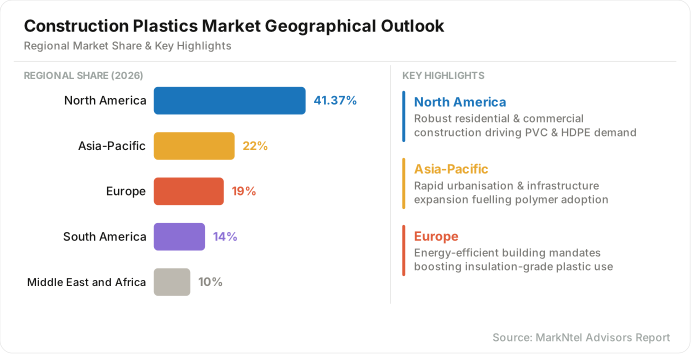
China continues to account for the largest share of regional demand due to sustained investments in transportation infrastructure, underground pipeline networks, urban utility systems, and smart city projects. In 2025, China approved infrastructure investment plans worth approximately USD 42 billion focused on transportation systems, ecological infrastructure, and public utility modernization projects . Alongside China, India is witnessing strong growth supported by urban development and government-backed housing and infrastructure initiatives, while Southeast Asian economies including Vietnam, Indonesia, and the Philippines continue experiencing rising industrialization and commercial infrastructure expansion. These interconnected development activities continue reinforcing Asia-Pacific’s dominant position within the construction plastics industry.
Global Construction Plastics Market Competitive Analysis
The global construction plastics market exhibits a moderately consolidated competitive environment, with major multinational polymer manufacturers and regional infrastructure material companies competing across piping systems, insulation materials, composite plastics, roofing membranes, and utility infrastructure applications. Key players, including Dow Inc., BASF SE, SABIC, LyondellBasell Industries, and Westlake Corporation, together hold nearly 32% share of the global market, driven by extensive polymer production capabilities, integrated petrochemical operations, broad construction material portfolios, strong international distribution networks, and continuous investments in recyclable and low-carbon plastic technologies.
List of Major Construction Plastics Companies Operating Globally
- Dow Inc.
- BASF SE
- SABIC
- LyondellBasell Industries
- Westlake Corporation
- DuPont
- Covestro AG
- INEOS Group
- LG Chem
- Arkema S.A.
- The Supreme Industries Ltd.
- Astral Limited
- Finolex Industries Ltd.
- Prince Pipes and Fittings Ltd.
- Aliaxis Group
- Others
Global Construction Plastics Industry News and Recent Developments
August 2025: SABIC Introduces Advanced Polycarbonate Solutions for Smart Infrastructure Applications
SABIC introduced advanced polycarbonate-based material solutions designed for smart infrastructure and high-performance construction applications. The materials are engineered to provide enhanced durability, lightweight performance, and improved weather resistance across modern building and infrastructure projects.
Impact Analysis: The development highlights increasing adoption of high-performance engineering plastics across infrastructure construction activities. Rising preference for lightweight, durable, and weather-resistant construction materials is expected to strengthen long-term demand for advanced polymer solutions across modern infrastructure and building applications.
September 2025: Covestro AG Expands Sustainable Polyurethane Solutions for Green Building Applications
Covestro AG expanded its polyurethane material portfolio focused on green building and low-carbon construction applications. The company emphasized development of advanced insulation solutions designed to improve building energy efficiency and support sustainable construction standards across residential and commercial infrastructure projects.
Impact Analysis: The expansion reflects growing industry focus on environmentally sustainable and energy-efficient construction materials. Increasing investments in green buildings and low-carbon infrastructure development are expected to accelerate adoption of advanced polyurethane-based construction plastics across modern construction activities.
- Market Segmentation
- Introduction
- Product Definition
- Research Process
- Assumptions
- Executive Summary
- Global Construction Plastics Market Policies, Regulations, and Product Standards
- Global Construction Plastics Production (Tons) Trend 2022-2032
- Global Construction Plastics Production (Tons) Trend By Product Type
- Polyvinyl Chloride (PVC)
- Polyethylene (PE)
- Polypropylene (PP)
- Polyurethane (PU)
- Expanded Polystyrene (EPS)
- Polycarbonate (PC)
- Acrylics
- Composite Plastics
- Others
- Company Wise Production Plants and Statistics
- Installed Production Capacity
- Actual Production
- Planned Production Target
- Global Construction Plastics Production (Tons) Trend By Product Type
- Global Construction Plastics Pricing Analysis (USD/ Tons) 2022-2032
- Global Construction Plastics Pricing Trend (USD/ Tons) 2022-2032
- Global Construction Plastics Pricing Trend (USD/ Tons) By Regions 2022-2032
- North America
- South America
- Europe
- Middle East & Africa
- Asia Pacific
- Global Construction Plastics Pricing Trend (USD/ Tons) By Product Type 2022-2032
- Polyvinyl Chloride (PVC)
- Polyethylene (PE)
- Polypropylene (PP)
- Polyurethane (PU)
- Expanded Polystyrene (EPS)
- Polycarbonate (PC)
- Acrylics
- Composite Plastics
- Others
- Global Construction Plastics Market Dynamics
- Growth Factors
- Challenges
- Global Construction Plastics Market Hotspot & Opportunities
- Global Construction Plastics Market Outlook, 2022-2032F
- Market Size & Outlook
- By Revenues (USD Million)
- By Quantity Sold (Tons)
- Market Share & Analysis
- By Product Type- Market Size & Forecast 2022-2032, USD Million
- Polyvinyl Chloride (PVC)
- Polyethylene (PE)
- Polypropylene (PP)
- Polyurethane (PU)
- Expanded Polystyrene (EPS)
- Polycarbonate (PC)
- Acrylics
- Composite Plastics
- Others
- By Application- Market Size & Forecast 2022-2032, USD Million
- Pipes & Ducts
- Insulation Materials
- Roofing
- Flooring & Decking
- Doors & Windows
- Wall Panels & Cladding
- Sealants & Adhesives
- Water Storage Systems
- Others
- By End-Use- Market Size & Forecast 2022-2032, USD Million
- Residential Construction
- Commercial Construction
- Industrial Construction
- Infrastructure & Public Utilities
- By Construction Type- Market Size & Forecast 2022-2032, USD Million
- New Construction
- Renovation & Remodeling
- By Region
- North America
- South America
- Europe
- Middle East and Africa
- Asia Pacific
- By Company
- Competition Characteristics
- Market Share & Analysis
- By Product Type- Market Size & Forecast 2022-2032, USD Million
- Market Size & Outlook
- North America Construction Plastics Market Outlook, 2022-2032F
- Market Size & Outlook
- By Revenues (USD Million)
- By Quantity Sold (Tons)
- Market Share & Analysis
- By Product Type- Market Size & Forecast 2022-2032, USD Million
- By Application- Market Size & Forecast 2022-2032, USD Million
- By End-Use- Market Size & Forecast 2022-2032, USD Million
- By Construction Type- Market Size & Forecast 2022-2032, USD Million
- By Country
- The US
- Canada
- Mexico
- The US Construction Plastics Market Outlook, 2022-2032F
- Market Size & Outlook
- By Revenues (USD Million)
- By Quantity Sold (Tons)
- Market Share & Analysis
- By Product Type- Market Size & Forecast 2022-2032, USD Million
- By Application- Market Size & Forecast 2022-2032, USD Million
- By End-Use- Market Size & Forecast 2022-2032, USD Million
- By Construction Type- Market Size & Forecast 2022-2032, USD Million
- Market Size & Outlook
- Canada Construction Plastics Market Outlook, 2022-2032F
- Market Size & Outlook
- By Revenues (USD Million)
- By Quantity Sold (Tons)
- Market Share & Analysis
- By Product Type- Market Size & Forecast 2022-2032, USD Million
- By Application- Market Size & Forecast 2022-2032, USD Million
- By End-Use- Market Size & Forecast 2022-2032, USD Million
- By Construction Type- Market Size & Forecast 2022-2032, USD Million
- Market Size & Outlook
- Market Size & Outlook
- South America Construction Plastics Market Outlook, 2022-2032F
- Market Size & Outlook
- By Revenues (USD Million)
- By Quantity Sold (Tons)
- Market Share & Analysis
- By Product Type- Market Size & Forecast 2022-2032, USD Million
- By Application- Market Size & Forecast 2022-2032, USD Million
- By End-Use- Market Size & Forecast 2022-2032, USD Million
- By Construction Type- Market Size & Forecast 2022-2032, USD Million
- By Country
- Brazil
- Argentina
- Chile
- Colombia
- Rest of South America
- Brazil Construction Plastics Market Outlook, 2022-2032F
- Market Size & Outlook
- By Revenues (USD Million)
- By Quantity Sold (Tons)
- Market Share & Analysis
- By Product Type- Market Size & Forecast 2022-2032, USD Million
- By Application- Market Size & Forecast 2022-2032, USD Million
- By End-Use- Market Size & Forecast 2022-2032, USD Million
- By Construction Type- Market Size & Forecast 2022-2032, USD Million
- Market Size & Outlook
- Argentina Construction Plastics Market Outlook, 2022-2032F
- Market Size & Outlook
- By Revenues (USD Million)
- By Quantity Sold (Tons)
- Market Share & Analysis
- By Product Type- Market Size & Forecast 2022-2032, USD Million
- By Application- Market Size & Forecast 2022-2032, USD Million
- By End-Use- Market Size & Forecast 2022-2032, USD Million
- By Construction Type- Market Size & Forecast 2022-2032, USD Million
- Market Size & Outlook
- Chile Construction Plastics Market Outlook, 2022-2032F
- Market Size & Outlook
- By Revenues (USD Million)
- By Quantity Sold (Tons)
- Market Share & Analysis
- By Product Type- Market Size & Forecast 2022-2032, USD Million
- By Application- Market Size & Forecast 2022-2032, USD Million
- By End-Use- Market Size & Forecast 2022-2032, USD Million
- By Construction Type- Market Size & Forecast 2022-2032, USD Million
- Market Size & Outlook
- Colombia Construction Plastics Market Outlook, 2022-2032F
- Market Size & Outlook
- By Revenues (USD Million)
- By Quantity Sold (Tons)
- Market Share & Analysis
- By Product Type- Market Size & Forecast 2022-2032, USD Million
- By Application- Market Size & Forecast 2022-2032, USD Million
- By End-Use- Market Size & Forecast 2022-2032, USD Million
- By Construction Type- Market Size & Forecast 2022-2032, USD Million
- Market Size & Outlook
- Market Size & Outlook
- Europe Construction Plastics Market Outlook, 2022-2032F
- Market Size & Outlook
- By Revenues (USD Million)
- By Quantity Sold (Tons)
- Market Share & Analysis
- By Product Type- Market Size & Forecast 2022-2032, USD Million
- By Application- Market Size & Forecast 2022-2032, USD Million
- By End-Use- Market Size & Forecast 2022-2032, USD Million
- By Construction Type- Market Size & Forecast 2022-2032, USD Million
- By Country
- The UK
- Germany
- France
- Italy
- Spain
- Russia
- Sweden
- Poland
- The Netherlands
- Rest of Europe
- The UK Construction Plastics Market Outlook, 2022-2032F
- Market Size & Outlook
- By Revenues (USD Million)
- By Quantity Sold (Tons)
- Market Share & Analysis
- By Product Type- Market Size & Forecast 2022-2032, USD Million
- By Application- Market Size & Forecast 2022-2032, USD Million
- By End-Use- Market Size & Forecast 2022-2032, USD Million
- By Construction Type- Market Size & Forecast 2022-2032, USD Million
- Market Size & Outlook
- Germany Construction Plastics Market Outlook, 2022-2032F
- Market Size & Outlook
- By Revenues (USD Million)
- By Quantity Sold (Tons)
- Market Share & Analysis
- By Product Type- Market Size & Forecast 2022-2032, USD Million
- By Application- Market Size & Forecast 2022-2032, USD Million
- By End-Use- Market Size & Forecast 2022-2032, USD Million
- By Construction Type- Market Size & Forecast 2022-2032, USD Million
- Market Size & Outlook
- France Construction Plastics Market Outlook, 2022-2032F
- Market Size & Outlook
- By Revenues (USD Million)
- By Quantity Sold (Tons)
- Market Share & Analysis
- By Product Type- Market Size & Forecast 2022-2032, USD Million
- By Application- Market Size & Forecast 2022-2032, USD Million
- By End-Use- Market Size & Forecast 2022-2032, USD Million
- By Construction Type- Market Size & Forecast 2022-2032, USD Million
- Market Size & Outlook
- Italy Construction Plastics Market Outlook, 2022-2032F
- Market Size & Outlook
- By Revenues (USD Million)
- By Quantity Sold (Tons)
- Market Share & Analysis
- By Product Type- Market Size & Forecast 2022-2032, USD Million
- By Application- Market Size & Forecast 2022-2032, USD Million
- By End-Use- Market Size & Forecast 2022-2032, USD Million
- By Construction Type- Market Size & Forecast 2022-2032, USD Million
- Market Size & Outlook
- Spain Construction Plastics Market Outlook, 2022-2032F
- Market Size & Outlook
- By Revenues (USD Million)
- By Quantity Sold (Tons)
- Market Share & Analysis
- By Product Type- Market Size & Forecast 2022-2032, USD Million
- By Application- Market Size & Forecast 2022-2032, USD Million
- By End-Use- Market Size & Forecast 2022-2032, USD Million
- By Construction Type- Market Size & Forecast 2022-2032, USD Million
- Market Size & Outlook
- Russia Construction Plastics Market Outlook, 2022-2032F
- Market Size & Outlook
- By Revenues (USD Million)
- By Quantity Sold (Tons)
- Market Share & Analysis
- By Product Type- Market Size & Forecast 2022-2032, USD Million
- By Application- Market Size & Forecast 2022-2032, USD Million
- By End-Use- Market Size & Forecast 2022-2032, USD Million
- By Construction Type- Market Size & Forecast 2022-2032, USD Million
- Market Size & Outlook
- Sweden Construction Plastics Market Outlook, 2022-2032F
- Market Size & Outlook
- By Revenues (USD Million)
- By Quantity Sold (Tons)
- Market Share & Analysis
- By Product Type- Market Size & Forecast 2022-2032, USD Million
- By Application- Market Size & Forecast 2022-2032, USD Million
- By End-Use- Market Size & Forecast 2022-2032, USD Million
- By Construction Type- Market Size & Forecast 2022-2032, USD Million
- Market Size & Outlook
- Poland Construction Plastics Market Outlook, 2022-2032F
- Market Size & Outlook
- By Revenues (USD Million)
- By Quantity Sold (Tons)
- Market Share & Analysis
- By Product Type- Market Size & Forecast 2022-2032, USD Million
- By Application- Market Size & Forecast 2022-2032, USD Million
- By End-Use- Market Size & Forecast 2022-2032, USD Million
- By Construction Type- Market Size & Forecast 2022-2032, USD Million
- Market Size & Outlook
- The Netherlands Construction Plastics Market Outlook, 2022-2032F
- Market Size & Outlook
- By Revenues (USD Million)
- By Quantity Sold (Tons)
- Market Share & Analysis
- By Product Type- Market Size & Forecast 2022-2032, USD Million
- By Application- Market Size & Forecast 2022-2032, USD Million
- By End-Use- Market Size & Forecast 2022-2032, USD Million
- By Construction Type- Market Size & Forecast 2022-2032, USD Million
- Market Size & Outlook
- Market Size & Outlook
- Middle East and Africa Construction Plastics Market Outlook, 2022-2032F
- Market Size & Outlook
- By Revenues (USD Million)
- By Quantity Sold (Tons)
- Market Share & Analysis
- By Product Type- Market Size & Forecast 2022-2032, USD Million
- By Application- Market Size & Forecast 2022-2032, USD Million
- By End-Use- Market Size & Forecast 2022-2032, USD Million
- By Construction Type- Market Size & Forecast 2022-2032, USD Million
- By Country
- Saudi Arabia
- UAE
- Turkey
- Qatar
- Israel
- South Africa
- Oman
- Nigeria
- Rest of the Middle East & Africa
- Saudi Arabia Construction Plastics Market Outlook, 2022-2032F
- Market Size & Outlook
- By Revenues (USD Million)
- By Quantity Sold (Tons)
- Market Share & Analysis
- By Product Type- Market Size & Forecast 2022-2032, USD Million
- By Application- Market Size & Forecast 2022-2032, USD Million
- By End-Use- Market Size & Forecast 2022-2032, USD Million
- By Construction Type- Market Size & Forecast 2022-2032, USD Million
- Market Size & Outlook
- UAE Construction Plastics Market Outlook, 2022-2032F
- Market Size & Outlook
- By Revenues (USD Million)
- By Quantity Sold (Tons)
- Market Share & Analysis
- By Product Type- Market Size & Forecast 2022-2032, USD Million
- By Application- Market Size & Forecast 2022-2032, USD Million
- By End-Use- Market Size & Forecast 2022-2032, USD Million
- By Construction Type- Market Size & Forecast 2022-2032, USD Million
- Market Size & Outlook
- Turkey Construction Plastics Market Outlook, 2022-2032F
- Market Size & Outlook
- By Revenues (USD Million)
- By Quantity Sold (Tons)
- Market Share & Analysis
- By Product Type- Market Size & Forecast 2022-2032, USD Million
- By Application- Market Size & Forecast 2022-2032, USD Million
- By End-Use- Market Size & Forecast 2022-2032, USD Million
- By Construction Type- Market Size & Forecast 2022-2032, USD Million
- Market Size & Outlook
- Qatar Construction Plastics Market Outlook, 2022-2032F
- Market Size & Outlook
- By Revenues (USD Million)
- By Quantity Sold (Tons)
- Market Share & Analysis
- By Product Type- Market Size & Forecast 2022-2032, USD Million
- By Application- Market Size & Forecast 2022-2032, USD Million
- By End-Use- Market Size & Forecast 2022-2032, USD Million
- By Construction Type- Market Size & Forecast 2022-2032, USD Million
- Market Size & Outlook
- Israel Construction Plastics Market Outlook, 2022-2032F
- Market Size & Outlook
- By Revenues (USD Million)
- By Quantity Sold (Tons)
- Market Share & Analysis
- By Product Type- Market Size & Forecast 2022-2032, USD Million
- By Application- Market Size & Forecast 2022-2032, USD Million
- By End-Use- Market Size & Forecast 2022-2032, USD Million
- By Construction Type- Market Size & Forecast 2022-2032, USD Million
- Market Size & Outlook
- South Africa Construction Plastics Market Outlook, 2022-2032F
- Market Size & Outlook
- By Revenues (USD Million)
- By Quantity Sold (Tons)
- Market Share & Analysis
- By Product Type- Market Size & Forecast 2022-2032, USD Million
- By Application- Market Size & Forecast 2022-2032, USD Million
- By End-Use- Market Size & Forecast 2022-2032, USD Million
- By Construction Type- Market Size & Forecast 2022-2032, USD Million
- Market Size & Outlook
- Oman Construction Plastics Market Outlook, 2022-2032F
- Market Size & Outlook
- By Revenues (USD Million)
- By Quantity Sold (Tons)
- Market Share & Analysis
- By Product Type- Market Size & Forecast 2022-2032, USD Million
- By Application- Market Size & Forecast 2022-2032, USD Million
- By End-Use- Market Size & Forecast 2022-2032, USD Million
- By Construction Type- Market Size & Forecast 2022-2032, USD Million
- Market Size & Outlook
- Nigeria Construction Plastics Market Outlook, 2022-2032F
- Market Size & Outlook
- By Revenues (USD Million)
- By Quantity Sold (Tons)
- Market Share & Analysis
- By Product Type- Market Size & Forecast 2022-2032, USD Million
- By Application- Market Size & Forecast 2022-2032, USD Million
- By End-Use- Market Size & Forecast 2022-2032, USD Million
- By Construction Type- Market Size & Forecast 2022-2032, USD Million
- Market Size & Outlook
- Market Size & Outlook
- Asia Pacific Construction Plastics Market Outlook, 2022-2032F
- Market Size & Outlook
- By Revenues (USD Million)
- By Quantity Sold (Tons)
- Market Share & Analysis
- By Product Type- Market Size & Forecast 2022-2032, USD Million
- By Application- Market Size & Forecast 2022-2032, USD Million
- By End-Use- Market Size & Forecast 2022-2032, USD Million
- By Construction Type- Market Size & Forecast 2022-2032, USD Million
- By Country
- China
- Japan
- India
- South Korea
- Australia
- Indonesia
- Thailand
- Vietnam
- Malaysia
- Philippines
- Rest of Asia-Pacific
- China Construction Plastics Market Outlook, 2022-2032F
- Market Size & Outlook
- By Revenues (USD Million)
- By Quantity Sold (Tons)
- Market Share & Analysis
- By Product Type- Market Size & Forecast 2022-2032, USD Million
- By Application- Market Size & Forecast 2022-2032, USD Million
- By End-Use- Market Size & Forecast 2022-2032, USD Million
- By Construction Type- Market Size & Forecast 2022-2032, USD Million
- Market Size & Outlook
- Japan Construction Plastics Market Outlook, 2022-2032F
- Market Size & Outlook
- By Revenues (USD Million)
- By Quantity Sold (Tons)
- Market Share & Analysis
- By Product Type- Market Size & Forecast 2022-2032, USD Million
- By Application- Market Size & Forecast 2022-2032, USD Million
- By End-Use- Market Size & Forecast 2022-2032, USD Million
- By Construction Type- Market Size & Forecast 2022-2032, USD Million
- Market Size & Outlook
- India Construction Plastics Market Outlook, 2022-2032F
- Market Size & Outlook
- By Revenues (USD Million)
- By Quantity Sold (Tons)
- Market Share & Analysis
- By Product Type- Market Size & Forecast 2022-2032, USD Million
- By Application- Market Size & Forecast 2022-2032, USD Million
- By End-Use- Market Size & Forecast 2022-2032, USD Million
- By Construction Type- Market Size & Forecast 2022-2032, USD Million
- Market Size & Outlook
- South Korea Construction Plastics Market Outlook, 2022-2032F
- Market Size & Outlook
- By Revenues (USD Million)
- By Quantity Sold (Tons)
- Market Share & Analysis
- By Product Type- Market Size & Forecast 2022-2032, USD Million
- By Application- Market Size & Forecast 2022-2032, USD Million
- By End-Use- Market Size & Forecast 2022-2032, USD Million
- By Construction Type- Market Size & Forecast 2022-2032, USD Million
- Market Size & Outlook
- Australia Construction Plastics Market Outlook, 2022-2032F
- Market Size & Outlook
- By Revenues (USD Million)
- By Quantity Sold (Tons)
- Market Share & Analysis
- By Product Type- Market Size & Forecast 2022-2032, USD Million
- By Application- Market Size & Forecast 2022-2032, USD Million
- By End-Use- Market Size & Forecast 2022-2032, USD Million
- By Construction Type- Market Size & Forecast 2022-2032, USD Million
- Market Size & Outlook
- Indonesia Construction Plastics Market Outlook, 2022-2032F
- Market Size & Outlook
- By Revenues (USD Million)
- By Quantity Sold (Tons)
- Market Share & Analysis
- By Product Type- Market Size & Forecast 2022-2032, USD Million
- By Application- Market Size & Forecast 2022-2032, USD Million
- By End-Use- Market Size & Forecast 2022-2032, USD Million
- By Construction Type- Market Size & Forecast 2022-2032, USD Million
- Market Size & Outlook
- Thailand Construction Plastics Market Outlook, 2022-2032F
- Market Size & Outlook
- By Revenues (USD Million)
- By Quantity Sold (Tons)
- Market Share & Analysis
- By Product Type- Market Size & Forecast 2022-2032, USD Million
- By Application- Market Size & Forecast 2022-2032, USD Million
- By End-Use- Market Size & Forecast 2022-2032, USD Million
- By Construction Type- Market Size & Forecast 2022-2032, USD Million
- Market Size & Outlook
- Vietnam Construction Plastics Market Outlook, 2022-2032F
- Market Size & Outlook
- By Revenues (USD Million)
- By Quantity Sold (Tons)
- Market Share & Analysis
- By Product Type- Market Size & Forecast 2022-2032, USD Million
- By Application- Market Size & Forecast 2022-2032, USD Million
- By End-Use- Market Size & Forecast 2022-2032, USD Million
- By Construction Type- Market Size & Forecast 2022-2032, USD Million
- Market Size & Outlook
- Malaysia Construction Plastics Market Outlook, 2022-2032F
- Market Size & Outlook
- By Revenues (USD Million)
- By Quantity Sold (Tons)
- Market Share & Analysis
- By Product Type- Market Size & Forecast 2022-2032, USD Million
- By Application- Market Size & Forecast 2022-2032, USD Million
- By End-Use- Market Size & Forecast 2022-2032, USD Million
- By Construction Type- Market Size & Forecast 2022-2032, USD Million
- Market Size & Outlook
- Philippines Construction Plastics Market Outlook, 2022-2032F
- Market Size & Outlook
- By Revenues (USD Million)
- By Quantity Sold (Tons)
- Market Share & Analysis
- By Product Type- Market Size & Forecast 2022-2032, USD Million
- By Application- Market Size & Forecast 2022-2032, USD Million
- By End-Use- Market Size & Forecast 2022-2032, USD Million
- By Construction Type- Market Size & Forecast 2022-2032, USD Million
- Market Size & Outlook
- Market Size & Outlook
- Global Construction Plastics Market Key Strategic Imperatives for Success & Growth
- Competitive Outlook
- Company Profiles
- Dow Inc.
- Business Description
- Product Portfolio
- Collaborations & Alliances
- Recent Developments
- Financial Details
- Others
- BASF SE
- Business Description
- Product Portfolio
- Collaborations & Alliances
- Recent Developments
- Financial Details
- Others
- SABIC
- Business Description
- Product Portfolio
- Collaborations & Alliances
- Recent Developments
- Financial Details
- Others
- LyondellBasell Industries
- Business Description
- Product Portfolio
- Collaborations & Alliances
- Recent Developments
- Financial Details
- Others
- Westlake Corporation
- Business Description
- Product Portfolio
- Collaborations & Alliances
- Recent Developments
- Financial Details
- Others
- DuPont
- Business Description
- Product Portfolio
- Collaborations & Alliances
- Recent Developments
- Financial Details
- Others
- Covestro AG
- Business Description
- Product Portfolio
- Collaborations & Alliances
- Recent Developments
- Financial Details
- Others
- INEOS Group
- Business Description
- Product Portfolio
- Collaborations & Alliances
- Recent Developments
- Financial Details
- Others
- LG Chem
- Business Description
- Product Portfolio
- Collaborations & Alliances
- Recent Developments
- Financial Details
- Others
- Aliaxis Group
- Business Description
- Product Portfolio
- Collaborations & Alliances
- Recent Developments
- Financial Details
- Others
- Borealis Gmbh
- Business Description
- Product Portfolio
- Collaborations & Alliances
- Recent Developments
- Financial Details
- Others
- Formosa Plastics Corporation
- Business Description
- Product Portfolio
- Collaborations & Alliances
- Recent Developments
- Financial Details
- Others
- Asahi Kasei Corporation
- Business Description
- Product Portfolio
- Collaborations & Alliances
- Recent Developments
- Financial Details
- Others
- Solvay
- Business Description
- Product Portfolio
- Collaborations & Alliances
- Recent Developments
- Financial Details
- Others
- Dow Inc.
- Company Profiles
- Disclaimer

MarkNtel Advisors follows a robust and iterative research methodology designed to ensure maximum accuracy and minimize deviation in market estimates and forecasts. Our approach combines both bottom-up and top-down techniques to effectively segment and quantify various aspects of the market. A consistent feature across all our research reports is data triangulation, which examines the market from three distinct perspectives to validate findings. Key components of our research process include:
1. Scope & Research Design At the outset, MarkNtel Advisors define the research objectives and formulate pertinent questions. This phase involves determining the type of research—qualitative or quantitative—and designing a methodology that outlines data collection methods, target demographics, and analytical tools. They also establish timelines and budgets to ensure the research aligns with client goals.
2. Sample Selection and Data Collection In this stage, the firm identifies the target audience and determines the appropriate sample size to ensure representativeness. They employ various sampling methods, such as random or stratified sampling, based on the research objectives. Data collection is carried out using tools like surveys, interviews, and observations, ensuring the gathered data is reliable and relevant.
3. Data Analysis and Validation Once data is collected, MarkNtel Advisors undertake a rigorous analysis process. This includes cleaning the data to remove inconsistencies, employing statistical software for quantitative analysis, and thematic analysis for qualitative data. Validation steps are taken to ensure the accuracy and reliability of the findings, minimizing biases and errors.

4. Data Forecast and FinalizationThe final phase involves forecasting future market trends based on the analyzed data. MarkNtel Advisors utilize predictive modeling and time series analysis to anticipate market behaviors. The insights are then compiled into comprehensive reports, featuring visual aids like charts and graphs, and include strategic recommendations to inform client decision-making
We offer flexible licensing options to cater to varying organizational needs. Choose the pricing pack that best suits your requirements:
Buy Now Inquire Before Buying
 Request Customization