

By Chemical Type (Coagulants, Flocculants, Biocides & Disinfectants, Corrosion Inhibitors, Scale Inhibitors, pH Adjusters & Stabilizers, Defoamers, Chelating Agents, Others), By Application (Raw Water... ... plication (Raw Water Treatment, Municipal Wastewater Treatment, Industrial Wastewater Treatment, Cooling Water Treatment, Boiler Water Treatment, Desalination Plants, Others), By End Users (Municipal, Power Generation, Textile Industry, Oil & Gas, Chemicals & Petrochemicals, Mining, Food & Beverage, Pulp & Paper, Pharmaceuticals, Others), and others Read more
- Chemicals
- Jul 2026
- 140
- PDF, Excel, PPT
China Water Treatment Chemicals Market Key Takeaways
- The China water treatment chemicals market was valued at USD 7.44 billion in 2025 and is projected to grow from USD 8.02 billion in 2026 to USD 12.18 billion by 2032.
- The industry is projected to witness steady growth at a CAGR of 7.2% during 2026–2032.
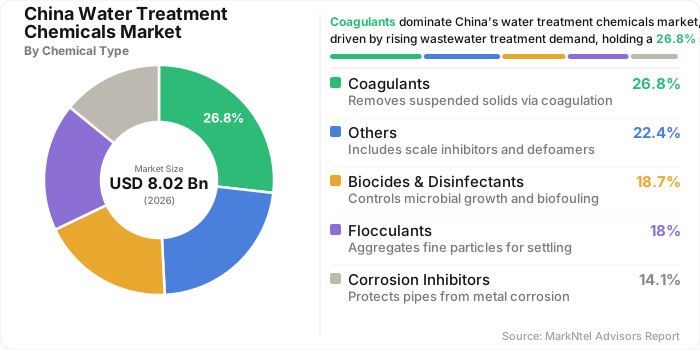
- Coagulants remained the dominant chemical type segment, accounting for approximately 26.8% of the market in 2026.
- Municipal Utilities led the market by end user, holding an estimated 46.2% share in 2026.
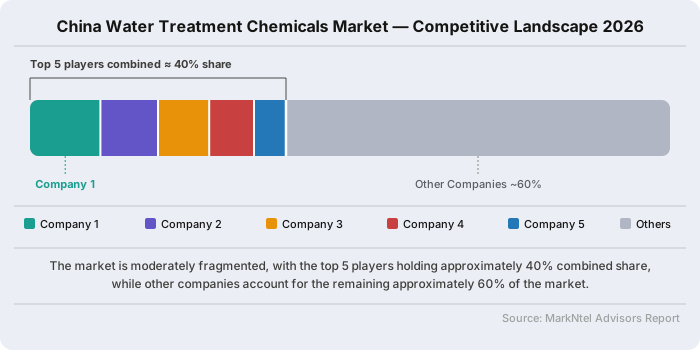
- The market is moderately fragmented, with the top five companies collectively accounting for 40% market share in 2026.
China Water Treatment Chemicals Market Size & Outlook
The water treatment chemicals market in China was valued at USD 7.44 billion in 2025 and is projected to reach USD 12.18 billion by 2032, expanding at a CAGR of 7.2% during 2026–2032.
The market is witnessing steady growth as industries and municipalities increasingly adopt specialty water treatment chemicals to improve water quality, comply with stringent environmental regulations, and enhance operational efficiency. Rising demand for industrial water treatment chemicals, municipal water treatment solutions, and sustainable treatment formulations is expected to support long-term market expansion across China's diverse industrial landscape.
China's abundant yet unevenly distributed water resources continue to increase the importance of efficient water management across industrial and municipal sectors. According to the Ministry of Water Resources (MWR), the country's total renewable water resources stood at approximately 3.0 trillion cubic metres in 2024, highlighting the need for efficient utilization across major industrial clusters. This is accelerating the deployment of advanced treatment programs that rely on coagulants, corrosion inhibitors, scale inhibitors, membrane treatment chemicals, and other high-performance formulations to improve water recycling and operational efficiency.
Industrial wastewater characteristics are becoming increasingly complex as advanced manufacturing industries continue to expand. According to the Ministry of Ecology and Environment (MEE), China's industrial sector discharged approximately 308,000 tonnes of Chemical Oxygen Demand (COD) in 2024, demonstrating the continued need for effective contaminant removal and wastewater treatment solutions. The rising complexity of industrial effluents is driving higher consumption of industrial wastewater chemicals and advanced treatment additives, particularly across the semiconductor, electronics, chemicals, pharmaceuticals, power generation, and metal processing industries, where higher treatment efficiency and regulatory compliance remain critical.
The market outlook remains favorable as industries and municipalities continue modernizing water treatment infrastructure to improve productivity, sustainability, and resource efficiency. According to the World Bank, industry contributed approximately 36% of China's GDP in 2024, underscoring the country's extensive industrial base and long-term demand for water treatment chemicals. Continued investment in wastewater treatment facilities, industrial water reuse, and smart water management systems is expected to create significant opportunities for specialty chemical manufacturers, technology providers, and integrated water treatment solution companies during the forecast period.
China Water Treatment Chemicals Market Key Indicators
- According to the National Bureau of Statistics (NBS) of China, investment in environmental pollution control reached approximately USD 134.0 billion in 2024. Rising environmental expenditure is driving higher consumption of coagulants, flocculants, corrosion inhibitors, biocides, and other water treatment chemicals across municipal and industrial water treatment facilities.
- As per the National Bureau of Statistics (NBS) of China, the country's manufacturing sector generated approximately USD 4.7 trillion in value added in 2024, retaining its position as the world's largest manufacturing base. The vast industrial ecosystem continues to increase demand for cooling water chemicals, boiler water treatment chemicals, process water additives, and industrial wastewater treatment chemicals.
- According to UN Comtrade, China imported more than USD 1.3 billion worth of filtration and purification machinery for liquids (HS 842121) in 2024. The expansion of advanced water treatment infrastructure is supporting greater usage of membrane cleaning chemicals, antiscalants, pH adjusters, and disinfection chemicals required for efficient system operation.
- According to the Asian Development Bank (ADB), developing Asia requires approximately USD 1.7 trillion in annual infrastructure investment, with water and wastewater infrastructure remaining a key priority. China's ongoing investments in municipal water networks, industrial water reuse, and wastewater treatment projects are creating sustained demand for specialty water treatment chemicals used in treatment, recycling, and distribution systems.
China Water Treatment Chemicals Market Scope
| Category | Segments |
|---|---|
| By Chemical Type | Coagulants, Flocculants, Biocides & Disinfectants, Corrosion Inhibitors, Scale Inhibitors, pH Adjusters & Stabilizers, Defoamers, Chelating Agents, Others |
| By Application | Raw Water Treatment, Municipal Wastewater Treatment, Industrial Wastewater Treatment, Cooling Water Treatment, Boiler Water Treatment, Desalination Plants, Others |
| By End Users | Municipal, Power Generation, Textile Industry, Oil & Gas, Chemicals & Petrochemicals, Mining, Food & Beverage, Pulp & Paper, Pharmaceuticals, Others |
China Water Treatment Chemicals Market Growth Drivers
Growing Industrial Water Consumption Across Manufacturing and Energy Sectors
China's expanding industrial base is significantly increasing the consumption of water treatment chemicals across manufacturing and power generation industries. According to the International Energy Agency (IEA), China generated approximately 9,456 TWh of electricity in 2024, with thermal power accounting for the majority of generation. Thermal power plants require continuous treatment of cooling water and boiler feedwater, driving strong demand for corrosion inhibitors, scale inhibitors, oxygen scavengers, biocides, and pH control chemicals to improve operational efficiency, reduce equipment fouling, and extend asset life.
The rapid growth of high-value manufacturing industries is further accelerating chemical consumption for industrial water management. According to the National Bureau of Statistics (NBS) of China, the value added of high-tech manufacturing increased by 8.9% year-on-year in 2024, supported by expanding production of electronics, pharmaceuticals, and advanced materials. These industries require consistent water quality throughout production processes, increasing the adoption of coagulants, flocculants, antiscalants, disinfectants, and specialty treatment chemicals for process water, cooling systems, and industrial wastewater treatment. Rising regulatory compliance requirements and the need to improve water reuse efficiency continue to strengthen demand for advanced water treatment chemical solutions across China's industrial sector.
Recent Trends
Smart Water Digitalization is Transforming Water Treatment Chemical Management
China is rapidly integrating digital technologies into water treatment infrastructure to improve chemical dosing accuracy, operational efficiency, and regulatory compliance. In March 2025, the Ministry of Industry and Information Technology (MIIT) released the Implementation Plan for Digital Transformation of the Raw Materials Industry (2025–2027), encouraging the deployment of artificial intelligence, industrial internet platforms, and intelligent monitoring systems across chemical and process industries. The adoption of smart water management and digital water treatment solutions is enabling real-time optimization of chemical consumption, helping industrial facilities minimize reagent usage while maintaining consistent water quality and reducing operating costs.
Industrial facilities across China are increasingly adopting intelligent monitoring systems to optimize industrial water treatment chemicals through AI-driven chemical dosing and real-time water quality analysis. Supporting this trend, Kurita Water Industries expanded its S.sensing™ digital water management platform across Asia, including China, in April 2025. The platform leverages IoT sensors and cloud analytics to improve the efficiency of cooling water and boiler treatment, reduce chemical consumption, and enhance predictive water management, accelerating the adoption of AI-powered water treatment across high-value manufacturing industries.
China Water Treatment Chemicals Market Opportunities and Challenges
Raw Material Supply Risks Accelerate Development of Sustainable Water Treatment Chemicals
China's water treatment chemicals industry faces increasing cost pressures due to its reliance on imported specialty chemical intermediates and performance additives used in high-end formulations. According to UN Comtrade, China imported more than USD 1.3 billion worth of filtration and purification machinery for liquids (HS 842121) in 2024, many of which serve as key inputs for specialty industrial formulations. Dependence on imported raw materials exposes manufacturers to supply chain disruptions and price volatility, particularly for advanced specialty water treatment chemicals and industrial process chemicals. These challenges are further intensified by tightening environmental standards, requiring producers to invest in cleaner production technologies while maintaining cost competitiveness.
China's accelerating investment in advanced manufacturing and sustainable water management is creating significant growth opportunities for the market. According to the Ministry of Industry and Information Technology (MIIT), the country's National Green Factories program expanded further in 2024, driving greater adoption of resource-efficient production and industrial water recycling technologies. Supporting this trend, Ecolab introduced new 3D TRASAR™ digital water management capabilities across industrial operations in Asia during 2025, enabling real-time optimization of chemical dosing, improved water reuse, and lower operating costs. The integration of digital water treatment technologies with high-performance chemical solutions is opening new opportunities for suppliers to deliver intelligent, sustainable water management systems across China's industrial sector.
Segmentations Insights
Primary Treatment Role Sustained Coagulants' Market Leadership
Coagulants held the largest market share of 26.8% in the China water treatment chemicals industry in 2026. Coagulants dominated the market owing to their indispensable role in primary water and wastewater treatment across China's municipal and industrial sectors. Aluminium sulphate (alum), polyaluminium chloride (PAC), ferric chloride, and polyferric sulphate are extensively used to remove suspended solids, turbidity, phosphorus, and organic contaminants before downstream treatment processes.
According to the Ministry of Housing and Urban-Rural Development, China's urban sewage treatment rate remained above 98% in 2024, reflecting the extensive operation of municipal wastewater treatment plants that continuously consume coagulant chemicals as part of routine treatment processes. The growing emphasis on municipal water treatment chemicals and industrial wastewater treatment solutions continues to reinforce demand for these essential treatment agents.
The segment is further supported by expanding industrial wastewater treatment requirements across power generation, chemicals, steel, electronics, mining, and food processing industries, where coagulation remains the first and most critical treatment stage. Reinforcing this demand, Kemira announced in 2024 continued investments to expand its global coagulant production capacity while reporting sustained growth in its Industry & Water business, supported by increasing municipal and industrial water treatment demand.
The widespread adoption of coagulants in China's large-scale water infrastructure, coupled with ongoing capacity expansion by leading manufacturers, continues to strengthen the segment's leadership in the China water treatment chemicals market. Based on Chemical Type, the industry has been segmented into:
- Coagulants
- Flocculants
- Biocides & Disinfectants
- Corrosion Inhibitors
- Scale Inhibitors
- pH Adjusters & Stabilizers
- Defoamers
- Chelating Agents
- Others
Large-Scale Urban Water Infrastructure Anchored Municipal Utility Leadership
Municipal Utilities accounted for the largest market share of 46.2% in the China water treatment chemicals industry in 2026. Municipal utilities dominated the market owing to their responsibility for supplying potable water and treating wastewater for China's large urban population. According to the Ministry of Water Resources (MWR), China's annual urban public water supply exceeded 67 billion cubic metres in 2024, highlighting the massive scale of municipal water distribution that requires continuous application of coagulants, disinfectants, corrosion inhibitors, and pH control chemicals. The increasing demand for urban water treatment infrastructure and municipal wastewater chemicals continues to support high and stable chemical consumption across public utilities.
The segment is further strengthened by China's ongoing investment in wastewater recycling and resilient urban infrastructure. According to the National Development and Reform Commission (NDRC), new urban infrastructure projects approved during 2024 continued to prioritize water conservation and reclaimed water utilization across major metropolitan regions. Supporting this trend, Veolia Water Technologies expanded its advanced municipal water treatment solutions in China during 2025, integrating digital monitoring with optimized chemical treatment programs to improve operational efficiency and water reuse performance. These developments continue to reinforce municipal utilities as the largest end-user of water treatment chemicals in China. The key end users mapped in the study involve:
- Municipal
- Power Generation
- Textile Industry
- Oil & Gas
- Chemicals & Petrochemicals
- Mining
- Food & Beverage
- Pulp & Paper
- Pharmaceuticals
- Others
China Water Treatment Chemicals Market Competitive Analysis
The China water treatment chemicals industry is moderately fragmented, with the top five companies accounting for 40% of the market share in 2026. Market competition is driven by product innovation, localized manufacturing, digital water management solutions, and sustainable chemical formulations. Leading players are strengthening their positions through capacity expansions, strategic partnerships, and investments in specialty water treatment chemicals and industrial water solutions.
Major Water and Wastewater Treatment Companies in China
- Ecolab Inc.
- Kemira Oyj
- Kurita Water Industries Ltd.
- SNF Group
- Solenis LLC
- Veolia Water Technologies SAS
- Dow Inc.
- BASF SE
- Shandong Taihe Water Treatment Technologies Co., Ltd.
- SUEZ Water Technologies & Solutions
- Shandong ThFine Chemical Co., Ltd.
- Jiyuan Qingyuan Water Treatment Co., Ltd.
- Shandong Xintai Water Treatment Technology Co., Ltd.
- Yinhaijie Environmental Protection Technology (Beijing) Co., Ltd.
- Nouryon Chemicals Holding B.V.
China Water Treatment Chemicals Industry News and Recent Developments
May 2024: Veolia Water Technologies Inaugurated Its First Ion Exchange Regeneration Facility in China
Veolia Water Technologies inaugurated its first ion exchange regeneration facility in Changshu, Jiangsu Province, following a €10 million investment. The facility regenerates and recycles ion exchange resins used in industrial water treatment and supplies ultrapure water services to strategic industries including microelectronics, pharmaceuticals, petrochemicals, power generation, and food & beverage. The site also incorporates water recycling technologies capable of reducing municipal water consumption by up to 60%.
Impact Analysis: The investment strengthens China's high-purity water treatment ecosystem by improving the local supply of regenerated resins and reducing dependence on imported treatment services. It is expected to increase demand for ion exchange chemicals, industrial water treatment chemicals, and specialty formulations supporting semiconductor and advanced manufacturing industries.
April 2024: Kurita Water Industries Launched S.sensing® WEB 2.0 to Enhance Digital Water Treatment Management
Kurita Water Industries introduced S.sensing® WEB 2.0, an upgraded cloud-based digital platform for industrial water treatment. The solution expands real-time monitoring, predictive analytics, and remote optimization capabilities, enabling customers to improve chemical dosing accuracy, reduce water consumption, and enhance operational efficiency across cooling water, boiler water, and process water systems.
Impact Analysis: The launch accelerates the adoption of digital water treatment solutions and AI-enabled chemical management, enabling industrial facilities to optimize specialty water treatment chemical consumption while supporting sustainability and regulatory compliance. The development is expected to strengthen demand for intelligent chemical treatment programs across China's manufacturing and utility sectors.
- Market Segmentation
- Introduction
- Product Definition
- Research Process
- Assumptions
- Executive Summary
- China Water Treatment Chemicals Production Trend 2022-2032
- Production Trend by Type (Thousand Tons)
- Coagulants & Flocculants
- Biocides & Disinfectants
- Corrosion Inhibitors
- Scale Inhibitors
- pH Adjusters & Stabilizers
- Defoamers
- Chelating Agents
- Others
- Company Wise Production Plants and Statistics
- Installed Production Capacity
- Actual Production
- Planned Production Target
- Production Trend by Type (Thousand Tons)
- China Water and Wastewater Treatment Chemicals Pricing Analysis 2022-2032
- China Water Treatment Chemicals Market Trends & Developments
- China Water Treatment Chemicals Market Dynamics
- Growth Drivers
- Challenges
- China Water Treatment Chemicals Market Hotspot & Opportunities
- China Water Treatment Chemicals Market Policies & Regulations
- China Water Treatment Chemicals Market Outlook, 2022-2032F
- Market Size & Analysis
- By Revenues (USD Million)
- Quantity Sold (Thousand Tons)
- Market Segmentation & Outlook
- By Chemical Type- Market Size & Forecast 2022-2032, USD Million & Thousand Tons
- Coagulants
- Flocculants
- Biocides & Disinfectants
- Corrosion Inhibitors
- Scale Inhibitors
- pH Adjusters & Stabilizers
- Defoamers
- Chelating Agents
- Others
- By Application- Market Size & Forecast 2022-2032, USD Million & Thousand Tons
- Raw Water Treatment
- Municipal Wastewater Treatment
- Industrial Wastewater Treatment
- Cooling Water Treatment
- Boiler Water Treatment
- Desalination Plants
- Others
- By End Users- Market Size & Forecast 2022-2032, USD Million & Thousand Tons
- Municipal
- Power Generation
- Textile Industry
- Oil & Gas
- Chemicals & Petrochemicals
- Mining
- Food & Beverage
- Pulp & Paper
- Pharmaceuticals
- Others
- By Region
- North
- South
- East
- West
- By Company
- Competition Characteristics
- Revenue Shares & Analysis
- By Chemical Type- Market Size & Forecast 2022-2032, USD Million & Thousand Tons
- Market Size & Analysis
- China Coagulants Market Outlook, 2022-2032F
- Market Size & Analysis
- By Revenues (USD Million)
- Quantity Sold (Thousand Tons)
- Market Segmentation & Outlook
- By Application- Market Size & Forecast 2022-2032, USD Million & Thousand Tons
- By End Users- Market Size & Forecast 2022-2032, USD Million & Thousand Tons
- Market Size & Analysis
- China Flocculants Market Outlook, 2022-2032F
- Market Size & Analysis
- By Revenues (USD Million)
- Quantity Sold (Thousand Tons)
- Market Segmentation & Outlook
- By Application- Market Size & Forecast 2022-2032, USD Million & Thousand Tons
- By End Users- Market Size & Forecast 2022-2032, USD Million & Thousand Tons
- Market Size & Analysis
- China Biocides & Disinfectants Market Outlook, 2022-2032F
- Market Size & Analysis
- By Revenues (USD Million)
- Quantity Sold (Thousand Tons)
- Market Segmentation & Outlook
- By Application- Market Size & Forecast 2022-2032, USD Million & Thousand Tons
- By End Users- Market Size & Forecast 2022-2032, USD Million & Thousand Tons
- Market Size & Analysis
- China Corrosion Inhibitors Market Outlook, 2022-2032F
- Market Size & Analysis
- By Revenues (USD Million)
- Quantity Sold (Thousand Tons)
- Market Segmentation & Outlook
- By Application- Market Size & Forecast 2022-2032, USD Million & Thousand Tons
- By End Users- Market Size & Forecast 2022-2032, USD Million & Thousand Tons
- Market Size & Analysis
- China Scale Inhibitors Market Outlook, 2022-2032F
- Market Size & Analysis
- By Revenues (USD Million)
- Quantity Sold (Thousand Tons)
- Market Segmentation & Outlook
- By Application- Market Size & Forecast 2022-2032, USD Million & Thousand Tons
- By End Users- Market Size & Forecast 2022-2032, USD Million & Thousand Tons
- Market Size & Analysis
- China pH Adjusters & Stabilizers Market Outlook, 2022-2032F
- Market Size & Analysis
- By Revenues (USD Million)
- Quantity Sold (Thousand Tons)
- Market Segmentation & Outlook
- By Application- Market Size & Forecast 2022-2032, USD Million & Thousand Tons
- By End Users- Market Size & Forecast 2022-2032, USD Million & Thousand Tons
- Market Size & Analysis
- China Defoamers Market Outlook, 2022-2032F
- Market Size & Analysis
- By Revenues (USD Million)
- Quantity Sold (Thousand Tons)
- Market Segmentation & Outlook
- By Application- Market Size & Forecast 2022-2032, USD Million & Thousand Tons
- By End Users- Market Size & Forecast 2022-2032, USD Million & Thousand Tons
- Market Size & Analysis
- China Chelating Agents Market Outlook, 2022-2032F
- Market Size & Analysis
- By Revenues (USD Million)
- Quantity Sold (Thousand Tons)
- Market Segmentation & Outlook
- By Application- Market Size & Forecast 2022-2032, USD Million & Thousand Tons
- By End Users- Market Size & Forecast 2022-2032, USD Million & Thousand Tons
- Market Size & Analysis
- China Water Treatment Chemicals Market Key Strategic Imperatives for Success & Growth
- Competition Outlook
- Company Profiles
- Ion Exchange (China) Ltd.
- Business Description
- Product Portfolio
- Strategic Alliances or Partnerships
- Recent Developments
- Financial Details
- Others
- Thermax Limited
- Business Description
- Product Portfolio
- Strategic Alliances or Partnerships
- Recent Developments
- Financial Details
- Others
- Ecolab Inc.
- Business Description
- Product Portfolio
- Strategic Alliances or Partnerships
- Recent Developments
- Financial Details
- Others
- Kemira Oyj
- Business Description
- Product Portfolio
- Strategic Alliances or Partnerships
- Recent Developments
- Financial Details
- Others
- Solenis LLC
- Business Description
- Product Portfolio
- Strategic Alliances or Partnerships
- Recent Developments
- Financial Details
- Others
- SNF Floerger
- Business Description
- Product Portfolio
- Strategic Alliances or Partnerships
- Recent Developments
- Financial Details
- Others
- Chembond Chemicals Limited
- Business Description
- Product Portfolio
- Strategic Alliances or Partnerships
- Recent Developments
- Financial Details
- Others
- Kurita
- Business Description
- Product Portfolio
- Strategic Alliances or Partnerships
- Recent Developments
- Financial Details
- Others
- VASU
- Business Description
- Product Portfolio
- Strategic Alliances or Partnerships
- Recent Developments
- Financial Details
- Others
- Others
- Ion Exchange (China) Ltd.
- Company Profiles
- Disclaimer

MarkNtel Advisors follows a robust and iterative research methodology designed to ensure maximum accuracy and minimize deviation in market estimates and forecasts. Our approach combines both bottom-up and top-down techniques to effectively segment and quantify various aspects of the market. A consistent feature across all our research reports is data triangulation, which examines the market from three distinct perspectives to validate findings. Key components of our research process include:
1. Scope & Research Design At the outset, MarkNtel Advisors define the research objectives and formulate pertinent questions. This phase involves determining the type of research—qualitative or quantitative—and designing a methodology that outlines data collection methods, target demographics, and analytical tools. They also establish timelines and budgets to ensure the research aligns with client goals.
2. Sample Selection and Data Collection In this stage, the firm identifies the target audience and determines the appropriate sample size to ensure representativeness. They employ various sampling methods, such as random or stratified sampling, based on the research objectives. Data collection is carried out using tools like surveys, interviews, and observations, ensuring the gathered data is reliable and relevant.
3. Data Analysis and Validation Once data is collected, MarkNtel Advisors undertake a rigorous analysis process. This includes cleaning the data to remove inconsistencies, employing statistical software for quantitative analysis, and thematic analysis for qualitative data. Validation steps are taken to ensure the accuracy and reliability of the findings, minimizing biases and errors.

4. Data Forecast and FinalizationThe final phase involves forecasting future market trends based on the analyzed data. MarkNtel Advisors utilize predictive modeling and time series analysis to anticipate market behaviors. The insights are then compiled into comprehensive reports, featuring visual aids like charts and graphs, and include strategic recommendations to inform client decision-making
We offer flexible licensing options to cater to varying organizational needs. Choose the pricing pack that best suits your requirements:
Buy Now Inquire Before Buying
 Request Customization