

By Offering (Hardware (Sensors, Controllers, Actuators, Smart Thermostats, Cameras & Access Devices), Software (Energy Management Software, Security & Surveillance Software, Facili......ty Management Software, Analytics & Monitoring Platforms), Services (Consulting Services, Installation & Integration Services, Maintenance & Support Services, Managed Services)), By System Type (HVAC Control Systems, Lighting Control Systems, Security & Access Control Systems, Building Energy Management Systems (BEMS), Fire & Life Safety Systems, Building Management Systems (BMS)), By Communication Technology (Wired Technologies, Wireless Technologies), By Deployment (On-Premise, Cloud-Based), By Building Type (Commercial Buildings, Industrial Buildings, Residential Buildings, Government & Public Infrastructure) Read more
- Buildings, Construction, Metals & Mining
- May 2026
- 165
- PDF, Excel, PPT
Vietnam Building Automation Market Key Takeaways
- The Vietnam Building Automation market was valued at around USD 221 million in 2025 and is anticipated to expand from USD 243 million in 2026 to USD 312 million by 2032, reflecting a CAGR of 4.25% over the forecast period.
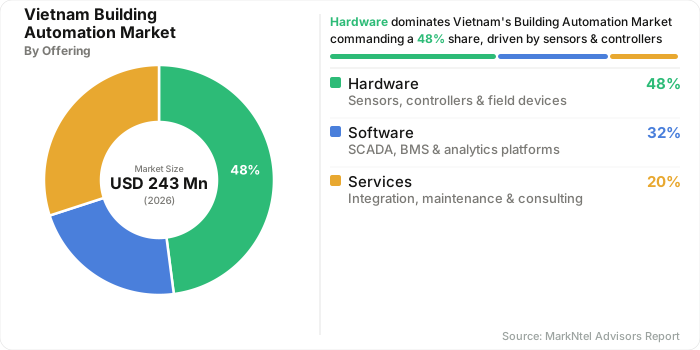
- Hardware dominated the offering segment with approximately 48% share of the Vietnam building automation market in 2026, driven by sustained procurement of HVAC controllers, sensors, actuators, and field-level building devices across commercial and industrial buildings.
- Commercial buildings led all building types with approximately 45% share in 2026, reflecting widespread adoption of integrated HVAC control, lighting automation, and access management systems across Vietnam's expanding office and hospitality sectors.
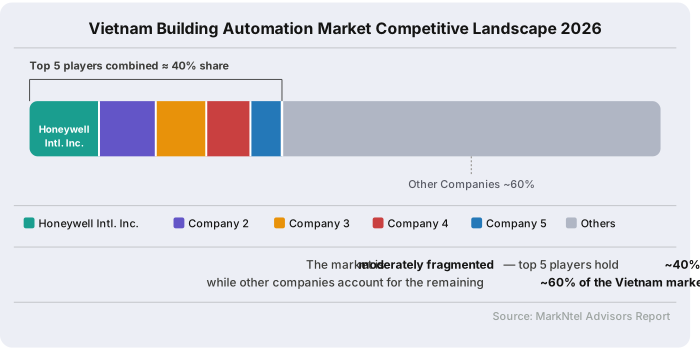
- The industry is moderately fragmented, with the top five leading players accounting for approximately 40% of the total market share.
Vietnam Building Automation Market Size and Outlook
The Vietnam Building Automation market is expected to witness steady growth at a CAGR of 4.25% during the forecast period. Rapid urban expansion and industrial modernization across Vietnam have created favorable conditions for increased adoption of building automation technologies in commercial, institutional, and industrial infrastructure projects. The World Bank projected Vietnam’s GDP growth at 6.8% in 2025 , supported by stronger public investment, export recovery, and continued growth in construction and real estate activities.
As commercial offices, hospitals, hotels, and industrial parks continue expanding, demand for automated HVAC, lighting, and integrated security systems has increased to improve operational efficiency while reducing long-term energy consumption across modern facilities. The growing emphasis on smart facility management and intelligent infrastructure optimization is further strengthening demand across urban development projects.
This growth trajectory has been further reinforced by government-led energy efficiency initiatives that continue encouraging wider deployment of intelligent building management technologies across both new and existing infrastructure developments. Vietnam enacted the amended Law on Economical and Efficient Use of Energy No. 77/2025/QH15 in June 2025, strengthening regulatory mechanisms for energy conservation and supporting private-sector investment in efficiency-focused technologies .
These efforts complement the Vietnam National Energy Efficiency Program 2019–2030 and national building efficiency regulations promoting smart monitoring systems , automated ventilation controls, and centralized energy management platforms across large-scale infrastructure projects. The increasing deployment of building energy management systems is also supporting the country’s broader sustainability and energy optimization objectives.
Supported by these policy initiatives, commercial buildings continue to account for a significant share of market demand, particularly across mixed-use developments, retail complexes, premium office towers, and hospitality infrastructure requiring integrated automation and surveillance capabilities. At the same time, industrial facilities are increasingly adopting intelligent building technologies as multinational manufacturers invest in smart production environments aligned with sustainability and energy optimization objectives.
Vietnam reported approximately 780 green-certified buildings by the end of 2025, with industrial real estate contributing more than 28% of certified floor space due to the rapid expansion of environmentally compliant manufacturing and logistics facilities. These developments are steadily accelerating the transition toward digitally connected and energy-efficient infrastructure ecosystems.
As Vietnam continues prioritizing energy-efficient urban infrastructure, investments in integrated automation systems and intelligent building technologies are expected to support sustained market expansion. Industry participants are increasingly introducing cloud-enabled building management platforms, advanced HVAC optimization systems, and intelligent security integration technologies tailored to Southeast Asia’s evolving infrastructure requirements.
Supported by Vietnam’s net-zero emissions commitment for 2050 and the country’s growing emphasis on sustainable urban development, the market is projected to grow from USD 243 million in 2026 to USD 312 million by 2032, with continued adoption expected across commercial, industrial, and public infrastructure projects throughout the forecast period.
Vietnam Building Automation Market Key Indicators
- According to the U.S. Green Building Council (USGBC), Vietnam ranked among the leading global markets outside the United States for LEED-certified floor area in 2025, recording nearly 2.6 million square meters of certified space across 100 projects, thereby supporting increased deployment of energy-efficient building automation and smart infrastructure technologies across commercial and industrial developments.
- Vietnam’s Ministry of Construction introduced a national digital transformation scheme for 2025–2030 focused on smart infrastructure management, digital construction systems, and intelligent urban operations, thereby supporting increased adoption of building automation and integrated energy management technologies across commercial and public infrastructure projects.
- Ho Chi Minh City attracted more than USD 2 billion in investment for AI-ready data center infrastructure projects during 2026, supporting expansion of intelligent infrastructure systems, energy-efficient facility management technologies, and advanced building automation deployment across Vietnam’s digital ecosystem.
- Vietnam inaugurated or commenced construction on 564 infrastructure projects with total investment exceeding USD 195 billion in 2025, including expressways, airports, railways, ports, and urban transit systems, thereby supporting rising deployment of intelligent infrastructure management, smart building technologies, and automated energy control systems across large-scale development projects nationwide.
Vietnam Building Automation Market Scope
| Category | Segments |
|---|---|
| By Offering | Hardware (Sensors, Controllers, Actuators, Smart Thermostats, Cameras & Access Devices), Software (Energy Management Software, Security & Surveillance Software, Facility Management Software, Analytics & Monitoring Platforms), Services (Consulting Services, Installation & Integration Services, Maintenance & Support Services, Managed Services |
| By System Type | HVAC Control Systems, Lighting Control Systems, Security & Access Control Systems, Building Energy Management Systems (BEMS), Fire & Life Safety Systems, Building Management Systems (BMS |
| By Communication Technology | Wired Technologies, Wireless Technologies |
| By Deployment | On-Premise, Cloud-Based |
| By Building Type | Commercial Buildings, Industrial Buildings, Residential Buildings, Government & Public Infrastructure |
Vietnam Building Automation Market Growth Drivers
Expansion of Commercial Infrastructure and Smart Urban Development Projects
Expansion of commercial infrastructure and smart urban development projects across Vietnam is significantly increasing demand for advanced building automation systems. Rising construction of office spaces, shopping malls, hotels, mixed-use developments, airports, educational institutions, and healthcare facilities is accelerating deployment of centralized building management systems, smart HVAC infrastructure, automated lighting controls, and intelligent security platforms throughout the country. As developers increasingly prioritize operational efficiency, energy optimization, and sustainability performance, integration of connected automation technologies is becoming an essential component across newly developed infrastructure projects. The ongoing growth in intelligent commercial buildings is further strengthening demand for integrated automation and energy optimization solutions across Vietnam’s urban infrastructure ecosystem.
At the same time, Vietnam’s accelerating urbanization and infrastructure modernization initiatives are creating favorable conditions for wider adoption of intelligent building technologies across major metropolitan regions. According to the Government of Vietnam, the country’s urbanization rate was targeted to reach approximately 45% by 2025 , supported by continuous expansion of metropolitan infrastructure and urban development initiatives across key economic centers. In 2026, Pacific Construction Group secured infrastructure contracts worth more than USD 4 billion across metro rail, bridge, and urban connectivity projects in Vietnam , highlighting the country’s increasing investment in integrated urban development and IoT-enabled commercial infrastructure deployment.
Growing emphasis on reducing electricity consumption and improving sustainability compliance is also encouraging wider integration of intelligent automation technologies across commercial and public facilities. Building operators are increasingly investing in occupancy-based lighting systems, AI-enabled HVAC optimization platforms, predictive maintenance solutions, and cloud-based facility management systems to improve operational performance while lowering long-term energy expenses. Supported by Vietnam’s ongoing smart city initiatives and connected infrastructure development, demand for integrated building automation technologies is expected to witness sustained long-term growth across commercial, industrial, and institutional sectors.
Recent Trends
Rising Integration of AI-Enabled Energy Management and Smart HVAC Systems
Increasing emphasis on operational efficiency, sustainability, and energy optimization is accelerating adoption of AI-enabled energy management platforms and intelligent HVAC automation systems across Vietnam’s building infrastructure ecosystem. Commercial property owners, industrial facility operators, hotels, hospitals, and retail developers are increasingly deploying cloud-connected automation platforms capable of monitoring energy consumption, occupancy patterns, and equipment performance in real time. Rising electricity costs and stricter sustainability objectives are encouraging broader integration of intelligent building technologies designed to improve operational efficiency while reducing long-term energy expenditure. The growing adoption of AI-powered building management systems is therefore becoming a key trend across Vietnam’s smart infrastructure landscape.
This transition toward digitally connected infrastructure is becoming increasingly visible through rising deployment of intelligent HVAC and cloud-enabled building management technologies across Vietnam’s commercial and industrial sectors. In 2024, u-blox partnered with Nagakawa Group to develop smart HVAC and VRF systems integrated with cloud-based building management platforms aimed at improving energy optimization across offices, factories, warehouses, and residential buildings in Vietnam. The collaboration reflects increasing adoption of smart HVAC automation systems and AIoT-enabled infrastructure across the country’s evolving building ecosystem.
Additionally, connected automation technologies are also gaining traction across Vietnam’s residential sector through growing adoption of AI-enabled smart home ecosystems. In 2025, True Digital Group partnered with VNPT Technology and T3 Technology to develop AI-enabled smart home solutions integrating connected control systems, intelligent automation platforms, and cloud-based home management technologies tailored for Vietnamese consumers . Supported by Vietnam’s expanding green infrastructure initiatives and sustainable urban development programs, intelligent automation systems are expected to become an increasingly important component of the country’s modern infrastructure ecosystem.
Vietnam Building Automation Market Opportunities and Challenges
High Initial Infrastructure Costs Driving Demand for Smart Retrofit Solutions across Legacy Buildings
High initial infrastructure and system integration costs continue to remain a major challenge limiting adoption of advanced building automation technologies across Vietnam. Deployment of intelligent building systems often requires significant upfront investment associated with smart sensors, controllers, cloud connectivity, software integration, cybersecurity infrastructure, and HVAC modernization, particularly across aging commercial buildings and industrial facilities operating with legacy infrastructure systems. Rising electricity expenses and sustainability compliance requirements are therefore encouraging building owners to modernize existing facilities through energy-efficient and digitally optimized infrastructure solutions. Government-led initiatives such as the Vietnam National Energy Efficiency Program (VNEEP3) are also supporting adoption of intelligent monitoring systems and energy-saving technologies across commercial and industrial infrastructure.
Despite these cost-related challenges, growing demand for sustainable infrastructure is creating strong opportunities for smart retrofit technologies and modular automation solutions across legacy buildings. Property owners are increasingly prioritizing cloud-based building automation platforms, wireless building controls, occupancy-based lighting systems, and energy-efficient HVAC modernization technologies capable of improving operational efficiency without requiring complete infrastructure replacement. In 2026, Vingroup launched its largest-ever urban development project in Dien Bien, reflecting rising investments in integrated residential infrastructure and connected urban ecosystems across Vietnam . As the country continues expanding sustainable infrastructure modernization initiatives, demand for cost-effective smart retrofit solutions is expected to increase steadily across commercial, industrial, and residential sectors.
Segmentation Insights
Increasing Deployment of Sensors, Controllers, and Smart HVAC Systems Positioning Hardware as the Leading Offering Segment
Connected hardware devices including sensors, controllers, and smart HVAC infrastructure continue representing the largest revenue-generating category within Vietnam’s building automation market, accounting for around 48% share. Rising installation of intelligent lighting systems, access control devices, surveillance cameras, and integrated fire safety infrastructure across commercial and industrial facilities is further strengthening the segment’s leading position. Rapid expansion of smart commercial buildings, industrial parks, mixed-use developments, and hospitality projects is significantly increasing demand for physical automation infrastructure capable of supporting digitally integrated building operations. The growing adoption of connected building systems is therefore accelerating integration of intelligent hardware technologies across Vietnam’s evolving smart infrastructure ecosystem.
In parallel, the transition toward IoT-enabled building environments is further strengthening demand for advanced automation hardware throughout the country. Facility operators are actively adopting occupancy sensors, smart thermostats, biometric access systems, intelligent power monitoring devices, and connected environmental control technologies to improve operational visibility and energy management efficiency across large infrastructure facilities. Expansion of green-certified buildings and smart city initiatives is also encouraging wider integration of automation hardware with centralized building management systems across commercial, industrial, and public infrastructure developments nationwide. Based on offering, the market has been segmented into:
- Hardware
- Software
- Services
Commercial Buildings Segment Dominates the Building Type Category Driven by Rapid Smart Commercial Infrastructure Development
Commercial buildings account for approximately 45% share of the Vietnam building automation market, positioning the segment as the leading revenue contributor within the industry. Rapid development of smart office buildings, shopping malls, hospitality infrastructure, hospitals, airports, educational campuses, and mixed-use commercial projects is significantly strengthening demand for integrated building automation systems across Vietnam’s major urban centers. Commercial developers are increasingly prioritizing intelligent infrastructure solutions capable of improving energy efficiency, operational management, occupant comfort, and security performance throughout large-scale commercial facilities. The growing adoption of commercial building automation Vietnam solutions is therefore accelerating deployment of connected building technologies throughout the country’s evolving urban infrastructure ecosystem.
This expansion of commercial infrastructure is being further supported by the continued recovery of Vietnam’s retail, tourism, and hospitality sectors. According to the Vietnam National Tourism Administration, international visitor arrivals to Vietnam exceeded 21 million during 2025 , supporting expansion of hotels, resorts, premium hospitality infrastructure, and intelligent building management systems across the country’s commercial real estate sector. Alongside the hospitality industry, rising development of high-end office complexes and modern retail centers across Hanoi and Ho Chi Minh City is strengthening integration of centralized HVAC controls, smart lighting infrastructure, digital access systems, and AI-enabled building management platforms throughout Vietnam’s commercial infrastructure landscape. Based on building type, the market is categorized into:
- Commercial Buildings
- Industrial Buildings
- Residential Buildings
- Government & Public Infrastructure
Vietnam Building Automation Market Competitive Analysis
Vietnam’s Building Automation industry features a moderately fragmented competitive landscape supported by the presence of multiple international building technology providers. Leading players such as Honeywell, Siemens, Schneider Electric, Johnson Controls, and ABB collectively contribute close to 40% of the market share through advanced building management and HVAC automation solutions.
Major Building Automation Companies in Vietnam
- Honeywell
- Siemens
- Schneider Electric
- Johnson Controls
- ABB
- Carrier
- Bosch
- Delta Controls
- Legrand
- Mitsubishi Electric
- Others
Vietnam Building Automation Industry News and Recent Developments
May 2025: Bivocom Expands Deployment of BACnet-Enabled IoT Gateway Technologies for Smart Building Infrastructure in Vietnam
Bivocom highlighted deployment of BACnet-enabled IoT gateway technologies designed to optimize smart HVAC operations and intelligent building management systems across commercial infrastructure projects. The solutions support real-time monitoring, predictive maintenance, and cloud-connected automation capabilities aimed at improving operational efficiency and reducing long-term energy consumption across smart building environments.
Impact Analysis: The development reflects Vietnam’s growing adoption of IoT-enabled building automation and cloud-based facility management technologies across commercial infrastructure. It is expected to strengthen deployment of intelligent HVAC systems, predictive maintenance platforms, and connected energy optimization solutions throughout the country’s expanding smart building ecosystem.
December 2025: BAPI Begins Construction of HVAC and Building Automation Manufacturing Facility in Vietnam
BAPI initiated construction of a new production facility in Da Nang, Vietnam, to strengthen manufacturing capabilities for HVAC and building automation components serving Southeast Asia’s expanding smart infrastructure market. The facility is expected to support increasing regional demand for intelligent environmental monitoring systems, smart HVAC technologies, and connected building infrastructure solutions across commercial and industrial developments.
Impact Analysis: The investment highlights growing regional demand for intelligent building technologies and energy-efficient infrastructure solutions across Vietnam and Southeast Asia. It is expected to strengthen local supply capabilities for smart HVAC systems and connected automation technologies while supporting expansion of Vietnam’s smart building and infrastructure modernization ecosystem.
- Market Segmentation
- Introduction
- Product Definition
- Research Process
- Assumptions
- Executive Summary
- Vietnam Building Automation Market Policies, Regulations, and Product Standards
- Vietnam Building Automation Market Trends & Developments
- Vietnam Building Automation Market Dynamics
- Growth Factors
- Challenges
- Vietnam Building Automation Market Hotspot & Opportunities
- Vietnam Building Automation Market Outlook, 2022-2032F
- Market Size & Outlook
- By Revenues (USD Million)
- Market Share & Outlook
- By Offering- Market Size & Forecast 2022-2032, USD Million
- Hardware
- Sensors
- Controllers
- Actuators
- Smart Thermostats
- Cameras & Access Devices
- Software
- Energy Management Software
- Security & Surveillance Software
- Facility Management Software
- Analytics & Monitoring Platforms
- Services
- Consulting Services
- Installation & Integration Services
- Maintenance & Support Services
- Managed Services
- Hardware
- By System Type- Market Size & Forecast 2022-2032, USD Million
- HVAC Control Systems
- Lighting Control Systems
- Security & Access Control Systems
- Building Energy Management Systems (BEMS)
- Fire & Life Safety Systems
- Building Management Systems (BMS)
- By Communication Technology- Market Size & Forecast 2022-2032, USD Million
- Wired Technologies
- Wireless Technologies
- By Deployment- Market Size & Forecast 2022-2032, USD Million
- On-Premise
- Cloud-Based
- By Building Type- Market Size & Forecast 2022-2032, USD Million
- Commercial Buildings
- Industrial Buildings
- Residential Buildings
- Government & Public Infrastructure
- By Company
- Competition Characteristics
- Market Share & Analysis
- By Offering- Market Size & Forecast 2022-2032, USD Million
- Market Size & Outlook
- Vietnam Hardware Market Outlook, 2022-2032
- Market Size & Outlook
- By Revenues (USD Million)
- Market Share & Outlook
- By System Type- Market Size & Forecast 2022-2032, USD Million
- By Communication Technology- Market Size & Forecast 2022-2032, USD Million
- By Deployment- Market Size & Forecast 2022-2032, USD Million
- By Building Type- Market Size & Forecast 2022-2032, USD Million
- Market Size & Outlook
- Vietnam Software Market Outlook, 2022-2032
- Market Size & Outlook
- By Revenues (USD Million)
- Market Share & Outlook
- By System Type- Market Size & Forecast 2022-2032, USD Million
- By Communication Technology- Market Size & Forecast 2022-2032, USD Million
- By Deployment- Market Size & Forecast 2022-2032, USD Million
- By Building Type- Market Size & Forecast 2022-2032, USD Million
- Market Size & Outlook
- Vietnam Services Market Outlook, 2022-2032
- Market Size & Outlook
- By Revenues (USD Million)
- Market Share & Outlook
- By System Type- Market Size & Forecast 2022-2032, USD Million
- By Communication Technology- Market Size & Forecast 2022-2032, USD Million
- By Deployment- Market Size & Forecast 2022-2032, USD Million
- By Building Type- Market Size & Forecast 2022-2032, USD Million
- Market Size & Outlook
- Vietnam Building Automation Market Key Strategic Imperatives for Success & Growth
- Competitive Outlook
- Company Profiles
- Honeywell
- Business Description
- Product Portfolio
- Collaborations & Alliances
- Recent Developments
- Financial Details
- Others
- Siemens
- Business Description
- Product Portfolio
- Collaborations & Alliances
- Recent Developments
- Financial Details
- Others
- Schneider Electric
- Business Description
- Product Portfolio
- Collaborations & Alliances
- Recent Developments
- Financial Details
- Others
- Johnson Controls
- Business Description
- Product Portfolio
- Collaborations & Alliances
- Recent Developments
- Financial Details
- Others
- ABB
- Business Description
- Product Portfolio
- Collaborations & Alliances
- Recent Developments
- Financial Details
- Others
- Carrier
- Business Description
- Product Portfolio
- Collaborations & Alliances
- Recent Developments
- Financial Details
- Others
- Bosch
- Business Description
- Product Portfolio
- Collaborations & Alliances
- Recent Developments
- Financial Details
- Others
- Delta Controls
- Business Description
- Product Portfolio
- Collaborations & Alliances
- Recent Developments
- Financial Details
- Others
- Legrand
- Business Description
- Product Portfolio
- Collaborations & Alliances
- Recent Developments
- Financial Details
- Others
- Mitsubishi Electric
- Business Description
- Product Portfolio
- Collaborations & Alliances
- Recent Developments
- Financial Details
- Others
- Honeywell
- Company Profiles
- Disclaimer

MarkNtel Advisors follows a robust and iterative research methodology designed to ensure maximum accuracy and minimize deviation in market estimates and forecasts. Our approach combines both bottom-up and top-down techniques to effectively segment and quantify various aspects of the market. A consistent feature across all our research reports is data triangulation, which examines the market from three distinct perspectives to validate findings. Key components of our research process include:
1. Scope & Research Design At the outset, MarkNtel Advisors define the research objectives and formulate pertinent questions. This phase involves determining the type of research—qualitative or quantitative—and designing a methodology that outlines data collection methods, target demographics, and analytical tools. They also establish timelines and budgets to ensure the research aligns with client goals.
2. Sample Selection and Data Collection In this stage, the firm identifies the target audience and determines the appropriate sample size to ensure representativeness. They employ various sampling methods, such as random or stratified sampling, based on the research objectives. Data collection is carried out using tools like surveys, interviews, and observations, ensuring the gathered data is reliable and relevant.
3. Data Analysis and Validation Once data is collected, MarkNtel Advisors undertake a rigorous analysis process. This includes cleaning the data to remove inconsistencies, employing statistical software for quantitative analysis, and thematic analysis for qualitative data. Validation steps are taken to ensure the accuracy and reliability of the findings, minimizing biases and errors.

4. Data Forecast and FinalizationThe final phase involves forecasting future market trends based on the analyzed data. MarkNtel Advisors utilize predictive modeling and time series analysis to anticipate market behaviors. The insights are then compiled into comprehensive reports, featuring visual aids like charts and graphs, and include strategic recommendations to inform client decision-making
FILL THE FORM TO GET THE FREE SAMPLE PAGES
We offer flexible licensing options to cater to varying organizational needs. Choose the pricing pack that best suits your requirements:
Buy Now Inquire Before Buying
 Talk to our Consultant
 Request Customization