

By Vehicle Type (Light Commercial Vehicles (LCV), Medium Commercial Vehicles (MCV), Heavy Commercial Vehicles (HCV)), By Temperature Type (Chilled (0°C to +8°C), Frozen (Below 0°C)......�C), Multi-Temperature), By Capacity (Below 7 Tons, 7–12 Tons, 12–18 Tons, Above 18 Tons), By Propulsion Type (Diesel, Electric, Hybrid), By End User (Food & Beverages, Pharmaceuticals & Healthcare, Chemicals, Others) Read more
- FMCG
- May 2026
- 130
- PDF, Excel, PPT
U.S. Refrigerated Truck Market Key Takeaways
- The U.S. Refrigerated Truck Market stood at around USD 2.82 billion in 2025 and is anticipated to expand from USD 2.95 billion in 2026 to USD 3.84 billion by 2032, driven by rising demand for temperature-controlled logistics, expanding e-commerce grocery distribution, and stringent food safety regulations.
- The industry is projected to grow at a steady CAGR of 4.5% during the forecast period (2026–32), supported by fleet modernization, increasing pharmaceutical cold chain requirements, and advancements in energy-efficient refrigeration technologies.
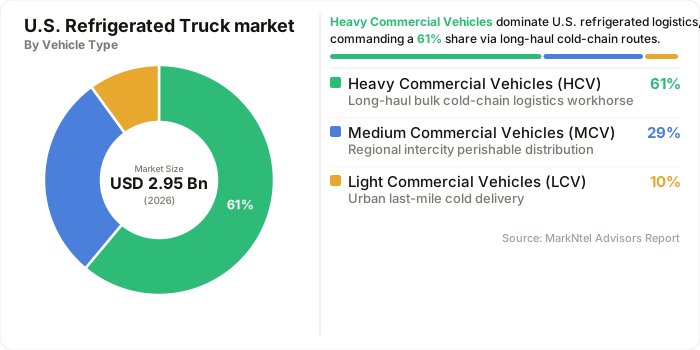
- By vehicle type, Heavy Commercial Vehicles (HCVs) dominated the market, capturing approximately 61% share in 2026, primarily due to their higher load capacity and suitability for long-haul refrigerated transportation.
- By end user, the Food & Beverages segment accounted for nearly 68% of the market share in 2026, driven by sustained demand for temperature-sensitive and perishable products.
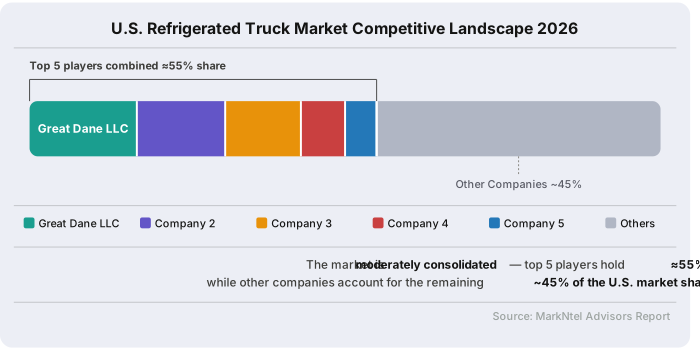
- The market exhibits a moderately concentrated structure with fragmented participation, wherein the top five players collectively hold around 55% share, supported by established scale advantages and extensive distribution networks.
U.S. Refrigerated Truck Market Size and Outlook
At a CAGR of approximately 4.5% over 2026–2032, the U.S. Refrigerated Truck Market is expected to rise from USD 2.95 billion in 2026 to USD 3.84 billion by 2032, following a valuation of USD 2.82 billion in 2025.
The market for refrigerated trucks in the United States is being strengthened by higher goods movement and the rising importance of cold chain logistics across industries. According to the U.S. Department of Transportation Freight Analysis Framework, nearly 20 billion tons of goods move across the national transportation network, highlighting the scale of distribution for perishable commodities. This extensive freight activity, combined with increasing demand for fresh and processed food reflected in data from the United States Department of Agriculture, continues to reinforce the need for temperature-controlled transport. At the same time, expanding pharmaceutical logistics, particularly biologics and vaccines, has further strengthened reliance on refrigerated trucking, supporting steady fleet expansion.
Ongoing demand from key end-use sectors, including food retail, foodservice, and healthcare, is maintaining a positive outlook for the market. The U.S. Census Bureau reported that retail e-commerce sales reached approximately USD 1.23 trillion in 2025, reflecting continued growth in digital retail channels. As online grocery and direct-to-consumer delivery expand, the need for last-mile refrigerated vehicles has increased, particularly in urban areas. In parallel, institutional demand from healthcare providers remains strong, with the Centers for Disease Control and Prevention emphasizing temperature-controlled distribution for vaccines and medical supplies, further supporting fleet utilization.
In response to these demand dynamics, regulatory frameworks and infrastructure investments are playing a key role in shaping market development and technology adoption. The Environmental Protection Agency has finalized stricter tailpipe emissions standards for heavy-duty vehicles for the 2027–2032 period, targeting reductions in greenhouse gas emissions . These regulations are encouraging the transition toward cleaner and more efficient refrigeration systems. At the same time, programs led by the Department of Energy are promoting energy-efficient transport technologies through funding and pilot initiatives, while infrastructure upgrades are improving overall logistics efficiency.
Aligned with these regulatory and demand trends, industry participants are advancing innovation and sustainability-focused strategies. Manufacturers are increasingly investing in electric and hybrid refrigeration technologies to meet evolving emission standards while improving operational performance. Additionally, the integration of telematics and real-time temperature monitoring is enhancing compliance and efficiency across fleets. The combination of population growth, changing dietary and consumption patterns, and expanding pharmaceutical cold chain transport requirements is expected to underpin a stable future of the refrigerated truck industry in United States.
U.S. Refrigerated Truck Market Key Indicators
- According to the American Trucking Associations, trucks transported approximately 11.27 billion tons of freight in 2024, accounting for nearly 72.7% of total domestic freight tonnage. The dominance of trucking in freight movement directly increases demand for temperature-controlled vehicles, particularly for perishable goods transport, thereby supporting growth in the refrigerated truck market .
- U.S. Department of Agriculture data indicate that per capita availability of red meat and poultry reached approximately 226 pounds per consumer, reflecting strong consumption of temperature-sensitive food products. This high consumption level requires efficient cold chain logistics for storage and distribution, thereby driving demand for refrigerated trucks across food supply chains.
- U.S. food and beverage manufacturing shipments approached USD 950 billion, based on government-backed data, reflecting strong industrial activity in temperature-sensitive goods. Large-scale production of perishable products necessitates efficient cold chain distribution, thereby increasing demand for refrigerated transport solutions.
- The U.S. highway network spans more than 4 million miles of public roads, as highlighted by the Federal Highway Administration, enabling extensive nationwide freight transportation. Such a vast transportation infrastructure facilitates large-scale distribution of perishable goods, thereby supporting the deployment and utilization of refrigerated truck fleets .
U.S. Refrigerated Truck Market Scope
| Category | Segments |
|---|---|
| By Vehicle Type | Light Commercial Vehicles (LCV), Medium Commercial Vehicles (MCV), Heavy Commercial Vehicles (HCV |
| By Temperature Type | Chilled (0°C to +8°C), Frozen (Below 0°C), Multi-Temperature |
| By Capacity | Below 7 Tons, 7–12 Tons, 12–18 Tons, Above 18 Tons |
| By Propulsion Type | Diesel, Electric, Hybrid |
| By End User | Food & Beverages, Pharmaceuticals & Healthcare, Chemicals, Others |
U.S. Refrigerated Truck Market Growth Drivers
Rising Demand for Perishable Food Products
Increased consumption of perishable food items is playing a critical role in driving growth within the U.S. refrigerated truck market. Data from the United States Department of Agriculture indicates that per capita availability of broiler meat is projected to reach 102.7 pounds in 2025 and 102.8 pounds in 2026, making it the most consumed animal product in the country . This sustained increase reflects a broader shift toward higher intake of temperature-sensitive food products. As dietary preferences continue to favor fresh and protein-rich foods, the need for reliable temperature-controlled logistics has intensified across supply chains.
The effects of this demand are clearly visible across major end-user segments such as food retail, foodservice, and e-commerce grocery distribution. The Bureau of Economic Analysis reported that personal consumption expenditures on food services and accommodations exceeded USD 1.08 trillion in Q1 2026, highlighting strong and sustained consumption of perishable food products . This level of demand requires continuous movement of fresh and frozen goods, reinforcing the importance of efficient perishable goods transportation across distribution networks. Consequently, refrigerated transport fleets are experiencing increased utilization across both last-mile delivery operations and long-haul distribution routes.
In alignment with these consumption trends, regulatory frameworks further reinforce the need for temperature-controlled logistics. The Food and Drug Administration enforces the Food Safety Modernization Act, which mandates strict temperature control during food transportation to ensure product safety and quality. Compliance with these requirements necessitates the deployment of advanced refrigerated vehicles equipped with monitoring and control systems. As a result, the combined effect of rising consumption and regulatory enforcement is structurally increasing refrigerated transport volumes, thereby accelerating the pace of refrigerated truck market expansion in the US.
Recent Trends
Integration of Telematics & IoT Monitoring
The adoption of telematics and IoT-based monitoring is gaining momentum, fundamentally altering the U.S. refrigerated truck market through enhanced visibility and compliance requirements. The Food and Drug Administration enforces temperature control under the Food Safety Modernization Act’s sanitary transportation rule, requiring proper refrigeration and documented handling during transit . These requirements are accelerating the use of digital tracking systems across refrigerated fleets. At the same time, initiatives supported by the Department of Transportation are promoting connected and data-driven logistics practices .
In response, fleet operations are increasingly shifting toward integrated monitoring and data-driven decision-making. Operators are deploying IoT-enabled sensors and telematics platforms to enable continuous temperature tracking, predictive maintenance, and route optimization. For instance, Thermo King launched the TK OneView platform, integrating tractor, trailer, refrigeration unit, and driver data into a unified system for real-time monitoring. Such developments reflect a broader transition toward connected and efficient refrigerated transport systems.
As these technologies become more embedded in logistics operations, the trend is expected to persist over the long term. The growing distribution of temperature-sensitive products, including vaccines and biologics, continues to require precise monitoring and reporting. In parallel, advancements in sensor technologies and connectivity infrastructure are improving scalability while reducing implementation costs. Together, these factors are reinforcing the long-term shift toward digitally enabled and efficient refrigerated transport operations.
U.S. Refrigerated Truck Market Opportunities and Challenges
Rising Fuel & Energy Costs Accelerating Adoption of Energy-Efficient and Electrified Refrigeration Systems
Escalating fuel and energy prices are placing considerable pressure on the cost efficiency of diesel-powered refrigerated truck operations in the U.S. The Energy Information Administration indicates that diesel prices have remained elevated and subject to fluctuations due to tight global supply conditions and ongoing market disruptions . Since refrigeration units operate continuously, they significantly increase fuel consumption and overall operating expenses for fleet operators within temperature-controlled logistics. At the same time, stricter emission standards introduced by the Environmental Protection Agency are further increasing compliance costs, limiting the long-term cost efficiency of conventional systems.
These cost-related challenges are prompting increased adoption of energy-efficient and electrified refrigeration solutions. Fleet operators are increasingly transitioning toward electric and hybrid refrigeration units to reduce fuel dependency and operating costs, accelerating the electrification of refrigerated trucks across commercial fleets. In 2026, Thermo King launched the E-Volution electric refrigeration system, designed to deliver significantly lower emissions and improved energy efficiency compared to conventional diesel units. Complementing this, in 2025, Carrier Transicold introduced advancements to its electric Vector refrigeration systems, including engine-less solutions that utilize grid and regenerative energy sources to minimize fuel consumption . These developments collectively highlight the industry’s transition toward electrified and energy-efficient refrigeration technologies, accelerating innovation and improving operational performance.
Segmentation Insights
High Payload Capacity and Long-Distance Suitability Position HCVs as the Leading Vehicle Type
Heavy Commercial Vehicles (HCVs) account for approximately 61% of the refrigerated truck market across U.S., making them the dominant segment across long-haul and bulk transportation applications. This dominance is primarily driven by their high load-carrying capacity and suitability for transporting large volumes of perishable goods over extended distances. HCVs are widely utilized in interstate logistics for food, beverages, and pharmaceuticals, where maintaining consistent temperature conditions across long routes is critical for efficient temperature-controlled logistics. Their compatibility with advanced refrigeration units and multi-temperature configurations further enhances their operational efficiency and reliability in large-scale distribution networks.
As the scale of food and pharmaceutical distribution continues to expand across the United States, demand for high-capacity refrigerated transport is increasing significantly. Long-distance supply chains, supported by extensive highway infrastructure, require vehicles capable of handling bulk shipments while ensuring temperature stability. HCVs offer cost advantages in terms of lower per-unit transportation costs and higher payload efficiency compared to light and medium commercial vehicles. Additionally, the growth of centralized cold storage facilities and regional distribution hubs is reinforcing the need for large-capacity transport solutions. Consequently, Heavy Commercial Vehicles maintain their leading position due to their efficiency, scalability, and strong alignment with long-haul refrigerated logistics requirements. Based on vehicle type, the study is segmented into:
- Light Commercial Vehicles (LCV)
- Medium Commercial Vehicles (MCV)
- Heavy Commercial Vehicles (HCV)
Continuous Demand and Large Consumption Volumes Establish Food & Beverages as the Dominant End-User Segment
With a market share of around 68%, Food & Beverages represents the largest end-user segment in the refrigerated logistics vehicles market across U.S., driven by its reliance on temperature-controlled transportation. This dominance is primarily attributed to the high volume and continuous movement of perishable products such as dairy, meat, seafood, fruits, vegetables, and frozen foods. These products require strict temperature regulation throughout transit to maintain quality, safety, and shelf life. The widespread presence of supermarkets, foodservice chains, and online grocery platforms further strengthens the need for reliable refrigerated transport across distribution networks.
As dietary preferences shift and supply chains broaden, the need for refrigerated transportation continues to grow steadily. Recent industry findings indicate that frozen food consumption is becoming increasingly integral to household meal planning in the U.S., with nearly 40% of consumers purchasing frozen foods every few days and around 30% planning to increase their consumption, highlighting sustained demand for temperature-sensitive products. This growing consumption is increasing shipment frequency and reinforcing the need for efficient food cold chain distribution across supply networks. At the same time, centralized cold storage facilities and regional distribution hubs are enabling large-scale movement of perishable goods across long distances. As a result, the food & beverages segment maintains its leading position due to sustained demand, continuous supply chain activity, and strong dependence on temperature-controlled logistics. Based on end user, the market is categorized into:
- Food & Beverages
- Pharmaceuticals & Healthcare
- Chemicals
- Others
U.S. Refrigerated Truck Market Competitive Analysis
A moderately concentrated yet partially fragmented competitive landscape defines the United States refrigerated truck industry, with a handful of major manufacturers complemented by several regional and niche participants. Leading players such as Utility Trailer Manufacturing Company, Great Dane, Wabash National Corporation, Hyundai Translead, and Stoughton Trailers collectively capture approximately 55% of the market, leveraging strong OEM relationships and extensive dealer presence across the country.
Key Reefer Truck Companies in United States
- Utility Trailer Manufacturing Company
- Great Dane
- Wabash National Corporation
- Hyundai Translead
- Schmitz Cargobull AG
- Kögel Trailer GmbH
- Lamberet SAS
- Gray & Adams Ltd
- CIMC Vehicles Group
- Stoughton Trailers
- Others
U.S. Refrigerated Truck Industry News and Recent Developments
May 2025: GreenPower Motor Company Launches EV Star REEFER X Electric Refrigerated Truck
GreenPower Motor Company introduced the EV Star REEFER X, an all-electric refrigerated delivery truck designed for last-mile distribution and temperature-controlled logistics applications in the U.S. The vehicle supports zero-emission operations while maintaining efficient cooling performance for perishable goods transportation.
Impact Analysis: This development highlights the accelerating shift toward the electrification of refrigerated trucks in the U.S. market. It is expected to reduce fuel dependency, lower operating costs, and support sustainability goals, thereby strengthening the adoption of zero-emission refrigerated transport solutions across urban and regional distribution networks.
- Market Segmentation
- Introduction
- Product Definition
- Research Process
- Assumptions
- Executive Summary
- U.S. Refrigerated Truck Market Policies, Regulations, and Product Standards
- U.S. Refrigerated Truck Production (Thousand Units) Trend 2022-2032
- U.S. Refrigerated Truck (Thousand Units) Trend by Type of Vehicle
- Light Commercial Vehicles (LCV)
- Medium Commercial Vehicles (MCV)
- Heavy Commercial Vehicles (HCV)
- Company-Wise Production Plants and Statistics
- Installed Production Capacity
- Production
- Planned Production Target
- U.S. Refrigerated Truck (Thousand Units) Trend by Type of Vehicle
- U.S. Refrigerated Truck Pricing Analysis 2022-2032
- U.S. Refrigerated Truck Pricing Trend (USD/Units) 2022-2032
- U.S. Refrigerated Truck Pricing Trend (USD/Units) By Vehicle 2022-2032
- Light Commercial Vehicles (LCV)
- Medium Commercial Vehicles (MCV)
- Heavy Commercial Vehicles (HCV)
- U.S. Refrigerated Truck Market Dynamics
- Growth Factors
- Challenges
- U.S. Refrigerated Truck Market Hotspot & Opportunities
- U.S. Refrigerated Truck Market Outlook, 2022-2032F
- Market Size & Outlook
- By Revenues (USD Million)
- By Quantity Sold (Units)
- Market Share & Outlook
- By Vehicle Type- Market Size & Forecast 2022-2032, USD Million
- Light Commercial Vehicles (LCV)
- Medium Commercial Vehicles (MCV)
- Heavy Commercial Vehicles (HCV)
- By Temperature Type- Market Size & Forecast 2022-2032, USD Million
- Chilled (0°C to +8°C)
- Frozen (Below 0°C)
- Multi-Temperature
- By Capacity- Market Size & Forecast 2022-2032, USD Million
- Below 7 Tons
- 7–12 Tons
- 12–18 Tons
- Above 18 Tons
- By Propulsion Type- Market Size & Forecast 2022-2032, USD Million
- Diesel
- Electric
- Hybrid
- By End User- Market Size & Forecast 2022-2032, USD Million
- Food & Beverages
- Pharmaceuticals & Healthcare
- Chemicals
- Others
- By Company
- Competition Characteristics
- Market Share & Analysis
- By Vehicle Type- Market Size & Forecast 2022-2032, USD Million
- Market Size & Outlook
- U.S. Light Commercial Vehicles (LCV) Market Outlook, 2022-2032
- Market Size & Outlook
- By Revenues (USD Million)
- By Quantity Sold (Units)
- Market Share & Outlook
- By Temperature Type- Market Size & Forecast 2022-2032, USD Million
- By Capacity- Market Size & Forecast 2022-2032, USD Million
- By Propulsion Type- Market Size & Forecast 2022-2032, USD Million
- By End User- Market Size & Forecast 2022-2032, USD Million
- Market Size & Outlook
- U.S. Medium Commercial Vehicles (MCV) Market Outlook, 2022-2032
- Market Size & Outlook
- By Revenues (USD Million)
- By Quantity Sold (Units)
- Market Share & Outlook
- By Temperature Type- Market Size & Forecast 2022-2032, USD Million
- By Capacity- Market Size & Forecast 2022-2032, USD Million
- By Propulsion Type- Market Size & Forecast 2022-2032, USD Million
- By End User- Market Size & Forecast 2022-2032, USD Million
- Market Size & Outlook
- U.S. Heavy Commercial Vehicles (HCV) Market Outlook, 2022-2032
- Market Size & Outlook
- By Revenues (USD Million)
- By Quantity Sold (Units)
- Market Share & Outlook
- By Temperature Type- Market Size & Forecast 2022-2032, USD Million
- By Capacity- Market Size & Forecast 2022-2032, USD Million
- By Propulsion Type- Market Size & Forecast 2022-2032, USD Million
- By End User- Market Size & Forecast 2022-2032, USD Million
- Market Size & Outlook
- U.S. Refrigerated Truck Market Key Strategic Imperatives for Success & Growth
- Competitive Outlook
- Company Profiles
- Utility Trailer Manufacturing Company
- Business Description
- Product Portfolio
- Collaborations & Alliances
- Recent Developments
- Financial Details
- Others
- Great Dane
- Business Description
- Product Portfolio
- Collaborations & Alliances
- Recent Developments
- Financial Details
- Others
- Wabash National Corporation
- Business Description
- Product Portfolio
- Collaborations & Alliances
- Recent Developments
- Financial Details
- Others
- Hyundai Translead
- Business Description
- Product Portfolio
- Collaborations & Alliances
- Recent Developments
- Financial Details
- Others
- Schmitz Cargobull AG
- Business Description
- Product Portfolio
- Collaborations & Alliances
- Recent Developments
- Financial Details
- Others
- Kögel Trailer GmbH
- Business Description
- Product Portfolio
- Collaborations & Alliances
- Recent Developments
- Financial Details
- Others
- Lamberet SAS
- Business Description
- Product Portfolio
- Collaborations & Alliances
- Recent Developments
- Financial Details
- Others
- Gray & Adams Ltd
- Business Description
- Product Portfolio
- Collaborations & Alliances
- Recent Developments
- Financial Details
- Others
- CIMC Vehicles Group
- Business Description
- Product Portfolio
- Collaborations & Alliances
- Recent Developments
- Financial Details
- Others
- Stoughton Trailers
- Business Description
- Product Portfolio
- Collaborations & Alliances
- Recent Developments
- Financial Details
- Others
- Utility Trailer Manufacturing Company
- Company Profiles
- Disclaimer

MarkNtel Advisors follows a robust and iterative research methodology designed to ensure maximum accuracy and minimize deviation in market estimates and forecasts. Our approach combines both bottom-up and top-down techniques to effectively segment and quantify various aspects of the market. A consistent feature across all our research reports is data triangulation, which examines the market from three distinct perspectives to validate findings. Key components of our research process include:
1. Scope & Research Design At the outset, MarkNtel Advisors define the research objectives and formulate pertinent questions. This phase involves determining the type of research—qualitative or quantitative—and designing a methodology that outlines data collection methods, target demographics, and analytical tools. They also establish timelines and budgets to ensure the research aligns with client goals.
2. Sample Selection and Data Collection In this stage, the firm identifies the target audience and determines the appropriate sample size to ensure representativeness. They employ various sampling methods, such as random or stratified sampling, based on the research objectives. Data collection is carried out using tools like surveys, interviews, and observations, ensuring the gathered data is reliable and relevant.
3. Data Analysis and Validation Once data is collected, MarkNtel Advisors undertake a rigorous analysis process. This includes cleaning the data to remove inconsistencies, employing statistical software for quantitative analysis, and thematic analysis for qualitative data. Validation steps are taken to ensure the accuracy and reliability of the findings, minimizing biases and errors.

4. Data Forecast and FinalizationThe final phase involves forecasting future market trends based on the analyzed data. MarkNtel Advisors utilize predictive modeling and time series analysis to anticipate market behaviors. The insights are then compiled into comprehensive reports, featuring visual aids like charts and graphs, and include strategic recommendations to inform client decision-making
FILL THE FORM TO GET THE FREE SAMPLE PAGES
We offer flexible licensing options to cater to varying organizational needs. Choose the pricing pack that best suits your requirements:
Buy Now Inquire Before Buying
 Talk to our Consultant
 Request Customization