

By Coating Type (Hard-Coated (Pyrolytic) Solar Control Glass, Soft-Coated (Sputtered / Low-E) Solar Control Glass), By Glass Type (Tempered Solar Control Glass, Laminated Solar Con......trol Glass, Insulated Glass Units (IGU / Double Glazing)), By End Use (Construction (Commercial, Residential, Industrial), Automotive (Passenger Vehicles, Commercial Vehicles, Electric Vehicles), Transportation Infrastructure, Specialty & Industrial Applications), and others Read more
- Energy
- Apr 2026
- 220
- PDF, Excel, PPT
Southeast Asia Solar Control Glass Market Key Takeaways
- The Southeast Asia solar control glass market size was valued at 12.86 million tons in 2025 and is projected to grow from 14.14 million tons in 2026 to 19.30 million tons by 2032, exhibiting a CAGR of 5.32% during 2026–2032.
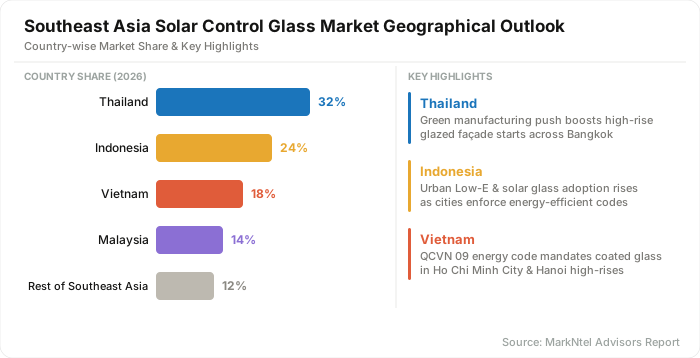
- Thailand leads the regional market, accounting for approximately 32% share, supported by its strong position as Southeast Asia’s largest vehicle manufacturing hub.
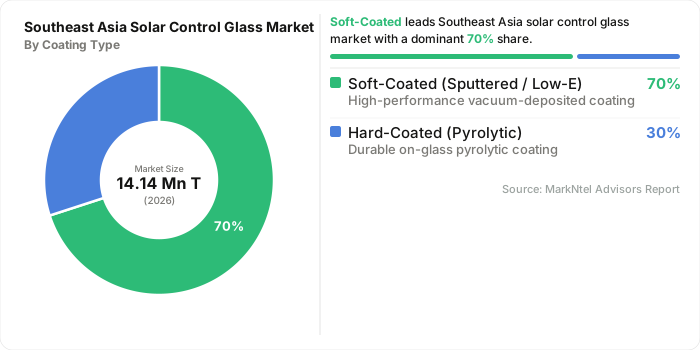
- By coating type, soft-coated (sputtered/Low-E) solar control glass dominates the Southeast Asia market with an estimated share of around 70%, primarily driven by its superior thermal emissivity performance compared to hard-coated alternatives.
- Based on end-use sector, the construction segment holds approximately 50% of the market, fueled by rapid growth in commercial, institutional, and high-rise residential construction activities across the region.
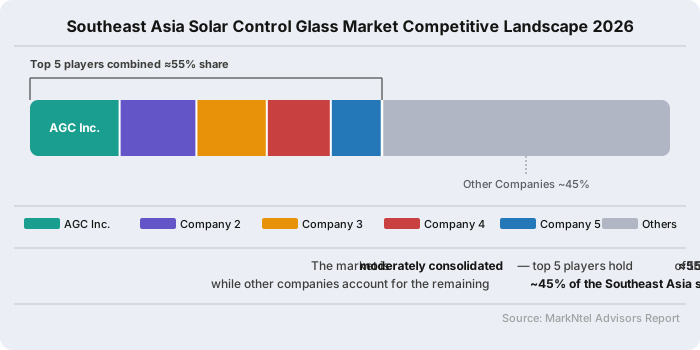
- The market exhibits a moderately consolidated structure, with approximately 25 solar control glass manufacturers operating across Southeast Asia. Notably, the top five companies collectively account for nearly 55% of the regional revenue, indicating a significant concentration of market share.
Southeast Asia Solar Control Glass Market Size & Outlook
The solar control glass market in the Southeast Asia was valued at 12.86 million tons in 2025 and is projected to grow from 14.14 million tons in 2026 to 19.30 million tons by 2032. Along with this, the market is estimated to grow at a CAGR of 5.32% during 2026–2032.
Solar control glass encompasses hard-coated pyrolytic and soft-coated sputtered/Low-E variants engineered to manage solar heat gain, diminish ultraviolet radiation, and sustain visible light transmission across architectural facades, fenestration, and automotive glazing. Construction and automotive sectors across Thailand, Vietnam, Indonesia, Malaysia, and Singapore form the principal demand base. For instance, Singapore's Building and Construction Authority (BCA), under the Singapore Green Building Masterplan (SGBMP), has institutionalized demand for high-performance building envelopes through the "80-80-80 by 2030" framework mandating that 80% of Singapore's buildings by gross floor area achieve green certification by 2030, that 80% of new developments meet Super Low Energy (SLE) standards from 2030, and that best-in-class buildings achieve an 80% improvement in energy efficiency against 2005 levels.
Additionally, to accelerate adoption of solar control glass in the existing building stock, the BCA deployed a USD63 million Green Mark incentive scheme, running from mid-2022 to Q1 2027, directing grant support toward building envelope retrofits that include solar control glazing. These specifications propagate across the broader region: Malaysia's Green RE, Vietnam's LOTUS, and Indonesia's national Green Building Codes each cross-reference BCA standards, setting the de facto performance floor for glazing specifications in commercial and institutional construction across Southeast Asia's main economies.
Additionally, Thailand's National Electric Vehicle Policy Committee has established the "30@30" policy, requiring electric vehicles to constitute 30% of domestic vehicle production by 2030. Automakers operationalizing this mandate, including BYD, which commenced local EV assembly and established Japanese original equipment manufacturers adapting production lines, require solar control glass in panoramic roofs , windshields, and side glazing to reduce cabin solar gain and preserve battery range.
Collectively, regulatory mandates, green building frameworks, EV policy-driven automotive transformation, and sustained construction investment across Southeast Asia are structurally reinforcing demand, positioning solar control glass as a critical material in achieving energy efficiency, sustainability compliance, and thermal performance optimization across both building and mobility sectors.
Southeast Asia Solar Control Glass Market Key Indicators
- According to the International Energy Agency, buildings in ASEAN accounted for approximately 23% of total final energy consumption and around 23% of energy-related CO₂ emissions, based on the latest available data, underscoring the sector’s central role in the region’s energy transition. The IEA identifies buildings as a key sector for achieving energy efficiency and emissions reduction targets through improvements in building envelopes and cooling demand management.
- As per latest report by the International Energy Agency, electricity use for space cooling in ASEAN buildings has risen sharply over recent decades and remains one of the fastest‑growing components of building energy demand. Total cooling electricity reaching around 80 TWh by 2020 and projected to grow to approximately 300 TWh by 2040, representing a three‑to‑four‑fold increase from earlier levels a trend driven by rising incomes, urbanization and air‑conditioner adoption in the region. Because high‑performance building envelopes that reduce solar heat gain are critical to slowing the growth of cooling electricity demand, architectural solutions such as solar control glass, which lowers the solar heat gain coefficient (SHGC) and peak cooling loads.
- The Building and Construction Authority is introducing a mandatory Minimum Energy Improvement (MEI) regime, expected to be fully operational by Q3 2025, requiring owners of energy-intensive commercial buildings to implement Energy Efficiency Improvement Plans targeting at least a 10% reduction in energy use intensity. This regulatory push is expected to accelerate retrofit activities across Singapore’s commercial building stock, with façade enhancements, such as the adoption of low-emissivity solar control glazing. This is emerging as a key solution to reduce solar heat gain and improve overall building energy performance.
Southeast Asia Solar Control Glass Market Scope
| Category | Segments |
|---|---|
| By Coating Type | (Hard-Coated (Pyrolytic) Solar Control Glass, Soft-Coated (Sputtered / Low-E) Solar Control Glass), |
| By Glass Type | (Tempered Solar Control Glass, Laminated Solar Control Glass, Insulated Glass Units (IGU / Double Glazing)), |
| By End Use | (Construction (Commercial, Residential, Industrial), Automotive (Passenger Vehicles, Commercial Vehicles, Electric Vehicles), Transportation Infrastructure, Specialty & Industrial Applications), |
Southeast Asia Solar Control Glass Industry Growth Drivers
Mandatory and Strengthening Energy Efficiency and Green Building Regulations in Southeast Asia
Government-led energy efficiency and green building regulatory frameworks across Southeast Asia have emerged as a primary structural driver for the adoption of heat-reflective and solar control glass. In recent years, these frameworks have expanded not only in scope but also in enforcement rigor, signaling a transition from voluntary sustainability initiatives to compliance-driven construction practices.
This shift is particularly evident in key regional markets. For instance, Vietnam’s LOTUS Version 4, updated in 2025, introduces enhanced requirements related to carbon management and building energy performance. The revised framework reflects a broader policy transition toward mandatory compliance, compelling developers to integrate energy-efficient materials and technologies into project design. Similarly, Malaysia’s Green Building Index is increasingly aligned with national energy performance standards such as MS 1525:2019, thereby institutionalizing energy efficiency as a prerequisite for commercial construction approvals.
The impact of these regulatory advancements is already measurable across the region. Vietnam, for example, has witnessed a notable increase in green-certified infrastructure, industrial, and commercial developments as energy efficiency codes gain traction. This trend indicates a growing preference for performance-oriented building materials, including advanced glazing solutions. In parallel, Singapore has expanded its regulatory reach through mandatory energy audits for energy-intensive buildings, introduced in September 2025. This policy extends compliance obligations beyond new developments to existing structures, thereby directly influencing retrofit activities and façade material specifications.
Collectively, these regulatory frameworks are not merely influencing pricing dynamics but are fundamentally expanding the solar control glass market volume. By embedding energy performance and sustainability as non-discretionary criteria for project approvals, financing eligibility, certification processes, and occupancy permits, governments across Southeast Asia are structurally accelerating the adoption of solar control glass and other energy-efficient façade components. This regulatory-driven transformation is expected to remain a key growth catalyst for the solar control glass industry over the forecast period.
Recent Trends
Integration of Smart and Dynamic Glazing Technologies
The Southeast Asia solar control glass market is progressively evolving toward next-generation solutions, with increasing integration of smart and dynamic glazing technologies. Unlike conventional solar control glass, which provides passive heat reduction, advanced solutions such as electrochromic and thermochromic glass enable real-time modulation of light transmission and solar heat gain based on external environmental conditions. This functional advancement enhances building performance by reducing reliance on HVAC systems while maintaining optimal indoor comfort levels.
Although currently representing a niche segment, the adoption of smart glass is gaining momentum in premium commercial and institutional developments, particularly across urban markets such as Singapore and Malaysia. This growth is supported by rising demand for high-performance building materials that align with energy efficiency objectives and modern architectural requirements. Furthermore, the integration of smart glazing with building automation systems is strengthening its value proposition, as it allows seamless interaction with sensors and centralized control platforms for automated energy optimization. For instance, IoT Solaris develops automated operable window systems and smart façade solutions that utilize environmental sensors to transmit real-time data into building automation systems (BAS) for optimized energy and ventilation management. Such implementations highlight the growing integration of dynamic glazing elements within intelligent building envelopes.
Overall, this convergence of dynamic glazing technologies with intelligent building systems reflects a broader shift toward adaptive and sustainable construction practices, reinforcing the transition from conventional UV protection glass toward more performance-driven and responsive façade solutions across the region.
Opportunities and Challenges
Import Dependence on Premium Sputtered Glass Creating Commercial Space for Regional Manufacturing Investment in Southeast Asia
Southeast Asia’s solar control glass market has historically relied on imported high‑performance soft‑coated sputtered products due to the absence of domestic sputtering capacity in key regional economies such as Thailand, Vietnam, and Indonesia. For decades, manufacturers in Japan, China, and Europe have supplied premium magnetron‑sputtered solar control glass to Southeast Asian commercial and automotive sectors. This reliance emerged as global sputtering technology advanced faster in those markets, while regional glass production remained focused on commodity float and tempered products. As a result, regional demand for architecturally specified solar control glass became structurally dependent on imports.
Over time, currency dynamics began exerting material pricing pressure on Southeast Asian projects. Depreciation of local currencies against the Japanese yen and Chinese renminbi directly increases the landed cost of imported premium glass, compressing developer margins on fixed‑bid construction contracts where glazing constitutes a significant budget line.
This structural import gap also reveals a regionally anchored commercial opportunity under the ASEAN Free Trade Area (AFTA) framework. AFTA’s near‑zero intra‑bloc tariff rates for finished goods enable a manufacturer with sputtering capacity in one ASEAN member state to supply across the region cost‑effectively. Recognizing this, governments have introduced enabling industrial policies.
Looking ahead, the manufacturers to establish cost‑competitive primary sputtering capacity within the AFTA framework stands to capture both volume demand and the pricing premium that current importers bear due to currency exposure and lead‑time disadvantages. Players such as Xinyi Glass Holdings Limited have extensive high‑volume production in China. Manufacturers that successfully establish certified, AFTA‑qualifying production, whether greenfield or through the acquisition of regional fabricators, will benefit from import displacement and enhanced positioning within Southeast Asia’s highest‑growth specialty glass segment.
Segmentation Insights
Soft-Coated (Sputtered/Low-E) Glass Commands 70% Share Driven by Superior Thermal Performance and Code Compliance
Soft-coated (sputtered) solar control glass leads the Southeast Asia market due to its superior optical precision, aesthetic versatility, and advanced functional customization features that are difficult to achieve with hard-coated alternatives. Soft-coated glass offers exceptional clarity with a nearly “invisible” finish. The sputtering process uses silver layers approximately 500 times thinner than a human hair, achieving a near-invisible finish; by contrast, hard-coated glass often has a slight haze or blue-green tint due to pyrolytic tin oxide. High-end museum displays and luxury retail storefronts use soft-coated glass to ensure products and artifacts are viewed in their true colors without visual distortion.
Soft-coated glass provides high Visible Light Transmission (VLT) while selectively blocking harmful UV and IR rays. This allows natural daylight penetration while reducing solar heat gain, lowering reliance on artificial lighting and air conditioning. Modern office towers with floor-to-ceiling windows employ soft-coated glass to maintain bright interiors and prevent fading of furniture or carpets. Since soft coatings are applied offline after the glass is produced, manufacturers can fine-tune coatings for different building facades.
In Southeast Asia, iconic high-rise developments such as Marina Bay Sands (Singapore) incorporate high-performance façade glazing systems engineered for solar heat gain control. Project façade engineering by Arup confirms the use of advanced coated glazing systems designed to reduce cooling loads in tropical climates, reflecting the widespread adoption of solar control and Low-E glass technologies in premium commercial buildings across the region. The market is further divided into: -
- Hard-Coated (Pyrolytic) Solar Control Glass
- Soft-Coated (Sputtered / Low-E) Solar Control Glass
Construction Sector Holds 50% Share, With Automotive Segment Expanding on EV Platform Growth
Based on end-use sector, the construction segment accounts for approximately 50% of the Southeast Asia solar control glass market, primarily driven by robust growth in commercial, institutional, and high-rise residential construction across the region. The increasing adoption of glass-intensive architectural designs, particularly in urban developments, has significantly elevated the demand for solar control glazing solutions to manage solar heat gain and enhance overall building energy efficiency. In tropical climates characterized by high temperatures and intense solar radiation, solar control glass has become an essential component in modern building envelopes to reduce cooling loads and maintain indoor comfort.
Additionally, the growing emphasis on green building certifications and ESG compliance among developers, investors, and tenants is further accelerating the adoption of high-performance glazing materials. For instance, solar control glass solutions offered by players such as Guardian Glass are widely utilized in curtain walls and large glazed façades to reduce solar heat gain while maintaining natural daylight transmission. Such applications are particularly prominent in commercial office towers and high-rise buildings, where achieving a balance between thermal efficiency, occupant comfort, and architectural aesthetics is critical.
Consequently, the construction sector continues to dominate market demand, positioning it as the primary application segment for solar control glass in Southeast Asia. The market is further divided into:
- Construction
- Commercial
- Residential
- Industrial
- Automotive
- Passenger Vehicles
- Commercial Vehicles
- Electric Vehicles
- Transportation Infrastructure
- Specialty & Industrial Applications
Southeast Asia Solar Control Glass Market Geographical Outlook
Thailand accounts for approximately 32% of Southeast Asia's solar control glass market, driven by its dual role as the region’s largest vehicle-manufacturing hub and most commercially active construction market. Bangkok, contributing 41.6% of Thailand’s total construction output, concentrates commercial tower, mixed-use, and institutional building projects where Grade-A office developers specify soft-coated solar control glass to meet institutional-tenant certification requirements. Central Pattana has committed to a USD 3 billion multi-city mixed-use expansion across 2024–2026, spanning commercial, hospitality, and office developments in Bangkok and major provincial cities, providing a sustained architectural glazing procurement pipeline.
The Cabinet-approved Land Bridge project, a USD 27 billion infrastructure corridor connecting the Gulf of Thailand and the Andaman Sea, with construction bidding opened in 2025 for a Q3 2026 start, will generate terminal facilities and adjacent commercial developments that require architectural solar control glass across a government-funded, multi-year construction timeline.
In the automotive sector, Thailand’s production base is evolving with the entry of Chinese EV manufacturers and Japanese OEM EV platform transitions, which embed solar control glass as a battery range-extension specification rather than solely a passenger comfort feature, increasing per-vehicle glass revenue. These three channels, Bangkok commercial construction, Land Bridge infrastructure, and Chiang Mai and Eastern Seaboard secondary-market growth, create a geographically layered demand profile that sustains Thailand’s dominant regional position in Southeast Asia solar control glass industry throughout the forecast period.
Southeast Asia Solar Control Glass Industry Competitive Landscape
The Southeast Asia solar control glass market is moderately consolidated, with more than 25 companies operating across the region's five primary country markets. The top 5 players, Saint-Gobain S.A., Guardian Industries, AGC Inc., Nippon Sheet Glass Co., Ltd., Xinyi Glass Holdings Limited, collectively account for a significant portion of 55% of regional revenue, reflecting the coexistence of global integrated glass manufacturers with full-process sputtering infrastructure and regional specialty producers competing on cost and local distribution reach.
Major Solar Control Glass Companies in the Southeast Asia
- AGC Inc.
- Saint-Gobain S.A.
- Nippon Sheet Glass Co., Ltd.
- Xinyi Glass Holdings Limited
- Guardian Industries
- Sisecam
- Flat Glass Group Co., Ltd.
- Taiwan Glass Industry Corporation
- Central Glass Co., Ltd.
- Vitro, S.A.B. de C.V.
- Asahi India Glass Limited
- SCHOTT AG
Southeast Asia Solar Control Glass Market News and Recent Developments
2025: Saint-Gobain Expands Solar Control and Energy-Efficient Glass Solutions for Net-Zero Building Demand
Saint-Gobain continued developing next-generation solar control glass substrates compatible with advanced Low-E coatings, targeting net-zero and energy-efficient building requirements across global and Asia-Pacific construction markets. The objective is to reduce building cooling loads and improve thermal insulation performance, resulting in increased adoption of high-performance solar control glazing in commercial and institutional buildings.
Impact Analysis: In Southeast Asia’s hot-humid climate, this accelerates adoption of high-performance solar control glass as a default requirement in Grade-A commercial and institutional buildings, especially in Singapore, Malaysia, and Thailand. The focus on net-zero building compatibility directly aligns with tightening green building frameworks (e.g., Green Mark, GBI, LEED adoption across ASEAN). This increases demand for solar control glazing as a compliance-enabling material, making façade glass a critical lever for achieving energy efficiency ratings and ESG certification targets in commercial real estate.
- Market Segmentation
- Introduction
- Product Definition
- Research Process
- Assumptions
- Executive Summary
- Southeast Asia Solar Control Glass Market Policies, Regulations, and Product Standards
- Southeast Asia Solar Control Glass Market Trends & Developments
- Southeast Asia Solar Control Glass Market Dynamics
- Growth Factors
- Challenges
- Southeast Asia Solar Control Glass Market Hotspot & Opportunities
- Southeast Asia Solar Control Glass Market Outlook, 2022-2032F
- Market Size & Outlook
- By Revenues (Million Tons)
- Market Share & Analysis
- By Coating Type- Market Size & Forecast 2022-2032, Million Tons
- Hard-Coated (Pyrolytic) Solar Control Glass
- Soft-Coated (Sputtered / Low-E) Solar Control Glass
- By Glass Type- Market Size & Forecast 2022-2032, Million Tons
- Tempered Solar Control Glass
- Laminated Solar Control Glass
- Insulated Glass Units (IGU / Double Glazing)
- By End Use
- Construction
- Commercial
- Residential
- Industrial
- Automotive
- Passenger Vehicles
- Commercial Vehicles
- Electric Vehicles
- Transportation Infrastructure
- Specialty & Industrial Applications
- Construction
- By Country
- Indonesia
- Thailand
- Malaysia
- Vietnam
- Philippines
- Singapore
- Rest of Southeast Asia
- By Company
- Competition Characteristics
- Market Share & Analysis
- By Coating Type- Market Size & Forecast 2022-2032, Million Tons
- Market Size & Outlook
- Indonesia Solar Control Glass Market Outlook, 2022-2032F
- Market Size & Outlook
- By Revenues (Million Tons)
- Market Share & Analysis
- By Coating Type- Market Size & Forecast 2022-2032, Million Tons
- By Glass Type- Market Size & Forecast 2022-2032, Million Tons
- By End-Use- Market Size & Forecast 2022-2032, Million Tons
- Market Size & Outlook
- Thailand Solar Control Glass Market Outlook, 2022-2032F
- Market Size & Outlook
- By Revenues (Million Tons)
- Market Share & Analysis
- By Coating Type- Market Size & Forecast 2022-2032, Million Tons
- By Glass Type- Market Size & Forecast 2022-2032, Million Tons
- By End-Use- Market Size & Forecast 2022-2032, Million Tons
- Market Size & Outlook
- Malaysia Solar Control Glass Market Outlook, 2022-2032F
- Market Size & Outlook
- By Revenues (Million Tons)
- Market Share & Analysis
- By Coating Type- Market Size & Forecast 2022-2032, Million Tons
- By Glass Type- Market Size & Forecast 2022-2032, Million Tons
- By End-Use- Market Size & Forecast 2022-2032, Million Tons
- Market Size & Outlook
- Vietnam Solar Control Glass Market Outlook, 2022-2032F
- Market Size & Outlook
- By Revenues (Million Tons)
- Market Share & Analysis
- By Coating Type- Market Size & Forecast 2022-2032, Million Tons
- By Glass Type- Market Size & Forecast 2022-2032, Million Tons
- By End-Use- Market Size & Forecast 2022-2032, Million Tons
- Market Size & Outlook
- Philippines Solar Control Glass Market Outlook, 2022-2032F
- Market Size & Outlook
- By Revenues (Million Tons)
- Market Share & Analysis
- By Coating Type- Market Size & Forecast 2022-2032, Million Tons
- By Glass Type- Market Size & Forecast 2022-2032, Million Tons
- By End-Use- Market Size & Forecast 2022-2032, Million Tons
- Market Size & Outlook
- Southeast Asia Solar Control Glass Market Key Strategic Imperatives for Success & Growth
- Competitive Outlook
- Company Profiles
- AGC Inc.
- Business Description
- Product Portfolio
- Collaborations & Alliances
- Recent Developments
- Financial Details
- Others
- Nippon Sheet Glass Co., Ltd.
- Business Description
- Product Portfolio
- Collaborations & Alliances
- Recent Developments
- Financial Details
- Others
- Saint-Gobain S.A.
- Business Description
- Product Portfolio
- Collaborations & Alliances
- Recent Developments
- Financial Details
- Others
- Guardian Industries
- Business Description
- Product Portfolio
- Collaborations & Alliances
- Recent Developments
- Financial Details
- Others
- Vitro, S.A.B. de C.V.
- Business Description
- Product Portfolio
- Collaborations & Alliances
- Recent Developments
- Financial Details
- Others
- Central Glass Co., Ltd.
- Business Description
- Product Portfolio
- Collaborations & Alliances
- Recent Developments
- Financial Details
- Others
- Sisecam
- Business Description
- Product Portfolio
- Collaborations & Alliances
- Recent Developments
- Financial Details
- Others
- Xinyi Glass Holdings Limited
- Business Description
- Product Portfolio
- Collaborations & Alliances
- Recent Developments
- Financial Details
- Others
- Taiwan Glass Industry Corporation
- Business Description
- Product Portfolio
- Collaborations & Alliances
- Recent Developments
- Financial Details
- Others
- Asahi India Glass Limited
- Business Description
- Product Portfolio
- Collaborations & Alliances
- Recent Developments
- Financial Details
- Others
- Flat Glass Group Co., Ltd.
- Business Description
- Product Portfolio
- Collaborations & Alliances
- Recent Developments
- Financial Details
- Others
- SCHOTT AG
- Business Description
- Product Portfolio
- Collaborations & Alliances
- Recent Developments
- Financial Details
- Others
- AGC Inc.
- Company Profiles
- Disclaimer

MarkNtel Advisors follows a robust and iterative research methodology designed to ensure maximum accuracy and minimize deviation in market estimates and forecasts. Our approach combines both bottom-up and top-down techniques to effectively segment and quantify various aspects of the market. A consistent feature across all our research reports is data triangulation, which examines the market from three distinct perspectives to validate findings. Key components of our research process include:
1. Scope & Research Design At the outset, MarkNtel Advisors define the research objectives and formulate pertinent questions. This phase involves determining the type of research—qualitative or quantitative—and designing a methodology that outlines data collection methods, target demographics, and analytical tools. They also establish timelines and budgets to ensure the research aligns with client goals.
2. Sample Selection and Data Collection In this stage, the firm identifies the target audience and determines the appropriate sample size to ensure representativeness. They employ various sampling methods, such as random or stratified sampling, based on the research objectives. Data collection is carried out using tools like surveys, interviews, and observations, ensuring the gathered data is reliable and relevant.
3. Data Analysis and Validation Once data is collected, MarkNtel Advisors undertake a rigorous analysis process. This includes cleaning the data to remove inconsistencies, employing statistical software for quantitative analysis, and thematic analysis for qualitative data. Validation steps are taken to ensure the accuracy and reliability of the findings, minimizing biases and errors.

4. Data Forecast and FinalizationThe final phase involves forecasting future market trends based on the analyzed data. MarkNtel Advisors utilize predictive modeling and time series analysis to anticipate market behaviors. The insights are then compiled into comprehensive reports, featuring visual aids like charts and graphs, and include strategic recommendations to inform client decision-making
FILL THE FORM TO GET THE FREE SAMPLE PAGES
We offer flexible licensing options to cater to varying organizational needs. Choose the pricing pack that best suits your requirements:
Buy Now Inquire Before Buying
 Talk to our Consultant
 Request Customization