

By Product Function (Anti-aging Serums, Hydrating Serums, Brightening Serums, Pigmentation Correction Serums, Acne & Blemish Control Serums, Exfoliating Serums, Eye-Specific Serums......, Multi-functional Serums), By Active Ingredient (Hyaluronic Acid-Based, Vitamin C-Based, Retinol / Retinoid-Based, Niacinamide-Based, Peptide-Based, AHA/BHA/Exfoliating Acid-Based, Botanical / Natural Extract-Based, Bio-engineered / Clinical Actives), By Formulation Type (Water-Based Serums, Oil-Based Serums, Gel-Based Serums, Emulsion / Hybrid Serums), By Skin Type (Oily Skin, Dry Skin, Combination Skin, Sensitive Skin), By Age Cohort (18-25 Years, 26-35 Years, 36-50 Years, 51+ Years), By Price Tier (Mass Market, Mid-Premium, Premium / Luxury), By Distribution Channel (Supermarkets & Hypermarkets, Specialty Beauty Retail Stores, Online Channel, Pharmacies / Drugstores, Department Stores), By End User (Female, Male) Read more
- FMCG
- May 2026
- 140
- PDF, Excel, PPT
South Korea Facial Serum Market Report Key Takeaways
- The South Korea Facial Serum Market was valued at approximately USD 181 million in 2025 and is projected to grow from USD 198 million in 2026 to USD 343 million by 2032, registering a CAGR of around 9.56% during the forecast period (2026–2032).
- By product function, the Anti-Aging Serums segment accounts for a significant market share of approximately 36%.
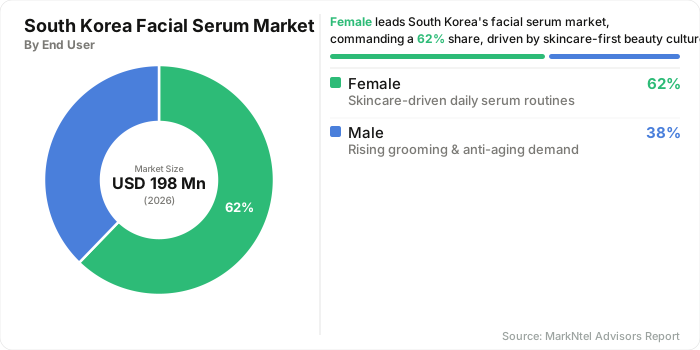
- By end user, the Female segment holds a dominant share of around 62%.
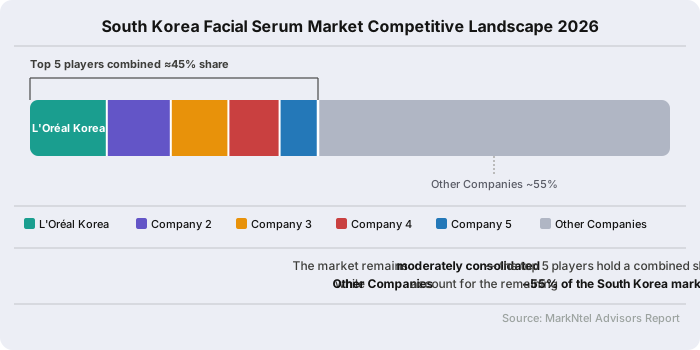
- Major companies, including Amorepacific Corporation, LG Household & Health Care, APR Corporation, L'Oréal Korea, and d'Alba Global, collectively account for nearly 45% share, indicating a moderately consolidated competitive landscape.
South Korea Facial Serum Market Size & Outlook
The South Korea Facial Serum Market is projected to register a CAGR of around 9.56% during 2026–2032, supported by the country’s strong K-beauty ecosystem, rising demand for functional and ingredient-led skincare products, increasing adoption of premium anti-aging formulations, and the continued expansion of digital beauty commerce and omnichannel skincare distribution networks.
The market includes concentrated skincare formulations used for anti-aging, hydration, brightening, pigmentation correction, acne and blemish control, exfoliation, eye-specific care, and multifunctional skin improvement. Demand is led by consumers seeking targeted skincare outcomes, while beauty retailers, e-commerce platforms, dermatology-led brands, and premium K-beauty manufacturers influence product development and channel expansion.
South Korea’s cosmetics export performance continues to strengthen the operating base for domestic facial serum manufacturers. The Ministry of Food and Drug Safety reported that Korean cosmetics exports reached USD 11.43 billion in 2025, up 12.3% from 2024, reflecting broader global demand for K-beauty formulations and supporting higher R&D intensity among Korean skincare companies.
South Korea’s advanced digital retail infrastructure continues to strengthen the growth trajectory of facial serums by improving product visibility, ingredient-focused skincare positioning, and omnichannel distribution efficiency. Facial serums are highly dependent on product education, formulation transparency, dermatologist-led positioning, and routine-based skincare engagement, making digital commerce an important channel for category expansion.
According to Statistics Korea, online shopping transaction value reached KRW 24.2904 trillion in December 2025, while mobile shopping transactions totaled KRW 18.7991 trillion, with both increasing by 6.2% compared to December 2024. The continued expansion of online and mobile commerce infrastructure is supporting wider accessibility of premium, functional, and targeted serum formulations across South Korea’s skincare ecosystem.
Over the forecast period, the South Korea facial serum industry is projected to grow from USD 198 million in 2026 to USD 343 million by 2032, supported by continued advancement in anti-aging, brightening, hydration, and derma-positioned skincare formulations. Ongoing innovation in active ingredient-based products, combined with the country’s strong K-beauty manufacturing ecosystem and expanding digital retail capabilities, is expected to further strengthen the positioning of premium and functional facial serum categories.
South Korea Facial Serum Market Key Indicators
- South Korea’s highly developed digital retail infrastructure is accelerating online skincare penetration and ingredient-focused beauty positioning. According to the Ministry of Data and Statistics, online shopping transaction value reached KRW 24.2904 trillion in December 2025, while mobile shopping transactions totaled KRW 18.7991 trillion, with both increasing by 6.2% compared to December 2024. The continued expansion of digital commerce and mobile retail integration is strengthening accessibility to premium, derma-positioned, and functional facial serum products.
- The strong penetration of social media and digital beauty platforms in South Korea is supporting ingredient education and skincare-focused product visibility. According to DataReportal, South Korea recorded 48.9 million active social media user identities in January 2025, equivalent to approximately 94.7% of the country’s population. High engagement across platforms such as Instagram, YouTube, TikTok, and Naver beauty communities is strengthening awareness of anti-aging, hydration, brightening, and barrier-repair facial serums.
- South Korea’s rapidly aging population is significantly supporting demand for preventive and anti-aging skincare formulations. According to Statistics Korea, individuals aged 65 years and above accounted for more than 20% of the country’s total population in 2025, officially classifying South Korea as a super-aged society. The increasing elderly demographic is strengthening long-term demand for facial serums targeting wrinkles, elasticity loss, hydration, and skin-repair concerns through active ingredients such as retinol, peptides, collagen boosters, and ceramides.
- Rising exposure to environmental stress and urban pollution is also supporting adoption of protective and barrier-repair skincare formulations. According to IQAir’s World Air Quality Report 2024, major urban centers such as Seoul continued to record PM2.5 concentrations above WHO recommended air quality guidelines. Increasing exposure to fine dust, pollution, and environmental stressors is accelerating the relevance of antioxidant-rich, hydration-focused, and skin barrier-support facial serums formulated with niacinamide, hyaluronic acid, centella asiatica, and probiotic ingredients.
- South Korea’s strong digital connectivity infrastructure further strengthens online skincare engagement and beauty commerce expansion. Reuters reported that nearly 99% of South Koreans are online and around 98% own smartphones, making the country one of the world’s most digitally connected economies. High smartphone penetration and mobile-first consumer behavior are supporting skincare content consumption, live-commerce integration, digital beauty campaigns, and ingredient-focused facial serum visibility across online channels.
South Korea Facial Serum Market Scope
| Category | Segments |
|---|---|
| By Product Function | (Anti-aging Serums, Hydrating Serums, Brightening Serums, Pigmentation Correction Serums, Acne & Blemish Control Serums, Exfoliating Serums, Eye-Specific Serums, Multi-functional Serums), |
| By Active Ingredient | (Hyaluronic Acid-Based, Vitamin C-Based, Retinol / Retinoid-Based, Niacinamide-Based, Peptide-Based, AHA/BHA/Exfoliating Acid-Based, Botanical / Natural Extract-Based, Bio-engineered / Clinical Actives), |
| By Formulation Type | (Water-Based Serums, Oil-Based Serums, Gel-Based Serums, Emulsion / Hybrid Serums), |
| By Skin Type | (Oily Skin, Dry Skin, Combination Skin, Sensitive Skin), |
| By Age Cohort | (18-25 Years, 26-35 Years, 36-50 Years, 51+ Years), |
| By Price Tier | (Mass Market, Mid-Premium, Premium / Luxury), |
| By Distribution Channel | (Supermarkets & Hypermarkets, Specialty Beauty Retail Stores, Online Channel, Pharmacies / Drugstores, Department Stores), |
South Korea Facial Serum Market Growth Drivers
Aging Demographics Are Strengthening Demand for Targeted Anti-aging Serums
South Korea’s rapidly aging population is significantly increasing the relevance of skincare products positioned around wrinkles, skin elasticity, firmness, hydration, and visible age-management concerns. Facial serums are particularly benefiting from this demographic shift due to their positioning as high-concentration and targeted skincare formulations integrated into daily skincare routines before creams and moisturizers. This enables brands to market facial serums as performance-oriented treatment products addressing specific aging-related skin concerns.
According to Statistics Korea’s 2025 elderly population statistics, the population aged 65 years and above reached approximately 10.51 million in 2025, accounting for around 20% of the country’s total population. The elderly population ratio among women was notably higher at 22.6%, compared to 18.0% among men, further strengthening the relevance of anti-aging and skin-maintenance skincare categories.
This demographic structure is increasing demand for advanced anti-aging serum formulations containing peptides, retinol alternatives, niacinamide, antioxidants, collagen-supporting actives, and skin barrier-repair ingredients. As consumers increasingly prefer targeted skincare solutions over conventional all-purpose creams, facial serums are gaining stronger positioning within premium and functional skincare portfolios.
The growing emphasis on aging-related skincare is also encouraging manufacturers to invest in clinically positioned formulations, efficacy-based product claims, dermatology-led branding strategies, and functional cosmetic compliance readiness. As a result, the category is expanding not only through broader product adoption but also through value migration toward higher-priced and scientifically positioned facial serum formulations.
Recent Trends
Functional and Derma-positioned Serum Formulations Are Gaining Priority
A major trend influencing the South Korea facial serum industry is the growing shift toward functional, derma-positioned, and evidence-based skincare formulations. Facial serums are increasingly being developed and marketed around targeted skin outcomes such as wrinkle improvement, brightening, pigmentation correction, blemish care, hydration, and skin barrier repair, rather than basic moisturization alone. This transition reflects the country’s strong preference for efficacy-driven skincare products supported by clinically positioned ingredients and functional performance claims.
The trend is further supported by rising functional cosmetics evaluation activity under the Ministry of Food and Drug Safety (MFDS). During the first half of 2024, triple-efficacy functional cosmetic approvals covering whitening, wrinkle improvement, and UV protection reached 93 cases, while dual-function products focused on whitening and wrinkle improvement accounted for 31 cases. These evaluation patterns highlight continued industry emphasis on multifunctional skincare formulations closely aligned with facial serum positioning and active ingredient innovation.
As a result, skincare brands are increasingly combining high-performance active ingredients with sensitivity-friendly formulations and clinically substantiated product claims. This evolving landscape is intensifying competition among established beauty companies, dermatology-oriented skincare brands, and emerging indie K-beauty players that differentiate products through ingredient transparency, clinical-style communication, and visible efficacy positioning.
The impact of this trend is clearly visible in expanding product architectures across the category. Companies are broadening serum portfolios through specialized brightening serums, anti-aging ampoules, blemish-control formulations, hydration concentrates, and barrier-repair boosters. This diversification is strengthening premium product positioning, increasing SKU depth, and supporting higher average selling values within South Korea’s functional skincare ecosystem.
South Korea Facial Serum Market Opportunities & Challenges
Higher Safety Compliance Creates Cost Pressure but Opens Opportunity for Evidence-led Serum Brands
A key challenge influencing the South Korea facial serum industry is the tightening regulatory environment surrounding cosmetic safety, formulation transparency, and product documentation. Facial serums frequently contain concentrated active ingredients, botanical extracts, acids, vitamins, peptides, and brightening agents, making ingredient verification, safety substantiation, and disciplined product claims increasingly important for skincare manufacturers and brand owners.
As regulatory expectations continue to evolve, companies are facing growing pressure to strengthen formulation safety assessment processes, ingredient traceability systems, and scientifically supported product communication. In this environment, brands offering transparent ingredient disclosures, clinically positioned formulations, and well-documented efficacy and safety standards are likely to strengthen consumer confidence and competitive positioning within the premium skincare category.
The evolving regulatory framework is also creating opportunities for suppliers and manufacturers capable of providing compliance-oriented services, including safety testing, active ingredient validation, stability assessment, and regulatory-ready formulation support. Companies with stronger quality assurance capabilities and responsible seller documentation systems are expected to benefit as skincare regulations become increasingly structured and evidence-driven.
This shift is further reinforced by regulatory developments introduced by the Ministry of Food and Drug Safety (MFDS). Under revised cosmetic regulations, responsible cosmetic sellers will be required to prepare and retain cosmetic safety assessment reports, with pilot projects scheduled for 2026–2027, phased implementation beginning in 2028, and full enforcement planned from 2031. The gradual implementation of these regulations is expected to favor companies with advanced compliance infrastructure while increasing operational and entry barriers for low-documentation and weakly substantiated facial serum brands.
Segmentation Insights
Anti-aging Serums Account for the Largest Share by Product Function
Anti-aging serums account for nearly 36% share of the South Korea Facial Serum Market, primarily driven by the strong alignment between anti-aging skincare needs and the core functionality of facial serums as concentrated, active ingredient-based treatment products. In South Korea, skincare routines are deeply associated with preventive care, skin texture refinement, hydration maintenance, and long-term appearance management, which continues to strengthen the relevance of anti-aging serum formulations across multiple consumer groups.
The segment’s growth is further supported by South Korea’s functional cosmetics regulatory framework, where wrinkle improvement is recognized as an approved functional claim category under the Ministry of Food and Drug Safety (MFDS). Functional cosmetics evaluation activity indicates that wrinkle-improvement claims are increasingly integrated across single-, dual-, and triple-efficacy skincare products, often combined with brightening, UV-protection, hydration, and skin barrier-support benefits. This multifunctional positioning is strengthening the development of advanced anti-aging serum formulations within the country’s skincare ecosystem.
The segment also plays a significant role in supporting premium skincare positioning and active ingredient-led innovation. Companies are continuously expanding anti-aging portfolios through peptide serums, retinol-alternative formulations, collagen-supporting products, ampoules, and skin-repair boosters, thereby strengthening premium pricing strategies, repeat-use skincare routines, and product-line diversification. Based on Product Function, the market is segmented into:
- Anti-aging Serums
- Hydrating Serums
- Brightening Serums
- Pigmentation Correction Serums
- Acne & Blemish Control Serums
- Exfoliating Serums
- Eye-Specific Serums
- Multi-functional Serums
Female Consumers Continue to Lead Facial Serum Usage
Female consumers account for nearly 62% share of the South Korea Facial Serum Market, primarily driven by their strong participation in multi-step skincare routines, targeted facial treatments, and premium skincare consumption. Women continue to represent the primary user base for facial serums, particularly across anti-aging, brightening, pigmentation correction, hydration, and sensitive-skin care categories, where demand for functional and ingredient-led skincare products remains high.
The segment’s relevance is further supported by evolving demographic and lifestyle trends in South Korea. According to Statistics Korea’s 2025 elderly statistics, interest in health, wellness, and appearance management has increased significantly among younger elderly populations. The report also highlighted a rise in time spent on appearance care compared with five years earlier, indicating growing emphasis on preventive skincare, visible skin improvement, and long-term skin maintenance routines.
This sustained female-led demand is encouraging skincare companies to expand product diversification through active ingredient-based serum formulations targeting specific skin concerns and age-related needs. It is also supporting premiumization, influencer-led skincare education, and stronger penetration across digital commerce platforms, health and beauty stores, department stores, and brand-owned retail channels. As a result, female consumers continue to play a central role in shaping product innovation, positioning strategies, and category expansion within South Korea’s facial serum industry. Based on End User, the market is segmented into:
- Female
- Male
South Korea Facial Serum Market Competitive Analysis
The South Korea Facial Serum Market is moderately consolidated, with Amorepacific Corp., LG Household & Health Care, APR Corp., L’Oréal Korea, and d'Alba Global Co., Ltd. together accounting for around 45% market share. The leading companies compete through product innovation, functional skincare positioning, derma and premium branding, digital retail strength, and overseas expansion.
Key Companies in the South Korea Facial Serum Market
- Amorepacific Corp.
- LG Household & Health Care
- APR Corp.
- L’Oréal Korea
- Goodai Global
- Torriden
- CLIO Cosmetics
- d'Alba Global Co., Ltd.
- The Founders Inc.
- Hugel
South Korea Facial Serum Market Industry News and Recent Developments
May 2025: d'Alba Global Debuted on KOSPI
d'Alba Global officially debuted on South Korea’s KOSPI exchange in May, 2025. The company highlighted its premium vegan skincare positioning, mist-serum hybrid category, and global expansion strategy supported by newly raised capital.
Impact Analysis: The listing improves funding visibility for premium serum-led K-beauty brands. It supports product innovation, global distribution, and brand-building investment, while increasing competitive pressure on established facial serum companies to respond to fast-scaling indie brands.
- Market Segmentation
- Introduction
- Product Definition
- Research Process
- Assumptions
- Executive Summary
- South Korea Facial Serum Market Policies, Regulations, and Product Standards
- South Korea Facial Serum Market Trends & Developments
- South Korea Facial Serum Market Dynamics
- Growth Factors
- Challenges
- South Korea Facial Serum Market Hotspot & Opportunities
- South Korea Facial Serum Market Outlook, 2022-2032F
- Market Size & Outlook
- By Revenues (USD Million)
- Market Share & Outlook
- By Product Function- Market Size & Forecast 2022-2032, USD Million
- Anti-aging Serums
- Hydrating Serums
- Brightening Serums
- Pigmentation Correction Serums
- Acne & Blemish Control Serums
- Exfoliating Serums
- Eye-Specific Serums
- Multi-functional Serums
- By Active Ingredient- Market Size & Forecast 2022-2032, USD Million
- Hyaluronic Acid-Based
- Vitamin C-Based
- Retinol / Retinoid-Based
- Niacinamide-Based
- Peptide-Based
- AHA/BHA/Exfoliating Acid-Based
- Botanical / Natural Extract-Based
- Bio-engineered / Clinical Actives
- By Formulation Type- Market Size & Forecast 2022-2032, USD Million
- Water-Based Serums
- Oil-Based Serums
- Gel-Based Serums
- Emulsion / Hybrid Serums
- By Skin Type- Market Size & Forecast 2022-2032, USD Million
- Oily Skin
- Dry Skin
- Combination Skin
- Sensitive Skin
- By Age Cohort- Market Size & Forecast 2022-2032, USD Million
- 18-25 Years
- 26-35 Years
- 36-50 Years
- 51+ Years
- By Price Tier - Market Size & Forecast 2022-2032, USD Million
- Mass Market
- Mid-Premium
- Premium / Luxury
- By Distribution Channel - Market Size & Forecast 2022-2032, USD Million
- Supermarkets & Hypermarkets
- Specialty Beauty Retail Stores
- Online Channel
- Pharmacies / Drugstores
- Department Stores
- By End User- Market Size & Forecast 2022-2032, USD Million
- Female
- Male
- By Company
- Competition Characteristics
- Market Share & Analysis
- By Product Function- Market Size & Forecast 2022-2032, USD Million
- Market Size & Outlook
- South Korea Anti-aging Serums Market Outlook, 2022-2032
- Market Size & Outlook
- By Revenues (USD Million)
- Market Share & Outlook
- By Active Ingredient- Market Size & Forecast 2022-2032, USD Million
- By Formulation Type- Market Size & Forecast 2022-2032, USD Million
- By Skin Type- Market Size & Forecast 2022-2032, USD Million
- By Age Cohort- Market Size & Forecast 2022-2032, USD Million
- By Price Tier - Market Size & Forecast 2022-2032, USD Million
- By Distribution Channel - Market Size & Forecast 2022-2032, USD Million
- By End User- Market Size & Forecast 2022-2032, USD Million
- By Region- Market Size & Forecast 2022-2032, USD Million
- Market Size & Outlook
- South Korea Hydrating Serums Market Outlook, 2022-2032
- Market Size & Outlook
- By Revenues (USD Million)
- Market Share & Outlook
- By Active Ingredient- Market Size & Forecast 2022-2032, USD Million
- By Formulation Type- Market Size & Forecast 2022-2032, USD Million
- By Skin Type- Market Size & Forecast 2022-2032, USD Million
- By Age Cohort- Market Size & Forecast 2022-2032, USD Million
- By Price Tier - Market Size & Forecast 2022-2032, USD Million
- By Distribution Channel - Market Size & Forecast 2022-2032, USD Million
- By End User- Market Size & Forecast 2022-2032, USD Million
- By Region- Market Size & Forecast 2022-2032, USD Million
- Market Size & Outlook
- South Korea Brightening Serums Market Outlook, 2022-2032
- Market Size & Outlook
- By Revenues (USD Million)
- Market Share & Outlook
- By Active Ingredient- Market Size & Forecast 2022-2032, USD Million
- By Formulation Type- Market Size & Forecast 2022-2032, USD Million
- By Skin Type- Market Size & Forecast 2022-2032, USD Million
- By Age Cohort- Market Size & Forecast 2022-2032, USD Million
- By Price Tier - Market Size & Forecast 2022-2032, USD Million
- By Distribution Channel - Market Size & Forecast 2022-2032, USD Million
- By End User- Market Size & Forecast 2022-2032, USD Million
- By Region- Market Size & Forecast 2022-2032, USD Million
- Market Size & Outlook
- South Korea Pigmentation Correction Serums Market Outlook, 2022-2032
- Market Size & Outlook
- By Revenues (USD Million)
- Market Share & Outlook
- By Active Ingredient- Market Size & Forecast 2022-2032, USD Million
- By Formulation Type- Market Size & Forecast 2022-2032, USD Million
- By Skin Type- Market Size & Forecast 2022-2032, USD Million
- By Age Cohort- Market Size & Forecast 2022-2032, USD Million
- By Price Tier - Market Size & Forecast 2022-2032, USD Million
- By Distribution Channel - Market Size & Forecast 2022-2032, USD Million
- By End User- Market Size & Forecast 2022-2032, USD Million
- By Region- Market Size & Forecast 2022-2032, USD Million
- Market Size & Outlook
- South Korea Acne & Blemish Control Serums Market Outlook, 2022-2032
- Market Size & Outlook
- By Revenues (USD Million)
- Market Share & Outlook
- By Active Ingredient- Market Size & Forecast 2022-2032, USD Million
- By Formulation Type- Market Size & Forecast 2022-2032, USD Million
- By Skin Type- Market Size & Forecast 2022-2032, USD Million
- By Age Cohort- Market Size & Forecast 2022-2032, USD Million
- By Price Tier - Market Size & Forecast 2022-2032, USD Million
- By Distribution Channel - Market Size & Forecast 2022-2032, USD Million
- By End User- Market Size & Forecast 2022-2032, USD Million
- By Region- Market Size & Forecast 2022-2032, USD Million
- Market Size & Outlook
- South Korea Exfoliating Serums Market Outlook, 2022-2032
- Market Size & Outlook
- By Revenues (USD Million)
- Market Share & Outlook
- By Active Ingredient- Market Size & Forecast 2022-2032, USD Million
- By Formulation Type- Market Size & Forecast 2022-2032, USD Million
- By Skin Type- Market Size & Forecast 2022-2032, USD Million
- By Age Cohort- Market Size & Forecast 2022-2032, USD Million
- By Price Tier - Market Size & Forecast 2022-2032, USD Million
- By Distribution Channel - Market Size & Forecast 2022-2032, USD Million
- By End User- Market Size & Forecast 2022-2032, USD Million
- By Region- Market Size & Forecast 2022-2032, USD Million
- Market Size & Outlook
- South Korea Eye-Specific Serums Market Outlook, 2022-2032
- Market Size & Outlook
- By Revenues (USD Million)
- Market Share & Outlook
- By Active Ingredient- Market Size & Forecast 2022-2032, USD Million
- By Formulation Type- Market Size & Forecast 2022-2032, USD Million
- By Skin Type- Market Size & Forecast 2022-2032, USD Million
- By Age Cohort- Market Size & Forecast 2022-2032, USD Million
- By Price Tier - Market Size & Forecast 2022-2032, USD Million
- By Distribution Channel - Market Size & Forecast 2022-2032, USD Million
- By End User- Market Size & Forecast 2022-2032, USD Million
- By Region- Market Size & Forecast 2022-2032, USD Million
- Market Size & Outlook
- South Korea Multi-functional Serums Market Outlook, 2022-2032
- Market Size & Outlook
- By Revenues (USD Million)
- Market Share & Outlook
- By Active Ingredient- Market Size & Forecast 2022-2032, USD Million
- By Formulation Type- Market Size & Forecast 2022-2032, USD Million
- By Skin Type- Market Size & Forecast 2022-2032, USD Million
- By Age Cohort- Market Size & Forecast 2022-2032, USD Million
- By Price Tier - Market Size & Forecast 2022-2032, USD Million
- By Distribution Channel - Market Size & Forecast 2022-2032, USD Million
- By End User- Market Size & Forecast 2022-2032, USD Million
- By Region- Market Size & Forecast 2022-2032, USD Million
- Market Size & Outlook
- South Korea Facial Serum Market Key Strategic Imperatives for Success & Growth
- Competitive Outlook
- Company Profiles
- Amorepacific Corp.
- Business Description
- Product Portfolio
- Collaborations & Alliances
- Recent Developments
- Financial Details
- Others
- LG Household & Health Care
- Business Description
- Product Portfolio
- Collaborations & Alliances
- Recent Developments
- Financial Details
- Others
- APR Corp.
- Business Description
- Product Portfolio
- Collaborations & Alliances
- Recent Developments
- Financial Details
- Others
- L’Oréal South Korea
- Business Description
- Product Portfolio
- Collaborations & Alliances
- Recent Developments
- Financial Details
- Others
- Goodai Global
- Business Description
- Product Portfolio
- Collaborations & Alliances
- Recent Developments
- Financial Details
- Others
- Torriden
- Business Description
- Product Portfolio
- Collaborations & Alliances
- Recent Developments
- Financial Details
- Others
- CLIO Cosmetics
- Business Description
- Product Portfolio
- Collaborations & Alliances
- Recent Developments
- Financial Details
- Others
- d'Alba Global Co., Ltd.
- Business Description
- Product Portfolio
- Collaborations & Alliances
- Recent Developments
- Financial Details
- Others
- Hugel
- Business Description
- Product Portfolio
- Collaborations & Alliances
- Recent Developments
- Financial Details
- Others
- Others
- Business Description
- Product Portfolio
- Collaborations & Alliances
- Recent Developments
- Financial Details
- Others
- Amorepacific Corp.
- Company Profiles
- Disclaimer

MarkNtel Advisors follows a robust and iterative research methodology designed to ensure maximum accuracy and minimize deviation in market estimates and forecasts. Our approach combines both bottom-up and top-down techniques to effectively segment and quantify various aspects of the market. A consistent feature across all our research reports is data triangulation, which examines the market from three distinct perspectives to validate findings. Key components of our research process include:
1. Scope & Research Design At the outset, MarkNtel Advisors define the research objectives and formulate pertinent questions. This phase involves determining the type of research—qualitative or quantitative—and designing a methodology that outlines data collection methods, target demographics, and analytical tools. They also establish timelines and budgets to ensure the research aligns with client goals.
2. Sample Selection and Data Collection In this stage, the firm identifies the target audience and determines the appropriate sample size to ensure representativeness. They employ various sampling methods, such as random or stratified sampling, based on the research objectives. Data collection is carried out using tools like surveys, interviews, and observations, ensuring the gathered data is reliable and relevant.
3. Data Analysis and Validation Once data is collected, MarkNtel Advisors undertake a rigorous analysis process. This includes cleaning the data to remove inconsistencies, employing statistical software for quantitative analysis, and thematic analysis for qualitative data. Validation steps are taken to ensure the accuracy and reliability of the findings, minimizing biases and errors.

4. Data Forecast and FinalizationThe final phase involves forecasting future market trends based on the analyzed data. MarkNtel Advisors utilize predictive modeling and time series analysis to anticipate market behaviors. The insights are then compiled into comprehensive reports, featuring visual aids like charts and graphs, and include strategic recommendations to inform client decision-making
FILL THE FORM TO GET THE FREE SAMPLE PAGES
We offer flexible licensing options to cater to varying organizational needs. Choose the pricing pack that best suits your requirements:
Buy Now Inquire Before Buying
 Talk to our Consultant
 Request Customization