

By Product Type (Alcoholic, Non-Alcoholic), By Flavored (Flavored, Unflavored), By Consumption (Drinks, Shots, Mixers), By Nature (Conventional, Natural/Organic), By Flavour (Flavo......ured, Unflavoured), By Packaging (Bottles (PET Bottles, Glass Bottles), Metal Cans (Pouches, Others)), By Packaging Size (Small, Medium, Large), By End Users (Teenagers, Adults, Geriatric), By Sales Channel (On-Trade, Off-Trade), and others Read more
- Food & Beverages
- Apr 2026
- 120
- PDF, Excel, PPT
India Energy Drinks Market Key Takeaways
- India Energy Drinks Market size was valued at USD 1.4 billion in 2025 and is projected to grow from USD 1.6 billion in 2026 to USD 2.3 billion by 2032, exhibiting a CAGR of 6.24% during 2026-2032.
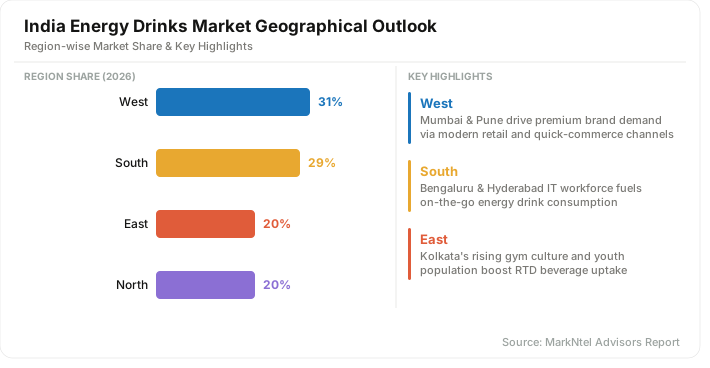
- The West region holds the largest share of about 31% in 2026.
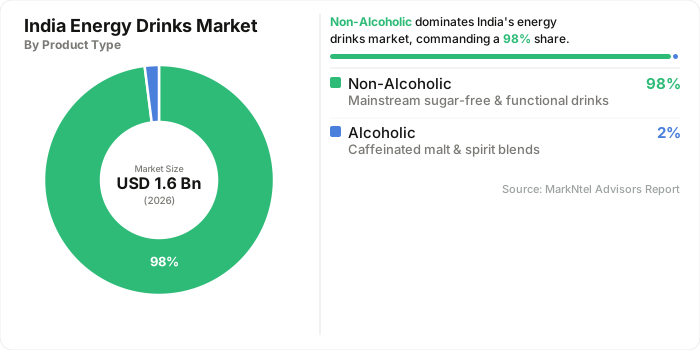
- In 2026, by product type, the non-alcoholic holds a significant share of about 98%.
- By end users, the adult segment seized a significant share of about 48% in 2026.
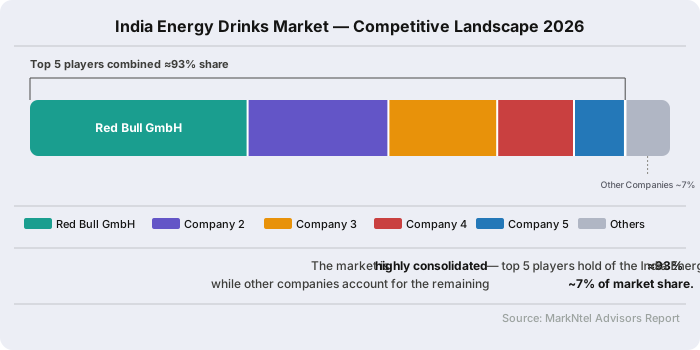
- The industry is highly consolidated, with the top five players collectively accounting for approximately 93% of the total market share.
India Energy Drinks Market Size and Outlook
The India Energy Drinks Market size was valued at USD 1.4 billion in 2025 and is anticipated to grow from USD 1.6 billion in 2026 to USD 2.3 billion by 2032. Along with this, the market is estimated to grow at a CAGR of around 6.24% during the forecast period, i.e., 2026-32.
The Energy Drinks demand in India is projected to witness steady expansion, driven by rapid urbanization, evolving work patterns, and increasing demand for convenient on-the-go energy solutions. The country’s urban population accounted for 36.87% in 2024, reflecting a continuous shift toward metropolitan living and concentrated consumption hubs. Regions such as North India, particularly Delhi NCR, represent highly influential urban clusters, where dense population and high consumption density significantly support demand for functional beverages. Delhi NCR, as one of the world’s largest urban agglomerations, plays a key role in shaping modern retail and beverage consumption patterns.
A major structural driver of the market is the increasing intensity of work lifestyles. According to the International Labour Organization, India is among the most overworked nations, with 51% of employees working more than 49 hours per week, ranking second globally. This reflects high occupational stress, long working hours, and fatigue-driven consumption behavior, directly supporting demand for instant energy and ready-to-drink beverage solutions .
In addition, changing consumer preferences are accelerating a shift toward healthier formulations. The market is witnessing strong demand for low-sugar, vitamin-enriched, and functional beverages, aligned with fitness and wellness trends. Industry evidence supports this transition, with Varun Beverages reporting that over 55% of its 2025 sales volumes came from low or no-sugar beverages, indicating a structural shift toward healthier consumption patterns in India. Similarly, global players such as The Coca-Cola Company are expanding their sports and functional hydration portfolios, including products like BodyArmorLyte, targeting fitness-conscious consumers with electrolyte and vitamin-enriched formulations .
Looking ahead, large-scale investments are expected to further accelerate market growth. Reliance Consumer Products Limited is developing a USD 180 million integrated food and beverage manufacturing park in Maharashtra, aimed at strengthening production capacity, improving supply chain efficiency, and expanding distribution networks across Tier-2 and Tier-3 cities . This infrastructure push is expected to enhance affordability, availability, and market penetration of energy and functional beverages across India.
As a result, the India energy drinks industry is positioned for sustained growth, supported by urban expansion, high work intensity, evolving health-conscious consumption, and strong manufacturing investments that collectively enhance both demand and supply chain efficiency.
India Energy Drinks Market Key Indicators
- Centrum’s ‘Har Din Ko Kar Recharge’ campaign highlights the growing focus on micronutrient-based energy solutions, positioning its effervescent drink as a convenient remedy for daily fatigue through vitamins like B12, C, magnesium, and zinc. The multi-channel campaign aims to drive awareness, promote wellness consumption, and expand the functional energy drink segment in India .
- India’s e-commerce market was valued at USD 140 billion in 2025 and is projected to reach USD 165.20 billion by 2030, growing at a CAGR of 18%. This rapid expansion is transforming retail distribution by enabling wider accessibility and faster delivery of packaged beverages, including energy drinks, across urban and emerging markets .
- India’s urban population is projected to reach 600 million by 2036, driving significant infrastructure development needs of around USD 840 billion. This large-scale urban expansion is expected to strengthen employment hubs, retail ecosystems, and modern trade networks, thereby improving product accessibility and accelerating demand for convenience-based beverages, including energy drinks, across emerging and metropolitan markets .
- The launch of 28 BLACK Energy Drink highlights increasing foreign brand entry into India’s energy drinks market, reflecting strong growth potential in urban and youth-driven consumption segments. The brand plans to introduce premium flavored energy beverages such as Açaí and Gummibär, targeting lifestyle-oriented consumers. This expansion signals rising competition, product diversification, and growing demand for functional and premium energy drinks in India’s evolving beverage landscape.
India Energy Drinks Market Scope
| Category | Segments |
|---|---|
| By Product Type | (Alcoholic, Non-Alcoholic), |
| By Flavored | (Flavored, Unflavored), |
| By Consumption | (Drinks, Shots, Mixers), |
| By Nature | (Conventional, Natural/Organic), |
| By Flavour | (Flavoured, Unflavoured), |
| By Packaging | (Bottles (PET Bottles, Glass Bottles), Metal Cans (Pouches, Others)), |
| By Packaging Size | (Small, Medium, Large), |
| By End Users | (Teenagers, Adults, Geriatric), |
| By Sales Channel | (On-Trade, Off-Trade), |
India Energy Drinks Market Growth Drivers
Rising Urbanization and Fast-Paced Lifestyles
The India energy drinks industry is strongly influenced by rapid urbanization and the concentration of economic activity in metropolitan regions, particularly in South India. States such as Karnataka, Tamil Nadu, Telangana, and Kerala host major IT and business hubs including Bengaluru, Hyderabad, and Chennai, which attract large-scale workforce migration. This has resulted in densely populated urban centers characterized by fast-paced routines and high work intensity. As per World Bank estimates, urban areas already contribute nearly 70% of India’s GDP, highlighting their role as primary economic engines and lifestyle influencers.
India’s urban population reached 534.9 million in 2024, reflecting the growing shift toward city-based living and modern consumption patterns. This urban expansion is directly linked to longer working hours, increased screen-based employment, and time-constrained lifestyles, all of which contribute to rising fatigue levels and demand for quick energy solutions . Consumers in these environments increasingly prefer ready-to-consume beverages that provide instant mental alertness and physical stamina.
Additionally, changing consumption behavior further strengthens demand. Urban households allocate a significant share of spending toward non-food and discretionary categories, indicating higher acceptance of lifestyle and functional beverages. At the same time, the gig economy is expanding rapidly, with India’s platform workforce expected to reach 23.5 million by 2029–30, creating irregular work schedules and on-the-go consumption needs.
Together, urbanization, economic clustering, and flexible work structures are reshaping consumer behavior in India. These factors are strongly accelerating demand for energy drinks as a convenient solution for sustained performance, alertness, and mobility-driven lifestyles.
Recent Trends
Shift Toward Low-Sugar and Functional Energy Drink Formulations
The energy drinks industry is experiencing a notable shift toward low-sugar, sugar-free, and functionally enriched formulations, reflecting evolving consumer preferences for healthier beverage options. This shift is strongly supported by recent industry data, which indicates that zero- and low-sugar beverages accounted for nearly 30% of the total market share in 2025, reaching a five-year high. The rising contribution of low- and mid-sugar drinks, up to 59% of quarterly sales volumes for major players, highlights a structural change in consumption behavior, particularly among urban and health-conscious consumers .
Product innovation is also reinforcing this ongoing trend. In 2025, Herbalife India introduced Liftoff®, a zero-added sugar energy drink enriched with caffeine, plant extracts, and essential vitamins such as B-complex and Vitamin C. The product is designed to enhance alertness while offering a low-calorie, functional alternative to traditional high-sugar energy drinks. Such launches demonstrate how brands are repositioning energy drinks from purely stimulant-based products to wellness-oriented solutions that combine energy, nutrition, and convenience .
This trend is further driven by growing awareness around lifestyle diseases, fitness adoption, and preventive healthcare, encouraging consumers to seek beverages that deliver both performance and health benefits.
Generally, the shift toward low-sugar and vitamin-enriched formulations is redefining the demand for energy drinks in India. As consumer demand for healthier alternatives continues to rise, companies are expected to accelerate innovation, making functional energy beverages a key growth pillar in the coming years.
India Energy Drinks Market Opportunities and Challenges
FSSAI & GST Constraints Driving Herbal and Functional Energy Formulations
The India energy drinks market is shaped by a dual regulatory environment that creates both constraints and significant innovation opportunities. The Food Safety and Standards Authority of India (FSSAI) regulates caffeinated beverages with a maximum permitted caffeine limit of 145 mg per litre, along with mandatory “High Caffeine Content” labelling and restrictions on certain stimulants, which limits formulation flexibility and increases compliance costs for manufacturers . This regulatory framework often forces brands to reformulate products, increasing R&D burden and slowing traditional product innovation cycles. In addition, the classification of energy drinks and aerated beverages under the 40% GST “sin goods” slab, as highlighted by The Hindu, significantly increases retail prices and restricts penetration in price-sensitive markets .
However, these constraints are simultaneously driving a major market opportunity. Regulatory pressure is accelerating the shift toward herbal, botanical, and clean-label formulations that rely on natural caffeine sources, plant extracts, and functional nutrients. Products such as Herboteen, which combines Ayurvedic herbs like ashwagandha, brahmi, and shatavari with vitamins and minerals, illustrate this transition toward wellness-oriented energy solutions. This evolution enables brands to reposition energy drinks as functional health beverages, combining energy, immunity, and stress management benefits .
Thus, strict regulation and high taxation are not limiting the market but reshaping it toward premium, health-focused, and innovation-led functional beverage growth in India.
Segmentation Insights
Non-Alcoholic Beverages Dominate the Market
The non-alcoholic segment contributes approximately 98% of the overall volume in the India energy drinks Industry, driven by strong cultural preferences, regulatory structures, and evolving health considerations. In India, alcohol consumption remains socially restricted across many demographics, which significantly limits the penetration of alcoholic energy beverages. Additionally, regulatory oversight by the Food Safety and Standards Authority of India ensures tighter controls on caffeinated and stimulant-based products, further reinforcing the dominance of non-alcoholic variants.
Consumer behavior also plays a critical role, as energy drinks are widely positioned as functional, performance-enhancing beverages for daily consumption rather than recreational alcohol mixers. Growing demand from students, working professionals, and fitness-oriented consumers has further accelerated adoption. Established brands such as Red Bull, Monster, and Sting primarily operate within this category, reinforcing its leadership in the market.
This dominance is further supported by continuous product innovation and new market entrants focusing on non-alcoholic formulations. For instance, in August 2025, Huckleberry launched its energy drink in India, featuring a blend of caffeine, taurine, and B vitamins to deliver sustained energy and mental focus. The product emphasizes premium ingredients, wellness positioning, and sustainability, reflecting the growing shift toward functional and health-oriented non-alcoholic beverages among performance-driven consumers.
The segment also benefits from extensive distribution across retail stores, supermarkets, and e-commerce platforms, making it highly accessible nationwide. As a result, non-alcoholic energy drinks continue to serve as the backbone of the market, driving both volume growth and product innovation in India. Based on product type, the scope has been segmented into
- Alcoholic
- Non-Alcoholic
Adult Segment Dominate the End-User Category
The adult segment represents the largest consumer group in the India energy drinks industry, contributing approximately 48% of total consumption, driven by demanding work schedules, urbanization, and lifestyle fatigue. Adults in the age group of 20–40 years form the core workforce in sectors such as IT, finance, retail, and services, where long working hours and high stress levels increase dependence on quick energy solutions.
According to labor trend, India has a significant share of employees working extended hours, which directly influences consumption of functional beverages for alertness and stamina. Energy drinks are increasingly perceived as performance-support beverages, helping manage fatigue during work, travel, and fitness activities. Rising gym culture, late working hours, and increased screen time further reinforce demand within this segment. Marketing strategies of leading brands also heavily target young professionals through digital platforms and retail activations. As a result, adults remain the most influential end-user group, shaping product innovation, flavor profiles, and packaging formats in the energy drinks market. The key end users mapped in the study involve:
- Teenagers
- Adults
- Geriatric
India Energy Drinks Market Geographical Outlook
The Energy Drinks landscape in India is dominated by West India, accounting for around 31% share, driven by its strong urban concentration, industrial development, and high-income consumer base. The region, comprising Maharashtra and Gujarat, hosts major metropolitan cities such as Mumbai, Pune, and Ahmedabad, which are key consumption hubs for energy and functional beverages. Mumbai, as India’s financial capital, has a dense population of corporate professionals engaged in banking, IT, media, and services, where long working hours and high stress levels significantly boost demand for quick energy solutions. Pune and Ahmedabad further contribute through expanding IT parks, manufacturing clusters, and educational institutions, strengthening regional consumption patterns.
Additionally, West India benefits from strong logistics networks, port access, and distribution efficiency, enabling faster availability of branded energy drinks across urban and semi-urban markets. The presence of organized retail chains, supermarkets, and modern trade outlets further enhances product penetration and impulse buying behavior. Similar to other high-consumption sectors, such as healthcare technology, where Tier-1 cities like Mumbai and Pune dominate due to advanced infrastructure and affluent populations, West India leads the energy drinks industry due to its concentrated urban lifestyle and workforce intensity.
Thus, West India remains the leading regional market, supported by urbanization, corporate culture, and strong commercial infrastructure.
India Energy Drinks Industry Competitive Analysis
The India energy drinks market is highly consolidated, with the top five companies, including Red Bull GmbH, PepsiCo, Inc., Monster Beverage Corporation, The Coca-Cola Company, and Anheuser-Busch InBev SA/NV, collectively account for approximately 93% of the total market share. Red Bull leads the premium segment, while PepsiCo dominates volume sales through its mass-market offerings, and Coca-Cola and Monster maintain strong distribution-driven presence across urban markets.
Major Energy Drinks Companies in India
- Red Bull GmbH
- PepsiCo, Inc.
- Monster Beverage Corporation
- The Coca-Cola Company
- Hector Beverages Private Limited
- Hell Energy Magyarország Kft.
- Tata Consumer Products Ltd
- Ghodawat Consumer Limited
- Ocean Drinks Private Limited
- Radiohead Brands Private Limited
- BPI Sports, LLC
- Others
India Energy Drinks Industry News and Recent Developments:
April 2025: Centrum Enters India’s Energy Drink Segment with “Centrum Recharge”
Centrum has launched “Centrum Recharge,” an energy drink mix fortified with 13 vitamins and minerals to support energy, immunity, and hydration. Priced at ₹10 per sachet and available across retail and e-commerce, the product is sugar-free and designed for convenient, daily consumption among active consumers.
Impact Analysis: The launch reflects a growing shift toward functional, health-focused energy beverages in India. By combining micronutrient supplementation with energy hydration, Centrum is expanding competition beyond traditional caffeinated drinks. Its affordable pricing and wide distribution could accelerate category penetration, encourage preventive health consumption, and push existing players to innovate with nutrient-enriched formulations in the evolving energy drink market.
January 2025: Reliance Consumer Products Enters Functional Beverage Segment with Launch of ‘RasKik Gluco Energy’
Reliance Consumer Products Limited introduced “RasKik Gluco Energy,” an affordable rehydration drink priced at ₹10, enriched with electrolytes, glucose, and lemon juice. The product targets hydration and instant energy needs during daily activities and heat conditions, marking Reliance’s expansion into functional beverages and strengthening its broader FMCG portfolio.
Impact Analysis: The launch highlights aggressive mass-market penetration through ultra-affordable pricing, intensifying competition in India’s energy and hydration segment. It strengthens Reliance’s positioning as a comprehensive beverage player, targeting rural and price-sensitive consumers. This strategy is expected to create pricing, expand category accessibility, and accelerate growth in low-cost functional energy drinks, especially in high-volume markets.
- Market Segmentation
- Introduction
- Product Definition
- Research Process
- Assumptions
- Executive Summary
- India Energy Drinks Market Policies, Regulations, and Product Standards
- India Energy Drinks Market Trends & Developments
- India Energy Drinks Market Dynamics
- Growth Factors
- Challenges
- India Energy Drinks Market Hotspot & Opportunities
- India Energy Drinks Market Outlook, 2022-2032F
- Market Size & Outlook
- By Revenues (USD Million)
- By Quantity Sold (Million Liters)
- Market Share & Outlook
- By Product Type- Market Size & Forecast 2022-2032, USD Million
- Alcoholic
- Non-Alcoholic
- By Flavored- Market Size & Forecast 2022-2032, USD Million
- Flavored
- Unflavored
- By Consumption- Market Size & Forecast 2022-2032, USD Million
- Drinks
- Shots
- Mixers
- By Nature- Market Size & Forecast 2022-2032, USD Million
- Conventional
- Natural/Organic
- By Flavour- Market Size & Forecast 2022-2032, USD Million
- Flavoured
- Unflavoured
- By Packaging- Market Size & Forecast 2022-2032, USD Million
- Bottles
- PET Bottles
- Glass Bottles
- Metal Cans
- Pouches
- Others
- Bottles
- By Packaging Size- Market Size & Forecast 2022-2032, USD Million
- Small
- Medium
- Large
- By End Users- Market Size & Forecast 2022-2032, USD Million
- Teenagers
- Adults
- Geriatric
- By Sales Channel- Market Size & Forecast 2022-2032, USD Million
- On-Trade
- Off-Trade
- By Region- Market Size & Forecast 2022-2032, USD Million
- South
- West
- East
- North
- By Company
- Competition Characteristics
- Market Share & Analysis
- By Product Type- Market Size & Forecast 2022-2032, USD Million
- Market Size & Outlook
- India Alcoholic Market Outlook, 2022-2032
- Market Size & Outlook
- By Revenues (USD Million)
- By Quantity Sold (Million Liters)
- Market Share & Outlook
- By Flavored- Market Size & Forecast 2022-2032, USD Million
- By Consumption- Market Size & Forecast 2022-2032, USD Million
- By Nature- Market Size & Forecast 2022-2032, USD Million
- By Flavour- Market Size & Forecast 2022-2032, USD Million
- By Packaging- Market Size & Forecast 2022-2032, USD Million
- By Packaging Size- Market Size & Forecast 2022-2032, USD Million
- By End Users- Market Size & Forecast 2022-2032, USD Million
- By Sales Channel- Market Size & Forecast 2022-2032, USD Million
- By Region- Market Size & Forecast 2022-2032, USD Million
- Market Size & Outlook
- India Non-Alcoholic Market Outlook, 2022-2032
- Market Size & Outlook
- By Revenues (USD Million)
- By Quantity Sold (Million Liters)
- Market Share & Outlook
- By Flavored- Market Size & Forecast 2022-2032, USD Million
- By Consumption- Market Size & Forecast 2022-2032, USD Million
- By Nature- Market Size & Forecast 2022-2032, USD Million
- By Flavour- Market Size & Forecast 2022-2032, USD Million
- By Packaging- Market Size & Forecast 2022-2032, USD Million
- By Packaging Size- Market Size & Forecast 2022-2032, USD Million
- By End Users- Market Size & Forecast 2022-2032, USD Million
- By Sales Channel- Market Size & Forecast 2022-2032, USD Million
- By Region- Market Size & Forecast 2022-2032, USD Million
- Market Size & Outlook
- India Energy Drinks Market Key Strategic Imperatives for Success & Growth
- Competitive Outlook
- Company Profiles
- PepsiCo, Inc.
- Business Description
- Product Portfolio
- Collaborations & Alliances
- Recent Developments
- Financial Details
- Others
- Monster Beverage Corporation
- Business Description
- Product Portfolio
- Collaborations & Alliances
- Recent Developments
- Financial Details
- Others
- The Coca-Cola Company
- Business Description
- Product Portfolio
- Collaborations & Alliances
- Recent Developments
- Financial Details
- Others
- Hector Beverages Private Limited
- Business Description
- Product Portfolio
- Collaborations & Alliances
- Recent Developments
- Financial Details
- Others
- Hell Energy Magyarország Kft.
- Business Description
- Product Portfolio
- Collaborations & Alliances
- Recent Developments
- Financial Details
- Others
- Tata Consumer Products Ltd
- Business Description
- Product Portfolio
- Collaborations & Alliances
- Recent Developments
- Financial Details
- Others
- Ghodawat Consumer Limited
- Business Description
- Product Portfolio
- Collaborations & Alliances
- Recent Developments
- Financial Details
- Others
- Ocean Drinks Private Limited
- Business Description
- Product Portfolio
- Collaborations & Alliances
- Recent Developments
- Financial Details
- Others
- Radiohead Brands Private Limited
- Business Description
- Product Portfolio
- Collaborations & Alliances
- Recent Developments
- Financial Details
- Others
- BPI Sports, LLC
- Business Description
- Product Portfolio
- Collaborations & Alliances
- Recent Developments
- Financial Details
- Others
- Red Bull GmbH
- Business Description
- Product Portfolio
- Collaborations & Alliances
- Recent Developments
- Financial Details
- Others
- Others
- PepsiCo, Inc.
- Company Profiles
- Disclaimer

MarkNtel Advisors follows a robust and iterative research methodology designed to ensure maximum accuracy and minimize deviation in market estimates and forecasts. Our approach combines both bottom-up and top-down techniques to effectively segment and quantify various aspects of the market. A consistent feature across all our research reports is data triangulation, which examines the market from three distinct perspectives to validate findings. Key components of our research process include:
1. Scope & Research Design At the outset, MarkNtel Advisors define the research objectives and formulate pertinent questions. This phase involves determining the type of research—qualitative or quantitative—and designing a methodology that outlines data collection methods, target demographics, and analytical tools. They also establish timelines and budgets to ensure the research aligns with client goals.
2. Sample Selection and Data Collection In this stage, the firm identifies the target audience and determines the appropriate sample size to ensure representativeness. They employ various sampling methods, such as random or stratified sampling, based on the research objectives. Data collection is carried out using tools like surveys, interviews, and observations, ensuring the gathered data is reliable and relevant.
3. Data Analysis and Validation Once data is collected, MarkNtel Advisors undertake a rigorous analysis process. This includes cleaning the data to remove inconsistencies, employing statistical software for quantitative analysis, and thematic analysis for qualitative data. Validation steps are taken to ensure the accuracy and reliability of the findings, minimizing biases and errors.

4. Data Forecast and FinalizationThe final phase involves forecasting future market trends based on the analyzed data. MarkNtel Advisors utilize predictive modeling and time series analysis to anticipate market behaviors. The insights are then compiled into comprehensive reports, featuring visual aids like charts and graphs, and include strategic recommendations to inform client decision-making
FILL THE FORM TO GET THE FREE SAMPLE PAGES
We offer flexible licensing options to cater to varying organizational needs. Choose the pricing pack that best suits your requirements:
Buy Now Inquire Before Buying
 Talk to our Consultant
 Request Customization