

By Species (Skipjack, Yellowfin, Albacore, Bigeye, Bluefin, Others), By Product Type (Plain Canned Tuna, Flavored/Marinated Tuna, Tuna Meal Kits, Tuna Salads & Prepared Mixes), By......Preservation Medium (In Water, In Oil, In Brine), By Form (Solid/Whole, Chunk, Flakes/Shredded, Fillets), By Packaging (Metal Cans, Flexible Pouches, Glass Jars, Vacuum Bags), By Distribution Channel (Supermarkets & Hypermarkets, Convenience Stores, Specialty Retail, Online Retail, Foodservice Distributors, Industrial/Processing Channels), and others Read more
- Food & Beverages
- Jul 2026
- 225
- PDF, Excel, PPT
Europe Canned Tuna Market Key Takeaways
- The Europe canned tuna market was valued at USD 3.12 billion in 2025, is projected to reach USD 3.98 billion in 2026, and USD 7.29 billion by 2032.
- The industry is projected to witness steady growth at a 10.61% CAGR during 2026–2032.
- Spain leads the regional market, accounting for approximately 22% of total demand.
- Skipjack tuna dominates the species segment, contributing approximately 58% of the overall market volume.
- Metal cans remain the preferred packaging format, capturing approximately 88% market share in 2026.
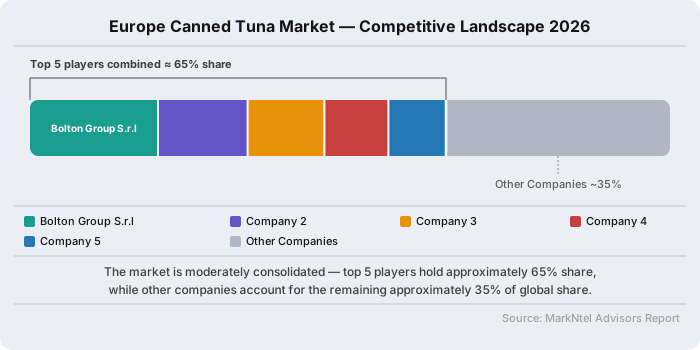
- The industry is moderately consolidated, with the top five companies collectively accounting for nearly 65% of the total market.
Europe Canned Tuna Market Size and Outlook
The canned tuna market in Europe was valued at USD 3.12 billion in 2025 and is projected to increase from USD 3.98 billion in 2026 to USD 7.29 billion by 2032, registering a CAGR of 10.61% during 2026–2032. Market expansion will be supported by rising consumer demand for convenient, protein-rich foods and continuous product innovation through advanced packaging and meal solutions. Increasing preference for shelf-stable seafood is expected to reinforce long-term consumption across European households.
Europe continues to maintain a strong manufacturing base supported by well-established seafood processing capabilities. According to INFOFISH, citing Eurostat Prodcom data, the European Union produces approximately 400,000 metric tons of canned tuna annually, representing nearly 35% of the EU's 1.14 million metric tons of prepared and preserved fishery products . Spain contributes around two-thirds of total canned tuna production, highlighting the region's leadership in food preservation technologies and industrial-scale seafood manufacturing.
Sustainability initiatives are expected to strengthen long-term market competitiveness by improving access to responsibly sourced raw materials. The Marine Stewardship Council (MSC) reported that 182 tuna fisheries worldwide were participating in its certification programme, including certified fisheries, those under assessment, and fisheries in improvement programmes as of 2025. The expanding supply of certified tuna supports retailer procurement strategies while increasing the availability of traceable seafood for processors serving European consumers.
Industry participants are also reinforcing future growth through certified product portfolios that address evolving retail and consumer expectations. Rio Mare achieved 100% MSC-certified sourcing for its canned and jarred tuna range in France and continues expanding certified offerings across European retail channels . Such initiatives are expected to strengthen consumer confidence, enhance product differentiation, and support sustainable growth prospects for the Europe canned tuna industry throughout the forecast period.
Europe Canned Tuna Market Key Indicators
- According to the European Market Observatory for Fisheries and Aquaculture Products (EUMOFA), EU household expenditure on fishery and aquaculture products reached EUR 62.8 billion in 2024, representing a 4% increase over the previous year despite lower overall seafood consumption volumes. The sustained rise in consumer spending highlights resilient demand for seafood products and strengthens the value proposition of canned tuna as an affordable, shelf-stable protein option amid elevated fresh seafood prices.
- The European Union's Council Regulation (EU) 2023/2720 introduced 31 autonomous tariff quotas for selected fishery products during 2024–2026, including a 0% import duty quota on tuna and skipjack loins for processing. These measures lower raw material procurement costs for European canneries, enhance processing competitiveness, and strengthen the region's position as a major value-added tuna processing hub.
- EUMOFA reports that the European Union's self-sufficiency rate for tuna, salmon, shrimp, Alaska pollock, and cod is only 9%, although these five species collectively account for approximately 44% of the EU's apparent seafood consumption . The indicator highlights Europe's structural dependence on imported raw materials, making canned tuna production and pricing closely linked to global tuna harvests, international trade flows, and overseas processing capacity.
- The tariff measures established under Council Regulation (EU) 2023/2720 remain applicable from 1 January 2024 through 31 December 2026, providing predictable access to essential fishery raw materials for European processors . The multi-year framework improves procurement planning, stabilizes manufacturing costs, and supports continuous canned tuna production across leading processing countries such as Spain, Italy, and France.
Europe Canned Tuna Market Scope
| Category | Segments |
|---|---|
| By Species | Skipjack, Yellowfin, Albacore, Bigeye, Bluefin, Others |
| By Product Type | Plain Canned Tuna, Flavored/Marinated Tuna, Tuna Meal Kits, Tuna Salads & Prepared Mixes |
| By Preservation Medium | In Water, In Oil, In Brine |
| By Form | Solid/Whole, Chunk, Flakes/Shredded, Fillets |
| By Packaging | Metal Cans, Flexible Pouches, Glass Jars, Vacuum Bags |
| By Distribution Channel | Supermarkets & Hypermarkets, Convenience Stores, Specialty Retail, Online Retail, Foodservice Distributors, Industrial/Processing Channels |
Europe Canned Tuna Market Growth Drivers
Rising Consumer Demand for Convenient, Protein-Rich Foods
The Europe canned tuna market is benefiting from growing consumer preference for convenient, nutritious meal options that fit increasingly busy lifestyles. Rising awareness of healthy eating has strengthened demand for protein-rich foods, with canned tuna offering a practical combination of high-quality protein, omega-3 fatty acids, affordability, and extended shelf life. According to the Food and Agriculture Organization (FAO), canned tuna remains one of the world's most widely consumed canned seafood products.
Consumer purchasing patterns across Europe further reinforce this demand. The European Market Observatory for Fisheries and Aquaculture Products (EUMOFA) reports that tuna was the most consumed fish species in the European Union, with apparent per capita consumption reaching 2,68 kg live weight equivalent, predominantly in canned form. Increasing preference for healthy convenience foods is encouraging households, students, and working professionals to choose ready-to-eat seafood products that require minimal preparation while supporting balanced diets.
Manufacturers are responding by expanding product portfolios with flavored, portion-controlled, and premium canned tuna offerings that align with evolving consumer preferences for nutritious, time-saving meal solutions. Wider availability across supermarkets, discount retailers, and online grocery platforms is further supporting product accessibility and repeat purchases. As health-conscious consumption and convenience continue to shape food choices, these factors are expected to remain a fundamental growth catalyst for the Europe canned tuna industry.
Recent Trends
Product Innovation Through Convenient Meal Solutions and Next-Generation Packaging
The Europe canned tuna industry is witnessing a growing trend toward innovative product formats that combine convenience, portability, and sustainability to meet evolving consumer preferences. Manufacturers are introducing value-added solutions that extend canned tuna beyond traditional consumption occasions, responding to rising demand for ready-to-eat seafood with enhanced functionality and ease of use. These innovations are strengthening product differentiation while expanding tuna's role in quick meal preparation across European households.
A notable example is Thai Union's launch of the seafood industry's first shelf-stable tuna product under its John West brand in July 2026. The new Stir & Serve range is available through Sainsbury's, Waitrose, Asda, and Ocado. The pouch delivers an 18-month shelf life, contains 42–46 grams of protein, offers four ready-to-eat flavors, and uses less than 7 grams of packaging per 300 grams of product, reflecting continued innovation in seafood packaging.
The adoption of recyclable mono-material packaging and convenient meal solutions illustrates how manufacturers are responding to changing consumption habits while supporting operational efficiency and product differentiation. Thai Union also announced that the technology will continue rolling out across its branded portfolio through 2026, with additional European launches planned thereafter. As brands increasingly invest in packaging innovation and convenience-led product development, these advancements are expected to remain a defining trend across the Europe canned tuna market.
Europe Canned Tuna Market Opportunities and Challenges
Rising Import Dependence Creates Pressure While Regional Processing Investments Unlock Growth
The canned tuna industry in Europe continues to face challenges from its dependence on imported tuna for processing. According to the EU Fish Market 2025, tuna imports into the European Union increased by 18% in volume and 8% in value during 2024, driven mainly by skipjack and yellowfin tuna . This reliance increases exposure to supply disruptions, price volatility, and changing trade conditions, affecting the resilience of seafood imports and exports.
Growing dependence on imported raw materials is encouraging processors to strengthen domestic value addition through diversified sourcing strategies and regional production capabilities. Expanding local facilities can reduce exposure to external market fluctuations while improving production flexibility, procurement efficiency, and supply continuity. Increased investment in modern seafood processing technologies also enables manufacturers to optimize operations, improve product quality, and respond more effectively to evolving market conditions and consumer demand.
The opportunity is reflected in strategic investments across Europe's processing industry. In April 2025, Spanish tuna producer Balfegó inaugurated an approximately USD 39.8 million processing complex in L'Ametlla de Mar, Spain. The 12,000-square-meter facility will double processing capacity while expanding value-added tuna production through advanced automation , strengthening regional competitiveness, and supporting the Europe canned tuna market over the forecast period.
Segmentation Insights
Skipjack Tuna Dominates Owing to Its Cost-Effectiveness and Strong Processing Suitability
Skipjack tuna is the dominant species in the canned tuna demand in Europe, contributing approximately 58% of the overall market volume. Its widespread availability, consistent supply, and cost-effectiveness make it the preferred raw material for canned tuna manufacturers. The species is extensively used in processed seafood applications, enabling producers to meet high-volume consumer demand while maintaining competitive pricing across both branded and private-label product portfolios.
The species is favored for its mild flavor, firm texture, and compatibility with multiple preservation methods, making it suitable for a broad range of canned tuna products. Its reliable year-round availability supports efficient production planning and stable procurement for processors. Compliance with stringent European food safety standards further enhances manufacturer confidence, ensuring consistent product quality and strengthening consumer trust across regional retail markets.
Skipjack tuna also offers significant processing efficiency, allowing manufacturers to optimize production costs while serving diverse consumer preferences through products packed in oil, water, and brine. Its versatility supports large-scale commercial operations and broad retail distribution across Europe. These advantages continue to reinforce Skipjack's leadership position, making it the preferred species. Based on species, the scope has been bifurcated into:
- Skipjack
- Yellowfin
- Albacore
- Bigeye
- Bluefin
- Others
Metal Cans Lead Owing to Superior Protection and Established Consumer Preference
Metal cans remain the dominant packaging format across the European tuna category, commanding approximately 88% of the overall market volume. Their ability to preserve freshness, maintain product quality, and extend shelf life makes them the preferred choice for manufacturers and retailers. Widespread adoption of metal cans supports efficient cold chain logistics by providing durable packaging that withstands transportation and long-term storage across extensive distribution networks.
Metal cans are widely preferred because they provide excellent barrier protection against moisture, oxygen, and light, ensuring consistent product integrity throughout storage and distribution. Their compatibility with high-temperature sterilization processes also supports stringent European food quality requirements and enhances product safety. These advantages have reinforced their leadership across both branded and private-label canned tuna portfolios, meeting diverse consumer preferences while ensuring reliable product performance.
Manufacturers continue investing in lightweight can designs, easy-open lids, and recyclable metal packaging to improve convenience and environmental performance without compromising durability. These packaging innovations help strengthen brand competitiveness while supporting evolving consumer buying behavior. As demand for convenient, long-lasting seafood products continues to grow, metal cans are expected to maintain their dominant position across the European canned tuna packaging landscape. The report evaluates the following packaging formats:
- Metal Cans
- Flexible Pouches
- Glass Jars
- Vacuum Bags
Europe Canned Tuna Market Geographical Outlook
Germany dominated the Europe canned tuna market with an estimated 16% share, supported by its strong seafood processing industry and substantial dependence on imported seafood. Since domestic fish production meets less than 20% of national demand, Germany relies heavily on imports to ensure a stable supply of processed seafood products, including canned tuna, through its well-developed food manufacturing and distribution network.
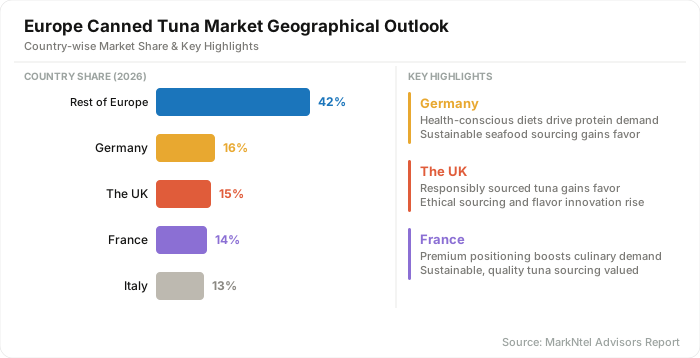
According to the German Federal Ministry of Food and Agriculture (BMEL), Germany's fish-processing industry supplies consumers with more than 1.1 million tonnes of fish and seafood annually. This extensive processing capacity enables manufacturers and retailers to efficiently produce, package, and distribute canned seafood products, meeting consistent demand from households, foodservice operators, and institutional buyers across the country
Furthermore, Germany's advanced retail infrastructure and integrated import supply chains ensure year-round availability of canned tuna sourced from leading exporting nations. Strong logistics capabilities, high food safety standards, and widespread supermarket penetration support efficient nationwide distribution, reinforcing Germany's position as the largest consumer market for canned tuna within Europe.
Europe Canned Tuna Market Competitive Analysis
The Europe canned tuna market is highly fragmented, with the top five companies collectively accounting for approximately 13% of the total market share. The industry comprises numerous regional processors, private-label manufacturers, seafood cooperatives, and local brands that compete alongside multinational players. Market fragmentation is driven by varying consumer preferences, strong retailer-owned brands, country-specific distribution networks, and abundant sourcing from major tuna-processing nations, resulting in intense competition and limited market concentration among leading participants.
Key Players in Europe Canned Tuna Industry
- Bolton Group S.r.l.
- Thai Union Group Public Company Limited
- Grupo Calvo
- Jealsa Corporación, S.A.
- Frinsa del Noroeste, S.A.
- Princes Group plc
- Conservas Ortiz, S.A.
- MW Brands
- Century Pacific Food, Inc.
- Dongwon Industries Co., Ltd.
- Nostromo S.p.A.
- Conservas Garavilla, S.L.
- Others
Europe Canned Tuna Industry News and Recent Developments
April 2026: Princes Launches Ocean Select MSC-Certified Yellowfin Tuna Steaks
Princes expanded its premium seafood portfolio by launching Ocean Select MSC-certified Yellowfin Tuna Steaks in the UK. Available exclusively through Tesco from 4 May 2026, the range includes Lemon & Herb, Chilli & Garlic, and Lightly Flavoured variants. The launch targets consumers seeking convenient, responsibly sourced, premium tuna products while strengthening Princes' presence in the growing value-added canned and ambient seafood segment.
Impact Analysis: The launch reinforces the industry's shift toward premium, convenient seafood products with certified sustainable sourcing. By combining MSC certification with flavored, ready-to-cook formats, Princes enhances product differentiation and addresses growing consumer demand for healthier meal solutions. The introduction also strengthens competition in Europe's premium tuna category, encouraging other manufacturers to expand innovative value-added portfolios while supporting retailer sustainability commitments and increasing the availability of certified seafood across mainstream grocery channels.
May 2025: Rio Mare Introduces Tuna Salad Pots in the UK
Bolton Group's Rio Mare launched a new range of tuna salad pots in the UK, marking the brand's entry into the ready-to-eat chilled convenience category. The range combines premium tuna with grains and vegetables in portable meal formats designed for on-the-go consumption. The launch reflects Rio Mare's strategy to diversify beyond traditional canned tuna by addressing rising demand for convenient, nutritionally balanced meal solutions.
Impact Analysis: The introduction of tuna salad pots expands competition beyond conventional canned formats by targeting the fast-growing convenience meal segment. This portfolio diversification enables Rio Mare to attract younger consumers and busy professionals seeking healthier ready-to-eat options. The launch is expected to encourage further innovation across Europe's tuna industry, prompting manufacturers to develop differentiated products with enhanced convenience, nutritional value, and premium positioning while broadening consumption occasions beyond pantry staples.
September 2025: Nauterra Expands Use of Tuna and Sardine Byproducts
Spanish seafood company Nauterra announced increased utilization of tuna and sardine byproducts to improve resource efficiency and reduce production waste across its seafood operations. The initiative supports circular economy objectives by converting processing byproducts into higher-value applications instead of disposal. The strategy aligns with broader industry efforts to enhance operational sustainability while maximizing raw material utilization throughout seafood processing activities.
Impact Analysis: Greater utilization of processing byproducts can improve production efficiency, reduce waste management costs, and strengthen environmental performance across the seafood value chain. The initiative demonstrates how processors are adopting circular economy practices to enhance resource productivity while responding to evolving sustainability expectations from retailers and consumers. Similar investments are likely to encourage wider adoption of resource-efficient processing technologies, improving long-term competitiveness and supporting more sustainable growth within Europe's canned tuna industry.
- Market Segmentation
- Introduction
- Product Definition
- Research Process
- Assumptions
- Executive Summary
- Europe Canned Tuna Market Import & Export Analysis
- Europe Canned Tuna Market Supply Chain Analysis
- Europe Canned Tuna Market Policies, Regulations, and Product Standards
- Europe Canned Tuna Production Trend 2022-2032
- Europe Canned Tuna Trend by Type of Product Type
- Plain Canned Tuna
- Flavored/Marinated Tuna
- Tuna Meal Kits
- Tuna Salads & Prepared Mixes
- Company Wise Production Plants and Statistics
- Installed Production Capacity
- Actual Production
- Planned Production Target
- Europe Canned Tuna Trend by Type of Product Type
- Europe Canned Tuna Pricing Analysis 2022-2032
- Europe Canned Tuna Pricing Trend 2022-2032
- Europe Canned Tuna Pricing Trend by Product Type 2022-2032
- Plain Canned Tuna
- Flavored/Marinated Tuna
- Tuna Meal Kits
- Tuna Salads & Prepared Mixes
- Europe Canned Tuna Market Dynamics
- Growth Factors
- Challenges
- Europe Canned Tuna Market Hotspot & Opportunities
- Europe Canned Tuna Market Outlook, 2022-2032
- Market Size & Outlook
- By Revenues (USD Million)
- By Quantity Sold (Thousand Tons)
- Market Share & Outlook
- By Species- Market Size & Forecast 2022-2032, USD Million & Thousand Tons
- Skipjack
- Yellowfin
- Albacore
- Bigeye
- Bluefin
- Others
- By Product Type- Market Size & Forecast 2022-2032, USD Million & Thousand Tons
- Plain Canned Tuna
- Flavored/Marinated Tuna
- Tuna Meal Kits
- Tuna Salads & Prepared Mixes
- By Preservation Medium- Market Size & Forecast 2022-2032, USD Million & Thousand Tons
- In Water
- In Oil
- In Brine
- By Form- Market Size & Forecast 2022-2032, USD Million & Thousand Tons
- Solid/Whole
- Chunk
- Flakes/Shredded
- Fillets
- By Packaging- Market Size & Forecast 2022-2032, USD Million & Thousand Tons
- Metal Cans
- Flexible Pouches
- Glass Jars
- Vacuum Bags
- By Distribution Channel- Market Size & Forecast 2022-2032, USD Million & Thousand Tons
- Supermarkets & Hypermarkets
- Convenience Stores
- Specialty Retail
- Online Retail
- Foodservice Distributors
- Industrial/Processing Channels
- By Country
- The UK
- Germany
- France
- Italy
- Spain
- Benelux
- Rest of Europe
- By Company
- Competition Characteristics
- Market Share & Analysis
- By Species- Market Size & Forecast 2022-2032, USD Million & Thousand Tons
- Market Size & Outlook
- The UK Canned Tuna Market Outlook, 2022-2032
- Market Size & Outlook
- By Revenues (USD Million)
- By Quantity Sold (Thousand Tons)
- Market Segmentation & Outlook
- By Species- Market Size & Forecast 2022-2032, USD Million & Thousand Tons
- By Product Type- Market Size & Forecast 2022-2032, USD Million & Thousand Tons
- By Preservation Medium- Market Size & Forecast 2022-2032, USD Million & Thousand Tons
- By Form- Market Size & Forecast 2022-2032, USD Million & Thousand Tons
- By Packaging- Market Size & Forecast 2022-2032, USD Million & Thousand Tons
- By Distribution Channel- Market Size & Forecast 2022-2032, USD Million & Thousand Tons
- Market Size & Outlook
- Germany Canned Tuna Market Outlook, 2022-2032
- Market Size & Outlook
- By Revenues (USD Million)
- By Quantity Sold (Thousand Tons)
- Market Segmentation & Outlook
- By Species- Market Size & Forecast 2022-2032, USD Million & Thousand Tons
- By Product Type- Market Size & Forecast 2022-2032, USD Million & Thousand Tons
- By Preservation Medium- Market Size & Forecast 2022-2032, USD Million & Thousand Tons
- By Form- Market Size & Forecast 2022-2032, USD Million & Thousand Tons
- By Packaging- Market Size & Forecast 2022-2032, USD Million & Thousand Tons
- By Distribution Channel- Market Size & Forecast 2022-2032, USD Million & Thousand Tons
- Market Size & Outlook
- France Canned Tuna Market Outlook, 2022-2032
- Market Size & Outlook
- By Revenues (USD Million)
- By Quantity Sold (Thousand Tons)
- Market Segmentation & Outlook
- By Species- Market Size & Forecast 2022-2032, USD Million & Thousand Tons
- By Product Type- Market Size & Forecast 2022-2032, USD Million & Thousand Tons
- By Preservation Medium- Market Size & Forecast 2022-2032, USD Million & Thousand Tons
- By Form- Market Size & Forecast 2022-2032, USD Million & Thousand Tons
- By Packaging- Market Size & Forecast 2022-2032, USD Million & Thousand Tons
- By Distribution Channel- Market Size & Forecast 2022-2032, USD Million & Thousand Tons
- Market Size & Outlook
- Italy Canned Tuna Market Outlook, 2022-2032
- Market Size & Outlook
- By Revenues (USD Million)
- By Quantity Sold (Thousand Tons)
- Market Segmentation & Outlook
- By Species- Market Size & Forecast 2022-2032, USD Million & Thousand Tons
- By Product Type- Market Size & Forecast 2022-2032, USD Million & Thousand Tons
- By Preservation Medium- Market Size & Forecast 2022-2032, USD Million & Thousand Tons
- By Form- Market Size & Forecast 2022-2032, USD Million & Thousand Tons
- By Packaging- Market Size & Forecast 2022-2032, USD Million & Thousand Tons
- By Distribution Channel- Market Size & Forecast 2022-2032, USD Million & Thousand Tons
- Market Size & Outlook
- Spain Canned Tuna Market Outlook, 2022-2032
- Market Size & Outlook
- By Revenues (USD Million)
- By Quantity Sold (Thousand Tons)
- Market Segmentation & Outlook
- By Species- Market Size & Forecast 2022-2032, USD Million & Thousand Tons
- By Product Type- Market Size & Forecast 2022-2032, USD Million & Thousand Tons
- By Preservation Medium- Market Size & Forecast 2022-2032, USD Million & Thousand Tons
- By Form- Market Size & Forecast 2022-2032, USD Million & Thousand Tons
- By Packaging- Market Size & Forecast 2022-2032, USD Million & Thousand Tons
- By Distribution Channel- Market Size & Forecast 2022-2032, USD Million & Thousand Tons
- Market Size & Outlook
- Benelux Canned Tuna Market Outlook, 2022-2032
- Market Size & Outlook
- By Revenues (USD Million)
- By Quantity Sold (Thousand Tons)
- Market Segmentation & Outlook
- By Species- Market Size & Forecast 2022-2032, USD Million & Thousand Tons
- By Product Type- Market Size & Forecast 2022-2032, USD Million & Thousand Tons
- By Preservation Medium- Market Size & Forecast 2022-2032, USD Million & Thousand Tons
- By Form- Market Size & Forecast 2022-2032, USD Million & Thousand Tons
- By Packaging- Market Size & Forecast 2022-2032, USD Million & Thousand Tons
- By Distribution Channel- Market Size & Forecast 2022-2032, USD Million & Thousand Tons
- Market Size & Outlook
- Europe Canned Tuna Market Key Strategic Imperatives for Success & Growth
- Competitive Outlook
- Company Profiles
- Bolton Group S.r.l.
- Business Description
- Product Portfolio
- Collaborations & Alliances
- Recent Developments
- Financial Details
- Others
- Thai Union Group Public Company Limited
- Business Description
- Product Portfolio
- Collaborations & Alliances
- Recent Developments
- Financial Details
- Others
- Grupo Calvo
- Business Description
- Product Portfolio
- Collaborations & Alliances
- Recent Developments
- Financial Details
- Others
- Jealsa Corporación, S.A.
- Business Description
- Product Portfolio
- Collaborations & Alliances
- Recent Developments
- Financial Details
- Others
- Frinsa del Noroeste, S.A.
- Business Description
- Product Portfolio
- Collaborations & Alliances
- Recent Developments
- Financial Details
- Others
- Princes Group plc
- Business Description
- Product Portfolio
- Collaborations & Alliances
- Recent Developments
- Financial Details
- Others
- Conservas Ortiz, S.A.
- Business Description
- Product Portfolio
- Collaborations & Alliances
- Recent Developments
- Financial Details
- Others
- MW Brands
- Business Description
- Product Portfolio
- Collaborations & Alliances
- Recent Developments
- Financial Details
- Others
- Century Pacific Food, Inc.
- Business Description
- Product Portfolio
- Collaborations & Alliances
- Recent Developments
- Financial Details
- Others
- Dongwon Industries Co., Ltd.
- Business Description
- Product Portfolio
- Collaborations & Alliances
- Recent Developments
- Financial Details
- Others
- Nostromo S.p.A.
- Business Description
- Product Portfolio
- Collaborations & Alliances
- Recent Developments
- Financial Details
- Others
- Conservas Garavilla, S.L.
- Business Description
- Product Portfolio
- Collaborations & Alliances
- Recent Developments
- Financial Details
- Others
- Others
- Bolton Group S.r.l.
- Company Profiles
- Disclaimer

MarkNtel Advisors follows a robust and iterative research methodology designed to ensure maximum accuracy and minimize deviation in market estimates and forecasts. Our approach combines both bottom-up and top-down techniques to effectively segment and quantify various aspects of the market. A consistent feature across all our research reports is data triangulation, which examines the market from three distinct perspectives to validate findings. Key components of our research process include:
1. Scope & Research Design At the outset, MarkNtel Advisors define the research objectives and formulate pertinent questions. This phase involves determining the type of research—qualitative or quantitative—and designing a methodology that outlines data collection methods, target demographics, and analytical tools. They also establish timelines and budgets to ensure the research aligns with client goals.
2. Sample Selection and Data Collection In this stage, the firm identifies the target audience and determines the appropriate sample size to ensure representativeness. They employ various sampling methods, such as random or stratified sampling, based on the research objectives. Data collection is carried out using tools like surveys, interviews, and observations, ensuring the gathered data is reliable and relevant.
3. Data Analysis and Validation Once data is collected, MarkNtel Advisors undertake a rigorous analysis process. This includes cleaning the data to remove inconsistencies, employing statistical software for quantitative analysis, and thematic analysis for qualitative data. Validation steps are taken to ensure the accuracy and reliability of the findings, minimizing biases and errors.

4. Data Forecast and FinalizationThe final phase involves forecasting future market trends based on the analyzed data. MarkNtel Advisors utilize predictive modeling and time series analysis to anticipate market behaviors. The insights are then compiled into comprehensive reports, featuring visual aids like charts and graphs, and include strategic recommendations to inform client decision-making
FILL THE FORM TO GET THE FREE SAMPLE PAGES
We offer flexible licensing options to cater to varying organizational needs. Choose the pricing pack that best suits your requirements:
Buy Now Inquire Before Buying
 Talk to our Consultant
 Request Customization