

By Product Type (Concrete Admixtures (Plasticizers, Superplasticizers, Accelerators, Retarders, Air-Entraining Admixtures, Shrinkage-Reducing Admixtures, Viscosity Modifying Admixt......ures), Waterproofing Chemicals (Cementitious Waterproofing, Liquid Waterproofing Membranes, Bituminous Waterproofing, Polyurethane Waterproofing, Acrylic Waterproofing), Adhesives (Epoxy Adhesives, Polyurethane Adhesives, Acrylic Adhesives, Cement-Based Adhesives), Sealants (Silicone Sealants, Polyurethane Sealants, Acrylic Sealants, Epoxy Sealants), Protective Coatings (Epoxy Coatings, Polyurethane Coatings, Acrylic Coatings, Cementitious Coatings), Flooring Compounds (Epoxy Flooring, Polyurethane Flooring, Self-Leveling Compounds, Decorative Flooring Systems), Repair & Rehabilitation Chemicals (Repair Mortars, Injection Grouts, Micro-Concrete, Rebar Protection Systems, Crack Repair Systems), Anchors and Grouts, Surface Treatment Chemicals (Curing Compounds, Mold Release Agents, Surface Hardeners, Concrete Densifiers)), By End-Use (Residential, Commercial, Industrial, Infrastructure, Institutional), By Application (Concrete, Masonry, Roads & Bridges, Tunnels, Marine Structures, Underground Construction), and others Read more
- Chemicals
- Apr 2026
- 435
- PDF, Excel, PPT
Global Construction Chemicals Market Key Takeaways
- The Construction Chemicals market size was valued at USD 67.61 billion in 2025 and is projected to grow from USD 74.37 billion in 2026 to USD 91.34 billion by 2032, exhibiting a CAGR of around 3.48% during the forecast period, i.e., 2026–2032.
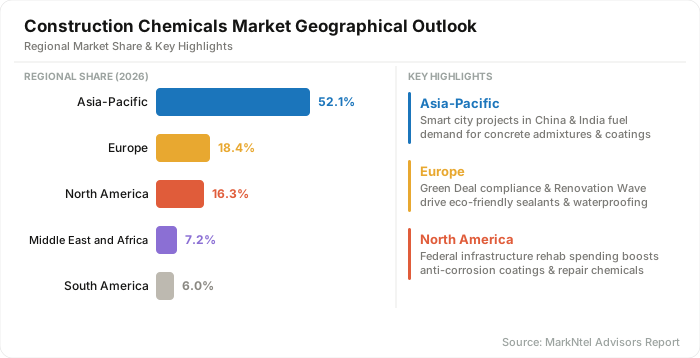
- Asia-Pacific accounts for approximately 52.1% of global construction chemicals revenue, supported by the region's position as the world's largest construction output base, concentrated in China, India, and Southeast Asia.
- Concrete admixtures represent the leading product type segment with approximately 46% of total market volume, anchored by mandatory workability and durability requirements across large-scale infrastructure, residential, and commercial concrete construction globally.
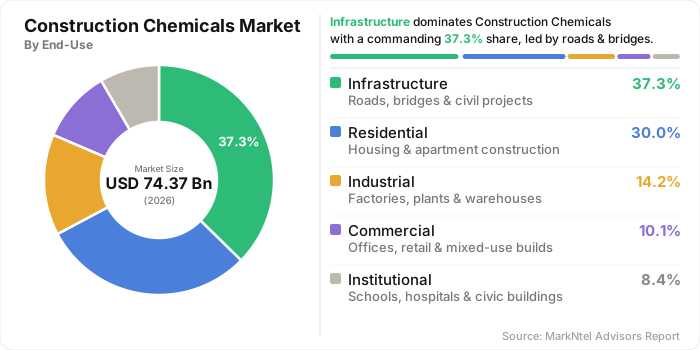
- Infrastructure accounts for approximately 37.3% of total end-use demand, driven by government-mandated investment in transport, water, and energy infrastructure across Asia-Pacific, the Middle East, and North America.
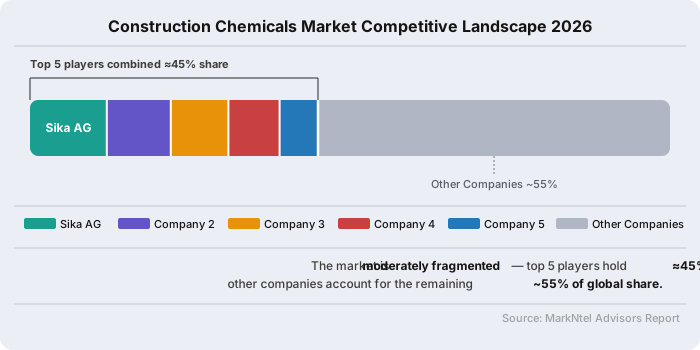
- The market is moderately consolidated, with 16 major companies operating across product categories that span concrete admixtures, waterproofing chemicals, adhesives, sealants, protective coatings, flooring compounds, repair and rehabilitation chemicals, and surface treatment chemicals.
Global Construction Chemicals Market Size and Outlook
The Construction Chemicals market size was valued at USD 67.61 billion in 2025 and is projected to grow from USD 74.37 billion in 2026 to USD 91.34 billion by 2032. Along with this, the market is estimated to grow at a CAGR of around 3.48% during the forecast period, i.e., 2026-32.
Economic and demographic trends underpinning this outlook include rising global urbanization, particularly in regions with expanding metropolitan populations requiring resilient building materials, as well as fast‑growing residential construction in emerging markets. Concrete admixtures, which facilitate improved workability and lifecycle performance, remain the cornerstone of construction chemical usage. This product orientation mirrors broader shifts in infrastructure frameworks toward durable, low‑maintenance assets.
Public policy commitments in major economies are reinforcing market demand with infrastructure‑led growth strategies and elevated capital expenditure allocations. For example, India’s federal government earmarked a record USD 133 billion in infrastructure spending for fiscal 2026–27, aiming to accelerate transport networks and urban development that indirectly stimulate construction chemical consumption across bridges, roads, and transit projects.
In parallel, regulatory initiatives in the European Union have introduced revised reporting requirements for construction product environmental performance, mandating lifecycle indicators that increase transparency in building materials and effectively raise performance expectations for chemical formulations used in coatings, sealants, and admixtures . These policy frameworks strengthen the case for advanced, high‑performance products that deliver measurable durability and sustainability outcomes.
Industry responses to market conditions include strategic investment and technological innovation by major chemical manufacturers, who are focusing on sustainability and efficiency gains.
Advanced formulations such as self‑healing concrete additives and smart admixtures are gaining traction in high‑performance applications, enabling longer asset lifespans and reduced maintenance costs in challenging environments. Commercial construction segments are also influencing product development priorities, as demand grows for solutions that improve fire resistance, moisture control, and structural integrity in mixed‑use developments and institutional buildings. As a result, construction chemicals are increasingly specified in commercial contract standards, raising overall material quality and market engagement.
Global Construction Chemicals Market Scope
| Category | Segments |
|---|---|
| By Product Type | (Concrete Admixtures (Plasticizers, Superplasticizers, Accelerators, Retarders, Air-Entraining Admixtures, Shrinkage-Reducing Admixtures, Viscosity Modifying Admixtures), Waterproofing Chemicals (Cementitious Waterproofing, Liquid Waterproofing Membranes, Bituminous Waterproofing, Polyurethane Waterproofing, Acrylic Waterproofing), Adhesives (Epoxy Adhesives, Polyurethane Adhesives, Acrylic Adhesives, Cement-Based Adhesives), Sealants (Silicone Sealants, Polyurethane Sealants, Acrylic Sealants, Epoxy Sealants), Protective Coatings (Epoxy Coatings, Polyurethane Coatings, Acrylic Coatings, Cementitious Coatings), Flooring Compounds (Epoxy Flooring, Polyurethane Flooring, Self-Leveling Compounds, Decorative Flooring Systems), Repair & Rehabilitation Chemicals (Repair Mortars, Injection Grouts, Micro-Concrete, Rebar Protection Systems, Crack Repair Systems), Anchors and Grouts, Surface Treatment Chemicals (Curing Compounds, Mold Release Agents, Surface Hardeners, Concrete Densifiers)), |
| By End-Use | (Residential, Commercial, Industrial, Infrastructure, Institutional), |
| By Application | (Concrete, Masonry, Roads & Bridges, Tunnels, Marine Structures, Underground Construction), |
Global Construction Chemicals Market Growth Drivers
Rising Global Adoption of High-Performance Concrete (HPC) Driving Structural Demand for Advanced Admixtures
The accelerated global adoption of high‑performance concrete (HPC), characterized by engineered mixes with enhanced strength, durability, and workability beyond conventional concrete, has become the most significant structural driver, widening demand for advanced admixture formulations across commercial and industrial construction. Unlike traditional concrete, HPC requires precisely tailored chemical admixtures such as high‑range water reducers (superplasticizers), viscosity modifiers, and durability enhancers to achieve the low water‑to‑cement ratios and uniform performance mandated by modern design standards and complex project requirements.
This shift is not anecdotal: global construction chemicals data indicate growing reliance on sophisticated admixtures to meet performance objectives, as HPC and related advanced concrete systems transition from niche to mainstream use in critical infrastructure, high‑rise, and industrial facilities.
Over recent years, the intensification of HPC adoption has been driven by both performance expectations and regulatory frameworks that implicitly require advanced mixes, evidenced by international standards that define HPC based on parameters like low permeability, high compressive strength, and superior durability, which conventional materials cannot satisfy without chemical admixtures.
Concrete meeting these criteria typically achieves strength classes well above 40 MPa and incorporates high‑efficiency admixtures to ensure workability and uniformity, especially in challenging placements like high‑rise cores or infrastructural slabs. Real project instances such as long‑span bridges and metro infrastructure show HPC usage where durability and service life are non‑negotiables, implicitly mandating advanced admixture use to achieve design performance.
This driver materially expands the construction chemicals sector volume rather than merely influencing pricing or short‑term uptake because HPC is inherently admixture‑intensive: each cubic meter of HPC concrete requires significantly more specialized chemical input than conventional mixes for strength gain, slump control, and durability.
As commercial and industrial building codes continue to prioritize lifecycle performance, climate resilience, and constructability, the baseline requirement for admixture‑enhanced concrete becomes embedded in project specifications worldwide, structurally enlarging the addressable market for advanced admixtures rather than creating momentary trend‑based demand spikes.
Recent Trends
Shift Toward Precision & Factory-Optimized Construction Chemicals
Prefabricated and modular construction methods in which structural elements, including wall panels, floor slabs, staircase units, and facade systems, are manufactured in controlled factory environments and assembled on-site, are generating a directional shift in construction chemicals demand from bulk site-applied formulations toward precision-dosed, factory-optimized adhesive, sealant, and admixture systems with tighter performance tolerances than conventional site-batched products.
Precast concrete manufacturers who produce structural elements under ISO 9001-certified quality management systems specify superplasticizers, accelerators, and retarders to precise tolerances required for consistent demold strength, surface finish quality, and dimensional accuracy, generating repeat-purchase demand for performance-consistent admixture formulations that differ from the contractor-discretionary dosing patterns of site-applied concrete. For example, in 2025, Technopark in Thiruvananthapuram initiated construction of its first prefabricated building spanning 50,000 sq ft, where structural components are manufactured off‑site and assembled on location to improve efficiency and support sustainable development goals.
This shift has material implications for construction chemical demand because factory‑based production typically specifies precise, performance‑consistent admixture formulations (e.g., superplasticizers, retarders, accelerators) integrated into controlled batching processes, unlike site‑mixed concrete, where dosing may vary with field conditions.
As modular adoption increases, demand increasingly shifts toward these pre‑specified chemical inputs that enable consistent performance, repeatability, and compliance within factory quality systems. The controlled environment of prefabrication also enables tighter quality tolerances, reduced variability, and optimized material performance, reinforcing structured chemical consumption tied to factory precision rather than discretionary on‑site application patterns. For example, A series of large‑scale modular hotel developments in Papua New Guinea progressed in late 2025 with modules produced in factory settings before on‑site assembly, showing broader commercial adoption of modular methods beyond housing alone.
Opportunities and Challenges
Petrochemical Feedstock Price Volatility Leading to Bio-Based & Recycled-Content Formulation Development
Construction chemicals manufacturers face structural exposure to petrochemical raw material price volatility because the majority of high-performance formulations including polyurethane waterproofing membranes, epoxy coatings, polyurethane sealants, and superplasticizer polymers depend on methylene diphenyl diisocyanate (MDI), toluene diisocyanate (TDI), bisphenol A (BPA), and polycarboxylate ether (PCE) monomers, all of which derive directly from crude oil and natural gas feedstock chains.
BPA, the primary feedstock for epoxy resin systems used in epoxy coatings, epoxy adhesives, and epoxy flooring, experienced price volatility of USD 1,320 per metric ton, up from earlier quarters, as demand from automotive and electronics sectors put upward pressure , illustrating volatility within the year. forcing epoxy-based construction chemicals manufacturers to absorb partial cost increases or reformulate products toward lower-BPA-content epoxy systems to manage raw material exposure.
The same feedstock price volatility that constrains margins simultaneously creates a commercially viable opening for bio-based and recycled-content construction chemical formulations, for instance, Arkema's development of Rilsan-based polyamide construction adhesives derived from castor oil, a bio-renewable feedstock, and its Pebax elastomer platform for waterproofing membrane applications represents active commercial deployment of bio-based chemistry in construction chemicals, with Arkema reporting bio-based formulations generating approximately 10.36 billion in annual revenue across adhesives, coatings, and construction applications by 2024 .
The strategic resolution of the feedstock challenge lies in portfolio bifurcation: maintaining petrochemical-derived formulations for price-sensitive emerging markets where green certification carries no procurement premium, while developing bio-based and recycled-content alternatives for premium-specification markets in Europe, North America, and Japan, where EPD requirements and green building certification create a price premium for sustainable chemistry. Manufacturers that execute this bifurcation successfully will convert feedstock volatility from a structural margin threat into a competitive sorting mechanism that rewards formulation breadth and raw material supply chain diversification across the 2026–2032 forecast period.
Segmentation Insights
Concrete Admixtures is the Most Preferred Product Type
Concrete admixtures account for approximately 46% of the total global construction chemicals sector volume, a dominance established by the universal requirement for workability, strength, and durability enhancement across every category of concrete construction from mass infrastructure pours to residential slab-on-grade applications, where admixture dosing is specified at the mix design stage rather than applied as a discretionary upgrade.
Superplasticizers particularly polycarboxylate ether (PCE)-based formulations constitute the highest-volume admixture sub-category, enabling water reduction of 40% per cubic meter of concrete while maintaining full workability, a performance characteristic that no non-chemical process can replicate and that is structurally mandated in reinforced concrete design under ACI 318, Eurocode 2, and IS 456 standards governing structural concrete in the United States, Europe, and India respectively.
The emerging-market penetration gap represents the most significant volume expansion opportunity within the admixtures sub-category through 2032. Accelerators and retarders address time-critical concrete placement requirements in precast manufacturing and hot-climate construction, respectively, with retarder consumption particularly elevated across Gulf Cooperation Council (GCC) construction markets where ambient temperatures above 40°C require extended workability windows to prevent premature hydration during transportation and placement.
Air-entraining admixtures and shrinkage-reducing admixtures (SRAs) address climate-specific durability requirements that expand admixture consumption beyond workability and strength into long-term structural performance categories.
SRAs, which reduce autogenous and drying shrinkage in high-performance and ultra-high-performance concrete (UHPC) by 30–50% compared with untreated mixes, are the fastest-growing admixture sub-category by value, driven by UHPC specification penetration in long-span bridge and high-rise structural applications. Viscosity-modifying admixtures (VMAs) are experiencing above-average demand growth in self-compacting concrete applications across Asia-Pacific's high-rise construction sector, where SCC specification eliminates vibration-compaction labour requirements and improves surface finish quality in architectural concrete elements. The admixtures category's combination of high penetration in mature markets and rising penetration in emerging markets establishes a dual-engine volume growth dynamic that sustains above-CAGR performance within the construction chemicals sector. Thus, the construction chemicals industry is divided into the following sub-categories:
- Concrete Admixtures
- Waterproofing Chemicals
- Adhesives
- Sealants
- Protective Coatings
- Flooring Compounds
- Repair & Rehabilitation Chemicals
- Anchors and Grouts
- Surface Treatment Chemicals
Infrastructure Sector is the Primary End-User
Roads, bridges, tunnels, dams, ports, and water treatment facilities collectively consume the highest chemical loading per unit of constructed volume across all end-use categories because exposure to traffic loading, moisture ingress, chemical attack, and thermal cycling requires mandatory application of concrete admixtures, protective coatings, waterproofing systems, repair mortars, and anchor grouts at construction stage and at periodic rehabilitation intervals throughout the structure's service life.
China’s 14th Five-Year Plan (2021–2025) prioritizes large-scale infrastructure development as a core driver of economic growth, particularly across transportation networks. According to official government data, transport infrastructure investment reached approximately 15.2 trillion yuan between 2021 and 2024. During this time, China expanded its railway network by roughly 16,000 km and added about 290,000 km of highways, reinforcing its position as the world’s largest transportation infrastructure market. This scale of development creates substantial demand for construction chemicals, including concrete admixtures, waterproofing systems , and durability-enhancing materials used across highways, bridges, tunnels, and rail systems.
The Residential end-use segment, the second-largest category, generates consistent demand for waterproofing chemicals, tile adhesives, and flooring compounds across new housing construction and renovation activity in the Asia-Pacific, where urbanization is driving apartment tower construction at scale. Institutional construction, including hospitals, schools, and government buildings, generates specification-grade demand for flooring compounds, protective coatings, and low-VOC adhesives, driven by indoor air quality standards under LEED and equivalent national certification frameworks.
Industrial end-use covering manufacturing facilities, food processing plants, and chemical storage facilities generates the highest unit-value chemical consumption per square meter of floor area, with industrial epoxy and polyurethane flooring systems, chemical-resistant coatings, and secondary containment waterproofing systems constituting high-margin product categories for manufacturers with application engineering capabilities.
The infrastructure segment's combination of government-mandated investment programmes, non-deferrable rehabilitation requirements, and high chemical specification intensity per unit of construction output positions it as the structurally most reliable end-use demand source for construction chemicals through 2032. Thus, the market is further classified into the following Sub-categories:
- Infrastructure
- Residential
- Commercial
- Industrial
- Institutional
Global Construction Chemicals Industry Geographical Outlook
Asia-Pacific accounts for approximately 52.1% of the global construction chemicals domain revenue, the largest regional share by a substantial margin, underpinned by the region's position as the world's dominant construction output zone, where China, India, and Southeast Asian economies simultaneously sustain new construction and infrastructure development at a scale unmatched across any other geographic region.
According to the Asian Development Bank (ADB), Asia-Pacific requires approximately USD 26 trillion in infrastructure investment between 2016 and 2030 to sustain growth and respond to climate change, a demand mandate that establishes the region's structural dominance in construction chemicals consumption for the full forecast period, regardless of cyclical variations in private construction activity. India's construction output exceeded USD 640 billion in 2024, making India the world's third-largest construction market, establishing a conversion opportunity that no other major market offers at an equivalent scale.
Japan and South Korea sustain construction chemicals demand through aging infrastructure rehabilitation programmes rather than new construction growth: Japan’s Ministry of Land, Infrastructure, Transport and Tourism highlights that a significant portion of the country’s infrastructure particularly bridges, tunnels, and roads was constructed during the 1960s–1970s high-growth period and is now simultaneously aging, creating a large-scale and unavoidable rehabilitation requirement.
Official estimates suggest that infrastructure renewal needs could reach approximately USD 81 billion annually if full replacement is pursued, underscoring a sustained and structurally mandated demand for repair materials, maintenance technologies, and construction chemicals across transport and civil infrastructure systems, creating durable demand for repair mortars, rebar protection systems, injection grouts, and crack repair chemicals.
Vietnam and Indonesia are experiencing above-average construction chemicals demand growth as foreign direct investment into manufacturing facilities, logistics parks, and tourist resort infrastructure accelerates under ASEAN industrial development programmes.
Global Construction Chemicals Market Competitive Landscape
The construction chemicals sector is moderately consolidated, with 16 major companies operating across product categories that span concrete admixtures, waterproofing chemicals, adhesives, sealants, protective coatings, flooring compounds, repair and rehabilitation chemicals, and surface treatment chemicals. The top 5 players, Sika AG, BASF SE, MAPEI S.p.A., RPM International Inc., and Saint-Gobain, collectively account for 45% of global market revenue.
Major Market Players
- Sika AG
- BASF SE
- MAPEI S.p.A.
- RPM International Inc.
- Saint-Gobain
- Henkel AG & Co. KGaA
- Dow Inc.
- Arkema
- MBCC Group
- W. R. Grace and Company
- GCP Applied Technologies
- Chryso
- Fosroc
- Bostik
- Pidilite Industries
- Oriental Yuhong
Global Construction Chemicals Industry News and Recent Developments
2026: Saint-Gobain strengthens its presence in construction chemicals in Indonesia
Saint-Gobain has expanded its construction chemicals business in Indonesia by forming a partnership with a local cement company. Through this deal, it gains access to an existing mortars (construction chemicals used for finishing and bonding) business, along with local production facilities and a strong distribution network. This helps Saint-Gobain sell more products like tile adhesives, wall finishing materials, and construction mortars in Indonesia, which is a fast-growing construction market.
Impact Analysis: This move helps Saint-Gobain grow faster in Indonesia because it now has local production and a strong distribution network. Instead of importing products, the company can supply materials faster and at lower cost, which is important for contractors. It also allows Saint-Gobain to offer a wider range of construction chemical products together, making it more competitive against companies like Sika AG and MAPEI S.p.A. Overall, this strengthens its position in a high-growth market and increases its chances of gaining more market share in Southeast Asia.
2025: Sika AG Expands Manufacturing Footprint Across Sub-Saharan Africa Through Local Production Investments
Sika AG has expanded its presence in Sub-Saharan Africa through the establishment and scaling of local subsidiaries and manufacturing facilities across key markets, including Nigeria, the Ivory Coast, Ghana, and Tanzania. The company has invested in regional production capacity to localize the manufacturing of construction chemicals such as concrete admixtures, waterproofing systems, and repair solutions, reducing reliance on imports and third-party distribution channels.
Sika’s Africa strategy focuses on building proximity to end-markets, enabling faster delivery timelines and improved technical support for contractors. The expansion of local production infrastructure strengthens Sika’s ability to supply large-scale infrastructure and urban development projects, particularly in high-growth economies where construction demand is accelerating.
Impact Analysis: The expansion enhances Sika AG’s supply chain efficiency and direct market access across Sub-Saharan Africa, a region experiencing sustained infrastructure investment and urbanization. By establishing local manufacturing, Sika reduces logistics costs, import dependency, and lead times, which are critical in contractor procurement decisions.
This localized presence provides Sika with a competitive advantage over companies operating through import-based or distributor-led models, particularly in markets where infrastructure development is being driven by national programs such as the South Africa National Development Plan and Kenya's Big Four Agenda.
Competitors without regional production facilities face structurally higher costs and slower responsiveness, reinforcing Sika’s positioning in supplying high-volume product categories such as concrete admixtures and waterproofing chemicals.
- Market Segmentation
- Introduction
- Product Definition
- Research Process
- Assumptions
- Executive Summary
- Global Construction Chemicals Market Policies, Regulations, and Product Standards
- Global Construction Chemicals Market Trends & Developments
- Global Construction Chemicals Market Pricing Analysis, 2026
- Chemical Wise Global Price (Per Ton), 2022-2032
- Concrete Admixtures
- Waterproofing Chemicals
- Adhesives
- Sealants
- Protective Coatings
- Flooring Compounds
- Repair & Rehabilitation Chemicals
- Anchors and Grouts
- Surface Treatment Compounds
- Chemical Wise Global Price (Per Ton), 2022-2032
- Global Construction Chemicals Market Dynamics
- Growth Factors
- Challenges
- Global Construction Chemicals Market Hotspot & Opportunities
- Global Construction Chemicals Market Outlook, 2022-2032F
- Market Size & Outlook
- By Revenues (USD Million)
- By Volume (Million Tons)
- Market Share & Analysis
- By Product Type- Market Size & Forecast 2022-2032, USD Million & Million Tons
- Concrete Admixtures
- Plasticizers
- Superplasticizers
- Accelerators
- Retarders
- Air-Entraining Admixtures
- Shrinkage-Reducing Admixtures
- Viscosity Modifying Admixtures
- Waterproofing Chemicals
- Cementitious Waterproofing
- Liquid Waterproofing Membranes
- Bituminous Waterproofing
- Polyurethane Waterproofing
- Acrylic Waterproofing
- Adhesives
- Epoxy Adhesives
- Polyurethane Adhesives
- Acrylic Adhesives
- Cement-Based Adhesives
- Sealants
- Silicone Sealants
- Polyurethane Sealants
- Acrylic Sealants
- Epoxy Sealants
- Protective Coatings
- Epoxy Coatings
- Polyurethane Coatings
- Acrylic Coatings
- Cementitious Coatings
- Flooring Compounds
- Epoxy Flooring
- Polyurethane Flooring
- Self-Leveling Compounds
- Decorative Flooring Systems
- Repair & Rehabilitation Chemicals
- Repair Mortars
- Injection Grouts
- Micro-Concrete
- Rebar Protection Systems
- Crack Repair Systems
- Anchors and Grouts
- Surface Treatment Chemicals
- Curing Compounds
- Mold Release Agents
- Surface Hardeners
- Concrete Densifiers
- Concrete Admixtures
- By End-Use- Market Size & Forecast 2022-2032, USD Million & Million Tons
- Residential
- Commercial
- Industrial
- Infrastructure
- Institutional
- By Application- Market Size & Forecast 2022-2032, USD Million & Million Tons
- Concrete
- Masonry
- Roads & Bridges
- Tunnels
- Marine Structures
- Underground Construction
- By Region
- North America
- South America
- Europe
- The Middle East & Africa
- Asia-Pacific
- By Company
- Competition Characteristics
- Market Share & Analysis
- By Product Type- Market Size & Forecast 2022-2032, USD Million & Million Tons
- Market Size & Outlook
- North America Construction Chemicals Market Outlook, 2022-2032F
- Market Size & Outlook
- By Revenues (USD Million)
- By Volume (Million Tons)
- Market Share & Analysis
- By Product Type- Market Size & Forecast 2022-2032, USD Million & Million Tons
- By End-Use- Market Size & Forecast 2022-2032, USD Million & Million Tons
- By Application- Market Size & Forecast 2022-2032, USD Million & Million Tons
- By Country
- The US
- Canada
- Mexico
- Rest of North America
- The US Construction Chemicals Market Outlook, 2022-2032F
- Market Size & Outlook
- By Revenues (USD Million)
- By Volume (Million Tons)
- Market Share & Analysis
- By Product Type- Market Size & Forecast 2022-2032, USD Million & Million Tons
- By End-Use- Market Size & Forecast 2022-2032, USD Million & Million Tons
- By Application- Market Size & Forecast 2022-2032, USD Million & Million Tons
- Market Size & Outlook
- Canada Construction Chemicals Market Outlook, 2022-2032F
- Market Size & Outlook
- By Revenues (USD Million)
- By Volume (Million Tons)
- Market Share & Analysis
- By Product Type- Market Size & Forecast 2022-2032, USD Million & Million Tons
- By End-Use- Market Size & Forecast 2022-2032, USD Million & Million Tons
- By Application- Market Size & Forecast 2022-2032, USD Million & Million Tons
- Market Size & Outlook
- Mexico Construction Chemicals Market Outlook, 2022-2032F
- Market Size & Outlook
- By Revenues (USD Million)
- By Volume (Million Tons)
- Market Share & Analysis
- By Product Type- Market Size & Forecast 2022-2032, USD Million & Million Tons
- By End-Use- Market Size & Forecast 2022-2032, USD Million & Million Tons
- By Application- Market Size & Forecast 2022-2032, USD Million & Million Tons
- Market Size & Outlook
- Market Size & Outlook
- South America Construction Chemicals Market Outlook, 2022-2032F
- Market Size & Outlook
- By Revenues (USD Million)
- By Volume (Million Tons)
- Market Share & Analysis
- By Product Type- Market Size & Forecast 2022-2032, USD Million & Million Tons
- By End-Use- Market Size & Forecast 2022-2032, USD Million & Million Tons
- By Application- Market Size & Forecast 2022-2032, USD Million & Million Tons
- By Country
- Brazil
- Argentina
- Chile
- Rest of South America
- Brazil Construction Chemicals Market Outlook, 2022-2032F
- Market Size & Outlook
- By Revenues (USD Million)
- By Volume (Million Tons)
- Market Share & Analysis
- By Product Type- Market Size & Forecast 2022-2032, USD Million & Million Tons
- By End-Use- Market Size & Forecast 2022-2032, USD Million & Million Tons
- By Application- Market Size & Forecast 2022-2032, USD Million & Million Tons
- Market Size & Outlook
- Argentina Construction Chemicals Market Outlook, 2022-2032F
- Market Size & Outlook
- By Revenues (USD Million)
- By Volume (Million Tons)
- Market Share & Analysis
- By Product Type- Market Size & Forecast 2022-2032, USD Million & Million Tons
- By End-Use- Market Size & Forecast 2022-2032, USD Million & Million Tons
- By Application- Market Size & Forecast 2022-2032, USD Million & Million Tons
- Market Size & Outlook
- Chile Construction Chemicals Market Outlook, 2022-2032F
- Market Size & Outlook
- By Revenues (USD Million)
- By Volume (Million Tons)
- Market Share & Analysis
- By Product Type- Market Size & Forecast 2022-2032, USD Million & Million Tons
- By End-Use- Market Size & Forecast 2022-2032, USD Million & Million Tons
- By Application- Market Size & Forecast 2022-2032, USD Million & Million Tons
- Market Size & Outlook
- Market Size & Outlook
- Europe Construction Chemicals Market Outlook, 2022-2032F
- Market Size & Outlook
- By Revenues (USD Million)
- By Volume (Million Tons)
- Market Share & Analysis
- By Product Type- Market Size & Forecast 2022-2032, USD Million & Million Tons
- By End-Use- Market Size & Forecast 2022-2032, USD Million & Million Tons
- By Application- Market Size & Forecast 2022-2032, USD Million & Million Tons
- By Country
- The UK
- Germany
- France
- Italy
- Spain
- Poland
- The Netherlands
- Rest of Europe
- The UK Construction Chemicals Market Outlook, 2022-2032F
- Market Size & Outlook
- By Revenues (USD Million)
- By Volume (Million Tons)
- Market Share & Analysis
- By Product Type- Market Size & Forecast 2022-2032, USD Million & Million Tons
- By End-Use- Market Size & Forecast 2022-2032, USD Million & Million Tons
- By Application- Market Size & Forecast 2022-2032, USD Million & Million Tons
- Market Size & Outlook
- Germany Construction Chemicals Market Outlook, 2022-2032F
- Market Size & Outlook
- By Revenues (USD Million)
- By Volume (Million Tons)
- Market Share & Analysis
- By Product Type- Market Size & Forecast 2022-2032, USD Million & Million Tons
- By End-Use- Market Size & Forecast 2022-2032, USD Million & Million Tons
- By Application- Market Size & Forecast 2022-2032, USD Million & Million Tons
- Market Size & Outlook
- France Construction Chemicals Market Outlook, 2022-2032F
- Market Size & Outlook
- By Revenues (USD Million)
- By Volume (Million Tons)
- Market Share & Analysis
- By Product Type- Market Size & Forecast 2022-2032, USD Million & Million Tons
- By End-Use- Market Size & Forecast 2022-2032, USD Million & Million Tons
- By Application- Market Size & Forecast 2022-2032, USD Million & Million Tons
- Market Size & Outlook
- Italy Construction Chemicals Market Outlook, 2022-2032F
- Market Size & Outlook
- By Revenues (USD Million)
- By Volume (Million Tons)
- Market Share & Analysis
- By Product Type- Market Size & Forecast 2022-2032, USD Million & Million Tons
- By End-Use- Market Size & Forecast 2022-2032, USD Million & Million Tons
- By Application- Market Size & Forecast 2022-2032, USD Million & Million Tons
- Market Size & Outlook
- Spain Construction Chemicals Market Outlook, 2022-2032F
- Market Size & Outlook
- By Revenues (USD Million)
- By Volume (Million Tons)
- Market Share & Analysis
- By Product Type- Market Size & Forecast 2022-2032, USD Million & Million Tons
- By End-Use- Market Size & Forecast 2022-2032, USD Million & Million Tons
- By Application- Market Size & Forecast 2022-2032, USD Million & Million Tons
- Market Size & Outlook
- Poland Construction Chemicals Market Outlook, 2022-2032F
- Market Size & Outlook
- By Revenues (USD Million)
- By Volume (Million Tons)
- Market Share & Analysis
- By Product Type- Market Size & Forecast 2022-2032, USD Million & Million Tons
- By End-Use- Market Size & Forecast 2022-2032, USD Million & Million Tons
- By Application- Market Size & Forecast 2022-2032, USD Million & Million Tons
- Market Size & Outlook
- The Netherlands Construction Chemicals Market Outlook, 2022-2032F
- Market Size & Outlook
- By Revenues (USD Million)
- By Volume (Million Tons)
- Market Share & Analysis
- By Product Type- Market Size & Forecast 2022-2032, USD Million & Million Tons
- By End-Use- Market Size & Forecast 2022-2032, USD Million & Million Tons
- By Application- Market Size & Forecast 2022-2032, USD Million & Million Tons
- Market Size & Outlook
- Market Size & Outlook
- The Middle East & Africa Construction Chemicals Market Outlook, 2022-2032F
- Market Size & Outlook
- By Revenues (USD Million)
- By Volume (Million Tons)
- Market Share & Analysis
- By Product Type- Market Size & Forecast 2022-2032, USD Million & Million Tons
- By End-Use- Market Size & Forecast 2022-2032, USD Million & Million Tons
- By Application- Market Size & Forecast 2022-2032, USD Million & Million Tons
- By Country
- Saudi Arabia
- UAE
- Egypt
- Turkey
- South Africa
- Kenya
- Nigeria
- Rest of the Middle East & Africa
- Saudi Arabia Construction Chemicals Market Outlook, 2022-2032F
- Market Size & Outlook
- By Revenues (USD Million)
- By Volume (Million Tons)
- Market Share & Analysis
- By Product Type- Market Size & Forecast 2022-2032, USD Million & Million Tons
- By End-Use- Market Size & Forecast 2022-2032, USD Million & Million Tons
- By Application- Market Size & Forecast 2022-2032, USD Million & Million Tons
- Market Size & Outlook
- UAE Construction Chemicals Market Outlook, 2022-2032F
- Market Size & Outlook
- By Revenues (USD Million)
- By Volume (Million Tons)
- Market Share & Analysis
- By Product Type- Market Size & Forecast 2022-2032, USD Million & Million Tons
- By End-Use- Market Size & Forecast 2022-2032, USD Million & Million Tons
- By Application- Market Size & Forecast 2022-2032, USD Million & Million Tons
- Market Size & Outlook
- Egypt Construction Chemicals Market Outlook, 2022-2032F
- Market Size & Outlook
- By Revenues (USD Million)
- By Volume (Million Tons)
- Market Share & Analysis
- By Product Type- Market Size & Forecast 2022-2032, USD Million & Million Tons
- By End-Use- Market Size & Forecast 2022-2032, USD Million & Million Tons
- By Application- Market Size & Forecast 2022-2032, USD Million & Million Tons
- Market Size & Outlook
- Turkey Construction Chemicals Market Outlook, 2022-2032F
- Market Size & Outlook
- By Revenues (USD Million)
- By Volume (Million Tons)
- Market Share & Analysis
- By Product Type- Market Size & Forecast 2022-2032, USD Million & Million Tons
- By End-Use- Market Size & Forecast 2022-2032, USD Million & Million Tons
- By Application- Market Size & Forecast 2022-2032, USD Million & Million Tons
- Market Size & Outlook
- South Africa Construction Chemicals Market Outlook, 2022-2032F
- Market Size & Outlook
- By Revenues (USD Million)
- By Volume (Million Tons)
- Market Share & Analysis
- By Product Type- Market Size & Forecast 2022-2032, USD Million & Million Tons
- By End-Use- Market Size & Forecast 2022-2032, USD Million & Million Tons
- By Application- Market Size & Forecast 2022-2032, USD Million & Million Tons
- Market Size & Outlook
- Kenya Construction Chemicals Market Outlook, 2022-2032F
- Market Size & Outlook
- By Revenues (USD Million)
- By Volume (Million Tons)
- Market Share & Analysis
- By Product Type- Market Size & Forecast 2022-2032, USD Million & Million Tons
- By End-Use- Market Size & Forecast 2022-2032, USD Million & Million Tons
- By Application- Market Size & Forecast 2022-2032, USD Million & Million Tons
- Market Size & Outlook
- Nigeria Construction Chemicals Market Outlook, 2022-2032F
- Market Size & Outlook
- By Revenues (USD Million)
- By Volume (Million Tons)
- Market Share & Analysis
- By Product Type- Market Size & Forecast 2022-2032, USD Million & Million Tons
- By End-Use- Market Size & Forecast 2022-2032, USD Million & Million Tons
- By Application- Market Size & Forecast 2022-2032, USD Million & Million Tons
- Market Size & Outlook
- Market Size & Outlook
- Asia-Pacific Construction Chemicals Market Outlook, 2022-2032F
- Market Size & Outlook
- By Revenues (USD Million)
- By Volume (Million Tons)
- Market Share & Analysis
- By Product Type- Market Size & Forecast 2022-2032, USD Million & Million Tons
- By End-Use- Market Size & Forecast 2022-2032, USD Million & Million Tons
- By Application- Market Size & Forecast 2022-2032, USD Million & Million Tons
- By Country
- China
- Japan
- India
- South Korea
- Indonesia
- Vietnam
- Philippines
- Thailand
- Rest of Asia-Pacific
- China Construction Chemicals Market Outlook, 2022-2032F
- Market Size & Outlook
- By Revenues (USD Million)
- By Volume (Million Tons)
- Market Share & Analysis
- By Product Type- Market Size & Forecast 2022-2032, USD Million & Million Tons
- By End-Use- Market Size & Forecast 2022-2032, USD Million & Million Tons
- By Application- Market Size & Forecast 2022-2032, USD Million & Million Tons
- Market Size & Outlook
- Japan Construction Chemicals Market Outlook, 2022-2032F
- Market Size & Outlook
- By Revenues (USD Million)
- By Volume (Million Tons)
- Market Share & Analysis
- By Product Type- Market Size & Forecast 2022-2032, USD Million & Million Tons
- By End-Use- Market Size & Forecast 2022-2032, USD Million & Million Tons
- By Application- Market Size & Forecast 2022-2032, USD Million & Million Tons
- Market Size & Outlook
- India Construction Chemicals Market Outlook, 2022-2032F
- Market Size & Outlook
- By Revenues (USD Million)
- By Volume (Million Tons)
- Market Share & Analysis
- By Product Type- Market Size & Forecast 2022-2032, USD Million & Million Tons
- By End-Use- Market Size & Forecast 2022-2032, USD Million & Million Tons
- By Application- Market Size & Forecast 2022-2032, USD Million & Million Tons
- Market Size & Outlook
- South Korea Construction Chemicals Market Outlook, 2022-2032F
- Market Size & Outlook
- By Revenues (USD Million)
- By Volume (Million Tons)
- Market Share & Analysis
- By Product Type- Market Size & Forecast 2022-2032, USD Million & Million Tons
- By End-Use- Market Size & Forecast 2022-2032, USD Million & Million Tons
- By Application- Market Size & Forecast 2022-2032, USD Million & Million Tons
- Market Size & Outlook
- Indonesia Construction Chemicals Market Outlook, 2022-2032F
- Market Size & Outlook
- By Revenues (USD Million)
- By Volume (Million Tons)
- Market Share & Analysis
- By Product Type- Market Size & Forecast 2022-2032, USD Million & Million Tons
- By End-Use- Market Size & Forecast 2022-2032, USD Million & Million Tons
- By Application- Market Size & Forecast 2022-2032, USD Million & Million Tons
- Market Size & Outlook
- Vietnam Construction Chemicals Market Outlook, 2022-2032F
- Market Size & Outlook
- By Revenues (USD Million)
- By Volume (Million Tons)
- Market Share & Analysis
- By Product Type- Market Size & Forecast 2022-2032, USD Million & Million Tons
- By End-Use- Market Size & Forecast 2022-2032, USD Million & Million Tons
- By Application- Market Size & Forecast 2022-2032, USD Million & Million Tons
- Market Size & Outlook
- The Philippines Construction Chemicals Market Outlook, 2022-2032F
- Market Size & Outlook
- By Revenues (USD Million)
- By Volume (Million Tons)
- Market Share & Analysis
- By Product Type- Market Size & Forecast 2022-2032, USD Million & Million Tons
- By End-Use- Market Size & Forecast 2022-2032, USD Million & Million Tons
- By Application- Market Size & Forecast 2022-2032, USD Million & Million Tons
- Market Size & Outlook
- Thailand Construction Chemicals Market Outlook, 2022-2032F
- Market Size & Outlook
- By Revenues (USD Million)
- By Volume (Million Tons)
- Market Share & Analysis
- By Product Type- Market Size & Forecast 2022-2032, USD Million & Million Tons
- By End-Use- Market Size & Forecast 2022-2032, USD Million & Million Tons
- By Application- Market Size & Forecast 2022-2032, USD Million & Million Tons
- Market Size & Outlook
- Market Size & Outlook
- Global Construction Chemicals Market Key Strategic Imperatives for Success & Growth
- Competitive Outlook
- Company Profiles
- Sika AG
- Business Description
- Product Portfolio
- Collaborations & Alliances
- Recent Developments
- Financial Details
- Others
- MAPEI S.p.A.
- Business Description
- Product Portfolio
- Collaborations & Alliances
- Recent Developments
- Financial Details
- Others
- Saint-Gobain
- Business Description
- Product Portfolio
- Collaborations & Alliances
- Recent Developments
- Financial Details
- Others
- RPM International Inc.
- Business Description
- Product Portfolio
- Collaborations & Alliances
- Recent Developments
- Financial Details
- Others
- BASF SE
- Business Description
- Product Portfolio
- Collaborations & Alliances
- Recent Developments
- Financial Details
- Others
- Dow Inc.
- Business Description
- Product Portfolio
- Collaborations & Alliances
- Recent Developments
- Financial Details
- Others
- Henkel AG & Co. KGaA
- Business Description
- Product Portfolio
- Collaborations & Alliances
- Recent Developments
- Financial Details
- Others
- Pidilite Industries
- Business Description
- Product Portfolio
- Collaborations & Alliances
- Recent Developments
- Financial Details
- Others
- Fosroc
- Business Description
- Product Portfolio
- Collaborations & Alliances
- Recent Developments
- Financial Details
- Others
- Arkema
- Business Description
- Product Portfolio
- Collaborations & Alliances
- Recent Developments
- Financial Details
- Others
- W. R. Grace and Company
- Business Description
- Product Portfolio
- Collaborations & Alliances
- Recent Developments
- Financial Details
- Others
- MBCC Group
- Business Description
- Product Portfolio
- Collaborations & Alliances
- Recent Developments
- Financial Details
- Others
- Chryso
- Business Description
- Product Portfolio
- Collaborations & Alliances
- Recent Developments
- Financial Details
- Others
- GCP Applied Technologies
- Business Description
- Product Portfolio
- Collaborations & Alliances
- Recent Developments
- Financial Details
- Others
- Bostik
- Business Description
- Product Portfolio
- Collaborations & Alliances
- Recent Developments
- Financial Details
- Others
- Oriental Yuhong
- Business Description
- Product Portfolio
- Collaborations & Alliances
- Recent Developments
- Financial Details
- Others
- Sika AG
- Company Profiles
- Disclaimer

MarkNtel Advisors follows a robust and iterative research methodology designed to ensure maximum accuracy and minimize deviation in market estimates and forecasts. Our approach combines both bottom-up and top-down techniques to effectively segment and quantify various aspects of the market. A consistent feature across all our research reports is data triangulation, which examines the market from three distinct perspectives to validate findings. Key components of our research process include:
1. Scope & Research Design At the outset, MarkNtel Advisors define the research objectives and formulate pertinent questions. This phase involves determining the type of research—qualitative or quantitative—and designing a methodology that outlines data collection methods, target demographics, and analytical tools. They also establish timelines and budgets to ensure the research aligns with client goals.
2. Sample Selection and Data Collection In this stage, the firm identifies the target audience and determines the appropriate sample size to ensure representativeness. They employ various sampling methods, such as random or stratified sampling, based on the research objectives. Data collection is carried out using tools like surveys, interviews, and observations, ensuring the gathered data is reliable and relevant.
3. Data Analysis and Validation Once data is collected, MarkNtel Advisors undertake a rigorous analysis process. This includes cleaning the data to remove inconsistencies, employing statistical software for quantitative analysis, and thematic analysis for qualitative data. Validation steps are taken to ensure the accuracy and reliability of the findings, minimizing biases and errors.

4. Data Forecast and FinalizationThe final phase involves forecasting future market trends based on the analyzed data. MarkNtel Advisors utilize predictive modeling and time series analysis to anticipate market behaviors. The insights are then compiled into comprehensive reports, featuring visual aids like charts and graphs, and include strategic recommendations to inform client decision-making
FILL THE FORM TO GET THE FREE SAMPLE PAGES
We offer flexible licensing options to cater to varying organizational needs. Choose the pricing pack that best suits your requirements:
Buy Now Inquire Before Buying
 Talk to our Consultant
 Request Customization