

By Product Type (Sun Protection Products, After-Sun Products, Self-Tanning Products), By SPF Range (Below SPF 30, SPF 30–50, Above SPF 50), By Form (Lotions & Creams, Sprays, Gels,......s, Sticks, Others), By Price Points (Mass Market, Luxury, Ultra-Luxury), By Formulation (Chemical, Mineral, Hybrid), By Distribution Channel (Offline (Supermarkets & Hypermarkets, Pharmacies & Drug Stores, Specialty Stores), Online Retail), and others Read more
- FMCG
- May 2026
- 180
- PDF, Excel, PPT
China Sun Care Product Market Key Takeaways
- The China Sun Care Product market reached USD 2.65 billion in 2025 and is expected to increase from USD 2.81 billion in 2026 to USD 4.03 billion by 2032, growing at a CAGR of 6.19% over the forecast period (2026–2032).
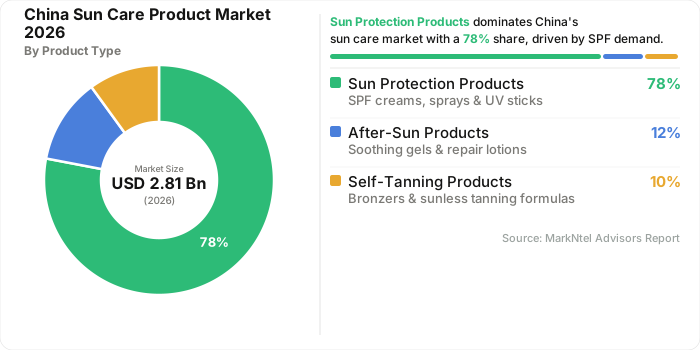
- By product type, sun protection products dominate the market, contributing approximately 78% of the total share.
- In terms of form, lotions and creams accounted for a leading share of around 48% in 2026.
- The market remains moderately consolidated with more than 100 companies, with the top five players together holding nearly 40% of the overall market share.
China Sun Care Product Market Size and Outlook
The China Sun Care Product Market is projected to register a CAGR of around 6.19% during 2026–2032, driven by the increasing integration of sun protection into daily skincare routines, rising awareness regarding UV-induced skin damage and premature aging, and growing preference for multifunctional skincare products combining SPF protection with hydration, brightening, and anti-pollution benefits. Expanding retail accessibility and digital engagement are further supporting penetration across urban and emerging city tiers.
A key structural driver is the rising awareness of skin health risks associated with UV exposure. According to the Global Burden of Disease (GBD) database, China recorded approximately 13,437 new cases of malignant skin melanoma, with total prevalence reaching 81,219 patients. This growing disease burden is encouraging preventive skincare adoption and driving demand for high SPF skincare products, particularly among health-conscious consumers seeking long-duration protection in high-exposure environments.
Despite favorable growth fundamentals, significant gaps in consumer adoption persist. A peer-reviewed survey published in PMC indicates that only 21% of Chinese respondents regularly use sunscreen, with male participation notably lower. This highlights a substantial untapped consumer base, creating opportunities for brands to expand outreach, improve awareness, and drive category penetration through targeted marketing strategies and product education initiatives.
From a trend perspective, innovation is reshaping the competitive landscape. Brands are increasingly focusing on performance-driven formulations that enhance durability, comfort, and protection efficiency. This has accelerated the development of long-lasting SPF formulations, catering to consumers exposed to prolonged outdoor conditions.
Additionally, increasing environmental awareness is fostering demand for sustainable sun care products in China, as consumers show a growing preference for safer ingredients and eco-conscious packaging solutions.
Behavioral dynamics among younger consumers also present both a challenge and an opportunity. According to an ANESSA-commissioned survey, children’s outdoor activity levels in key Asian cities remain below the World Health Organization’s recommended 60 minutes per day . This trend suggests limited early adoption of sun protection habits, prompting brands to invest in awareness campaigns and child-friendly product formats to build long-term usage patterns.
Overall, the interplay of rising health awareness, innovation-led product development, and a large untapped consumer segment is expected to support sustained expansion of the China Sun Care Product Market from USD 2.81 billion in 2026 to USD 4.03 billion by 2032. As brands address behavioral gaps and align offerings with evolving consumer expectations, the industry is positioned for steady and resilient growth over the forecast period.
China Sun Care Product Market Key Indicators
- Beauty and personal care consumption landscape in China continues to expand, with cosmetics retail sales reaching USD 58 billion in 2023, advancing at a steady annual pace of 5.1%. This scale reflects a strong commercial base where daily-use SPF products increasingly compete for consumer spending, reinforcing the growth trajectory of the SPF skincare market in China as sun protection becomes an essential component of routine skincare purchases.
- A surge in outdoor lifestyle participation is reshaping product demand dynamics, as China’s outdoor sports market climbed to approximately USD 20 billion in 2024, expanding 23% year-on-year. With activities like hiking and running gaining widespread traction, sustained exposure to sunlight is accelerating the need for performance-driven solutions, thereby strengthening demand within the UV protection skincare in China segment, particularly for durable and high-SPF formulations.
- Tourism recovery is playing a catalytic role in sun care consumption patterns, with inbound travel reaching approximately 132 million visitors and generating USD 94.2 billion in spending during 2024 . Increased travel-related outdoor exposure is encouraging both domestic and international consumers to prioritize protective skincare, contributing to rising product adoption across the sun care industry in China, especially in high-traffic urban and tourist-centric regions.
- China’s cosmetics ecosystem demonstrates significant structural depth, with transaction volumes exceeding USD 151.22 billion in 2024 and supported by over 20,000 enterprises. This dense network of manufacturers and distributors enables efficient rollout of new SKUs and enhances penetration across city tiers, accelerating innovation and commercialization within the sun care product innovation in China landscape.
China Sun Care Product Market Scope
| Category | Segments |
|---|---|
| By Product Type | Sun Protection Products, After-Sun Products, Self-Tanning Products |
| By SPF Range | Below SPF 30, SPF 30–50, Above SPF 50 |
| By Form | Lotions & Creams, Sprays, Gels, Sticks, Others |
| By Price Points | Mass Market, Luxury, Ultra-Luxury |
| By Formulation | Chemical, Mineral, Hybrid |
| By Distribution Channel | Offline (Supermarkets & Hypermarkets, Pharmacies & Drug Stores, Specialty Stores), Online Retail |
China Sun Care Product Market Growth Drivers
Rising Environmental Pollution and Urbanization
Elevated air pollution levels are acting as a significant catalyst for growth in the China sun care product industry, as consumers increasingly associate environmental exposure with adverse skin conditions such as premature aging, pigmentation, and sensitivity.
According to the Centre for Research on Energy and Clean Air, China’s average PM2.5 concentration reached 29.3 micrograms per cubic metre in 2024, remaining substantially above the World Health Organization’s recommended threshold despite a 2.7% year-on-year improvement in overall air quality.
Concurrently, the Ministry of Ecology and Environment reported that over 40% of monitored cities continued to exceed national PM2.5 standards, underscoring persistent pollutant exposure across densely populated urban regions.
This sustained environmental burden is accelerating consumer demand for advanced protective skincare solutions that integrate UV defense with anti-pollution benefits, thereby driving adoption of multifunctional skincare with SPF across daily routines. In parallel, heightened awareness regarding pollution-induced skin damage is reinforcing urban skincare demand in China, particularly within tier-1 and industrialized city clusters where exposure intensity remains elevated.
Collectively, the persistence of elevated pollution levels, combined with growing consumer awareness and preventive skincare behavior, is expected to sustain long-term demand for sun care products across China’s evolving skincare ecosystem, reinforcing their role as an essential component of modern daily skincare regimens.
Recent Trends
Emergence of AI-Enabled Multifunctional Sun Care Products
The increasing integration of artificial intelligence into skincare development is emerging as a prominent trend in the China sun care product market, as brands prioritize precision, speed, and personalization in product formulation.
Companies are leveraging data-driven technologies to enhance ingredient selection, optimize efficacy, and accelerate innovation cycles, aligning with evolving consumer demand for high-performance and customized solutions. This shift is significantly contributing to sun care product innovation in China, while also supporting the rise of multifunctional skincare with SPF that combines protection, aesthetics, and convenience.
Additionally, advancements in formulation science are enabling the development of long-lasting SPF formulations, designed to deliver extended protection under varying environmental conditions, further strengthening product differentiation.
Reflecting this trend, in January 2026, Shiseido Company, Limited announced the development of its first AI-formulated mist-type sun care product using its proprietary VOYAGER formulation platform. The product integrates SPF protection with fragrance and color technologies, demonstrating a shift toward sensorial and hybrid skincare solutions. Scheduled for commercial launch in Summer 2026 under the company’s open innovation initiative “fibona,” this development highlights how AI is transforming traditional formulation processes into more adaptive and consumer-centric systems.
Taken together, the convergence of AI-driven innovation and multifunctional product development is expected to redefine competitive positioning, enabling brands to deliver differentiated offerings and sustain growth within China’s evolving sun care products industry.
China Sun Care Product Market Opportunities and Challenges
Evolving Safety Regulations Driving High-Performance Sun Care Product Innovation
China’s evolving regulatory framework is exerting a dual influence on the sun care product industry, simultaneously constraining product development while unlocking pathways for innovation. In 2024, the National Medical Products Administration (NMPA) introduced enhanced cosmetic safety assessment requirements, mandating comprehensive toxicological data, ingredient validation, and efficacy substantiation. These stricter regulations have increased compliance complexity, particularly for advanced formulations, as they extended approval timelines and elevated development costs.
The burden is especially significant for products incorporating multiple active components, intensifying regulatory restrictions on UV filters in China and amplifying consumer concerns about chemical sunscreen safety.
However, these regulatory pressures are also accelerating innovation among established players capable of meeting higher compliance standards. Leading companies are leveraging advanced R&D capabilities to develop safer, high-efficacy formulations aligned with evolving regulations. For instance, Shiseido Company, Limited has introduced new formulation approaches that integrate cutting-edge technologies and safety validation processes, reflecting the growing emphasis on innovation in mineral sunscreen in China and the development of sustainable sun care products in China . This shift is enabling premium brands to differentiate through compliant, high-performance offerings while strengthening consumer trust.
Overall, while regulatory tightening presents short-term barriers, it is fostering a more structured and innovation-driven ecosystem, positioning compliant and technologically advanced players to capitalize on long-term growth opportunities in China’s sun care market.
Segmentation Insights
High Adoption of Sun Protection Products
Sun protection products dominate the China Sun Care Product Industry, accounting for approximately 78% of total revenue, reflecting their essential role in daily skincare routines and preventive skin health practices.
This dominance is primarily driven by increasing consumer awareness regarding UV-induced skin damage, including premature aging, pigmentation, and long-term dermatological risks. As a result, products such as sunscreen lotions, sprays, and gels have transitioned from seasonal use to year-round necessity, particularly in urban environments where exposure to sunlight and pollution is high.
Furthermore, the growing emphasis on daily skincare with SPF and the rising adoption of high SPF skincare products are reinforcing consistent demand across diverse consumer segments. The integration of additional benefits such as hydration, anti-aging, and anti-pollution properties is also strengthening the position of sun protection products within multifunctional skincare routines. In comparison, after-sun products and self-tanning products remain relatively niche, with demand largely limited to specific use cases such as skin recovery or cosmetic enhancement.
The combination of preventive skincare behavior, product innovation, and increasing consumer education continues to solidify the leadership of sun protection products, positioning them as the primary revenue contributor within China’s evolving sun care product market. By product type, the market is categorized into:
- Sun Protection Products
- After-Sun Products
- Self-Tanning Products
Lotions & Creams Drive China Sun Care Demand
The lotions & creams segment accounts for approximately 48% of the China Sun Care Product market, supported by its ability to cater to a wide spectrum of consumer needs and usage conditions.
Unlike other formats, these formulations offer flexible application across different climates and skin concerns, making them particularly suitable for both everyday use and extended outdoor exposure. Their adaptability has contributed to sustained demand, especially among consumers seeking sunscreen for oily skin in China, where balanced textures and non-greasy finishes are increasingly prioritized.
Moreover, product innovation within this segment continues to enhance performance attributes such as spreadability, absorption rate, and durability, aligning with evolving consumer expectations. This has supported the development of SPF 50+ sunscreen in China offerings that deliver higher protection levels without compromising comfort. In parallel, the expanding role of digital platforms is strengthening visibility and accessibility, contributing to the growth of e-commerce in the country, where lotions and creams consistently dominate purchase volumes.
Although sprays, gels, sticks, and other formats are gradually expanding their presence due to convenience and portability, their adoption remains comparatively limited in mass usage scenarios. Taken together, the segment’s ability to combine performance efficiency, formulation adaptability, and strong retail presence continues to reinforce its leading position within China’s sun care product market. The key forms analyzed in the study include:
- Lotions & Creams
- Sprays
- Gels
- Sticks
- Others
China Sun Care Product Market Competitive Analysis
The China Sun Care Product industry is moderately consolidated, with more than 100 companies operating with a mix of international brands and strong domestic players competing across multiple product categories, including sun protection, after-sun care, and self-tanning products. The top five companies, including L'Oréal Group, Shiseido Company, Limited, Beiersdorf, Kao Corporation, and Johnson & Johnson, collectively account for approximately 40% of the total market share.
Prominent Companies Operating in China Sun Care Product Industry
- L'Oréal Group
- Shiseido Company, Limited
- Kao Corporation
- Kunming Botanee Bio Tech
- Mentholatum (Zhongshan) Pharmaceuticals
- Guangzhou Uniasia
- Kosé Cosmetics Co Ltd
- Nivea (Shanghai) Co Ltd
- Coty Inc
- Johnson & Johnson
- Beiersdorf
- Pechoin
- Others
China Sun Care Product Industry News and Recent Developments
February 2026: Kao Launches Upgraded ALLIE Chrono Beauty UV Gel EX
Kao Corporation introduced the upgraded ALLIE “Chrono Beauty Gel UV EX” sunscreen in China. The SPF50+ PA++++ product incorporates sweat-resistant and friction-resistant technologies alongside moisturizing skincare ingredients. The launch also emphasized environmentally conscious packaging solutions, reflecting increasing consumer preference for sustainable and multifunctional sun care products.
Impact Analysis: The launch strengthens Kao’s positioning in China’s premium sun care segment by aligning with growing demand for long-lasting, skin-friendly, and sustainable sunscreen formulations. The integration of skincare and environmental attributes is expected to enhance consumer engagement, support premium pricing strategies, and intensify competition within China’s evolving multifunctional SPF product landscape.
September 2025: Kao Introduces Foundation-Integrated ALLIE Sunscreen Product
Kao Corporation launched ALLIE’s first foundation-grade sunscreen product in China, combining makeup coverage with high-SPF sun protection functionality. The product was designed to merge cosmetic enhancement with UV defense, targeting consumers seeking simplified beauty and skincare routines through hybrid formulations with enhanced convenience and aesthetic benefits.
Impact Analysis: This development reflects the increasing convergence of cosmetics and sun care products in China’s beauty industry. By integrating complexion enhancement with UV protection, Kao is addressing rising demand for multifunctional skincare solutions, which is expected to accelerate innovation in hybrid sun care categories and strengthen premium consumer adoption across urban markets.
February 2025: Kao Launches Bioré Water Film Glow Sunscreen
Kao Corporation launched the Bioré “Water Film Glow Sunscreen” in China in February 2025 under its Bioré UV product line. The SPF50+ PA++++ sunscreen combines UV protection with tone-enhancing and pore-blurring functions while maintaining a lightweight texture aimed at improving everyday skincare and cosmetic usability among younger consumers.
Impact Analysis: The launch highlights growing consumer preference for hybrid skincare formulations offering both protective and aesthetic benefits. This strategy is expected to strengthen Kao’s competitive positioning in China’s fast-growing multifunctional sun care segment while encouraging broader adoption of daily SPF products among beauty-conscious urban consumers.
- Market Segmentation
- Introduction
- Product Definition
- Research Process
- Assumptions
- Executive Summary
- China Sun Care Product Market Policies, Regulations, and Product Standards
- China Sun Care Product Production Trend 2022-2032
- China Sun Care Product Trend by Type of Product Type
-
- Sun Protection Products
- After-Sun Products
- Self-Tanning Products
-
- Company Wise Production Plants and Statistics
- Installed Production Capacity
- Actual Production
- Planned Production Target
- China Sun Care Product Trend by Type of Product Type
- China Sun Care Product Pricing Analysis 2022-2032
- China Sun Care Product Pricing Trend 2022-2032
- China Sun Care Product Pricing Trend by Product Type 2022-2032
-
- Sun Protection Products
- After-Sun Products
- Self-Tanning Products
-
- China Sun Care Product Market Dynamics
- Growth Factors
- Challenges
- China Sun Care Product Market Hotspot & Opportunities
- China Sun Care Product Market Outlook, 2022-2032F
- Market Size & Outlook
- By Revenues (USD Million)
- Market Share & Outlook
- By Product Type- Market Size & Forecast 2022-2032, USD Million
- Sun Protection Products
- After-Sun Products
- Self-Tanning Products
- By SPF Range- Market Size & Forecast 2022-2032, USD Million
- Below SPF 30
- SPF 30–50
- Above SPF 50
- By Form- Market Size & Forecast 2022-2032, USD Million
- Lotions & Creams
- Sprays
- Gels
- Sticks
- Others
- By Price Points- Market Size & Forecast 2022-2032, USD Million
- Mass Market
- Luxury
- Ultra-Luxury
- By Formulation- Market Size & Forecast 2022-2032, USD Million
- Chemical
- Mineral
- Hybrid
- By Distribution Channel- Market Size & Forecast 2022-2032, USD Million
- Offline
- Supermarkets & Hypermarkets
- Pharmacies & Drug Stores
- Specialty Stores
- Online Retail
- Offline
- By Region- Market Size & Forecast 2022-2032, USD Million
- East China
- North China
- South China
- Central China
- Southwest China
- Northwest China
- Northeast China
- By Company
- Competition Characteristics
- Market Share & Analysis
- By Product Type- Market Size & Forecast 2022-2032, USD Million
- Market Size & Outlook
- China Sun Protection Products Market Outlook, 2022-2032
- Market Size & Outlook
- By Revenues (USD Million)
- Market Share & Outlook
- By SPF Range- Market Size & Forecast 2022-2032, USD Million
- By Form- Market Size & Forecast 2022-2032, USD Million
- By Price Points- Market Size & Forecast 2022-2032, USD Million
- By Formulation- Market Size & Forecast 2022-2032, USD Million
- By Distribution Channel- Market Size & Forecast 2022-2032, USD Million
- By Region- Market Size & Forecast 2022-2032, USD Million
- Market Size & Outlook
- China After-Sun Products Market Outlook, 2022-2032
- Market Size & Outlook
- By Revenues (USD Million)
- Market Share & Outlook
- By SPF Range- Market Size & Forecast 2022-2032, USD Million
- By Form- Market Size & Forecast 2022-2032, USD Million
- By Price Points- Market Size & Forecast 2022-2032, USD Million
- By Formulation- Market Size & Forecast 2022-2032, USD Million
- By Distribution Channel- Market Size & Forecast 2022-2032, USD Million
- By Region- Market Size & Forecast 2022-2032, USD Million
- Market Size & Outlook
- China Self-Tanning Products Market Outlook, 2022-2032
- Market Size & Outlook
- By Revenues (USD Million)
- Market Share & Outlook
- By SPF Range- Market Size & Forecast 2022-2032, USD Million
- By Form- Market Size & Forecast 2022-2032, USD Million
- By Price Points- Market Size & Forecast 2022-2032, USD Million
- By Formulation- Market Size & Forecast 2022-2032, USD Million
- By Distribution Channel- Market Size & Forecast 2022-2032, USD Million
- By Region- Market Size & Forecast 2022-2032, USD Million
- Market Size & Outlook
- China Sun Care Product Market Key Strategic Imperatives for Success & Growth
- Competitive Outlook
- Company Profiles
- L'Oréal Group
- Business Description
- Product Portfolio
- Collaborations & Alliances
- Recent Developments
- Financial Details
- Others
- Shiseido Company, Limited
- Business Description
- Product Portfolio
- Collaborations & Alliances
- Recent Developments
- Financial Details
- Others
- Kao Corporation
- Business Description
- Product Portfolio
- Collaborations & Alliances
- Recent Developments
- Financial Details
- Others
- Kunming Botanee Bio Tech
- Business Description
- Product Portfolio
- Collaborations & Alliances
- Recent Developments
- Financial Details
- Others
- Mentholatum (Zhongshan) Pharmaceuticals
- Business Description
- Product Portfolio
- Collaborations & Alliances
- Recent Developments
- Financial Details
- Others
- Guangzhou Uniasia
- Business Description
- Product Portfolio
- Collaborations & Alliances
- Recent Developments
- Financial Details
- Others
- Kosé Cosmetics Co Ltd
- Business Description
- Product Portfolio
- Collaborations & Alliances
- Recent Developments
- Financial Details
- Others
- Nivea (Shanghai) Co Ltd
- Business Description
- Product Portfolio
- Collaborations & Alliances
- Recent Developments
- Financial Details
- Others
- Coty Inc
- Business Description
- Product Portfolio
- Collaborations & Alliances
- Recent Developments
- Financial Details
- Others
- Johnson & Johnson
- Business Description
- Product Portfolio
- Collaborations & Alliances
- Recent Developments
- Financial Details
- Others
- Beiersdorf
- Business Description
- Product Portfolio
- Collaborations & Alliances
- Recent Developments
- Financial Details
- Others
- Pechoin
- Business Description
- Product Portfolio
- Collaborations & Alliances
- Recent Developments
- Financial Details
- Others
- Others
- L'Oréal Group
- Company Profiles
- Disclaimer

MarkNtel Advisors follows a robust and iterative research methodology designed to ensure maximum accuracy and minimize deviation in market estimates and forecasts. Our approach combines both bottom-up and top-down techniques to effectively segment and quantify various aspects of the market. A consistent feature across all our research reports is data triangulation, which examines the market from three distinct perspectives to validate findings. Key components of our research process include:
1. Scope & Research Design At the outset, MarkNtel Advisors define the research objectives and formulate pertinent questions. This phase involves determining the type of research—qualitative or quantitative—and designing a methodology that outlines data collection methods, target demographics, and analytical tools. They also establish timelines and budgets to ensure the research aligns with client goals.
2. Sample Selection and Data Collection In this stage, the firm identifies the target audience and determines the appropriate sample size to ensure representativeness. They employ various sampling methods, such as random or stratified sampling, based on the research objectives. Data collection is carried out using tools like surveys, interviews, and observations, ensuring the gathered data is reliable and relevant.
3. Data Analysis and Validation Once data is collected, MarkNtel Advisors undertake a rigorous analysis process. This includes cleaning the data to remove inconsistencies, employing statistical software for quantitative analysis, and thematic analysis for qualitative data. Validation steps are taken to ensure the accuracy and reliability of the findings, minimizing biases and errors.

4. Data Forecast and FinalizationThe final phase involves forecasting future market trends based on the analyzed data. MarkNtel Advisors utilize predictive modeling and time series analysis to anticipate market behaviors. The insights are then compiled into comprehensive reports, featuring visual aids like charts and graphs, and include strategic recommendations to inform client decision-making
FILL THE FORM TO GET THE FREE SAMPLE PAGES
We offer flexible licensing options to cater to varying organizational needs. Choose the pricing pack that best suits your requirements:
Buy Now Inquire Before Buying
 Talk to our Consultant
 Request Customization