

By Technology (Organic Photovoltaics (OPV), Perovskite Transparent Solar Cells, Dye-Sensitized Solar Cells (DSSC), Amorphous Silicon (a-Si) Transparent Thin-Film Cells, Quantum Dot...... Transparent Solar Cells, Others (CZTS, luminescent solar concentrators, hybrid architectures)), By Transparency (Semi-Transparent (10–70% VLT), Fully Transparent (>70% VLT)), By Application (Building-Integrated Photovoltaics (BIPV) — Windows, Facades, Skylights, Automotive Glazing — Sunroofs, Rear/Side Windows, Consumer Electronics, Agricultural & Greenhouse Glazing, Others (signage, transparent power banks, smart glass hybrids)), By End User (Residential, Commercial, Institutional & Government, Others (agricultural enterprises, R&D/pilot installations)), and others Read more
- Environment
- Jul 2026
- 240
- PDF, Excel, PPT
Asia Transparent Solar Cells Market Key Takeaways
- The Asia transparent solar cells market was valued at approximately USD 21.21 million in 2025 and is projected to reach USD 29.81 million in 2026, further expanding to nearly USD 119.21 million by 2032.
- The industry is projected to witness steady growth at a CAGR of around 25.99% during the forecast period.
- China is expected to dominate the regional market, accounting for approximately 46% share in 2026.
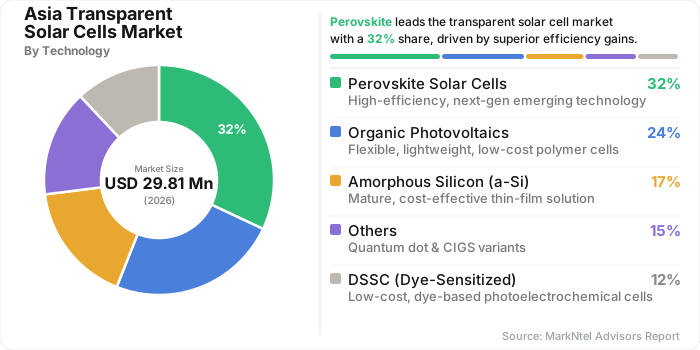
- By technology, perovskite transparent solar cells are anticipated to hold the leading position with approximately 32% market share in 2026.
- By end user, the commercial segment is projected to account for approximately 49% market share in 2026.
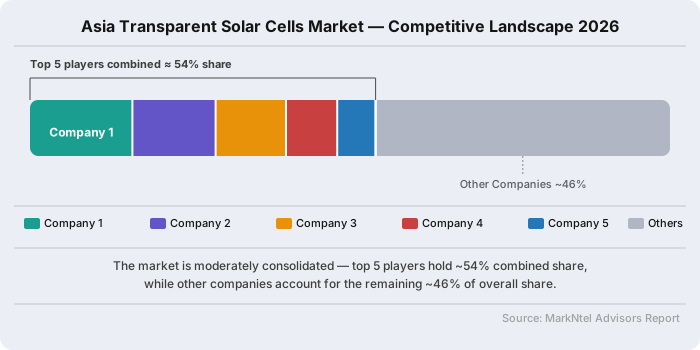
- The industry is moderately consolidated, with the top five leading players accounting for approximately 54% of the total market share.
Asia Transparent Solar Cells Market Size and Outlook
Market revenue is expected to grow from USD 29.81 million in 2026 to approximately USD 119.21 million by 2032, expanding at a CAGR of 25.99%, following a valuation of USD 21.21 million in 2025.
Asia's transparent solar cells market is expanding steadily with rising investments in renewable energy, green buildings, and advanced photovoltaic technologies. China, Japan, South Korea, and India have strengthened solar manufacturing while introducing policies that encourage renewable energy deployment. China's Energy Law, effective from January 2025, establishes a legal framework to accelerate the green energy transition and support the development and utilization of renewable energy, including solar power. Consequently, the growing adoption of building-integrated photovoltaics is creating favorable opportunities for transparent solar technologies across commercial and institutional projects.
This supportive policy environment is accelerating the commercialization of advanced transparent photovoltaic technologies. Japan has strengthened perovskite solar cell commercialization through government support exceeding USD 1.5 billion, while its Seventh Strategic Energy Plan, adopted in 2025, identifies solar photovoltaics as a key pillar of the country's long-term decarbonization strategy. These initiatives are encouraging the deployment of lightweight and semi-transparent photovoltaic products across commercial buildings, transportation infrastructure, and public facilities.
Supported by these initiatives, manufacturers are expanding production capacity and investing in perovskite and thin-film technologies to improve efficiency and accelerate commercialization. At the same time, government-backed manufacturing support is advancing the adoption of transparent photovoltaic glass for windows, façades, skylights, and other building applications where conventional solar panels are less practical.
These policy and industry developments are expected to support long-term market growth. According to the International Energy Agency, China remains the global leader in photovoltaic manufacturing and innovation, while perovskite technologies account for a growing share of new solar patents across China, Japan, and South Korea. Rising investments in commercial complexes, smart cities, industrial facilities, and institutional buildings are expected to sustain demand for transparent solar cells across Asia.
Asia Transparent Solar Cells Market Key Indicators
- China accounts for more than 80% of global solar photovoltaic manufacturing capacity across key stages of the solar value chain, including polysilicon, wafers, cells, and modules. Its strong manufacturing ecosystem supports technological innovation and the commercialization of advanced transparent solar cells across Asia.
- Global solar photovoltaic electricity generation reached nearly 2,700 TWh in 2025, reflecting the rapid expansion of solar energy worldwide. Growing solar deployment is supporting innovation and commercialization of transparent photovoltaic technologies for buildings and urban infrastructure.
- India's installed solar energy capacity reached 132.85 GW in November 2025, reflecting an increase of over 41% compared with 94.17 GW in November 2024. Continued expansion of solar infrastructure is creating favorable opportunities for transparent photovoltaic technologies in commercial and institutional buildings.
- Buildings account for approximately 32% of global final energy consumption and 34% of energy-related CO₂ emissions. The growing focus on energy-efficient buildings is accelerating the adoption of integrated renewable energy solutions, creating favorable opportunities for transparent solar technologies in modern construction.
Asia Transparent Solar Cells Market Scope
| Category | Segments |
|---|---|
| By Technology | Organic Photovoltaics (OPV), Perovskite Transparent Solar Cells, Dye-Sensitized Solar Cells (DSSC), Amorphous Silicon (a-Si) Transparent Thin-Film Cells, Quantum Dot Transparent Solar Cells, Others (CZTS, luminescent solar concentrators, hybrid architectures |
| By Transparency | Semi-Transparent (10–70% VLT), Fully Transparent (>70% VLT |
| By Application | Building-Integrated Photovoltaics (BIPV) — Windows, Facades, Skylights, Automotive Glazing — Sunroofs, Rear/Side Windows, Consumer Electronics, Agricultural & Greenhouse Glazing, Others (signage, transparent power banks, smart glass hybrids |
| By End User | Residential, Commercial, Institutional & Government, Others (agricultural enterprises, R&D/pilot installations |
Asia Transparent Solar Cells Market Growth Drivers
Accelerating Clean Energy Transition and Urban Land Constraints
Asia's rapid expansion of renewable energy is reshaping solar deployment as suitable land and rooftop space become increasingly constrained across densely populated urban areas. According to China's National Energy Administration (NEA), the country's installed solar power capacity reached 1.20 TW by the end of 2025, representing a 35.4% year-on-year increase. As conventional installation space becomes more limited, developers are increasingly utilizing windows, façades, and skylights for electricity generation, accelerating the adoption of energy-generating smart windows across modern buildings.
This transition is further reinforced by ambitious decarbonization policies across Asia. China's dual-carbon goals of peaking carbon emissions before 2030 and achieving carbon neutrality before 2060 continue to accelerate renewable energy deployment and strengthen the integration of distributed solar systems into commercial and residential buildings. Similarly, net-zero commitments across Japan, South Korea, and India are strengthening building energy regulations while encouraging energy-generating building envelopes that support transparent solar technologies.
Alongside these policy initiatives, energy security has emerged as another important growth catalyst. Import-dependent Asian economies are expanding domestic renewable energy generation to reduce reliance on volatile fuel markets, while building-integrated photovoltaic systems enable electricity generation at the point of consumption. As commercial and public infrastructure development continues across the region, transparent solar cell adoption is expected to expand steadily, supported by growing investments in sustainable building envelope technologies throughout the forecast period.
Recent Trends
Rising Commercialization of Transparent Building-Integrated Photovoltaics (BIPV)
Building-integrated photovoltaics (BIPV) are expanding beyond traditional rooftop installations as transparent solar technologies become increasingly integrated into façades, skylights, and windows. Transparent photovoltaic glass enables buildings to generate electricity while preserving natural daylight, making it an attractive solution for energy-efficient commercial infrastructure. As governments and developers across Asia continue prioritizing sustainable urban development, the commercialization of transparent BIPV solutions is gaining momentum.
Supporting this trend, AGC Inc. continues promoting the commercialization of Building-Integrated Photovoltaic (BIPV) solutions through its SUNJOULE® and SunEwat photovoltaic glass products for commercial building façades and glazing systems. Likewise, Onyx Solar Energy, S.L. has completed more than 350 BIPV projects across 50 countries, supplying photovoltaic glass solutions for airports, railway stations, offices, hotels, and other commercial and institutional buildings. These developments reflect the growing commercial acceptance of transparent photovoltaic technologies.
The commercialization trend is further reinforced by continued investments in advanced photovoltaic materials by Panasonic Holdings Corporation, Kaneka Corporation, and Sharp Corporation to improve transparency, energy conversion efficiency, and long-term durability. As these innovations become increasingly aligned with modern architectural requirements, transparent building-integrated photovoltaics are expected to play a greater role in supporting low-carbon and energy-efficient buildings across Asia.
Asia Transparent Solar Cells Market Opportunities and Challenges
Efficiency–Transparency Trade-Off and Durability Challenges Driving Innovation in Transparent Solar Technologies
The trade-off between power conversion efficiency and visible light transparency remains one of the primary challenges limiting the widespread adoption of transparent solar cells across Asia. Transparent photovoltaic designs with higher visible light transmission generally produce lower power output, while higher-efficiency configurations reduce glass transparency. In addition, durability concerns, including moisture sensitivity and shorter operational lifespans in certain emerging photovoltaic materials, continue to affect the commercial deployment of transparent photovoltaic technology in building-integrated applications.
Despite these challenges, continuous advancements in materials science and photovoltaic engineering are accelerating innovation across the transparent solar industry. Manufacturers and research institutions are investing in advanced encapsulation technologies, barrier films, tandem photovoltaic architectures, and next-generation solar materials to improve energy conversion efficiency, durability, and optical transparency.
Reflecting this industry-wide progress, Oxford PV and Fraunhofer ISE recently demonstrated a 25.6% efficient perovskite-silicon tandem solar module using Matrix Shingle technology, highlighting continued advancements toward the commercialization of high-performance tandem photovoltaic technologies. As these technologies continue to mature, they are expected to enhance the long-term reliability and commercial viability of transparent solar solutions, supporting wider integration into energy-efficient buildings and sustainable urban infrastructure.
Segmentation Insights
Architectural Flexibility and Uniform Semi-Transparency Strengthen the Leadership of Thin-Film Transparent Solar Cells
Accounting for approximately 32% of market revenue, perovskite transparent solar cells represent the leading technology segment in Asia's transparent solar cells market. The segment's leadership is driven by its ability to combine high power conversion efficiency with adjustable transparency, making it well suited for building-integrated photovoltaic (BIPV) applications. Compared with conventional transparent photovoltaic technologies, perovskite-based cells offer greater design flexibility, lightweight structures, and compatibility with windows, façades, and skylights, supporting the growing adoption of energy-generating buildings across the region.
Rapid technological advancements and pilot-scale commercialization have further strengthened the segment's leadership. Reflecting this trend, LONGi Green Energy Technology Co., Ltd. achieved a 33.0% conversion efficiency for a 260.9 cm² crystalline silicon-perovskite tandem solar cell, certified by the U.S. National Renewable Energy Laboratory (NREL), in June 2025. Such breakthroughs are accelerating the commercialization of high-performance transparent photovoltaic technologies and reinforcing the position of perovskite transparent solar cells as the preferred technology for next-generation smart buildings and sustainable urban infrastructure. Based on technology, the market has been segmented into:
- Organic Photovoltaics (OPV)
- Perovskite Transparent Solar Cells
- Dye-Sensitized Solar Cells (DSSC)
- Amorphous Silicon (a-Si) Transparent Thin-Film Cells
- Quantum Dot Transparent Solar Cells
- Others (CZTS, luminescent solar concentrators, hybrid architectures)
Extensive Glazed Façades and Corporate Net-Zero Goals Anchor the Commercial Segment's Leadership
Holding approximately 49% of market revenue, commercial buildings represent the leading end-user segment in Asia's transparent solar cells market. Office towers, shopping malls, hotels, and corporate campuses feature extensive glazed façades that provide ideal surfaces for transparent solar integration. Coupled with rising corporate net-zero commitments and increasingly stringent green building certification requirements, these architectural characteristics are encouraging developers to adopt power-generating glazing solutions as part of broader smart building energy solutions without compromising natural daylight or modern building aesthetics.
This momentum is further reinforced by the rapid expansion of green commercial construction across the region. In 2024, newly built green buildings accounted for nearly 98% of all new urban construction floor space in China, according to the State Council Information Office, highlighting the growing emphasis on sustainable urban development. As investment in energy-efficient commercial infrastructure continues to expand across Asia, transparent solar glazing is expected to play an increasingly important role in enabling buildings to generate clean electricity while maintaining architectural performance and visual appeal. Based on end user, the market is categorized into:
- Commercial
- Residential
- Industrial
- Government & Institutional
Asia Transparent Solar Cells Market Geographical Outlook
Capturing approximately 46% of regional revenue, China remains the leading market for transparent solar cells in Asia, underpinned by its integrated photovoltaic manufacturing ecosystem and sustained commercialization of next-generation transparent solar technologies. This leadership is further reinforced by the country's accelerating renewable energy transition. According to the National Energy Administration, renewable energy accounted for more than 60% of China's total installed power generation capacity in 2025, with the combined installed capacity of wind and solar power surpassing thermal power for the first time. Backed by the world's largest solar manufacturing supply chain, Chinese manufacturers continue to maintain significant cost and production advantages in transparent and building-integrated solar technologies.
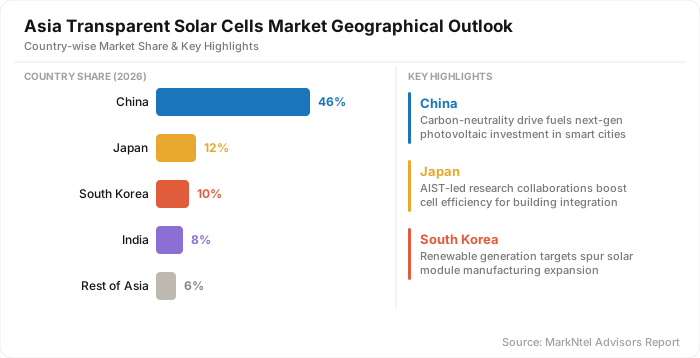
Beyond its manufacturing strength, China is accelerating the commercialization of advanced transparent solar technologies through continuous innovation and supportive green building policies. Companies such as BOE Technology Group Co., Ltd., GCL Technology Holdings Limited, and Xinyi Solar Holdings Limited are advancing photovoltaic glass and perovskite technologies, while growing urban construction continues to expand demand for façade- and window-integrated solar solutions. Together, these factors continue to reinforce China's leadership in transparent solar cell production and deployment across Asia.
Asia Transparent Solar Cells Market Competitive Analysis
The Asia transparent solar cells market exhibits a moderately consolidated competitive landscape, with the top five players collectively accounting for approximately 54% of the organized market. Leading companies, including AGC Inc., Panasonic Holdings Corporation, Nippon Sheet Glass Co., Ltd., LONGi Green Energy Technology Co., Ltd., and Kaneka Corporation, continue to strengthen their market positions through advancements in transparent photovoltaic materials, building-integrated photovoltaic (BIPV) solutions, and strategic collaborations across the renewable energy and construction sectors.
Key Players of Transparent Solar Cells Industry in Asia
- AGC Inc.
- Panasonic Holdings Corporation
- Nippon Sheet Glass Co., Ltd.
- Kaneka Corporation
- Sharp Corporation
- Ubiquitous Energy, Inc.
- Compagnie de Saint-Gobain S.A.
- Onyx Solar Energy, S.L.
- Mingyang (Mingyang Thin Film Technology)
- UtmoLight
- GCL Perovskite
- Taiwan Perovskite Solar Corp. (TPSC)
- Hanwha Solutions Corporation (Hanwha Q CELLS)
- Trina Solar Co., Ltd.
- LONGi Green Energy Technology Co., Ltd.
- First Solar, Inc.
- Others
Asia Transparent Solar Cells Industry News and Recent Developments
March 2025: NTU Singapore Develops Near-Invisible Ultrathin Solar Cells for Power-Generating Windows
Researchers at Nanyang Technological University (NTU), Singapore developed near-invisible ultrathin solar cells capable of converting sunlight into electricity while maintaining high transparency. The technology is designed for integration into windows and glass façades, advancing the development of building-integrated photovoltaic (BIPV) systems for urban infrastructure.
Impact Analysis: The innovation strengthens the commercialization prospects of transparent solar cells by enabling energy-generating windows without compromising building aesthetics. It is expected to accelerate the adoption of transparent photovoltaic technologies in smart buildings and sustainable urban developments across Asia.
- Market Segmentation
- Introduction
- Product Definition
- Research Process
- Assumptions
- Executive Summary
- Asia Transparent Solar Cells Market Policies, Regulations, and Product Standards
- Asia Transparent Solar Cells Market Trends & Developments
- Asia Transparent Solar Cells Market Dynamics
- Growth Factors
- Challenges
- Asia Transparent Solar Cells Market Hotspot & Opportunities
- Asia Transparent Solar Cells Market Outlook, 2022-2032
- Market Size & Outlook
- By Revenues (USD Million)
- Market Share & Outlook
- By Technology- Market Size & Forecast 2022-2032, USD Million
- Organic Photovoltaics (OPV)
- Perovskite Transparent Solar Cells
- Dye-Sensitized Solar Cells (DSSC)
- Amorphous Silicon (a-Si) Transparent Thin-Film Cells
- Quantum Dot Transparent Solar Cells
- Others (CZTS, luminescent solar concentrators, hybrid architectures)
- By Transparency- Market Size & Forecast 2022-2032, USD Million
- Semi-Transparent (10–70% VLT)
- Fully Transparent (>70% VLT)
- By Application- Market Size & Forecast 2022-2032, USD Million
- Building-Integrated Photovoltaics (BIPV) — Windows, Facades, Skylights
- Automotive Glazing — Sunroofs, Rear/Side Windows
- Consumer Electronics
- Agricultural & Greenhouse Glazing
- Others (signage, transparent power banks, smart glass hybrids)
- By End User- Market Size & Forecast 2022-2032, USD Million
- Residential
- Commercial
- Institutional & Government
- Others (agricultural enterprises, R&D/pilot installations)
- By Country
- China
- Japan
- South Korea
- India
- Indonesia
- Thailand
- Vietnam
- Malaysia
- Saudi Arabia
- UAE
- Qatar
- Turkey
- By Company
- Competition Characteristics
- Market Segmentation & Outlook
- By Technology- Market Size & Forecast 2022-2032, USD Million
- Market Size & Outlook
- China Transparent Solar Cells Market Outlook, 2022-2032
- Market Size & Outlook
- By Revenues (USD Million)
- Market Segmentation & Outlook
- By Technology- Market Size & Forecast 2022-2032, USD Million
- By Transparency- Market Size & Forecast 2022-2032, USD Million
- By Application- Market Size & Forecast 2022-2032, USD Million
- By End User- Market Size & Forecast 2022-2032, USD Million
- Market Size & Outlook
- Japan Transparent Solar Cells Market Outlook, 2022-2032
- Market Size & Outlook
- By Revenues (USD Million)
- Market Segmentation & Outlook
- By Technology- Market Size & Forecast 2022-2032, USD Million
- By Transparency- Market Size & Forecast 2022-2032, USD Million
- By Application- Market Size & Forecast 2022-2032, USD Million
- By End User- Market Size & Forecast 2022-2032, USD Million
- Market Size & Outlook
- South Korea Transparent Solar Cells Market Outlook, 2022-2032
- Market Size & Outlook
- By Revenues (USD Million)
- Market Segmentation & Outlook
- By Technology- Market Size & Forecast 2022-2032, USD Million
- By Transparency- Market Size & Forecast 2022-2032, USD Million
- By Application- Market Size & Forecast 2022-2032, USD Million
- By End User- Market Size & Forecast 2022-2032, USD Million
- Market Size & Outlook
- India Transparent Solar Cells Market Outlook, 2022-2032
- Market Size & Outlook
- By Revenues (USD Million)
- Market Segmentation & Outlook
- By Technology- Market Size & Forecast 2022-2032, USD Million
- By Transparency- Market Size & Forecast 2022-2032, USD Million
- By Application- Market Size & Forecast 2022-2032, USD Million
- By End User- Market Size & Forecast 2022-2032, USD Million
- Market Size & Outlook
- Indonesia Transparent Solar Cells Market Outlook, 2022-2032
- Market Size & Outlook
- By Revenues (USD Million)
- Market Segmentation & Outlook
- By Technology- Market Size & Forecast 2022-2032, USD Million
- By Transparency- Market Size & Forecast 2022-2032, USD Million
- By Application- Market Size & Forecast 2022-2032, USD Million
- By End User- Market Size & Forecast 2022-2032, USD Million
- Market Size & Outlook
- Thailand Transparent Solar Cells Market Outlook, 2022-2032
- Market Size & Outlook
- By Revenues (USD Million)
- Market Segmentation & Outlook
- By Technology- Market Size & Forecast 2022-2032, USD Million
- By Transparency- Market Size & Forecast 2022-2032, USD Million
- By Application- Market Size & Forecast 2022-2032, USD Million
- By End User- Market Size & Forecast 2022-2032, USD Million
- Market Size & Outlook
- Vietnam Transparent Solar Cells Market Outlook, 2022-2032
- Market Size & Outlook
- By Revenues (USD Million)
- Market Segmentation & Outlook
- By Technology- Market Size & Forecast 2022-2032, USD Million
- By Transparency- Market Size & Forecast 2022-2032, USD Million
- By Application- Market Size & Forecast 2022-2032, USD Million
- By End User- Market Size & Forecast 2022-2032, USD Million
- Market Size & Outlook
- Malaysia Transparent Solar Cells Market Outlook, 2022-2032
- Market Size & Outlook
- By Revenues (USD Million)
- Market Segmentation & Outlook
- By Technology- Market Size & Forecast 2022-2032, USD Million
- By Transparency- Market Size & Forecast 2022-2032, USD Million
- By Application- Market Size & Forecast 2022-2032, USD Million
- By End User- Market Size & Forecast 2022-2032, USD Million
- Market Size & Outlook
- Saudi Arabia Transparent Solar Cells Market Outlook, 2022-2032
- Market Size & Outlook
- By Revenues (USD Million)
- Market Segmentation & Outlook
- By Technology- Market Size & Forecast 2022-2032, USD Million
- By Transparency- Market Size & Forecast 2022-2032, USD Million
- By Application- Market Size & Forecast 2022-2032, USD Million
- By End User- Market Size & Forecast 2022-2032, USD Million
- Market Size & Outlook
- UAE Transparent Solar Cells Market Outlook, 2022-2032
- Market Size & Outlook
- By Revenues (USD Million)
- Market Segmentation & Outlook
- By Technology- Market Size & Forecast 2022-2032, USD Million
- By Transparency- Market Size & Forecast 2022-2032, USD Million
- By Application- Market Size & Forecast 2022-2032, USD Million
- By End User- Market Size & Forecast 2022-2032, USD Million
- Market Size & Outlook
- Qatar Transparent Solar Cells Market Outlook, 2022-2032
- Market Size & Outlook
- By Revenues (USD Million)
- Market Segmentation & Outlook
- By Technology- Market Size & Forecast 2022-2032, USD Million
- By Transparency- Market Size & Forecast 2022-2032, USD Million
- By Application- Market Size & Forecast 2022-2032, USD Million
- By End User- Market Size & Forecast 2022-2032, USD Million
- Market Size & Outlook
- Turkey Transparent Solar Cells Market Outlook, 2022-2032
- Market Size & Outlook
- By Revenues (USD Million)
- Market Segmentation & Outlook
- By Technology- Market Size & Forecast 2022-2032, USD Million
- By Transparency- Market Size & Forecast 2022-2032, USD Million
- By Application- Market Size & Forecast 2022-2032, USD Million
- By End User- Market Size & Forecast 2022-2032, USD Million
- Market Size & Outlook
- Asia Transparent Solar Cells Market Key Strategic Imperatives for Success & Growth
- Competitive Outlook
- Company Profiles
- AGC Inc.
- Business Description
- Product Portfolio
- Collaborations & Alliances
- Recent Developments
- Financial Details
- Others
- Panasonic Holdings Corporation
- Business Description
- Product Portfolio
- Collaborations & Alliances
- Recent Developments
- Financial Details
- Others
- Nippon Sheet Glass Co., Ltd.
- Business Description
- Product Portfolio
- Collaborations & Alliances
- Recent Developments
- Financial Details
- Others
- Kaneka Corporation
- Business Description
- Product Portfolio
- Collaborations & Alliances
- Recent Developments
- Financial Details
- Others
- Sharp Corporation
- Business Description
- Product Portfolio
- Collaborations & Alliances
- Recent Developments
- Financial Details
- Others
- Ubiquitous Energy, Inc.
- Business Description
- Product Portfolio
- Collaborations & Alliances
- Recent Developments
- Financial Details
- Others
- Compagnie de Saint-Gobain S.A.
- Business Description
- Product Portfolio
- Collaborations & Alliances
- Recent Developments
- Financial Details
- Others
- Onyx Solar Energy, S.L.
- Business Description
- Product Portfolio
- Collaborations & Alliances
- Recent Developments
- Financial Details
- Others
- Mingyang (Mingyang Thin Film Technology)
- Business Description
- Product Portfolio
- Collaborations & Alliances
- Recent Developments
- Financial Details
- Others
- UtmoLight
- Business Description
- Product Portfolio
- Collaborations & Alliances
- Recent Developments
- Financial Details
- Others
- GCL Perovskite
- Business Description
- Product Portfolio
- Collaborations & Alliances
- Recent Developments
- Financial Details
- Others
- Taiwan Perovskite Solar Corp. (TPSC)
- Business Description
- Product Portfolio
- Collaborations & Alliances
- Recent Developments
- Financial Details
- Others
- Hanwha Solutions Corporation (Hanwha Q CELLS)
- Business Description
- Product Portfolio
- Collaborations & Alliances
- Recent Developments
- Financial Details
- Others
- Trina Solar Co., Ltd.
- Business Description
- Product Portfolio
- Collaborations & Alliances
- Recent Developments
- Financial Details
- Others
- LONGi Green Energy Technology Co., Ltd.
- Business Description
- Product Portfolio
- Collaborations & Alliances
- Recent Developments
- Financial Details
- Others
- First Solar, Inc.
- Business Description
- Product Portfolio
- Collaborations & Alliances
- Recent Developments
- Financial Details
- Others
- AGC Inc.
- Company Profiles
- Disclaimer

MarkNtel Advisors follows a robust and iterative research methodology designed to ensure maximum accuracy and minimize deviation in market estimates and forecasts. Our approach combines both bottom-up and top-down techniques to effectively segment and quantify various aspects of the market. A consistent feature across all our research reports is data triangulation, which examines the market from three distinct perspectives to validate findings. Key components of our research process include:
1. Scope & Research Design At the outset, MarkNtel Advisors define the research objectives and formulate pertinent questions. This phase involves determining the type of research—qualitative or quantitative—and designing a methodology that outlines data collection methods, target demographics, and analytical tools. They also establish timelines and budgets to ensure the research aligns with client goals.
2. Sample Selection and Data Collection In this stage, the firm identifies the target audience and determines the appropriate sample size to ensure representativeness. They employ various sampling methods, such as random or stratified sampling, based on the research objectives. Data collection is carried out using tools like surveys, interviews, and observations, ensuring the gathered data is reliable and relevant.
3. Data Analysis and Validation Once data is collected, MarkNtel Advisors undertake a rigorous analysis process. This includes cleaning the data to remove inconsistencies, employing statistical software for quantitative analysis, and thematic analysis for qualitative data. Validation steps are taken to ensure the accuracy and reliability of the findings, minimizing biases and errors.

4. Data Forecast and FinalizationThe final phase involves forecasting future market trends based on the analyzed data. MarkNtel Advisors utilize predictive modeling and time series analysis to anticipate market behaviors. The insights are then compiled into comprehensive reports, featuring visual aids like charts and graphs, and include strategic recommendations to inform client decision-making
FILL THE FORM TO GET THE FREE SAMPLE PAGES
We offer flexible licensing options to cater to varying organizational needs. Choose the pricing pack that best suits your requirements:
Buy Now Inquire Before Buying
 Talk to our Consultant
 Request Customization