

By Component (Hardware, Software, Services), By Encryption Technology (Symmetric Encryption, Asymmetric Encryption, Hybrid Encryption, Post-Quantum Encryption), By Deployment Mode (Embedded Encryption... ... (Embedded Encryption Systems, External Encryption Modules, Network-Based Encryption Systems), By Platform (Satellites, Launch Vehicles, Ground Stations, Mission Control Centers), By End User (Government Space Agencies, Defense, Commercial Satellite Operators, Launch Service Providers, Others) Read more
- Aerospace & Defense
- Jul 2026
- 140
- PDF, Excel, PPT
UK Telemetry, Tracking & Command Encryption Systems Market Key Takeaways
- The United Kingdom telemetry, tracking & command encryption systems market size was valued at around USD 219 million in 2025 and is projected to grow from USD 229 million in 2026 to USD 312 million by 2032, exhibiting a CAGR of 5.29 % during 2026-2032.
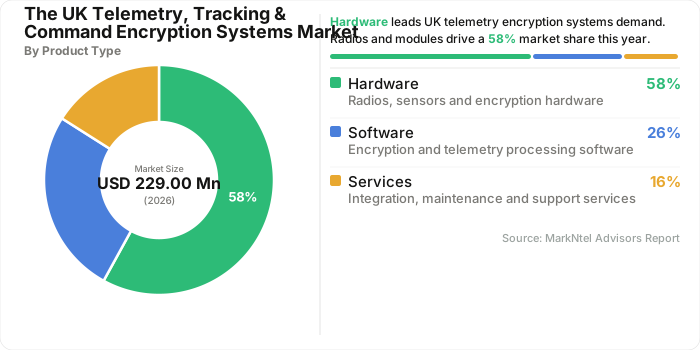
- Hardware led the component segment with a 58% revenue share in 2026.
- Satellites accounted for 64% of the platform segment in 2026.
- The industry is moderately consolidated, with the top five leading players accounting for approximately 68% of the total market share.
UK Telemetry, Tracking & Command Encryption Systems Market Size and Outlook
At a CAGR of approximately 5.29% over 2026–2032, the UK Telemetry, Tracking & Command Encryption Systems market is expected to rise from USD 229 million in 2026 to USD 312 million by 2032, following a valuation of USD 219 million in 2025.
The telemetry, tracking & command encryption systems industry in the United Kingdom is witnessing steady growth, supported by rising investments in secure satellite communications, resilient space infrastructure, and advanced cyber protection capabilities. As satellites become increasingly vital for defense, navigation, communications, and Earth observation, securing TT&C links has become a strategic priority for both government and commercial missions. According to the UK Space Agency Corporate Plan 2025–26, the agency catalyzed at least USD 2.9 billion of investment into the UK space sector during 2024–25 while advancing programs in telecommunications, launch capabilities, and space resilience, creating favorable conditions for TT&C encryption technologies.
This expanding investment is translating into stronger demand across key end-user segments. Government and defense organizations remain the primary adopters, driven by the modernization of secure satellite communication capabilities and critical space infrastructure. Meanwhile, commercial satellite operators are deploying larger constellations to support broadband connectivity, navigation, and Earth observation, increasing the need for authenticated command links and encrypted communications throughout the satellite lifecycle.
As deployment expands, technological innovation is becoming equally important in strengthening space cybersecurity. Leading industry participants are investing in space-qualified cryptographic hardware, embedded encryption modules, and secure communication architectures to counter increasingly sophisticated cyber threats. At the same time, government-backed innovation programs continue to encourage research, commercialization, and domestic manufacturing, supporting the development of a more resilient and secure space ecosystem.
Looking ahead, supportive policy initiatives are expected to reinforce this growth trajectory. In March 2025, the UK National Cyber Security Centre (NCSC) published a roadmap encouraging organizations to transition toward post-quantum cryptography, with milestone targets in 2028, 2031, and full migration by 2035. Together with continued satellite deployments and national space development programs, these initiatives are expected to sustain long-term demand for advanced TT&C encryption systems across the UK.
UK Telemetry, Tracking & Command Encryption Systems Market Key Indicators
- The UK Government is investing over USD 6.7 billion in the SKYNET 6 Programme over the next decade to strengthen sovereign military satellite communications. The program's focus on secure telemetry, tracking, and command capabilities is driving demand for advanced TT&C encryption systems and cryptographic technologies.
- The International Air Transport Association (IATA) reported a 220% increase in GPS signal loss events between 2021 and 2024, highlighting growing GNSS interference risks. Rising jamming and spoofing threats are driving demand for secure TT&C encryption systems and authenticated satellite communications.
- The UK Government has committed to increasing defense spending to 2.5% of GDP by 2027. Higher investment in military space capabilities and secure satellite communications is expected to support procurement of advanced TT&C encryption systems and secure ground infrastructure.
UK Telemetry, Tracking & Command Encryption Systems Market Scope
| Category | Segments |
|---|---|
| By Component | Hardware, Software, Services |
| By Encryption Technology | Symmetric Encryption, Asymmetric Encryption, Hybrid Encryption, Post-Quantum Encryption |
| By Deployment Mode | Embedded Encryption Systems, External Encryption Modules, Network-Based Encryption Systems |
| By Platform | Satellites, Launch Vehicles, Ground Stations, Mission Control Centers |
| By End User | Government Space Agencies, Defense, Commercial Satellite Operators, Launch Service Providers, Others |
UK Telemetry, Tracking & Command Encryption Systems Market Growth Drivers
Growing Defense Space Programme and Secure Satellite Communications
The increasing integration of space assets into Defense operations is driving demand for advanced TT&C encryption systems across the United Kingdom. Military satellites support secure communications, intelligence gathering, navigation, missile warning, and battlefield coordination, making protected telemetry and command links essential for mission continuity. As cyber threats targeting space infrastructure become more sophisticated, Defense organizations are prioritizing resilient secure telemetry communication systems to safeguard mission-critical data and prevent signal interception, spoofing, and unauthorized command execution.
Recognizing these evolving security challenges, the UK Government continues to strengthen its sovereign Defense space capabilities through long-term investment and strategic initiatives. The Government is investing over USD 6.7 billion in the SKYNET 6 Programme over the next decade to modernize military satellite communications and enhance secure space-based connectivity. In addition, the Ministry of Defense announced the Borealis space domain awareness system in May 2026, designed to improve the monitoring and protection of UK satellites against emerging orbital threats while strengthening the resilience of national space infrastructure.
These initiatives are encouraging closer collaboration between government agencies, Defense contractors, and satellite manufacturers to integrate advanced satellite command encryption solutions into future satellite platforms. As military spacecraft, secure ground terminals, and command networks continue to expand, demand for high-assurance TT&C encryption systems is expected to grow steadily, supporting the long-term development of the UK's Defense and national security ecosystem.
Recent Trends
Transition Towards Post-Quantum Cryptography for Future Satellite Communications
The transition toward quantum-resistant cybersecurity is emerging as a major trend across the satellite communications industry, reshaping the design of secure TT&C systems. As advances in quantum computing raise concerns over the long-term resilience of conventional encryption, satellite operators and government agencies are increasingly investing in post-quantum cryptography (PQC) to strengthen space cryptography and secure telemetry, tracking, and command communications. Given the long operational lifespan of satellites, integrating quantum-resistant encryption during the design stage is becoming a strategic priority to ensure mission security and protect critical space infrastructure.
Supporting this transition, the UK National Cyber Security Centre (NCSC) published guidance in 2025 encouraging organizations responsible for critical infrastructure to prepare for migration toward post-quantum cryptography. Building on this momentum, the UK launched the Satellite Platform for Optical Quantum Communications (SPOQC) mission in March 2026 to demonstrate space-based quantum communications and quantum key distribution technologies for future secure satellite networks. As investment in cryptographic key management and quantum-resilient TT&C architectures accelerates, these developments are expected to shape next-generation satellite platforms and mission control infrastructure, creating sustained opportunities for advanced TT&C encryption technologies throughout the forecast period.
UK Telemetry, Tracking & Command Encryption Systems Market Opportunities and Challenges
Increasing Cyber Threats to Space Assets Creating Opportunities for Zero-Trust Encryption Architectures
As the UK's reliance on satellite-based services continues to grow, protecting space infrastructure from increasingly sophisticated cyber threats has become a strategic priority. Satellite systems supporting Defense, navigation, communications, and other critical services are becoming more interconnected through cloud-enabled mission operations, distributed ground stations, and commercial satellite constellations, expanding the potential attack surface. This evolving threat landscape is creating significant opportunities for adopting Zero-Trust encryption architectures that strengthen ground station security while continuously authenticating users, devices, and communication sessions before granting access to mission-critical TT&C networks.
In response to these evolving security challenges, the UK National Cyber Security Centre (NCSC) continues to promote Zero Trust Architecture for organizations operating critical digital infrastructure, encouraging stronger identity verification, encrypted communications, and continuous access validation. Reflecting this shift, industry experts are increasingly advocating Zero-Trust principles for space systems, including encrypted command uplinks, continuous monitoring, and satellite authentication to strengthen spacecraft and ground segment security. As these practices become more widely adopted, demand for advanced authentication, secure key management, and next-generation TT&C encryption technologies is expected to grow, creating long-term opportunities across the UK's space cybersecurity ecosystem.
Segmentation Insights
Hardware Segment Maintains Market Prominence Through Mission-Critical Security
Hardware accounted for approximately 58% of the UK Telemetry, tracking & command encryption systems market in 2026, owing to its indispensable role in establishing trusted security across both spacecraft and ground infrastructure. Space-qualified cryptographic processors, hardware security modules (HSM), trusted platform modules, encryption accelerators, secure communication terminals, and anti-tamper devices provide the physical root of trust required to protect command authentication and telemetry transmission. Compared with software-only solutions, dedicated encryption hardware delivers stronger physical protection while supporting the high-speed processing essential for real-time satellite operations.
As satellite systems become increasingly sophisticated, demand for resilient encryption hardware is strengthening alongside advancements in onboard computing and software-defined payloads. The European Union Agency for the Space Programme (EUSPA) continues to promote cybersecurity-by-design across European space infrastructure, encouraging the integration of trusted hardware security technologies into satellite communication systems. Although software platforms and managed security services are expanding with digital mission operations, mission-critical space applications continue to rely on tamper-resistant encryption hardware, supporting its market prominence throughout the forecast period. Based on component, the market has been segmented into:
- Hardware
- Software
- Services
Expanding Satellite Deployments Reinforce Platform Dominance
Satellites represented nearly 64% of the UK TT&C encryption systems market in 2026, reflecting their central role in defense communications, Earth observation, navigation, scientific research, and commercial connectivity. Every operational satellite depends on secure spacecraft communications for telemetry, tracking, and command functions to maintain orbital control, payload operations, software updates, and overall mission continuity. Because these functions must remain protected throughout the satellite's operational lifecycle, TT&C encryption systems have become an integral component of modern satellite platforms.
This strong position is further reinforced by the continued expansion of the UK's satellite ecosystem. According to the Satellite Applications Catapult, the United Kingdom remains one of Europe's leading hubs for satellite manufacturing, downstream applications, and satellite-enabled services, supported by increasing commercial participation in Low Earth Orbit (LEO) and small satellite missions. As satellite constellations continue to expand and mission complexity increases, demand for robust TT&C encryption systems is expected to remain strongest for satellite platforms compared with launch vehicles, ground stations, and mission control centers. Based on platform, the market is categorized into:
- Satellites
- Launch Vehicles
- Ground Stations
- Mission Control Centers
UK Telemetry, Tracking & Command Encryption Systems Market Competitive Analysis
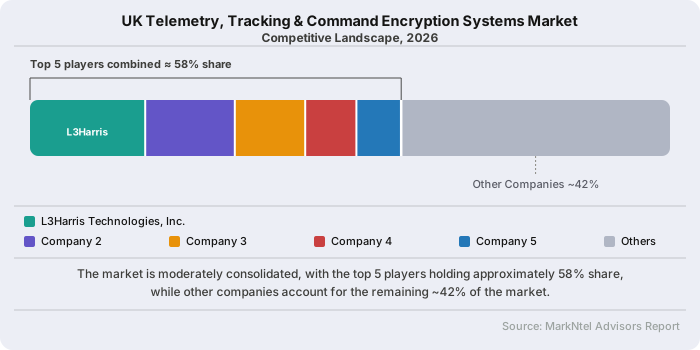
Competition within the UK telemetry, tracking & command encryption systems market remains moderately consolidated. Key companies, including L3Harris Technologies, Inc., Airbus Defense and Space GmbH, Thales Alenia Space SAS, BAE Systems plc, Viasat, Inc., RTX Corporation, General Dynamics Mission Systems, Inc., Leonardo S.p.A., Honeywell International Inc., Kratos Defense & Security Solutions, Inc., ST Engineering iDirect, Inc., and Cobham Satcom, collectively account for approximately 58% of the market revenue, supported by strong technological capabilities and long-term defense and space programs.
Key Players of Telemetry, Tracking & Command Encryption Systems in The UK
- L3Harris Technologies, Inc.
- Airbus Defense and Space GmbH
- Thales Alenia Space SAS
- BAE Systems plc
- Viasat, Inc.
- RTX Corporation
- General Dynamics Mission Systems, Inc.
- Leonardo S.p.A.
- Honeywell International Inc.
- Kratos Defense & Security Solutions, Inc.
- ST Engineering iDirect, Inc.
- Cobham Satcom
- Others
UK Telemetry, Tracking & Command Encryption Systems Industry News and Recent Developments
August 2025: Viasat Launches HaloNet for Secure Space Communications
Viasat launched its HaloNet portfolio to deliver secure, resilient communications for government and commercial space missions. The platform supports multi-band connectivity and secure data transmission, strengthening satellite communication capabilities for mission-critical operations.
Impact Analysis: The launch highlights the growing demand for resilient satellite communication networks, encouraging greater adoption of secure TT&C architectures and advanced encryption technologies across government and commercial space missions.
- Market Segmentation
- Introduction
- Product Definition
- Research Process
- Assumptions
- Executive Summary
- UK Telemetry, Tracking & Command Encryption Systems Market Policies, Regulations, and Product Standards
- UK Telemetry, Tracking & Command Encryption Systems Market Trends & Developments
- UK Telemetry, Tracking & Command Encryption Systems Market Dynamics
- Growth Factors
- Challenges
- UK Telemetry, Tracking & Command Encryption Systems Market Hotspot & Opportunities
- UK Telemetry, Tracking & Command Encryption Systems Market Outlook, 2022-2032
- Market Size & Outlook
- By Revenues (USD Million)
- Market Segmentation & Outlook
- By Component- Market Size & Forecast 2022-2032, USD Million
- Hardware
- Software
- Services
- By Encryption Technology- Market Size & Forecast 2022-2032, USD Million
- Symmetric Encryption
- Asymmetric Encryption
- Hybrid Encryption
- Post-Quantum Encryption
- By Deployment Mode- Market Size & Forecast 2022-2032, USD Million
- Embedded Encryption Systems
- External Encryption Modules
- Network-Based Encryption Systems
- By Platform- Market Size & Forecast 2022-2032, USD Million
- Satellites
- Launch Vehicles
- Ground Stations
- Mission Control Centers
- By End User- Market Size & Forecast 2022-2032, USD Million
- Government Space Agencies
- Defense
- Commercial Satellite Operators
- Launch Service Providers
- Others
- By Company
- Competition Characteristics
- Market Share & Analysis
- By Component- Market Size & Forecast 2022-2032, USD Million
- Market Size & Outlook
- UK Hardware Encryption Systems Market Outlook, 2022-2032
- Market Size & Outlook
- By Revenues (USD Million)
- Market Segmentation & Outlook
- By Encryption Technology- Market Size & Forecast 2022-2032, USD Million
- By Deployment Mode- Market Size & Forecast 2022-2032, USD Million
- By Platform- Market Size & Forecast 2022-2032, USD Million
- By End User- Market Size & Forecast 2022-2032, USD Million
- Market Size & Outlook
- UK Software Encryption Systems Market Outlook, 2022-2032
- Market Size & Outlook
- By Revenues (USD Million)
- Market Segmentation & Outlook
- By Encryption Technology- Market Size & Forecast 2022-2032, USD Million
- By Deployment Mode- Market Size & Forecast 2022-2032, USD Million
- By Platform- Market Size & Forecast 2022-2032, USD Million
- By End User- Market Size & Forecast 2022-2032, USD Million
- Market Size & Outlook
- UK Services Encryption Systems Market Outlook, 2022-2032
- Market Size & Outlook
- By Revenues (USD Million)
- Market Segmentation & Outlook
- By Encryption Technology- Market Size & Forecast 2022-2032, USD Million
- By Deployment Mode- Market Size & Forecast 2022-2032, USD Million
- By Platform- Market Size & Forecast 2022-2032, USD Million
- By End User- Market Size & Forecast 2022-2032, USD Million
- Market Size & Outlook
- UK Telemetry, Tracking & Command Encryption Systems Market Key Strategic Imperatives for Success & Growth
- Competitive Outlook
- Company Profiles
- L3Harris Technologies, Inc.
- Business Description
- Product Portfolio
- Collaborations & Alliances
- Recent Developments
- Financial Details
- Others
- Airbus Defense and Space GmbH
- Business Description
- Product Portfolio
- Collaborations & Alliances
- Recent Developments
- Financial Details
- Others
- Thales Alenia Space SAS
- Business Description
- Product Portfolio
- Collaborations & Alliances
- Recent Developments
- Financial Details
- Others
- BAE Systems plc
- Business Description
- Product Portfolio
- Collaborations & Alliances
- Recent Developments
- Financial Details
- Others
- Viasat, Inc.
- Business Description
- Product Portfolio
- Collaborations & Alliances
- Recent Developments
- Financial Details
- Others
- RTX Corporation
- Business Description
- Product Portfolio
- Collaborations & Alliances
- Recent Developments
- Financial Details
- Others
- General Dynamics Mission Systems, Inc.
- Business Description
- Product Portfolio
- Collaborations & Alliances
- Recent Developments
- Financial Details
- Others
- Leonardo S.p.A.
- Business Description
- Product Portfolio
- Collaborations & Alliances
- Recent Developments
- Financial Details
- Others
- Honeywell International Inc.
- Business Description
- Product Portfolio
- Collaborations & Alliances
- Recent Developments
- Financial Details
- Others
- Kratos Defense & Security Solutions, Inc.
- Business Description
- Product Portfolio
- Collaborations & Alliances
- Recent Developments
- Financial Details
- Others
- ST Engineering iDirect, Inc.
- Business Description
- Product Portfolio
- Collaborations & Alliances
- Recent Developments
- Financial Details
- Others
- Cobham Satcom
- Business Description
- Product Portfolio
- Collaborations & Alliances
- Recent Developments
- Financial Details
- Others
- L3Harris Technologies, Inc.
- Company Profiles
- Disclaimer

MarkNtel Advisors follows a robust and iterative research methodology designed to ensure maximum accuracy and minimize deviation in market estimates and forecasts. Our approach combines both bottom-up and top-down techniques to effectively segment and quantify various aspects of the market. A consistent feature across all our research reports is data triangulation, which examines the market from three distinct perspectives to validate findings. Key components of our research process include:
1. Scope & Research Design At the outset, MarkNtel Advisors define the research objectives and formulate pertinent questions. This phase involves determining the type of research—qualitative or quantitative—and designing a methodology that outlines data collection methods, target demographics, and analytical tools. They also establish timelines and budgets to ensure the research aligns with client goals.
2. Sample Selection and Data Collection In this stage, the firm identifies the target audience and determines the appropriate sample size to ensure representativeness. They employ various sampling methods, such as random or stratified sampling, based on the research objectives. Data collection is carried out using tools like surveys, interviews, and observations, ensuring the gathered data is reliable and relevant.
3. Data Analysis and Validation Once data is collected, MarkNtel Advisors undertake a rigorous analysis process. This includes cleaning the data to remove inconsistencies, employing statistical software for quantitative analysis, and thematic analysis for qualitative data. Validation steps are taken to ensure the accuracy and reliability of the findings, minimizing biases and errors.

4. Data Forecast and FinalizationThe final phase involves forecasting future market trends based on the analyzed data. MarkNtel Advisors utilize predictive modeling and time series analysis to anticipate market behaviors. The insights are then compiled into comprehensive reports, featuring visual aids like charts and graphs, and include strategic recommendations to inform client decision-making
We’d love to understand what matters most to you.