

By Resin Type (Commodity Thermoplastics (Polyethylene (PE) (HDPE, LDPE, LLDPE), Polypropylene (PP) (Homopolymer PP, Copolymer PP), Polyvinyl Chloride (PVC) (Rigid PVC, Flexible PVC), Polystyrene (PS))... ... ), Polystyrene (PS)), Engineering Thermoplastics (Polyamide (PA), Polycarbonate (PC), Polyethylene Terephthalate (PET), Polybutylene Terephthalate (PBT), Acrylonitrile Butadiene Styrene (ABS), Polymethyl Methacrylate (PMMA), Polyoxymethylene (POM)), High-Performance Thermoplastics (Polyether Ether Ketone (PEEK), Polyphenylene Sulfide (PPS), Polyetherimide (PEI), Polysulfone / Polyarylsulfone (PAS), Liquid Crystal Polymer (LCP), Fluoropolymers (PTFE, FEP, PFA, ETFE, PVDF)), Others), By Processing Technology (Injection Molding, Extrusion, Thermoforming, Rotational Molding, Additive Manufacturing, Others), By End User (Packaging, Automotive & Transportation, Building & Construction, Electrical & Electronics, Healthcare & Medical, Industrial Manufacturing, Aerospace & Defense, Others), and others Read more
- Chemicals
- Jul 2026
- 340
- PDF, Excel, PPT
Thermoplastics Market Key Takeaways
- The thermoplastics market was valued at USD 22.19 billion in 2025 and is projected to reach USD 23.52 billion in 2026 and USD 32.38 billion by 2032, registering a 5.47% CAGR during 2026–2032.
- Asia-Pacific leads the industry, accounting for approximately 38% of total revenue.
- By resin type, commodity thermoplastics dominate with an estimated 68% share.
- The packaging segment captured approximately 37% of the end-user share in 2026.
- The industry remains moderately fragmented, with the top five players collectively accounting for nearly 35% of the market share.
Thermoplastics Market Size and Outlook
The thermoplastics market size was valued at USD 22.19 billion in 2025 and is projected to increase from USD 23.52 billion in 2026 to USD 32.38 billion by 2032, registering a CAGR of around 5.47% during 2026–2032. Growth is expected to remain steady as rapid e-commerce expansion accelerates demand for flexible packaging, while manufacturers increasingly adopt lightweight engineering materials to improve efficiency, product durability, and processing performance, supported by continuous advances in advanced polymer solutions.
Demand is further supported by expanding electronics manufacturing, particularly in emerging economies. India’s electronics production reached USD 138 billion in 2024, backed by the Production Linked Incentive (PLI) Scheme, significantly increasing consumption of engineering thermoplastics for connectors, housings, and electrical insulation components. Rising investments in domestic electronics manufacturing, combined with increasing production of consumer devices and industrial equipment, are expected to strengthen long-term material demand throughout the forecast period.
The thermoplastics industry is also benefiting from evolving sustainability regulations across Europe. Under the revised End-of-Life Vehicles Regulation, 15% recycled plastic content within six years of the regulation entering into force. The European Commission states that the automotive sector consumes approximately 6 million tonnes of plastics annually across the EU. According to the European Parliament, new vehicles must include at least 25% recycled content within ten years, encouraging wider adoption of recycled engineering polymers.
Long-term aerospace production further strengthens industry prospects. According to the International Air Transport Association, global airlines carried an order backlog of 17,000 aircraft as of the end of 2024, approximately 50% larger than pre-pandemic norms. This unprecedented production pipeline indicates sustained multi-year demand for lightweight thermoplastic composites in next-generation airframes as manufacturers work through record aircraft production queues, reinforcing favorable growth prospects across high-value industrial applications.
Thermoplastics Market Key Indicators
- Global plastics production climbed to 430.9 million tonnes in 2024, according to Plastics Europe. This concentration of thermoplastic polymers manufacturing capacity in Asia directly shapes feedstock availability and pricing for downstream polymer processors, reinforcing the region's position as the primary manufacturing base for commodity and engineering-grade plastic materials worldwide.
- Worldwide generation of electronic waste reached 62 million tonnes, embedding an estimated 17 million tonnes of plastics, and is forecast to climb to 82 million tonnes by 2030, according to the UN's Global E-waste Monitor. Rising volumes within this electronic waste stream signal parallel growth in plastic component consumption for consumer electronics housings, circuit board substrates, and cable insulation across the electrical and electronics manufacturing sector.
- India's Jal Jeevan Mission has connected more than 157.9 million rural households, or 81.56% of the target population, to piped tap water as of 28 January 2026, backed by a central government outlay of approximately USD 24 billion, per the Press Information Bureau. This unprecedented scale of rural water infrastructure expansion sustains high-volume procurement of HDPE and PVC pipes as essential construction materials, a major downstream application for commodity-grade thermoplastic resins in developing economies.
- The European Union's Packaging and Packaging Waste Regulation, in force since 11 February 2025 and applicable from 12 August 2026, mandates minimum recycled content in plastic packaging with recycled content thresholds rising progressively through 2030 and 2040, according to the European Commission. Compliance obligations of this scale are compelling sustainable packaging converters across the bloc to reformulate plastic packaging lines around certified post-consumer recycled resin inputs ahead of the enforcement deadline.
Thermoplastics Market Scope
| Category | Segments |
|---|---|
| By Resin Type | Commodity Thermoplastics (Polyethylene (PE) (HDPE, LDPE, LLDPE), Polypropylene (PP) (Homopolymer PP, Copolymer PP), Polyvinyl Chloride (PVC) (Rigid PVC, Flexible PVC), Polystyrene (PS)), Engineering Thermoplastics (Polyamide (PA), Polycarbonate (PC), Polyethylene Terephthalate (PET), Polybutylene Terephthalate (PBT), Acrylonitrile Butadiene Styrene (ABS), Polymethyl Methacrylate (PMMA), Polyoxymethylene (POM)), High-Performance Thermoplastics (Polyether Ether Ketone (PEEK), Polyphenylene Sulfide (PPS), Polyetherimide (PEI), Polysulfone / Polyarylsulfone (PAS), Liquid Crystal Polymer (LCP), Fluoropolymers (PTFE, FEP, PFA, ETFE, PVDF)), Others |
| By Processing Technology | Injection Molding, Extrusion, Thermoforming, Rotational Molding, Additive Manufacturing, Others |
| By End User | Packaging, Automotive & Transportation, Building & Construction, Electrical & Electronics, Healthcare & Medical, Industrial Manufacturing, Aerospace & Defense, Others |
Thermoplastics Market Growth Drivers
Rapid E-Commerce Expansion Driving Flexible Packaging
Rapid e-commerce expansion is accelerating flexible packaging demand for various products across the thermoplastics sector in both mature and emerging economies worldwide today. U.S. retail e-commerce sales reached USD 1,1929 billion in 2026, according to the U.S. Census Bureau. Each online transaction requires protective, lightweight packaging built from plastic resins, distinct from bulk retail formats used in traditional stores.
This shift extends well beyond the United States into fast-growing global markets. Global business e-commerce sales reached USD 27 trillion, growing nearly 60% since approximately five to six years, according to UN Trade and Development. Markets across Asia, Latin America, and Africa are replicating the packaging intensity seen in mature e-commerce economies, broadening the addressable base for flexible sustainable packaging formats beyond any single national market or region worldwide.
For producers across the thermoplastics industry, this shift favors polyolefin-based films, pouches, and mailers engineered for durability under repeated handling and variable climate exposure during long-distance transit and storage. Packaging converters increasingly prioritize resin grades combining puncture resistance with reduced material weight, since e-commerce logistics networks reward packaging that lowers shipping cost per unit while maintaining product protection standards across delivery routes nationwide.
Recent Trends
Rising Adoption of Lightweight Engineering Thermoplastics in Electric Vehicle Components
Global electric car sales exceeded 20 million units in 2025, growing 20% over 2024 and reaching a 25% share of total car sales worldwide, according to the International Energy Agency. This sustained multi-year expansion within the thermoplastics industry is steadily replacing metal components with engineering thermoplastics across battery enclosures, connector housings, and structural brackets, extending the vehicle range achieved per single battery charge across platforms.
China anchors this shift at scale, with more than 13 million electric cars sold domestically in 2025, maintaining its position as the world's largest electric vehicle market and accounting for six out of every ten electric cars sold globally, per the IEA. Vehicle manufacturers increasingly specify glass-fiber-reinforced polyamide and polypropylene compounds for battery pack housings, advancing automotive lightweighting strategies across expanding global EV platforms and vehicle architectures.
This directional shift is reinforced by manufacturers' continued transition toward battery electric platforms over combustion architectures, strengthened as electric car sales in Europe rose 30% in 2025 following tightened emissions standards. As automakers standardize electric vehicle materials across expanding platforms, demand for engineering-grade resins within the thermoplastics market continues to scale alongside global vehicle electrification volumes and rising production output levels.
Thermoplastics Market Opportunities and Challenges
California's SB 54 Packaging Mandate Driving Demand for Molecular Recycling Investment
California's Plastic Pollution Prevention and Packaging Producer Responsibility Act, known as SB 54, advanced toward enforcement when the Office of Administrative Law filed its permanent regulations on 1 May 2026, according to CalRecycle. The law requires producers to achieve a 25% source reduction in single-use plastic packaging and a 65% recycling rate for plastic covered materials by 2032, reshaping compliance costs across the thermoplastics market nationwide and beyond.
Producers of expanded polystyrene food-service ware already faced a statewide sales ban effective 1 January 2025 after failing to meet a 25% plastic recycling rate threshold, illustrating the tangible commercial consequences non-compliance now carries for covered producers operating statewide, as documented by CalRecycle. This regulatory precedent signals that California's phased 2028 and 2032 deadlines will impose similarly binding consequences across broader packaging categories nationwide over time.
This compliance pressure creates a direct commercial opening within the thermoplastics industry for molecular recycling capacity across the United States and beyond. Eastman Chemical Company's methanolysis facility in Kingsport, Tennessee, produced more than 2.5 times its targeted output in 2025, delivering approximately USD 60 million of incremental earnings versus 2024, according to the company's fourth-quarter financial results, positioning early movers in circular economy plastics ahead of mechanical-recycling-only competitors nationwide.
Segmentation Insights
Commodity Thermoplastics Lead on Large-Scale, Low-Cost Feedstock Availability
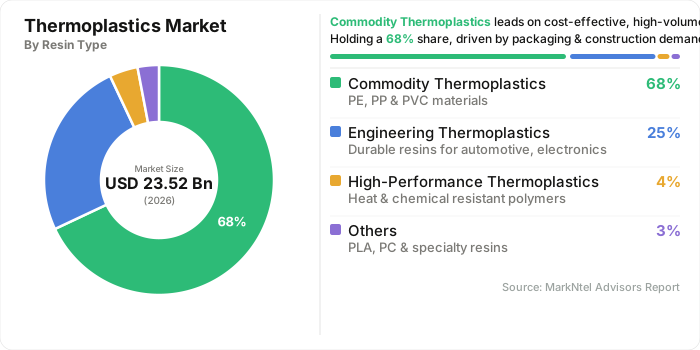
Commodity thermoplastics contribute approximately 68% share of the overall thermoplastics landscape, anchored by polyethylene and polypropylene's dominance in packaging, construction, and consumer goods manufacturing worldwide today. China's ethylene production capacity exceeds 54 million tonnes per year, the largest of any country worldwide, reinforcing the low-cost feedstock base that keeps commodity polymer materials competitively priced against engineering and high-performance alternatives globally, according to industry capacity tracking.
This scale advantage sustains commodity thermoplastics' cost leadership across high-volume applications where processability, moldability, and price outweigh the need for specialized mechanical, thermal, or chemical-resistance performance found in more demanding engineering plastics applications worldwide today. China's polypropylene exports climbed from 1.3 million tonnes to 2.4 million tonnes in 2024, reflecting rapidly expanding global availability of commodity-grade resin supply, per trade flow data.
Volumes are projected to reach 3.2 to 3.4 million tonnes by 2026, underscoring continued commodity-grade supply growth across major export markets worldwide. Engineering thermoplastics represent the fastest-growing segment as automotive and electronics manufacturers substitute metal components with glass-reinforced polyamide and polycarbonate blends, signaling a gradual value-mix shift even as commodity grades retain overall volume leadership. Based on resin type, the scope has been classified into:
- Commodity Thermoplastics
- Engineering Thermoplastics
- High-Performance Thermoplastics
- Others
Packaging Leads Due to The Superior Barrier Protection and Light Weight
Packaging accounts for approximately 37% of overall demand within the thermoplastics industry, making it the dominant segment. This leadership is reinforced by extensive consumption across food, beverage, healthcare, personal care, and industrial packaging applications, where durable yet lightweight materials remain essential. The segment continues to benefit from increasing reliance on polymer materials that support efficient manufacturing, transportation, and product protection throughout complex global supply chains.
The European Environment Agency reports that packaging represents close to 40% of total plastics converter demand across the EU-27 plus three additional countries in Europe today. This substantial consumption reflects sustained demand from manufacturers seeking materials capable of supporting high-volume production while maintaining consistent product quality. Continuous innovation in plastic resins further strengthens packaging applications by enabling improved functionality across both flexible and rigid packaging formats.
Packaging maintains its leading position because thermoplastics combine excellent barrier protection, high formability, and lightweight characteristics compared with conventional glass or metal alternatives. These performance advantages help reduce transportation weight, improve manufacturing efficiency, and support diverse products. As packaging requirements continue to evolve, these material characteristics are expected to reinforce the segment's long-term dominance. The study analyzes the following key end-user segments:
- Packaging
- Automotive & Transportation
- Building & Construction
- Electrical & Electronics
- Healthcare & Medical
- Industrial Manufacturing
- Aerospace & Defense
- Others
Thermoplastics Market Geographical Outlook
Asia-Pacific accounts for approximately 38% of the thermoplastics demand, representing the largest regional share worldwide. Its leadership is supported by its position as the world's dominant manufacturing and petrochemical production base. Integrated refining-to-resin value chains across China, South Korea, and Southeast Asia provide manufacturers with reliable feedstock availability and high-cost and logistics advantages, strengthening regional competitiveness in polymer manufacturing.
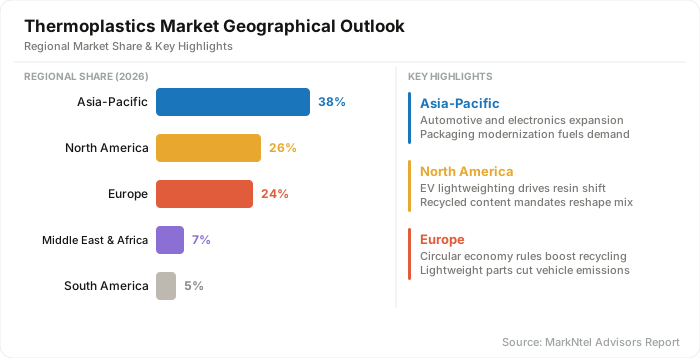
The region's vertically integrated industrial ecosystem enables efficient production, processing, and distribution of thermoplastic materials across multiple downstream industries. Proximity between petrochemical producers and converters shortens supply chains, enhances operational efficiency, and supports consistent raw material availability. These structural advantages continue to reinforce Asia-Pacific's position as a global production hub while encouraging investments in industrial plastics for packaging, automotive, electronics, and construction applications.
Indonesia demonstrates this competitive advantage through expanding petrochemical investments. PT Lotte Chemical Indonesia inaugurated its USD 3.9 billion LINE petrochemical complex in Cilegon, Banten province, in November 2025, adding an annual production capacity of 1 million tonnes of ethylene, 520,000 tonnes of propylene, and 350,000 tonnes of polypropylene. The project expands regional feedstock availability for downstream converters nationwide while strengthening long-term manufacturing capabilities across the regional value chain.
Thermoplastics Market Competitive Analysis
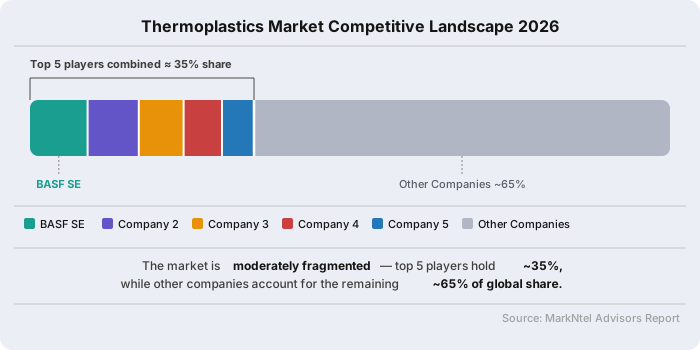
The competitive landscape of the thermoplastics market is moderately fragmented, with the top five companies BASF SE, Dow Inc., SABIC, LyondellBasell Industries, and ExxonMobil Chemical collectively holding an estimated 35% of the revenue. Competition is driven by production scale, feedstock integration, product innovation, manufacturing efficiency, and regional expansion strategies. Leading companies continue investing in high-performance polymers, recycled materials, and bio-based solutions while strengthening global supply chains through capacity expansions and strategic partnerships. Meanwhile, numerous regional and specialty producers intensify competition by serving niche applications, supporting innovation, and meeting localized demand across diverse end-use industries.
Major Companies in the Thermoplastics Industry
- BASF SE
- Dow Inc.
- SABIC
- LyondellBasell Industries
- ExxonMobil Chemical
- Sinopec
- INEOS Group
- LG Chem Ltd.
- Chevron Phillips Chemical Company
- Borealis AG
- Covestro AG
- Celanese Corporation
- DuPont de Nemours, Inc.
- Eastman Chemical Company
- Arkema S.A.
- Others
Thermoplastics Industry News and Recent Developments
December 2025: SABIC Launches Fluorine-Free Polycarbonate Resin for Medical Devices
SABIC introduced LNP ELCRES™ NPCRX9612U, the industry's first polycarbonate copolymer resin formulated without fluorine or other PFAS. Certified under UL746G, the new material provides excellent chemical resistance against healthcare disinfectants and UL94 V0 flame retardance at 1.5 mm. Designed for applications including insulin pumps, diagnostic imaging devices, and medical monitors, the resin supports thinner, lightweight medical device designs.
Impact Analysis: The launch strengthens SABIC's position in high-value engineering thermoplastics while addressing tightening global PFAS regulations and growing demand for safer healthcare materials. By combining regulatory compliance with high mechanical performance and chemical resistance, the new resin enables medical device manufacturers to accelerate product innovation without compromising safety. The development is expected to stimulate broader adoption of specialty polycarbonate materials and intensify competition in medical-grade thermoplastics, encouraging further investment in sustainable, high-performance polymer solutions.
June 2025: BASF Introduces Ultramid® Advanced N for Electric Vehicle Connectors
BASF expanded its engineering plastics portfolio by launching Ultramid® Advanced N3U42G6, a non-halogenated flame-retardant polyphthalamide (PPA) developed for high-voltage connectors used in electric vehicles. The material offers excellent electrical insulation, dimensional stability, chemical resistance, and long-term color stability while supporting compact connector designs for batteries, inverters, and DC-DC converters in next-generation electric powertrains.
Impact Analysis: The introduction reinforces BASF's competitive position in advanced engineering thermoplastics for electric mobility. As automakers seek lightweight, high-temperature materials capable of improving connector reliability and electrical safety, the new PPA grade addresses evolving performance requirements for EV platforms. Its non-halogenated flame-retardant formulation also aligns with increasing sustainability expectations across automotive supply chains. The launch is likely to accelerate material substitution from conventional polymers and support wider adoption of advanced thermoplastic solutions in electrified vehicles.
October 2025: LyondellBasell Expands Polypropylene Portfolio with New Packaging Grade
LyondellBasell introduced a new polypropylene grade for packaging applications, expanding its advanced polymer portfolio with enhanced processability, mechanical performance, and formulation flexibility. The material is designed to improve manufacturing efficiency while meeting evolving customer requirements across rigid and flexible packaging applications.
Impact Analysis: The product launch strengthens LyondellBasell's presence in one of the largest thermoplastics application segments by addressing increasing demand for efficient, lightweight, and circular packaging materials. Enhanced polypropylene formulations enable converters to improve production efficiency while meeting sustainability targets through recycled-content integration. As brand owners continue prioritizing resource efficiency and packaging performance, the development is expected to reinforce innovation across polypropylene applications and encourage broader commercialization of high-performance packaging materials.
- Market Segmentation
- Introduction
- Product Definition
- Research Process
- Assumptions
- Executive Summary
- Global Thermoplastics Market Policies, Regulations, and Product Standards
- Global Thermoplastics Production Trend 2022-2032
- Global Thermoplastics Trend by Resin Type
- Commodity Thermoplastics
- Engineering Thermoplastics
- High-Performance Thermoplastics
- Company Wise Production Plants and Statistics
- Installed Production Capacity
- Actual Production
- Planned Production Target
- Global Thermoplastics Trend by Resin Type
- Global Thermoplastics Pricing Analysis 2022-2032
- Global Thermoplastics Pricing Trend 2022-2032
- Global Thermoplastics Pricing Trend by Regions 2022-2032
- North America
- South America
- Europe
- Middle East & Africa
- Asia Pacific
- Global Thermoplastics Pricing Trend by Resin Type 2022-2032
- Commodity Thermoplastics
- Engineering Thermoplastics
- High-Performance Thermoplastics
- Global Thermoplastics Market Dynamics
- Growth Factors
- Challenges
- Global Thermoplastics Market Supply Chain Analysis
- Global Thermoplastics Market Hotspot & Opportunities
- Global Thermoplastics Market Outlook, 2022-2032F
- Market Size & Outlook
- By Revenues (USD Million)
- Market Segmentation & Outlook
- By Resin Type- Market Size & Forecast 2022-2032, USD Million
- Commodity Thermoplastics
- Polyethylene (PE)
- HDPE
- LDPE
- LLDPE
- Polypropylene (PP)
- Homopolymer PP
- Copolymer PP
- Polyvinyl Chloride (PVC)
- Rigid PVC
- Flexible PVC
- Polystyrene (PS)
- Polyethylene (PE)
- Engineering Thermoplastics
- Polyamide (PA)
- Polycarbonate (PC)
- Polyethylene Terephthalate (PET)
- Polybutylene Terephthalate (PBT)
- Acrylonitrile Butadiene Styrene (ABS)
- Polymethyl Methacrylate (PMMA)
- Polyoxymethylene (POM)
- High-Performance Thermoplastics
- Polyether Ether Ketone (PEEK)
- Polyphenylene Sulfide (PPS)
- Polyetherimide (PEI)
- Polysulfone / Polyarylsulfone (PAS)
- Liquid Crystal Polymer (LCP)
- Fluoropolymers
- PTFE
- FEP
- PFA
- ETFE
- PVDF
- Others
- Commodity Thermoplastics
- By Processing Technology- Market Size & Forecast 2022-2032, USD Million
- Injection Molding
- Extrusion
- Thermoforming
- Rotational Molding
- Additive Manufacturing
- Others
- By End User- Market Size & Forecast 2022-2032, USD Million
- Packaging
- Automotive & Transportation
- Building & Construction
- Electrical & Electronics
- Healthcare & Medical
- Industrial Manufacturing
- Aerospace & Defense
- Others
- By Region
- North America
- South America
- Europe
- The Middle East & Africa
- Asia-Pacific
- By Company
- Competition Characteristics
- Market Share & Analysis
- By Resin Type- Market Size & Forecast 2022-2032, USD Million
- Market Size & Outlook
- North America Thermoplastics Market Outlook, 2022-2032F
- Market Size & Outlook
- By Revenues (USD Million)
- Market Segmentation & Outlook
- By Resin Type- Market Size & Forecast 2022-2032, USD Million
- By Processing Technology- Market Size & Forecast 2022-2032, USD Million
- By End User- Market Size & Forecast 2022-2032, USD Million
- By Country
- The US
- Canada
- Mexico
- The US Thermoplastics Market Outlook, 2022-2032F
- Market Size & Outlook
- By Revenues (USD Million)
- Market Segmentation & Outlook
- By Resin Type- Market Size & Forecast 2022-2032, USD Million
- By Processing Technology- Market Size & Forecast 2022-2032, USD Million
- By End User- Market Size & Forecast 2022-2032, USD Million
- Market Size & Outlook
- Canada Thermoplastics Market Outlook, 2022-2032F
- Market Size & Outlook
- By Revenues (USD Million)
- Market Segmentation & Outlook
- By Resin Type- Market Size & Forecast 2022-2032, USD Million
- By Processing Technology- Market Size & Forecast 2022-2032, USD Million
- By End User- Market Size & Forecast 2022-2032, USD Million
- Market Size & Outlook
- Mexico Thermoplastics Market Outlook, 2022-2032F
- Market Size & Outlook
- By Revenues (USD Million)
- Market Segmentation & Outlook
- By Resin Type- Market Size & Forecast 2022-2032, USD Million
- By Processing Technology- Market Size & Forecast 2022-2032, USD Million
- By End User- Market Size & Forecast 2022-2032, USD Million
- Market Size & Outlook
- Market Size & Outlook
- South America Thermoplastics Market Outlook, 2022-2032F
- Market Size & Outlook
- By Revenues (USD Million)
- Market Segmentation & Outlook
- By Resin Type- Market Size & Forecast 2022-2032, USD Million
- By Processing Technology- Market Size & Forecast 2022-2032, USD Million
- By End User- Market Size & Forecast 2022-2032, USD Million
- By Country
- Brazil
- Argentina
- Rest of South America
- Brazil Thermoplastics Market Outlook, 2022-2032F
- Market Size & Outlook
- By Revenues (USD Million)
- Market Segmentation & Outlook
- By Resin Type- Market Size & Forecast 2022-2032, USD Million
- By Processing Technology- Market Size & Forecast 2022-2032, USD Million
- By End User- Market Size & Forecast 2022-2032, USD Million
- Market Size & Outlook
- Argentina Thermoplastics Market Outlook, 2022-2032F
- Market Size & Outlook
- By Revenues (USD Million)
- Market Segmentation & Outlook
- By Resin Type- Market Size & Forecast 2022-2032, USD Million
- By Processing Technology- Market Size & Forecast 2022-2032, USD Million
- By End User- Market Size & Forecast 2022-2032, USD Million
- Market Size & Outlook
- Market Size & Outlook
- Europe Thermoplastics Market Outlook, 2022-2032F
- Market Size & Outlook
- By Revenues (USD Million)
- Market Segmentation & Outlook
- By Resin Type- Market Size & Forecast 2022-2032, USD Million
- By Processing Technology- Market Size & Forecast 2022-2032, USD Million
- By End User- Market Size & Forecast 2022-2032, USD Million
- By Country
- The UK
- Germany
- France
- Italy
- Spain
- The Benelux
- Rest of Europe
- The UK Thermoplastics Market Outlook, 2022-2032F
- Market Size & Outlook
- By Revenues (USD Million)
- Market Segmentation & Outlook
- By Resin Type- Market Size & Forecast 2022-2032, USD Million
- By Processing Technology- Market Size & Forecast 2022-2032, USD Million
- By End User- Market Size & Forecast 2022-2032, USD Million
- Market Size & Outlook
- Germany Thermoplastics Market Outlook, 2022-2032F
- Market Size & Outlook
- By Revenues (USD Million)
- Market Segmentation & Outlook
- By Resin Type- Market Size & Forecast 2022-2032, USD Million
- By Processing Technology- Market Size & Forecast 2022-2032, USD Million
- By End User- Market Size & Forecast 2022-2032, USD Million
- Market Size & Outlook
- France Thermoplastics Market Outlook, 2022-2032F
- Market Size & Outlook
- By Revenues (USD Million)
- Market Segmentation & Outlook
- By Resin Type- Market Size & Forecast 2022-2032, USD Million
- By Processing Technology- Market Size & Forecast 2022-2032, USD Million
- By End User- Market Size & Forecast 2022-2032, USD Million
- Market Size & Outlook
- Italy Thermoplastics Market Outlook, 2022-2032F
- Market Size & Outlook
- By Revenues (USD Million)
- Market Segmentation & Outlook
- By Resin Type- Market Size & Forecast 2022-2032, USD Million
- By Processing Technology- Market Size & Forecast 2022-2032, USD Million
- By End User- Market Size & Forecast 2022-2032, USD Million
- Market Size & Outlook
- Spain Thermoplastics Market Outlook, 2022-2032F
- Market Size & Outlook
- By Revenues (USD Million)
- Market Segmentation & Outlook
- By Resin Type- Market Size & Forecast 2022-2032, USD Million
- By Processing Technology- Market Size & Forecast 2022-2032, USD Million
- By End User- Market Size & Forecast 2022-2032, USD Million
- Market Size & Outlook
- The Benelux Thermoplastics Market Outlook, 2022-2032F
- Market Size & Outlook
- By Revenues (USD Million)
- Market Segmentation & Outlook
- By Resin Type- Market Size & Forecast 2022-2032, USD Million
- By Processing Technology- Market Size & Forecast 2022-2032, USD Million
- By End User- Market Size & Forecast 2022-2032, USD Million
- Market Size & Outlook
- Market Size & Outlook
- The Middle East & Africa Thermoplastics Market Outlook, 2022-2032F
- Market Size & Outlook
- By Revenues (USD Million)
- Market Segmentation & Outlook
- By Resin Type- Market Size & Forecast 2022-2032, USD Million
- By Processing Technology- Market Size & Forecast 2022-2032, USD Million
- By End User- Market Size & Forecast 2022-2032, USD Million
- By Country
- Saudi Arabia
- The UAE
- South Africa
- Egypt
- Rest of Middle East & Africa
- Saudi Arabia Thermoplastics Market Outlook, 2022-2032F
- Market Size & Outlook
- By Revenues (USD Million)
- Market Segmentation & Outlook
- By Resin Type- Market Size & Forecast 2022-2032, USD Million
- By Processing Technology- Market Size & Forecast 2022-2032, USD Million
- By End User- Market Size & Forecast 2022-2032, USD Million
- Market Size & Outlook
- The UAE Thermoplastics Market Outlook, 2022-2032F
- Market Size & Outlook
- By Revenues (USD Million)
- Market Segmentation & Outlook
- By Resin Type- Market Size & Forecast 2022-2032, USD Million
- By Processing Technology- Market Size & Forecast 2022-2032, USD Million
- By End User- Market Size & Forecast 2022-2032, USD Million
- Market Size & Outlook
- South Africa Thermoplastics Market Outlook, 2022-2032F
- Market Size & Outlook
- By Revenues (USD Million)
- Market Segmentation & Outlook
- By Resin Type- Market Size & Forecast 2022-2032, USD Million
- By Processing Technology- Market Size & Forecast 2022-2032, USD Million
- By End User- Market Size & Forecast 2022-2032, USD Million
- Market Size & Outlook
- Egypt Thermoplastics Market Outlook, 2022-2032F
- Market Size & Outlook
- By Revenues (USD Million)
- Market Segmentation & Outlook
- By Resin Type- Market Size & Forecast 2022-2032, USD Million
- By Processing Technology- Market Size & Forecast 2022-2032, USD Million
- By End User- Market Size & Forecast 2022-2032, USD Million
- Market Size & Outlook
- Market Size & Outlook
- Asia-Pacific Thermoplastics Market Outlook, 2022-2032F
- Market Size & Outlook
- By Revenues (USD Million)
- Market Segmentation & Outlook
- By Resin Type- Market Size & Forecast 2022-2032, USD Million
- By Processing Technology- Market Size & Forecast 2022-2032, USD Million
- By End User- Market Size & Forecast 2022-2032, USD Million
- By Country
- China
- Japan
- India
- South Korea
- Australia
- Rest of Asia-Pacific
- China Thermoplastics Market Outlook, 2022-2032F
- Market Size & Outlook
- By Revenues (USD Million)
- Market Segmentation & Outlook
- By Resin Type- Market Size & Forecast 2022-2032, USD Million
- By Processing Technology- Market Size & Forecast 2022-2032, USD Million
- By End User- Market Size & Forecast 2022-2032, USD Million
- Market Size & Outlook
- Japan Thermoplastics Market Outlook, 2022-2032F
- Market Size & Outlook
- By Revenues (USD Million)
- Market Segmentation & Outlook
- By Resin Type- Market Size & Forecast 2022-2032, USD Million
- By Processing Technology- Market Size & Forecast 2022-2032, USD Million
- By End User- Market Size & Forecast 2022-2032, USD Million
- Market Size & Outlook
- India Thermoplastics Market Outlook, 2022-2032F
- Market Size & Outlook
- By Revenues (USD Million)
- Market Segmentation & Outlook
- By Resin Type- Market Size & Forecast 2022-2032, USD Million
- By Processing Technology- Market Size & Forecast 2022-2032, USD Million
- By End User- Market Size & Forecast 2022-2032, USD Million
- Market Size & Outlook
- South Korea Thermoplastics Market Outlook, 2022-2032F
- Market Size & Outlook
- By Revenues (USD Million)
- Market Segmentation & Outlook
- By Resin Type- Market Size & Forecast 2022-2032, USD Million
- By Processing Technology- Market Size & Forecast 2022-2032, USD Million
- By End User- Market Size & Forecast 2022-2032, USD Million
- Market Size & Outlook
- Australia Thermoplastics Market Outlook, 2022-2032F
- Market Size & Outlook
- By Revenues (USD Million)
- Market Segmentation & Outlook
- By Resin Type- Market Size & Forecast 2022-2032, USD Million
- By Processing Technology- Market Size & Forecast 2022-2032, USD Million
- By End User- Market Size & Forecast 2022-2032, USD Million
- Market Size & Outlook
- Market Size & Outlook
- Global Thermoplastics Market Key Strategic Imperatives for Success & Growth
- Competitive Outlook
- Company Profiles
- BASF SE
- Business Description
- Product Portfolio
- Collaborations & Alliances
- Recent Developments
- Financial Details
- Others
- Dow Inc.
- Business Description
- Product Portfolio
- Collaborations & Alliances
- Recent Developments
- Financial Details
- Others
- SABIC
- Business Description
- Product Portfolio
- Collaborations & Alliances
- Recent Developments
- Financial Details
- Others
- LyondellBasell Industries
- Business Description
- Product Portfolio
- Collaborations & Alliances
- Recent Developments
- Financial Details
- Others
- ExxonMobil Chemical
- Business Description
- Product Portfolio
- Collaborations & Alliances
- Recent Developments
- Financial Details
- Others
- Sinopec
- Business Description
- Product Portfolio
- Collaborations & Alliances
- Recent Developments
- Financial Details
- Others
- INEOS Group
- Business Description
- Product Portfolio
- Collaborations & Alliances
- Recent Developments
- Financial Details
- Others
- LG Chem Ltd.
- Business Description
- Product Portfolio
- Collaborations & Alliances
- Recent Developments
- Financial Details
- Others
- Chevron Phillips Chemical Company
- Business Description
- Product Portfolio
- Collaborations & Alliances
- Recent Developments
- Financial Details
- Others
- Borealis AG
- Business Description
- Product Portfolio
- Collaborations & Alliances
- Recent Developments
- Financial Details
- Others
- Covestro AG
- Business Description
- Product Portfolio
- Collaborations & Alliances
- Recent Developments
- Financial Details
- Others
- Celanese Corporation
- Business Description
- Product Portfolio
- Collaborations & Alliances
- Recent Developments
- Financial Details
- Others
- DuPont de Nemours, Inc.
- Business Description
- Product Portfolio
- Collaborations & Alliances
- Recent Developments
- Financial Details
- Others
- Eastman Chemical Company
- Business Description
- Product Portfolio
- Collaborations & Alliances
- Recent Developments
- Financial Details
- Others
- Arkema S.A.
- Business Description
- Product Portfolio
- Collaborations & Alliances
- Recent Developments
- Financial Details
- Others
- Others
- BASF SE
- Company Profiles
- Disclaimer

MarkNtel Advisors follows a robust and iterative research methodology designed to ensure maximum accuracy and minimize deviation in market estimates and forecasts. Our approach combines both bottom-up and top-down techniques to effectively segment and quantify various aspects of the market. A consistent feature across all our research reports is data triangulation, which examines the market from three distinct perspectives to validate findings. Key components of our research process include:
1. Scope & Research Design At the outset, MarkNtel Advisors define the research objectives and formulate pertinent questions. This phase involves determining the type of research—qualitative or quantitative—and designing a methodology that outlines data collection methods, target demographics, and analytical tools. They also establish timelines and budgets to ensure the research aligns with client goals.
2. Sample Selection and Data Collection In this stage, the firm identifies the target audience and determines the appropriate sample size to ensure representativeness. They employ various sampling methods, such as random or stratified sampling, based on the research objectives. Data collection is carried out using tools like surveys, interviews, and observations, ensuring the gathered data is reliable and relevant.
3. Data Analysis and Validation Once data is collected, MarkNtel Advisors undertake a rigorous analysis process. This includes cleaning the data to remove inconsistencies, employing statistical software for quantitative analysis, and thematic analysis for qualitative data. Validation steps are taken to ensure the accuracy and reliability of the findings, minimizing biases and errors.

4. Data Forecast and FinalizationThe final phase involves forecasting future market trends based on the analyzed data. MarkNtel Advisors utilize predictive modeling and time series analysis to anticipate market behaviors. The insights are then compiled into comprehensive reports, featuring visual aids like charts and graphs, and include strategic recommendations to inform client decision-making
We’d love to understand what matters most to you.