

By Product Type (Room Air Conditioners, VRF Systems, Chillers, Packaged Air Conditioners, Cassette Air Conditioners, Ducted Split Systems), By Refrigerant Type (R32, R410A, R134a, R290, R1234ze / R123... ... R290, R1234ze / R1234yf, Others), By Distribution Channel (Direct Sales, Authorized Dealers & Distributors, Multi-Brand Stores, Online), By End User (Residential, Offices, Retail & Malls, Hotels & Hospitality, Hospitals & Healthcare, Educational Institutions, Manufacturing, Pharmaceuticals, Food & Beverage, Data Centers, Others), and others Read more
- Environment
- Jun 2026
- 180
- PDF, Excel, PPT
South Africa Air Conditioners Market Key Takeaways
- South Africa air conditioners market size was valued at USD 198 million in 2025 and is projected to grow from USD 212 million in 2026 to USD 262 million by 2032.
- The industry is projected to reflect sustained growth at a steady CAGR of 3.59% during 2026-2032.
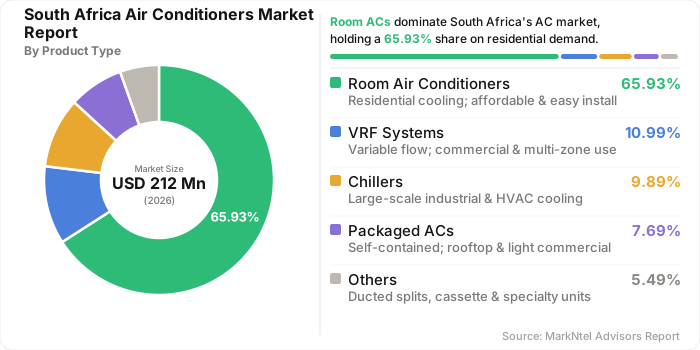
- By product type, room air conditioners hold a significant share of about 60% in 2026.
- By end user, residential seized a significant share of about 43% in 2026.
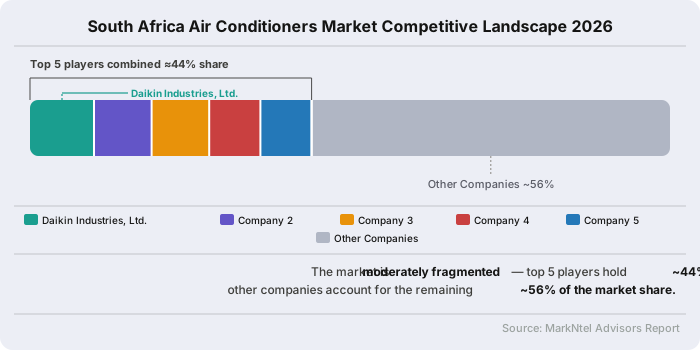
- The industry is moderately fragmented. However, the top five players collectively account for nearly 44% share.
South Africa Air Conditioners Market Size and Outlook
The South Africa air conditioners market size was valued at USD 198 million in 2025 and is projected to grow from USD 212 million in 2026 to USD 262 million by 2032. Along with this, the market is estimated to grow at a CAGR of around 3.59% during the forecast period, i.e., 2026-32, driven by extreme heat events. In November 2025, the South African Weather Service issued heat warnings across several provinces, including Cape Town, with daytime temperatures exceeding 40°C in parts of the interior. A year earlier, in December 2024, Twee Riviere in the Eastern Cape recorded 45.9°C, among the country's highest readings on record, reinforcing how climatic extremes push residential and commercial buyers toward cooling equipment nationwide.
Regulation strongly shapes the market. Under SANS 941, part of Compulsory Specification VC 9008 enforced since 2014-2015, South Africa's Department of Trade, Industry and Competition requires every air conditioner sold locally to carry a minimum Class B energy-efficiency rating. In 2024, the department gazetted proposed amendments extending mandatory approval by the National Regulator for Compulsory Specifications to air conditioners and heat pumps up to 8.8kW cooling or heating output.
International manufacturers are deepening their footprint. Daikin operates as a major South African distributor of air conditioning, heating, and heat-pump systems, serving both residential and commercial sectors. On October 27, 2025, Mitsubishi Electric Corporation announced that its subsidiary, Mitsubishi Electric Hydronics & IT Cooling Systems S.p.A., had acquired a stake in Intramech Pty Ltd., a South African company specializing in applied HVAC and IT-cooling systems, citing rising regional demand for cooling solutions .
Structural challenges persist alongside this momentum. Unreliable electricity supply and high tariffs from Eskom continue raising long-term ownership costs, prompting buyers toward inverter-based and split-unit systems for efficiency. Combined with continued urban construction, hotel expansion, and retail development across major cities, these factors suggest South Africa's air conditioner sector will keep strengthening steadily, balancing climatic necessity against the country's persistent energy-supply constraints in the years ahead.
South Africa Air Conditioners Market Key Indicators
- South Africa is urbanizing rapidly, with 63% of the population already living in urban areas, a share projected to rise to 71% by 2030 and to roughly 80% by 2050, according to South Africa's Parliamentary Monitoring Group . This sustained shift toward cities like Johannesburg, Cape Town, and Durban increases pressure on housing, offices, and retail infrastructure, each requiring built-in cooling solutions. As urban density grows, so does the addressable market for residential and commercial air conditioning systems nationwide.
- According to the South African Reserve Bank, disposable personal income increased to USD 310.8 billion in the fourth quarter of 2025, up from USD 306.6 billion in the third quarter of 2025, reaching a record high. This steady rise in after-tax income enhances affordability for residential air conditioners, particularly among middle-income urban households, supporting long-term market demand .
- South Africa has more than 17 million households, creating a substantial consumer base for room air conditioners, split ACs, and heat pump-based cooling systems. Growing household formation, rising middle-income consumers, and increased adoption of home appliances are encouraging the penetration of cooling equipment across urban and suburban regions, thereby supporting market growth.
- South Africa recorded approximately 8.92 million international tourist arrivals in 2024, representing a year-on-year increase of about 5.1%. Hotels, resorts, guesthouses, restaurants, convention centers, and entertainment venues rely heavily on air conditioning systems to maintain guest comfort. Rising tourist arrivals therefore directly stimulate demand for HVAC and cooling equipment across the hospitality sector.
- South Africa is the largest data center market in Africa, accounting for more than 50% of the continent's operational colocation data center capacity. According to industry estimates, the country had over 130 MW of operational colocation capacity in 2025, with an additional 200+ MW under development or planned. Furthermore, South Africa hosts more than 35 operational data center facilities, concentrated primarily in Johannesburg and Cape Town. Since data centers require 24/7 precision cooling to maintain optimal server temperatures and prevent equipment failures, the rapid expansion of cloud computing, artificial intelligence, and digital transformation infrastructure is significantly increasing demand for commercial and industrial air conditioning systems.
South Africa Air Conditioners Market Scope
| Category | Segments |
|---|---|
| By Product Type | Room Air Conditioners, VRF Systems, Chillers, Packaged Air Conditioners, Cassette Air Conditioners, Ducted Split Systems |
| By Refrigerant Type | R32, R410A, R134a, R290, R1234ze / R1234yf, Others |
| By Distribution Channel | Direct Sales, Authorized Dealers & Distributors, Multi-Brand Stores, Online |
| By End User | Residential, Offices, Retail & Malls, Hotels & Hospitality, Hospitals & Healthcare, Educational Institutions, Manufacturing, Pharmaceuticals, Food & Beverage, Data Centers, Others |
South Africa Air Conditioners Market Growth Drivers
Rising Temperatures and Increasing Heatwaves Fuel Demand for Air Conditioners in South Africa
Escalating temperatures and recurrent heatwaves are becoming a fundamental driver of air conditioner demand in South Africa. According to South Africa’s Second Nationally Determined Contribution (2025) submitted to the UNFCCC, the country has warmed at more than twice the global average rate, increasing exposure to extreme heat and raising the need for cooling solutions in homes, offices, healthcare facilities, and commercial buildings. This accelerated warming is expected to intensify the reliance on air conditioning as a climate adaptation measure.
The trend is reinforced by global climate data. The World Meteorological Organization (WMO) confirmed that 2024 was the warmest year ever recorded globally, with the global mean temperature reaching approximately 1.55°C above the 1850–1900 baseline. Higher ambient temperatures directly increase cooling degree days and extend the duration of air conditioner usage, particularly during prolonged summer periods.
Rising temperatures are transforming air conditioning from a discretionary appliance into an essential requirement across South Africa. Combined with long-term climate adaptation investments and increasingly frequent heat extremes, this driver is expected to significantly accelerate demand for energy-efficient air conditioners in the coming years.
Recent Trends
Growing Adoption of AI-Integrated Smart and Connected Air Conditioners
The South Africa air conditioners market is increasingly witnessing demand for smart and connected air conditioners as consumers seek greater control over energy consumption and remote operation. The rapid expansion of connected devices is supporting this trend. According to GSMA Intelligence (2023), the number of global IoT connections is projected to increase from 18.8 billion in 2023 to 38.5 billion by 2030, creating a robust ecosystem for connected home appliances, including intelligent HVAC systems.
A notable example of this trend is Samsung Electronics’ introduction of Bespoke AI WindFree™ air conditioners in 2025, which incorporate AI-based cooling algorithms and SmartThings Energy integration. The system analyzes indoor and outdoor conditions, occupancy patterns, and user preferences to automatically adjust operation for improved comfort and efficiency. These innovations illustrate the industry's shift from conventional cooling equipment to intelligent climate-management solutions.
Moreover, continued investment in AI, IoT connectivity, and smart home technologies is expected to accelerate the adoption of connected air conditioners in South Africa, particularly as consumers seek lower electricity costs and greater automation.
AI-powered HVAC technologies are redefining air conditioning by combining intelligent energy optimization with enhanced user convenience. As leading manufacturers expand AI-enabled product portfolios and digital infrastructure improves, smart air conditioners are expected to gain a larger share of the South African market and stimulate long-term replacement demand.
South Africa Air Conditioners Market Opportunities and Challenges
Power Supply Instability and Rising Electricity Costs Accelerate the Shift Toward Energy-Efficient Air Conditioning Solutions
Power supply instability and rising electricity prices remain significant barriers to the growth of the South Africa air conditioners market. Frequent energy constraints and increasing utility bills raise the lifetime operating cost of cooling equipment, causing many households and businesses to delay purchases or reduce usage. In addition, Eskom’s electricity tariffs for direct customers increased by 12.74% from 1 April 2025, further intensifying the focus on energy-efficient appliances and cost-saving technologies.
At the same time, these challenges are creating opportunities for advanced, energy-efficient HVAC solutions. A notable example is Daikin Cloud Plus, launched in 2024, which enables real-time monitoring, remote control, predictive diagnostics, and energy consumption analytics to optimize HVAC performance and reduce unnecessary energy use. By helping building owners track and improve energy efficiency, such intelligent platforms support lower operating costs while maintaining occupant comfort.
Looking ahead, sustained increases in electricity prices and growing emphasis on energy management are expected to accelerate demand for inverter-based and digitally optimized air conditioning systems in South Africa. As a result, energy-related challenges are encouraging consumers to replace conventional cooling equipment with high-efficiency alternatives, supporting long-term market expansion.
Although electricity cost pressures and grid constraints present short-term obstacles, they are also driving innovation in energy-efficient HVAC technologies. This transition is expected to boost adoption of smart, low-energy cooling systems and strengthen the future growth of the South African air conditioners market.
Segmentation Insights
Room Air Conditioners as the Leading Product Segment
Room air conditioners account for approximately 60% of the South Africa air conditioners market, making them the largest product segment. Their dominance is primarily driven by rising demand from households, apartments, small offices, retail outlets, and light commercial establishments seeking affordable and energy-efficient cooling solutions. Split air conditioners, in particular, have gained significant popularity due to their quieter operation, improved aesthetics, and lower electricity consumption compared with conventional systems. Increasing urbanization, expanding middle-income households, and the construction of new residential developments are further supporting adoption.
In addition, rising temperatures and more frequent heatwaves across South Africa have made room air conditioners an essential appliance for maintaining indoor comfort during extended summer periods. Manufacturers are also introducing inverter-based and smart connected models with AI-enabled energy management, encouraging consumers to replace older units with more efficient alternatives. The availability of products across multiple price points and cooling capacities has widened consumer access, reinforcing the segment’s leading position and supporting sustained growth in both unit sales and market value. Based on product type, the scope has been segmented into
- Room Air Conditioners
- VRF Systems
- Chillers
- Packaged Air Conditioners
- Cassette Air Conditioners
- Ducted Split Systems
Residential Emerge as the Leading End-Use Application
Residential represents the largest application segment in the South Africa air conditioners industry, accounting for approximately 43% of total demand. The segment’s dominance is supported by increasing urbanization, the expansion of middle-income households, and growing demand for improved indoor comfort amid rising temperatures and recurring heatwaves. Rapid development of apartments, townhouses, and gated communities in major cities such as Johannesburg, Cape Town, and Durban has further increased installations of room air conditioners, particularly split systems. Consumers are increasingly favoring inverter-based and smart-connected models that offer lower electricity consumption and quieter operation, especially in response to rising power costs.
In addition, ongoing home renovation activities and greater awareness of energy-efficient appliances are encouraging the replacement of older cooling equipment with advanced systems. The availability of products across a broad range of capacities and price points also makes air conditioners accessible to a wider consumer base. These factors collectively reinforce the residential sector’s leadership and are expected to sustain its strong contribution to market demand over the forecast period. By end-user, the scope has been classified into
- Residential
- Offices
- Retail & Malls
- Hotels & Hospitality
- Hospitals & Healthcare
- Educational Institutions
- Manufacturing
- Pharmaceuticals
- Food & Beverage
- Data Centers
- Others
South Africa Air Conditioners Market Competitive Analysis
The South Africa air conditioners market is moderately fragmented, with strong competition among major players. Companies such as Daikin Industries, Ltd., LG Electronics Inc., Samsung Electronics Co., Ltd., Carrier Global Corporation, and Trane Technologies plc collectively account for an estimated 44% of the market share, supported by their extensive product portfolios, advanced technological capabilities, strong distribution networks, and established presence across the residential, commercial, and industrial air conditioning segments.
Key Players in South Africa Air Conditioners Market
- Daikin Industries, Ltd.
- LG Electronics Inc.
- Samsung Electronics Co., Ltd.
- Carrier Global Corporation
- Trane Technologies plc
- Midea Group Co., Ltd.
- Gree Electric Appliances, Inc. of Zhuhai
- Toshiba Carrier Corporation
- Hisense Home Appliances Group Co., Ltd.
- Johnson Controls International plc
- Others
South Africa Air Conditioners Industry News and Recent Developments:
March 2025: Hisense Introduces Kelon Air Conditioning Brand to South Africa
On March 25, 2025, Hisense and its sub-brand Kelon signed a strategic cooperation agreement with China National Building Material Group (CNBM) in Johannesburg, formally introducing Kelon's high-efficiency, energy-saving air conditioners to South Africa. The partnership pairs Hisense's distribution network with CNBM's solar-energy resources, aiming to build a combined air-conditioning and renewable-energy ecosystem locally.
Impact Analysis: The introduction of Kelon strengthens competition in South Africa’s air conditioners market by expanding the availability of energy-efficient cooling solutions. The collaboration with CNBM integrates air conditioning with renewable energy initiatives, potentially accelerating adoption of sustainable HVAC systems in residential and commercial applications. The move is also expected to enhance product accessibility through Hisense’s established distribution network and encourage further investment in energy-saving technologies.
July 2025: Samsung Promotes WindFree™ AR8500/AR9500 for Winter Heating
On July 11, 2025, Samsung Newsroom South Africa promoted its WindFree™ AR8500 and AR9500 models for winter heating, highlighting AI-powered energy efficiency that adapts to room conditions and usage patterns. Both models combine Digital Inverter technology with advanced air filtration, positioning Samsung's range as a year-round comfort solution rather than a strictly summer-season cooling product.
Impact Analysis: Samsung’s positioning of its WindFree™ AR8500 and AR9500 models as year-round climate-control solutions broadens the use case for air conditioners beyond summer cooling. The emphasis on AI-driven energy optimization and Digital Inverter technology is likely to encourage consumers to adopt premium, energy-efficient systems that provide both heating and cooling, supporting higher replacement demand and increasing the penetration of smart HVAC products in South Africa.
- Market Segmentation
- Introduction
- Product Definition
- Research Process
- Assumptions
- Executive Summary
- South Africa Air Conditioners Market Policies, Regulations, and Product Standards
- South Africa Air Conditioners Market Supply Chain Analysis
- South Africa Air Conditioners Market Import/ Export
- South Africa Air Conditioners Market Pricing Analysis
- South Africa Air Conditioners Market Trends & Developments
- South Africa Air Conditioners Market Dynamics
- Growth Drivers
- Challenges
- South Africa Air Conditioners Market Hotspot & Opportunities
- South Africa Air Conditioners Market Outlook, 2022-2032F
- Market Size & Outlook
- By Revenues (USD Million)
- By Units Sold (Thousand Units)
- Market Share & Outlook
- By Product Type- Market Size & Forecast 2022-2032, USD Million & Thousand Units
- Room Air Conditioners
- Window AC
- Upto 1 Ton
- 1 Ton to 2 Ton
- Above 2 Ton
- Split AC - USD Million & Thousand Units
- Upto 1 Ton
- 1 Ton to 1.5 Ton
- Above 1.6 to 2 Ton
- Above 2 Ton
- Window AC
- VRF Systems
- Chillers
- Air-cooled chillers
- Water-cooled chillers
- Others
- Packaged Air Conditioners
- Upto 5 Tons
- 6 to 10 Tons
- 11 to 20 Tons
- Above 20 Tons
- Cassette Air Conditioners
- Upto 2 Tons
- 2.1 to 4 Tons
- 4.1 to 5 Tons
- Above 5 Tons
- Ducted Split Systems
- Upto 5 Tons
- 6 to 10 Tons
- 11 to 20 Tons
- Above 20 Tons
- Others (Air Handling Units (AHU) / Fan Coil Units (FCU), etc.)
- Room Air Conditioners
- By Refrigerant Type - Market Size & Forecast 2022-2032, USD Million & Thousand Units
- R32
- R410A
- R134a
- R290
- R1234ze / R1234yf
- Others
- By Distribution Channel - Market Size & Forecast 2022-2032, USD Million & Thousand Units
- Direct Sales
- Authorized Dealers & Distributors
- Multi-Brand Stores
- Online
- By End User - Market Size & Forecast 2022-2032, USD Million & Thousand Units
- Residential
- Offices
- Retail & Malls
- Hotels & Hospitality
- Hospitals & Healthcare
- Educational Institutions
- Manufacturing
- Pharmaceuticals
- Food & Beverage
- Data Centers
- Others
- By Region
- Johannesburg
- Cape Town
- Durban
- Pretoria
- Others
- By Company
- Company Revenue Shares
- Competitor Characteristics
- By Product Type- Market Size & Forecast 2022-2032, USD Million & Thousand Units
- Market Size & Outlook
- South Africa Room Air Conditioners Market Outlook, 2022-2032F
- Market Size & Analysis
- Market Revenues (USD Million)
- By Units Sold (Thousand Units)
- Market Share & Analysis
- By Refrigerant Type - Market Size & Forecast 2022-2032, USD Million & Thousand Units
- By Distribution Channel- Market Size & Forecast 2022-2032, USD Million & Thousand Units
- By End-User- Market Size & Forecast 2022-2032, USD Million & Thousand Units
- Market Size & Analysis
- South Africa VRF Systems Market Outlook, 2022-2032F
- Market Size & Analysis
- Market Revenues (USD Million)
- By Units Sold (Thousand Units)
- Market Share & Analysis
- By Refrigerant Type - Market Size & Forecast 2022-2032, USD Million & Thousand Units
- By Distribution Channel- Market Size & Forecast 2022-2032, USD Million & Thousand Units
- By End-User- Market Size & Forecast 2022-2032, USD Million & Thousand Units
- Market Size & Analysis
- South Africa Chillers Market Outlook, 2022-2032F
- Market Size & Analysis
- By Revenue (USD Million)
- Market Share & Analysis
- By Refrigerant Type - Market Size & Forecast 2022-2032, USD Million & Thousand Units
- By Distribution Channel- Market Size & Forecast 2022-2032, USD Million & Thousand Units
- By End-User- Market Size & Forecast 2022-2032, USD Million & Thousand Units
- Market Size & Analysis
- South Africa Packaged Air Conditioners Market Outlook, 2022-2032F
- Market Size & Analysis
- Market Revenues (USD Million)
- By Units Sold (Thousand Units)
- Market Share & Analysis
- By Refrigerant Type - Market Size & Forecast 2022-2032, USD Million & Thousand Units
- By Distribution Channel- Market Size & Forecast 2022-2032, USD Million & Thousand Units
- By End-User- Market Size & Forecast 2022-2032, USD Million & Thousand Units
- Market Size & Analysis
- South Africa Cassette Air Conditioners Market Outlook, 2022-2032F
- Market Size & Analysis
- Market Revenues (USD Million)
- By Units Sold (Thousand Units)
- Market Share & Analysis
- By Refrigerant Type - Market Size & Forecast 2022-2032, USD Million & Thousand Units
- By Distribution Channel- Market Size & Forecast 2022-2032, USD Million & Thousand Units
- By End-User- Market Size & Forecast 2022-2032, USD Million & Thousand Units
- Market Size & Analysis
- South Africa Ducted Split Systems Air Conditioners Market Outlook, 2022-2032F
- Market Size & Analysis
- Market Revenues (USD Million)
- By Units Sold (Thousand Units)
- Market Share & Analysis
- By Refrigerant Type - Market Size & Forecast 2022-2032, USD Million & Thousand Units
- By Distribution Channel- Market Size & Forecast 2022-2032, USD Million & Thousand Units
- By End-User- Market Size & Forecast 2022-2032, USD Million & Thousand Units
- Market Size & Analysis
- South Africa Air Conditioners Market Key Strategic Imperatives for Success & Growth
- Competition Outlook
- Company Profiles
- Daikin Industries Ltd.
- Business Description
- Product Portfolio
- Strategic Alliances or Partnerships
- Recent Developments
- Financial Details
- Others
- LG Electronics Inc.
- Business Description
- Product Portfolio
- Strategic Alliances or Partnerships
- Recent Developments
- Financial Details
- Others
- Samsung Electronics Co., Ltd.
- Business Description
- Product Portfolio
- Strategic Alliances or Partnerships
- Recent Developments
- Financial Details
- Others
- Carrier Global Corporation
- Business Description
- Product Portfolio
- Strategic Alliances or Partnerships
- Recent Developments
- Financial Details
- Others
- Trane Technologies plc
- Business Description
- Product Portfolio
- Strategic Alliances or Partnerships
- Recent Developments
- Financial Details
- Others
- Midea Group Co., Ltd.
- Business Description
- Product Portfolio
- Strategic Alliances or Partnerships
- Recent Developments
- Financial Details
- Others
- Gree Electric Appliances, Inc. of Zhuhai
- Business Description
- Product Portfolio
- Strategic Alliances or Partnerships
- Recent Developments
- Financial Details
- Others
- Toshiba Carrier Corporation
- Business Description
- Product Portfolio
- Strategic Alliances or Partnerships
- Recent Developments
- Financial Details
- Others
- Hisense Home Appliances Group Co., Ltd.
- Business Description
- Product Portfolio
- Strategic Alliances or Partnerships
- Recent Developments
- Financial Details
- Others
- Johnson Controls International plc
- Business Description
- Product Portfolio
- Strategic Alliances or Partnerships
- Recent Developments
- Financial Details
- Others
- Others
- Daikin Industries Ltd.
- Company Profiles
- Disclaimer

MarkNtel Advisors follows a robust and iterative research methodology designed to ensure maximum accuracy and minimize deviation in market estimates and forecasts. Our approach combines both bottom-up and top-down techniques to effectively segment and quantify various aspects of the market. A consistent feature across all our research reports is data triangulation, which examines the market from three distinct perspectives to validate findings. Key components of our research process include:
1. Scope & Research Design At the outset, MarkNtel Advisors define the research objectives and formulate pertinent questions. This phase involves determining the type of research—qualitative or quantitative—and designing a methodology that outlines data collection methods, target demographics, and analytical tools. They also establish timelines and budgets to ensure the research aligns with client goals.
2. Sample Selection and Data Collection In this stage, the firm identifies the target audience and determines the appropriate sample size to ensure representativeness. They employ various sampling methods, such as random or stratified sampling, based on the research objectives. Data collection is carried out using tools like surveys, interviews, and observations, ensuring the gathered data is reliable and relevant.
3. Data Analysis and Validation Once data is collected, MarkNtel Advisors undertake a rigorous analysis process. This includes cleaning the data to remove inconsistencies, employing statistical software for quantitative analysis, and thematic analysis for qualitative data. Validation steps are taken to ensure the accuracy and reliability of the findings, minimizing biases and errors.

4. Data Forecast and FinalizationThe final phase involves forecasting future market trends based on the analyzed data. MarkNtel Advisors utilize predictive modeling and time series analysis to anticipate market behaviors. The insights are then compiled into comprehensive reports, featuring visual aids like charts and graphs, and include strategic recommendations to inform client decision-making
We’d love to understand what matters most to you.