

By Product Category (Facial Skincare, Color Cosmetics, Hair Care, Body Care, Fragrances, Beauty Devices & Tools), By Distribution Channel (Online, Offline), By Price Tier (Mass, Mid-Premium, Premium,... ... d-Premium, Premium, Luxury), By End User (Male, Female), and others Read more
- FMCG
- Jun 2026
- 340
- PDF, Excel, PPT
K-Beauty Products Market Key Takeaways
- The K-beauty products market was valued at USD 16.18 billion in 2025, rising to USD 17.27 billion in 2026 and reaching USD 23.29 billion by 2032.
- The industry is projected to witness steady growth at a CAGR of 5.11% during the forecast period, i.e., 2026-32.
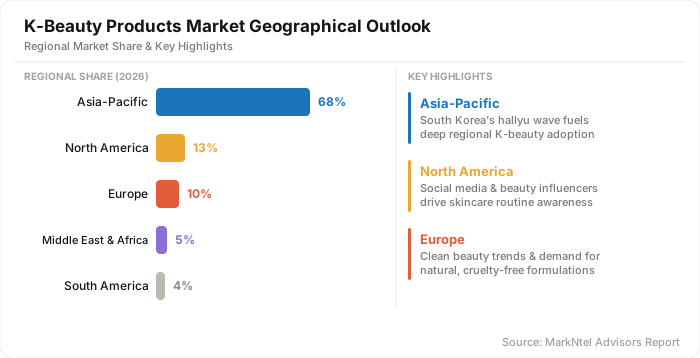
- Asia-Pacific leads regional demand with approximately 68% market share.
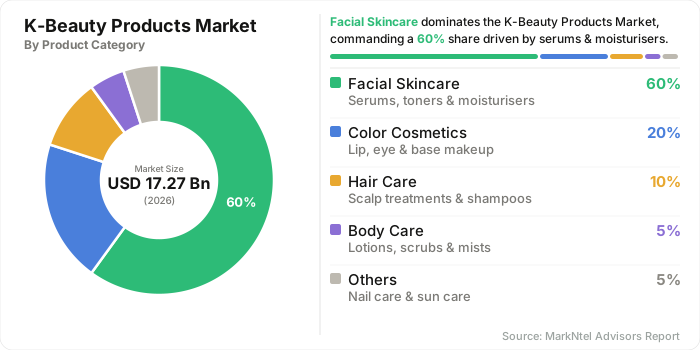
- Facial skincare dominates product categories, contributing nearly 60% share.
- The female segment accounted for around a 77% share in 2026.
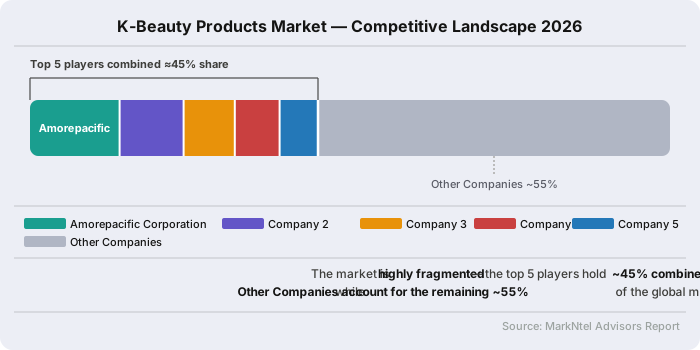
- The industry remains moderately fragmented, with the top five players collectively holding about a 45% share, balancing large-scale global leaders with numerous agile, niche K-beauty brands.
K-Beauty Products Market Size and Outlook
The K-beauty products market size was valued at USD 16.18 billion in 2025 and is projected to reach USD 17.27 billion in 2026, further expanding to USD 23.29 billion by 2032, growing at a CAGR of 5.11% during 2026–2032. This steady trajectory reflects sustained global demand for Korean skincare innovations and premium formulations. Growth is primarily supported by the rising influence of Korean culture and increasing adoption of simplified skincare routines, reinforcing long-term expansion potential.
A significant structural shift is evident in export dynamics, with the United States surpassing China as the largest importer of Korean cosmetics in 2025, reaching USD 2.2 billion (19.1% share), while exports to China declined to USD 2.0 billion, marking a 19% drop . This transition highlights deeper retail penetration across major platforms and growing consumer traction. The shift reduces reliance on a single market while unlocking higher-margin opportunities through premium beauty retail channels and expanding digital-led consumer engagement.
Europe is emerging as a strategic growth frontier, supported by increasing brand acceptance and retail integration. Korean cosmetics exports to France reached USD 134.05 million in 2025, reflecting a strong 71.5% year-over-year increase . Entry into established beauty markets such as France signifies rising global credibility of Korean brands beyond value-driven positioning. Expanding shelf presence in department stores and curated retail spaces is strengthening brand positioning strategies and accelerating regional market expansion across European countries.
Looking beyond 2026, long-term growth will be driven by strategic investments and innovation-led expansion. Amorepacific has outlined a vision to achieve approximately USD 11.5 billion in annual revenue by 2035, with overseas sales contributing 70% of total revenue. The company is prioritizing biotech-based anti-aging solutions and advanced beauty devices. Such initiatives will reinforce innovation-driven growth and enhance market competitiveness, supporting the sustained expansion of the K-beauty products industry over the forecast period.
K-Beauty Products Market Key Indicators
- According to the Ministry of Food and Drug Safety, Korean cosmetics exports increased by 20.3% in 2024 to USD 10.2 billion, positioning South Korea as the third-largest exporter globally after France and the United States . This milestone underscores the industry’s strong reliance on international markets and validates its export-led growth trajectory. The sustained rise in outbound shipments reflects robust global demand and strengthens Korea’s leadership in international beauty exports.
- Domestic production capacity has expanded significantly, with total cosmetics output reaching a record of approximately USD 12.8 billion in 2024, marking a 20.9% increase year-over-year, as reported by the Ministry of Food and Drug Safety. This growth ensures a consistent supply for both domestic and international markets. The upward trend highlights operational scalability and reinforces the sector’s long-term strength through cosmetics manufacturing growth.
- Korean cosmetics reached 172 countries in 2024, up from 165 in the previous year, according to official data. This widening international footprint reflects increasing acceptance of Korean beauty products across diverse consumer bases. By expanding into new markets, the industry reduces dependency on specific regions while enhancing resilience. This broad reach significantly contributes to sustained growth through export market diversification.
- Product composition remains heavily skewed toward skincare, with basic cosmetics generating USD 7.67 billion in exports, far exceeding color cosmetics at USD 1.35 billion. This disparity highlights the dominance of functional skincare products such as serums and moisturizers in global demand. The strong preference for these categories continues to shape innovation priorities and reinforces Korea’s leadership in skincare segment dominance.
- Cultural influence continues to drive demand, with Hallyu-related exports reaching USD 14.16 billion in 2023, growing by 5.1%, according to the Korea Foundation for International Cultural Exchange. The global popularity of Korean entertainment has strengthened consumer interest in associated products, including cosmetics. This cultural-commercial synergy plays a critical role in expanding demand through Hallyu-driven consumption.
K-Beauty Products Market Scope
| Category | Segments |
|---|---|
| By Product Category | Facial Skincare, Color Cosmetics, Hair Care, Body Care, Fragrances, Beauty Devices & Tools |
| By Distribution Channel | Online, Offline |
| By Price Tier | Mass, Mid-Premium, Premium, Luxury |
| By End User | Male, Female |
K-Beauty Products Market Growth Drivers
Popularity of Korean Culture
The K-beauty products industry is significantly driven by the global expansion of the Korean Wave (Hallyu), particularly the influence of K-pop and entertainment content. According to government data, K-pop accounted for 31.8% of media coverage in Asia, 24.5% in Europe, 32.3% in North America, and 38.1% in Latin America, highlighting its widespread cultural penetration. This extensive visibility strengthens global consumer awareness and accelerates cross-cultural adoption, directly influencing beauty preferences and increasing demand for Korean skincare products.
The commercial impact of Hallyu is further evident through rising beauty tourism and retail spending. In 2025, foreign tourists spent approximately USD 680 million at CJ Olive Young stores, with shoppers from 190 countries claiming tax refunds on cosmetics purchases . This reflects how cultural exposure is translating into tangible consumption patterns, supported by beauty tourism growth and increasing experiential retail demand, as international consumers actively seek authentic K-beauty experiences in South Korea.
Beyond immediate sales, the Hallyu wave is fostering long-term demand creation by continuously introducing new consumer segments to Korean beauty standards. The integration of entertainment, retail, and tourism ecosystems enhances brand visibility and expansion and reinforces sustained engagement. As cultural exports continue to expand globally, this driver will remain critical in supporting international market penetration, strengthening consumer loyalty, and ensuring the continued growth of the K-beauty products landscape.
Recent Trends
Adoption of Skinimalism and Simplified Routines
The K-beauty products industry is witnessing a structural shift toward “skinimalism,” where consumers are moving away from complex multi-step routines toward fewer, high-performance products. This transition is driven by increasing focus on skin barrier health, convenience, and ingredient safety, as dermatologists highlight risks associated with excessive layering of active ingredients. The trend is further supported by rising demand for multifunctional skincare and minimalist beauty routines, reflecting a broader preference for efficacy-driven, simplified product usage.
This shift is clearly reflected in recent product innovation strategies. For instance, COSRX expanded its Ceramide Skin Barrier line with the launch of Moisturizing Mist and Cream products designed to deliver hydration, soothing, and barrier repair within a streamlined regimen. These formulations are positioned to replace multiple steps by combining essential skincare functions, supporting the rise of barrier-repair formulations and functional skincare products that align with evolving consumer expectations.
The skinimalism is expected to reshape product development and marketing strategies across the industry. Brands are increasingly investing in clinically backed ingredients and simplified regimens to enhance consumer retention and reduce routine complexity. As demand for efficient, results-oriented skincare continues to grow, this trend will accelerate adoption rates, strengthen brand differentiation, and drive sustained expansion of the K-beauty products sector.
K-Beauty Products Market Opportunities and Challenges
Digital Ecosystem Dependence Driving Omnichannel Evolution
The K-beauty products industry faces a structural challenge due to its heavy reliance on digital ecosystems, including cross-border e-commerce, social media marketing, and influencer-led campaigns. While this model has enabled rapid global scaling, it has also increased exposure to algorithm dependency, rising acquisition costs, and platform concentration risks. For example, Medicube generated approximately USD 102.9 million via TikTok Shop and USD 22 million during Amazon Prime Day, supported by over 34,000 creators, highlighting strong yet fragile social commerce reliance .
This dependence creates volatility in demand generation, as shifts in platform algorithms or engagement patterns can directly impact brand visibility and sales consistency. Overreliance on influencer ecosystems also limits long-term brand equity development, making sustained growth increasingly difficult in a competitive digital landscape. As customer acquisition becomes more expensive and less predictable, brands are compelled to reassess their channel strategies while balancing digital marketing efficiency and scalable growth models.
Conversely, this challenge is accelerating a transition toward omnichannel strategies, where brands integrate offline and online experiences to enhance consumer engagement. For example, Amorepacific attracted over 3,500 visitors within two days through its New York K-beauty pop-up, demonstrating the effectiveness of experiential retail . Increasing investments in flagship stores, retail partnerships, and immersive formats are strengthening omnichannel retail expansion and enabling more resilient, diversified growth pathways.
Segmentation Insights
Facial Skincare Dominance Driven by Routine-Based Consumption and Product Innovation
The facial skincare segment dominates the K-beauty products market, accounting for approximately 60% of total revenue, driven by strong consumer focus on skin health, hydration, and anti-aging solutions. Korean beauty routines emphasize preventive care and multi-step regimens, significantly increasing demand for cleansers, toners, serums, and moisturizers. The rising preference for advanced skincare formulations and dermatology-inspired products further strengthens this segment’s leadership.
Innovation within facial skincare continues to reinforce its dominance, supported by frequent product launches and premium positioning strategies. For instance, AP Beauty introduced the Ultimate Oil-to-Milk Cleanser in 2025, designed for deep cleansing, antioxidant protection, and skin purification . Positioned as a foundational step in skincare routines, the launch reflects increasing demand for functional cleansing solutions and barrier-focused formulations, which are central to evolving consumer preferences in K-beauty.
Other segments continue to expand but remain comparatively smaller in revenue contribution. These categories are primarily driven by innovation, seasonal demand, and lifestyle trends rather than routine-based consumption. However, facial skincare remains the primary growth engine due to its high repeat purchase rate and strong consumer engagement. Increasing investment in skincare product innovation and premium skincare solutions will continue to sustain its leading position. Based on product category, the scope has been divided into:
- Facial Skincare
- Color Cosmetics
- Hair Care
- Body Care
- Fragrances
- Beauty Devices & Tools
Higher Product Adoption and Routine-Based Consumption Driving Female Consumer Dominance
The female segment dominates the K-beauty products demand, accounting for approximately 77% of total revenue, driven by higher product adoption, routine-based consumption patterns, and strong engagement with evolving skincare innovations. Female consumers typically follow structured skincare regimens, contributing to higher per-capita spending across cleansers, serums, and moisturizers. Additionally, rising awareness regarding skin health, anti-aging solutions, and preventive care continues to reinforce demand.
A key growth driver within the female segment is the increasing preference for premium skincare products and dermatology-inspired formulations, supported by expanding product portfolios from leading K-beauty brands. Consumers are actively seeking clinically validated ingredients, reflecting a shift toward efficacy-driven purchasing behavior. Moreover, the influence of global beauty trends and Korean cultural exports continues to accelerate adoption rates, particularly in emerging markets where female consumers are the primary decision-makers.
While the male segment is gradually expanding, supported by rising grooming awareness and targeted product launches, it remains comparatively niche in revenue contribution. However, brands are increasingly introducing simplified routines and multifunctional products to attract male consumers. The sustained innovation, premiumization, and strong consumer engagement will continue to position the female segment as the primary growth engine of the K-beauty products industry. The study categorizes key end users into the following segments:
- Male
- Female
K-Beauty Products Market Geographical Outlook
The Asia-Pacific region dominates the K-beauty products landscape, accounting for approximately 68% of total demand, driven by strong cultural alignment, geographic proximity, and high awareness of skincare routines. Key markets such as China, Japan, and Southeast Asia continue to exhibit strong consumption of K-beauty products, supported by rising disposable incomes and increasing preference for premium skincare solutions. The region’s mature beauty ecosystem and familiarity with Korean formulations further reinforce its leadership position.
Growth across Asia-Pacific is further supported by expanding retail infrastructure and experiential engagement strategies. For instance, CJ Olive Young strengthened its presence in Japan through activations at KCON JAPAN 2025 and KCON JAPAN 2026. In 2026, it launched Olive Young Festa Japan, bringing Korean brands closer to consumers via omnichannel retail formats and product discovery platforms, reinforcing Japan’s role as a key regional growth hub.
The region’s dominance is further strengthened by rising demand for dermatology-inspired skincare and clean beauty formulations, particularly among urban consumers. Increasing localization strategies, cross-border e-commerce growth, and continued brand investments across India and Southeast Asia are supporting long-term expansion. The strong consumer engagement, retail innovation, and sustained product demand will ensure Asia-Pacific remains the primary growth engine of the K-beauty products market.
K-Beauty Products Market Competitive Analysis
The top five players in the K-Beauty Products industry are Amorepacific Corporation, LG Household & Health Care, COSMAX, Inc., Kolmar Korea Co., Ltd., and CJ Olive Young, collectively accounting for an estimated 45% market share. The market is moderately fragmented, characterized by the coexistence of large conglomerates, contract manufacturers, and emerging indie brands. Leading players leverage strong R&D, global distribution, and brand portfolios, while smaller firms compete through innovation and digital agility. Overall, the industry reflects a hybrid competitive structure where scale-driven leadership coexists with high competitive intensity and continuous product differentiation.
Prominent Companies in the K-Beauty Products Market
- Amorepacific Corporation
- LG Household & Health Care
- Aekyung Industrial Co., Ltd.
- COSMAX, Inc.
- Kolmar Korea Co., Ltd.
- Cosmecca Korea Co., Ltd.
- Intercos Korea
- Able C&C Co., Ltd.
- CLIO Cosmetics Co., Ltd.
- TONYMOLY Co., Ltd.
- Nature Republic Co., Ltd.
- APR Corp.
- Abib Co., Ltd.
- CJ Olive Young
- COSRX
- Others
K-Beauty Products Industry News and Recent Developments
February 2026: LANEIGE Launches JuicePop Box Lip Tint with KATSEYE Partnership
LANEIGE launched its new JuicePop Box Lip Tint collection, featuring eight music-inspired shades and a hydrating water-to-oil formula. The launch was supported by a global campaign featuring K-pop-inspired girl group KATSEYE, combining beauty innovation with entertainment-driven marketing to enhance consumer engagement and social visibility.
Impact Analysis: The launch highlights how leading K-beauty brands are increasingly integrating beauty products with global pop-culture ecosystems to accelerate international adoption. By combining skincare benefits, LANEIGE strengthens its appeal among younger consumers seeking multifunctional products. The KATSEYE collaboration further demonstrates the industry's growing reliance on cultural marketing to drive product discovery beyond traditional advertising channels.
October 2025: Amorepacific and Sephora Launch First Multi-Brand K-Beauty Pop-Up in New York
Amorepacific partnered with Sephora to launch “Seoul in the City,” its first multi-brand K-beauty pop-up in the United States. The event featured LANEIGE, Innisfree, AESTURA, and HANYUL, offering immersive brand experiences, exclusive launches, and consumer education initiatives designed to introduce Korean beauty culture to North American audiences.
Impact Analysis: This initiative illustrates the industry's strategic transition from digital-only engagement toward omnichannel retail expansion. Experiential formats enable brands to educate consumers, encourage product testing, and strengthen brand loyalty in ways that online channels cannot fully replicate. The collaboration also reflects increasing confidence among major global retailers in the long-term growth potential of K-beauty products. By bringing multiple Korean brands under one platform, Amorepacific enhanced cross-brand visibility while accelerating consumer acquisition.
May 2025: HANYUL Expands into Sephora's U.S. Retail Network
HANYUL entered the U.S. market through a nationwide launch at Sephora stores and online channels. Known for combining traditional Korean botanical ingredients with science-backed formulations, the brand introduced its skincare portfolio to a broader consumer base, strengthening Amorepacific's presence in the premium skincare category.
Impact Analysis: HANYUL's Sephora launch demonstrates the growing institutionalization of K-beauty within mainstream global retail networks. Rather than relying solely on niche Asian beauty channels, Korean brands are increasingly securing shelf space alongside established international skincare players. This expansion enhances category credibility, improves consumer accessibility, and broadens exposure to premium Korean formulations. The move also reflects increasing retailer confidence in the commercial viability of Korean skincare beyond trend-driven demand.
- Market Segmentation
- Introduction
- Product Definition
- Research Process
- Assumptions
- Executive Summary
- Global K-Beauty Products Market Policies, Regulations, and Product Standards
- Global K-Beauty Products Production Trend 2022-2032
- Global K-Beauty Products Trend by Type of Product Category
- Facial Skincare
- Color Cosmetics
- Hair Care
- Body Care
- Fragrances
- Beauty Devices & Tools
- Company-Wise Production Plants and Statistics
- Installed Production Capacity
- Actual Production
- Planned Production Target
- Global K-Beauty Products Trend by Type of Product Category
- Global K-Beauty Products Pricing Analysis 2022-2032
- Global K-Beauty Products Pricing Trend 2022-2032
- Global K-Beauty Products Pricing Trend by Regions 2022-2032
- North America
- South America
- Europe
- Middle East & Africa
- Asia Pacific
- Global K-Beauty Products Pricing Trend by Product Category 2022-2032
- Facial Skincare
- Color Cosmetics
- Hair Care
- Body Care
- Fragrances
- Beauty Devices & Tools
- Global K-Beauty Products Market Dynamics
- Growth Factors
- Challenges
- Global K- Beauty Products Consumer Survey 2026
- Global K-Beauty Products Market Import & Export Analysis
- Global K-Beauty Products Market Hotspot & Opportunities
- Global K-Beauty Products Market Outlook, 2022-2032F
- Market Size & Outlook
- By Revenues (USD Million)
- Market Share & Outlook
- By Product Category - Market Size & Forecast 2022-2032, USD Million
- Facial Skincare
- Cleansers
- Toners
- Essences
- Serums & Ampoules
- Moisturizers
- Sunscreens
- Sheet Masks
- Wash-off Masks
- Others
- Color Cosmetics
- Face Makeup
- Eye Makeup
- Lip Makeup
- Nail Products
- Hair Care
- Shampoo
- Conditioner
- Hair Masks
- Hair Serums
- Scalp Treatments
- Styling Products
- Body Care
- Body Lotion
- Body Wash
- Scrubs
- Hand & Foot Care
- Fragrances
- Beauty Devices & Tools
- Facial Skincare
- By Distribution Channel - Market Size & Forecast 2022-2032, USD Million
- Online
- Direct-to-Consumer (Brand Websites)
- Third-Party E-commerce Platforms
- Offline
- Specialty Beauty Stores
- Hypermarkets & Supermarkets
- Department Stores
- Pharmacies & Drugstores
- Convenience Stores
- Online
- By Price Tier - Market Size & Forecast 2022-2032, USD Million
- Mass
- Mid-Premium
- Premium
- Luxury
- By End User - Market Size & Forecast 2022-2032, USD Million
- Male
- Female
- By Region
- North America
- South America
- Europe
- The Middle East & Africa
- Asia-Pacific
- By Company
- Competition Characteristics
- Market Share & Analysis
- By Product Category - Market Size & Forecast 2022-2032, USD Million
- Market Size & Outlook
- North America K-Beauty Products Market Outlook, 2022-2032F
- Market Size & Outlook
- By Revenues (USD Million)
- Market Segmentation & Outlook
- By Product Category - Market Size & Forecast 2022-2032, USD Million
- By Distribution Channel - Market Size & Forecast 2022-2032, USD Million
- By Price Tier - Market Size & Forecast 2022-2032, USD Million
- By End User - Market Size & Forecast 2022-2032, USD Million
- By Country
- The US
- Canada
- Mexico
- The US K-Beauty Products Market Outlook, 2022-2032F
- Market Size & Outlook
- By Revenues (USD Million)
- Market Segmentation & Outlook
- By Product Category - Market Size & Forecast 2022-2032, USD Million
- By Distribution Channel - Market Size & Forecast 2022-2032, USD Million
- By Price Tier - Market Size & Forecast 2022-2032, USD Million
- By End User - Market Size & Forecast 2022-2032, USD Million
- Market Size & Outlook
- Canada K-Beauty Products Market Outlook, 2022-2032F
- Market Size & Outlook
- By Revenues (USD Million)
- Market Segmentation & Outlook
- By Product Category - Market Size & Forecast 2022-2032, USD Million
- By Distribution Channel - Market Size & Forecast 2022-2032, USD Million
- By Price Tier - Market Size & Forecast 2022-2032, USD Million
- By End User - Market Size & Forecast 2022-2032, USD Million
- Market Size & Outlook
- Mexico K-Beauty Products Market Outlook, 2022-2032F
- Market Size & Outlook
- By Revenues (USD Million)
- Market Segmentation & Outlook
- By Product Category - Market Size & Forecast 2022-2032, USD Million
- By Distribution Channel - Market Size & Forecast 2022-2032, USD Million
- By Price Tier - Market Size & Forecast 2022-2032, USD Million
- By End User - Market Size & Forecast 2022-2032, USD Million
- Market Size & Outlook
- Market Size & Outlook
- South America K-Beauty Products Market Outlook, 2022-2032F
- Market Size & Outlook
- By Revenues (USD Million)
- Market Segmentation & Outlook
- By Product Category - Market Size & Forecast 2022-2032, USD Million
- By Distribution Channel - Market Size & Forecast 2022-2032, USD Million
- By Price Tier - Market Size & Forecast 2022-2032, USD Million
- By End User - Market Size & Forecast 2022-2032, USD Million
- By Country
- Brazil
- Argentina
- Rest of South America
- Brazil K-Beauty Products Market Outlook, 2022-2032F
- Market Size & Outlook
- By Revenues (USD Million)
- Market Segmentation & Outlook
- By Product Category - Market Size & Forecast 2022-2032, USD Million
- By Distribution Channel - Market Size & Forecast 2022-2032, USD Million
- By Price Tier - Market Size & Forecast 2022-2032, USD Million
- By End User - Market Size & Forecast 2022-2032, USD Million
- Market Size & Outlook
- Argentina K-Beauty Products Market Outlook, 2022-2032F
- Market Size & Outlook
- By Revenues (USD Million)
- Market Segmentation & Outlook
- By Product Category - Market Size & Forecast 2022-2032, USD Million
- By Distribution Channel - Market Size & Forecast 2022-2032, USD Million
- By Price Tier - Market Size & Forecast 2022-2032, USD Million
- By End User - Market Size & Forecast 2022-2032, USD Million
- Market Size & Outlook
- Market Size & Outlook
- Europe K-Beauty Products Market Outlook, 2022-2032F
- Market Size & Outlook
- By Revenues (USD Million)
- Market Segmentation & Outlook
- By Product Category - Market Size & Forecast 2022-2032, USD Million
- By Distribution Channel - Market Size & Forecast 2022-2032, USD Million
- By Price Tier - Market Size & Forecast 2022-2032, USD Million
- By End User - Market Size & Forecast 2022-2032, USD Million
- By Country
- The UK
- Germany
- France
- Italy
- Spain
- The Benelux
- Rest of Europe
- The UK K-Beauty Products Market Outlook, 2022-2032F
- Market Size & Outlook
- By Revenues (USD Million)
- Market Segmentation & Outlook
- By Product Category - Market Size & Forecast 2022-2032, USD Million
- By Distribution Channel - Market Size & Forecast 2022-2032, USD Million
- By Price Tier - Market Size & Forecast 2022-2032, USD Million
- By End User - Market Size & Forecast 2022-2032, USD Million
- Market Size & Outlook
- Germany K-Beauty Products Market Outlook, 2022-2032F
- Market Size & Outlook
- By Revenues (USD Million)
- Market Segmentation & Outlook
- By Product Category - Market Size & Forecast 2022-2032, USD Million
- By Distribution Channel - Market Size & Forecast 2022-2032, USD Million
- By Price Tier - Market Size & Forecast 2022-2032, USD Million
- By End User - Market Size & Forecast 2022-2032, USD Million
- Market Size & Outlook
- France K-Beauty Products Market Outlook, 2022-2032F
- Market Size & Outlook
- By Revenues (USD Million)
- Market Segmentation & Outlook
- By Product Category - Market Size & Forecast 2022-2032, USD Million
- By Distribution Channel - Market Size & Forecast 2022-2032, USD Million
- By Price Tier - Market Size & Forecast 2022-2032, USD Million
- By End User - Market Size & Forecast 2022-2032, USD Million
- Market Size & Outlook
- Italy K-Beauty Products Market Outlook, 2022-2032F
- Market Size & Outlook
- By Revenues (USD Million)
- Market Segmentation & Outlook
- By Product Category - Market Size & Forecast 2022-2032, USD Million
- By Distribution Channel - Market Size & Forecast 2022-2032, USD Million
- By Price Tier - Market Size & Forecast 2022-2032, USD Million
- By End User - Market Size & Forecast 2022-2032, USD Million
- Market Size & Outlook
- Spain K-Beauty Products Market Outlook, 2022-2032F
- Market Size & Outlook
- By Revenues (USD Million)
- Market Segmentation & Outlook
- By Product Category - Market Size & Forecast 2022-2032, USD Million
- By Distribution Channel - Market Size & Forecast 2022-2032, USD Million
- By Price Tier - Market Size & Forecast 2022-2032, USD Million
- By End User - Market Size & Forecast 2022-2032, USD Million
- Market Size & Outlook
- The Benelux K-Beauty Products Market Outlook, 2022-2032F
- Market Size & Outlook
- By Revenues (USD Million)
- Market Segmentation & Outlook
- By Product Category - Market Size & Forecast 2022-2032, USD Million
- By Distribution Channel - Market Size & Forecast 2022-2032, USD Million
- By Price Tier - Market Size & Forecast 2022-2032, USD Million
- By End User - Market Size & Forecast 2022-2032, USD Million
- Market Size & Outlook
- Market Size & Outlook
- The Middle East & Africa K-Beauty Products Market Outlook, 2022-2032F
- Market Size & Outlook
- By Revenues (USD Million)
- Market Segmentation & Outlook
- By Product Category - Market Size & Forecast 2022-2032, USD Million
- By Distribution Channel - Market Size & Forecast 2022-2032, USD Million
- By Price Tier - Market Size & Forecast 2022-2032, USD Million
- By End User - Market Size & Forecast 2022-2032, USD Million
- By Country
- Saudi Arabia
- The UAE
- South Africa
- Egypt
- Rest of Middle East & Africa
- Saudi Arabia K-Beauty Products Market Outlook, 2022-2032F
- Market Size & Outlook
- By Revenues (USD Million)
- Market Segmentation & Outlook
- By Product Category - Market Size & Forecast 2022-2032, USD Million
- By Distribution Channel - Market Size & Forecast 2022-2032, USD Million
- By Price Tier - Market Size & Forecast 2022-2032, USD Million
- By End User - Market Size & Forecast 2022-2032, USD Million
- Market Size & Outlook
- The UAE K-Beauty Products Market Outlook, 2022-2032F
- Market Size & Outlook
- By Revenues (USD Million)
- Market Segmentation & Outlook
- By Product Category - Market Size & Forecast 2022-2032, USD Million
- By Distribution Channel - Market Size & Forecast 2022-2032, USD Million
- By Price Tier - Market Size & Forecast 2022-2032, USD Million
- By End User - Market Size & Forecast 2022-2032, USD Million
- Market Size & Outlook
- South Africa K-Beauty Products Market Outlook, 2022-2032F
- Market Size & Outlook
- By Revenues (USD Million)
- Market Segmentation & Outlook
- By Product Category - Market Size & Forecast 2022-2032, USD Million
- By Distribution Channel - Market Size & Forecast 2022-2032, USD Million
- By Price Tier - Market Size & Forecast 2022-2032, USD Million
- By End User - Market Size & Forecast 2022-2032, USD Million
- Market Size & Outlook
- Egypt K-Beauty Products Market Outlook, 2022-2032F
- Market Size & Outlook
- By Revenues (USD Million)
- Market Segmentation & Outlook
- By Product Category - Market Size & Forecast 2022-2032, USD Million
- By Distribution Channel - Market Size & Forecast 2022-2032, USD Million
- By Price Tier - Market Size & Forecast 2022-2032, USD Million
- By End User - Market Size & Forecast 2022-2032, USD Million
- Market Size & Outlook
- Market Size & Outlook
- Asia-Pacific K-Beauty Products Market Outlook, 2022-2032F
- Market Size & Outlook
- By Revenues (USD Million)
- Market Segmentation & Outlook
- By Product Category - Market Size & Forecast 2022-2032, USD Million
- By Distribution Channel - Market Size & Forecast 2022-2032, USD Million
- By Price Tier - Market Size & Forecast 2022-2032, USD Million
- By End User - Market Size & Forecast 2022-2032, USD Million
- By Country
- China
- Japan
- India
- South Korea
- Australia
- Rest of Asia-Pacific
- China K-Beauty Products Market Outlook, 2022-2032F
- Market Size & Outlook
- By Revenues (USD Million)
- Market Segmentation & Outlook
- By Product Category - Market Size & Forecast 2022-2032, USD Million
- By Distribution Channel - Market Size & Forecast 2022-2032, USD Million
- By Price Tier - Market Size & Forecast 2022-2032, USD Million
- By End User - Market Size & Forecast 2022-2032, USD Million
- Market Size & Outlook
- Japan K-Beauty Products Market Outlook, 2022-2032F
- Market Size & Outlook
- By Revenues (USD Million)
- Market Segmentation & Outlook
- By Product Category - Market Size & Forecast 2022-2032, USD Million
- By Distribution Channel - Market Size & Forecast 2022-2032, USD Million
- By Price Tier - Market Size & Forecast 2022-2032, USD Million
- By End User - Market Size & Forecast 2022-2032, USD Million
- Market Size & Outlook
- India K-Beauty Products Market Outlook, 2022-2032F
- Market Size & Outlook
- By Revenues (USD Million)
- Market Segmentation & Outlook
- By Product Category - Market Size & Forecast 2022-2032, USD Million
- By Distribution Channel - Market Size & Forecast 2022-2032, USD Million
- By Price Tier - Market Size & Forecast 2022-2032, USD Million
- By End User - Market Size & Forecast 2022-2032, USD Million
- Market Size & Outlook
- South Korea K-Beauty Products Market Outlook, 2022-2032F
- Market Size & Outlook
- By Revenues (USD Million)
- Market Segmentation & Outlook
- By Product Category - Market Size & Forecast 2022-2032, USD Million
- By Distribution Channel - Market Size & Forecast 2022-2032, USD Million
- By Price Tier - Market Size & Forecast 2022-2032, USD Million
- By End User - Market Size & Forecast 2022-2032, USD Million
- Market Size & Outlook
- Australia K-Beauty Products Market Outlook, 2022-2032F
- Market Size & Outlook
- By Revenues (USD Million)
- Market Segmentation & Outlook
- By Product Category - Market Size & Forecast 2022-2032, USD Million
- By Distribution Channel - Market Size & Forecast 2022-2032, USD Million
- By Price Tier - Market Size & Forecast 2022-2032, USD Million
- By End User - Market Size & Forecast 2022-2032, USD Million
- Market Size & Outlook
- Market Size & Outlook
- Global K-Beauty Products Market Key Strategic Imperatives for Success & Growth
- Competitive Outlook
- Company Profiles
- Amorepacific Corporation
- Business Description
- Product Portfolio
- Collaborations & Alliances
- Recent Developments
- Financial Details
- Others
- LG Household & Health Care
- Business Description
- Product Portfolio
- Collaborations & Alliances
- Recent Developments
- Financial Details
- Others
- Aekyung Industrial Co., Ltd.
- Business Description
- Product Portfolio
- Collaborations & Alliances
- Recent Developments
- Financial Details
- Others
- COSMAX, Inc.
- Business Description
- Product Portfolio
- Collaborations & Alliances
- Recent Developments
- Financial Details
- Others
- Kolmar Korea Co., Ltd.
- Business Description
- Product Portfolio
- Collaborations & Alliances
- Recent Developments
- Financial Details
- Others
- Cosmecca Korea Co., Ltd.
- Business Description
- Product Portfolio
- Collaborations & Alliances
- Recent Developments
- Financial Details
- Others
- Intercos Korea
- Business Description
- Product Portfolio
- Collaborations & Alliances
- Recent Developments
- Financial Details
- Others
- Able C&C Co., Ltd.
- Business Description
- Product Portfolio
- Collaborations & Alliances
- Recent Developments
- Financial Details
- Others
- CLIO Cosmetics Co., Ltd.
- Business Description
- Product Portfolio
- Collaborations & Alliances
- Recent Developments
- Financial Details
- Others
- TONYMOLY Co., Ltd.
- Business Description
- Product Portfolio
- Collaborations & Alliances
- Recent Developments
- Financial Details
- Others
- Nature Republic Co., Ltd.
- Business Description
- Product Portfolio
- Collaborations & Alliances
- Recent Developments
- Financial Details
- Others
- APR Corp.
- Business Description
- Product Portfolio
- Collaborations & Alliances
- Recent Developments
- Financial Details
- Others
- Abib Co., Ltd.
- Business Description
- Product Portfolio
- Collaborations & Alliances
- Recent Developments
- Financial Details
- Others
- CJ Olive Young
- Business Description
- Product Portfolio
- Collaborations & Alliances
- Recent Developments
- Financial Details
- Others
- COSRX
- Business Description
- Product Portfolio
- Collaborations & Alliances
- Recent Developments
- Financial Details
- Others
- Others
- Amorepacific Corporation
- Company Profiles
- Disclaimer

MarkNtel Advisors follows a robust and iterative research methodology designed to ensure maximum accuracy and minimize deviation in market estimates and forecasts. Our approach combines both bottom-up and top-down techniques to effectively segment and quantify various aspects of the market. A consistent feature across all our research reports is data triangulation, which examines the market from three distinct perspectives to validate findings. Key components of our research process include:
1. Scope & Research Design At the outset, MarkNtel Advisors define the research objectives and formulate pertinent questions. This phase involves determining the type of research—qualitative or quantitative—and designing a methodology that outlines data collection methods, target demographics, and analytical tools. They also establish timelines and budgets to ensure the research aligns with client goals.
2. Sample Selection and Data Collection In this stage, the firm identifies the target audience and determines the appropriate sample size to ensure representativeness. They employ various sampling methods, such as random or stratified sampling, based on the research objectives. Data collection is carried out using tools like surveys, interviews, and observations, ensuring the gathered data is reliable and relevant.
3. Data Analysis and Validation Once data is collected, MarkNtel Advisors undertake a rigorous analysis process. This includes cleaning the data to remove inconsistencies, employing statistical software for quantitative analysis, and thematic analysis for qualitative data. Validation steps are taken to ensure the accuracy and reliability of the findings, minimizing biases and errors.

4. Data Forecast and FinalizationThe final phase involves forecasting future market trends based on the analyzed data. MarkNtel Advisors utilize predictive modeling and time series analysis to anticipate market behaviors. The insights are then compiled into comprehensive reports, featuring visual aids like charts and graphs, and include strategic recommendations to inform client decision-making
We’d love to understand what matters most to you.