

By Formulation Type (Pure Ascorbic Acid, Stabilized Derivatives, Blended Serum), By Concentration Level (Below 10%, 10% – 20%, Above 20%), By Type (Mass, Premium, Luxury), By Skin Type (Oily, Dry, Com... ... n Type (Oily, Dry, Combination, Sensitive), By Application (Anti-aging & Wrinkle Reduction, Brightening & Radiance Enhancement, Hyperpigmentation & Dark Spot Treatment, Acne & Blemish Control, Sun Damage Repair & Protection), By Distribution Channel (Hypermarkets & Supermarkets, Specialty Stores, Pharmacies & Drugstores, Online, Others), By Packaging Type (Dropper Bottles, Pump Bottles, Ampoules), and others Read more
- FMCG
- May 2026
- 165
- PDF, Excel, PPT
India Vitamin C Serum Market Key Takeaways
- The India Vitamin C Serum Market was valued at USD 73.14 million in 2025 and is projected to grow from USD 79.87 million in 2026 to USD 135.69 million by 2032, registering a CAGR of 9.23% during the forecast period (2026–2032).
- Based on concentration, the 10%–20% segment dominates the market, accounting for approximately 60% of the total share.
- By skin type, the combination skin segment leads the market, capturing around 40% share in 2026.
- The market remains highly fragmented, with the top five players collectively accounting for nearly 50% of the total market share.
India Vitamin C Serum Market Size and Outlook
The India vitamin C serum market is projected to grow at a CAGR of 9.23% during the forecast period (2026–2032). This growth is driven by the clinically validated efficacy of Vitamin C in improving skin health, along with the rising adoption of multi-active formulations that enhance product performance. Additionally, increasing consumer awareness, demand for targeted skincare solutions, and the growing influence of dermatological recommendations are further supporting market expansion.
Scientific evidence highlights that vitamin C plays a critical role in neutralizing reactive oxygen species (ROS) generated from UV exposure, thereby significantly reducing oxidative stress, a primary contributor to premature aging and pigmentation. These clinically proven vitamin C topical application benefits are strengthening its adoption across preventive skincare routines.
Further reinforcing product efficacy, a clinical study published in the Journal of Clinical and Aesthetic Dermatology demonstrated that daily application of 3% topical Vitamin C over a four-month period resulted in a measurable increase in dermal papillae density, improving the structural connection between the dermis and epidermis . This structural improvement is directly associated with enhanced skin firmness and visible reduction in aging signs, which is accelerating demand for targeted solutions such as vitamin C serum for dark spots in India.
At the same time, the market is witnessing a structural shift toward advanced formulations within the facial treatment serums in India category. Brands are increasingly combining Vitamin C with complementary ingredients such as hyaluronic acid and peptides to deliver multifunctional benefits, including hydration, anti-aging, and skin repair. This trend is supporting simplified skincare routines while enhancing product efficacy and driving premiumization across urban consumer segments.
However, challenges related to skin sensitivity remain a critical factor influencing purchasing behavior. High-concentration formulations often result in irritation without proportional efficacy gains, limiting adoption among first-time and sensitive users. This has accelerated the transition toward stabilized and balanced formulations that ensure improved tolerability while maintaining performance standards.
Overall, the India Vitamin C serum market is forecast to increase from USD 79.87 million in 2026 to USD 135.69 million by 2032, with growth supported by clinically validated benefits, continuous formulation innovations, and evolving skincare preferences. Rising demand for stable and multifunctional serums is expected to further sustain market momentum.
India Vitamin C Serum Market Key Indicators
- A 2024 Pan-India dermatology survey reported melasma (50.2%) and post-inflammatory hyperpigmentation (49.8%) as the most frequently treated conditions in clinical practice . This high disease burden is sustaining demand for targeted solutions within hyperpigmentation treatment in India skincare, where Vitamin C is widely used as a frontline topical agent, supporting both prescription-driven and consumer-led product adoption.
- A clinical study conducted across 1,204 women in four Indian cities found that over 80% exhibited facial skin color heterogeneity, with a significant prevalence of hyperpigmented spots among women aged above 35 years . This widespread concern is accelerating consumer demand for vitamin C serum for pigmentation in India, as individuals increasingly seek effective solutions for uneven tone and visible discoloration.
- India continues to experience high UV radiation levels, with the UV Index frequently ranging between 8 and 11+, classified as very high to extreme . Prolonged exposure, even under cloud cover, increases risks of sunburn and long-term skin damage. This environmental factor is reinforcing demand for antioxidant skincare products in India, particularly those formulated to combat oxidative stress and prevent photoaging.
- India’s rapidly expanding creator economy, comprising 2–2.5 million influencers impacting over USD 350 million in consumer spending, is playing a crucial role in shaping skincare preferences. With 67% of consumers placing higher trust in influencer recommendations, product discovery is accelerating significantly, particularly benefiting D2C beauty brands in India that rely on digital-first engagement strategies to reach and convert target audiences .
India Vitamin C Serum Market Scope
| Category | Segments |
|---|---|
| By Formulation Type | Pure Ascorbic Acid, Stabilized Derivatives, Blended Serum |
| By Concentration Level | Below 10%, 10% – 20%, Above 20% |
| By Type | Mass, Premium, Luxury |
| By Skin Type | Oily, Dry, Combination, Sensitive |
| By Application | Anti-aging & Wrinkle Reduction, Brightening & Radiance Enhancement, Hyperpigmentation & Dark Spot Treatment, Acne & Blemish Control, Sun Damage Repair & Protection |
| By Distribution Channel | Hypermarkets & Supermarkets, Specialty Stores, Pharmacies & Drugstores, Online, Others |
| By Packaging Type | Dropper Bottles, Pump Bottles, Ampoules |
India Vitamin C Serum Market Growth Drivers
Scientific Validation of Vitamin C Benefits
The growth of the India vitamin C serum industry is significantly driven by the scientifically validated benefits of Vitamin C, particularly within the broader shift toward active ingredient skincare in India.
Clinical dermatology research confirms that topical Vitamin C concentrations of 5%–20% are safe and effective, with approximately 15% L-ascorbic acid considered optimal for delivering photoprotection and anti-aging results. This optimal range ensures efficacy while maintaining tolerability across diverse skin types, supporting widespread adoption in dermatologist recommended serums in India.
In addition, peer-reviewed studies (2024) highlight that Vitamin C actively supports collagen boosting skincare by stimulating collagen synthesis through activation of lysine and proline hydroxylases, while simultaneously inhibiting matrix metalloproteinase-1 (MMP-1), a key enzyme responsible for collagen degradation. This dual biological action helps reduce wrinkle formation, improve skin elasticity, and enhance overall skin texture. These clinically proven outcomes are strengthening consumer trust and encouraging integration of Vitamin C into daily skincare routines, particularly for anti-aging and photoprotection needs.
The growing preference for science-backed, results-driven formulations is accelerating the adoption of Vitamin C serums. As awareness of clinically proven skincare benefits increases, this driver will continue to support long-term vitamin C serum market expansion in India.
Recent Trends
Rise of Multi-Active Formulations
A key trend shaping the India vitamin C serum market is the increasing shift toward multi-active skincare formulations, wherein multiple functional ingredients are combined to deliver enhanced and holistic skin benefits. This trend reflects evolving consumer demand for facial treatment serums in India that address multiple concerns such as hydration, anti-aging, and skin brightening within a single application, reducing the need for complex routines.
A notable example is the launch of Artistry Skin Nutrition Vitamin C + HA3 Daily Serum by Amway India. The product integrates Vitamin C for antioxidant protection and radiance enhancement, tri-action hyaluronic acid for deep hydration, and peptides for anti-aging support, demonstrating the growing emphasis on ingredient synergy. Such formulations are designed to improve skin texture, reduce the appearance of wrinkles, and strengthen overall skin health, reinforcing the functional value proposition of Vitamin C topical application benefits.
Furthermore, the increasing positioning of such products within anti-aging serums in India highlights the transition toward clinically inspired, results-oriented skincare solutions. This approach aligns with the broader “skinimalism” trend, where consumers prefer fewer, high-performance products.
The growing adoption of multi-active formulations is redefining product development and consumer expectations in the India vitamin C serum industry. By delivering multiple targeted benefits through a single, high-performance product, brands are enhancing value perception and simplifying skincare routines.
India Vitamin C Serum Market Opportunities and Challenges
High Concentration Misuse Increasing Demand for Safer Vitamin C Serum Formulations
The growing adoption of high-strength actives is emerging as a key challenge within active ingredient skincare in India, particularly in the Vitamin C serum category. Clinical evidence shows that topical Vitamin C concentrations above 20% do not improve efficacy but significantly increase the risk of irritation, including erythema, stinging, and skin barrier disruption.
Although dermatological studies (2024) demonstrate that 10% Vitamin C can reduce UV-induced redness by nearly 52%, improper usage, over-application, and incorrect product layering continue to trigger adverse reactions, especially among consumers seeking vitamin C serum for sensitive skin. These factors often lead to inconsistent results and reduced product satisfaction.
At the same time, this challenge is creating a strong opportunity for low-irritation, dermatologist-calibrated formulations. Recent product trends indicate a growing shift toward stabilized vitamin C derivatives, such as Ethyl Ascorbic Acid, which offer improved tolerability and comparable efficacy to traditional L-ascorbic acid. These formulations are increasingly positioned for beginner users and sensitive skin segments, enabling brands to expand accessibility while maintaining performance standards.
While sensitivity concerns remain a barrier, they are accelerating innovation toward safer formulations. This shift is expected to enhance consumer confidence and support sustained growth in the India vitamin C serum industry.
Segmentation Insights
India Vitamin C Serum Market Shows Strong Preference for 10%–20% Concentration Range
The 10%–20% concentration segment accounts for approximately 60% of the total revenue in the India vitamin C serum market, primarily due to its optimal balance between clinical efficacy and skin tolerability. This concentration range is widely recognized for delivering visible outcomes, including improved skin radiance, reduction in hyperpigmentation, and enhanced overall skin texture, without significantly increasing the risk of irritation.
From a clinical perspective, concentrations within 10%–20% ensure effective dermal absorption and antioxidant activity without significantly increasing the risk of irritation. In contrast, higher concentrations above 20% are often associated with sensitivity issues, while lower concentrations below 10% may not provide sufficiently noticeable results for consumers seeking targeted treatments. This positions the segment as a practical and reliable choice across a wide user base.
Moreover, many leading brands formulate their products within this range, often combining Vitamin C with complementary ingredients such as hyaluronic acid and Vitamin E to enhance overall performance. This formulation approach aligns with the growing demand for vitamin C serum for pigmentation in India, where consumers prioritize both efficacy and skin compatibility.
Overall, the strong clinical backing, widespread product availability, and consumer preference for balanced formulations continue to reinforce the dominance of the 10%–20% concentration segment in the India vitamin C serum industry. Market segmented by Vitamin C concentration levels:
- Below 10%
- 10% – 20%
- Above 20%

Combination Skin Segment Leads Demand in India Vitamin C Serum Industry
The combination skin segment accounts for approximately 40% of the India Vitamin C serum industry, driven by the widespread prevalence of dual skin concerns among consumers. This segment requires balanced formulations that can simultaneously address excess sebum in certain areas while maintaining hydration in others. As a result, demand for vitamin C serum for combination skin is significantly higher compared to other skin types.
Vitamin C-based formulations are particularly effective for this segment due to their ability to deliver multiple benefits, including oil regulation, hydration support, and improvement in uneven skin tone. This aligns with the rising preference for skin brightening serums in India, where consumers seek products that provide visible radiance while maintaining skin balance.
Additionally, brands are increasingly developing lightweight, non-comedogenic formulations tailored for combination skin, ensuring better absorption without clogging pores. The growing awareness of customized skincare routines further supports the adoption of such targeted products.
The multifunctional performance and adaptability of Vitamin C serums continue to strengthen their appeal among combination skin users, reinforcing the segment’s leading share in the India vitamin C serum market. Skin type segmentation considered in the study:
- Oily
- Dry
- Combination
- Sensitive
India Vitamin C Serum Market Competitive Analysis
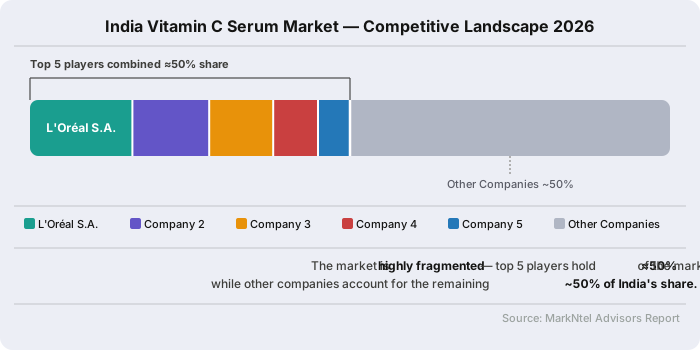
The India vitamin C serum market is highly fragmented, with a mix of domestic direct-to-consumer brands and established multinational skincare companies competing across mass, premium, and clinical segments within the broader India beauty and personal care industry. Key players, including Honasa Consumer Limited, L'Oréal India Private Limited, Hindustan Unilever Limited (HUL), Nykaa E-Retail Private Limited, and Plum Goodness Private Limited, collectively account for approximately 50% of the total market share.
Major Vitamin C Serum Companies in India
- Uprising Science Private Limited
- Honasa Consumer Limited
- Plum Goodness Private Limited
- Nykaa E-Retail Private Limited
- Pilgrim India Private Limited
- Body Cupid Private Limited
- Hindustan Unilever Limited (HUL)
- L'Oréal India Private Limited
- Himalaya Global Holdings Ltd.
- O3+ Professional Skincare
- Others
India Vitamin C Serum Industry News and Recent Developments
February 2026: Pilgrim India Private Limited Launches India’s First Vitamin C Serum Sunscreen
Pilgrim India Private Limited introduced India’s first Vitamin C serum sunscreen featuring a 5% Vitamin C complex with SPF 50+ PA++++. The product combines antioxidant skincare benefits with broad-spectrum UV protection, incorporating advanced UV filters and lightweight texture. It is designed to prevent pigmentation, tanning, and premature aging while delivering skin brightening in a single application.
Impact Analysis: This launch highlights the growing convergence of skincare and sun care, reinforcing the shift toward multifunctional products in India. By integrating treatment and protection, the product reduces routine complexity and enhances consumer convenience. It is expected to intensify competition in the Vitamin C serum segment, push innovation in hybrid formulations, and accelerate demand for multi-active products, particularly among urban consumers seeking efficacy-driven and time-efficient skincare solutions.
May 2025: Plum Goodness Private Limited Unveils Campaign for New Vitamin C Serum in India
Plum Goodness Private Limited launched a marketing campaign titled “It’s not a... but THE Vitamin C Serum” to promote its new 10% Vitamin C serum. The formulation combines niacinamide, ceramides, hyaluronic acid, and calendula, and was developed using customer feedback. The product is positioned as clinically tested, dermatologist-approved, and focused on delivering visible glow and barrier repair.
Impact Analysis: This campaign highlights the shift toward community-driven product development and ingredient transparency in India skincare market. By integrating multiple actives in a single formulation, the launch reinforces the multi-functional skincare trend. It also strengthens Plum’s positioning in the competitive Vitamin C category while emphasizing consumer trust and engagement. Such initiatives are expected to accelerate demand for clinically positioned, result-oriented serums and intensify competition among D2C skincare brands in India.
- Market Segmentation
- Introduction
- Product Definition
- Research Process
- Assumptions
- Executive Summary
- India Vitamin C Serum Market Policies, Regulations, and Product Standards
- India Vitamin C Serum Production Trend 2022-2032
- India Vitamin C Serum Production Trend by Formulation Type
- Pure Ascorbic Acid
- Stabilized Derivatives
- Blended Serum
- Company Wise Production Plants and Statistics
- Installed Production Capacity
- Actual Production
- Planned Production Target
- India Vitamin C Serum Production Trend by Formulation Type
- India Vitamin C Serum Pricing Analysis 2022-2032
- India Vitamin C Serum Pricing Trend 2022-2032
- India Vitamin C Serum Production Trend by Formulation Type
- Pure Ascorbic Acid
- Stabilized Derivatives
- Blended Serum
- India Vitamin C Serum Market Dynamics
- Growth Factors
- Challenges
- India Vitamin C Serum Market Hotspot & Opportunities
- India Vitamin C Serum Market Outlook, 2022-2032F
- Market Size & Outlook
- By Revenues (USD Million)
- Market Share & Outlook
- By Formulation Type- Market Size & Forecast 2022-2032, USD Million
- Pure Ascorbic Acid
- Stabilized Derivatives
- Blended Serum
- By Concentration Level- Market Size & Forecast 2022-2032, USD Million
- Below 10%
- 10% – 20%
- Above 20%
- By Type- Market Size & Forecast 2022-2032, USD Million
- Mass
- Premium
- Luxury
- By Skin Type- Market Size & Forecast 2022-2032, USD Million
- Oily
- Dry
- Combination
- Sensitive
- By Application- Market Size & Forecast 2022-2032, USD Million
- Anti-aging & Wrinkle Reduction
- Brightening & Radiance Enhancement
- Hyperpigmentation & Dark Spot Treatment
- Acne & Blemish Control
- Sun Damage Repair & Protection
- By Distribution Channel- Market Size & Forecast 2022-2032, USD Million
- Hypermarkets & Supermarkets
- Specialty Stores
- Pharmacies & Drugstores
- Online
- Others
- By Packaging Type- Market Size & Forecast 2022-2032, USD Million
- Dropper Bottles
- Pump Bottles
- Ampoules
- By Region- Market Size & Forecast 2022-2032, USD Million
- North
- South
- East
- West
- By Company
- Competition Characteristics
- Market Share & Analysis
- By Formulation Type- Market Size & Forecast 2022-2032, USD Million
- Market Size & Outlook
- India Pure Ascorbic Acid Market Outlook, 2022-2032
- Market Size & Outlook
- By Revenues (USD Million)
- Market Share & Outlook
- By Concentration Level- Market Size & Forecast 2022-2032, USD Million
- By Type- Market Size & Forecast 2022-2032, USD Million
- By Skin Type- Market Size & Forecast 2022-2032, USD Million
- By Application- Market Size & Forecast 2022-2032, USD Million
- By Distribution Channel- Market Size & Forecast 2022-2032, USD Million
- By Packaging Type- Market Size & Forecast 2022-2032, USD Million
- By Region- Market Size & Forecast 2022-2032, USD Million
- Market Size & Outlook
- India Stabilized Derivatives Market Outlook, 2022-2032
- Market Size & Outlook
- By Revenues (USD Million)
- Market Share & Outlook
- By Concentration Level- Market Size & Forecast 2022-2032, USD Million
- By Type- Market Size & Forecast 2022-2032, USD Million
- By Skin Type- Market Size & Forecast 2022-2032, USD Million
- By Application- Market Size & Forecast 2022-2032, USD Million
- By Distribution Channel- Market Size & Forecast 2022-2032, USD Million
- By Packaging Type- Market Size & Forecast 2022-2032, USD Million
- By Region- Market Size & Forecast 2022-2032, USD Million
- Market Size & Outlook
- India Blended Serum Market Outlook, 2022-2032
- Market Size & Outlook
- By Revenues (USD Million)
- Market Share & Outlook
- By Concentration Level- Market Size & Forecast 2022-2032, USD Million
- By Type- Market Size & Forecast 2022-2032, USD Million
- By Skin Type- Market Size & Forecast 2022-2032, USD Million
- By Application- Market Size & Forecast 2022-2032, USD Million
- By Distribution Channel- Market Size & Forecast 2022-2032, USD Million
- By Packaging Type- Market Size & Forecast 2022-2032, USD Million
- By Region- Market Size & Forecast 2022-2032, USD Million
- Market Size & Outlook
- India Vitamin C Serum Market Key Strategic Imperatives for Success & Growth
- Competitive Outlook
- Company Profiles
- Uprising Science Private Limited
- Business Description
- Product Portfolio
- Collaborations & Alliances
- Recent Developments
- Financial Details
- Others
- Honasa Consumer Limited
- Business Description
- Product Portfolio
- Collaborations & Alliances
- Recent Developments
- Financial Details
- Others
- Plum Goodness Private Limited
- Business Description
- Product Portfolio
- Collaborations & Alliances
- Recent Developments
- Financial Details
- Others
- Nykaa E-Retail Private Limited
- Business Description
- Product Portfolio
- Collaborations & Alliances
- Recent Developments
- Financial Details
- Others
- Pilgrim India Private Limited
- Business Description
- Product Portfolio
- Collaborations & Alliances
- Recent Developments
- Financial Details
- Others
- Body Cupid Private Limited
- Business Description
- Product Portfolio
- Collaborations & Alliances
- Recent Developments
- Financial Details
- Others
- Hindustan Unilever Limited (HUL)
- Business Description
- Product Portfolio
- Collaborations & Alliances
- Recent Developments
- Financial Details
- Others
- L'Oréal India Private Limited
- Business Description
- Product Portfolio
- Collaborations & Alliances
- Recent Developments
- Financial Details
- Others
- Himalaya Global Holdings Ltd.
- Business Description
- Product Portfolio
- Collaborations & Alliances
- Recent Developments
- Financial Details
- Others
- O3+ Professional Skincare
- Business Description
- Product Portfolio
- Collaborations & Alliances
- Recent Developments
- Financial Details
- Others
- Others
- Uprising Science Private Limited
- Company Profiles
- Disclaimer

MarkNtel Advisors follows a robust and iterative research methodology designed to ensure maximum accuracy and minimize deviation in market estimates and forecasts. Our approach combines both bottom-up and top-down techniques to effectively segment and quantify various aspects of the market. A consistent feature across all our research reports is data triangulation, which examines the market from three distinct perspectives to validate findings. Key components of our research process include:
1. Scope & Research Design At the outset, MarkNtel Advisors define the research objectives and formulate pertinent questions. This phase involves determining the type of research—qualitative or quantitative—and designing a methodology that outlines data collection methods, target demographics, and analytical tools. They also establish timelines and budgets to ensure the research aligns with client goals.
2. Sample Selection and Data Collection In this stage, the firm identifies the target audience and determines the appropriate sample size to ensure representativeness. They employ various sampling methods, such as random or stratified sampling, based on the research objectives. Data collection is carried out using tools like surveys, interviews, and observations, ensuring the gathered data is reliable and relevant.
3. Data Analysis and Validation Once data is collected, MarkNtel Advisors undertake a rigorous analysis process. This includes cleaning the data to remove inconsistencies, employing statistical software for quantitative analysis, and thematic analysis for qualitative data. Validation steps are taken to ensure the accuracy and reliability of the findings, minimizing biases and errors.

4. Data Forecast and FinalizationThe final phase involves forecasting future market trends based on the analyzed data. MarkNtel Advisors utilize predictive modeling and time series analysis to anticipate market behaviors. The insights are then compiled into comprehensive reports, featuring visual aids like charts and graphs, and include strategic recommendations to inform client decision-making
We’d love to understand what matters most to you.