

By Product Type (Rings, Necklaces, Chains, Earrings, Bangles & Bracelets, Others), By Material Type (Gold, Platinum, Silver, Gemstone, Others), By Manufacturing Type (In House, Outsourced), By Manufac... ... sourced), By Manufacturing Process Type (Handmade, Machine Made), By Occasion (Daily Wear, Wedding Wear, Other Occasions), By Market Type (Organized, Unorganized), By Price Range (Economy (Up to USD 150), Mid-Tier (USD 151 – USD 650), Luxury (Above USD 650)), By Distribution Channel (Offline, Online), and others Read more
- FMCG
- Jun 2026
- 135
- PDF, Excel, PPT
India Fine Jewelry Market Key Takeaways
- India fine jewelry market valued at USD 85.18 billion in 2025, projected to reach USD 124 billion by 2032 from USD 87.19 billion in 2026, at a 6.05% CAGR.
- The Southern region dominates demand, accounting for approximately a 32% share.
- Rings represent a key product category, contributing around 23% of total market share.
- Handmade jewelry leads manufacturing processes with nearly a 71% share in 2026.
- The industry remains highly fragmented, with the top five players collectively holding nearly 25% share, despite increasing expansion of organized retail chains.
India Fine Jewelry Market Size and Outlook
The India fine jewelry market size was estimated at USD 85.18 billion in 2025 and is projected to grow from USD 87.19 billion in 2026 to USD 124 billion by 2032, registering a CAGR of 6.05% during 2026–2032. This expansion reflects stable consumption supported by rising incomes and evolving preferences. Cultural demand continues to anchor baseline consumption, while increasing premiumization and product diversification are strengthening long-term growth visibility across diverse consumer segments.
Consumption patterns are being reshaped by both traditional and emerging factors. Wedding and festival demand remains central, while increasing adoption of lab diamonds is expanding accessibility among younger consumers. Simultaneously, rising investment demand is reinforcing the broader ecosystem, with gold investment demand increasing 54% year-on-year to 82 tonnes in Q1 2026, highlighting growing confidence in gold as a long-term store of value among Indian households.
Affordability dynamics are further influencing purchasing behavior, creating opportunities for innovation. Rising gold prices are encouraging consumers to shift toward lightweight jewelry and lower-carat products, enabling continued purchasing despite budget constraints. Supporting this trend, total gold demand rose 10% year-on-year to 151 tonnes in Q1 2026, with bar and coin demand nearly matching jewelry demand and ETF investments reaching record levels across domestic markets.
On the supply side, India’s strong manufacturing base and export momentum continue to reinforce competitiveness. The presence of approximately 450 organized manufacturers across major hubs such as Surat, Mumbai, and Jaipur supports large-scale production efficiency . Additionally, exports to Australia and France increased by over 36%, while Surat remains a leading global manufacturing center, collectively positioning the industry for sustained long-term expansion and global competitiveness.
India Fine Jewelry Market Key Indicators
- India’s gold demand rose 5% year-on-year to 802.8 tonnes in 2024, while total value surged 31% to approximately USD 62 billion, highlighting strong underlying consumption resilience. This sustained increase in gold demand supports a continuous fabrication pipeline for fine jewelry, particularly across wedding and festival cycles. Despite price volatility, consistent physical demand ensures stable throughput for manufacturers, reinforcing the sector’s structural depth and long-term consumption visibility across both urban and rural markets.
- A widening divergence between volume and value defines recent consumption behavior, with gold jewellery demand reaching a record USD 49 billion in 2025 even as volumes declined 24% to 430.5 tonnes. This reflects a decisive shift toward lightweight jewelry, where consumers prioritize design, branding, and affordability over metal weight. The trend is accelerating margin expansion for organized players, as buyers increasingly opt for contemporary, design-led products that align with evolving lifestyle preferences and purchasing patterns.
- Regulatory tightening is transforming industry dynamics, with over 600 million items certified under the BIS hallmark India (HUID system) between 2021 and 2026 across 380 districts . Mandatory hallmarking has significantly improved transparency and trust, reducing information asymmetry in gold purchases. As a result, consumers are increasingly shifting toward certified retailers, accelerating formalization while eroding the competitive advantage of informal players that historically operated without standardized purity assurance mechanisms.
- India’s gold jewellery exports increased 5.53% year-on-year to USD 9.71 billion during April 2025–January 2026, supported by an 8.69% rise in studded jewellery shipments . This growth in jewelry exports underscores the country’s globally competitive manufacturing ecosystem, which combines skilled labor with design capabilities. The export base not only drives foreign exchange earnings but also strengthens domestic supply chains, enabling brands to leverage scale efficiencies and cater to premium consumer demand.
- With a national target of USD 75 billion in gem and jewellery exports by 2030, India is positioning itself as a global hub for high-value jewelry manufacturing. The country already processes over 90% of global cut and polished diamonds, reinforcing its leadership in diamond polishing. Continued investments in infrastructure, skilling, and export facilitation are expected to expand production capacity, enhance competitiveness, and support both international trade ambitions and domestic consumption growth.
- The rapid expansion of branded players is evident from 32% to 124% revenue growth reported in Q1 2026, alongside the addition of 7 to 38 stores per company. This surge in organized jewelry reflects increasing penetration into tier-2 and tier-3 cities, where consumer preferences are shifting toward trusted brands. The transition from fragmented family jewellers to organized chains is reshaping competitive dynamics and enabling standardized pricing, quality assurance, and enhanced customer experience.
- Exports of alternative metals are witnessing strong growth, with silver jewellery rising 51.21% to USD 1.28 billion and platinum jewellery increasing 49.09% to USD 215 million. This surge highlights the growing relevance of silver jewelry as consumers diversify beyond gold amid rising prices. Organized players are capitalizing on this trend by expanding portfolios into white metals, enabling access to new customer segments and supporting higher-margin product innovation across evolving consumption preferences.
India Fine Jewelry Market Scope
| Category | Segments |
|---|---|
| By Product Type | Rings, Necklaces, Chains, Earrings, Bangles & Bracelets, Others |
| By Material Type | Gold, Platinum, Silver, Gemstone, Others |
| By Manufacturing Type | In House, Outsourced |
| By Manufacturing Process Type | Handmade, Machine Made |
| By Occasion | Daily Wear, Wedding Wear, Other Occasions |
| By Market Type | Organized, Unorganized |
| By Price Range | Economy (Up to USD 150), Mid-Tier (USD 151 – USD 650), Luxury (Above USD 650 |
| By Distribution Channel | Offline, Online |
India Fine Jewelry Market Growth Drivers
Strong Cultural and Wedding-Driven Demand
Wedding-driven consumption remains the primary growth engine of the fine jewelry industry, anchoring demand through highly concentrated seasonal activity. Around 4.6 million weddings between November and mid-December 2025 generated approximately USD 78 billion in trade, with jewelry contributing nearly USD 11.7 billion. This compressed demand cycle highlights the structural importance of bridal jewelry in sustaining annual consumption patterns.
The economic scale of weddings continues due to rising disposable incomes and aspirational spending. Notably, the 2025 wedding season exceeded the USD 71 billion generated in 2024 despite a slightly lower wedding count, indicating a 10% increase in value. This shift reflects higher per-event expenditure and reinforces the role of gold demand India in driving premium purchases.
Organized retailers are increasingly capturing this expanding value pool, benefiting from consumer preference for transparency, design variety, and brand assurance. The growing shift toward formal retail channels is accelerating the evolution of jewelry retail, particularly in urban and semi-urban regions where consumers are prioritizing quality-certified and design-led offerings over traditional unorganized formats.
The rising wedding expenditures, premiumization trends, and retail formalization are reinforcing the India fine jewelry industry as a structurally resilient growth segment. This demand model ensures consistent revenue visibility and positions occasion-led consumption as the most dependable long-term driver of market expansion.
Recent Trends
Rapid Growth of Lab-Grown Diamonds
Lab-grown diamonds are emerging as a transformative trend within the India fine jewelry sector, driven by affordability and evolving consumer preferences. Products priced between USD 120 and USD 1,200 are expanding accessibility, particularly among younger buyers seeking design-led, everyday wear options. This shift is accelerating the adoption of lab grown diamonds as a viable alternative to natural stones.
A key inflection point came with the entry of Titan Company through its dedicated beYon brand in late 2025. Positioned as a fashion-forward offering, the brand focuses on accessibility and self-expression, marking a transition toward branded jewelry that emphasizes lifestyle appeal over traditional investment-driven purchasing behavior.
Retail expansion strategies further reinforce this trend, with the first exclusive store launched in Mumbai and additional outlets planned across Mumbai and Delhi. This expansion highlights growing consumer confidence and aligns with rising online jewelry growth, where buyers increasingly explore both digital and physical channels for discovery and purchase decisions.
The rise of lab-grown diamonds, increasing participation of organized players, and evolving retail strategies are reshaping demand dynamics. These shifts are positioning the India fine jewelry industry for sustained growth, as affordability, innovation, and accessibility redefine consumer engagement for such products.
India Fine Jewelry Market Opportunities and Challenges
Rising Gold Prices Driving Shift Toward Lightweight Jewelry
Record-high gold prices remain a critical constraint for the India fine jewelry demand, with domestic rates reaching approximately USD 1,015 per 10 grams in early 2025. Given that jewelry accounts for nearly 70% of total gold demand, elevated prices directly compress purchase volumes, particularly affecting weight-driven ceremonial buying patterns across price-sensitive consumer segments.
This affordability pressure is intensifying across the sector, as households operate within fixed budgets and prioritize essential spending. High prices are disproportionately impacting traditional bulk purchases such as bridal sets, leading consumers to reduce quantities or defer purchases altogether. This trend is contributing to slower volume growth despite underlying demand remaining structurally intact across key regions.
However, rising gold prices are simultaneously unlocking new opportunities, particularly in the expansion of cost-efficient product categories. Retailers are increasingly focusing on innovative, design-led offerings with reduced gold content, enabling consumers to maintain purchase frequency while adapting to budget constraints. This shift is accelerating demand for affordable jewelry.
A notable example includes the launch of a dedicated lightweight jewelry brand in 2025 targeting a segment growing at approximately 30% annually, alongside plans to open 12 specialized stores. This reflects a broader industry shift toward lightweight jewelry, where lower-carat, everyday-wear collections are helping brands attract younger consumers and sustain growth despite persistent pricing pressures.
Segmentation Insights
Rings Emerging as the Most Dominating Due to Engagement-Driven Demand
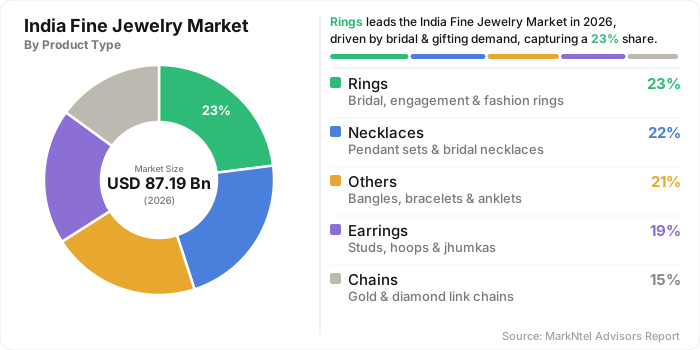
The rings contribute approximately 23% of the overall revenue in the India fine jewelry market, making them the leading product segment. Their dominance is driven by strong cultural and emotional relevance, particularly in engagements and proposals. The increasing importance of relationship milestones has elevated ring purchases beyond seasonal demand, positioning them as a consistent revenue contributor across both urban and semi-urban regions.
The innovation in ring design is further strengthening segment growth. Leading players like CaratLane, which launched an all-new engagement ring collection featuring its proprietary 73-faceted "Gulnaara" solitaire collections exceeding 400 designs, with entry prices starting around USD 290, are improving accessibility for first-time buyers . This aligns with rising diamond jewelry demand, particularly among younger consumers seeking personalized and design-centric offerings.
Other categories such as necklaces, earrings, and bangles continue to contribute significantly, especially during weddings. However, rings remain distinct due to their everyday wearability and symbolic value. Growing preference for modern aesthetics and customization is reinforcing demand for customized jewelry, ensuring sustained expansion of the segment within the broader product landscape. By product type, the market is divided into the following categories:
- Rings
- Necklaces
- Chains
- Earrings
- Bangles & Bracelets
- Others
Handmade Craftsmanship Dominates Jewelry Manufacturing Landscape
The handmade segment dominates the India fine jewelry industry, accounting for approximately 71% of the total share, making it the largest contributor within manufacturing processes. This leadership is rooted in India’s long-standing artisanal heritage, where intricate craftsmanship and customization remain central to consumer preferences, particularly for bridal and traditional jewelry requiring detailed, design-intensive production.
Across the broader ecosystem in India, the leverage skilled labor and regional craftsmanship clusters to maintain this dominance. Handmade jewelry is highly valued for its uniqueness and cultural authenticity, especially in high-value purchases. This aligns with the growing importance of jewelry manufacturing, where craftsmanship-driven production differentiates offerings in both domestic and export markets.
In contrast, machine-made jewelry represents a smaller but steadily expanding segment, driven by scalability and cost efficiency. It supports demand for standardized, lightweight designs suited for everyday wear, particularly in urban markets. The increasing role of organized jewelry is further accelerating this shift, as brands adopt hybrid production models to balance artisanal quality with operational efficiency. The study categorizes the manufacturing process into the following types:
- Handmade
- Machine Made
India Fine Jewelry Market Geographical Outlook
The South region accounts for approximately 32% of total demand in the India fine jewelry industry, making it the largest regional contributor. Strong cultural affinity toward gold purchases, especially during weddings and festivals, continues to drive sustained consumption. This entrenched preference reinforces the dominance of the South India jewelry market, where gold ownership is closely linked to tradition, wealth preservation, and social customs.
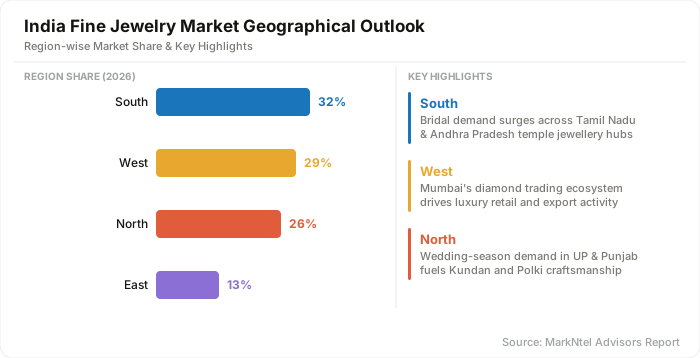
The region’s strength is further supported by a deeply rooted production ecosystem, particularly in Tamil Nadu. Coimbatore alone hosts over 40,000 goldsmithing units, employing more than 200,000 workers, highlighting its critical role in the national jewelry value chain . This concentration of skilled labor underpins strong Tamil Nadu gold demand, while also supporting supply for broader domestic markets.
Urban centers such as Chennai, Bengaluru, and Hyderabad are key demand hubs, driven by rising disposable incomes and increasing preference for branded offerings. The growing influence of organized retail is reshaping consumption behavior, with higher adoption of certified and design-led products. This aligns with rising Karnataka jewelry demand, reflecting expanding consumption across southern states.
The strong cultural demand, extensive manufacturing infrastructure, and increasing retail formalization position southern India as the backbone of the India fine jewelry industry. This regional ecosystem is expected to sustain long-term leadership, driven by both consumption strength and production capabilities.
India Fine Jewelry Market Competitive Analysis
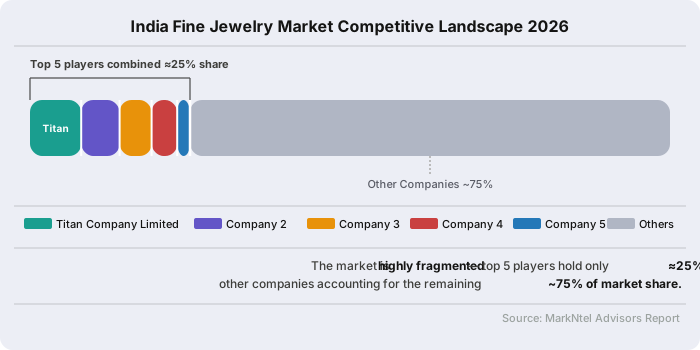
The India fine jewelry industry remains highly fragmented, with the top five organized players like Titan Company (Tanishq), Malabar Gold & Diamonds, Kalyan Jewellers, Joyalukkas, and Senco Gold, collectively accounting for approximately 25% of total market share. The competitive landscape continues to be dominated by a large base of unorganized, regional, and family-owned jewelers, resulting in low overall concentration. However, the market is gradually transitioning toward formalization, supported by hallmarking regulations, increasing consumer trust in branded offerings, and aggressive retail expansion into tier-2 and tier-3 cities.
Key Players in India Fine Jewelry Market
- Titan
- Malabar Gold & Diamonds.
- Kalyan Jewellers
- BlueStone
- PC Jeweller
- Gitanjali
- Thangamayil Jewelry Ltd
- Senco Gold
- PN Gadgil
- Reliance
- Joyalukkas Holdings
- TBZ
- Others
India Fine Jewelry Industry News and Recent Developments:
April 2026: Tanishq Expands into Natural Gemstone Jewelry with ‘Hues’ Collection
Tanishq launched its ‘Hues’ collection in April 2026, marking a strategic expansion into the natural gemstone jewelry segment. The collection features 100% natural colored gemstones set in 18KT gold and was introduced ahead of Akshaya Tritiya. With prices starting from approximately INR 30,000, the collection emphasizes transparency, exchange value, and everyday wearability while targeting consumers seeking contemporary, design-led gemstone jewelry.
Impact Analysis: The launch strengthens Tanishq’s presence beyond traditional gold and diamond categories, enabling diversification into a relatively underpenetrated gemstone segment. By addressing consumer concerns regarding authenticity and value retention, the company is helping formalize the natural gemstone category within organized retail. The collection also aligns with rising demand for self-purchase and lifestyle-oriented jewelry among younger consumers.
April 2026: Sennes Opens First Exclusive Lab-Grown Diamond Store in Noida
Sennes, backed by Senco Gold & Diamonds, opened its first exclusive store in Noida during April 2026. Located at Gaur City Mall, the approximately 670-square-foot outlet represents the brand’s 12th store in India. The store combines lab-grown diamond jewelry with lifestyle products such as leather accessories and fragrances, reflecting a design-led retail strategy focused on modern consumers.
Impact Analysis: The expansion highlights growing confidence in the long-term commercial viability of lab-grown diamonds within India. By establishing a dedicated retail presence in a major urban market, Sennes is strengthening consumer accessibility and awareness of lab-grown products. The lifestyle-led store format also reflects an industry shift toward experiential retail and cross-category branding. As organized retailers increase investments in lab-grown diamonds, competition within the segment is expected to intensify, supporting category growth and broader consumer adoption.
February 2026: Malabar Gold & Diamonds Launches ZOUL Everyday Fine Jewelry Collection
Malabar Gold & Diamonds introduced ZOUL in February 2026, a fine jewelry collection featuring natural diamonds set in 14KT and 18KT gold. Designed as a lightweight, everyday-wear range, the collection includes pendants, earrings, rings, bracelets, and chains, with prices starting from approximately INR 20,000. The collection is available across the company’s global showroom network and online platform, targeting consumers seeking accessible fine jewelry for regular use.
Impact Analysis: The launch reflects a broader industry shift toward lightweight and lifestyle-oriented jewelry categories that address affordability and frequency of purchase. By focusing on daily wear rather than occasion-based consumption, Malabar is expanding its reach among younger and working consumers. The collection also supports the premiumization trend by offering natural diamond jewelry at accessible entry points.
- Market Segmentation
- Introduction
- Product Definition
- Research Process
- Assumptions
- Executive Summary
- India Fine Jewelry Market Policies, Regulations, and Product Standards
- India Fine Jewelry Market Value Chain Analysis
- Raw Material Sourcing
- Manufacturing & Processing Landscape
- Wholesale & Distribution Network
- Retail & Omni-channel Landscape
- Margin Analysis Across Value Chain
- India Fine Jewelry Production Trend 2022-2032
- India Fine Jewelry Production Trend by Product Type
- Rings
- Necklaces
- Chains
- Earrings
- Bangles & Bracelets
- Others
- Company Wise Production Plants and Statistics
- Installed Production Capacity
- Actual Production
- Planned Production Target
- India Fine Jewelry Production Trend by Product Type
- India Fine Jewelry Pricing Analysis 2022-2032
- India Fine Jewelry Pricing Trend 2022-2032
- India Fine Jewelry Production Trend by Product Type
- Rings
- Necklaces
- Chains
- Earrings
- Bangles & Bracelets
- Others
- India Fine Jewelry Market Dynamics
- Growth Factors
- Challenges
- India Fine Jewelry Market Import & Export Analysis
- India Fine Jewelry Market Hotspot & Opportunities
- India Fine Jewelry Market Outlook, 2022-2032F
- Market Size & Outlook
- By Revenues (USD Million)
- Market Share & Outlook
- By Product Type- Market Size & Forecast 2022-2032, USD Million
- Rings
- Necklaces
- Chains
- Earrings
- Bangles & Bracelets
- Others
- By Material Type- Market Size & Forecast 2022-2032, USD Million
- Gold
- Platinum
- Silver
- Gemstone
- Others
- By Manufacturing Type- Market Size & Forecast 2022-2032, USD Million
- In House
- Outsourced
- By Manufacturing Process Type- Market Size & Forecast 2022-2032, USD Million
- Handmade
- Machine Made
- By Occasion- Market Size & Forecast 2022-2032, USD Million
- Daily Wear
- Rings
- Necklaces
- Chains
- Earrings
- Bangles
- Others
- Wedding Wear
- Rings
- Necklaces
- Chains
- Earrings
- Bangles
- Others
- Other Occasions
- Rings
- Necklaces
- Chains
- Earrings
- Bangles
- Others
- Daily Wear
- By Market Type- Market Size & Forecast 2022-2032, USD Million
- Organized
- Unorganized
- By Price Range - Market Size & Forecast 2022-2032, USD Million
- Economy (Up to USD 150)
- Mid-Tier (USD 151 – USD 650)
- Luxury (Above USD 650)
- By Distribution Channel- Market Size & Forecast 2022-2032, USD Million
- Offline
- Brand Outlets
- Multibrand Outlets
- Independent Jewelers
- Others
- Online
- Offline
- By Region- Market Size & Forecast 2022-2032, USD Million
- North
- Uttar Pradesh
- Haryana
- Punjab
- Delhi NCR
- Others
- West
- Maharashtra
- Gujarat
- Rajasthan
- Others
- East
- Assam
- West Bengal
- Bihar
- Others
- South
- Tamil Nadu
- Karnataka
- Telangana
- Others
- North
- By Company
- Competition Characteristics
- Market Share & Analysis
- By Product Type- Market Size & Forecast 2022-2032, USD Million
- Market Size & Outlook
- India Rings Fine Jewelry Market Outlook, 2022-2032
- Market Size & Outlook
- By Revenues (USD Million)
- Market Share & Outlook
- By Material Type- Market Size & Forecast 2022-2032, USD Million
- By Manufacturing Type- Market Size & Forecast 2022-2032, USD Million
- By Manufacturing Process Type- Market Size & Forecast 2022-2032, USD Million
- By Occasion- Market Size & Forecast 2022-2032, USD Million
- By Market Type- Market Size & Forecast 2022-2032, USD Million
- By Price Range - Market Size & Forecast 2022-2032, USD Million
- By Distribution Channel- Market Size & Forecast 2022-2032, USD Million
- By Region- Market Size & Forecast 2022-2032, USD Million
- Market Size & Outlook
- India Necklaces Fine Jewelry Market Outlook, 2022-2032
- Market Size & Outlook
- By Revenues (USD Million)
- Market Share & Outlook
- By Material Type- Market Size & Forecast 2022-2032, USD Million
- By Manufacturing Type- Market Size & Forecast 2022-2032, USD Million
- By Manufacturing Process Type- Market Size & Forecast 2022-2032, USD Million
- By Occasion- Market Size & Forecast 2022-2032, USD Million
- By Market Type- Market Size & Forecast 2022-2032, USD Million
- By Price Range - Market Size & Forecast 2022-2032, USD Million
- By Distribution Channel- Market Size & Forecast 2022-2032, USD Million
- By Region- Market Size & Forecast 2022-2032, USD Million
- Market Size & Outlook
- India Chains Fine Jewelry Market Outlook, 2022-2032
- Market Size & Outlook
- By Revenues (USD Million)
- Market Share & Outlook
- By Material Type- Market Size & Forecast 2022-2032, USD Million
- By Manufacturing Type- Market Size & Forecast 2022-2032, USD Million
- By Manufacturing Process Type- Market Size & Forecast 2022-2032, USD Million
- By Occasion- Market Size & Forecast 2022-2032, USD Million
- By Market Type- Market Size & Forecast 2022-2032, USD Million
- By Price Range - Market Size & Forecast 2022-2032, USD Million
- By Distribution Channel- Market Size & Forecast 2022-2032, USD Million
- By Region- Market Size & Forecast 2022-2032, USD Million
- Market Size & Outlook
- India Earrings Fine Jewelry Market Outlook, 2022-2032
- Market Size & Outlook
- By Revenues (USD Million)
- Market Share & Outlook
- By Material Type- Market Size & Forecast 2022-2032, USD Million
- By Manufacturing Type- Market Size & Forecast 2022-2032, USD Million
- By Manufacturing Process Type- Market Size & Forecast 2022-2032, USD Million
- By Occasion- Market Size & Forecast 2022-2032, USD Million
- By Market Type- Market Size & Forecast 2022-2032, USD Million
- By Price Range - Market Size & Forecast 2022-2032, USD Million
- By Distribution Channel- Market Size & Forecast 2022-2032, USD Million
- By Region- Market Size & Forecast 2022-2032, USD Million
- Market Size & Outlook
- India Bangles & Bracelets Fine Jewelry Market Outlook, 2022-2032
- Market Size & Outlook
- By Revenues (USD Million)
- Market Share & Outlook
- By Material Type- Market Size & Forecast 2022-2032, USD Million
- By Manufacturing Type- Market Size & Forecast 2022-2032, USD Million
- By Manufacturing Process Type- Market Size & Forecast 2022-2032, USD Million
- By Occasion- Market Size & Forecast 2022-2032, USD Million
- By Market Type- Market Size & Forecast 2022-2032, USD Million
- By Price Range - Market Size & Forecast 2022-2032, USD Million
- By Distribution Channel- Market Size & Forecast 2022-2032, USD Million
- By Region- Market Size & Forecast 2022-2032, USD Million
- Market Size & Outlook
- India Fine Jewelry Market Key Strategic Imperatives for Success & Growth
- Competitive Outlook
- Company Profiles
- Titan
- Business Description
- Product Portfolio
- Collaborations & Alliances
- Recent Developments
- Financial Details
- Others
- Malabar Gold & Diamonds.
- Business Description
- Product Portfolio
- Collaborations & Alliances
- Recent Developments
- Financial Details
- Others
- Kalyan Jewellers
- Business Description
- Product Portfolio
- Collaborations & Alliances
- Recent Developments
- Financial Details
- Others
- BlueStone
- Business Description
- Product Portfolio
- Collaborations & Alliances
- Recent Developments
- Financial Details
- Others
- PC Jeweller
- Business Description
- Product Portfolio
- Collaborations & Alliances
- Recent Developments
- Financial Details
- Others
- Gitanjali
- Business Description
- Product Portfolio
- Collaborations & Alliances
- Recent Developments
- Financial Details
- Others
- Thangamayil Jewelry Ltd
- Business Description
- Product Portfolio
- Collaborations & Alliances
- Recent Developments
- Financial Details
- Others
- Senco Gold
- Business Description
- Product Portfolio
- Collaborations & Alliances
- Recent Developments
- Financial Details
- Others
- PN Gadgil
- Business Description
- Product Portfolio
- Collaborations & Alliances
- Recent Developments
- Financial Details
- Others
- Reliance
- Business Description
- Product Portfolio
- Collaborations & Alliances
- Recent Developments
- Financial Details
- Others
- Joyalukkas Holdings
- Business Description
- Product Portfolio
- Collaborations & Alliances
- Recent Developments
- Financial Details
- Others
- TBZ
- Business Description
- Product Portfolio
- Collaborations & Alliances
- Recent Developments
- Financial Details
- Others
- Others
- Titan
- Company Profiles
- Disclaimer

MarkNtel Advisors follows a robust and iterative research methodology designed to ensure maximum accuracy and minimize deviation in market estimates and forecasts. Our approach combines both bottom-up and top-down techniques to effectively segment and quantify various aspects of the market. A consistent feature across all our research reports is data triangulation, which examines the market from three distinct perspectives to validate findings. Key components of our research process include:
1. Scope & Research Design At the outset, MarkNtel Advisors define the research objectives and formulate pertinent questions. This phase involves determining the type of research—qualitative or quantitative—and designing a methodology that outlines data collection methods, target demographics, and analytical tools. They also establish timelines and budgets to ensure the research aligns with client goals.
2. Sample Selection and Data Collection In this stage, the firm identifies the target audience and determines the appropriate sample size to ensure representativeness. They employ various sampling methods, such as random or stratified sampling, based on the research objectives. Data collection is carried out using tools like surveys, interviews, and observations, ensuring the gathered data is reliable and relevant.
3. Data Analysis and Validation Once data is collected, MarkNtel Advisors undertake a rigorous analysis process. This includes cleaning the data to remove inconsistencies, employing statistical software for quantitative analysis, and thematic analysis for qualitative data. Validation steps are taken to ensure the accuracy and reliability of the findings, minimizing biases and errors.

4. Data Forecast and FinalizationThe final phase involves forecasting future market trends based on the analyzed data. MarkNtel Advisors utilize predictive modeling and time series analysis to anticipate market behaviors. The insights are then compiled into comprehensive reports, featuring visual aids like charts and graphs, and include strategic recommendations to inform client decision-making
We’d love to understand what matters most to you.