

By Type (Centrifugal Pump (Submersible Pump, Vertical Pump / Turbine, Horizontal End Suction, Split Case Pump), Positive Displacement Pump (Diaphragm Pump, Progressive Cavity Pump, Peristaltic Pump, S... ... Peristaltic Pump, Screw Pump)), By Power Source (Electric Pump, Diesel / Fuel-based Pump, Hydraulic Pump), By end user (Construction companies, Mining companies, Government / municipal bodies, Industrial manufacturing units, Rental equipment providers), By Application (Construction Sites, Mining Industry, Municipal & Urban Drainage, Industrial Plants, Oil & Gas sites), By Operation Type (Portable Pump, Stationary Pump), By Capacity (Up to 3 HP, 3 to 10 HP, 10 to 50 HP, Above 50 HP), By Distribution Channel (Direct sales, Project-Based Sales, EPC Contractor Sales, Indirect sales, Authorized Dealers & Distributors, Rental Equipment Providers, Industrial Supply Stores, Online B2B Platforms), and others Read more
- Environment
- May 2026
- 135
- PDF, Excel, PPT
India Dewatering Pump Market Report Key Takeaways
- The India Dewatering Pump Market size was valued at USD 360.36 million in 2025 and is projected to grow from USD 394.39 million in 2026 to USD 686.25 million by 2032.
- The industry is projected to witness sustained growth at a CAGR of 6.19% during the forecast period, i.e., 2026-32.
- By type, centrifugal pumps dominate the market with nearly 75% share in 2026, due to operational efficiency, high-flow handling capability, and extensive industrial deployment.
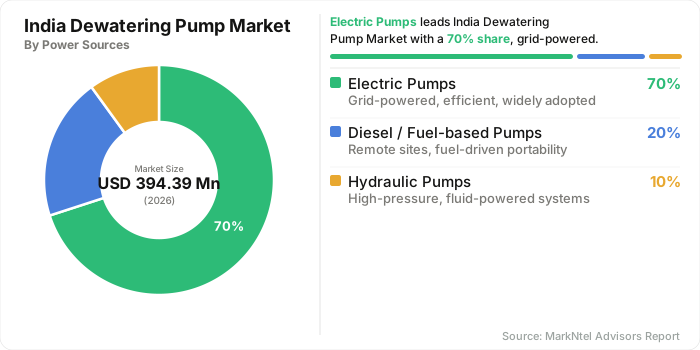
- By power source, electric pumps account for nearly 70% market share in 2026, owing to lower operating costs, energy-efficiency advantages, and increasing electrification of industrial infrastructure.
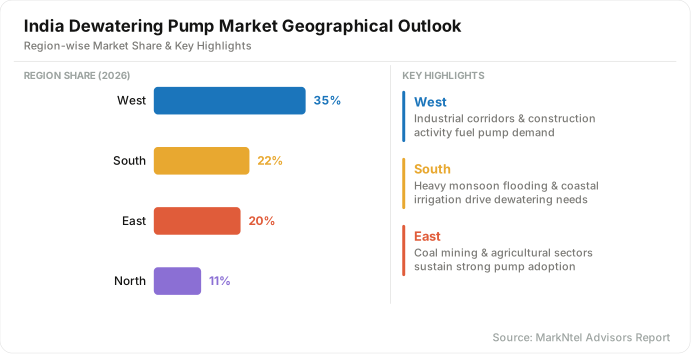
- Western India leads the market with nearly 35% share in 2026, supported by large-scale industrial activity, infrastructure expansion, mining operations, and urban drainage investments.
- Maharashtra and Gujarat represent the fastest-growing regional markets, expanding at growth rates above 7%, due to rising industrial corridor development, smart city investments, and manufacturing sector expansion.
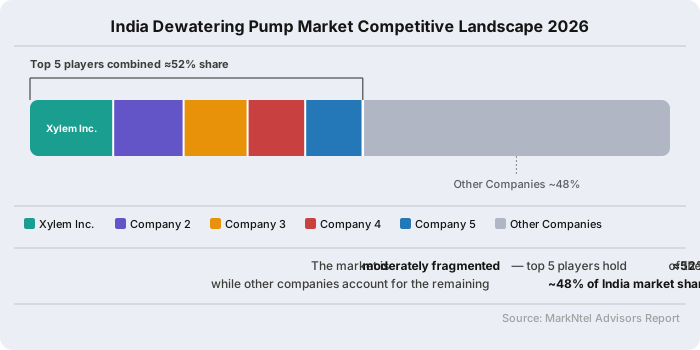
- The market remains moderately fragmented, with the top five companies collectively accounting for nearly 52% of the India dewatering pump market in 2026.
India Dewatering Pump Market Size and Outlook
The India dewatering pump market is projected to register a CAGR of 6.19% during the forecast period. The market covers electric submersible pumps, centrifugal dewatering pumps, diesel-driven pumps, diaphragm pumps, and hydraulic pump systems deployed to remove groundwater and surface water intrusion from active construction sites, underground and opencast mines, municipal excavation works, and industrial facilities. Coal mining, civil infrastructure construction, and municipal water management account for the largest share of installed dewatering pump capacity across India.
The Union Budget 2025–26 raised the capital investment outlay for infrastructure to USD 128.64 billion, equivalent to 3.1% of GDP, a sustained public expenditure baseline that directly sustains demand for construction dewatering equipment across hundreds of simultaneously active project sites nationwide. India's expanding coal extraction programme constitutes the single most direct macro demand driver for mine dewatering pumps in India.
According to the Ministry of Coal, Government of India, total domestic coal production reached 1,047.52 million tonnes (MT) in 2024–25, a 4.98% increase over the 997.83 MT recorded in 2023–24. Every active surface and underground mine requires continuous dewatering operations to prevent flooding of working faces, protect machinery, and maintain safety compliance under the Coal Mine Regulations, 2017.
Additionally, the Government of India has earmarked USD 693 million for coal and lignite exploration during 2026–27 to 2030–31, which will open new mining blocks across water-table-sensitive geologies, each requiring dedicated submersible and centrifugal dewatering pump installations from the commencement of development drilling.
Furthermore, India's large-scale rural water infrastructure programme creates a structurally distinct and sustained demand channel for dewatering pump deployment. The Union Budget 2025–26 allocated USD 7.84 billion to the Jal Jeevan Mission (JJM), extended until 2028, targeting 100% functional household tap connection coverage across rural India, up from 80% of rural households covered as of 2025, according to the Ministry of Jal Shakti. Laying water transmission pipelines, excavating pump chamber foundations, and constructing water treatment intake structures in seasonally waterlogged terrain all require electric and diesel dewatering pumps throughout each project's construction lifecycle.
Key domestic manufacturers are actively aligned with these demand forces, supporting the growth of the India dewatering pump market from USD 394.39 million in 2026 to USD 686.25 million by 2032. Kirloskar Brothers Limited serves mining and large infrastructure dewatering applications with site-specific submersible configurations. Shakti Pumps (India) Limited has expanded its electric submersible dewatering pump range with energy-efficient models suited to prolonged continuous-duty mine operations. KSB Limited supplies high-head centrifugal dewatering solutions to major infrastructure and industrial customers, reinforcing the commercial momentum building across the market.
India Dewatering Pump Industry Key Indicators
- According to the Central Groundwater Board (CGWB), India’s annual groundwater draft reached 245.64 billion cubic metres (BCM) in 2024, with groundwater supporting nearly 62% of total irrigation demand. Additionally, 11.13% of groundwater assessment units were classified as over-exploited. The country’s structural dependence on groundwater extraction across agriculture-intensive states such as Punjab, Haryana, Rajasthan, and Tamil Nadu continues to sustain demand for submersible dewatering and drainage pumps used in well deepening, aquifer management, and agricultural field drainage operations.
- According to the Ministry of Road Transport and Highways (MoRTH), approximately 34,000 km of National Highway projects were under active development as of 2025, with road construction progressing at nearly 34 km per day. Large-scale infrastructure activities including expressways, flyovers, and underpass construction require continuous dewatering of excavation pits and sub-grade zones, thereby generating sustained demand for electric and diesel-powered dewatering pumps across construction sites in India.
- According to the Ministry of Housing and Urban Affairs (MoHUA), metro rail systems are operational or under construction across 29 Indian states. Delhi Metro’s operational network is approaching 1,013 km under Phase 4 expansion, while Tunnel Boring Machines (TBMs) completed underground tunnelling operations at average depths of 18–26 metres during 2025. Metro tunnel construction through sub-surface aquifer zones creates significant demand for high-head submersible dewatering systems operating continuously throughout tunnelling and underground civil engineering activities.
- According to the Ministry of Mines, India’s iron ore production reached 289 million metric tonnes (MMT) during 2024–25, while the Indian Bureau of Mines (IBM) reported a further 5.7% year-on-year increase to 25.9 MMT in March 2025 alone. Iron ore mining activities across Odisha, Jharkhand, and Chhattisgarh generate continuous groundwater inflows within mining pits and benches, sustaining demand for uninterrupted operation of submersible and centrifugal dewatering pumps to maintain safe and accessible working conditions.
India Dewatering Pump Market Scope
| Category | Segments |
|---|---|
| By Type | Centrifugal Pump (Submersible Pump, Vertical Pump / Turbine, Horizontal End Suction, Split Case Pump), Positive Displacement Pump (Diaphragm Pump, Progressive Cavity Pump, Peristaltic Pump, Screw Pump, |
| By Power Source | Electric Pump, Diesel / Fuel-based Pump, Hydraulic Pump |
| By end user | Construction companies, Mining companies, Government / municipal bodies, Industrial manufacturing units, Rental equipment providers |
| By Application | Construction Sites, Mining Industry, Municipal & Urban Drainage, Industrial Plants, Oil & Gas sites |
| By Operation Type | Portable Pump, Stationary Pump |
| By Capacity | Up to 3 HP, 3 to 10 HP, 10 to 50 HP, Above 50 HP |
| By Distribution Channel | Direct sales, Project-Based Sales, EPC Contractor Sales, Indirect sales, Authorized Dealers & Distributors, Rental Equipment Providers, Industrial Supply Stores, Online B2B Platforms |
India Dewatering Pump Market Growth Drivers
Surging Urban Housing Construction Driving Demand for Dewatering Pumps Across India
India's mass-scale urban housing construction push has created a structurally non-discretionary demand base for dewatering pumps, one that operates independently of seasonal or cyclical factors. Every residential building with basement parking, utility corridors, or deep-foundation systems requires active groundwater removal before excavation can progress and continues to need pump operation until the sub-structure is fully waterproofed. This is not an optional equipment category; without submersible dewatering pumps and centrifugal pump sets, waterlogged excavation pits halt construction entirely.
According to the Ministry of Housing and Urban Affairs (MoHUA), Government of India, Pradhan Mantri Awas Yojana Urban 2.0 (PMAY-U 2.0), launched in September 2024, targets one crore additional urban houses over five years (2024–25 to 2028–29) with a total investment of USD 10.40 billion, of which government assistance stands at USD 24.03 billion.
The scale of simultaneous construction starts that PMAY-U 2.0 activates across tier-1, tier-2, and tier-3 cities directly multiplies the number of active dewatering pump deployments at any given point. Furthermore, India's urban population reached approximately 534.9 million in 2024, according to the World Bank, sustaining private residential and commercial development well beyond the government housing pipeline.
This combination of policy-driven and market-driven construction activity means dewatering pump demand is not concentrated in a single geography or project type, but distributed across hundreds of concurrent urban sites where high-water tables make pump deployment unavoidable.
For manufacturers and distributors in the water removal equipment industry, this construction volume translates into a multi-year, geographically diversified order horizon. Suppliers capable of offering site-ready electric submersible pump configurations alongside diesel-driven backup pump sets addressing both grid-connected and off-grid urban construction environments are top-positioned to capture the recurring equipment procurement, rental, and servicing revenue that large-scale urban housing projects generate at each new excavation stage.
India Dewatering Pump Market Recent Trends
Increasing Integration of Urban Flood Management Infrastructure Across Indian Cities
India is witnessing a rapid shift toward permanent urban flood management infrastructure, significantly increasing the deployment of dewatering pumps across municipal drainage networks and transportation corridors. This transition accelerated further after the Brihanmumbai Municipal Corporation (BMC) announced in 2026 the deployment of 547 dewatering pumps across flood-prone locations in Mumbai to strengthen monsoon preparedness and reduce urban flooding disruptions.
The trend is structurally reshaping procurement and operating models across India’s municipal infrastructure ecosystem. Civic authorities are moving away from short-duration emergency rentals toward multi-year operation and maintenance contracts, automated drainage monitoring systems, and IoT-enabled pumping infrastructure. Simultaneously, transport infrastructure operators managing metro systems, rail underpasses , highways, and urban tunnels are incorporating permanent dewatering arrangements into engineering design standards to minimize operational shutdowns during heavy rainfall events. In Delhi, authorities introduced upgraded drainage-monitoring measures and standby pump deployment protocols in 2026 to improve emergency response capabilities and prevent large-scale waterloggi ng across vulnerable urban corridors.
This trend is expected to persist because urban flooding is becoming an increasingly recurrent infrastructure challenge linked to climate variability and rapid urbanization. Government agencies are expanding investments in stormwater modernization, drainage upgrades, and smart water-management systems to reduce economic disruption caused by transport paralysis and infrastructure damage during extreme rainfall events. Cities are also adopting sensor-based drainage monitoring, backup diesel pump systems, and mobile high-capacity pumping units to strengthen emergency response capabilities. These developments are creating sustained long-term demand for technologically advanced dewatering pumps, monitoring solutions, and maintenance services across India’s urban infrastructure sector.
Opportunities and Challenges
Rising Diesel Operating Costs Constraining Site-Level Dewatering Economics, Creating Opportunity for Electric and Solar Pump Adoption
India's construction and mining sectors depend heavily on diesel-driven dewatering pump sets for site-level groundwater removal, particularly at locations without reliable grid connectivity. This dependency has become an acute cost constraint as industrial diesel prices rose steeply to approximately Rs 112 per litre in March 2026, up from Rs 92.68 per litre, a 20.8% increase. The Federation of Indian Mineral Industries confirmed that high-speed diesel accounts for 40–50% of total operating costs in mining, a ratio that applies with equal force to diesel- powered dewatering pump operations at construction excavations and mine drainage points.
For small and medium-sized contractors who execute a significant share of India's infrastructure and real estate construction activity, this sustained fuel cost escalation directly erodes project margins, restricts technology upgrades, and prolongs dependence on operationally expensive diesel pump sets.
The same cost pressure, however, is creating a well-defined commercial opening for energy-efficient electric submersible dewatering pumps and solar-powered pump configurations that offer demonstrably lower lifecycle operating costs.
Pump manufacturers in India are actively investing to capture this shift. Shakti Pumps (India) Limited invested 9 million in its subsidiary Shakti Energy Solutions Limited in 2025 to establish a 2.20 GW solar DCR cell and PV module manufacturing facility at Pithampur, Madhya Pradesh, directly expanding its solar-compatible pump manufacturing capacity.
Additionally, the Government of India's Mutual Credit Guarantee Scheme for MSMEs (MCGS-MSME), launched under Union Budget 2025–26 and revised in March 2026, provides 60% guarantee coverage by the National Credit Guarantee Trustee Company Limited (NCGTC) on collateral-free loans up to USD 12 million for equipment and machinery purchases lowering the capital access barrier that has historically prevented smaller site operators from transitioning from diesel-driven to electric dewatering pump systems.
Segmentation Analysis
Dominance of Electric Dewatering Pumps
Electric pumps dominate the India dewatering pump market with a market share of 70% due to their lower operating cost, continuous performance efficiency, and strong alignment with infrastructure electrification policies. Construction contractors, metro rail projects, industrial plants, and municipal drainage operators increasingly prefer electric-powered systems because diesel price volatility directly raises operating expenditure in long-duration dewatering activities. Government-backed energy-efficiency programs led by the Bureau of Energy Efficiency (BEE) and Agricultural Demand Side Management (AgDSM) initiatives have accelerated the replacement of older fuel-based pumping systems with energy-efficient electric alternatives across industrial and water-management sectors.
The segment’s leadership is further reinforced by rapid investments in urban infrastructure, mining modernization, and smart water management systems. Large dewatering operations in mining zones and underground infrastructure projects increasingly deploy high-capacity electric submersible pumps integrated with variable frequency drives (VFDs), IoT monitoring, and automated flow control systems. Companies such as Wilo have introduced energy-efficient electric dewatering solutions optimized for Indian mining and industrial conditions, improving reliability while reducing maintenance frequency.
Electric pumps enable easier integration with renewable power sources and automated control systems, making them highly suitable for smart construction sites, wastewater projects, and industrial drainage networks. This transition continues to shift procurement preferences away from diesel-powered alternatives, sustaining electric pumps as the leading power-source segment across the dewatering pumps landscape. By power sources, the market is further segmented into the following categories:
- Electric Pumps
- Diesel / Fuel-based Pumps
- Hydraulic Pumps
Submersible Pumps Lead the Market Due to High Operational Efficiency
Submersible pumps lead the dewatering pump type in India with a share of 75% because they provide high operational efficiency, compact installation, and reliable performance in waterlogged environments. Unlike horizontal or split-case systems, submersible pumps operate directly inside flooded areas, reducing priming issues and improving drainage speed in construction, mining, and municipal applications.
Rapid growth in metro rail tunnels, underground infrastructure, and smart city drainage projects has significantly increased the deployment of electric submersible pumps across India. Their ability to handle slurry, wastewater, and high-solid-content water also makes them highly suitable for mining and industrial dewatering operations where continuous water removal is essential for productivity and worker safety.
Government investments under the Smart Cities Mission, AMRUT, and Jal Jeevan Mission have accelerated procurement of submersible pumps for flood management and wastewater infrastructure modernization. Mining operators, including Coal India, increasingly utilize heavy-duty submersible systems in underground mines to improve water control efficiency.
Companies such as Kirloskar Brothers Limited and KSB Limited are introducing energy-efficient submersible pumps integrated with IoT monitoring, predictive maintenance, and variable frequency drive (VFD) technologies to improve operational efficiency and reduce downtime. By pump type, the market is further segmented into the following sub-categories:
- Centrifugal Pump
- Submersible Pump
- Vertical Pump / Turbine
- Horizontal End Suction
- Split Case Pump
- Positive Displacement Pump
- Diaphragm Pump
- Progressive Cavity Pump
- Peristaltic Pump
- Screw Pump
India Dewatering Pump Market Geographical Analysis
West India accounts for the largest share of the India dewatering pump market, underpinned by the region's dominant position in the country's industrial, construction, and infrastructure output. Maharashtra and Gujarat, the two anchor states of this region, collectively generate the highest volume of concurrent construction activity from large-scale urban residential projects and commercial real estate to refinery expansions, port-linked industrial zones, and metro rail works, each of which generates non-discretionary dewatering pump demand at excavation and sub-structure stages.
The scale of incoming investment commitments to West India reinforces the structural demand outlook for dewatering pumps in the region through the forecast period. At the World Economic Forum Annual Meeting in January 2025, the Maharashtra government signed 54 MoUs worth USD 189 billion , with the largest single commitment of USD 36.7 billion from Reliance Group spanning petrochemicals, renewable energy, data centres, and industrial development across the state.
One year later, at the World Economic Forum 2026, Maharashtra secured a further USD 17.5 thousand in MoUs on its opening day alone, spanning green energy, steel manufacturing, EV-automobile, shipbuilding, and digital infrastructure investments that, upon execution, will generate years of construction-phase dewatering activity across new industrial complexes, manufacturing facilities, and supporting civil infrastructure.
In Gujarat, Indian Oil Corporation announced a USD 28.9 billion investment in April 2025 to establish two new petrochemical units at its Vadodara refinery, each requiring deep foundation excavation and continuous groundwater management during construction. Furthermore, Maharashtra's recurring urban flooding challenge with waterlogging -prone locations in Mumbai increasing 10% to 498 spots in 2026 is accelerating municipal dewatering pump procurement across the state's urban corridors, adding a sustained public-sector demand channel to the region's already high private-sector construction activity.
As large-scale industrial corridors, smart cities, metro rail systems, ports, and energy projects continue to expand across the western region, West India is expected to retain its position as the largest and most commercially significant regional market for dewatering pumps in the country.
India Dewatering Pump Industry Competitive landscape
The India dewatering pump market is moderately fragmented, with the top five companies collectively accounting for nearly 52% of the market share in 2026. Global manufacturers including Xylem Inc., KSB Pumps, Grundfos, Wilo, and Sulzer maintain strong market positions through extensive distribution networks, technologically advanced pumping systems, and strong participation in municipal, mining, and industrial infrastructure projects.
Major Companies in India dewatering Pump Industry
- Kirloskar Brothers Ltd (KBL)
- Xylem Inc.
- KSB Pumps
- Grundfos
- Wilo
- Sulzer
- Lubi Pumps
- Shakti Pumps
- CRI Pumps
- Crompton Greaves
- Texmo Industries
- Atlas Copco
- Racors Pumps
India Dewatering Pump Industry News and Recent Developments
2024: Cosmos Pumps introduced “The Giant” high-capacity dewate ring pump
Cosmos Pumps launched “The Giant” dewatering pump with 650 HP power, 130-meter head capacity, and water evacuation capability of nearly 1 million liters per hour. The pump was designed to address severe water seepage and rainwater accumulation issues in deep mining operations, tunnel excavation projects, and large-scale infrastructure construction sites. Developed by Indian engineers, the product highlights growing domestic manufacturing capabilities in advanced industrial pumping systems under the “Make in India” initiative.
The launch reflects increasing investment in India’s mining modernization, underground infrastructure development, and flood-control projects where high-capacity dewatering systems are essential for operational continuity and worker safety. The product also demonstrates India’s rising focus on reducing dependence on imported heavy-duty industrial pumps by strengthening local manufacturing and engineering innovation. Its deployment potential across mining, metro rail, construction, and municipal drainage applications supports long-term growth of the Indian dewatering pump market.
2025: Franklin Electric launched Pioneer Pump Minetuff electric submersible dewatering pumps
Franklin Electric introduced the Minetuff series under its Pioneer Pump brand to strengthen its presence in heavy-duty mining and construction dewatering applications. The new electric submersible pumps were engineered for abrasive slurry handling, high-solid-content water transfer, and continuous operation in harsh industrial environments. The product line focuses on improving energy efficiency, operational durability, and reduced maintenance frequency compared to conventional diesel-powered dewatering systems.
Impact analysis: The launch reflects the accelerating market transition toward electric-powered dewatering infrastructure across mining, tunneling, and industrial drainage projects. Mining operators increasingly prefer electric submersible pumps due to lower fuel dependency, easier automation integration, and reduced lifecycle operating costs. The development also highlights growing industry demand for compact, portable, and high-capacity dewatering systems capable of operating under extreme site conditions while supporting sustainability and energy-efficiency objectives across industrial water-management operations.
2025: Kirloskar Brothers Limited launched KU7P and LEHR advanced submersible pumps
Kirloskar Brothers Limited introduced the KU7P and LEHR borewell submersible pump range to improve energy efficiency and operational reliability across agricultural, domestic, and groundwater extraction applications in India. The pumps were designed with low-voltage starting capability and solar-power compatibility, enabling stable performance in regions facing inconsistent electricity supply and rising energy costs. The launch aligns with increasing demand for sustainable pumping technologies capable of supporting rural water infrastructure and decentralized irrigation systems.
The development reflects broader market movement toward energy-optimized and environmentally sustainable pumping solutions across India’s water-management sector. Solar-compatible submersible pumps are gaining strong adoption due to government support for renewable-powered irrigation infrastructure and rural electrification initiatives. By integrating energy-efficient motor systems and improved hydraulic performance, the new product range helps reduce electricity consumption and maintenance expenditure for end users. The launch also strengthens competition within the electric submersible pump segment, accelerating technological innovation and long-term replacement of conventional fuel-based pumping systems across agriculture and water-transfer applications.
2026: EKKI Water Technologies and HOMA Pumpenfabrik GmbH launched LINUS Clog-Defense sewage pump range in India
EKKI HOMA introduced the LINUS Clog-Defense sewage pump range specifically for Indian wastewater and sewage management applications. The pumps were engineered to prevent clogging caused by fibrous waste and heavy solids, one of the biggest operational challenges in India’s sewage infrastructure. The Indo-German joint venture also announced expansion of local manufacturing capabilities in Coimbatore to strengthen sewage pump production for Indian and emerging markets. The development directly supports rising investments in decentralized sewage systems, municipal wastewater projects, and urban sanitation infrastructure across India.
The launch reflects increasing demand for durable and energy-efficient submersible sewage pumps capable of operating in corrosive and high-solid-content wastewater environments common across Indian cities. The product range includes advanced sealing systems, motor protection technology, and wear-resistant hydraulic designs that reduce maintenance frequency, operational downtime, and lifecycle costs. The initiative also aligns with India’s “Make in India” manufacturing strategy by combining German engineering expertise with localized production and service infrastructure.
- Market Segmentation
- Introduction
- Product Definition
- Research Process
- Assumptions
- Executive Summary
- India Dewatering Pump Market Policies, Regulations, and Product Standards
- India Dewatering Pump Market Trends & Developments
- India Dewatering Pump Market Dynamics
- Growth Factors
- Challenges
- India Dewatering Pump Market Hotspot & Opportunities
- India Dewatering Pump Market Outlook, 2022-2032F
- Market Size & Outlook
- By Revenues (USD Million)
- By Quantity Sold (Thousand Units)
- Market Share & Outlook
- By Type- Market Size & Forecast 2022-2032, USD Million
- Centrifugal Pump
- Submersible Pump
- Vertical Pump / Turbine
- Horizontal End Suction
- Split Case Pump
- Positive Displacement Pump
- Diaphragm Pump
- Progressive Cavity Pump
- Peristaltic Pump
- Screw Pump
- Centrifugal Pump
- By Power Source- Market Size & Forecast 2022-2032, USD Million
- Electric Pump
- Diesel / Fuel-based Pump
- Hydraulic Pump
- By end user- Market Size & Forecast 2022-2032, USD Million
- Construction companies
- Mining companies
- Government / municipal bodies
- Industrial manufacturing units
- Rental equipment providers
- By Application- Market Size & Forecast 2022-2032, USD Million
- Construction Sites
- Mining Industry
- Municipal & Urban Drainage
- Industrial Plants
- Oil & Gas sites
- By Operation Type- Market Size & Forecast 2022-2032, USD Million
- Portable Pump
- Stationary Pump
- By Capacity- Market Size & Forecast 2022-2032, USD Million
- Up to 3 HP
- 3 to 10 HP
- 10 to 50 HP
- Above 50 HP
- By Distribution Channel- Market Size & Forecast 2022-2032, USD Million
- Direct sales
- Project-Based Sales
- EPC Contractor Sales
- Indirect sales
- Authorized Dealers & Distributors
- Rental Equipment Providers
- Industrial Supply Stores
- Online B2B Platforms
- By region- Market Size & Forecast 2022-2032, USD Million
- North
- National Capital Region (Delhi NCR)
- Uttar Pradesh
- Punjab
- Rajasthan
- South
- Karnataka
- Tamil Nadu
- Kerala
- East
- West Bengal
- Odisha
- West
- Maharashtra
- Gujarat
- Madhya Pradesh
- North
- By Company
- Competition Characteristics
- Market Share & Analysis
- By Type- Market Size & Forecast 2022-2032, USD Million
- Market Size & Outlook
- India Up to 3 HP Market Outlook, 2022-2032
- Market Size & Outlook
- By Revenues (USD Million)
- By Quantity Sold (Thousand Units)
- Market Share & Outlook
- By Power Source- Market Size & Forecast 2022-2032, USD Million
- By end user- Market Size & Forecast 2022-2032, USD Million
- By Application- Market Size & Forecast 2022-2032, USD Million
- By Operation Type- Market Size & Forecast 2022-2032, USD Million
- By Capacity- Market Size & Forecast 2022-2032, USD Million
- By Distribution Channel- Market Size & Forecast 2022-2032, USD Million
- By region- Market Size & Forecast 2022-2032, USD Million
- Market Size & Outlook
- India 3 to 10 HP Market Outlook, 2022-2032
- Market Size & Outlook
- By Revenues (USD Million)
- By Quantity Sold (Thousand Units)
- Market Share & Outlook
- By Power Source- Market Size & Forecast 2022-2032, USD Million
- By end user- Market Size & Forecast 2022-2032, USD Million
- By Application- Market Size & Forecast 2022-2032, USD Million
- By Operation Type- Market Size & Forecast 2022-2032, USD Million
- By Capacity- Market Size & Forecast 2022-2032, USD Million
- By Distribution Channel- Market Size & Forecast 2022-2032, USD Million
- By region- Market Size & Forecast 2022-2032, USD Million
- Market Size & Outlook
- India 10 to 50 HP Market Outlook, 2022-2032
- Market Size & Outlook
- By Revenues (USD Million)
- By Quantity Sold (Thousand Units)
- Market Share & Outlook
- By Power Source- Market Size & Forecast 2022-2032, USD Million
- By end user- Market Size & Forecast 2022-2032, USD Million
- By Application- Market Size & Forecast 2022-2032, USD Million
- By Operation Type- Market Size & Forecast 2022-2032, USD Million
- By Capacity- Market Size & Forecast 2022-2032, USD Million
- By Distribution Channel- Market Size & Forecast 2022-2032, USD Million
- By region- Market Size & Forecast 2022-2032, USD Million
- Market Size & Outlook
- India Above 50 HP Market Outlook, 2022-2032
- Market Size & Outlook
- By Revenues (USD Million)
- By Quantity Sold (Thousand Units)
- Market Share & Outlook
- By Power Source- Market Size & Forecast 2022-2032, USD Million
- By end user- Market Size & Forecast 2022-2032, USD Million
- By Application- Market Size & Forecast 2022-2032, USD Million
- By Operation Type- Market Size & Forecast 2022-2032, USD Million
- By Capacity- Market Size & Forecast 2022-2032, USD Million
- By Distribution Channel- Market Size & Forecast 2022-2032, USD Million
- By region- Market Size & Forecast 2022-2032, USD Million
- Market Size & Outlook
- India Kirloskar Brothers Ltd (KBL) Market Outlook, 2022-2032
- Market Size & Outlook
- By Revenues (USD Million)
- By Quantity Sold (Thousand Units)
- Market Share & Outlook
- By Power Source- Market Size & Forecast 2022-2032, USD Million
- By end user- Market Size & Forecast 2022-2032, USD Million
- By Application- Market Size & Forecast 2022-2032, USD Million
- By Operation Type- Market Size & Forecast 2022-2032, USD Million
- By Capacity- Market Size & Forecast 2022-2032, USD Million
- By Distribution Channel- Market Size & Forecast 2022-2032, USD Million
- By region- Market Size & Forecast 2022-2032, USD Million
- Market Size & Outlook
- India Xylem Inc. Market Outlook, 2022-2032
- Market Size & Outlook
- By Revenues (USD Million)
- By Quantity Sold (Thousand Units)
- Market Share & Outlook
- By Power Source- Market Size & Forecast 2022-2032, USD Million
- By end user- Market Size & Forecast 2022-2032, USD Million
- By Application- Market Size & Forecast 2022-2032, USD Million
- By Operation Type- Market Size & Forecast 2022-2032, USD Million
- By Capacity- Market Size & Forecast 2022-2032, USD Million
- By Distribution Channel- Market Size & Forecast 2022-2032, USD Million
- By region- Market Size & Forecast 2022-2032, USD Million
- Market Size & Outlook
- India Dewatering Pump Market Key Strategic Imperatives for Success & Growth
- Competitive Outlook
- Company Profiles
- Grundfos
- Business Description
- Product Portfolio
- Collaborations & Alliances
- Recent Developments
- Financial Details
- Others
- Wilo
- Business Description
- Product Portfolio
- Collaborations & Alliances
- Recent Developments
- Financial Details
- Others
- Sulzer
- Business Description
- Product Portfolio
- Collaborations & Alliances
- Recent Developments
- Financial Details
- Others
- Lubi Pump
- Business Description
- Product Portfolio
- Collaborations & Alliances
- Recent Developments
- Financial Details
- Others
- Shakti Pump
- Business Description
- Product Portfolio
- Collaborations & Alliances
- Recent Developments
- Financial Details
- Others
- CRI Pump
- Business Description
- Product Portfolio
- Collaborations & Alliances
- Recent Developments
- Financial Details
- Others
- Crompton Greaves
- Business Description
- Product Portfolio
- Collaborations & Alliances
- Recent Developments
- Financial Details
- Others
- Texmo Industries
- Business Description
- Product Portfolio
- Collaborations & Alliances
- Recent Developments
- Financial Details
- Others
- Atlas Copco
- Business Description
- Product Portfolio
- Collaborations & Alliances
- Recent Developments
- Financial Details
- Others
- Racors Pump
- Business Description
- Product Portfolio
- Collaborations & Alliances
- Recent Developments
- Financial Details
- Others
- Grundfos
- Company Profiles
- Disclaimer

MarkNtel Advisors follows a robust and iterative research methodology designed to ensure maximum accuracy and minimize deviation in market estimates and forecasts. Our approach combines both bottom-up and top-down techniques to effectively segment and quantify various aspects of the market. A consistent feature across all our research reports is data triangulation, which examines the market from three distinct perspectives to validate findings. Key components of our research process include:
1. Scope & Research Design At the outset, MarkNtel Advisors define the research objectives and formulate pertinent questions. This phase involves determining the type of research—qualitative or quantitative—and designing a methodology that outlines data collection methods, target demographics, and analytical tools. They also establish timelines and budgets to ensure the research aligns with client goals.
2. Sample Selection and Data Collection In this stage, the firm identifies the target audience and determines the appropriate sample size to ensure representativeness. They employ various sampling methods, such as random or stratified sampling, based on the research objectives. Data collection is carried out using tools like surveys, interviews, and observations, ensuring the gathered data is reliable and relevant.
3. Data Analysis and Validation Once data is collected, MarkNtel Advisors undertake a rigorous analysis process. This includes cleaning the data to remove inconsistencies, employing statistical software for quantitative analysis, and thematic analysis for qualitative data. Validation steps are taken to ensure the accuracy and reliability of the findings, minimizing biases and errors.

4. Data Forecast and FinalizationThe final phase involves forecasting future market trends based on the analyzed data. MarkNtel Advisors utilize predictive modeling and time series analysis to anticipate market behaviors. The insights are then compiled into comprehensive reports, featuring visual aids like charts and graphs, and include strategic recommendations to inform client decision-making
We’d love to understand what matters most to you.