

By Vehicle Type (Light Commercial Vehicles (LCV), Medium Commercial Vehicles (MCV), Heavy Commercial Vehicles (HCV)), By Temperature Type (Chilled (0°C to +8°C), Frozen (Below 0°C), Multi-Temperature)... ... �C), Multi-Temperature), By Capacity (Below 7 Tons, 7–12 Tons, 12–18 Tons, Above 18 Tons), By Propulsion Type (Diesel, Electric, Hybrid), By End User (Food & Beverages, Pharmaceuticals & Healthcare, Chemicals, Others), and others Read more
- Automotive
- Jun 2026
- 240
- PDF, Excel, PPT
GCC Refrigerated Truck Market Key Takeaways
- The GCC Refrigerated Truck Market was valued at around USD 381 million in 2025 and is anticipated to expand from USD 398 million in 2026 to USD 521 million by 2032, reflecting a CAGR of 4.59% over the forecast period.
- Saudi Arabia dominated the regional market with nearly 52% share in 2026.
- By Vehicle Type, Light Commercial Vehicles (LCV) accounted for approximately 68% share in 2026.
- By End User, Food & Beverages held nearly 57% share in 2026.
- The industry is moderately consolidated, with the top five leading players accounting for approximately 30% of the total market share.
GCC Refrigerated Truck Market Size and Outlook
The refrigerated truck market in GCC is projected to witness growth at a steady CAGR of around 4.59% during the forecast period, i.e., 2026-32.
The growing need to preserve the quality and safety of temperature-sensitive products has elevated the importance of refrigerated transportation across the GCC, supporting wider adoption of refrigerated vehicles within food, healthcare, and retail supply chains. Rising imports of perishable food products, expanding urban populations, and changing consumer preferences continue to increase demand for temperature-controlled distribution. Consequently, refrigerated trucks play a vital role in maintaining product quality and ensuring the efficient movement of food, beverages, pharmaceuticals, and other sensitive goods across the region.
This demand is being reinforced by government initiatives aimed at strengthening food security and logistics resilience. The UAE National Food Security Strategy 2051 promotes diversified food sourcing, sustainable production, and technology adoption to enhance long-term supply-chain stability . At the same time, Saudi Arabia’s Vision 2030 and National Industrial Development and Logistics Program continue to support investments in transportation infrastructure, logistics hubs, and supply-chain modernization, creating favorable conditions for the expansion of cold-chain logistics across the GCC.
As logistics capabilities advance, commercial end users remain the primary contributors to refrigerated transportation demand. Supermarkets, hypermarkets, restaurants, hotels, and foodservice operators depend on refrigerated vehicles to maintain freshness standards and comply with food safety regulations. The continued growth of grocery e-commerce and home-delivery platforms has further increased demand for efficient last-mile cold-chain transportation. Meanwhile, healthcare providers and pharmaceutical distributors are strengthening temperature-controlled logistics networks to support the safe handling of medicines, vaccines, and biologics.
Building on these developments, the expansion of logistics networks, warehousing capacity, and integrated cold-chain facilities is creating a stronger foundation for future market growth. Industry participants are responding with energy-efficient refrigeration systems, telematics-enabled fleet monitoring technologies, and lower-emission transport solutions to improve operational efficiency and sustainability.
Supported by food security priorities, economic diversification programs, and growing healthcare logistics requirements, the GCC refrigerated truck sector is expected to maintain positive growth momentum over the forecast period, with the market projected to increase from USD 398 million in 2026 to USD 521 million by 2032.
GCC Refrigerated Truck Market Key Indicators
- The United Arab Emirates imported approximately USD 3.12 billion worth of meat and edible offal in 2024, according to OEC trade data. The large-scale movement of imported meat products across retail, hospitality, and foodservice supply chains requires extensive cold-chain infrastructure and refrigerated transportation networks, thereby creating sustained demand for refrigerated trucks throughout the region .
- UAE pharmaceutical companies reported in 2026 that coordinated efforts with the Emirates Drug Establishment (EDE) are helping maintain the uninterrupted supply of medicines, vaccines, and advanced therapies across the country. The growing distribution of temperature-sensitive pharmaceutical products requires reliable cold-chain logistics and temperature-controlled transportation, thereby supporting demand for refrigerated trucks across the GCC .
GCC Refrigerated Truck Market Scope
| Category | Segments |
|---|---|
| By Vehicle Type | Light Commercial Vehicles (LCV), Medium Commercial Vehicles (MCV), Heavy Commercial Vehicles (HCV) |
| By Temperature Type | Chilled (0°C to +8°C), Frozen (Below 0°C), Multi-Temperature |
| By Capacity | Below 7 Tons, 7–12 Tons, 12–18 Tons, Above 18 Tons |
| By Propulsion Type | Diesel, Electric, Hybrid |
| By End User | Food & Beverages, Pharmaceuticals & Healthcare, Chemicals, Others |
GCC Refrigerated Truck Market Growth Drivers
Expansion of Food Processing and Frozen Food Consumption
The rapid expansion of food processing activities and increasing consumption of frozen and packaged food products across GCC countries are strengthening demand for refrigerated transportation. Rising urbanization, changing dietary preferences, growing tourism activity, and increasing workforce participation are encouraging higher consumption of ready-to-eat meals, frozen meat products, dairy items, and processed foods that require strict temperature-controlled handling. Consequently, manufacturers, distributors, and retailers are expanding transportation networks to maintain product quality, extend shelf life, and strengthen food logistics operations across the supply chain.
As food consumption patterns continue to evolve, GCC countries are expanding domestic food manufacturing capacity to enhance the availability of processed and value-added food products. In 2025, Saudi Arabia’s Ministry of Industry and Mineral Resources reported that the Kingdom hosts more than 1,900 food factories with investments exceeding USD 23 billion. As production volumes increase, the movement of chilled, frozen, and processed food products between factories, warehouses, retailers, and export channels continues to rise. This growing need for reliable temperature-controlled distribution is supporting frozen food transportation activities and driving sustained demand for refrigerated trucks across the region.
Recent Trends
Growing Adoption of Smart Refrigerated Trucks with Telematics and Real-Time Temperature Monitoring
Fleet operators across the GCC are increasingly adopting smart refrigerated trucks equipped with telematics platforms, GPS tracking, IoT-enabled sensors, and real-time temperature monitoring technologies. Rising emphasis on food safety compliance, pharmaceutical product integrity, and operational efficiency is encouraging logistics providers to deploy advanced transportation solutions capable of continuously monitoring cargo conditions throughout the distribution process. These capabilities are becoming increasingly important as companies invest in smart cold chain solutions to improve visibility, traceability, and operational control across temperature-sensitive supply chains.
This transition toward digitally connected fleets is being reinforced by stricter transportation and product-handling requirements. Saudi Food and Drug Authority (SFDA) regulations require strict temperature control, monitoring, and compliance measures for chilled, frozen, and pharmaceutical products, increasing the importance of digitally enabled refrigerated transportation solutions . As a result, fleet operators are increasingly adopting remote diagnostics, predictive maintenance tools, and telematics-based fleet monitoring systems to improve transportation reliability, reduce spoilage risks, and enhance operational efficiency across refrigerated transportation networks.
GCC Refrigerated Truck Market Opportunities and Challenges
Rising Operating Costs Accelerating Adoption of Energy-Efficient Refrigeration Technologies
The operation of refrigerated trucks involves significant costs related to fuel consumption, refrigeration equipment maintenance, temperature-control systems, and compliance with food and pharmaceutical transportation standards. Fluctuating fuel prices and increasing pressure to reduce carbon emissions are creating challenges for fleet operators seeking to maintain profitability while ensuring reliable temperature-controlled transportation services. Smaller logistics providers often face additional financial burdens when upgrading aging fleets or implementing advanced monitoring technologies, making operational efficiency an increasingly important industry priority.
As fleet operators seek to reduce operating expenses and improve long-term efficiency, demand for energy-efficient refrigeration technologies is gaining momentum across the region. The UAE’s Net Zero by 2050 Strategic Initiative is encouraging the adoption of energy-efficient technologies and lower-emission transportation solutions, creating favorable conditions for investment in sustainable refrigerated transportation systems.
In response, refrigeration technology providers are developing electric standby refrigeration systems, low-emission cooling units, and advanced insulation technologies that help reduce fuel consumption while maintaining temperature performance. These innovations are enabling fleet operators to lower operating costs, improve sustainability, and support the adoption of green logistics initiatives, creating significant opportunities for advanced refrigeration solutions across the GCC Refrigerated Truck industry.
Segmentation Insights
Light Commercial Vehicles Lead the Market Amid Growing Demand for Last-Mile Refrigerated Distribution
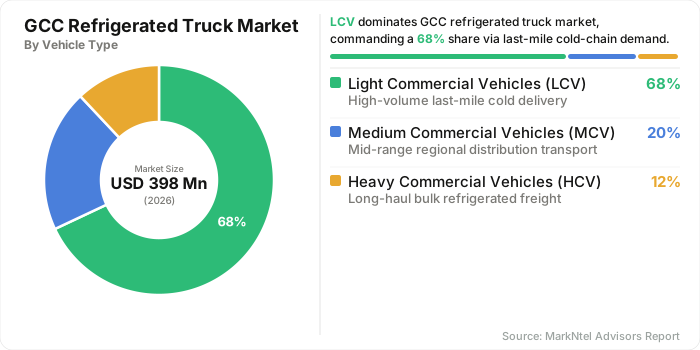
The increasing importance of urban cold-chain operations has positioned Light Commercial Vehicles (LCVs) as the dominant vehicle category in the GCC refrigerated truck industry, accounting for approximately 68% share. Growing demand for grocery delivery services, restaurant supply chains, pharmaceutical transportation, and retail cold chain distribution continues to support widespread deployment of refrigerated LCV fleets. Their operational flexibility, lower ownership costs, and ability to efficiently navigate densely populated areas make them particularly suitable for short- and medium-distance transportation of temperature-sensitive products.
Further strengthening this position is the growth in grocery e-commerce and on-demand delivery services across the region. According to the UAE Digital Economy Strategy, the country aims to increase the contribution of the digital economy to GDP and accelerate digital transformation across economic sectors. These initiatives are supporting wider adoption of digital platforms and technology-enabled business models, contributing to the expansion of e-commerce and last-mile distribution activities. As retailers and delivery operators continue expanding urban logistics capabilities, refrigerated LCVs remain the preferred choice for efficient and reliable temperature-controlled deliveries. Based on vehicle type, the market has been segmented into:
- Light Commercial Vehicles (LCV)
- Medium Commercial Vehicles (MCV)
- Heavy Commercial Vehicles (HCV)
Food & Beverages Segment Maintains Leadership Through Expanding Cold-Chain Food Distribution
The Food & Beverages segment dominated the refrigerated truck market in the GCC with approximately 57% share, supported by the large-scale transportation requirements of dairy products, frozen foods, seafood, fresh fruits, vegetables, and processed food items. Rising population levels, changing dietary preferences, and increasing demand for high-quality perishable products are generating substantial demand for temperature-controlled transportation across the region. As food consumption continues to expand, refrigerated trucks remain essential for preserving product freshness, safety, and quality throughout the supply chain.
Adding further momentum to segment growth is the continued expansion of tourism, hospitality, and foodservice activities across the GCC. According to the World Travel & Tourism Council (WTTC), the Middle East travel and tourism sector is projected to contribute approximately USD 367.3 billion to the regional economy in 2025 . The resulting increase in demand from hotels, restaurants, catering services, and food retailers is driving higher volumes of perishable food distribution.
As businesses continue strengthening cold-storage and transportation capabilities, the Food & Beverages segment maintains its position as the largest end user of refrigerated trucks across the region. Based on end user, the market is categorized into:
- Food & Beverages
- Pharmaceuticals & Healthcare
- Chemicals
- Others
GCC Refrigerated Truck Market Geographical Outlook
A combination of strong domestic consumption, extensive transportation requirements, and large-scale economic activity has enabled Saudi Arabia to capture approximately 52% share of the GCC refrigerated truck industry. The Kingdom's position as the largest economy and most populous country in the region generates substantial demand for temperature-controlled transportation across food, pharmaceutical, retail, and healthcare supply chains. The movement of chilled, frozen, and healthcare products across major cities and industrial centers continues to create refrigerated freight volumes that exceed those of other GCC markets.
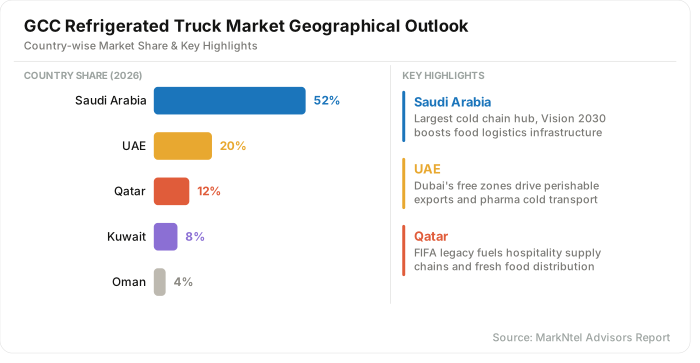
Supporting this market leadership is the Kingdom's continued focus on logistics expansion and supply-chain modernization under Vision 2030 and the National Industrial Development and Logistics Program (NIDLP). Investments in logistics zones, warehousing infrastructure, transportation corridors, and distribution networks are strengthening Saudi Arabia's role as a regional logistics hub. At the same time, major developments such as NEOM, the Red Sea Project, and Diriyah are stimulating demand across hospitality, retail, and foodservice sectors, increasing the need for temperature-controlled transportation. As logistics activity and cold-chain distribution continue to expand, Saudi Arabia remains the leading refrigerated truck market within the GCC.
GCC Refrigerated Truck Market Competitive Analysis
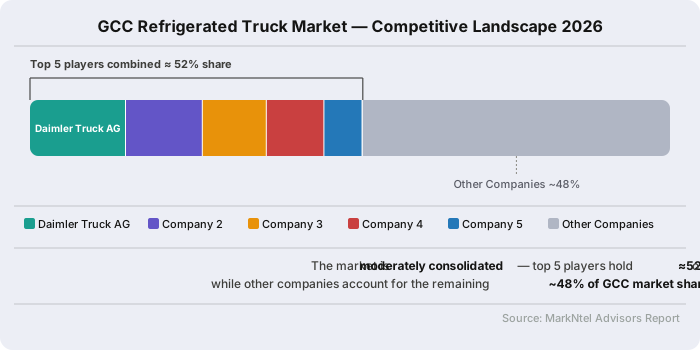
Market competition across the GCC refrigerated truck market remains moderately consolidated, with Daimler Truck AG, AB Volvo, Scania CV AB, Isuzu Motors Limited, and Mitsubishi Fuso Truck and Bus Corporation collectively accounting for approximately 30% of market revenue. Their leadership is supported by strong dealer networks, refrigerated vehicle portfolios, and regional logistics partnerships.
Key Refrigerated Truck Companies in the GCC
- Mitsubishi Fuso Truck and Bus Corporation
- Isuzu Motors Limited
- AB Volvo
- Scania CV AB
- MAN Truck & Bus SE
- DAF Trucks N.V.
- Daimler Truck AG
- IVECO S.p.A.
- Hino Motors, Ltd.
- Thermo King Corporation
- Carrier Transicold Corporation
- Schmitz Cargobull AG
- Krone Commercial Vehicle Group GmbH & Co. KG
- Others
GCC Refrigerated Truck Industry News and Recent Developments
February 2024: Victory Saudi Arabia Launches K3 Refrigerated Truck and V3 Refrigerated Van
Victory Saudi Arabia launched the K3 refrigerated truck and V3 refrigerated van to support temperature-controlled transportation across food distribution and cold-chain logistics operations. Designed for transporting chilled and frozen products, the vehicles expand the company's refrigerated vehicle portfolio and strengthen its presence in Saudi Arabia's growing cold-chain transportation sector.
Impact Analysis: The launch highlights increasing investment in specialized refrigerated transportation solutions across Saudi Arabia. Growing demand for food distribution and temperature-sensitive logistics is encouraging manufacturers to introduce purpose-built refrigerated vehicles, supporting fleet modernization and enhancing cold-chain transportation capabilities throughout the GCC region.
- Market Segmentation
- Introduction
- Product Definition
- Research Process
- Assumptions
- Executive Summary
- GCC Cold Chain Infrastructure & Fleet Operator Outlook, 2026
- The UAE
- List of Top Cold Storage Facilities
- Major cold chain Logistics Providers & Refrigerated Fleet Operators
- Country Attractiveness Assessment and High-growth Markets
- Saudi Arabia
- List of Top Cold Storage Facilities
- Major cold chain Logistics Providers & Refrigerated Fleet Operators
- Country Attractiveness Assessment and High-growth Markets
- Qatar
- List of Top Cold Storage Facilities
- Major cold chain Logistics Providers & Refrigerated Fleet Operators
- Country Attractiveness Assessment and High-growth Markets
- Kuwait
- List of Top Cold Storage Facilities
- Major cold chain Logistics Providers & Refrigerated Fleet Operators
- Country Attractiveness Assessment and High-growth Markets
- Oman
- List of Top Cold Storage Facilities
- Major cold chain Logistics Providers & Refrigerated Fleet Operators
- Country Attractiveness Assessment and High-growth Markets
- Bahrain
- List of Top Cold Storage Facilities
- Major cold chain Logistics Providers & Refrigerated Fleet Operators
- Country Attractiveness Assessment and High-growth Markets
- The UAE
- GCC Refrigerated Truck Market Policies, Regulations, and Product Standards
- GCC Refrigerated Truck Market Trends & Developments
- GCC Refrigerated Truck Market Dynamics
- Growth Factors
- Challenges
- GCC Refrigerated Truck Market Hotspot & Opportunities
- GCC Refrigerated Truck Market Outlook, 2022-2032F
- Market Size & Outlook
- By Revenues (USD Million)
- By Unit Sold (Thousand Units)
- Market Share & Analysis
- By Vehicle Type- Market Size & Forecast 2022-2032, USD Million & Thousand Units
- Light Commercial Vehicles (LCV)
- Medium Commercial Vehicles (MCV)
- Heavy Commercial Vehicles (HCV)
- By Temperature Type- Market Size & Forecast 2022-2032, USD Million & Thousand Units
- Chilled (0°C to +8°C)
- Frozen (Below 0°C)
- Multi-Temperature
- By Capacity- Market Size & Forecast 2022-2032, USD Million & Thousand Units
- Below 7 Tons
- 7–12 Tons
- 12–18 Tons
- Above 18 Tons
- By Propulsion Type- Market Size & Forecast 2022-2032, USD Million & Thousand Units
- Diesel
- Electric
- Hybrid
- By End User- Market Size & Forecast 2022-2032, USD Million & Thousand Units
- Food & Beverages
- Pharmaceuticals & Healthcare
- Chemicals
- Others
- By Country
- The UAE
- Saudi Arabia
- Qatar
- Kuwait
- Oman
- Bahrain
- By Company
- Competition Characteristics
- Market Share & Analysis
- By Vehicle Type- Market Size & Forecast 2022-2032, USD Million & Thousand Units
- Market Size & Outlook
- The UAE Refrigerated Truck Market Outlook, 2022-2032F
- Market Size & Outlook
- By Revenues (USD Million)
- By Unit Sold (Thousand Units)
- Market Share & Analysis
- By Vehicle Type- Market Size & Forecast 2022-2032, USD Million & Thousand Units
- By Temperature Type- Market Size & Forecast 2022-2032, USD Million & Thousand Units
- By Capacity- Market Size & Forecast 2022-2032, USD Million & Thousand Units
- By Propulsion Type- Market Size & Forecast 2022-2032, USD Million & Thousand Units
- By End User- Market Size & Forecast 2022-2032, USD Million & Thousand Units
- Market Size & Outlook
- Saudi Arabia Refrigerated Truck Market Outlook, 2022-2032F
- Market Size & Outlook
- By Revenues (USD Million)
- By Unit Sold (Thousand Units)
- Market Share & Analysis
- By Vehicle Type- Market Size & Forecast 2022-2032, USD Million & Thousand Units
- By Temperature Type- Market Size & Forecast 2022-2032, USD Million & Thousand Units
- By Capacity- Market Size & Forecast 2022-2032, USD Million & Thousand Units
- By Propulsion Type- Market Size & Forecast 2022-2032, USD Million & Thousand Units
- By End User- Market Size & Forecast 2022-2032, USD Million & Thousand Units
- Market Size & Outlook
- Qatar Refrigerated Truck Market Outlook, 2022-2032F
- Market Size & Outlook
- By Revenues (USD Million)
- By Unit Sold (Thousand Units)
- Market Share & Analysis
- By Vehicle Type- Market Size & Forecast 2022-2032, USD Million & Thousand Units
- By Temperature Type- Market Size & Forecast 2022-2032, USD Million & Thousand Units
- By Capacity- Market Size & Forecast 2022-2032, USD Million & Thousand Units
- By Propulsion Type- Market Size & Forecast 2022-2032, USD Million & Thousand Units
- By End User- Market Size & Forecast 2022-2032, USD Million & Thousand Units
- Market Size & Outlook
- Kuwait Refrigerated Truck Market Outlook, 2022-2032F
- Market Size & Outlook
- By Revenues (USD Million)
- By Unit Sold (Thousand Units)
- Market Share & Analysis
- By Vehicle Type- Market Size & Forecast 2022-2032, USD Million & Thousand Units
- By Temperature Type- Market Size & Forecast 2022-2032, USD Million & Thousand Units
- By Capacity- Market Size & Forecast 2022-2032, USD Million & Thousand Units
- By Propulsion Type- Market Size & Forecast 2022-2032, USD Million & Thousand Units
- By End User- Market Size & Forecast 2022-2032, USD Million & Thousand Units
- Market Size & Outlook
- Oman Refrigerated Truck Market Outlook, 2022-2032F
- Market Size & Outlook
- By Revenues (USD Million)
- By Unit Sold (Thousand Units)
- Market Share & Analysis
- By Vehicle Type- Market Size & Forecast 2022-2032, USD Million & Thousand Units
- By Temperature Type- Market Size & Forecast 2022-2032, USD Million & Thousand Units
- By Capacity- Market Size & Forecast 2022-2032, USD Million & Thousand Units
- By Propulsion Type- Market Size & Forecast 2022-2032, USD Million & Thousand Units
- By End User- Market Size & Forecast 2022-2032, USD Million & Thousand Units
- Market Size & Outlook
- Bahrain Refrigerated Truck Market Outlook, 2022-2032F
- Market Size & Outlook
- By Revenues (USD Million)
- By Unit Sold (Thousand Units)
- Market Share & Analysis
- By Vehicle Type- Market Size & Forecast 2022-2032, USD Million & Thousand Units
- By Temperature Type- Market Size & Forecast 2022-2032, USD Million & Thousand Units
- By Capacity- Market Size & Forecast 2022-2032, USD Million & Thousand Units
- By Propulsion Type- Market Size & Forecast 2022-2032, USD Million & Thousand Units
- By End User- Market Size & Forecast 2022-2032, USD Million & Thousand Units
- Market Size & Outlook
- GCC Refrigerated Truck Market Key Strategic Imperatives for Success & Growth
- Competitive Outlook
- Company Profiles
- Thermo King Corporation
- Business Description
- Product Portfolio
- Collaborations & Alliances
- Recent Developments
- Financial Details
- Others
- Carrier Transicold Corporation
- Business Description
- Product Portfolio
- Collaborations & Alliances
- Recent Developments
- Financial Details
- Others
- Frigoblock GmbH
- Business Description
- Product Portfolio
- Collaborations & Alliances
- Recent Developments
- Financial Details
- Others
- Zanotti S.p.A.
- Business Description
- Product Portfolio
- Collaborations & Alliances
- Recent Developments
- Financial Details
- Others
- Kingtec Group Co., Ltd.
- Business Description
- Product Portfolio
- Collaborations & Alliances
- Recent Developments
- Financial Details
- Others
- Hwasung Thermo Co., Ltd.
- Business Description
- Product Portfolio
- Collaborations & Alliances
- Recent Developments
- Financial Details
- Others
- Zhengzhou Guchen Industry Co., Ltd.
- Business Description
- Product Portfolio
- Collaborations & Alliances
- Recent Developments
- Financial Details
- Others
- VOLGA Cooling Technologies
- Business Description
- Product Portfolio
- Collaborations & Alliances
- Recent Developments
- Financial Details
- Others
- DENSO Corporation
- Business Description
- Product Portfolio
- Collaborations & Alliances
- Recent Developments
- Financial Details
- Others
- Mitsubishi Heavy Industries Thermal Systems, Ltd.
- Business Description
- Product Portfolio
- Collaborations & Alliances
- Recent Developments
- Financial Details
- Others
- Thermo King Corporation
- Company Profiles
- Disclaimer

MarkNtel Advisors follows a robust and iterative research methodology designed to ensure maximum accuracy and minimize deviation in market estimates and forecasts. Our approach combines both bottom-up and top-down techniques to effectively segment and quantify various aspects of the market. A consistent feature across all our research reports is data triangulation, which examines the market from three distinct perspectives to validate findings. Key components of our research process include:
1. Scope & Research Design At the outset, MarkNtel Advisors define the research objectives and formulate pertinent questions. This phase involves determining the type of research—qualitative or quantitative—and designing a methodology that outlines data collection methods, target demographics, and analytical tools. They also establish timelines and budgets to ensure the research aligns with client goals.
2. Sample Selection and Data Collection In this stage, the firm identifies the target audience and determines the appropriate sample size to ensure representativeness. They employ various sampling methods, such as random or stratified sampling, based on the research objectives. Data collection is carried out using tools like surveys, interviews, and observations, ensuring the gathered data is reliable and relevant.
3. Data Analysis and Validation Once data is collected, MarkNtel Advisors undertake a rigorous analysis process. This includes cleaning the data to remove inconsistencies, employing statistical software for quantitative analysis, and thematic analysis for qualitative data. Validation steps are taken to ensure the accuracy and reliability of the findings, minimizing biases and errors.

4. Data Forecast and FinalizationThe final phase involves forecasting future market trends based on the analyzed data. MarkNtel Advisors utilize predictive modeling and time series analysis to anticipate market behaviors. The insights are then compiled into comprehensive reports, featuring visual aids like charts and graphs, and include strategic recommendations to inform client decision-making
We’d love to understand what matters most to you.