

By Type (Acrylic, Silicone, Polyurethane (Urethane), Bituminous, Epoxy, Fluoropolymer, Others), By Substrate (Metal, Asphalt, Membrane, Concrete, Others), By Technology (Water-based, Solvent-based, Ot... ... d, Solvent-based, Others), By Roof Slope (Low-Sloped, Steep-Sloped), By End user (Residential, Commercial, Industrial), and others Read more
- Chemicals
- Jul 2026
- 240
- PDF, Excel, PPT
GCC Cool Roof Coatings Market Key Takeaways
- The GCC cool roof coatings market was valued at USD 1.01 billion in 2025 and is projected to grow from USD 1.29 billion in 2026 to USD 3.11 billion by 2032.
- The industry is projected to witness steady growth at a CAGR of 15.80% during the forecast, i.e., 2026-32.
- Saudi Arabia dominates regional demand, accounting for approximately 48% of the market share.
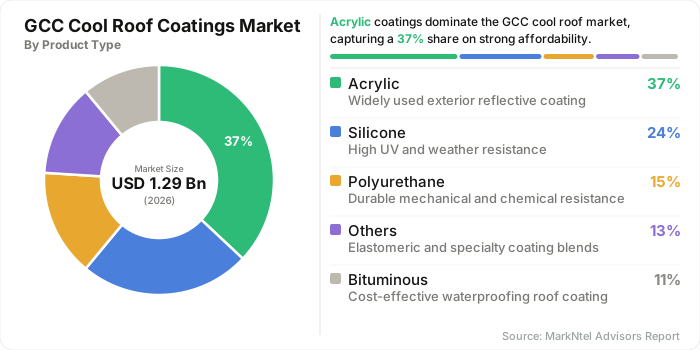
- Acrylic coatings represent the leading type, capturing approximately 37% market share in 2026.
- Commercial buildings account for approximately 47% of demand in 2026.
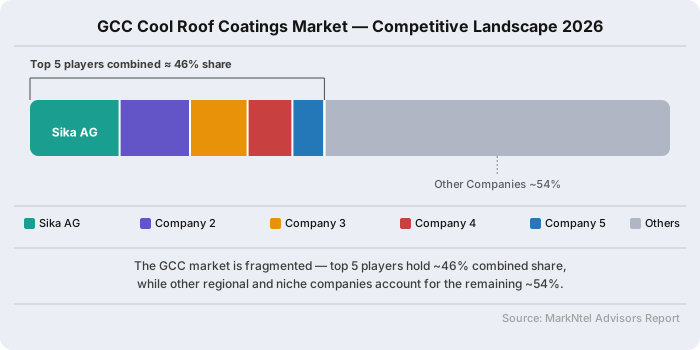
- The market remains moderately fragmented, with the top five companies collectively holding nearly 46% of total revenue.
GCC Cool Roof Coatings Market Size and Outlook
The GCC cool roof coatings market size was valued at USD 1.01 billion in 2025 and is projected to increase from USD 1.29 billion in 2026 to USD 3.11 billion by 2032, registering a CAGR of 15.80% during 2026–2032. In comparison, the broader GCC paint and coatings market exceeded USD 1.08 billion in 2025, highlighting the significant expansion potential of reflective roofing solutions. Demand continues to accelerate as developers increasingly specify green building coatings to improve building efficiency and long-term operational performance.
Saudi Arabia is expected to remain the primary growth engine owing to Vision 2030's large-scale urban transformation initiatives. The Public Investment Fund's New Murabba project is anticipated to contribute approximately USD 48 billion to the national GDP while creating around 334,000 jobs by 2030, generating millions of square metres of additional roofing area. These developments create favorable opportunities for advanced reflective coating systems that support sustainable building materials adoption while improving long-term energy efficiency and asset durability across expanding urban districts.
The United Arab Emirates is anticipated to witness sustained demand as regulatory policies continue promoting energy-efficient construction practices. Dubai's Green Building Regulations are expected to generate savings of approximately USD 2.72 billion by 2030 while reducing nearly 30% of the emirate's carbon emissions. In addition, the Al Sa'fat rating system encourages reflective roofing specifications that improve thermal performance, helping developers achieve higher sustainability standards while reducing lifecycle operating costs across commercial and residential developments.
Regional growth is further reinforced by landmark mixed-use developments that continue expanding premium commercial building stock. Diriyah Company's USD 1.53 billion Arena Block project, comprising a 20,000-seat arena and three mixed-use office buildings across approximately 114,000 square metres, illustrates the scale of future roofing demand. Collectively, these investments are expected to strengthen long-term adoption of cool roof coating technologies, supporting sustained cool roof coatings industry expansion throughout the forecast period while reinforcing regional construction modernization initiatives.
GCC Cool Roof Coatings Market Key Indicators
- Electricity demand across the Middle East grew by nearly 4% in 2025, the IEA reports, driven by economic expansion and rising air-conditioner uptake. Each incremental cooling load compounds operating costs for building owners, increasing the appeal of thermal insulation delivered at the roof line, where reflective coatings cut surface temperatures and the air-conditioning energy that fuels this demand growth.
- Saudi Arabia's urban population reached 85.17% of its total population in 2024, World Bank data shows, ranking among the most urbanised nations globally. Dense, concentrated building stock intensifies the urban heat island effect, raising rooftop temperatures and cooling loads in cities such as Riyadh and Jeddah. Reflective roofing offers a scalable mitigation tool, lowering both indoor temperatures and the ambient heat that urban agglomerations trap.
- The United Arab Emirates' Net Zero 2050 Strategy spans more than 25 programmes and is expected to create around 200,000 jobs while adding close to 3% to national GDP, per the UAE Government. Buildings, the largest electricity consumers, are a core focus, positioning building envelope upgrades such as reflective roof coatings as practical levers to cut cooling-driven emissions and support the country's decarbonisation pathway.
- Saudi Arabia aims to raise homeownership to 70% by 2030 under Vision 2030, accelerating residential construction nationwide. Each new villa and apartment block in the Kingdom's extreme climate requires roofing that resists intense ultraviolet exposure, making elastomeric coatings with solar-reflective and waterproofing properties increasingly specified. This homeownership push translates directly into sustained demand for durable reflective roof systems.
- Saudi Arabia's Public Investment Fund is delivering five giga-projects like NEOM, The Red Sea, Qiddiya, Diriyah, and Roshn that are reshaping the national skyline. These developments generate vast new commercial and hospitality roof area in some of the hottest inhabited zones, where roof waterproofing combined with high reflectance protects assets and curbs cooling costs, embedding cool-roof specifications into landmark project requirements.
GCC Cool Roof Coatings Market Scope
| Category | Segments |
|---|---|
| By Type | Acrylic, Silicone, Polyurethane (Urethane), Bituminous, Epoxy, Fluoropolymer, Others |
| By Substrate | Metal, Asphalt, Membrane, Concrete, Others |
| By Technology | Water-based, Solvent-based, Others |
| By Roof Slope | Low-Sloped, Steep-Sloped |
| By End user | Residential, Commercial, Industrial |
GCC Cool Roof Coatings Market Growth Drivers
Extreme Cooling Energy Demand
Extreme temperatures across the Gulf continue to strengthen the GCC cool roof coatings sector as building owners seek practical ways to reduce electricity consumption and improve thermal efficiency. Air conditioning accounts for nearly 50% of residential electricity use in Saudi Arabia due to prolonged cooling needs. Consequently, roof cooling solutions reduce roof surface temperatures while improving the effectiveness of building envelope coatings across residential, commercial, and industrial buildings.
Regional cooling demand continues supporting long-term market expansion. Summer temperatures frequently exceed 50°C in parts of Saudi Arabia, encouraging the government to provide incentives of approximately USD 240 per qualifying split air conditioner under its High-Efficiency Air Conditioning Programme. Studies indicate replacing inefficient cooling units could save nearly 20 terawatt-hours of electricity annually. The GCC cool roof coatings market benefits as reflective coatings reduce cooling loads before heat enters buildings.
Manufacturers are expanding portfolios with advanced solar-reflective and elastomeric technologies designed for harsh Gulf climates. Commercial developers, industrial operators, and public authorities increasingly prioritize coatings that reduce operating costs, extend roof lifespan, and improve energy efficiency without major structural upgrades. Persistent cooling demand, rising retrofit projects, and continued infrastructure investment collectively establish a durable replacement cycle supporting industry growth through the forecast period.
Recent Trends
Rising Adoption of Cool Roof Coatings with Rooftop Solar Installations
A major trend shaping the GCC cool roof coatings market is the integration of reflective roof coatings with rooftop solar installations across commercial and industrial buildings. As the built environment contributes nearly 39% of global carbon emissions, developers increasingly transform rooftops into multifunctional energy assets. This approach combines renewable electricity generation with passive cooling technologies, enabling reflective coatings to reduce roof temperatures while improving photovoltaic efficiency under intense Gulf sunlight.
Regional rooftop solar deployment continues accelerating, reinforcing this integrated roofing strategy. Knight Frank, together with the Universities of Leeds and Bristol, identified approximately 158.2 square kilometres of suitable rooftop space in Riyadh and 42.8 square kilometres in Abu Dhabi for photovoltaic installations. Estimated payback periods of seven to eleven years further encourage investment in high solar reflectance roofing, enabling building owners to maximize energy production while reducing cooling requirements throughout the year.
As investments expand across logistics parks, manufacturing facilities, warehouses, and retail complexes, developers increasingly specify reflective coatings and rooftop solar as complementary roof systems rather than independent technologies. This combination delivers lower operating costs, improved asset sustainability, and stronger compliance with regional net-zero ambitions. Consequently, the GCC cool roof coatings industry is expected to experience rising demand for integrated roofing solutions that simultaneously enhance thermal performance, renewable energy generation, and long-term building efficiency.
GCC Cool Roof Coatings Market Opportunities and Challenges
Mandatory Emissions Regulations Driving Demand for Low-Emission Reflective Coatings
The Gulf's tightening climate-disclosure framework presents a significant challenge for the GCC cool roof coatings industry. The UAE's Federal Decree-Law No. 11 of 2024 requires organizations, including free-zone entities, to measure, report, and reduce greenhouse-gas emissions by May 2026 with penalties ranging from approximately USD 13,600 to USD 544,600. These requirements accelerate demand for certified low VOC roof coatings while increasing compliance, reformulation, testing, and certification costs for regional manufacturers across the construction sector.
Large emitters generating million tonnes or more of CO₂ equivalent annually were required to register with the National Register for carbon credits, increasing pressure on manufacturers to adopt verified sustainable formulations. For smaller regional suppliers, investments in environmental verification, product testing, and third-party certification create substantial financial barriers, making regulatory compliance increasingly challenging throughout the GCC cool roof coatings sector and limiting competitive participation.
The same regulations also create significant commercial opportunities. Governments increasingly prioritize climate-resilient construction and lower building emissions, making reflective roof coatings an economical solution for reducing cooling-related electricity consumption and Scope 2 emissions. Manufacturers with independently verified sustainability credentials are expected to secure greater project specifications. Hempel's 2026 EcoVadis Gold Medal score of 80 demonstrates how verified environmental performance increasingly influences procurement decisions across Gulf construction markets.
Segmentation Insights
Acrylic Coatings Dominate Due to Superior Reflectivity and Cost-Effective Performance
Acrylic coatings account for approximately 37% of the GCC cool roof coatings landscape by type, making them the leading segment. Their dominance stems from water-based formulations that combine high solar reflectance, ultraviolet resistance, elasticity, and waterproofing performance at competitive costs. These characteristics make acrylic coatings particularly suitable for the Gulf's extensive flat-roof infrastructure across residential, commercial, and industrial buildings exposed to extreme climatic conditions throughout the year.
Growing adoption is further supported by increasing investments in sustainable construction and roof refurbishment projects across GCC countries. Acrylic coatings adhere effectively to concrete, metal, and modified bitumen roofs while maintaining durability under prolonged ultraviolet exposure and temperature fluctuations. Compared with alternative resin systems, they provide easier application, faster curing, and lower maintenance requirements, making them the preferred solution for contractors seeking reliable thermal reflective coatings for large-scale developments.
The continued benefits are seen from acrylic coatings as governments strengthen energy-efficiency regulations and developers prioritize lifecycle cost savings. Their compatibility with renovation projects, strong weather resistance, and environmentally preferable chemistry encourage widespread specification across new construction and retrofit applications. Although other coatings serve specialized requirements, acrylic products remain the benchmark for balancing performance, affordability, and long-term operational efficiency. Based on type, the scope has been divided into:
- Acrylic
- Silicone
- Polyurethane (Urethane)
- Bituminous
- Epoxy
- Fluoropolymer
- Others
Commercial Segment Dominates Due to High Cooling Loads and Expanding Hospitality Infrastructure
The commercial segment accounts for approximately 47% of the GCC cool roof coatings demand, making it the largest end-user category. Shopping malls, office complexes, hotels, warehouses, and mixed-use developments feature extensive flat-roof surfaces exposed to intense solar radiation, creating substantial cooling requirements. Consequently, commercial roofing coatings are increasingly specified to improve energy efficiency, reduce operating expenses, and support compliance with evolving green-building regulations across the Gulf region.
Saudi Arabia's expanding hospitality and commercial infrastructure further reinforces segment leadership. According to Knight Frank, the Kingdom plans approximately 362,000 hotel rooms by 2030 under a USD 110 billion investment programme, significantly increasing demand for energy-efficient roofing systems. Large hospitality projects, business parks, and logistics facilities require durable industrial roof coatings and reflective technologies that minimize heat absorption while extending roof service life under demanding climatic conditions throughout the region.
The GCC cool roof coatings industry continues benefiting from sustained investment in commercial real estate, tourism, logistics, and institutional infrastructure. Rising occupancy standards, lower lifecycle operating costs, and stricter sustainability requirements encourage developers to prioritize cool roof solutions. Although residential and industrial applications continue expanding steadily, the commercial segment is expected to retain its leadership through continuous infrastructure investment and substantial energy-saving potential. The study analyzes the following key end-user segments:
- Residential
- Commercial
- Industrial
GCC Cool Roof Coatings Market Geographical Outlook
Saudi Arabia accounts for approximately 48% of the GCC cool roof coatings industry, making it the region's largest contributor. Strong investment in GCC infrastructure projects, including commercial real estate, tourism developments, and mixed-use destinations, continues expanding demand for reflective roofing systems. Rising temperatures and extensive flat-roof construction encourage developers to adopt cool roof coatings that improve building energy performance while reducing long-term cooling costs across diverse building categories throughout the Kingdom.
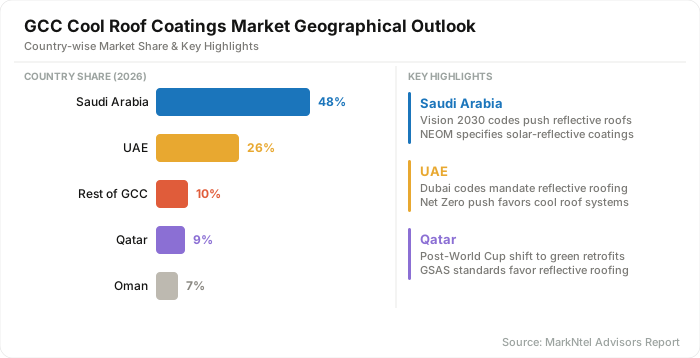
City-level construction momentum further strengthens Saudi Arabia's leadership. Riyadh and Jeddah are expected to add approximately 3,485 and 3,156 hotel rooms, respectively, during 2025, significantly expanding commercial building stock. Rapid GCC commercial construction growth across hospitality, business districts, and tourism infrastructure increases demand for reflective roof coatings that lower indoor temperatures, enhance occupant comfort, and support compliance with evolving sustainability requirements across new developments and refurbishment projects.
The GCC cool roof coatings landscape is expected to maintain strong growth in Saudi Arabia as Vision 2030 continues driving investment across residential, hospitality, logistics, and commercial sectors. Continuous infrastructure expansion, combined with growing awareness of energy-efficient building materials, reinforces the country's leadership position. These favorable factors are anticipated to sustain long-term demand for cool roof coating solutions while strengthening Saudi Arabia's contribution to regional demand through the forecast period.
GCC Cool Roof Coatings Market Competitive Analysis
The GCC cool roof coatings industry is moderately fragmented, with the top five players collectively accounting for approximately 46% of total market revenue. Sika AG, Jotun A/S, Akzo Nobel N.V., Hempel A/S, and The Sherwin-Williams Company maintain competitive advantages through broad product portfolios, established distribution networks, technical support capabilities, and participation in major infrastructure and commercial developments. Regional manufacturers strengthen competition by leveraging local manufacturing, pricing flexibility, and strong relationships with contractors, resulting in a competitive market characterized by continuous product innovation and expanding sustainability-focused offerings.
Leading Companies in GCC Cool Roof Coatings Market
- Sika AG
- Jotun A/S
- The Sherwin-Williams Company
- PPG Industries, Inc.
- Akzo Nobel N.V.
- Hempel A/S
- Jazeera Paints Company
- National Paints Factories Co. Ltd.
- RPM International Inc.
- Bitumat Company Limited
- Terraco UAE Ltd.
- Star Shield Paints Industries L.L.C.
- Others
GCC Cool Roof Coatings Industry News and Recent Developments
November 2025: Sika AG Acquired Gulf Additive Factory LLC to Expand Saudi Manufacturing Operations
Sika AG acquired Gulf Additive Factory LLC, a Saudi Arabian manufacturer of construction products, strengthening its local production and distribution capabilities. The acquisition expands Sika's footprint in the Kingdom's rapidly growing construction sector and enhances its ability to supply construction chemicals and roofing solutions. The move aligns with Saudi Arabia's Vision 2030 infrastructure expansion and supports increasing demand for advanced building materials across the GCC.
Impact Analysis: The acquisition enhances Sika's ability to respond quickly to rising regional demand for cool roof coatings and other building envelope solutions by strengthening local manufacturing and supply chain resilience. Increased production capacity enables faster project deliveries, improved customer support, and greater product availability for large-scale commercial and infrastructure developments. As Saudi Arabia accelerates megaproject construction under Vision 2030, Sika is well positioned to capitalize on growing opportunities for energy-efficient roofing systems and sustainable construction solutions throughout the GCC.
- Market Segmentation
- Introduction
- Product Definition
- Research Process
- Assumptions
- Executive Summary
- GCC Cool Roof Coatings Market Policies, Regulations, and Product Standards
- GCC Cool Roof Coatings Production Trend 2022-2032
- GCC Cool Roof Coatings Trend by Type
- Acrylic
- Silicone
- Polyurethane (Urethane)
- Bituminous
- Epoxy
- Fluoropolymer
- Others
- Company Wise Production Plants and Statistics
- Installed Production Capacity
- Actual Production
- Planned Production Target
- GCC Cool Roof Coatings Trend by Type
- GCC Cool Roof Coatings Pricing Analysis 2022-2032
- GCC Cool Roof Coatings Pricing Trend 2022-2032
- GCC Cool Roof Coatings Pricing Trend by Type 2022-2032
- Acrylic
- Silicone
- Polyurethane (Urethane)
- Bituminous
- Epoxy
- Fluoropolymer
- Others
- GCC Cool Roof Coatings Market Dynamics
- Growth Factors
- Challenges
- GCC Cool Roof Coatings Supply Chain & Value Chain Analysis
- GCC Cool Roof Coatings Import & Export Analysis
- GCC Cool Roof Coatings Market Hotspot & Opportunities
- GCC Cool Roof Coatings Market Outlook, 2022-2032F
- Market Size & Outlook
- By Revenues (USD Million)
- By Quantity Sold (Thousand Tons)
- Market Segmentation & Outlook
- By Type- Market Size & Forecast 2022-2032, USD Million & Thousand Tons
- Acrylic
- Silicone
- Polyurethane (Urethane)
- Bituminous
- Epoxy
- Fluoropolymer
- Others
- By Substrate - Market Size & Forecast 2022-2032, USD Million & Thousand Tons
- Metal
- Asphalt
- Membrane
- Concrete
- Plastic (Polycarbonate, FRP, etc.)
- Others
- By Technology- Market Size & Forecast 2022-2032, USD Million & Thousand Tons
- Water-based
- Solvent-based
- Others
- By Roof Slope- Market Size & Forecast 2022-2032, USD Million & Thousand Tons
- Low-Sloped
- Steep-Sloped
- By End user- Market Size & Forecast 2022-2032, USD Million & Thousand Tons
- Residential
- Commercial
- Industrial
- By Country
- Saudi Arabia
- The UAE
- Qatar
- Kuwait
- Oman
- Bahrain
- By Company
- Competition Characteristics
- Market Share & Analysis
- By Type- Market Size & Forecast 2022-2032, USD Million & Thousand Tons
- Market Size & Outlook
- Saudi Arabia Cool Roof Coatings Market Outlook, 2022-2032F
- Market Size & Outlook
- By Revenues (USD Million)
- By Quantity Sold (Thousand Tons)
- Market Segmentation & Outlook
- By Type- Market Size & Forecast 2022-2032, USD Million & Thousand Tons
- By Substrate - Market Size & Forecast 2022-2032, USD Million & Thousand Tons
- By Technology- Market Size & Forecast 2022-2032, USD Million & Thousand Tons
- By Roof Slope- Market Size & Forecast 2022-2032, USD Million & Thousand Tons
- By End user- Market Size & Forecast 2022-2032, USD Million & Thousand Tons
- Market Size & Outlook
- The UAE Cool Roof Coatings Market Outlook, 2022-2032F
- Market Size & Outlook
- By Revenues (USD Million)
- By Quantity Sold (Thousand Tons)
- Market Segmentation & Outlook
- By Type- Market Size & Forecast 2022-2032, USD Million & Thousand Tons
- By Substrate - Market Size & Forecast 2022-2032, USD Million & Thousand Tons
- By Technology- Market Size & Forecast 2022-2032, USD Million & Thousand Tons
- By Roof Slope- Market Size & Forecast 2022-2032, USD Million & Thousand Tons
- By End user- Market Size & Forecast 2022-2032, USD Million & Thousand Tons
- Market Size & Outlook
- Qatar Cool Roof Coatings Market Outlook, 2022-2032F
- Market Size & Outlook
- By Revenues (USD Million)
- By Quantity Sold (Thousand Tons)
- Market Segmentation & Outlook
- By Type- Market Size & Forecast 2022-2032, USD Million & Thousand Tons
- By Substrate - Market Size & Forecast 2022-2032, USD Million & Thousand Tons
- By Technology- Market Size & Forecast 2022-2032, USD Million & Thousand Tons
- By Roof Slope- Market Size & Forecast 2022-2032, USD Million & Thousand Tons
- By End user- Market Size & Forecast 2022-2032, USD Million & Thousand Tons
- Market Size & Outlook
- Kuwait Cool Roof Coatings Market Outlook, 2022-2032F
- Market Size & Outlook
- By Revenues (USD Million)
- By Quantity Sold (Thousand Tons)
- Market Segmentation & Outlook
- By Type- Market Size & Forecast 2022-2032, USD Million & Thousand Tons
- By Substrate - Market Size & Forecast 2022-2032, USD Million & Thousand Tons
- By Technology- Market Size & Forecast 2022-2032, USD Million & Thousand Tons
- By Roof Slope- Market Size & Forecast 2022-2032, USD Million & Thousand Tons
- By End user- Market Size & Forecast 2022-2032, USD Million & Thousand Tons
- Market Size & Outlook
- Oman Cool Roof Coatings Market Outlook, 2022-2032F
- Market Size & Outlook
- By Revenues (USD Million)
- By Quantity Sold (Thousand Tons)
- Market Segmentation & Outlook
- By Type- Market Size & Forecast 2022-2032, USD Million & Thousand Tons
- By Substrate - Market Size & Forecast 2022-2032, USD Million & Thousand Tons
- By Technology- Market Size & Forecast 2022-2032, USD Million & Thousand Tons
- By Roof Slope- Market Size & Forecast 2022-2032, USD Million & Thousand Tons
- By End user- Market Size & Forecast 2022-2032, USD Million & Thousand Tons
- Market Size & Outlook
- Bahrain Cool Roof Coatings Market Outlook, 2022-2032F
- Market Size & Outlook
- By Revenues (USD Million)
- By Quantity Sold (Thousand Tons)
- Market Segmentation & Outlook
- By Type- Market Size & Forecast 2022-2032, USD Million & Thousand Tons
- By Substrate - Market Size & Forecast 2022-2032, USD Million & Thousand Tons
- By Technology- Market Size & Forecast 2022-2032, USD Million & Thousand Tons
- By Roof Slope- Market Size & Forecast 2022-2032, USD Million & Thousand Tons
- By End user- Market Size & Forecast 2022-2032, USD Million & Thousand Tons
- Market Size & Outlook
- GCC Cool Roof Coatings Market Key Strategic Imperatives for Success & Growth
- Competitive Outlook
- Company Profiles
- Sika AG
- Business Description
- Product Portfolio
- Collaborations & Alliances
- Recent Developments
- Financial Details
- Others
- Jotun A/S
- Business Description
- Product Portfolio
- Collaborations & Alliances
- Recent Developments
- Financial Details
- Others
- The Sherwin-Williams Company
- Business Description
- Product Portfolio
- Collaborations & Alliances
- Recent Developments
- Financial Details
- Others
- PPG Industries, Inc.
- Business Description
- Product Portfolio
- Collaborations & Alliances
- Recent Developments
- Financial Details
- Others
- Akzo Nobel N.V.
- Business Description
- Product Portfolio
- Collaborations & Alliances
- Recent Developments
- Financial Details
- Others
- Hempel A/S
- Business Description
- Product Portfolio
- Collaborations & Alliances
- Recent Developments
- Financial Details
- Others
- Jazeera Paints Company
- Business Description
- Product Portfolio
- Collaborations & Alliances
- Recent Developments
- Financial Details
- Others
- National Paints Factories Co. Ltd.
- Business Description
- Product Portfolio
- Collaborations & Alliances
- Recent Developments
- Financial Details
- Others
- RPM International Inc.
- Business Description
- Product Portfolio
- Collaborations & Alliances
- Recent Developments
- Financial Details
- Others
- Bitumat Company Limited
- Business Description
- Product Portfolio
- Collaborations & Alliances
- Recent Developments
- Financial Details
- Others
- Terraco UAE Ltd.
- Business Description
- Product Portfolio
- Collaborations & Alliances
- Recent Developments
- Financial Details
- Others
- Star Shield Paints Industries L.L.C.
- Business Description
- Product Portfolio
- Collaborations & Alliances
- Recent Developments
- Financial Details
- Others
- Others
- Sika AG
- Company Profiles
- Disclaimer

MarkNtel Advisors follows a robust and iterative research methodology designed to ensure maximum accuracy and minimize deviation in market estimates and forecasts. Our approach combines both bottom-up and top-down techniques to effectively segment and quantify various aspects of the market. A consistent feature across all our research reports is data triangulation, which examines the market from three distinct perspectives to validate findings. Key components of our research process include:
1. Scope & Research Design At the outset, MarkNtel Advisors define the research objectives and formulate pertinent questions. This phase involves determining the type of research—qualitative or quantitative—and designing a methodology that outlines data collection methods, target demographics, and analytical tools. They also establish timelines and budgets to ensure the research aligns with client goals.
2. Sample Selection and Data Collection In this stage, the firm identifies the target audience and determines the appropriate sample size to ensure representativeness. They employ various sampling methods, such as random or stratified sampling, based on the research objectives. Data collection is carried out using tools like surveys, interviews, and observations, ensuring the gathered data is reliable and relevant.
3. Data Analysis and Validation Once data is collected, MarkNtel Advisors undertake a rigorous analysis process. This includes cleaning the data to remove inconsistencies, employing statistical software for quantitative analysis, and thematic analysis for qualitative data. Validation steps are taken to ensure the accuracy and reliability of the findings, minimizing biases and errors.

4. Data Forecast and FinalizationThe final phase involves forecasting future market trends based on the analyzed data. MarkNtel Advisors utilize predictive modeling and time series analysis to anticipate market behaviors. The insights are then compiled into comprehensive reports, featuring visual aids like charts and graphs, and include strategic recommendations to inform client decision-making
We’d love to understand what matters most to you.