

By Product Category (Multi-Surface Cleaners, Floor Cleaners, Glass & Window Cleaners, Kitchen Surface Cleaners, Bathroom & Toilet Surface Cleaners, Disinfectant Surface Cleaners, Degreasers, Furniture... ... egreasers, Furniture & Specialty Surface Cleaners, Metal Surface Cleaners, Surface Cleaners), By Chemistry Type (Chlorine-Based, Quaternary Ammonium Compound (Quat)-Based, Alcohol-Based, Hydrogen Peroxide-Based, Solvent-Based, Bio-Based, Enzyme-Based, pH-Neutral Formulations), By Form (Liquid, Spray, Wipes, Foam, Powder & Granules, Concentrates, Tablets & Pods), By Packaging Type (Bottles, Trigger Sprays, Refill Packs, Bulk Drums & Containers, Sachets, Canisters), By Distribution Channel (Supermarkets & Hypermarkets, Convenience Stores, Specialty Stores, Wholesale & Cash-and-Carry, Direct/B2B Sales, E-commerce), By End User (Residential, Commercial, Healthcare Facilities, Industrial & Manufacturing Facilities, Food Service & Food Processing, Transportation & Logistics Facilities), and others Read more
- Chemicals
- May 2026
- 220
- PDF, Excel, PPT
Europe Surface Cleaner Market Key Takeaways
- The Europe surface cleaner market size was valued at USD 5.56 billion in 2025, rising to USD 5.81 billion in 2026 and USD 7.54 billion by 2032.
- The industry is projected to grow at a steady CAGR of 4.44% during the forecast period.
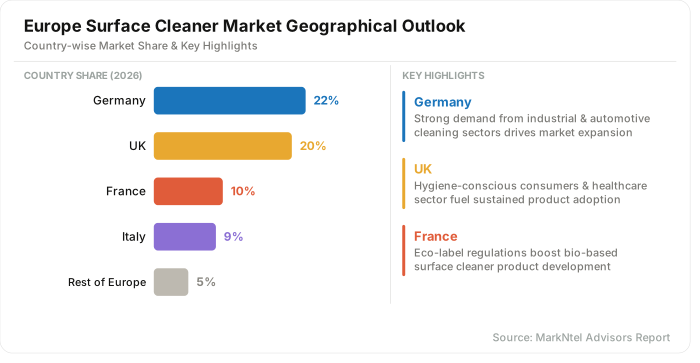
- Germany leads regional demand in Europe with an estimated 22% share in 2026.
- In 2026, multi-surface cleaners dominate product categories, contributing approximately 28% share.
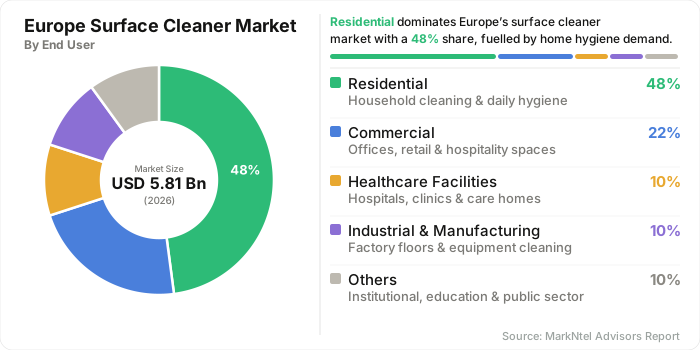
- Residential end-use remains the largest demand contributor, accounting for nearly 48% share in 2026.
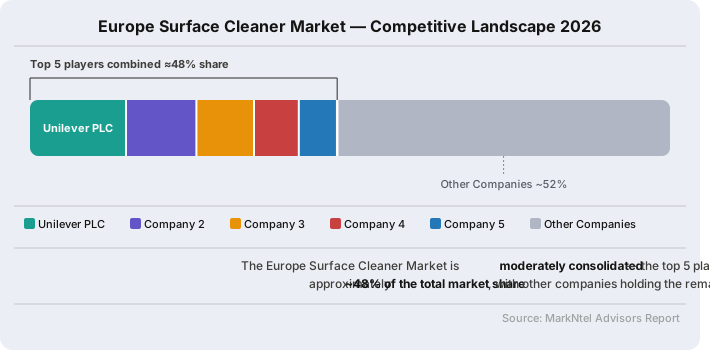
- The market is moderately consolidated, with the top five players collectively holding around 48% share, reflecting balanced competition between global leaders and regional brands.
Europe Surface Cleaner Market Size and Outlook
The Europe surface cleaner market demonstrates steady expansion, valued at USD 5.56 billion in 2025 and projected to reach USD 7.54 billion by 2032, growing at a CAGR of 4.44% during 2026–2032. Growth is supported by strong demand for surface hygiene solutions, household cleaning products, and commercial cleaning agents across residential and institutional settings. Also driven by consistent consumption patterns and broad end-use penetration across households and institutional environments across diverse sectors throughout the region.
Market expansion is strongly reinforced by rising healthcare-associated infection burdens across European clinical settings, creating sustained demand for high-efficacy disinfectants. According to the European Centre for Disease Prevention and Control, more than 3.5 million infections occur annually, contributing to over 90,000 deaths, emphasizing persistent contamination risks on surfaces . This epidemiological pressure mandates stringent sanitation protocols, increasing procurement of certified surface cleaners across hospitals, clinics, and long-term care facilities, thereby positioning infection prevention as a central driver of institutional consumption across Europe within regulated healthcare infrastructure systems across Europe.
Parallel to healthcare demand, public investment frameworks are expanding the institutional consumption base for surface cleaners across the region. The EU4Health Programme, with a budget of approximately USD 4.75 billion is strengthening healthcare infrastructure, infection control systems, and facility preparedness across participating countries. These investments integrate routine surface disinfection into operational expenditures, ensuring recurring demand within hospitals, primary care centers, and long-term care environments, while reinforcing the role of surface hygiene products as essential components of healthcare delivery ecosystems supporting consistent procurement cycles across public and private providers.
Regulatory developments and food industry requirements continue to drive consistent demand through emphasis on sustainable cleaning formulations, industrial sanitation compliance, and food-grade cleaning chemicals. Regulation EU 2026/405 mandates surfactant biodegradability and introduces digital product passports, driving reformulation investments and transparency across manufacturers ahead of full implementation by 2029. Simultaneously, the EU food and beverage sector, generating over USD 1.62 trillion in turnover, requires continuous surface sanitation under HACCP guidelines, sustaining demand for degreasers, disinfectants, and kitchen cleaners across processing facilities, commercial kitchens, and food service operations throughout diverse regional supply chains and networks .
Europe Surface Cleaner Market Key Indicators
- Europe surface cleaner demand is strongly anchored in healthcare capacity, with Eurostat reporting an average of 511 hospital beds per 100,000 inhabitants and Germany alone accounting for 638,354 beds. Each occupied bed necessitates repeated sanitation of adjacent surfaces multiple times daily, reinforcing continuous consumption of disinfectants. This extensive infrastructure directly drives clinical surface sanitation requirements, positioning hospitals as the largest institutional consumption channel across the region.
- Europe’s rising urban concentration is creating sustained demand for organized hygiene maintenance. The European Commission’s Knowledge4Policy platform projects Europe’s urbanization level to reach approximately 83.7% by 2050, reflecting continued migration toward densely populated cities. This demographic transition increases reliance on routine sanitation practices within compact living environments, positioning urban hygiene consumption as a long-term growth indicator supporting consistent demand for surface care products throughout metropolitan regions.
- A different demand dynamic emerges from tourism, where 3.02 billion overnight stays were recorded across EU accommodations in 2024, reflecting sustained travel activity. Hotels alone contributed 62.8% of total stays, with each guest turnover triggering full-room sanitation processes. This cyclical usage pattern significantly boosts product volumes, with hospitality hygiene turnover acting as a recurring and high-frequency consumption driver for multi-surface cleaning formulations.
- At the residential level, nearly 202 million private households were recorded in the EU in 2024, with 23.6% including children, indicating heightened hygiene sensitivity . Regular cleaning routines across kitchens, bathrooms, and living spaces sustain baseline product demand independent of institutional usage. This widespread consumer base underpins steady volume sales, with domestic cleaning penetration ensuring consistent uptake of surface cleaning solutions across everyday household environments.
Europe Surface Cleaner Market Scope
| Category | Segments |
|---|---|
| By Product Category | Multi-Surface Cleaners, Floor Cleaners, Glass & Window Cleaners, Kitchen Surface Cleaners, Bathroom & Toilet Surface Cleaners, Disinfectant Surface Cleaners, Degreasers, Furniture & Specialty Surface Cleaners, Metal Surface Cleaners, Surface Cleaners |
| By Chemistry Type | Chlorine-Based, Quaternary Ammonium Compound (Quat)-Based, Alcohol-Based, Hydrogen Peroxide-Based, Solvent-Based, Bio-Based, Enzyme-Based, pH-Neutral Formulations |
| By Form | Liquid, Spray, Wipes, Foam, Powder & Granules, Concentrates, Tablets & Pods |
| By Packaging Type | Bottles, Trigger Sprays, Refill Packs, Bulk Drums & Containers, Sachets, Canisters |
| By Distribution Channel | Supermarkets & Hypermarkets, Convenience Stores, Specialty Stores, Wholesale & Cash-and-Carry, Direct/B2B Sales, E-commerce |
| By End User | Residential, Commercial, Healthcare Facilities, Industrial & Manufacturing Facilities, Food Service & Food Processing, Transportation & Logistics Facilities |
Europe Surface Cleaner Market Growth Drivers
Growing Disease Burden Driving Hygiene Practices
Rising hygiene awareness across the Europe surface cleaner market is being reinforced by the sustained circulation of infectious diseases, particularly seasonal influenza. The European Centre for Disease Prevention and Control reported that influenza positivity rates peaked at 39% during the 2023–2024 season. This has strengthened the adoption of hospital disinfection protocols, antimicrobial surface solutions, and clinical sanitation demand across healthcare and community settings, ensuring continuous utilization of surface cleaning products.
Beyond healthcare, infection risks in high-density environments are accelerating structured sanitation practices across public and commercial infrastructure. Increased viral circulation during the 2024–2025 winter season led to rising hospital admissions and reinforced preventive cleaning across transport systems, offices, and educational institutions. This has expanded reliance on public space hygiene management, high-touch surface cleaning, and shared environment sanitation. Meanwhile, at the consumer level, behavioral shifts toward preventive hygiene remain firmly embedded, supported by growing awareness of surface-mediated transmission risks.
Households are increasingly adopting routine cleaning practices focused on kitchens, bathrooms, and frequently used surfaces. The Europe surface cleaner industry is witnessing a structural transformation where infection prevention is no longer reactive but integrated into daily life and operational systems. The convergence of healthcare protocols, public hygiene measures, and consumer awareness is firmly positioning hygiene-driven demand as a long-term growth engine for the market.
Recent Trends
Sensory Innovation Transforming Cleaning Product Demand
The Europe surface cleaner market is witnessing a notable shift toward premiumization as consumers increasingly prioritize sensory appeal alongside cleaning effectiveness. Surface cleaners are evolving into lifestyle-oriented products that emphasize fragrance sophistication, visual aesthetics, and enhanced user experience. This transformation is particularly evident across Western European households, where purchasing decisions are influenced by premium fragrance formulations and sensory cleaning experiences. As a result, manufacturers are focusing on creating differentiated offerings.
The rising demand for elevated home care experiences is encouraging companies to adopt innovation strategies centered on emotional engagement and personalization. Consumers increasingly associate cleaning with relaxation and comfort, prompting brands to introduce products with layered scents, seasonal variants, and wellness-oriented positioning. This shift is driving the adoption of home ambience enhancement solutions, where fragrance longevity and mood-based appeal play a crucial role.
For instance, Zoflora expanded its fragrance-led portfolio in 2024 with launches such as Tropical Palms and Orchid & Patchouli across multipurpose cleaners and disinfectants in European retail channels. These products feature immersive scent profiles combining tropical and floral notes, designed to create a refreshing and luxurious indoor atmosphere. Such innovations highlight the increasing convergence of hygiene performance and sensory differentiation, reinforcing premium positioning across the Europe surface cleaner industry.
Europe Surface Cleaner Market Opportunities and Challenges
Regulatory Compliance Expanding Sustainable Cleaning Solutions
Stringent environmental regulations across Europe are creating significant reformulation pressures for manufacturers operating within the Europe surface cleaner industry. Regulation (EU) 2026/405 mandates surfactant biodegradability, enhanced ingredient transparency, and Digital Product Passports for detergents. These evolving standards are increasing compliance costs, limiting the use of conventional chemical ingredients, and forcing producers to redesign legacy formulations.
However, these regulatory constraints are simultaneously unlocking strong growth potential through accelerated adoption of bio-based surfactants, refillable cleaning systems, and circular packaging solutions. Manufacturers are increasingly introducing concentrated and low-impact formulations that align with EU sustainability objectives while improving brand differentiation. This transition is enabling companies to capture environmentally conscious consumers and institutional buyers prioritizing compliant procurement standards.
For instance, Ecover expanded its Multi-Action Surface Cleaner Refill Concentrate, featuring biodegradable ingredients and refill-based packaging capable of reducing plastic consumption by up to 87%. The product supports reusable spray systems and directly aligns with EU circular economy and surfactant biodegradability requirements . Such developments are strengthening demand for low-toxicity cleaning formulations, particularly among retailers and consumers seeking sustainable alternatives.
This regulatory compliance is evolving beyond a structural cost burden into a catalyst for long-term innovation and premium product development. The convergence of sustainability mandates, eco-conscious purchasing behavior, and green formulation technologies is reshaping competitive dynamics and creating durable expansion opportunities across the Europe cleaning products industry.
Segmentation Insights
Convenience and Efficiency Boost Multi-Surface Cleaner Adoption
Multi-surface cleaners account for approximately 28% of total revenue in the Europe surface cleaner industry, reflecting their strong dominance driven by versatility and operational efficiency. These products are widely preferred for their ability to clean multiple surfaces with a single formulation, reducing the need for specialised cleaners. This supports growing demand for time-saving cleaning solutions, all-in-one cleaning products, and simplified household maintenance across residential and commercial environments.
The dominance of this segment is further reinforced by increasing consumer preference for convenience-oriented products that streamline daily cleaning routines. In commercial settings, facility managers prioritize multi-surface formulations to reduce inventory complexity and improve cost efficiency across large-scale operations. The ability to deliver consistent cleaning performance across varied surfaces enhances adoption, particularly in offices, retail spaces, and public infrastructure requiring frequent sanitation.
Additionally, manufacturers are introducing advanced formulations combining disinfection, stain removal, and surface protection in a single product. This multifunctionality aligns with evolving hygiene expectations and efficiency-driven consumption patterns. As a result, multi-surface cleaners continue to outperform other product categories, supported by their adaptability, ease of use, and growing relevance in both household and institutional cleaning applications. By product category, the market is classified into:
- Multi-Surface Cleaners
- Floor Cleaners
- Glass & Window Cleaners
- Kitchen Surface Cleaners
- Bathroom & Toilet Surface Cleaners
- Disinfectant Surface Cleaners
- Degreasers
- Furniture & Specialty Surface Cleaners
- Metal Surface Cleaners
- Electronic Surface Cleaners
Residential Sector Leads End-Use Demand Globally
The residential segment holds a dominant position in the surface cleaner sector, accounting for approximately 48% of total revenue share. This leadership is primarily driven by the sheer volume of households globally and the frequency of routine cleaning activities. Increasing consumer focus on hygiene and cleanliness has led to sustained demand for daily cleaning routines, household sanitation practices, and consistent product usage across kitchens, bathrooms, and living spaces.
The segment’s dominance is further supported by rising awareness of health and hygiene, particularly in the post-pandemic environment where preventive cleaning behaviors have become normalized. Consumers are increasingly adopting structured cleaning habits, ensuring regular usage of surface cleaners for maintenance and infection prevention. This trend is especially prominent in urban households, where compact living spaces require frequent upkeep and efficient cleaning solutions.
Moreover, the availability of a wide range of affordable and premium cleaning products across retail and e-commerce channels is driving accessibility and adoption. Manufacturers are targeting residential consumers through product innovation, packaging convenience, and fragrance differentiation. As a result, the residential segment continues to generate the highest volume demand, supported by consistent usage patterns and evolving consumer preferences toward cleanliness and hygiene. The report outlines the following major end-user groups:
- Residential
- Commercial
- Healthcare Facilities
- Industrial & Manufacturing Facilities
- Food Service & Food Processing
- Transportation & Logistics Facilities
Europe Surface Cleaner Market Geographical Outlook
Germany accounts for approximately 22% of Europe surface cleaner demand, supported by its advanced healthcare infrastructure and strong institutional hygiene frameworks. The country’s well-developed hospital network and strict sanitation regulations drive consistent consumption of cleaning products across medical facilities. Additionally, rising emphasis on infection prevention is strengthening demand for healthcare cleaning compliance, hospital sanitation systems, and structured hygiene protocols.
The dominance is further reinforced by increasing investment in facility management services across healthcare institutions. According to the 2025 Krankenhausbarometer Facility Service study, 67% of German hospitals increased budgets for cleaning and hygiene operations, reflecting a growing institutional focus on sanitation standards. This trend is accelerating the adoption of facility hygiene management, professional disinfection services, and integrated cleaning solutions across hospitals and long-term care facilities, ensuring recurring demand for certified surface cleaning products.
Beyond healthcare, Germany’s strong commercial infrastructure and regulatory environment contribute significantly to regional leadership. Offices, manufacturing sites, and public infrastructure require routine maintenance and sanitation to meet compliance standards. The presence of organized service providers and high operational standards supports demand for industrial cleaning applications, workplace hygiene solutions, and large-scale maintenance practices. This widespread institutional and commercial usage, combined with consistent investment in hygiene systems, firmly establishes Germany as a dominant country within the Europe surface cleaner ecosystem.
Europe Surface Cleaner Market Competitive Analysis
The Europe surface cleaner industry is moderately consolidated, with the top five players like Unilever PLC, Reckitt Benckiser Group plc, Henkel AG & Co. KGaA, The Procter & Gamble Company, and S. C. Johnson & Son, Inc. collectively accounting for approximately 48% of the total market share. While these global leaders dominate through strong brand equity, extensive distribution, and continuous innovation, the presence of regional players such as Ecolab Inc., Diversey Holdings, Ltd., and niche eco-focused brands like Werner & Mertz GmbH and Ecover maintains competitive intensity.
Key Players in Europe Surface Cleaner Industry
- Unilever PLC
- Reckitt Benckiser Group plc
- Henkel AG & Co. KGaA
- The Procter & Gamble Company
- S. C. Johnson & Son, Inc.
- Ecolab Inc.
- Diversey Holdings, Ltd.
- Werner & Mertz GmbH
- McBride plc
- Ecover
- Others
Europe Surface Cleaner Industry News and Recent Developments
March 2026: Reckitt Benckiser Group plc Activates Dettol Activ Botany Plant-Based Surface Disinfectant
Reckitt Benckiser Group plc activated Dettol Activ Botany across European markets, following its China launch in early 2025, where it outperformed forecasts by 23% and captured 44% TikTok category share. Developed over 24 months of formulation testing, the plant-based liquid disinfectant delivers 99.999% germ kill performance alongside up to seven-day residual surface protection.
Impact Analysis: Dettol Activ Botany's European entry pairs clinically validated germ-kill performance with botanical formulation, directly competing with eco-certified surface cleaner specialists, including Werner & Mertz GmbH's Frosch range, without the efficacy compromise that has historically limited plant-based alternatives. Its rollout across 14 European markets intensifies competition in residential surface disinfection and signals accelerating mainstream adoption of plant-based chemistries, increasing pressure on conventional chlorine and quaternary ammonium compound formulations that currently dominate the category.
October 2025: Ecolab Life Sciences Launches Klercide™ Rapid Sporicide for Pharmaceutical Cleanroom Surface Disinfection
Ecolab Life Sciences launched Klercide™ Rapid Sporicide, specifically for pharmaceutical cleanroom surface decontamination. Formulated on a peracetic acid and hydrogen peroxide combination rather than conventional chlorine-based chemistries, the product eliminates strong odour and surface corrosiveness while requiring no additional personal protective equipment.
Impact Analysis: The Klercide Rapid Sporicide addresses a longstanding formulation gap in European pharmaceutical cleanroom disinfection, where odour, corrosiveness, and residue have constrained programme efficiency. By removing these operator barriers, Ecolab reduces per-cycle changeover downtime and improves compliance rates — both critical against the cost of contamination events in regulated EU manufacturing environments. The launch reinforces Ecolab's competitive position in European pharmaceutical surface cleaning as EU-based drug producers scale domestic manufacturing capacity.
April 2025: Unilever PLC Launches Cif Infinite Clean Probiotic Multi-Surface Cleaner
Unilever PLC launched Cif Infinite Clean in April 2025 in the UK the brand's first probiotic-powered surface cleaner in Europe with planned rollout to France, Poland, and Italy. The patent-pending microbiome technology activates on contact with dirty surfaces, delivering up to 72 hours of continued cleaning action after a single application. Its reload format reduces plastic packaging waste by 50% compared with a conventional trigger spray.
Impact Analysis: The launch establishes a new performance benchmark in European multi-surface cleaning, where residual 72-hour efficacy directly challenges single-use spray formats on value-per-use grounds. Unilever's first probiotic deployment in European retail strengthens its premium residential positioning while pre-empting EU packaging sustainability obligations through the reload format. Competitors lacking equivalent microbiome R&D investment face a multi-year formulation development gap, creating a meaningful competitive window for Unilever across European surface cleaner retail channels.
- Market Segmentation
- Introduction
- Product Definition
- Research Process
- Assumptions
- Executive Summary
- Europe Surface Cleaner Market Policies, Regulations, and Product Standards
- Europe Surface Cleaner Production Trend 2022-2032
- Europe Surface Cleaner Trend by Type of Product Category
- Multi-Surface Cleaners
- Floor Cleaners
- Glass & Window Cleaners
- Kitchen Surface Cleaners
- Bathroom & Toilet Surface Cleaners
- Disinfectant Surface Cleaners
- Degreasers
- Furniture & Specialty Surface Cleaners
- Metal Surface Cleaners
- Electronic Surface Cleaners
- Company Wise Production Plants and Statistics
- Installed Production Capacity
- Actual Production
- Planned Production Target
- Europe Surface Cleaner Trend by Type of Product Category
- Europe Surface Cleaner Pricing Analysis 2022-2032
- Europe Surface Cleaner Pricing Trend 2022-2032
- Europe Surface Cleaner Pricing Trend by Product Category 2022-2032
- Multi-Surface Cleaners
- Floor Cleaners
- Glass & Window Cleaners
- Kitchen Surface Cleaners
- Bathroom & Toilet Surface Cleaners
- Disinfectant Surface Cleaners
- Degreasers
- Furniture & Specialty Surface Cleaners
- Metal Surface Cleaners
- Electronic Surface Cleaners
- Europe Surface Cleaner Market Dynamics
- Growth Factors
- Challenges
- Europe Surface Cleaner Market Hotspot & Opportunities
- Europe Surface Cleaner Market Outlook, 2022-2032F
- Market Size & Outlook
- By Revenues (USD Million)
- By Quantity Sold (Tons)
- Market Share & Analysis
- By Product Category- Market Size & Forecast 2022-2032, USD Million
- Multi-Surface Cleaners
- Floor Cleaners
- Glass & Window Cleaners
- Kitchen Surface Cleaners
- Bathroom & Toilet Surface Cleaners
- Disinfectant Surface Cleaners
- Degreasers
- Furniture & Specialty Surface Cleaners
- Metal Surface Cleaners
- Electronic Surface Cleaners
- By Chemistry Type- Market Size & Forecast 2022-2032, USD Million
- Chlorine-Based
- Quaternary Ammonium Compound (Quat)-Based
- Alcohol-Based
- Hydrogen Peroxide-Based
- Solvent-Based
- Bio-Based
- Enzyme-Based
- pH-Neutral Formulations
- By Form- Market Size & Forecast 2022-2032, USD Million
- Liquid
- Spray
- Wipes
- Foam
- Powder & Granules
- Concentrates
- Tablets & Pods
- By Packaging Type- Market Size & Forecast 2022-2032, USD Million
- Bottles
- Trigger Sprays
- Refill Packs
- Bulk Drums & Containers
- Sachets
- Canisters
- By Distribution Channel- Market Size & Forecast 2022-2032, USD Million
- Supermarkets & Hypermarkets
- Convenience Stores
- Specialty Stores
- Wholesale & Cash-and-Carry
- Direct/B2B Sales
- E-commerce
- By End User- Market Size & Forecast 2022-2032, USD Million
- Residential
- Commercial
- Healthcare Facilities
- Industrial & Manufacturing Facilities
- Food Service & Food Processing
- Transportation & Logistics Facilities
- By Country
- The UK
- Germany
- France
- Italy
- Spain
- Benelux
- Rest of Europe
- By Company
- Competition Characteristics
- Market Share & Analysis
- By Product Category- Market Size & Forecast 2022-2032, USD Million
- Market Size & Outlook
- The UK Surface Cleaner Market Outlook, 2022-2032F
- Market Size & Outlook
- By Revenues (USD Million)
- By Quantity Sold (Tons)
- Market Share & Analysis
- By Product Category- Market Size & Forecast 2022-2032, USD Million
- By Chemistry Type- Market Size & Forecast 2022-2032, USD Million
- By Form- Market Size & Forecast 2022-2032, USD Million
- By Packaging Type- Market Size & Forecast 2022-2032, USD Million
- By Distribution Channel- Market Size & Forecast 2022-2032, USD Million
- By End User- Market Size & Forecast 2022-2032, USD Million
- Market Size & Outlook
- Germany Surface Cleaner Market Outlook, 2022-2032F
- Market Size & Outlook
- By Revenues (USD Million)
- By Quantity Sold (Tons)
- Market Share & Analysis
- By Product Category- Market Size & Forecast 2022-2032, USD Million
- By Chemistry Type- Market Size & Forecast 2022-2032, USD Million
- By Form- Market Size & Forecast 2022-2032, USD Million
- By Packaging Type- Market Size & Forecast 2022-2032, USD Million
- By Distribution Channel- Market Size & Forecast 2022-2032, USD Million
- By End User- Market Size & Forecast 2022-2032, USD Million
- Market Size & Outlook
- France Surface Cleaner Market Outlook, 2022-2032F
- Market Size & Outlook
- By Revenues (USD Million)
- By Quantity Sold (Tons)
- Market Share & Analysis
- By Product Category- Market Size & Forecast 2022-2032, USD Million
- By Chemistry Type- Market Size & Forecast 2022-2032, USD Million
- By Form- Market Size & Forecast 2022-2032, USD Million
- By Packaging Type- Market Size & Forecast 2022-2032, USD Million
- By Distribution Channel- Market Size & Forecast 2022-2032, USD Million
- By End User- Market Size & Forecast 2022-2032, USD Million
- Market Size & Outlook
- Italy Surface Cleaner Market Outlook, 2022-2032F
- Market Size & Outlook
- By Revenues (USD Million)
- By Quantity Sold (Tons)
- Market Share & Analysis
- By Product Category- Market Size & Forecast 2022-2032, USD Million
- By Chemistry Type- Market Size & Forecast 2022-2032, USD Million
- By Form- Market Size & Forecast 2022-2032, USD Million
- By Packaging Type- Market Size & Forecast 2022-2032, USD Million
- By Distribution Channel- Market Size & Forecast 2022-2032, USD Million
- By End User- Market Size & Forecast 2022-2032, USD Million
- Market Size & Outlook
- Spain Surface Cleaner Market Outlook, 2022-2032F
- Market Size & Outlook
- By Revenues (USD Million)
- By Quantity Sold (Tons)
- Market Share & Analysis
- By Product Category- Market Size & Forecast 2022-2032, USD Million
- By Chemistry Type- Market Size & Forecast 2022-2032, USD Million
- By Form- Market Size & Forecast 2022-2032, USD Million
- By Packaging Type- Market Size & Forecast 2022-2032, USD Million
- By Distribution Channel- Market Size & Forecast 2022-2032, USD Million
- By End User- Market Size & Forecast 2022-2032, USD Million
- Market Size & Outlook
- Benelux Surface Cleaner Market Outlook, 2022-2032F
- Market Size & Outlook
- By Revenues (USD Million)
- By Quantity Sold (Tons)
- Market Share & Analysis
- By Product Category- Market Size & Forecast 2022-2032, USD Million
- By Chemistry Type- Market Size & Forecast 2022-2032, USD Million
- By Form- Market Size & Forecast 2022-2032, USD Million
- By Packaging Type- Market Size & Forecast 2022-2032, USD Million
- By Distribution Channel- Market Size & Forecast 2022-2032, USD Million
- By End User- Market Size & Forecast 2022-2032, USD Million
- Market Size & Outlook
- Europe Surface Cleaner Market Key Strategic Imperatives for Success & Growth
- Competitive Outlook
- Company Profiles
- Unilever PLC
- Business Description
- Product Portfolio
- Collaborations & Alliances
- Recent Developments
- Financial Details
- Others
- Reckitt Benckiser Group plc
- Business Description
- Product Portfolio
- Collaborations & Alliances
- Recent Developments
- Financial Details
- Others
- Henkel AG & Co. KGaA
- Business Description
- Product Portfolio
- Collaborations & Alliances
- Recent Developments
- Financial Details
- Others
- The Procter & Gamble Company
- Business Description
- Product Portfolio
- Collaborations & Alliances
- Recent Developments
- Financial Details
- Others
- S. C. Johnson & Son, Inc.
- Business Description
- Product Portfolio
- Collaborations & Alliances
- Recent Developments
- Financial Details
- Others
- Ecolab Inc.
- Business Description
- Product Portfolio
- Collaborations & Alliances
- Recent Developments
- Financial Details
- Others
- Diversey Holdings, Ltd.
- Business Description
- Product Portfolio
- Collaborations & Alliances
- Recent Developments
- Financial Details
- Others
- Werner & Mertz GmbH
- Business Description
- Product Portfolio
- Collaborations & Alliances
- Recent Developments
- Financial Details
- Others
- McBride plc
- Business Description
- Product Portfolio
- Collaborations & Alliances
- Recent Developments
- Financial Details
- Others
- Ecover
- Business Description
- Product Portfolio
- Collaborations & Alliances
- Recent Developments
- Financial Details
- Others
- Others
- Unilever PLC
- Company Profiles
- Disclaimer

MarkNtel Advisors follows a robust and iterative research methodology designed to ensure maximum accuracy and minimize deviation in market estimates and forecasts. Our approach combines both bottom-up and top-down techniques to effectively segment and quantify various aspects of the market. A consistent feature across all our research reports is data triangulation, which examines the market from three distinct perspectives to validate findings. Key components of our research process include:
1. Scope & Research Design At the outset, MarkNtel Advisors define the research objectives and formulate pertinent questions. This phase involves determining the type of research—qualitative or quantitative—and designing a methodology that outlines data collection methods, target demographics, and analytical tools. They also establish timelines and budgets to ensure the research aligns with client goals.
2. Sample Selection and Data Collection In this stage, the firm identifies the target audience and determines the appropriate sample size to ensure representativeness. They employ various sampling methods, such as random or stratified sampling, based on the research objectives. Data collection is carried out using tools like surveys, interviews, and observations, ensuring the gathered data is reliable and relevant.
3. Data Analysis and Validation Once data is collected, MarkNtel Advisors undertake a rigorous analysis process. This includes cleaning the data to remove inconsistencies, employing statistical software for quantitative analysis, and thematic analysis for qualitative data. Validation steps are taken to ensure the accuracy and reliability of the findings, minimizing biases and errors.

4. Data Forecast and FinalizationThe final phase involves forecasting future market trends based on the analyzed data. MarkNtel Advisors utilize predictive modeling and time series analysis to anticipate market behaviors. The insights are then compiled into comprehensive reports, featuring visual aids like charts and graphs, and include strategic recommendations to inform client decision-making
We’d love to understand what matters most to you.