

By Product Type (Elevators (By Type (Traction Elevators, Hydraulic Elevators, Machine Room-Less (MRL) Elevators), By Building Height (Low-Rise Buildings, High-Rise Buildings)), Escalators (By Type (Mo... ... alators (By Type (Moving Walkways/Travelators, Moving Stairs), By Speed (1 m/s to 2.5 m/s, 3 m/s to 3.5 m/s, 4 m/s & Above))), By Service Type (New Installation, Maintenance & Repair, Modernization), By Application (Residential, Commercial, Industrial, Public Infrastructure (Airports, Railway Stations, Metro Stations, Shopping Malls)) Read more
- Buildings, Construction, Metals & Mining
- May 2026
- 145
- PDF, Excel, PPT
China Elevators & Escalators Market Key Takeaways
- The China Elevators & Escalators Market, valued at nearly USD 32.52 billion in 2025, is anticipated to expand steadily, reaching USD 39.51 billion by 2032 from USD 33.44 billion in 2026.
- The industry is expected to register a steady CAGR of 2.82% during the forecast period of 2026–2032.
- Residential applications emerged as the leading segment in 2026, accounting for nearly 52% of the overall market share.
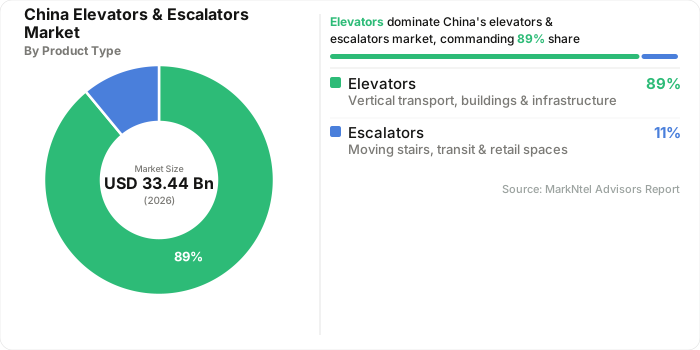
- Elevators dominated the product category with approximately 89% share of the total market in 2026.
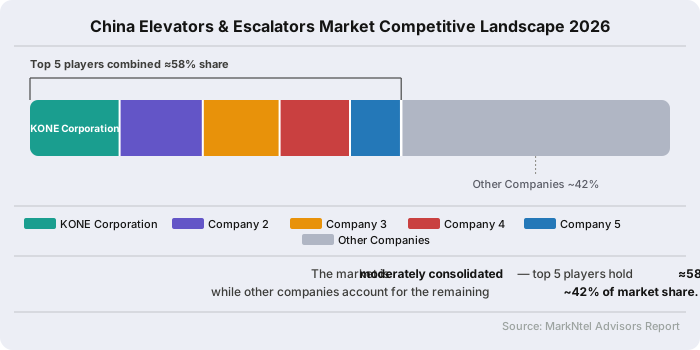
- The China elevators and escalators industry remains moderately consolidated, with leading domestic and international manufacturers collectively holding nearly 58% of the market share.
China Elevators & Escalators Market Size and Outlook
The China Elevators & Escalators Market is expected to witness steady growth at a CAGR of 2.82% during the forecast period of 2026–2032. Rapid urban transformation across China continues supporting demand for elevators and escalators across residential, commercial, and mixed-use infrastructure projects.
Although the country’s property sector has experienced slower new construction activity since 2023 , government-backed urban redevelopment and affordable housing programs continue generating installation demand for vertical transportation systems. According to the National Bureau of Statistics of China, the urbanization rate exceeded 67.89% in 2025, reflecting continued migration toward densely populated cities and increasing dependence on high-rise residential towers, office complexes, hospitals, and integrated urban developments. As urban infrastructure continues evolving, adoption of smart elevator systems and energy-efficient mobility technologies is steadily increasing across China’s expanding built environment.
At the same time, transportation modernization initiatives are reinforcing market growth through rising deployment of elevators & escalators, and moving walkways across public infrastructure projects. Under the 14th Five-Year Plan for New Urbanization, China continued expanding metro rail systems, airport terminals, and high-speed railway connectivity by 2025.
According to the Ministry of Transport of the People’s Republic of China and the China Association of Metros, the country’s urban rail transit network continued exceeding 11,000 kilometers in 2025, creating sustained demand for heavy-duty transit mobility systems. This expanding transportation infrastructure is also encouraging airports, shopping malls, and railway stations to adopt IoT-enabled elevator technologies integrated with predictive maintenance and intelligent traffic management systems.
In addition to new infrastructure development, demographic shifts and urban renewal initiatives are creating strong opportunities for modernization and retrofit services across China’s aging building infrastructure. The State Council of China continued promoting the Urban Old Residential Community Renovation Program during 2025, encouraging elevator installation in older apartment buildings lacking accessibility systems for elderly residents .
Simultaneously, the growing number of aging elevators across residential and institutional buildings is strengthening recurring demand for maintenance, repair, and modernization solutions. In response, major manufacturers are expanding digital maintenance platforms, remote monitoring capabilities, and energy-efficient retrofit technologies designed to improve operational safety and long-term electricity efficiency.
Going forward, expansion of smart city infrastructure and continuous investments in sustainable urban mobility systems are anticipated to strengthen future demand for elevators and escalators across China. Increasing integration of AI-enabled building management systems, regenerative drive technologies, and connected mobility platforms is expected to accelerate deployment of intelligent vertical transportation systems across residential, commercial, and public-sector applications.
Meanwhile, multinational and domestic manufacturers are strengthening localized production capabilities and digital service operations to align with China’s evolving energy-efficiency standards and infrastructure modernization priorities. Supported by ongoing investments in sustainable urban development and public mobility enhancement, the market is projected to grow from USD 33.44 billion in 2026 to USD 39.51 billion by 2032, maintaining favorable market progression throughout the forecast period.
China Elevators & Escalators Market Key Indicators
- China continues operating the world’s largest high-speed rail network, exceeding 48,000 kilometers in 2025, reflecting substantial investments in transportation connectivity and regional infrastructure development. Expansion of railway stations and integrated transit-oriented developments requires installation of advanced vertical mobility systems, thereby supporting long-term demand for elevators and escalators across public infrastructure projects.
- China installed approximately 14,000 elevators in old residential communities during 2025 as part of ongoing urban renewal and accessibility improvement initiatives. Growing investments in renovation of aging apartment buildings and elderly-friendly infrastructure are increasing demand for low-rise elevators, modernization solutions, and maintenance services across residential applications.
- In 2026, China approved an investment plan for two major infrastructure projects worth nearly USD 42 billion, reflecting continued investments in transportation and urban infrastructure development. Expansion of railway stations, commercial complexes, and transit-oriented infrastructure is expected to increase demand for elevators, escalators, and advanced vertical mobility systems across public and commercial applications .
China Elevators & Escalators Market Scope
| Category | Segments |
|---|---|
| By Product Type | Elevators |
| By Type | Traction Elevators, Hydraulic Elevators, Machine Room-Less (MRL) Elevators |
| By Building Height | Low-Rise Buildings, High-Rise Buildings)), Escalators |
| By Type | Moving Walkways/Travelators, Moving Stairs |
| By Speed | 1 m/s to 2.5 m/s, 3 m/s to 3.5 m/s, 4 m/s & Above |
| By Service Type | New Installation, Maintenance & Repair, Modernization |
| By Application | Residential, Commercial, Industrial, Public Infrastructure (Airports, Railway Stations, Metro Stations, Shopping Malls |
China Elevators & Escalators Market Growth Drivers
Rapid Urbanization and High-Rise Construction
Accelerating urban infrastructure development and growing concentration of high-rise residential and commercial buildings are playing a critical role in expanding China’s elevators and escalators market. Increasing migration toward urban centers has intensified demand for residential towers, office complexes, hospitals, and mixed-use developments requiring advanced vertical transportation systems. China’s urbanization rate continued rising during 2025 as government policies remained focused on sustainable urban development across metropolitan regions. This transition toward high-density urban living is materially increasing installation volumes of elevators, escalators, and intelligent vertical transportation systems across residential and commercial infrastructure projects nationwide.
The driver has further strengthened through the continuous expansion of infrastructure and fixed asset investment, supporting large-scale urban construction activity across China. Data released by the National Bureau of Statistics of China showed that the country’s fixed asset investment exceeded approximately USD 7.1 trillion in 2025 , while infrastructure investment increased by 4.8% during the year. Reflecting continued transportation infrastructure expansion, China Eastern Airlines announced an investment plan worth nearly USD 696 million for Xi’an Xianyang International Airport development by 2025 . Expansion of airports, railway stations, office complexes, and commercial centers is therefore directly increasing deployment volumes of elevators, escalators, and machine room-less elevator systems across multiple end-user sectors
Meanwhile, rising urban infrastructure density is increasing long-term demand for maintenance, modernization, and digitally connected mobility systems across China’s existing building stock. Commercial complexes, transportation hubs, and institutional facilities are increasingly integrating predictive maintenance platforms, AI-enabled traffic management systems, and digital elevator monitoring technologies to improve operational efficiency and passenger flow management. This growing installed base is strengthening recurring service revenues alongside new equipment deployment throughout the country. As infrastructure modernization and urban redevelopment initiatives continue accelerating, rapid urban expansion is expected to remain a key factor supporting long-term market growth across China.
Recent Trends
Growing Adoption of Smart Elevator Systems
Integration of digital building technologies and intelligent mobility infrastructure is emerging as a major trend transforming China’s elevators and escalators market. Commercial developers, transportation authorities, and infrastructure operators are increasingly deploying elevators integrated with IoT sensors, AI-enabled predictive maintenance systems, and cloud connectivity to improve operational efficiency and passenger management. Rising smart city investments and growing adoption of intelligent building systems are accelerating deployment of connected and energy-efficient vertical transportation technologies across residential, commercial, and public infrastructure projects. As a result, urban infrastructure operations are steadily evolving toward digitally connected mobility ecosystems.
This transition is also reshaping industry dynamics by shifting market focus from conventional equipment installation toward long-term digital service and maintenance ecosystems. Elevator manufacturers are increasingly introducing cloud-based maintenance platforms, remote diagnostics systems, and automated fault detection technologies designed to improve operational reliability and reduce service downtime. Reflecting this shift, Taoping Inc. announced new smart elevator service orders exceeding USD 3 million during 2026, supported by growing demand for AI-driven diagnostics and intelligent elevator monitoring solutions. Consequently, recurring revenues from maintenance, modernization, and digital monitoring services are steadily expanding alongside traditional equipment deployment.
Meanwhile, government-led sustainability and smart infrastructure initiatives are expected to sustain long-term adoption of intelligent elevator technologies across China. During 2025, the country continued strengthening green infrastructure and energy-efficiency requirements under broader sustainability development programs, encouraging wider deployment of connected building technologies. Simultaneously, manufacturers operating in China are expanding investment in AI-enabled mobility platforms and intelligent traffic management technologies to align with evolving smart city infrastructure requirements. As smart infrastructure development continues to progress across China, intelligent elevator technologies are expected to become increasingly important within modern urban mobility ecosystems.
China Elevators & Escalators Market Opportunities and Challenges
Slowdown in China’s Real Estate Sector Driving Demand for Elevator Modernization and Retrofit Services
Slower construction activity and continued weakness in China’s real estate sector are emerging as a significant challenge for new elevator and escalator installations across residential infrastructure projects. Declining property investment, lower housing demand in certain regions, and financial pressure on developers have reduced the pace of new residential construction activity since 2023. Data released by the National Bureau of Statistics of China showed that real estate development investment declined by 17.2% during 2025 , reflecting continued pressure across portions of the country’s housing sector. This slowdown is limiting demand growth for new elevator installations while increasing pricing pressure and competition among manufacturers operating in the market.
At the same time, this challenge is creating substantial opportunities for elevator modernization, retrofitting, and maintenance services across China’s existing building infrastructure. Growing numbers of aging residential buildings lacking modern vertical transportation systems are encouraging government-backed renovation and accessibility improvement initiatives across urban communities. Reflecting this transition, KONE expanded its modernization operations across more than 80 Chinese cities during 2026 and secured over 2,100 elevators in one of China’s largest modernization projects . Simultaneously, manufacturers are increasingly expanding retrofit, modernization, and predictive maintenance solutions to generate recurring revenue opportunities across China’s large installed elevator base.
Segmentation Insights
Elevators Hold the Dominant Position within the Product Type Segment
Elevators account for nearly 89% share of the China Elevators & Escalators Market, making them the leading product category across the country’s vertical transportation industry. The segment’s dominance is primarily supported by China’s extensive high-rise residential construction activities, continuous urban redevelopment programs, and expansion of commercial and mixed-use infrastructure across major metropolitan regions. Rapid urbanization and increasing population density in cities such as Shanghai, Beijing, Shenzhen, Guangzhou, and Chengdu continue driving demand for vertical mobility systems across apartment complexes, office towers, hospitals, hotels, and public infrastructure projects. Additionally, government-backed renovation initiatives promoting elevator retrofitting in older residential communities are further strengthening installation demand across the country.
The increasing integration of intelligent building systems and smart infrastructure technologies is also supporting the deployment of advanced elevator systems throughout China. Developers are increasingly installing elevators integrated with AI-enabled traffic management systems, regenerative drive technologies, and cloud-based monitoring platforms to improve operational efficiency and passenger convenience. Reflecting this trend, the Guangzhou Baiyun International Airport Terminal 3 expansion project incorporated integrated transportation infrastructure and smart mobility systems designed to support an annual passenger capacity exceeding 120 million . Such large-scale airport and transit-oriented developments are significantly increasing the deployment of high-speed elevators across public infrastructure projects, supporting the segment’s long-term market dominance. Based on product type, the market has been segmented into:
- Elevators
- Escalators
Residential Segment Dominates the Application Landscape, Driven by Urban Housing Expansion and Aging Community Modernization Programs
Demand from residential buildings remains the primary contributor to China’s elevators and escalators market, with the segment holding nearly 52% share across total applications. The segment’s strong position is mainly supported by China’s extensive urban residential infrastructure base and continued development of high-rise apartment complexes across metropolitan and Tier-2 cities. Rapid migration toward urban areas, rising residential density, and expansion of vertical housing projects continue to generate substantial demand for passenger elevators across newly constructed residential buildings. Additionally, increasing focus on accessibility improvement within aging apartment communities is accelerating deployment of retrofit elevators across older residential structures lacking vertical mobility infrastructure.
The segment is also benefiting from growing adoption of smart residential infrastructure and intelligent building management technologies across China’s housing sector. Developers are increasingly integrating energy-efficient elevators, touchless access systems, IoT-enabled monitoring technologies, and cloud-based maintenance platforms within modern residential projects to improve operational efficiency and resident convenience. Furthermore, rising investments in affordable housing, mixed-use smart communities, and sustainable residential developments are strengthening long-term elevator installation demand throughout the country. Rising investments in high-rise residential projects and smart housing communities are expected to sustain strong demand for elevators across China’s residential sector. Based on application, the market is categorized into:
- Residential
- Commercial
- Industrial
- Public Infrastructure
China Elevators & Escalators Market Competitive Analysis
The China Elevators & Escalators Market is moderately consolidated, with over 40 domestic and international companies operating across installation, modernization, and maintenance services. The top five players, Otis Worldwide Corporation, KONE Corporation, Schindler Group, TK Elevator, and Mitsubishi Electric Corporation, collectively account for nearly 58% of the total market share, supported by strong manufacturing capabilities, advanced technologies, and extensive service networks across China.
Key Players in China Elevators & Escalators Market
- Otis Worldwide Corporation
- KONE Corporation
- Schindler Group
- TK Elevator
- Mitsubishi Electric Corporation
- Hitachi Ltd.
- Fujitec Co., Ltd.
- Hyundai Elevator Co., Ltd.
- Canny Elevator Co., Ltd.
- SJEC Corporation
- Disheng Elevator (China) Co., Ltd
- Xizi United Holdings Limited
- General Elevator Co., Ltd.
- Others
China Elevators & Escalators Industry News and Recent Developments
April 2026: KONE Proposes Acquisition of TK Elevator to Strengthen Modernization and Digital Service Capabilities
KONE Corporation announced a proposed acquisition of TK Elevator during 2026 in a deal valued at nearly USD 34.4 billion. The transaction aims to strengthen elevator modernization, maintenance, and digital service operations across Asia, Europe, and the Americas while expanding smart elevator technology capabilities.
Impact Analysis: The development reflects increasing consolidation within the elevators and escalators industry as companies expand modernization and connected service ecosystems. The acquisition is expected to strengthen predictive maintenance capabilities, smart mobility technologies, and recurring service revenues across residential, commercial, and public infrastructure projects.
- Market Segmentation
- Introduction
- Product Definition
- Research Process
- Assumptions
- Executive Summary
- China Elevators & Escalators Market Policies, Regulations
- China Elevators & Escalators Market Unmet Needs
- China Elevators & Escalators Market Trends & Developments
- China Elevators & Escalators Market Dynamics
- Growth Factors
- Challenges
- China Elevators & Escalators Market Hotspot & Opportunities
- China Elevators & Escalators Market Outlook, 2022-2032F
- Market Size & Outlook
- By Revenues (USD Million)
- Market Share & Outlook
- By Product Type- Market Size & Forecast 2022-2032, USD Million
- Elevators
- By Type
- Traction Elevators
- Hydraulic Elevators
- Machine Room-Less (MRL) Elevators
- By Building Height
- Low-Rise Buildings
- High-Rise Buildings
- By Speed
- 0.15 to 0.5 m/s
- 1.0 to 2.5 m/s
- 3.0 to 6.0 m/s
- 7.0 to 20.5+ m/s
- By Load Capacity
- Below 500 kg
- 500–1,000 kg
- 1,001–2,000 kg
- Above 2,000 kg
- By Region
- East
- North East
- South East
- Others
- By Type
- Escalators
- By Type
- Moving Walkways/Travelators
- Moving Stairs
- By Speed
- 1 m/s to 2.5 m/s
- 3 m/s to 3.5 m/s
- 4 m/s & Above
- By Installation
- Indoor
- Outdoor
- By Step Width
- 600 mm
- 800 mm
- 1,000 mm
- By Region
- East
- North East
- South East
- Others
- By Type
- Elevators
- By Service Type- Market Size & Forecast 2022-2032, USD Million
- New Installation
- Maintenance & Repair
- Preventive Maintenance
- Corrective / Breakdown Maintenance
- Predictive / Condition-Based Maintenance
- Modernization
- By Application- Market Size & Forecast 2022-2032, USD Million
- Residential
- Commercial
- Industrial
- Public Infrastructure
- Airports
- Railway Stations
- Metro Stations
- Shopping Malls
- By Company
- Competition Characteristics
- Market Share & Analysis
- By Product Type- Market Size & Forecast 2022-2032, USD Million
- Market Size & Outlook
- China Elevators Market Outlook, 2022-2032
- Market Size & Outlook
- By Revenues (USD Million)
- By New Installation
- Market Share & Outlook
- By Service Type- Market Size & Forecast 2022-2032, USD Million
- By Application- Market Size & Forecast 2022-2032, USD Million
- By Building Height - Market Size & Forecast 2022-2032, USD Million
- By Speed - Market Size & Forecast 2022-2032, USD Million
- By Load Capacity - Market Size & Forecast 2022-2032, USD Million
- By Region - Market Size & Forecast 2022-2032, USD Million
- Market Size & Outlook
- China Escalators Market Outlook, 2022-2032
- Market Size & Outlook
- By Revenues (USD Million)
- By New Installation
- Market Share & Outlook
- By Service Type- Market Size & Forecast 2022-2032, USD Million
- By Application- Market Size & Forecast 2022-2032, USD Million
- By Type - Market Size & Forecast 2022-2032, USD Million
- By Speed - Market Size & Forecast 2022-2032, USD Million
- By Installation - Market Size & Forecast 2022-2032, USD Million
- By Step Width - Market Size & Forecast 2022-2032, USD Million
- Market Size & Outlook
- China Elevators & Escalators Market Key Strategic Imperatives for Success & Growth
- Competitive Outlook
- Company Profiles
- Otis Worldwide Corporation
- Business Description
- Product Portfolio
- Collaborations & Alliances
- Recent Developments
- Financial Details
- Others
- KONE Corporation
- Business Description
- Product Portfolio
- Collaborations & Alliances
- Recent Developments
- Financial Details
- Others
- Schindler Group
- Business Description
- Product Portfolio
- Collaborations & Alliances
- Recent Developments
- Financial Details
- Others
- TK Elevator
- Business Description
- Product Portfolio
- Collaborations & Alliances
- Recent Developments
- Financial Details
- Others
- Mitsubishi Electric Corporation
- Business Description
- Product Portfolio
- Collaborations & Alliances
- Recent Developments
- Financial Details
- Others
- Hitachi Ltd.
- Business Description
- Product Portfolio
- Collaborations & Alliances
- Recent Developments
- Financial Details
- Others
- Fujitec Co., Ltd.
- Business Description
- Product Portfolio
- Collaborations & Alliances
- Recent Developments
- Financial Details
- Others
- Hyundai Elevator Co., Ltd.
- Business Description
- Product Portfolio
- Collaborations & Alliances
- Recent Developments
- Financial Details
- Others
- Canny Elevator Co., Ltd.
- Business Description
- Product Portfolio
- Collaborations & Alliances
- Recent Developments
- Financial Details
- Others
- SJEC Corporation
- Business Description
- Product Portfolio
- Collaborations & Alliances
- Recent Developments
- Financial Details
- Others
- Disheng Elevator (China) Co., Ltd
- Business Description
- Product Portfolio
- Collaborations & Alliances
- Recent Developments
- Financial Details
- Others
- Xizi United Holdings Limited
- Business Description
- Product Portfolio
- Collaborations & Alliances
- Recent Developments
- Financial Details
- Others
- General Elevator Co., Ltd.
- Business Description
- Product Portfolio
- Collaborations & Alliances
- Recent Developments
- Financial Details
- Others
- Otis Worldwide Corporation
- Company Profiles
- Disclaimer

MarkNtel Advisors follows a robust and iterative research methodology designed to ensure maximum accuracy and minimize deviation in market estimates and forecasts. Our approach combines both bottom-up and top-down techniques to effectively segment and quantify various aspects of the market. A consistent feature across all our research reports is data triangulation, which examines the market from three distinct perspectives to validate findings. Key components of our research process include:
1. Scope & Research Design At the outset, MarkNtel Advisors define the research objectives and formulate pertinent questions. This phase involves determining the type of research—qualitative or quantitative—and designing a methodology that outlines data collection methods, target demographics, and analytical tools. They also establish timelines and budgets to ensure the research aligns with client goals.
2. Sample Selection and Data Collection In this stage, the firm identifies the target audience and determines the appropriate sample size to ensure representativeness. They employ various sampling methods, such as random or stratified sampling, based on the research objectives. Data collection is carried out using tools like surveys, interviews, and observations, ensuring the gathered data is reliable and relevant.
3. Data Analysis and Validation Once data is collected, MarkNtel Advisors undertake a rigorous analysis process. This includes cleaning the data to remove inconsistencies, employing statistical software for quantitative analysis, and thematic analysis for qualitative data. Validation steps are taken to ensure the accuracy and reliability of the findings, minimizing biases and errors.

4. Data Forecast and FinalizationThe final phase involves forecasting future market trends based on the analyzed data. MarkNtel Advisors utilize predictive modeling and time series analysis to anticipate market behaviors. The insights are then compiled into comprehensive reports, featuring visual aids like charts and graphs, and include strategic recommendations to inform client decision-making
We’d love to understand what matters most to you.