

By Engine Type (Turbofan Engine, Turboprop Engine, Turboshaft Engine, Turbojet Engine, Piston Engine), By Aircraft Type (Commercial Aircraft, Military Aircraft, General Aviation Aircraft, Helicopters,... ... rcraft, Helicopters, Unmanned Aerial Vehicles (UAVs)), By Point of Sale (OEM, Aftermarket), By Component (Compressor, Turbine, Gearbox, Fuel System, Exhaust System, Combustion Chamber, Others), By Thrust Range (Below 10,000 lbs, 10,000–20,000 lbs, 20,000–50,000 lbs, Above 50,000 lbs), and others Read more
- Aerospace & Defense
- May 2026
- 255
- PDF, Excel, PPT
Asia Aircraft Engines Market Key Takeaways
- The Asia aircraft engines market size was valued at USD 33.8 billion in 2025 and is projected to expand from USD 35.45 billion in 2026 to USD 54.34 billion by 2032.
- The industry is expected to grow at a CAGR of 7.38% during the forecast period.
- In 2026, China accounted for nearly 45% regional market share, supported by expanding aviation fleets and large-scale aerospace infrastructure investments.
- Turbofan engines captured approximately 68% market share in 2026 due to widespread deployment across commercial and military aircraft platforms.
- Commercial aircraft held nearly 57% market share in 2026, driven by fleet modernization, passenger traffic recovery, and aircraft procurement growth.
- The industry is moderately consolidated, with the top five leading players accounting for approximately 65% of the total market share.
Asia Aircraft Engines Market Size and Outlook
The Asia aircraft engines market is projected to witness steady growth at a steady CAGR of 7.38% during the forecast period, due to higher airline fleet modernization activities, rising cross-border passenger movement, and growing investments in aviation and defense infrastructure. Increasing urbanization and improving disposable incomes across countries such as China and India have significantly accelerated regional air travel demand, encouraging airlines to strengthen connectivity and expand operational fleets. This has consequently increased demand for advanced aircraft propulsion systems, engine components, and long-term maintenance services across commercial aviation markets.
Supportive regulatory reforms and aviation infrastructure development programs are further contributing to market expansion throughout the region. In 2025, India passed the “Protection of Interests in Aircraft Objects” bill to strengthen aircraft leasing protections under the Cape Town Convention, improving financing accessibility for aircraft acquisitions and supporting airline fleet expansion . Simultaneously, ongoing airport modernization and aviation capacity enhancement projects across emerging Asian economies are creating favorable conditions for increased procurement of advanced and fuel-efficient aircraft engines for passenger and cargo transportation applications.
Alongside commercial aviation growth, regional governments and aerospace manufacturers are increasingly focusing on localization and indigenous aerospace production capabilities. In 2026, the first domestically manufactured Airbus C-295 aircraft assembled under the Tata-Airbus partnership in India entered flight testing under the “Make in India” initiative, reflecting broader efforts to strengthen regional aerospace manufacturing ecosystem s. Such initiatives are supporting local supply-chain development while increasing long-term demand for aircraft engines, propulsion components, and aftermarket maintenance services. Rising military aircraft modernization programs across Asia and the Middle East are also contributing to higher engine procurement activities.
Increasing investments in fleet expansion, coupled with rising passenger traffic across regional and international routes, are expected to support continued growth of the Asia aircraft engines industry, driving the market from USD 35.45 billion in 2026 to USD 54.34 billion by 2032. Expanding aircraft order backlogs, rising maintenance, repair, and overhaul activities, and growing adoption of next-generation turbofan engines are anticipated to strengthen future market demand. Furthermore, continued emphasis on operational efficiency, lower emissions, and sustainable aviation technologies is encouraging aerospace manufacturers and airline operators to invest in advanced propulsion systems, supporting ongoing modernization of the regional aviation ecosystem.
Asia Aircraft Engines Market Key Indicators
- SIPRI reported that China increased military expenditure to approximately USD 314 billion in 2025, supporting fighter aircraft modernization and consequently increasing demand for advanced military aircraft engines and propulsion systems.
- According to Airbus’ 2026 Global Services Forecast, Asia-Pacific will require nearly 19,560 new passenger aircraft over the next 20 years, accounting for approximately 46% of global aircraft demand, thereby supporting long-term demand for aircraft engines and propulsion systems.
- As per Stockholm International Peace Research Institute (SIPRI), Middle East military spending totaled nearly USD 218 billion in 2025, reflecting continued defense modernization efforts that are supporting procurement of advanced military aircraft engines and propulsion technologies.
- Southeast Asia is expected to witness strong aviation fleet expansion, with Boeing estimating demand for over 4,960 new aircraft by 2043, consequently supporting long-term growth in aircraft engine and propulsion system demand across Asia.
- South Korea imported approximately USD 2.2 billion worth of aerospace products from the United States in 2022, with civilian aircraft, engines, and parts accounting for nearly 80% of imports. Rising dependence on commercial aviation equipment and aerospace components reflects increasing aircraft activity and growing demand for propulsion systems and aftermarket engine services across the Asia aviation sector.
Asia Aircraft Engines Market Scope
| Category | Segments |
|---|---|
| By Engine Type | Turbofan Engine, Turboprop Engine, Turboshaft Engine, Turbojet Engine, Piston Engine |
| By Aircraft Type | Commercial Aircraft, Military Aircraft, General Aviation Aircraft, Helicopters, Unmanned Aerial Vehicles (UAVs |
| By Point of Sale | OEM, Aftermarket |
| By Component | Compressor, Turbine, Gearbox, Fuel System, Exhaust System, Combustion Chamber, Others |
| By Thrust Range | Below 10,000 lbs, 10,000–20,000 lbs, 20,000–50,000 lbs, Above 50,000 lbs |
Asia Aircraft Engines Market Growth Drivers
Rapid Expansion of Commercial Aviation Across Asia
The rapid development of Asia’s commercial aviation sector continues to accelerate procurement of aircraft engines, propulsion systems, and associated maintenance services. Rising urbanization, improving disposable incomes, and increasing regional connectivity have significantly strengthened passenger air travel across countries such as China and India. The International Air Transport Association reported that global passenger traffic exceeded pre-pandemic levels during 2025, while Asia-Pacific continued leading global aviation growth. Increasing passenger movement is consequently encouraging airlines to expand operational fleets and aircraft utilization across regional and international routes.
As aviation activity expands, airlines across Asia are actively modernizing fleets and increasing aircraft deployment to improve operational efficiency and route connectivity. Boeing projected in 2024 that Southeast Asia’s passenger air traffic would grow by approximately 7.2% annually through 2043, while the regional aircraft fleet is expected to exceed 4,960 jets . Expanding aircraft fleets are consequently increasing demand for turbofan engines, propulsion systems, spare engine components, and maintenance infrastructure. Rising deployment of narrow-body aircraft on domestic and regional routes is also strengthening aircraft maintenance and overhaul activities across the regional aviation ecosystem.
Government-backed aviation infrastructure programs are further reinforcing long-term market expansion across Asia. India’s modified UDAN regional connectivity scheme aims to operationalize 120 new destinations and support nearly 40 million additional passengers by 2035. Similarly, China plans to expand its airport network to more than 400 airports by 2035 from nearly 240 currently . Such developments are enabling airlines to increase operational capacity and aircraft deployment, thereby sustaining long-term demand for advanced and fuel-efficient aircraft engines.
Recent Trends
Rising Adoption of Fuel-Efficient Turbofan Engines
The aviation industry across Asia is increasingly adopting fuel-efficient turbofan engines as airlines prioritize lower operating costs, improved fuel efficiency, and compliance with evolving environmental standards. Rising aviation fuel prices and growing pressure to reduce carbon emissions have accelerated deployment of next-generation propulsion technologies across commercial aircraft fleets. Major aircraft manufacturers including Airbus and Boeing continue expanding deliveries of narrow-body aircraft equipped with advanced turbofan engines across rapidly growing aviation markets in Asia.
As airlines continue modernizing fleets, the transition toward fuel-efficient propulsion systems is increasingly reshaping aerospace operating models and long-term fleet strategies. Reflecting this trend, Riyadh Air ordered 120 CFM LEAP-1A engines in 2025 for its Airbus A321neo fleet to improve fuel efficiency and reduce emissions . Similarly, Otto Aerospace advanced development of its Phantom 3500 aircraft in 2026, designed to operate with substantially lower fuel consumption and smaller engine configurations. Such developments are strengthening demand for advanced engine technologies, lightweight aerospace engine materials, and aircraft maintenance infrastructure across the aviation ecosystem.
Long-term sustainability objectives and strengthening aviation emission regulations are expected to sustain this trend across the industry. The International Civil Aviation Organization and multiple Asian governments continue promoting aviation decarbonization initiatives and sustainable aviation fuel adoption programs. Simultaneously, rising passenger traffic and fluctuating fuel prices are encouraging airlines to prioritize operational efficiency and lower lifecycle operating costs.
Asia Aircraft Engines Market Opportunities and Challenges
Dependence on Imported Aerospace Components Encouraging Indigenous Aircraft Engine Production Initiatives
Dependence on imported aerospace components is emerging as a significant challenge for aircraft engine manufacturers across Asia and the Middle East. Several regional aerospace industries continue relying on imported turbine blades, propulsion systems, and aerospace-grade materials from North America and Europe. Ongoing supply chain disruptions, geopolitical tensions, and trade restrictions have increased procurement risks, production delays, and manufacturing costs across the aviation sector.
According to the International Air Transport Association (IATA), supply chain constraints continued affecting aircraft deliveries and maintenance operations during 2025 due to shortages of critical aerospace components and engines. Such dependence on foreign suppliers is increasing operational vulnerability for regional aerospace manufacturers and airline operators.
This challenge is simultaneously creating strong opportunities for indigenous aircraft engine production and regional aerospace manufacturing expansion. Governments across Asia are increasingly promoting localization initiatives, domestic aerospace production, and technology transfer partnerships to strengthen supply-chain resilience and reduce import dependence.
For instance, India continues expanding aerospace manufacturing under the “Make in India” initiative, while China is increasing investments in indigenous commercial aircraft and propulsion system development. Such initiatives are supporting regional aircraft engine component production and strengthening local aerospace supply-chain ecosystems.
Segmentation Insights
Strong Commercial Aviation Expansion and Fleet Modernization Supporting Dominance of Turbofan Engines
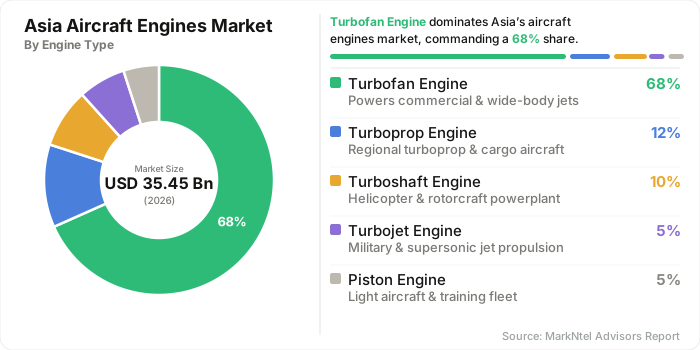
Extensive utilization in commercial narrow-body and wide-body aircraft supported turbofan engines in maintaining nearly 68% share of the regional market. The segment continues witnessing strong demand across major aviation markets including China, India, Japan, and Southeast Asia due to rising passenger air traffic and expanding airline networks. Increasing regional and international connectivity is consistently encouraging airlines to expand fleets and increase aircraft deployment across domestic and long-haul routes, thereby strengthening demand for turbofan aircraft engines in Asia across the regional commercial aviation sector.
The segment’s dominance is further reinforced by the operational advantages offered by modern turbofan propulsion systems. Airlines increasingly prefer turbofan engines because of their superior fuel efficiency, lower noise emissions, and ability to support high-frequency as well as long-distance operations. At the same time, ongoing fleet modernization programs across Asia are accelerating deployment of next-generation aircraft such as the Airbus A320neo and Boeing 737 MAX equipped with advanced turbofan engine technologies.
Continuous advancements in lightweight engine materials and digital monitoring systems are also supporting the long-term competitiveness of turbofan engines across the regional aircraft engine market. Based on engine type, the market has been segmented into:
- Turbofan Engine
- Turboprop Engine
- Turboshaft Engine
- Turbojet Engine
- Piston Engine
Continuous Airline Fleet Expansion and Increasing Passenger Mobility Supporting Commercial Aircraft Leadership
Commercial aircraft continue holding the largest share of the Asia aircraft engines market, accounting for nearly 57% of total market revenue. The segment continues witnessing strong demand due to rising passenger air traffic, increasing regional connectivity, and expanding airline operations across major aviation markets including China, India, Japan, and Southeast Asia.
Growing middle-class populations, increasing tourism activity, and rising business travel are consistently encouraging airlines to expand fleets and strengthen domestic as well as international route networks. As a result, demand for commercial aircraft engines in Asia continues increasing across the regional aviation sector.
The growing transition toward modern and fuel-efficient commercial aircraft fleets is contributing significantly to the segment’s sustained market leadership across Asia. Airlines are increasingly procuring next-generation narrow-body and wide-body aircraft to improve operational efficiency, reduce fuel consumption, and accommodate rising passenger volumes.
Simultaneously, expansion of low-cost carriers and regional airline networks is increasing utilization of commercial aircraft across short-haul and medium-haul routes. Continued investments in airport infrastructure, aircraft maintenance facilities, and advanced propulsion technologies are also strengthening long-term passenger aviation engine demand across the regional aviation ecosystem. Based on aircraft type, the market is categorized into:
- Commercial Aircraft
- Military Aircraft
- General Aviation Aircraft
- Helicopters
- Unmanned Aerial Vehicles (UAVs)
Asia Aircraft Engines Market Geographical Outlook
Growing domestic air travel demand and continuous expansion of aviation infrastructure contributed significantly to China securing nearly 45% share of the regional market. The country continues witnessing strong growth in passenger air traffic, airline fleet expansion, and aircraft deployment across both domestic and international routes. Rising middle-class populations, increasing tourism activity, and strengthening regional connectivity are consistently encouraging Chinese airlines to expand commercial aircraft procurement and operational capacity. Simultaneously, continued development of indigenous aerospace manufacturing programs and localized propulsion technologies is supporting long-term demand for aircraft engines, propulsion systems, and aftermarket maintenance services across the national aviation ecosystem.
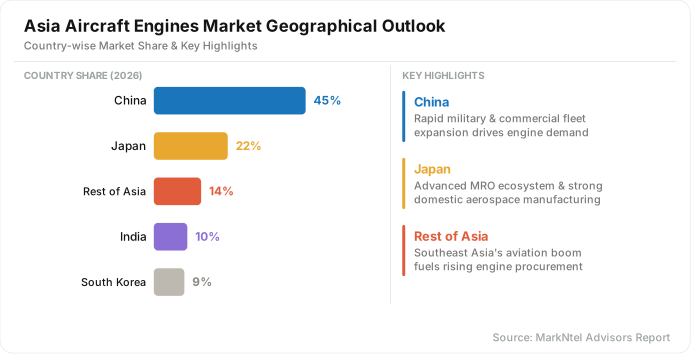
China’s leadership position is further reinforced by extensive investments in aviation infrastructure and airport expansion programs. The country has continued investing billions in airport modernization and new airport construction projects to accommodate rising passenger traffic and increasing airline operations. Beijing’s new international airport alone was designed to handle nearly 72 million passengers annually, reflecting the scale of China’s long-term aviation infrastructure development strategy. Alongside infrastructure expansion, growing investments in domestic aerospace manufacturing and aviation connectivity are strengthening demand for commercial aircraft engines in Asia and reinforcing China’s position within the regional Asia aerospace manufacturing market.
Asia Aircraft Engines Market Competitive Analysis
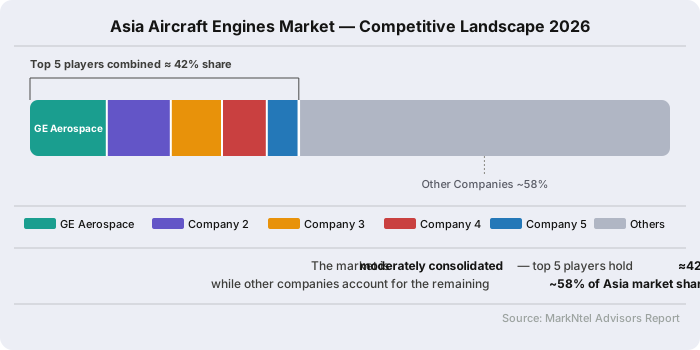
Competition within the Asia aircraft engines industry remains moderately consolidated due to the presence of global automotive manufacturers and regional engine producers across major Asian economies. Leading companies including Toyota Motor Corporation, Volkswagen AG, Honda Motor Co., Ltd., Hyundai Motor Company, and Nissan Motor Co., Ltd. together account for approximately 42% share of the regional market, supported by strong manufacturing infrastructure, hybrid powertrain technologies, and extensive automotive supply chain integration across Asia.
Key Players of Aircraft Engines in Asia
- GE Aerospace
- Pratt & Whitney (RTX)
- Rolls-Royce
- CFM International (GE + Safran JV)
- International Aero Engines — IAE
- Engine Alliance (GE + Pratt & Whitney JV)
- Safran Aircraft Engines
- MTU Aero Engines
- Aero Engine Corporation of China
- AVIC Aero-Engine
- IHI Corporation
- Mitsubishi Heavy Industries
- Kawasaki Heavy Industries
- Hanwha Aerospace
- Korea Aerospace Industries
- Hindustan Aeronautics Limited, India
- Gas Turbine Research Establishment, India.
- Others
Asia Aircraft Engines Industry News and Recent Developments
September 2025: GE Aerospace Expanded Singapore Aircraft Engine Repair Facility
GE Aerospace expanded its aircraft engine repair facility in Singapore during 2025 by investing nearly USD 11 million to strengthen additive manufacturing and jet engine maintenance capabilities. The upgraded facility supports repairs for GEnx and CFM LEAP engines and aims to enhance regional aircraft engine maintenance capacity across Asia aviation markets.
Impact Analysis: The development highlights increasing investments in aircraft engine MRO infrastructure and advanced engine repair technologies across Asia. Expansion of regional maintenance capabilities is expected to support growing aircraft utilization, strengthen aftermarket service demand, and improve long-term operational support for fuel-efficient turbofan engine platforms across the regional aviation ecosystem.
February 2025: Pratt & Whitney Secured Additional GTF Engine Orders from Cebu Pacific
Pratt & Whitney secured additional engine orders from Cebu Pacific during 2025 for Airbus A320neo-family aircraft powered by GTF engines. The agreement also included expansion of long-term engine maintenance support programs to strengthen operational efficiency and improve lifecycle engine performance across the airline’s growing commercial aircraft fleet.
Impact Analysis: The development reflects increasing airline preference for fuel-efficient aircraft propulsion technologies and long-term engine maintenance agreements across Southeast Asia’s aviation sector. Rising deployment of GTF-powered aircraft is expected to strengthen demand for advanced aircraft engines, aftermarket services, and regional aviation maintenance infrastructure across expanding commercial airline networks.
- Market Segmentation
- Introduction
- Product Definition
- Research Process
- Assumptions
- Executive Summary
- Asia Aircraft Engines Market Policies, Regulations, and Product Standards
- Asia Aircraft Engines Market Trends & Developments
- Asia Aircraft Engines Market Dynamics
- Growth Factors
- Challenges
- Asia Aircraft Engines Market Hotspot & Opportunities
- Asia Aircraft Engines Market Outlook, 2022-2032F
- Market Size & Outlook
- By Revenues (USD Million)
- Market Share & Analysis
- By Engine Type- Market Size & Forecast 2022-2032, USD Million
- Turbofan Engine
- Turboprop Engine
- Turboshaft Engine
- Turbojet Engine
- Piston Engine
- By Aircraft Type- Market Size & Forecast 2022-2032, USD Million
- Commercial Aircraft
- Military Aircraft
- General Aviation Aircraft
- Helicopters
- Unmanned Aerial Vehicles (UAVs)
- By Point of Sale- Market Size & Forecast 2022-2032, USD Million
- OEM
- Aftermarket
- By Component- Market Size & Forecast 2022-2032, USD Million
- Compressor
- Turbine
- Gearbox
- Fuel System
- Exhaust System
- Combustion Chamber
- Others
- By Thrust Range- Market Size & Forecast 2022-2032, USD Million
- Below 10,000 lbs
- 10,000–20,000 lbs
- 20,000–50,000 lbs
- Above 50,000 lbs
- By Country
- China
- Japan
- South Korea
- India
- Bangladesh
- Indonesia
- Thailand
- Vietnam
- Malaysia
- Saudi Arabia
- Turkey
- By Company
- Competition Characteristics
- Market Share & Analysis
- By Engine Type- Market Size & Forecast 2022-2032, USD Million
- Market Size & Outlook
- China Aircraft Engines Market Outlook, 2022-2032F
- Market Size & Outlook
- By Revenues (USD Million)
- Market Share & Analysis
- By Engine Type- Market Size & Forecast 2022-2032, USD Million
- By Aircraft Type- Market Size & Forecast 2022-2032, USD Million
- By Point of Sale- Market Size & Forecast 2022-2032, USD Million
- By Component- Market Size & Forecast 2022-2032, USD Million
- By Thrust Range- Market Size & Forecast 2022-2032, USD Million
- Market Size & Outlook
- Japan Aircraft Engines Market Outlook, 2022-2032F
- Market Size & Outlook
- By Revenues (USD Million)
- Market Share & Analysis
- By Engine Type- Market Size & Forecast 2022-2032, USD Million
- By Aircraft Type- Market Size & Forecast 2022-2032, USD Million
- By Point of Sale- Market Size & Forecast 2022-2032, USD Million
- By Component- Market Size & Forecast 2022-2032, USD Million
- By Thrust Range- Market Size & Forecast 2022-2032, USD Million
- Market Size & Outlook
- South Korea Aircraft Engines Market Outlook, 2022-2032F
- Market Size & Outlook
- By Revenues (USD Million)
- Market Share & Analysis
- By Engine Type- Market Size & Forecast 2022-2032, USD Million
- By Aircraft Type- Market Size & Forecast 2022-2032, USD Million
- By Point of Sale- Market Size & Forecast 2022-2032, USD Million
- By Component- Market Size & Forecast 2022-2032, USD Million
- By Thrust Range- Market Size & Forecast 2022-2032, USD Million
- Market Size & Outlook
- India Aircraft Engines Market Outlook, 2022-2032F
- Market Size & Outlook
- By Revenues (USD Million)
- Market Share & Analysis
- By Engine Type- Market Size & Forecast 2022-2032, USD Million
- By Aircraft Type- Market Size & Forecast 2022-2032, USD Million
- By Point of Sale- Market Size & Forecast 2022-2032, USD Million
- By Component- Market Size & Forecast 2022-2032, USD Million
- By Thrust Range- Market Size & Forecast 2022-2032, USD Million
- Market Size & Outlook
- Bangladesh Aircraft Engines Market Outlook, 2022-2032F
- Market Size & Outlook
- By Revenues (USD Million)
- Market Share & Analysis
- By Engine Type- Market Size & Forecast 2022-2032, USD Million
- By Aircraft Type- Market Size & Forecast 2022-2032, USD Million
- By Point of Sale- Market Size & Forecast 2022-2032, USD Million
- By Component- Market Size & Forecast 2022-2032, USD Million
- By Thrust Range- Market Size & Forecast 2022-2032, USD Million
- Market Size & Outlook
- Indonesia Aircraft Engines Market Outlook, 2022-2032F
- Market Size & Outlook
- By Revenues (USD Million)
- Market Share & Analysis
- By Engine Type- Market Size & Forecast 2022-2032, USD Million
- By Aircraft Type- Market Size & Forecast 2022-2032, USD Million
- By Point of Sale- Market Size & Forecast 2022-2032, USD Million
- By Component- Market Size & Forecast 2022-2032, USD Million
- By Thrust Range- Market Size & Forecast 2022-2032, USD Million
- Market Size & Outlook
- Thailand Aircraft Engines Market Outlook, 2022-2032F
- Market Size & Outlook
- By Revenues (USD Million)
- Market Share & Analysis
- By Engine Type- Market Size & Forecast 2022-2032, USD Million
- By Aircraft Type- Market Size & Forecast 2022-2032, USD Million
- By Point of Sale- Market Size & Forecast 2022-2032, USD Million
- By Component- Market Size & Forecast 2022-2032, USD Million
- By Thrust Range- Market Size & Forecast 2022-2032, USD Million
- Market Size & Outlook
- Vietnam Aircraft Engines Market Outlook, 2022-2032F
- Market Size & Outlook
- By Revenues (USD Million)
- Market Share & Analysis
- By Engine Type- Market Size & Forecast 2022-2032, USD Million
- By Aircraft Type- Market Size & Forecast 2022-2032, USD Million
- By Point of Sale- Market Size & Forecast 2022-2032, USD Million
- By Component- Market Size & Forecast 2022-2032, USD Million
- By Thrust Range- Market Size & Forecast 2022-2032, USD Million
- Market Size & Outlook
- Malaysia Aircraft Engines Market Outlook, 2022-2032F
- Market Size & Outlook
- By Revenues (USD Million)
- Market Share & Analysis
- By Engine Type- Market Size & Forecast 2022-2032, USD Million
- By Aircraft Type- Market Size & Forecast 2022-2032, USD Million
- By Point of Sale- Market Size & Forecast 2022-2032, USD Million
- By Component- Market Size & Forecast 2022-2032, USD Million
- By Thrust Range- Market Size & Forecast 2022-2032, USD Million
- Market Size & Outlook
- Saudi Arabia Aircraft Engines Market Outlook, 2022-2032F
- Market Size & Outlook
- By Revenues (USD Million)
- Market Share & Analysis
- By Engine Type- Market Size & Forecast 2022-2032, USD Million
- By Aircraft Type- Market Size & Forecast 2022-2032, USD Million
- By Point of Sale- Market Size & Forecast 2022-2032, USD Million
- By Component- Market Size & Forecast 2022-2032, USD Million
- By Thrust Range- Market Size & Forecast 2022-2032, USD Million
- Market Size & Outlook
- Turkey Aircraft Engines Market Outlook, 2022-2032F
- Market Size & Outlook
- By Revenues (USD Million)
- Market Share & Analysis
- By Engine Type- Market Size & Forecast 2022-2032, USD Million
- By Aircraft Type- Market Size & Forecast 2022-2032, USD Million
- By Point of Sale- Market Size & Forecast 2022-2032, USD Million
- By Component- Market Size & Forecast 2022-2032, USD Million
- By Thrust Range- Market Size & Forecast 2022-2032, USD Million
- Market Size & Outlook
- Asia Aircraft Engines Market Key Strategic Imperatives for Success & Growth
- Competitive Outlook
- Company Profiles
- GE Aerospace
- Business Description
- Product Portfolio
- Collaborations & Alliances
- Recent Developments
- Financial Details
- Others
- Pratt & Whitney (RTX)
- Business Description
- Product Portfolio
- Collaborations & Alliances
- Recent Developments
- Financial Details
- Others
- Rolls-Royce
- Business Description
- Product Portfolio
- Collaborations & Alliances
- Recent Developments
- Financial Details
- Others
- CFM International (GE + Safran JV)
- Business Description
- Product Portfolio
- Collaborations & Alliances
- Recent Developments
- Financial Details
- Others
- International Aero Engines — IAE
- Business Description
- Product Portfolio
- Collaborations & Alliances
- Recent Developments
- Financial Details
- Others
- Engine Alliance (GE + Pratt & Whitney JV)
- Business Description
- Product Portfolio
- Collaborations & Alliances
- Recent Developments
- Financial Details
- Others
- Safran Aircraft Engines
- Business Description
- Product Portfolio
- Collaborations & Alliances
- Recent Developments
- Financial Details
- Others
- MTU Aero Engines
- Business Description
- Product Portfolio
- Collaborations & Alliances
- Recent Developments
- Financial Details
- Others
- Aero Engine Corporation of China
- Business Description
- Product Portfolio
- Collaborations & Alliances
- Recent Developments
- Financial Details
- Others
- AVIC Aero-Engine
- Business Description
- Product Portfolio
- Collaborations & Alliances
- Recent Developments
- Financial Details
- Others
- IHI Corporation
- Business Description
- Product Portfolio
- Collaborations & Alliances
- Recent Developments
- Financial Details
- Others
- Mitsubishi Heavy Industries
- Business Description
- Product Portfolio
- Collaborations & Alliances
- Recent Developments
- Financial Details
- Others
- Kawasaki Heavy Industries
- Business Description
- Product Portfolio
- Collaborations & Alliances
- Recent Developments
- Financial Details
- Others
- Hanwha Aerospace
- Business Description
- Product Portfolio
- Collaborations & Alliances
- Recent Developments
- Financial Details
- Others
- Korea Aerospace Industries
- Business Description
- Product Portfolio
- Collaborations & Alliances
- Recent Developments
- Financial Details
- Others
- Hindustan Aeronautics Limited, India
- Business Description
- Product Portfolio
- Collaborations & Alliances
- Recent Developments
- Financial Details
- Others
- Gas Turbine Research Establishment, India.
- Business Description
- Product Portfolio
- Collaborations & Alliances
- Recent Developments
- Financial Details
- Others
- GE Aerospace
- Company Profiles
- Disclaimer

MarkNtel Advisors follows a robust and iterative research methodology designed to ensure maximum accuracy and minimize deviation in market estimates and forecasts. Our approach combines both bottom-up and top-down techniques to effectively segment and quantify various aspects of the market. A consistent feature across all our research reports is data triangulation, which examines the market from three distinct perspectives to validate findings. Key components of our research process include:
1. Scope & Research Design At the outset, MarkNtel Advisors define the research objectives and formulate pertinent questions. This phase involves determining the type of research—qualitative or quantitative—and designing a methodology that outlines data collection methods, target demographics, and analytical tools. They also establish timelines and budgets to ensure the research aligns with client goals.
2. Sample Selection and Data Collection In this stage, the firm identifies the target audience and determines the appropriate sample size to ensure representativeness. They employ various sampling methods, such as random or stratified sampling, based on the research objectives. Data collection is carried out using tools like surveys, interviews, and observations, ensuring the gathered data is reliable and relevant.
3. Data Analysis and Validation Once data is collected, MarkNtel Advisors undertake a rigorous analysis process. This includes cleaning the data to remove inconsistencies, employing statistical software for quantitative analysis, and thematic analysis for qualitative data. Validation steps are taken to ensure the accuracy and reliability of the findings, minimizing biases and errors.

4. Data Forecast and FinalizationThe final phase involves forecasting future market trends based on the analyzed data. MarkNtel Advisors utilize predictive modeling and time series analysis to anticipate market behaviors. The insights are then compiled into comprehensive reports, featuring visual aids like charts and graphs, and include strategic recommendations to inform client decision-making
We’d love to understand what matters most to you.