

By Formulation Type (Pure Ascorbic Acid, Stabilized Derivatives, Blended Serum), By Concentration Level (Below 10%, 10% – 20%, Above 20%), By Type (Mass, Premium, Luxury), By Appli......lication (Anti-aging & Wrinkle Reduction, Brightening & Radiance Enhancement, Hyperpigmentation & Dark Spot Treatment, Acne & Blemish Control, Sun Damage Repair & Protection), By Distribution Channel (Hypermarkets & Supermarkets, Specialty Stores, Pharmacies & Drugstores, Online, Others), By Packaging Type (Dropper Bottles, Pump Bottles, Ampoules), and others Read more
- FMCG
- May 2026
- 145
- PDF, Excel, PPT
UAE Vitamin C Serum Market Report Key Takeaways:
- The UAE Vitamin C Serum Market was valued at USD 65 million in 2025 and is projected to grow from USD 70 million in 2026 to USD 125 million by 2032, registering a CAGR of 10.15% during the forecast period (2026–2032).
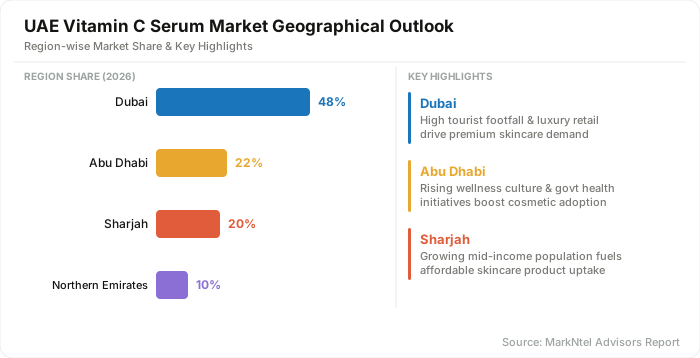
- Dubai accounts for the largest regional share, contributing approximately 48% of the total vitamin C serum demand in the UAE, supported by its concentration of premium beauty retail outlets, advanced medical aesthetics infrastructure, and a high-spending expatriate and tourist consumer base.
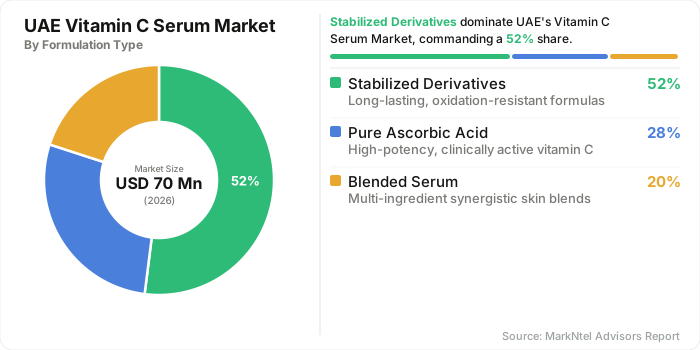
- By formulation type, stabilized derivatives, including sodium ascorbyl phosphate, magnesium ascorbyl phosphate, and ascorbyl glucoside, account for nearly 52% of the market share, driven by their superior oxidative stability compared to pure L-ascorbic acid, particularly under the UAE’s high-temperature climatic conditions.
- By application, hyperpigmentation and dark spot treatment represent approximately 33% of total demand, reflecting the high prevalence of post-inflammatory hyperpigmentation and sun-induced melanin overproduction among the UAE’s diverse, predominantly South and Southeast Asian population.
- The market is moderately consolidated, characterized by the presence of global dermatology-focused brands, rapidly growing science-based skincare companies, and regional cosmetic players. The top five players collectively account for approximately 75% of the total market share.
UAE Vitamin C Serum Market Size and Outlook
The UAE Vitamin C Serum Market is projected to grow at a CAGR of around 10.15% during 2026-2032, supported by a well-regulated and rapidly expanding cosmetics ecosystem, underpinned by stringent product safety standards and efficient import-driven supply chains. Increasing consumer awareness regarding skincare efficacy, particularly for concerns such as hyperpigmentation, uneven skin tone, and early signs of aging, is significantly driving demand for vitamin C-based formulations. Moreover, the country functions as a regional beauty hub, with Dubai acting as a primary entry point for cosmetic products distributed across the GCC.
This expansion reflects sustained growth in skincare categories, particularly active formulations such as antioxidant-based serums.
Current market conditions are shaped by a stringent regulatory environment governed by the Ministry of Industry and Advanced Technology and local municipal authorities.
All cosmetic products, including serums, must obtain conformity certification and undergo mandatory registration before commercial sale, ensuring ingredient safety and compliance with GCC standards.
The regulatory framework also mandates adherence to Good Manufacturing Practices and detailed ingredient disclosure, reinforcing consumer confidence in high-efficacy skincare products. This compliance-driven ecosystem supports the growth of clinically positioned products such as vitamin C serums across both retail and professional channels.
The demand for vitamin C serum in the UAE, valued at USD 65 million in 2025, is strongly influenced by end-user segments, particularly residential consumers and dermatology-led treatment settings that emphasize preventive and corrective skincare. Cosmetic classification frameworks in the UAE explicitly include serums within regulated skincare categories, reinforcing their role in daily personal care routines. Additionally, the UAE’s position as a high-volume import and re-export hub ensures the continuous availability of international skincare brands across retail and pharmacy networks, supporting consistent market growth. This combination of consumer awareness and institutional accessibility has strengthened the adoption of targeted skincare solutions, including brightening and antioxidant formulations.
Looking ahead, the UAE Vitamin C serum market outlook remains positive, with projected to grow from USD 70 million in 2026 to USD 125 million by 2032, supported by continuous regulatory upgrades and increasing sophistication of cosmetic safety standards. Recent updates to GCC cosmetic regulations in 2024–2025, including enhanced labeling and safety requirements, are expected to further standardize product quality across the market. The country’s role as a regional distribution gateway, combined with rising demand for high-performance skincare, will continue to attract global cosmetic manufacturers. As a result, Vitamin C serum demand is expected to remain structurally supported by regulatory trust, product innovation, and a sustained consumer shift toward active skincare formulations, reinforcing long-term market growth.
UAE Vitamin C Serum Industry Key Indicators
- The World Bank recorded UAE household final consumption expenditure at USD 234.51 billion in 2023 , growing 9.66% per capita year-on-year. Within the beauty category, the International Trade Administration (US Department of Commerce) recorded the UAE beauty and personal care market revenues at USD 1.3 billion, with skincare, the segment housing vitamin C serums, holding the second-largest sub-category position at USD 292.5 million. Rising per capita expenditure directly expands the discretionary budget available for high-frequency premium skincare purchases; vitamin C serums, priced between USD 25 and USD 150 per unit across mass and premium tiers in the UAE market, sit within the expenditure range that income growth at this pace routinely unlocks for new consumer cohorts.
UAE Vitamin C Serum Market Scope
| Category | Segments |
|---|---|
| By Formulation Type | Pure Ascorbic Acid, Stabilized Derivatives, Blended Serum |
| By Concentration Level | Below 10%, 10% – 20%, Above 20% |
| By Type | Mass, Premium, Luxury |
| By Application | Anti-aging & Wrinkle Reduction, Brightening & Radiance Enhancement, Hyperpigmentation & Dark Spot Treatment, Acne & Blemish Control, Sun Damage Repair & Protection |
| By Distribution Channel | Hypermarkets & Supermarkets, Specialty Stores, Pharmacies & Drugstores, Online, Others |
| By Packaging Type | Dropper Bottles, Pump Bottles, Ampoules |
UAE Vitamin C Serum Industry Growth Drivers
High Incidence of UV-Induced Skin Disorders Driving Clinical and Preventive Skincare Demand
A primary structural driver of the brightening serum solutions is the high and persistent incidence of UV-induced skin damage across the population. Clinical evidence indicates that the UAE experiences extreme ultraviolet exposure, with UV index levels frequently exceeding 10, which can cause skin damage within minutes of unprotected exposure. This environmental intensity accelerates photoaging, including collagen degradation, pigmentation, and early wrinkle formation. As a result, consumers are increasingly adopting antioxidant-based skincare solutions such as Vitamin C serums to counteract oxidative stress and visible skin damage.
The driver has intensified due to a measurable rise in dermatological conditions and clinical treatment demand within the UAE. A 2024 clinical study conducted in Dubai recorded approximately 5,969 new dermatology cases in a single year, highlighting the scale of skin-related health concerns. The study further identifies climate factors, particularly heat and UV exposure, as key determinants influencing skin disease prevalence in the region. This growing clinical burden is directly translating into higher usage of treatment-supportive skincare products, including Vitamin C formulations used in pigmentation and repair protocols.
The impact on market expansion is structurally significant, as demand is driven by both preventive and treatment-oriented consumption patterns. Skin cancer accounts for approximately 6.3% of total cancer cases in the UAE, reinforcing long-term concerns around UV exposure and skin health. This has led to sustained behavioural shifts toward daily-use protective skincare, rather than occasional cosmetic application. Consequently, Vitamin C serums are experiencing increased purchase frequency and broader adoption across residential and clinical end-user segments, driving consistent market volume growth.
Recent Trends
Vitamin C Formulations Driving Structural Premiumization and Product Reformulation in the UAE
The UAE Vitamin C serum market is witnessing a structural transition toward climate-adaptive formulation science, fundamentally reshaping product development and competitive positioning. Extreme heat, UV exposure, and oxidation risks have accelerated the shift from unstable L-ascorbic acid to advanced, lipophilic derivatives such as 3-O-Ethyl Ascorbic Acid and Tetrahexyldecyl Ascorbate.
A relevant example of this formulation shift is observed in premium skincare brand Sunday Riley, which offers the Sunday Riley C.E.O. 15% Vitamin C Brightening Serum in the UAE market. The product utilizes Tetrahexyldecyl Ascorbate (THD Ascorbate), an oil-soluble and highly stable Vitamin C derivative, instead of conventional L-ascorbic acid to enhance stability and skin absorption under high-temperature conditions. These ingredients enable longer shelf life, deeper dermal penetration, and consistent efficacy under harsh environmental conditions, making them a baseline requirement rather than a point of differentiation.
Concurrently, the market is being reshaped by a pronounced shift toward “barrier-first” skincare, driven by rising consumer sensitivity linked to prolonged air-conditioning exposure and environmental stressors. This has led to the reformulation of Vitamin C serums from high-potency treatment products into multifunctional daily-use solutions that integrate ceramides, hyaluronic acid, and soothing agents. Offerings such as EQQUALBERRY Vitamin Illuminating Serum reflect this repositioning, where efficacy is balanced with skin tolerance. As a result, brands are moving away from aggressive claims toward “gentle efficacy,” which is expanding the addressable consumer base and increasing repeat usage, thereby directly influencing volume growth.
In parallel, innovation is accelerating through multi-active and bio-enhanced systems designed to address persistent hyperpigmentation, a key regional concern driven by intense sun exposure. The integration of complementary actives such as niacinamide and tranexamic acid alongside Vitamin C, as seen in Garnier Skin Active Fast Bright 30x Vitamin C & Niacinami de Serum, is driving a shift toward clinically inspired, results-oriented formulations across both mass and premium segments. Additionally, fermentation-based delivery systems, exemplified by Innisfree Vita C Green Tea Enzyme Brightening Serum, are enhancing bioavailability while reducing irritation. This is complemented by the rise of lightweight textures and clean botanical blends, particularly in urban centers such as Dubai, collectively driving product premiumization, higher consumer willingness to pay, and intensified innovation cycles across the skincare market.
UAE Vitamin C Serum Market Opportunities and Challenges
Stringent Regulatory Compliance and Stability Constraints Driving Demand for Locally Adapted Vitamin C Formulations
A primary structural barrier in the UAE vitamin C serum industry is the strict product registration and ingredient compliance framework enforced by authorities such as the Dubai Municipality and the Emirates Authority for Standardization and Metrology. All cosmetic products must be registered under the Montaji system, requiring full disclosure of formulations, safety data, and labeling compliance before commercialization. This requirement has intensified with updated Gulf Standardization Organization (GSO) cosmetic regulations aligned with EU safety frameworks during 2024–2025. As a result, brands using unstable actives like L-ascorbic acid face higher scrutiny due to oxidation risks and short shelf life in high-temperature climates.
This challenge exists because Vitamin C is chemically unstable under heat, light, and oxygen exposure, conditions prevalent in the UAE’s climate. Regulatory authorities mandate stability testing, which increases time-to-market and compliance costs for new entrants.
In 2025–2026, the UAE significantly strengthened cosmetic product oversight through updated regulatory frameworks and enforcement mechanisms. The introduction of new federal oversight structures and alignment with GSO 1943 standards increased scrutiny on ingredient safety, documentation accuracy, and compliance verification, with stricter penalties for non-compliant or misleading products.
The same regulatory and climatic constraints are directly creating an opportunity for locally adapted, stabilized Vitamin C formulations in the UAE. As strict compliance frameworks filter out unstable or poorly tested products, demand is shifting toward clinically validated, heat-resistant derivatives such as sodium ascorbyl phosphate. Government-backed industrial strategies, including the UAE’s “Make it in the Emirates” initiative (2025), are encouraging localized manufacturing of high-value consumer goods.
This creates favorable conditions for regional labs specializing in active stabilization technologies and climate-adapted skincare. The UAE government, through the Ministry of Industry and Advanced Technology, is channeling over USD 10.9 billion in financing over five years to support industrial projects and SMEs. This funding specifically targets localized production, advanced materials, and high-value consumer goods, which include cosmetics and skincare manufacturing . For Vitamin C serums, this reduces entry barriers for labs investing in stabilization technologies, controlled formulation environments, and packaging innovation. As a result, the market is transitioning toward a quality-driven, compliance-intensive model where localized production becomes a strategic advantage. New entrants that align product development with regulatory standards and environmental conditions can bypass traditional barriers and scale more efficiently. Therefore, the core challenge is not merely restrictive but transformative, directly catalyzing a more resilient, innovation-led market structure.
Segmentation Insights
Dominance of Stabilized Vitamin C Derivatives
The stabilized derivatives segment leads the UAE vitamin C serum market primarily with a market share of 52% due to its superior oxidation resistance, longer shelf stability, and compatibility with harsh climatic conditions. In high-temperature and high-UV environments like the UAE, pure L-ascorbic acid degrades quickly, losing efficacy and turning unstable in retail storage and consumer use. Stabilized forms such as Sodium Ascorbyl Phosphate (SAP), Magnesium Ascorbyl Phosphate (MAP), and Tetrahexyldecyl Ascorbate maintain potency even under heat exposure, making them operationally more viable for mass retail distribution and premium skincare positioning.
Demand is also structurally reinforced by dermatology-led consumer behavior and regulatory expectations around product stability claims under GCC cosmetic compliance frameworks (UAE ESMA/ECAS standards). Clinics and dermatologists in Dubai and Abu Dhabi increasingly recommend stabilized derivatives because they reduce irritation risk while still delivering brightening and anti-aging outcomes. This aligns with a consumer base that prefers clinically safe, low-irritation formulations over aggressive acid-based serums.
From an industry standpoint, global and regional brands like SkinCeuticals C E Ferulic are the benchmark stabilized antioxidant systems widely used in UAE dermatology clinics, contains 15% L-Ascorbic Acid, Vitamin E, and Ferulic Acid, designed for oxidation resistance and long stability under heat. Another brand named Obagi Professional-C Serum (Boots UAE / Clinics) it is a dermatologist-grade stabilized pure vitamin C system widely prescribed in UAE skincare clinics. It uses ascorbic acid in controlled stabilized concentrations (10–20%). Formulated for slow degradation and deeper penetration. Positioned for sensitive and post-procedure skin in GCC dermatology. This combination of climate suitability, clinical endorsement, and supply-chain efficiency ensures stabilized derivatives maintain structural dominance over pure ascorbic acid and blended serums. By formulation type, the market is further classified into the following sub-categories:
- Pure Ascorbic Acid
- Stabilized Derivatives
- Blended Serum
Market Leadership of Hyperpigmentation & Dark Spot Treatment Applications
The hyperpigmentation and dark spot treatment segment leads the UAE vitamin C serum market with a market share of 33% due to the region’s intense year-round UV exposure and high incidence of uneven skin tone concerns linked to melanin overproduction. Consumers in the UAE are highly exposed to sun-induced pigmentation due to outdoor lifestyles and climatic conditions, making corrective skincare a routine requirement rather than an occasional use case. Vitamin C’s ability to inhibit melanin synthesis and improve skin clarity positions it as a core active in targeted treatment regimens rather than general skincare.
This dominance is structurally reinforced by dermatology-led adoption patterns and clinical post-treatment protocols, where vitamin C serums are widely recommended following laser therapy and exfoliation procedures to minimize rebound pigmentation. The UAE’s strong med-spa and dermatology clinic network integrates pigmentation correction into long-term skin management programs, ensuring repeat consumption and sustained product demand. For instance, Dermalogica BioLumin-C Serum, it is designed specifically for dullness, uneven tone, and pigmentation spots. It uses stabilized vitamin C complex for humid /high-UV environments, which is why popular in the UAE spa and aesthetic clinic ecosystem. Regulatory emphasis on safe, non-invasive cosmetic actives further strengthens preference for antioxidant-based brightening solutions over harsher depigmentation methods. By application, the market is further segmented into the following categories:
- Anti-aging & Wrinkle Reduction
- Brightening & Radiance Enhancement
- Hyperpigmentation & Dark Spot Treatment
- Acne & Blemish Control
- Sun Damage Repair & Protection
UAE Vitamin C Serum Industry Geographical Analysis
Dubai emerges as the dominant regional hub within the UAE vitamin C serum market with a market share of 48% due to its highly integrated trade and logistics ecosystem. The emirate operates as a global re-export center through Jebel Ali Port and Dubai International Airport, enabling rapid import and redistribution of cosmetics. This infrastructure advantage reduces time-to-market for imported vitamin C serums, strengthening Dubai’s concentration of supply and distribution. From a regulatory standpoint, Dubai provides a streamlined yet stringent compliance environment that reinforces its leadership in skincare distribution.
Demand concentration in Dubai is significantly higher due to its demographic and consumption profile, particularly in premium skincare categories like vitamin C serums.
The emirate’s high-income expatriate population, strong tourism inflow, and luxury retail ecosystem create structurally higher skincare penetration rates than other UAE regions.
Dubai’s Department of Economy and Tourism reported continued growth in international visitor arrivals through 2024–2025, reinforcing retail and personal care demand. For instance, Dubai International Airport managed over 95.2 million passengers in 2025, rei nforcing its position as a global entry hub. This sustained consumption base directly drives higher adoption of dermatologist-recommended and active-ingredient skincare products.
Industry presence further consolidates Dubai’s leadership through the clustering of global beauty brands, distributors, and omnichannel retailers. Major cosmetic retailers such as Sephora UAE, Faces, and leading e-commerce platforms like Amazon.ae and Noon operate regional fulfillment centers in Dubai. This concentration is supported by the Dubai Integrated Economic Zones Authority (DIEZ), which facilitates foreign brand setup and logistics operations. As a result, Dubai functions as both a distribution gateway and demand center, reinforcing its dominance in the UAE vitamin C serum market.
UAE Vitamin C Serum Industry Competitive Landscape
The UAE Vitamin C serum market is moderately consolidated, with a mix of dermatology-led brands, fast-growing science-based skincare companies, and regional cosmetic players operating across premium serums, mid-range active formulations, and pharmacy-distributed skincare products. The market is primarily driven by high import dependency, strong retail penetration in Dubai, and increasing consumer preference for clinically proven active ingredients such as Vitamin C. The leading players SkinCeuticals, Minimalist, Chemist At Play, Shiffa Beauty, and Al Kamal Cosmetics collectively account for a dominant share of the market, estimated at 75% of market share.
Major Key Players of Vitamin C Serum in the UAE:
- KJ Serums
- Vince beauty
- Tillit Laboratory
- Shirley Conlon Organics
- Shiffa Beauty
- Project BYouty
- Al Kamal Cosmetics
- Mahloran International Cosmetics
- Minimalist
- Skinceuticals
- Chemist At Play
- Deemah Cosmetics
UAE Vitamin C Serum Industry News and Recent Developments
2025: Azarish launches DANIQUE skincare in the UAE
Azarish, a UAE-based beauty e-commerce platform, officially launched the DANIQUE skincare brand in the UAE market in August 2025. The brand is a premium Korean vegan skincare line offering clinically formulated products such as Vitamin C serums, hyaluronic acid hydration serums, and retinol-based treatments. The launch includes full UAE regulatory compliance and availability through online distribution channels like Azarish.ae. The product range is specifically designed for GCC climate conditions such as heat, dryness, and high UV exposure. The Vitamin C serum is highlighted as a key product targeting brightening, pigmentation, and antioxidant protection needs. This launch strengthens the presence of ingredient-focused skincare brands in the UAE beauty ecosystem.
Impact Analysis: This launch reflects the accelerating shift in the UAE toward active-ingredient skincare, especially Vitamin C-based formulations. It increases competitive intensity in the premium serum segment, where Korean and science-led brands are gaining strong traction.
The entry of DANIQUE expands the availability of dermatologist-positioned Vitamin C serums in Dubai’s e-commerce-driven beauty market. It also reinforces demand for products tailored to hyperpigmentation, sun damage, and climate stress conditions in GCC regions.
Such launches strengthen Dubai’s role as a regional hub for skincare innovation and distribution, attracting more international brands. Overall, it contributes to the rising adoption of functional, clinically backed serums over traditional cosmetic skincare products in the UAE market.
- Market Segmentation
- Introduction
- Product Definition
- Research Process
- Assumptions
- Executive Summary
- UAE Vitamin C Serum Market Policies, Regulations, and Product Standards
- UAE Vitamin C Serum Market Trends & Developments
- UAE Vitamin C Serum Market Dynamics
- Growth Factors
- Challenges
- UAE Vitamin C Serum Market Hotspot & Opportunities
- F
- f
- UAE Vitamin C Serum Market Outlook, 2022-2032F
- Market Size & Outlook
- By Revenues (USD Million)
- Market Share & Outlook
- By Formulation Type
- Pure Ascorbic Acid
- Stabilized Derivatives
- Blended Serum
- By Concentration Level
- Below 10%
- 10% – 20%
- Above 20%
- By Type
- Mass
- Premium
- Luxury
- By Application
- Anti-aging & Wrinkle Reduction
- Brightening & Radiance Enhancement
- Hyperpigmentation & Dark Spot Treatment
- Acne & Blemish Control
- Sun Damage Repair & Protection
- By Distribution Channel
- Hypermarkets & Supermarkets
- Specialty Stores
- Pharmacies & Drugstores
- Online
- Others
- By Packaging Type
- Dropper Bottles
- Pump Bottles
- Ampoules
- By region
- Abu Dhabi
- Dubai
- Sharjah
- Northern Emirates
- By Company
- Competition Characteristics
- Market Share & Analysis
- By Formulation Type
- Market Size & Outlook
- UAE Pure Ascorbic Acid Market Outlook, 2022-2032
- Market Size & Outlook
- By Revenues (USD Million)
- Market Share & Outlook
- By Concentration Level
- By Type
- By Application
- By Distribution Channel
- By Packaging Type
- By region
- Market Size & Outlook
- UAE Stabilized Derivatives Market Outlook, 2022-2032
- Market Size & Outlook
- By Revenues (USD Million)
- Market Share & Outlook
- By Concentration Level
- By Type
- By Application
- By Distribution Channel
- By Packaging Type
- By region
- Market Size & Outlook
- UAE Blended Serum Market Outlook, 2022-2032
- Market Size & Outlook
- By Revenues (USD Million)
- Market Share & Outlook
- By Concentration Level
- By Type
- By Application
- By Distribution Channel
- By Packaging Type
- By region
- Market Size & Outlook
- Vitamin C Serum Market Key Strategic Imperatives for Success & Growth
- Competitive Outlook
- Company Profiles
- KJ Serums
- Business Description
- Product Portfolio
- Collaborations & Alliances
- Recent Developments
- Financial Details
- Others
- Vince beauty
- Business Description
- Product Portfolio
- Collaborations & Alliances
- Recent Developments
- Financial Details
- Others
- Tillit Laboratory
- Business Description
- Product Portfolio
- Collaborations & Alliances
- Recent Developments
- Financial Details
- Others
- Shirley Conlon Organics
- Business Description
- Product Portfolio
- Collaborations & Alliances
- Recent Developments
- Financial Details
- Others
- Shiffa Beauty
- Business Description
- Product Portfolio
- Collaborations & Alliances
- Recent Developments
- Financial Details
- Others
- Project bYouty
- Business Description
- Product Portfolio
- Collaborations & Alliances
- Recent Developments
- Financial Details
- Others
- Al Kamal Cosmetics
- Business Description
- Product Portfolio
- Collaborations & Alliances
- Recent Developments
- Financial Details
- Others
- Mahloran International Cosmetics
- Business Description
- Product Portfolio
- Collaborations & Alliances
- Recent Developments
- Financial Details
- Others
- Minimalist
- Business Description
- Product Portfolio
- Collaborations & Alliances
- Recent Developments
- Financial Details
- Others
- Skinceuticals
- Business Description
- Product Portfolio
- Collaborations & Alliances
- Recent Developments
- Financial Details
- Others
- Chemist At Play
- Business Description
- Product Portfolio
- Collaborations & Alliances
- Recent Developments
- Financial Details
- Others
- Deemah Cosmetics
- Business Description
- Product Portfolio
- Collaborations & Alliances
- Recent Developments
- Financial Details
- Others
- Others
- KJ Serums
- Company Profiles
- Disclaimer

MarkNtel Advisors follows a robust and iterative research methodology designed to ensure maximum accuracy and minimize deviation in market estimates and forecasts. Our approach combines both bottom-up and top-down techniques to effectively segment and quantify various aspects of the market. A consistent feature across all our research reports is data triangulation, which examines the market from three distinct perspectives to validate findings. Key components of our research process include:
1. Scope & Research Design At the outset, MarkNtel Advisors define the research objectives and formulate pertinent questions. This phase involves determining the type of research—qualitative or quantitative—and designing a methodology that outlines data collection methods, target demographics, and analytical tools. They also establish timelines and budgets to ensure the research aligns with client goals.
2. Sample Selection and Data Collection In this stage, the firm identifies the target audience and determines the appropriate sample size to ensure representativeness. They employ various sampling methods, such as random or stratified sampling, based on the research objectives. Data collection is carried out using tools like surveys, interviews, and observations, ensuring the gathered data is reliable and relevant.
3. Data Analysis and Validation Once data is collected, MarkNtel Advisors undertake a rigorous analysis process. This includes cleaning the data to remove inconsistencies, employing statistical software for quantitative analysis, and thematic analysis for qualitative data. Validation steps are taken to ensure the accuracy and reliability of the findings, minimizing biases and errors.

4. Data Forecast and FinalizationThe final phase involves forecasting future market trends based on the analyzed data. MarkNtel Advisors utilize predictive modeling and time series analysis to anticipate market behaviors. The insights are then compiled into comprehensive reports, featuring visual aids like charts and graphs, and include strategic recommendations to inform client decision-making
FILL THE FORM TO INQUIRE BEFORE BUYING THIS REPORT
We offer flexible licensing options to cater to varying organizational needs. Choose the pricing pack that best suits your requirements:
Buy Now Talk to our Consultant
 Request Customization