

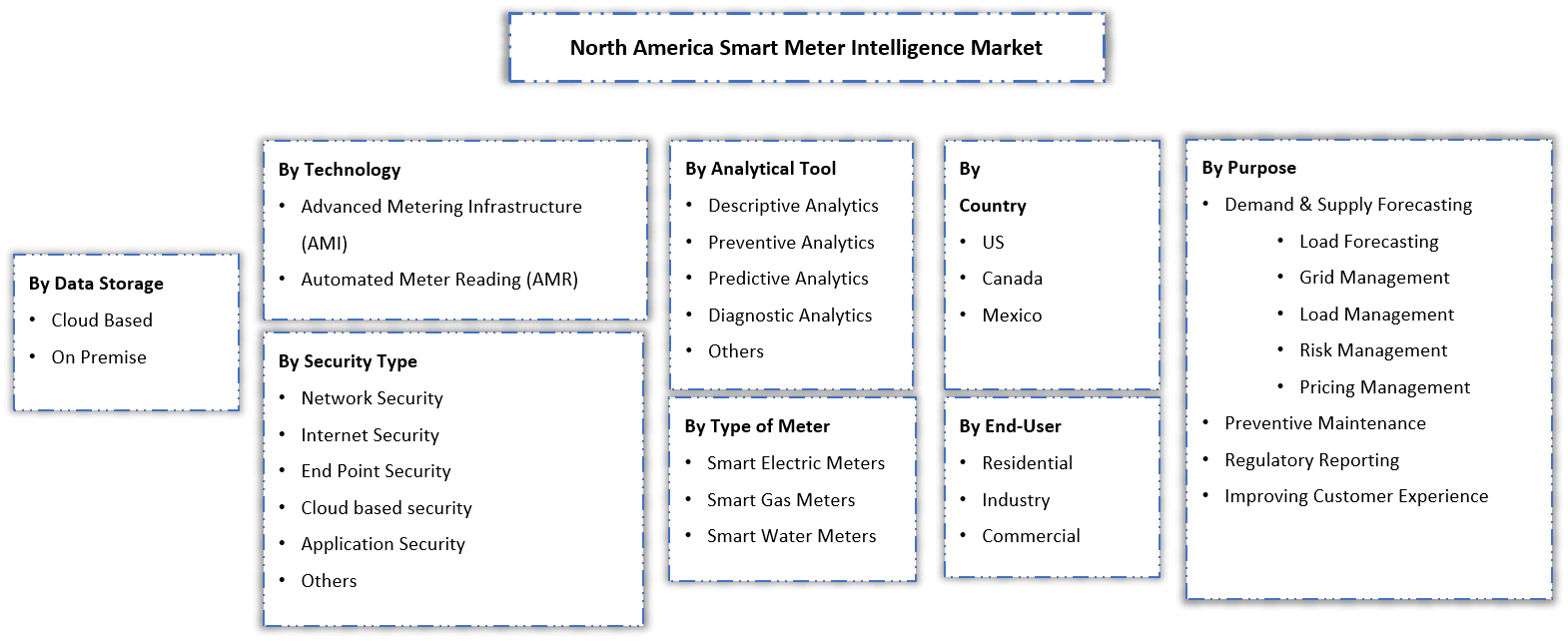
By Type of Meter (Smart Electric Meters, Smart Gas Meters, Smart Water Meters), By Analytical Tool (Descriptive Analytics, Preventive Analytics, Predictive Analytics, Diagnostic An......alytics), By Technology (Advanced Metering Infrastructure (AMI), Automated Meter Reading (AMR)), By Data Storage (Cloud-Based, On-Premise), By Security Type (Network Security, Internet Security, End Point Security, Cloud based security, Application Security), By End User (Residential, Industry, Commercial), By Purpose (Demand & Supply Forecasting, Load Forecasting, Grid Management, Load Management, Risk Management, Pricing Management, Preventive Maintenance, Regulatory Reporting, Improving Customer Experience) Read more
- Energy
- Oct 2021
- 122
- PDF, Excel, PPT
Smart Meters are electronic devices that store data related to energy (electricity, gas, water) consumed by individual consumers and facilitates automatic readings & bill generation. The data recorded by these meters help predict the energy demand.
The North America Smart Meter Intelligence Market is anticipated to grow at around 8.21% CAGR during the forecast period, i.e., 2021-26, says MarkNtel Advisors. With the booming urbanization, increasing residential apartments, commercial buildings, and industrial operations in the region, the market witnessed a steady growth during 2016-2020. This technology has proven to be extremely helpful to numerous utility companies & grid managers.
The burgeoning installations of smart meters are also due to the transparency of energy consumed provided to end-users. It ensures a reduction in wastage of resources. The monitoring and calculation of bills and other such related tasks have been made simpler. The forecasting of potential demand has now been made accurate with the integration of AI in those meters.
Moreover, smart meters in North America have witnessed up to 50% growth in their demand, leaving ample space for growth & investment opportunities in the market over the forecast period. Besides, rising construction projects across the residential, commercial, and industrial sectors is another crucial aspect predicted to drive the market in the coming years, further states the research report, “North America Smart Meter Intelligence Market Analysis, 2021.”
| Report Coverage | Details |
|---|---|
| Study Period | Historical Data: 2016-19 |
| Base Year: 2020 | |
| Forecast Period: 2021-26 | |
| CAGR (2021-2026) | 8.21% |
| Countries Covered | North America: USA, Canada, Mexico |
| Key Companies Profiled | Microsoft, General Electric, IBM, SAS, Itron, Oracle, Innowatts, Cyient, C3 AI, OmniSci, Sagewell, Landis +Gyr, Siemens, Grid4C, OSIsoft |
| Unit Denominations | USD Million/Billion |
Impact of COVID-19 on North America Smart Meter Intelligence Market
Last year, the Covid-19 pandemic negatively impacted the North America Smart Meter Intelligence Market, primarily due to the decline in the meter deployments in residential & commercial areas. Shipments & installations of Smart meters got adversely affected due to the imposition of lockdown.The smart meter rollout witnessed some extent of delays amidst the pandemic.
However, a proper resumption of shipments & installations of smart meters was observed from Q4 2020 onwards, mainly after the upliftment of lockdown & trade restrictions. It owes to various advantages of smart meters to both utilities & customers that their demand is propelling significantly. Hence, the market is expected to gain a rapid pace and generate a steady demand, especially from the industrial sector.
- Introduction
- Product Definition
- Research Process
- Assumptions
- Market Segmentation
- Executive Summary
- Impact of COVID-19 on North America Smart Grid Market
- Expert Verbatim: What our expert says?
- North America Smart Meter Intelligence Market Trends & Insights
- North America Smart Meter Intelligence Market Dynamics
- Growth Drivers
- Challenges
- Impact Analysis
- North America Smart Meter Intelligence Market Hotspot & Opportunities
- North America Smart Meter Intelligence Market Key Strategic Imperatives for Success & Growth
- North America Smart Meter Intelligence Government Regulations and Policy Analysis
- North America Smart Meter Intelligence Market Analysis, 2016-2026F
- Market Size and Analysis
- By Revenue
- Market Share and Analysis
- By Type of Meter
- Smart Electric Meters
- Smart Gas Meters
- Smart Water Meters
- By Analytical Tool
- Descriptive Analytics
- Preventive Analytics
- Predictive Analytics
- Diagnostic Analytics
- Others
- By Technology
- Advanced Metering Infrastructure(AMI)
- Automated Meter Reading (AMR)
- By Data Storage
- Cloud Based
- On Premise
- By Security Type
- Network Security
- Internet Security
- End Point Security
- Cloud based security
- Application Security
- Others
- By End User
- Residential
- Industry
- Commercial
- By Purpose
- Demand & Supply Forecasting
- Load Forecasting
- Grid Management
- Load Management
- Risk Management
- Pricing Management
- Preventive Maintenance
- Regulatory Reporting
- Improving Customer Experience
- Demand & Supply Forecasting
- By Country
- The US
- Canada
- Mexico
- By Company
- Competition Characteristics
- Market Share and Analysis
- By Type of Meter
- Market Size and Analysis
- The United States Smart Meter Intelligence Market Analysis, 2016-2026F
- Market Size and Analysis
- By Revenue
- Market Share and Analysis
- By Type of Meter
- By Analytical Tools
- By Technology
- By Data Storage
- By Security Type
- By End User
- By Purpose
- Market Size and Analysis
- Canada Smart Meter Intelligence Market Analysis, 2016-2026F
- Market Size and Analysis
- By Revenue
- Market Share and Analysis
- By Type of Meter
- By Analytical Tools
- By Technology
- By Data Storage
- By Security Type
- By End User
- By Purpose
- Market Size and Analysis
- Mexico Smart Meter Intelligence Market Analysis, 2016-2026F
- Market Size and Analysis
- By Revenue
- Market Share and Analysis
- By Type of Meter
- By Analytical Tools
- By Technology
- By Data Storage
- By Security Type
- By End User
- By Purpose
- Market Size and Analysis
- Competition Outlook
- Competition Matrix
- Product Portfolio
- Target Markets
- Target End Users
- Manufacturing Units
- Research & Development
- Strategic Alliance
- Strategic Initiatives
- Company Profiles (Business Description, Product Offering, Business Segments, Financials, Strategic Alliances or Partnerships, Future Plans)
- Microsoft
- General Electric
- IBM
- SAS
- Itron
- Oracle
- Innowatts
- Cyient
- C3 AI
- OmniSci
- Sagewell
- Landis +Gyr
- Siemens
- Grid4C
- OSIsoft
- Others
- Competition Matrix
- Disclaimer
MarkNtel Advisors follows a robust and iterative research methodology designed to ensure maximum accuracy and minimize deviation in market estimates and forecasts. Our approach combines both bottom-up and top-down techniques to effectively segment and quantify various aspects of the market. A consistent feature across all our research reports is data triangulation, which examines the market from three distinct perspectives to validate findings. Key components of our research process include:
1. Scope & Research Design At the outset, MarkNtel Advisors define the research objectives and formulate pertinent questions. This phase involves determining the type of research—qualitative or quantitative—and designing a methodology that outlines data collection methods, target demographics, and analytical tools. They also establish timelines and budgets to ensure the research aligns with client goals.
2. Sample Selection and Data Collection In this stage, the firm identifies the target audience and determines the appropriate sample size to ensure representativeness. They employ various sampling methods, such as random or stratified sampling, based on the research objectives. Data collection is carried out using tools like surveys, interviews, and observations, ensuring the gathered data is reliable and relevant.
3. Data Analysis and Validation Once data is collected, MarkNtel Advisors undertake a rigorous analysis process. This includes cleaning the data to remove inconsistencies, employing statistical software for quantitative analysis, and thematic analysis for qualitative data. Validation steps are taken to ensure the accuracy and reliability of the findings, minimizing biases and errors.

4. Data Forecast and FinalizationThe final phase involves forecasting future market trends based on the analyzed data. MarkNtel Advisors utilize predictive modeling and time series analysis to anticipate market behaviors. The insights are then compiled into comprehensive reports, featuring visual aids like charts and graphs, and include strategic recommendations to inform client decision-making
FILL THE FORM TO INQUIRE BEFORE BUYING THIS REPORT
We offer flexible licensing options to cater to varying organizational needs. Choose the pricing pack that best suits your requirements:
Buy Now Talk to our Consultant
 Request Customization