

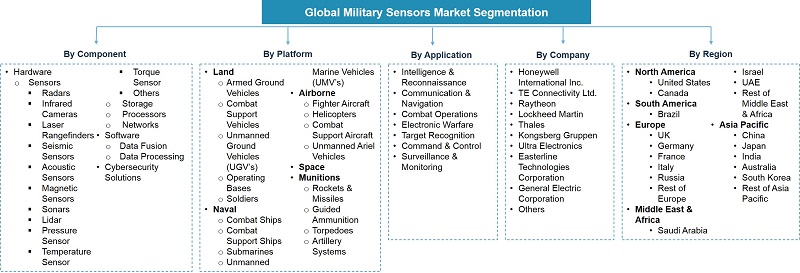
By Application (Intelligence & Reconnaissance, Communication & Navigation, Combat Operations, Electronic Warfare, Target Recognition, Command & Control, Surveillance & Monitoring),...... By Component (Hardware (Sensors (Radars, Infrared Cameras, Laser Rangefinders, Seismic Sensors, Acoustic Sensors, Magnetic Sensors, Sonars, Lidar, Pressure Sensor, Temperature Sensor, Torque Sensor), Storage (Processors, Networks)), Software (Data Fusion, Data Processing), Cybersecurity Solutions), By Platforms (Land (Armed Ground Vehicles, Combat Support Vehicles, Unmanned Ground Vehicles (UGV’s), Operating Bases, Soldiers), Naval (Combat Ships, Combat Support Ships, Submarines, Unmanned Marine Vehicles (UMV’s)), Airborne (Fighter Aircraft, Helicopters, Combat Support Aircraft, Unmanned Ariel Vehicles), Space, Munitions (Rockets & Missiles, Guided Ammunition, Torpedoes, Artillery Systems)), By Region (North America, South America, Europe, Middle East & Africa, Asia-Pacific), By Countries (The US, Canada, Brazil, The UK, France, Russia & CIS, Italy, Germany, Saudi Arabia, UAE, Israel, China, India, Japan, Australia, South Korea), By Competitors (Honeywell International Inc., TE Connectivity Ltd., Raytheon, Lockheed Martin, Thales, Kongsberg Gruppen, Ultra Electronics, Easterline Technologies Corporation, General Electric Corporation, BAE Systems PLC) Read more
- Aerospace & Defense
- Mar 2022
- 222
- PDF, Excel, PPT
Market Definition
Military sensors are prominent electronic devices used in different military systems like armed ground vehicles, combat support vehicles, combat ships, submarines, rockets & missiles, & guided ammunition, among others, for several critical applications, principally for intelligence & reconnaissance, communication & navigation, combat operations, electronic warfare, target recognition, command & control, surveillance & monitoring, etc. The rapidly increasing geopolitical tensions & surging need to strengthen the defense systems of countries worldwide are playing a crucial role in stimulating the procurement of military sensors.
Market Insights
The Global Military Sensors Market is projected to grow at a CAGR of around 5% during the forecast period, i.e., 2022-27. The growth of the market is likely to be driven primarily by massive defense budgets of several countries across different regions worldwide for procuring technologically advanced military systems equipped with sensors integrated with technologies like the Internet of Things & Artificial Intelligence.
| Report Coverage | Details |
|---|---|
| Study Period | Historical Data: 2017-20 |
| Base Year: 2021 | |
| Forecast Period: 2022-27 | |
| CAGR(2022-27) | 5% |
| Regions Covered | North America: US, Canada |
| South America: Brazil | |
| Europe: Germany, Italy, France, UK, Russia | |
| Asia-Pacific: China, India, Japan, Australia, South Korea | |
| Middle East & Africa: Saudi Arabia, Israel, UAE | |
| Key Companies Profiled | Honeywell International Inc., TE Connectivity Ltd., Raytheon, Lockheed Martin, Thales, Kongsberg Gruppen, Ultra Electronics, Easterline Technologies Corporation, General Electric Corporation, BAE Systems PLC |
| Unit Denominations | USD Million/Billion |
Besides, the surging geopolitical tensions globally are instigating governments to procure new & advanced systems and utilize sensors for an extensive range of applications like surveillance & monitoring, gathering & processing real-time data, etc., from remote or difficult to reach locations. It, in turn, is playing a crucial role in stimulating market growth & generating multiple opportunities for the leading players to develop upgraded versions & new capabilities of sensors in the coming years.
Moreover, the active participation of prominent manufacturers entwined with massive government support through substantial investments & research & development activities are other crucial aspects projected to contribute to the overall expansion of the Global Military Sensors Market during the forecast period.
Impact of Covid-19 on the Global Military Sensors Market
The Covid-19 pandemic in 2020 had a decelerating impact on most industries worldwide, and the Global Military Sensors Market was no exception. With the imposition of stringent movement restrictions & frequent lockdowns by the governments of different countries to curb the spread of this dreadful disease, disruptions in the supply chain and hampered transportation & logistics led to the unavailability of raw materials for the production & distribution of military sensors.
Besides, since the governments worldwide were focused on addressing the pandemic situation in their respective countries, defense budgets were either cut short or remained intact and the financial strain got centered on developing cures for the virus. It, in turn, displayed a temporary decline in the sales & demand for military systems & sensors globally, causing massive financial losses for the leading players in the industry. Moreover, the research & development in military sensors further witnessed a downfall amidst the crisis owing to stringent movement restrictions.
- Introduction
- Research Process
- Assumption
- Market Segmentation
- Market Definition
- Executive Summary
- Global Military Sensors Market Policies, Regulations, Application Standards
- Global Military Sensors Market Trends & Insights
- Global Military Sensors Market Dynamics
- Growth Drivers
- Challenges
- Impact Analysis
- Global Military Sensors Market Hotspot and Opportunities
- Global Military Sensors Market Key Strategic Imperatives for Success and Growth
- Global Military Sensors Market Outlook, 2017- 2027
- Market Size and Analysis
- By Revenues
- Market Share and Analysis
- By Application
- Intelligence & Reconnaissance
- Communication & Navigation
- Combat Operations
- Electronic Warfare
- Target Recognition
- Command & Control
- Surveillance & Monitoring
- By Component
- Hardware
- Sensors
- Radars
- Infrared Cameras
- Laser Rangefinders
- Seismic Sensors
- Acoustic Sensors
- Magnetic Sensors
- Sonars
- Lidar
- Pressure Sensor
- Temperature Sensor
- Torque Sensor
- Others
- Storage
- Processors
- Networks
- Sensors
- Software
- Data Fusion
- Data Processing
- Cybersecurity Solutions
- Hardware
- By Platform
- Land
- Armed Ground Vehicles
- Combat Support Vehicles
- Unmanned Ground Vehicles (UGV’s)
- Operating Bases
- Soldiers
- Naval
- Combat Ships
- Combat Support Ships
- Submarines
- Unmanned Marine Vehicles (UMV’s)
- Airborne
- Fighter Aircraft
- Helicopters
- Combat Support Aircraft
- Unmanned Ariel Vehicles
- Space
- Munitions
- Rockets & Missiles
- Guided Ammunition
- Torpedoes
- Artillery Systems
- Land
- By Region
- North America
- South America
- Europe
- Middle East & Africa
- Asia-Pacific
- By Company
- Revenue Shares
- Strategic Factorial Indexing
- Competitor Placement in MarkNtel Quadrant
- By Application
- Market Size and Analysis
- North America Military Sensors Market Outlook, 2017- 2027
- Market Size and Analysis
- By Revenues
- Market Share and Analysis
- By Application
- By Component
- By Platform
- By Country
- US
- Canada
- The US Military Sensors Market Outlook, 2017- 2027
- Market Size and Analysis
- By Revenues
- Market Share and Analysis
- By Application
- By Component
- By Platform
- Market Size and Analysis
- Canada Military Sensors Market Outlook, 2017- 2027
- Market Size and Analysis
- By Revenues
- Market Share and Analysis
- By Application
- By Component
- By Platform
- Market Size and Analysis
- Market Size and Analysis
- South America Military Sensors Market Outlook, 2017- 2027
- Market Size and Analysis
- By Revenues
- Market Share and Analysis
- By Application
- By Component
- By Platform
- By Country
- Brazil
- Brazil Military Sensors Market Outlook, 2017- 2027
- Market Size and Analysis
- By Revenues
- Market Share and Analysis
- By Application
- By Component
- By Platform
- Market Size and Analysis
- Market Size and Analysis
- Europe Military Sensors Market Outlook, 2017- 2027
- Market Size and Analysis
- By Revenues
- Market Share and Analysis
- By Application
- By Component
- By Platform
- By Country
- Germany
- Italy
- France
- UK
- Russia
- Germany Military Sensors Market Outlook, 2017- 2027
- Market Size and Analysis
- By Revenues
- Market Share and Analysis
- By Application
- By Component
- By Platform
- Market Size and Analysis
- Italy Military Sensors Market Outlook, 2017- 2027
- Market Size and Analysis
- By Revenues
- Market Share and Analysis
- By Application
- By Component
- By Platform
- Market Size and Analysis
- France Military Sensors Market Outlook, 2017- 2027
- Market Size and Analysis
- By Revenues
- Market Share and Analysis
- By Application
- By Component
- By Platform
- Market Size and Analysis
- UK Military Sensors Market Outlook, 2017- 2027
- Market Size and Analysis
- By Revenues
- Market Share and Analysis
- By Application
- By Component
- By Platform
- Market Size and Analysis
- Russia Military Sensors Market Outlook, 2017- 2027
- Market Size and Analysis
- By Revenues
- Market Share and Analysis
- By Application
- By Component
- By Platform
- Market Size and Analysis
- Market Size and Analysis
- Middle East & Africa Military Sensors Market Outlook, 2017- 2027
- Market Size and Analysis
- By Revenues
- Market Share and Analysis
- By Application
- By Component
- By Component
- By Platform
- By Dimension
- By Range
- By Frequency Band
- By Country
- Saudi Arabia
- Israel
- UAE
- Saudi Arabia Military Sensors Market Outlook, 2017- 2027
- Market Size and Analysis
- By Revenues
- Market Share and Analysis
- By Application
- By Component
- By Platform
- Market Size and Analysis
- Israel Military Sensors Market Outlook, 2017- 2027
- Market Size and Analysis
- By Revenues
- Market Share and Analysis
- By Application
- By Component
- By Platform
- Market Size and Analysis
- UAE Military Sensors Market Outlook, 2017- 2027
- Market Size and Analysis
- By Revenues
- Market Share and Analysis
- By Application
- By Component
- By Platform
- Market Size and Analysis
- Market Size and Analysis
- Asia-Pacific Military Sensors Market Outlook, 2017- 2027
- Market Size and Analysis
- By Revenues
- Market Share and Analysis
- By Application
- By Component
- By Platform
- By Country
- China
- India
- Japan
- Australia
- South Korea
- China Military Sensors Market Outlook, 2017- 2027
- Market Size and Analysis
- By Revenues
- Market Share and Analysis
- By Application
- By Component
- By Platform
- Market Size and Analysis
- India Military Sensors Market Outlook, 2017- 2027
- Market Size and Analysis
- By Revenues
- Market Share and Analysis
- By Application
- By Component
- By Platform
- Market Size and Analysis
- Japan Military Sensors Market Outlook, 2017- 2027
- Market Size and Analysis
- By Revenues
- Market Share and Analysis
- By Application
- By Component
- By Platform
- Market Size and Analysis
- Australia Military Sensors Market Outlook, 2017- 2027
- Market Size and Analysis
- By Revenues
- Market Share and Analysis
- By Application
- By Component
- By Platform
- Market Size and Analysis
- South Korea Military Sensors Market Outlook, 2017- 2027
- Market Size and Analysis
- By Revenues
- Market Share and Analysis
- By Application
- By Component
- By Platform
- Market Size and Analysis
- Market Size and Analysis
- Competitive Outlook
- Competition Matrix
- Application Portfolio
- Brand Specialization
- Target Markets
- Target Applications
- Research & Development
- Strategic Alliances
- Strategic Initiatives
- Company Profiles (Business Description, Application Segments, Business Segments, Financials, Strategic Alliances/ Partnerships, Future Plans)
- Honeywell International Inc.
- TE Connectivity Ltd.
- Raytheon
- Lockheed Martin
- Thales
- Kongsberg Gruppen
- Ultra Electronics
- Easterline Technologies Corporation
- General Electric Corporation
- BAE Systems PLC
- Competition Matrix
- Disclaimer
MarkNtel Advisors follows a robust and iterative research methodology designed to ensure maximum accuracy and minimize deviation in market estimates and forecasts. Our approach combines both bottom-up and top-down techniques to effectively segment and quantify various aspects of the market. A consistent feature across all our research reports is data triangulation, which examines the market from three distinct perspectives to validate findings. Key components of our research process include:
1. Scope & Research Design At the outset, MarkNtel Advisors define the research objectives and formulate pertinent questions. This phase involves determining the type of research—qualitative or quantitative—and designing a methodology that outlines data collection methods, target demographics, and analytical tools. They also establish timelines and budgets to ensure the research aligns with client goals.
2. Sample Selection and Data Collection In this stage, the firm identifies the target audience and determines the appropriate sample size to ensure representativeness. They employ various sampling methods, such as random or stratified sampling, based on the research objectives. Data collection is carried out using tools like surveys, interviews, and observations, ensuring the gathered data is reliable and relevant.
3. Data Analysis and Validation Once data is collected, MarkNtel Advisors undertake a rigorous analysis process. This includes cleaning the data to remove inconsistencies, employing statistical software for quantitative analysis, and thematic analysis for qualitative data. Validation steps are taken to ensure the accuracy and reliability of the findings, minimizing biases and errors.

4. Data Forecast and FinalizationThe final phase involves forecasting future market trends based on the analyzed data. MarkNtel Advisors utilize predictive modeling and time series analysis to anticipate market behaviors. The insights are then compiled into comprehensive reports, featuring visual aids like charts and graphs, and include strategic recommendations to inform client decision-making
FILL THE FORM TO INQUIRE BEFORE BUYING THIS REPORT
We offer flexible licensing options to cater to varying organizational needs. Choose the pricing pack that best suits your requirements:
Buy Now Talk to our Consultant
 Request Customization