

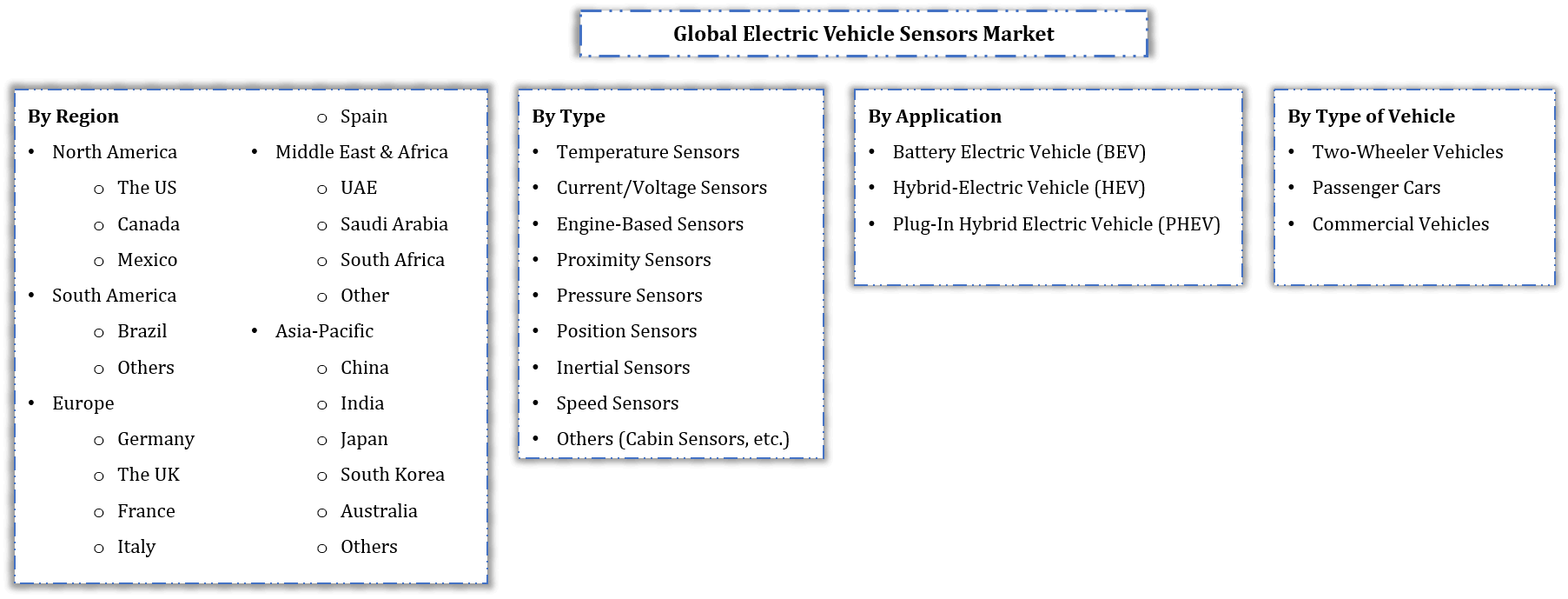
By Type (Temperature Sensors, Current/Voltage Sensors, Engine-Based Sensors, Proximity Sensors, Pressure Sensors, Position Sensors, Inertial Sensors, Speed Sensors, Others (Cabin S......ensors, etc.)), By Application (Battery Electric Vehicle (BEV), Hybrid-Electric Vehicle (HEV), Plug-In Hybrid Electric Vehicle (PHEV)), By Vehicle Type (Two-Wheeler Vehicles, Passenger Cars, Commercial Vehicles), By Region (North America, South America, Europe, Asia-Pacific, Middle East & Africa), By Country (U.S, Canada, Brazil, Mexico, Germany, France, The U.K, Spain, Italy, China, India, Japan, Australia, South Korea, UAE, Saudi Arabia, South Africa), By Competitors (Denso, Infineon Technologies AG, NXP Semiconductors, Texas Instruments Incorporated, LEM, Kohshin Electric Corporation, Vishay Intertechnology, Inc, Allegro MicroSystems, Amphenol Advanced Sensors, Ams AG, Analog Devices, Melexis, Sensata Technologies, STMicroelectronics) Read more
- Automotive
- Jun 2021
- 243
- PDF, Excel, PPT
Market Overview
Sensors are an integral part of an electric vehicle, which ensures their safety and reliability. It helps in monitoring the load, displacement, and temperature of batteries. Also, it is designed to detect, transmit, analyze, record, and display overall vehicle performance.
According to the MarkNtel Advisors' research report, "Global Electric Vehicle Sensors Market Analysis, 2021," the market is likely to grow at a CAGR of around 12% during 2021-26, primarily due to the rising demand for integrating advanced technologies into electric vehicles for monitoring temperature, current, pressure changes, etc.
Further, surging demand for premium vehicles also fuels the usage of sensors in electric vehicles. Mounting government initiatives toward promoting the development of various safety features and the rising number of electronic components in electric vehicles are crucial factors fueling the growth of the Global Electric Vehicle Sensors market across the world.
| Report Coverage | Details |
|---|---|
| Study Period | Historical Data: 2016-19 |
| Base Year: 2020 | |
| Forecast Period: 2021-26 | |
| CAGR | 12% |
| Regions Covered | North America: USA, Canada, Mexico |
| Europe: Germany, UK, France, Italy, Spain | |
| Asia-Pacific: China, India, Japan, South Korea, Australia | |
| South America: Brazil | |
| Europe: UAE, Saudi Arabia, South Africa | |
| Key Companies Profiled | Denso, Infineon Technologies AG, NXP Semiconductors, Texas Instruments Incorporated, LEM, Kohshin Electric Corporation, Vishay Intertechnology, Inc, Allegro MicroSystems, Amphenol Advanced Sensors, Ams AG, Analog Devices, Melexis, Sensata Technologies, STMicroelectronics |
| Unit Denominations | USD Million/Billion |
Impact of COVID-19
The sudden outbreak of the COVID-19 pandemic has adversely affected the global market for Electric Vehicle Sensors due to the lockdown imposed and trading restrictions that have disrupted the supply chain and affected the export of Chinese parts.
Further, the temporary shutdown of large-scale manufacturing units and the closure of assembly plants throughout the world has negatively affected the production of electric vehicle sensors. The imposition of lockdown and stringent rules laid by the government is not beneficial for the overall growth of the automotive industry.
However, as the government has started relaxing norms for resuming business activities, the Electric Vehicle Sensors market is reviving and shall grow substantially in the coming future.
Market Segmentation
Temperature Sensors Accounted for the Largest Market Share
Based on the Type, the market bifurcates into Temperature, Current/Voltage, Engine-Based, Proximity, Pressure, Position, Inertial, and Speed Sensors. Among these segments, Temperature Sensors acquired the largest share in the Global Electric Vehicle Sensors Market in the previous few years due to the rising need for thermal-management solutions to ensure the continuous operation of critical parts and safety of a vehicle.
Each part of an electric vehicle requires temperature monitoring. Continuous temperature monitoring and accurate information regarding variation in temperature recorded at different times & locations are beneficial for the vehicle processor to temperature-compensate the system. It leads the vehicle to optimize its performance and maximize reliability. Therefore, the demand for the temperature sensor segment is substantially high cites, MarkNtel Advisors in their research report, "Global Electric Vehicle Sensors Market Analysis, 2021."
- Introduction
- Product Definition
- Research Process
- Assumptions
- Market Segmentation
- Preface
- Executive Summary
- Impact of COVID-19 on Global Electric Vehicle Sensors Market
- Global Electric Vehicle Sensors Market Value Chain Analysis
- Global Electric Vehicle Market Supply & Demand Analysis
- Impact of IOT & AI on Global Electric Vehicle Sensors Market
- Export & Import Analysis on Global Electric Vehicle Sensors Market
- Global Electric Vehicle Sensors Market of Electric Vehicles Government Regulations and Policies
- Global Electric Vehicle Sensors Market Trends & Insights
- Global Electric Vehicle Sensors Market Dynamics
- Growth Drivers
- Challenges
- Impact Analysis
- Global Electric Vehicle Sensors Market Hotspot & Opportunities
- Global Electric Vehicle Sensors Market Key Strategic Imperatives for Success & Growth
- Global Electric Vehicle Sensors Market Outlook, 2016-2026F
- Market Size & Analysis
- Market Revenues
- Unit Sold
- Market Share & Analysis
- By Type
- Temperature Sensors
- Current/Voltage Sensors
- Engine-Based Sensors
- Proximity Sensors
- Pressure Sensors
- Position Sensors
- Inertial Sensors
- Speed Sensors
- Others (Cabin Sensors, etc.)
- By Application
- Battery Electric Vehicle (BEV)
- Hybrid-Electric Vehicle (HEV)
- Plug-In Hybrid Electric Vehicle (PHEV)
- By Vehicle Type
- Two-Wheeler Vehicles
- Passenger Cars
- Commercial Vehicles
- By Region
- North America
- South America
- Europe
- Middle East & Africa
- Asia-Pacific
- By Competitors
- Competition Characteristics
- Market Share & Analysis
- Competitive Metrix
- By Type
- Market Size & Analysis
- North America Electric Vehicle Sensors Market Outlook, 2016-2026F
- Market Size & Analysis
- Market Revenues
- Unit Sold
- Market Share & Analysis
- By Type
- By Application
- By Vehicle Type
- By Country
- The US
- Canada
- Mexico
- The US Electric Vehicle Sensors Market Outlook, 2016-2026F
- Market Size & Analysis
- Market Revenues
- Unit Sold
- Market Share & Analysis
- By Application
- By Vehicle Type
- Market Size & Analysis
- Canada Electric Vehicle Sensors Market Outlook, 2016-2026F
- Market Size & Analysis
- Market Revenues
- Unit Sold
- Market Share & Analysis
- By Application
- By Vehicle Type
- Market Size & Analysis
- Mexico Electric Vehicle Sensors Market Outlook, 2016-2026F
- Market Size & Analysis
- Market Revenues
- Unit Sold
- Market Share & Analysis
- By Application
- By Vehicle Type
- Market Size & Analysis
- Market Size & Analysis
- South America Electric Vehicle Sensors Market Outlook, 2016-2026F
- Market Size & Analysis
- Market Revenues
- Unit Sold
- Market Share & Analysis
- By Type
- By Application
- By Vehicle Type
- By Country
- Brazil
- Others
- By Type
- Brazil Electric Vehicle Sensors Market Outlook, 2016-2026F
- Market Size & Analysis
- Market Revenues
- Unit Sold
- Market Share & Analysis
- By Application
- By Vehicle Type
- Market Size & Analysis
- Market Size & Analysis
- Europe Electric Vehicle Sensors Market Outlook, 2016-2026F
- Market Size & Analysis
- Market Revenues
- Unit Sold
- Market Share & Analysis
- By Type
- By Application
- By Vehicle Type
- By Country
- Germany
- The UK
- France
- Italy
- Spain
- Others
- Germany Electric Vehicle Sensors Market Outlook, 2016-2026F
- Market Size & Analysis
- Market Revenues
- Unit Sold
- Market Share & Analysis
- By Application
- By Vehicle Type
- Market Size & Analysis
- The UK Electric Vehicle Sensors Market Outlook, 2016-2026F
- Market Size & Analysis
- Market Revenues
- Unit Sold
- Market Share & Analysis
- By Application
- By Vehicle Type
- Market Size & Analysis
- France Electric Vehicle Sensors Market Outlook, 2016-2026F
- Market Size & Analysis
- Market Revenues
- Unit Sold
- Market Share & Analysis
- By Application
- By Vehicle Type
- Market Size & Analysis
- Italy Electric Vehicle Sensors Market Outlook, 2016-2026F
- Market Size & Analysis
- Market Revenues
- Unit Sold
- Market Share & Analysis
- By Application
- By Vehicle Type
- Market Size & Analysis
- Spain Electric Vehicle Sensors Market Outlook, 2016-2026F
- Market Size & Analysis
- Market Revenues
- Unit Sold
- Market Share & Analysis
- By Application
- By Vehicle Type
- Market Size & Analysis
- Market Size & Analysis
- Middle East & Africa Electric Vehicle Sensors Market Outlook, 2016-2026F
- Market Size & Analysis
- Market Revenues
- Unit Sold
- Market Share & Analysis
- By Type
- By Application
- By Vehicle Type
- By Country
- UAE
- Saudi Arabia
- South Africa
- Others
- UAE Electric Vehicle Sensors Market Outlook, 2016-2026F
- Market Size & Analysis
- Market Revenues
- Unit Sold
- Market Share & Analysis
- By Application
- By Vehicle Type
- Market Size & Analysis
- Saudi Arabia Electric Vehicle Sensors Market Outlook, 2016-2026F
- Market Size & Analysis
- Market Revenues
- Unit Sold
- Market Share & Analysis
- By Application
- By Vehicle Type
- Market Size & Analysis
- South Africa Electric Vehicle Sensors Market Outlook, 2016-2026F
- Market Size & Analysis
- Market Revenues
- Unit Sold
- Market Share & Analysis
- By Application
- By Vehicle Type
- Market Size & Analysis
- Market Size & Analysis
- Asia-Pacific Electric Vehicle Sensors Market Outlook, 2016-2026F
- Market Size & Analysis
- Market Revenues
- Unit Sold
- Market Share & Analysis
- By Type
- By Application
- By Vehicle Type
- By Country
- China
- India
- Japan
- South Korea
- Australia
- Others
- China Electric Vehicle Sensors Market Outlook, 2016-2026F
- Market Size & Analysis
- Market Revenues
- Unit Sold
- Market Share & Analysis
- By Application
- By Vehicle Type
- Market Size & Analysis
- India Electric Vehicle Sensors Market Outlook, 2016-2026F
- Market Size & Analysis
- Market Revenues
- Unit Sold
- Market Share & Analysis
- By Application
- By Vehicle Type
- Market Size & Analysis
- Japan Electric Vehicle Sensors Market Outlook, 2016-2026F
- Market Size & Analysis
- Market Revenues
- Unit Sold
- Market Share & Analysis
- By Application
- By Vehicle Type
- Market Size & Analysis
- South Korea Electric Vehicle Sensors Market Outlook, 2016-2026F
- Market Size & Analysis
- Market Revenues
- Unit Sold
- Market Share & Analysis
- By Application
- By Vehicle Type
- Market Size & Analysis
- Australia Electric Vehicle Sensors Market Outlook, 2016-2026F
- Market Size & Analysis
- Market Revenues
- Unit Sold
- Market Share & Analysis
- By Application
- By Vehicle Type
- Market Size & Analysis
- Market Size & Analysis
- Competition Outlook
- Competition Matrix
- Target Markets
- Research & Development
- Collaborations & Strategic Alliances
- Key Business Expansion Initiatives
- Business Restructuring- Mergers, Acquisitions, JVs
- Strategic Initiatives
- Company Profiles (Business Description, Product Segments, Business Segments, Financials, Strategic Alliances/ Partnerships, Future Plans
- Denso
- Infineon Technologies AG
- NXP Semiconductors
- Texas Instruments Incorporated
- LEM
- Kohshin Electric Corporation
- Vishay Intertechnology, Inc
- Allegro MicroSystems
- Amphenol Advanced Sensors
- Ams AG
- Analog Devices
- Melexis
- Sensata Technologies
- STMicroelectronics
- Competition Matrix
- Disclaimer
MarkNtel Advisors follows a robust and iterative research methodology designed to ensure maximum accuracy and minimize deviation in market estimates and forecasts. Our approach combines both bottom-up and top-down techniques to effectively segment and quantify various aspects of the market. A consistent feature across all our research reports is data triangulation, which examines the market from three distinct perspectives to validate findings. Key components of our research process include:
1. Scope & Research Design At the outset, MarkNtel Advisors define the research objectives and formulate pertinent questions. This phase involves determining the type of research—qualitative or quantitative—and designing a methodology that outlines data collection methods, target demographics, and analytical tools. They also establish timelines and budgets to ensure the research aligns with client goals.
2. Sample Selection and Data Collection In this stage, the firm identifies the target audience and determines the appropriate sample size to ensure representativeness. They employ various sampling methods, such as random or stratified sampling, based on the research objectives. Data collection is carried out using tools like surveys, interviews, and observations, ensuring the gathered data is reliable and relevant.
3. Data Analysis and Validation Once data is collected, MarkNtel Advisors undertake a rigorous analysis process. This includes cleaning the data to remove inconsistencies, employing statistical software for quantitative analysis, and thematic analysis for qualitative data. Validation steps are taken to ensure the accuracy and reliability of the findings, minimizing biases and errors.

4. Data Forecast and FinalizationThe final phase involves forecasting future market trends based on the analyzed data. MarkNtel Advisors utilize predictive modeling and time series analysis to anticipate market behaviors. The insights are then compiled into comprehensive reports, featuring visual aids like charts and graphs, and include strategic recommendations to inform client decision-making
FILL THE FORM TO INQUIRE BEFORE BUYING THIS REPORT
We offer flexible licensing options to cater to varying organizational needs. Choose the pricing pack that best suits your requirements:
Buy Now Talk to our Consultant
 Request Customization