

By Application (Diesel and Gasoil, Gasoline, Aviation Turbine Fuel, Marine and Bunker Fuels, Other Fuels), By Type (Deposit Control Additives and Detergents, Cetane Improvers, Lubr......icity Improvers, Stability Improvers and Antioxidants, Octane Improvers and Antiknock Additives, Corrosion Inhibitors, Cold-Flow Improvers, Handling, Safety and Quality Additives, Dyes, Markers and Other Fuel Additives), By End User (Automotive, Aviation, Marine, Power Generation, Industrial, Agriculture & Off-Highway, Others), and others Read more
- Chemicals
- Aug 2026
- 270
- PDF, Excel, PPT
GCC Fuel Additives Market Key Takeaways
- The market is expected to rise from USD 208 million in 2025 to USD 219 million in 2026, and further projected to reach USD 300 million by 2032, representing a 5.40% CAGR during 2026-32.
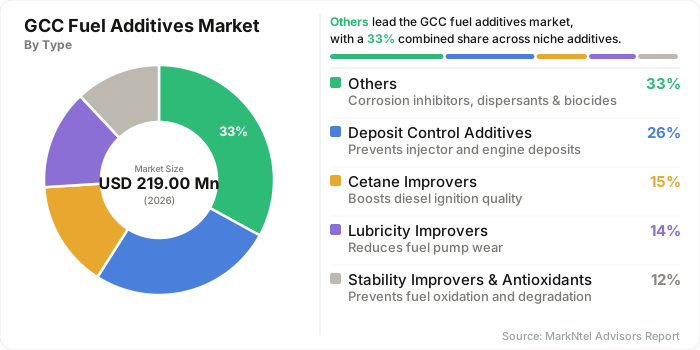
- Deposit control additives and detergents represent the leading additive function, accounting for an estimated 26% market share in 2026.
- Diesel and gasoil lead by treated fuel/application, accounting for an estimated 46% market share in 2026.
- Saudi Arabia is the leading regional market, with an estimated 46% market share in 2026.
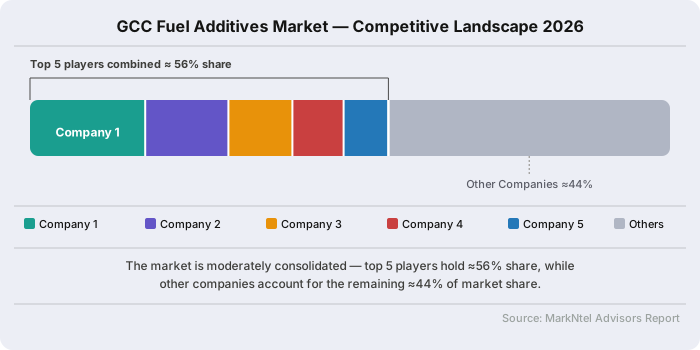
- The market is moderately concentrated, with the top five companies collectively accounting for an estimated 56% market share.
GCC Fuel Additives Market Size and Outlook
The fuel additives market in GCC was valued at an estimated USD 208 million in 2025 and is expected to reach approximately USD 219 million in 2026. It is projected to attain nearly USD 300 million by 2032, representing a CAGR of around 5.40% during 2026–2032.
Market growth is supported by the GCC’s large, increasingly export-oriented refining base and the recurring treatment requirements associated with various fuels. Country figures reported in the OAPEC 2025 Annual Statistical Report, combined with Oman’s reported refining capacity, indicate aggregate GCC capacity of approximately 7.3 million barrels per day. This creates a substantial addressable fuel pool for deposit-control additives, cetane and lubricity improvers, antioxidants, corrosion inhibitors and handling treatments.
Recent utilization gains are strengthening this base. In February 2025, OQ8 reported that Duqm Refinery had raised output from its 230,000-barrel-per-day nameplate capacity to 255,000 barrels per day. Higher refinery runs increase volumes requiring treatment before storage, terminal blending or export, while sales into multiple destination markets elevate demand for specification-compatible formulations.
Through 2032, diesel and gasoil should remain the principal treated-fuel base because of their use in road freight, construction, industry, power generation and refined-product exports, while gasoline should sustain demand for detergent and octane-performance packages. Market growth is expected to exceed underlying fuel-volume expansion as suppliers introduce multifunctional packages and formulations compatible with lower-sulfur and renewable-component-containing fuels. However, lengthy qualification cycles, dependence on imported proprietary chemistries, refinery outages, shipping disruptions and gradual transport electrification could moderate expansion. Companies combining approved formulations with regional inventory, dosing support and refinery-level technical service should capture the most durable opportunities.
GCC Fuel Additives Market Key Indicators
- Saudi Arabia’s domestic consumption reached 224.1 million barrels of gasoil/diesel and 188.2 million barrels of gasoline in 2024, according to The General Authority for Statistics (GASTAT). The combined 412.3-million-barrel fuel pool supports recurring demand for lubricity, cetane, detergent, corrosion-control and stability additives across road transport, industrial use and distribution.
- The UAE Ministry of Interior recorded 801,857 vehicle registrations in 2024, including 698,699 light vehicles. This registration activity indicates a large replenishing combustion-engine base, supporting fuel throughput alongside retail and workshop demand for injector cleaners, deposit-control treatments and multifunctional aftermarket additives.
- Saudi airports handled 140.9 million passengers and approximately 980,400 flights in 2025, increasing 9.6% and 8.3%, respectively, according to Air Transport Statistics Publication 2025 released by GASTAT. Higher aircraft movements directly expand aviation-turbine-fuel throughput and requirements for approved conductivity improvers, anti-icing agents, corrosion inhibitors and stability treatments.
- Fujairah Oil Industry Zone data showed bunker sales reached approximately 3.70 million cubic meters in the first half of 2025; low-sulfur fuel represented 65% and high-sulfur fuel 28% in June. This scale and grade mix sustain demand for marine stability, combustion, compatibility, corrosion and handling additives.
- Qatar’s Ministry of Transport expected electric buses to reach 74% of the public fleet, or 787 vehicles, by mid-2025 and targets complete electrification of public and school buses by 2030. The transition illustrates a gradual constraint on diesel-additive demand in selected public-transport applications.
GCC Fuel Additives Market Supply Chain Analysis
Approval-Intensive Procurement Elevates Regional Inventory and Technical Support
Fuel-additive procurement in the GCC differs from bulk chemical purchasing because refiners, terminals and fuel marketers must verify performance, compatibility and safe dosing before commercial use. Requirements become stricter when diesel and aviation fuels are exported to markets with different specifications. Typical diesel-additive qualifications include EI 1535, multi-product-pipeline testing and DGMK no-harm assessment, while jet-fuel additives may require Def Stan 91-091 approval. Qualification consequently favors established formulations and lengthens supplier-switching cycles. It also elevates inventory availability, as an unavailable or unapproved additive can delay blending or restrict a fuel batch’s destination flexibility.
Supplier localization increasingly combines global formulation technology with regional manufacturing, storage and field support. Nalco Water reported more than 100 approved fuel additives and over 500 sales and service personnel across the Middle East, supported by manufacturing facilities in Saudi Arabia, a UAE headquarters and operations in Kuwait, Oman, Qatar and Bahrain. Its model combines additive selection with dosing equipment, on-site application and technical assistance. This illustrates why GCC competition extends beyond chemical price: suppliers must shorten replenishment times, support trials and maintain approval-compliant supply across several countries. Through 2032, companies offering local stockholding, qualified alternative formulations and refinery-level application support should gain procurement resilience and stronger customer relationships.
GCC Fuel Additives Market Scope
| Category | Segments |
|---|---|
| By Application | Diesel and Gasoil, Gasoline, Aviation Turbine Fuel, Marine and Bunker Fuels, Other Fuels |
| By Type | Deposit Control Additives and Detergents, Cetane Improvers, Lubricity Improvers, Stability Improvers and Antioxidants, Octane Improvers and Antiknock Additives, Corrosion Inhibitors, Cold-Flow Improvers, Handling, Safety and Quality Additives, Dyes, Markers and Other Fuel Additives |
| By End User | Automotive, Aviation, Marine, Power Generation, Industrial, Agriculture & Off-Highway, Others |
GCC Fuel Additives Market Growth Drivers
Expansion of Low-Sulfur, Export-Grade Fuel Production Increases Treatment Demand
Producing lower-sulfur, export-grade fuels increases additive requirements even where underlying refinery volumes grow moderately. Deep desulfurization can reduce naturally occurring polar compounds that support diesel lubricity, creating demand for lubricity improvers, while longer pipeline, storage and export journeys raise requirements for stability, corrosion-control, conductivity and handling additives. Kuwait’s Al-Zour Refinery processes 615,000 barrels daily and uses a desulfurization system with a 99.9% recovery rate to produce ultra-low-sulfur diesel meeting European standards. Its exports of low-sulfur diesel, premium jet fuel and other products illustrate how destination specifications convert refining output into recurring demand for approved treatment packages.
Further GCC capacity modernization is widening this addressable fuel pool. In December 2025, Bapco Energies reported that production at its modernized Bahrain refinery had increased from 265,000 to 380,000 barrels per day, while capacity reached 405,000 barrels per day. The project also increased Bahrain’s export capacity for high-value petroleum products by up to 40%. Greater production of diesel, kerosene and other distillates expands the volume requiring treatment before storage or shipment. Consequently, suppliers offering multifunctional packages that restore lubricity, preserve fuel quality and satisfy export-market approvals should benefit as modernized GCC refineries operate at higher rates through 2032.
Recent Trends
Bio-Component Fuels Are Broadening Fuel-Quality and Compatibility Requirements
GCC fuel suppliers are beginning to handle renewable-component blends alongside conventional marine and aviation fuels, adding a quality-management layer for the additives market. FAME-containing marine fuels can absorb water, oxidize during storage and support microbial growth, while their solvency can mobilize tank deposits. CIMAC’s guidance accompanying ISO 8217:2024 consequently emphasizes fuel-specific handling and compatibility assessment. For additive companies, this favors targeted use of antioxidants, stabilizers, corrosion inhibitors, demulsifiers and, where permitted, biocides, supported by testing that confirms the package does not compromise engine, seal or filtration-system compatibility.
The shift is visible at a GCC bunkering hub. In March 2025, Vopak Horizon Fujairah completed its first UAE bio-bunker supply, delivering ISCC-certified B24 comprising 24% FAME blended with very-low-sulfur fuel oil. The event signals movement from trials toward commercial terminal handling, although volumes remain small relative to conventional bunker fuels. As bio-blend availability expands, terminals and marketers will need tighter control of feedstock variability, blend stability, water contamination and storage duration. This should shift competition from standard treat-rate products toward application-specific packages, technical documentation and on-site dosing support. The near-term opportunity is therefore likely to be higher-value formulation and service intensity rather than a rapid increase in additive tonnage.
GCC Fuel Additives Market Opportunities and Challenges
Vehicle Electrification Constrains Road-Fuel Volume Growth While Driving Higher-Value Fuel Differentiation
Vehicle electrification is beginning to constrain long-term volume upside for gasoline- and diesel-focused additives. Dubai had more than 39,000 EVs at end-Q1 2025, while Green Charger usage rose 23.6% year-on-year. Although fleet turnover and commercial diesel use will prevent rapid displacement, each kilometer shifted to electricity removes fuel throughput that could otherwise receive detergents, cetane or octane improvers, lubricity agents, or corrosion inhibitors. For suppliers concentrated on road fuels, growth can no longer depend only on vehicle numbers or pump volumes; it must increasingly come from greater treatment value per liter and exposure to non-road applications.
The response is closer collaboration with fuel marketers and infrastructure operators to formulate differentiated packages around operational and brand requirements. In May 2025, Aramco disclosed MoUs with Afton Chemical covering the development and supply of chemical fuel additives for pipelines and retail fuel offerings. This creates monetizable scope for multifunctional detergent, corrosion-control, conductivity, lubricity and performance packages, alongside field testing, dosage optimization and technical support. Suppliers demonstrating cleaner injectors, safe pipeline movement, consistent terminal handling or premium-fuel performance can capture higher unit value even when road-fuel volume growth moderates. The opportunity therefore lies in shifting from single-function supply toward co-developed programs embedded in customer operations and branded-fuel strategies.
Segmentation Insights
Deposit Control Additives and Detergents Lead Through Broad Fuel Applicability, Accounting for an Estimated 26% Market Share in 2026
Deposit control additives and detergents lead because they address a recurring requirement across gasoline and diesel rather than one specification parameter. Injector and intake-valve deposits can impair combustion, acceleration and engine response, making cleanliness packages relevant to passenger vehicles, fleets and branded fuels. Unlike cold-flow improvers, whose GCC use is limited by the warm climate, detergents have year-round applicability. They are also combined with corrosion inhibitors, friction modifiers or demulsifiers, increasing the value of multifunctional packages compared with stand-alone treatments.
The scale and expansion of the conventional vehicle base reinforce this position. Saudi Arabia had more than 15.8 million registered and roadworthy vehicles at the end of 2024, an increase of 6.9% from 2023, while new registrations exceeded one million. This creates a wide installed base exposed to stop-start driving, sustained heat, variable maintenance and fuel-system deposit formation. Demand is therefore supported by compliance requirements and marketers’ ability to differentiate premium grades around engine cleanliness and performance. Suppliers combining proven detergency with low treat rates and compatibility across fuel grades should retain the strongest position through 2032. Based on type, the market is segmented into:
- Deposit Control Additives and Detergents
- Cetane Improvers
- Lubricity Improvers
- Stability Improvers and Antioxidants
- Octane Improvers and Antiknock Additives
- Corrosion Inhibitors
- Cold-Flow Improvers
- Handling, Safety and Quality Additives
- Dyes, Markers and Other Fuel Additives
Diesel and Gasoil Dominate Treated Fuels Through Heavy-Duty and Industrial Consumption, Accounting for an approx. 46% Market Share in 2026
Diesel and gasoil represent the largest treated-fuel category in GCC fuel additives industry because GCC demand extends beyond passenger mobility into freight transport, construction equipment, ports, oilfield operations, agriculture and standby power generation. These applications consume substantial volumes and operate under high loads, elevating the cost of injector fouling, filter blockage, corrosion, poor ignition quality and downtime. Low-sulfur diesel can require lubricity restoration, while distribution through terminals, pipelines and bulk tanks supports demand for conductivity improvers, stabilizers, demulsifiers and corrosion inhibitors. The segment consequently draws on more additive functions than gasoline, aviation turbine fuel or marine fuel alone.
Saudi Arabia’s regulated transport activity illustrates this demand base. The Transport General Authority reported issuing 1.2 million vehicle operating cards during 2025, alongside continued expansion in logistics activity. Heavy utilization and long operating hours make commercial users more sensitive to fuel economy, maintenance intervals and equipment reliability than motorists. Suppliers can therefore capture recurring revenue through multifunctional packages tailored to fleet, off-road and bulk-fuel requirements. Gasoline remains the second-largest category, but diesel’s broader end-use coverage and higher treatment intensity should preserve its lead through 2032. Based on application, the market is segmented into:
- Diesel and Gasoil
- Gasoline
- Aviation Turbine Fuel
- Marine and Bunker Fuels
- Other Fuels
GCC Fuel Additives Market Geographical Outlook
Saudi Arabia is estimated to account for 46% market share in 2026, supported by the GCC’s largest concentration of road-fuel consumption, refining and distribution infrastructure, industrial operations and inland logistics activity. The country’s scale creates demand across deposit-control detergents, cetane improvers, lubricity additives, antioxidants, conductivity improvers, corrosion inhibitors and fuel markers rather than concentrating expenditure in one function. GASTAT reported that Saudi freight volumes in 2024 reached 331.3 million tons through maritime transport and 25.7 million tons through road ports, alongside 15.6 million tons transported by rail.
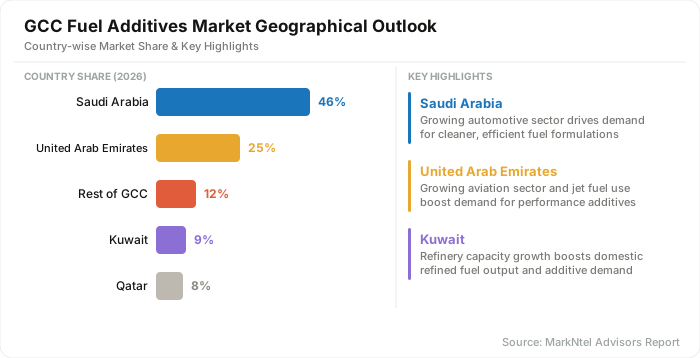
Marine terminals and land-freight corridors require substantial diesel, bunker and handling-fuel throughput, while construction, oilfield, mining and standby-power applications extend additive consumption beyond retail mobility. Saudi Arabia should consequently remain the largest market through 2032, with suppliers benefiting from high-volume refinery treatment, terminal dosing and performance packages for commercial fleets and industrial users.
The UAE is expected to record the fastest growth, supported by its diversified aviation, bunkering, logistics and commercial-fueling ecosystem. In May 2025, ENOC Link disclosed that it had delivered approximately 350 million liters of gasoline and diesel to UAE business customers through 2024 and was serving 268 companies. Expansion of mobile and bulk-fuel delivery increases the importance of consistent dosage, storage stability, water separation, corrosion control and fuel cleanliness. This should favor suppliers offering terminal-compatible multifunctional packages and technical support for distributed commercial operations.
GCC Fuel Additives Market Competitive Analysis
GCC fuel additives indutry is moderately concentrated, with the top five companies holding an estimated 56% market share. The top five players in the market are Innospec Inc., Afton Chemical Corporation, The Lubrizol Corporation, Infineum International Limited and BASF SE.
Key Companies in the GCC Fuel Additives Industry
- Innospec Inc.
- Afton Chemical Corporation
- The Lubrizol Corporation
- Infineum International Limited
- Chevron Oronite Company LLC
- BASF SE
- Ecolab Inc.
- Baker Hughes Company
- Dorf Ketal Chemicals
- TotalEnergies Additives and Fuels Solutions
- Evonik Industries AG
- Clariant AG
- LANXESS AG
- Others
GCC Fuel Additives Industry News and Recent Developments
-
April 2026 | BASF SE Expands Keropur® Fuel-Additive Distribution Across the Middle East
Azelis entered a distribution agreement with BASF covering the latter’s Keropur branded fuel-additive technologies across every Middle East and Africa country, effective immediately. The arrangement combines BASF’s gasoline and diesel performance-additive portfolio with Azelis’s regional supply chain, local market knowledge, customer relationships, and technical support capabilities.
Impact analysis: GCC refiners, terminal operators, fuel marketers, and blenders gain a broader route to formulation support and commercial supply. Wider channel coverage should lower market-access friction for differentiated fuels and increase competition for detergent and multifunctional performance-additive programs.
-
December 2025 | Chevron Oronite Company LLC Opens Additives Storage Facility in Dubai
Chevron Oronite opened a local storage facility in Dubai’s Jebel Ali Free Zone in partnership with chemical-logistics operator RSA-TALKE. The depot was established to bolster Oronite’s Middle East supply chain and improve regional availability of its lubricant and fuel-additive portfolio as local demand continued to expand.
Impact analysis: Locating inventory within the GCC can shorten replenishment cycles, reduce exposure to intercontinental shipping delays, and support smaller or more frequent customer deliveries. These advantages should improve supply responsiveness and raise service expectations for competing additive suppliers.
-
October 2025 | The Lubrizol Corporation Appoints IMCD as UAE Fuel-Additives Channel Partner
Lubrizol expanded its strategic relationship with IMCD Group into the United Arab Emirates, appointing IMCD’s Dubai-based operations as its channel partner for lubricant and fuel additives. The agreement placed local commercial access and distribution support for Lubrizol’s additive technologies within an established specialty-chemicals platform in the UAE.
Impact analysis: The partnership can extend Lubrizol’s reach among fuel marketers, blenders, and industrial buyers that depend on local technical and commercial engagement. A dedicated UAE channel should also improve product access and intensify competition for customer-specific additive packages.
- Market Segmentation
- Introduction
- Product Definition
- Research Process
- Assumptions
- Executive Summary
- GCC Fuel Additives Market Supply Chain Analysis
- GCC Fuel Additives Market Policies, Regulations, and Product Standards
- GCC Fuel Additives Market Trends & Developments
- GCC Fuel Additives Market Dynamics
- Growth Factors
- Challenges
- GCC Fuel Additives Market Hotspot & Opportunities
- GCC Fuel Additives Market Outlook, 2022-2032
- Market Size & Outlook
- By Revenues (USD Million)
- By Quantity Sold (Thousand Tons)
- Market Segmentation & Outlook
- By Application- Market Size & Forecast 2022-2032, USD Million & Thousand Tons
- Diesel and Gasoil
- Gasoline
- Aviation Turbine Fuel
- Marine and Bunker Fuels
- Other Fuels
- By Type- Market Size & Forecast 2022-2032, USD Million & Thousand Tons
- Deposit Control Additives and Detergents
- Cetane Improvers
- Lubricity Improvers
- Stability Improvers and Antioxidants
- Octane Improvers and Antiknock Additives
- Corrosion Inhibitors
- Cold-Flow Improvers
- Handling, Safety and Quality Additives
- Dyes, Markers and Other Fuel Additives
- By End User- Market Size & Forecast 2022-2032, USD Million & Thousand Tons
- Automotive
- Aviation
- Marine
- Power Generation
- Industrial
- Agriculture & Off-Highway
- Others
- By Country
- Saudi Arabia
- United Arab Emirates
- Kuwait
- Qatar
- Oman
- Bahrain
- By Company
- Competition Characteristics
- Market Share & Analysis
- By Application- Market Size & Forecast 2022-2032, USD Million & Thousand Tons
- Market Size & Outlook
- Saudi Arabia Fuel Additives Market Outlook, 2022-2032
- Market Size & Outlook
- By Revenues (USD Million)
- By Quantity Sold (Thousand Tons)
- Market Segmentation & Outlook
- By Application- Market Size & Forecast 2022-2032, USD Million & Thousand Tons
- By Type- Market Size & Forecast 2022-2032, USD Million & Thousand Tons
- By End User- Market Size & Forecast 2022-2032, USD Million & Thousand Tons
- Market Size & Outlook
- United Arab Emirates Fuel Additives Market Outlook, 2022-2032
- Market Size & Outlook
- By Revenues (USD Million)
- By Quantity Sold (Thousand Tons)
- Market Segmentation & Outlook
- By Application- Market Size & Forecast 2022-2032, USD Million & Thousand Tons
- By Type- Market Size & Forecast 2022-2032, USD Million & Thousand Tons
- By End User- Market Size & Forecast 2022-2032, USD Million & Thousand Tons
- Market Size & Outlook
- Kuwait Fuel Additives Market Outlook, 2022-2032
- Market Size & Outlook
- By Revenues (USD Million)
- By Quantity Sold (Thousand Tons)
- Market Segmentation & Outlook
- By Application- Market Size & Forecast 2022-2032, USD Million & Thousand Tons
- By Type- Market Size & Forecast 2022-2032, USD Million & Thousand Tons
- By End User- Market Size & Forecast 2022-2032, USD Million & Thousand Tons
- Market Size & Outlook
- Qatar Fuel Additives Market Outlook, 2022-2032
- Market Size & Outlook
- By Revenues (USD Million)
- By Quantity Sold (Thousand Tons)
- Market Segmentation & Outlook
- By Application- Market Size & Forecast 2022-2032, USD Million & Thousand Tons
- By Type- Market Size & Forecast 2022-2032, USD Million & Thousand Tons
- By End User- Market Size & Forecast 2022-2032, USD Million & Thousand Tons
- Market Size & Outlook
- Oman Fuel Additives Market Outlook, 2022-2032
- Market Size & Outlook
- By Revenues (USD Million)
- By Quantity Sold (Thousand Tons)
- Market Segmentation & Outlook
- By Application- Market Size & Forecast 2022-2032, USD Million & Thousand Tons
- By Type- Market Size & Forecast 2022-2032, USD Million & Thousand Tons
- By End User- Market Size & Forecast 2022-2032, USD Million & Thousand Tons
- Market Size & Outlook
- Bahrain Fuel Additives Market Outlook, 2022-2032
- Market Size & Outlook
- By Revenues (USD Million)
- By Quantity Sold (Thousand Tons)
- Market Segmentation & Outlook
- By Application- Market Size & Forecast 2022-2032, USD Million & Thousand Tons
- By Type- Market Size & Forecast 2022-2032, USD Million & Thousand Tons
- By End User- Market Size & Forecast 2022-2032, USD Million & Thousand Tons
- Market Size & Outlook
- GCC Fuel Additives Market Key Strategic Imperatives for Success & Growth
- Competitive Outlook
- Company Profiles
- Innospec Inc.
- Business Description
- Product Portfolio
- Collaborations & Alliances
- Recent Developments
- Financial Details
- Others
- Afton Chemical Corporation
- Business Description
- Product Portfolio
- Collaborations & Alliances
- Recent Developments
- Financial Details
- Others
- The Lubrizol Corporation
- Business Description
- Product Portfolio
- Collaborations & Alliances
- Recent Developments
- Financial Details
- Others
- Infineum International Limited
- Business Description
- Product Portfolio
- Collaborations & Alliances
- Recent Developments
- Financial Details
- Others
- Chevron Oronite Company LLC
- Business Description
- Product Portfolio
- Collaborations & Alliances
- Recent Developments
- Financial Details
- Others
- BASF SE
- Business Description
- Product Portfolio
- Collaborations & Alliances
- Recent Developments
- Financial Details
- Others
- Ecolab Inc.
- Business Description
- Product Portfolio
- Collaborations & Alliances
- Recent Developments
- Financial Details
- Others
- Baker Hughes Company
- Business Description
- Product Portfolio
- Collaborations & Alliances
- Recent Developments
- Financial Details
- Others
- Dorf Ketal Chemicals LLC
- Business Description
- Product Portfolio
- Collaborations & Alliances
- Recent Developments
- Financial Details
- Others
- TotalEnergies Additives & Fuels Solutions
- Business Description
- Product Portfolio
- Collaborations & Alliances
- Recent Developments
- Financial Details
- Others
- Evonik Industries AG
- Business Description
- Product Portfolio
- Collaborations & Alliances
- Recent Developments
- Financial Details
- Others
- Clariant AG
- Business Description
- Product Portfolio
- Collaborations & Alliances
- Recent Developments
- Financial Details
- Others
- LANXESS AG
- Business Description
- Product Portfolio
- Collaborations & Alliances
- Recent Developments
- Financial Details
- Others
- Others
- Innospec Inc.
- Company Profiles
- Disclaimer

MarkNtel Advisors follows a robust and iterative research methodology designed to ensure maximum accuracy and minimize deviation in market estimates and forecasts. Our approach combines both bottom-up and top-down techniques to effectively segment and quantify various aspects of the market. A consistent feature across all our research reports is data triangulation, which examines the market from three distinct perspectives to validate findings. Key components of our research process include:
1. Scope & Research Design At the outset, MarkNtel Advisors define the research objectives and formulate pertinent questions. This phase involves determining the type of research—qualitative or quantitative—and designing a methodology that outlines data collection methods, target demographics, and analytical tools. They also establish timelines and budgets to ensure the research aligns with client goals.
2. Sample Selection and Data Collection In this stage, the firm identifies the target audience and determines the appropriate sample size to ensure representativeness. They employ various sampling methods, such as random or stratified sampling, based on the research objectives. Data collection is carried out using tools like surveys, interviews, and observations, ensuring the gathered data is reliable and relevant.
3. Data Analysis and Validation Once data is collected, MarkNtel Advisors undertake a rigorous analysis process. This includes cleaning the data to remove inconsistencies, employing statistical software for quantitative analysis, and thematic analysis for qualitative data. Validation steps are taken to ensure the accuracy and reliability of the findings, minimizing biases and errors.

4. Data Forecast and FinalizationThe final phase involves forecasting future market trends based on the analyzed data. MarkNtel Advisors utilize predictive modeling and time series analysis to anticipate market behaviors. The insights are then compiled into comprehensive reports, featuring visual aids like charts and graphs, and include strategic recommendations to inform client decision-making
FILL THE FORM TO INQUIRE BEFORE BUYING THIS REPORT
We offer flexible licensing options to cater to varying organizational needs. Choose the pricing pack that best suits your requirements:
Buy Now Talk to our Consultant
 Request Customization