

By Product Group (Disinfectants, Preservatives, Pest Control Products, Other Biocidal Products), By Active Ingredient Chemistry (Halogen Compounds, Quaternary Ammonium Compounds (Q......ACs), Metallic Compounds, Organosulfur Compounds, Phenolic Compounds, Organic Acids, Other Active Ingredients), By Formulation (Liquid, Solid, Semi-Solid, Aerosol), By End User (Water Treatment, Healthcare & Pharmaceuticals, Food & Beverage Processing, Paints & Coatings, Wood Preservation, Personal Care & Cosmetics, Industrial & Institutional Cleaning, Agriculture (Non-Crop Biocides), Other Industrial Applications), By Distribution Channel (Direct Sales, Distributors & Wholesalers, E-commerce/B2B Platforms), and others Read more
- Chemicals
- Jul 2026
- 240
- PDF, Excel, PPT
Europe Biocides Market Key Takeaways
- The Europe biocides market was valued at USD 2.21 billion in 2025 and is projected to grow from USD 2.34 billion in 2026 to USD 3.37 billion by 2032, at a 6.27% CAGR during 2026–2032.
- Germany leads the regional market, accounting for approximately 25% of total revenue.
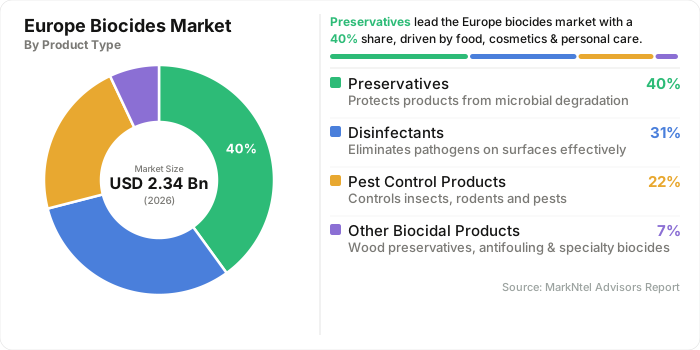
- Preservatives dominate the product group segment, capturing around 40% of the market share.
- Halogen compounds held approximately 31% of the active ingredient chemistry segment in 2026.
- The industry remains moderately fragmented, with the top five companies collectively accounting for nearly 44% of the regional market share.
Europe Biocides Market Size and Outlook
The Europe biocides market size was valued at USD 2.21 billion in 2025 and is projected to increase from USD 2.34 billion in 2026 to USD 3.37 billion by 2032, registering a CAGR of 6.27% during 2026–2032. The growth is expected to remain steady, supported by recurring avian influenza outbreaks that continue to strengthen farm biosecurity programmes and sustained regulatory efforts encouraging innovation in water treatment chemicals and compliant antimicrobial formulations across the region.
Long-term demand is also being reinforced by investments in municipal water infrastructure. According to the European Commission, 30,354 urban wastewater treatment plants operate across the European Union, while the revised Urban Wastewater Treatment Directive entered into force on 1 January 2025. The directive introduces quaternary treatment requirements for micropollutant removal and mandates monitoring of antimicrobial resistance markers in treated effluent, encouraging wider adoption of cooling water treatment and advanced disinfection technologies to meet future compliance obligations.
Regulatory progress under the Biocidal Products Regulation is expected to broaden the availability of approved active substances for manufacturers. During its late-2025 meeting, the European Chemicals Agency's Biocidal Products Committee adopted six opinions on active substances, including 2,2-dibromo-2-cyanoacetamide for liquid-cooling preservatives and 2-methyl-2H-isothiazol-3-one for in-storage preservation. Following European Commission implementing decisions, these approvals are expected to expand compliant specialty chemicals available for preservative and disinfection applications.
Additional momentum will come from European public investments supporting environmental protection and healthcare resilience. The EU4Health Programme, backed by a budget of approximately USD 6.04 billion, continues strengthening healthcare preparedness, infection prevention, and hospital resilience, sustaining demand for hospital-grade disinfectants. Simultaneously, the EU's Zero Pollution Action Plan promotes cleaner water and reduced chemical pollution, accelerating investment in advanced wastewater disinfection solutions. These initiatives are expected to reinforce the Europe biocides industry throughout the forecast period.
Europe Biocides Market Key Indicators
- The European Centre for Disease Prevention and Control recorded 4.3 million patients acquiring at least one healthcare-associated infection annually. Respiratory infections accounted for major cases, followed by urinary tract and surgical-site infections. This infection burden compels hospitals to maintain rigorous surface disinfection protocols, driving continuous consumption of quaternary and oxidising disinfectant actives across acute care settings.
- Eurostat reported that European Union production in construction rose 1.5% in April 2026 versus April 2025, reversing flat output recorded across 2025 as a whole. Specialised construction activities, including renovation and protective-coating work, posted some of the strongest monthly gains within this rebound. Renewed building activity is lifting consumption of wood preservation biocidal actives used in masonry, paint, and timber protection across residential and non-residential segments.
- The European Centre for Disease Prevention and Control's fourth point prevalence survey of long-term care facilities, conducted across the EU/EEA in 2023–2024, measured infection prevention and antimicrobial use structures in nursing homes and residential care settings region-wide. Long-term care facilities represent a distinct institutional segment from acute hospitals, with residents requiring sustained surface hygiene management to limit healthcare-associated infection spread, supporting steady disinfectant and detergent-biocide demand across Europe's elderly-care infrastructure.
- The European Commission's Water Resilience Strategy, published as COM(2025) 280 final, commits the European Union to rebuilding water cycle management while developing what it terms a water-smart economy across member states. The strategy explicitly links water reuse expansion to industrial competitiveness. This policy direction is expected to accelerate adoption of industrial water reuse treatment trains, in which biocidal disinfectants control microbial regrowth before recycled water re-enters manufacturing processes.
Europe Biocides Market Scope
| Category | Segments |
|---|---|
| By Product Group | Disinfectants, Preservatives, Pest Control Products, Other Biocidal Products |
| By Active Ingredient Chemistry | Halogen Compounds, Quaternary Ammonium Compounds (QACs), Metallic Compounds, Organosulfur Compounds, Phenolic Compounds, Organic Acids, Other Active Ingredients |
| By Formulation | Liquid, Solid, Semi-Solid, Aerosol |
| By End User | Water Treatment, Healthcare & Pharmaceuticals, Food & Beverage Processing, Paints & Coatings, Wood Preservation, Personal Care & Cosmetics, Industrial & Institutional Cleaning, Agriculture (Non-Crop Biocides), Other Industrial Applications |
| By Distribution Channel | Direct Sales, Distributors & Wholesalers, E-commerce/B2B Platforms |
Europe Biocides Market Growth Drivers
Recurring Avian Influenza Outbreaks Driving Farm Biosecurity Disinfection Demand
Recurring outbreaks of highly pathogenic avian influenza are accelerating demand for Europe biocides market solutions as poultry producers strengthen farm biosecurity practices. Between 6 September and 14 November 2025, authorities recorded 1,443 detections of HPAI A(H5) viruses in wild birds across 26 European countries, four times higher than the same period in 2024. The growing need for disinfectants supports routine sanitation across poultry facilities.
The outbreak trend continued into 2026, reinforcing procurement of industrial hygiene solutions across commercial farms. The European Commission's Animal Disease Information System recorded 283 HPAI outbreaks in commercial poultry flocks across 16 European countries by 6 May 2026, compared with 729 outbreaks across 23 countries during all of 2025. Poland reported 122 commercial outbreaks, while Germany recorded 1,420 wild-bird detections, sustaining demand for quaternary ammonium and peroxide-based disinfectants.
To strengthen disease prevention, EFSA and the European Commission introduced the #NoBirdFlu communication toolkit in September 2025, providing biosecurity guidance in all EU languages for farmers and veterinarians. As seasonal outbreaks increasingly require continuous rather than reactive sanitation programmes, the Europe biocides industry is witnessing sustained demand for routine farm disinfection, supporting long-term adoption of biosecurity practices across commercial poultry operations.
Recent Trends
Rising Substitution of PFAS-Based Additives in Biocidal Formulations
The Europe biocides market is witnessing a growing shift toward PFAS-free formulations as regulatory scrutiny intensifies across the European Union. On 3 March 2026, the European Chemicals Agency's Committee for Risk Assessment (RAC) adopted its final opinion, concluding that PFAS use across the European Union poses a risk that justifies restriction. The proposed restriction covers more than 10,000 PFAS substances, encouraging manufacturers to reassess formulation strategies and evaluate alternative ingredients for future compliance.
Regulatory progress continued on 26 March 2026, when ECHA opened a 60-day public consultation on the Committee for Socio-Economic Analysis's (SEAC) draft opinion. The consultation seeks stakeholder feedback on the availability of alternatives and the need for derogations across sectors affected by the proposed restriction. This ongoing evaluation provides manufacturers with greater clarity on future regulatory requirements while supporting informed decision-making before the European Commission prepares its legislative proposal.
In response, formulators are proactively replacing PFAS-based surfactants, wetting agents, and dispersants used in preservatives and disinfectant products ahead of the anticipated regulatory changes. Early reformulation helps manufacturers prepare for evolving compliance requirements while maintaining product performance and supply continuity. Consequently, the Europe biocides industry is experiencing increased innovation in chemical preservation technologies as companies invest in PFAS-free alternatives to strengthen long-term regulatory readiness.
Europe Biocides Market Opportunities and Challenges
Prolonged BPR Review Timelines Creating Challenges While Accelerating Innovation in Alternative Disinfection Technologies
The Europe biocides industry continues to face challenges from lengthy active substance reviews under the EU Biocidal Products Regulation (BPR). According to Normachem, the European Commission has repeatedly extended approval expiry dates for several active substances, including decanoic acid, povidone-iodine, octanoic acid, iodine, nonanoic acid, Cu-HDO, S-methoprene, and didecyldimethylammonium carbonate, reflecting the prolonged evaluation process. These recurring extensions increase regulatory compliance complexity, delay product planning, and create uncertainty for manufacturers managing existing biocidal portfolios.
The evolving regulatory landscape also presents opportunities for companies developing innovative alternatives to conventional chemistries. Kemira's chlorine-free KemConnect™ DEX technology, based on performic acid, exemplifies this shift toward sustainable chemicals. The company states the solution has been used across Europe for more than a decade and supported wastewater disinfection at the Seine Amont treatment plant during preparations for the 2024 Paris Olympic and Paralympic Games, demonstrating growing adoption of advanced disinfection technologies.
As environmental expectations and regulatory scrutiny continue to intensify, end users are increasingly adopting innovative disinfection technologies that deliver both long-term compliance and operational reliability. Consequently, the Europe biocides market is expected to accelerate the commercialization of next-generation antimicrobial solutions, while manufacturers dependent on legacy active substances must continuously adapt to evolving approval timelines, reformulation requirements, and changing regulatory frameworks to remain competitive across the European Union.
Segmentation Insights
Preservatives Leads Due to their Extensive Use Across Industrial and Consumer Applications
The Europe biocides market is led by the preservatives segment, accounting for approximately 40% of regional demand. Its leadership is supported by widespread application in paints and coatings, wood products, personal care formulations, industrial fluids, and building materials, where preservatives inhibit microbial growth and extend product durability. Their broad compatibility across manufacturing industries continues to reinforce long-term consumption throughout the region.
Growing regulatory emphasis on product longevity and microbial protection is further strengthening demand for preservative technologies. Manufacturers are increasingly incorporating advanced paint preservation solutions to safeguard coatings against bacterial and fungal deterioration while maintaining product quality during storage and application. Continuous innovation in preservative formulations also helps industries meet evolving performance standards and regulatory requirements without compromising efficacy.
The segment's dominance is further supported by rising demand across construction, industrial manufacturing, and consumer goods industries, where durable materials and extended shelf life remain critical priorities. Increasing adoption of antimicrobial coatings in infrastructure, transportation, healthcare, and commercial facilities is creating additional opportunities for preservative-based biocides, ensuring sustained market leadership. Based on product group, the scope has been divided into:
- Disinfectants
- Preservatives
- Pest Control Products
- Other Biocidal Products
Halogen Compounds Dominate Due to Their Broad-Spectrum Antimicrobial Effectiveness
The halogen compounds segment dominates the Europe biocides industry by active ingredient chemistry, accounting for approximately 31% of regional consumption. Their leading position is attributed to their broad-spectrum antimicrobial efficacy, rapid action against bacteria, viruses, fungi, and algae, and widespread use across municipal water systems, healthcare facilities, food processing plants, and industrial operations requiring reliable microbial control.
Demand for halogen compounds continues to grow because of their proven performance in surface disinfectants used for infection control and sanitation across healthcare and commercial environments. Chlorine- and bromine-based formulations remain preferred choices due to their cost-effectiveness, residual antimicrobial activity, and ability to maintain hygiene standards in high-risk applications, supporting consistent consumption across diverse end-use industries.
The segment also benefits from increasing utilization in food safety solutions, where stringent hygiene regulations require effective microbial control. Furthermore, ongoing investments in public health infrastructure, water sanitation projects, and industrial hygiene practices are expected to sustain the dominance of halogen compounds as organizations continue prioritizing efficient and regulatory-compliant biocidal formulations. The report covers the following major active ingredient chemistry categories:
- Halogen Compounds
- Quaternary Ammonium Compounds (QACs)
- Metallic Compounds
- Organosulfur Compounds
- Phenolic Compounds
- Organic Acids
- Other Active Ingredients
Europe Biocides Market Geographical Outlook
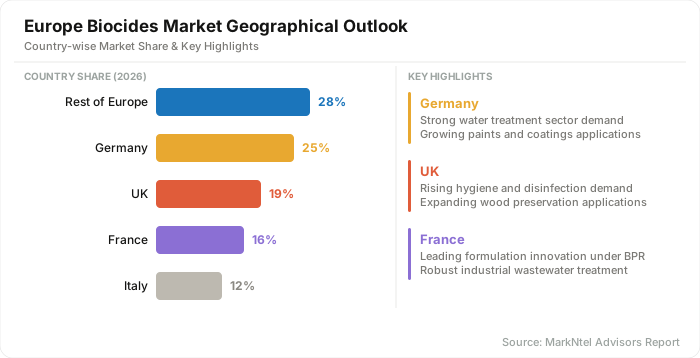
Germany accounts for approximately 25% of the Europe biocides industry, making it the largest national market across the region. Its leadership is supported by a well-established industrial base, stringent environmental regulations, and extensive municipal water infrastructure. Strong demand from healthcare, manufacturing, and public utility sectors continues to reinforce the country's consumption of high-performance biocidal products for diverse commercial and industrial applications.
Germany further strengthened its position through the implementation of the recast EU Drinking Water Directive under its revised Drinking Water Ordinance (TrinkwV). This framework enables German municipal water utilities to align with the directive's European Positive Lists for treatment chemicals ahead of the 1 January 2027 compliance deadline, encouraging wider adoption of advanced industrial biocides for safe and compliant drinking water treatment.
The country's proactive regulatory approach and continuous modernization of public water infrastructure are expected to sustain long-term demand for effective microbial control solutions. Growing investments in water quality management, public health protection, and infrastructure resilience are also supporting increased utilization of biofilm control technologies across municipal distribution networks and treatment facilities, reinforcing Germany's leadership in the regional biocides industry.
Europe Biocides Market Competitive Analysis
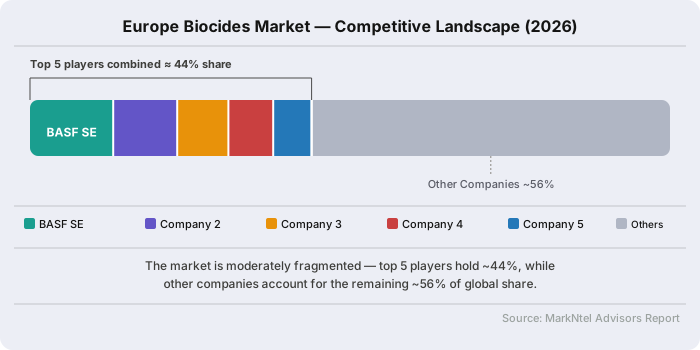
The Europe biocides industry is moderately fragmented, with the top five players BASF SE, LANXESS AG, Lonza Group AG, Clariant AG, and Ecolab Inc. collectively accounting for approximately 44% of the regional market share. These companies maintain strong competitive positions through extensive product portfolios, robust research and development capabilities, regulatory expertise, and well-established distribution networks across Europe. Meanwhile, regional manufacturers and niche specialty chemical suppliers compete by offering application-specific formulations, customized solutions, and sustainable innovations. Continuous investments in product development, regulatory compliance, strategic partnerships, and capacity expansion are expected to intensify competition.
Leading Companies in Europe Biocides Market
- BASF SE
- LANXESS AG
- Lonza Group AG
- Nouryon Holding B.V.
- Clariant AG
- Dow Inc.
- THOR Group Limited United Kingdom
- Evonik Industries AG
- Ecolab Inc.
- Solvay SA
- Kemira Oyj
- Italmatch Chemicals S.p.A.
- Others
Europe Biocides Industry News and Recent Developments
April 2026: LANXESS Partners with Fuelcare to Expand Fuel Biocide Distribution Across Europe
LANXESS AG entered a strategic partnership with Fuelcare to distribute its Kathon™ FP 1.5 and Preventol® D2 fuel biocides across Europe. The agreement strengthens the availability of fuel preservation solutions for the maritime, rail, manufacturing, power generation, and logistics sectors. Notably, Kathon™ FP 1.5 is among the few fuel biocides holding Union-wide authorization under the EU Biocidal Products Regulation (BPR).
Impact Analysis: The partnership expands access to BPR-compliant fuel biocides across key European industrial sectors while reinforcing LANXESS's distribution network. It is expected to support wider adoption of advanced fuel preservation technologies as industries seek to minimize microbial contamination, extend fuel storage life, and comply with increasingly stringent regulatory standards. The collaboration also demonstrates the growing importance of strategic partnerships in improving product availability, customer support, and market penetration within Europe's industrial biocides landscape.
April 2026: LANXESS Showcases Expanded Biocides and Oxidation Portfolio at CHEMUK 2026
LANXESS presented its portfolio of biocidal active ingredients, industrial hygiene solutions, oxidation technologies, and Klarix® EXIT for biocide-free end products. The exhibition highlighted applications supporting sanitation, water treatment, and industrial manufacturing while demonstrating the company's continued focus on sustainable microbial control technologies and customer-oriented product innovation across the European specialty chemicals and biocides sector.
Impact Analysis: The expanded portfolio reflects increasing industry demand for sustainable, high-performance antimicrobial solutions capable of meeting evolving environmental and regulatory requirements. By promoting integrated hygiene and oxidation technologies, LANXESS strengthens its competitive position while addressing customer needs for improved operational efficiency and compliance. The showcase also highlights the industry's transition toward innovative formulations that balance microbial efficacy with sustainability, reinforcing long-term growth opportunities across industrial, water treatment, and institutional hygiene applications.
February 2026: ECHA Supports Ethanol Approval for Key Disinfectant Applications
European Chemicals Agency's (ECHA) Biocidal Products Committee (BPC) adopted opinions supporting the approval of ethanol as an active substance for Product Types 1, 2, and 4, covering human hygiene products, surface disinfectants, and products used in food and feed areas. The Committee concluded that safe use had been demonstrated for these applications before forwarding its opinion to the European Commission for a final decision.
Impact Analysis: The positive opinion provides greater regulatory certainty for manufacturers developing ethanol-based disinfectants and advances the authorization process under the EU Biocidal Products Regulation. Once formally adopted by the European Commission, the decision is expected to facilitate product commercialization, support investment in compliant disinfectant formulations, and strengthen supply continuity across healthcare, food processing, and institutional hygiene sectors. The development also reinforces confidence in ethanol as a key active substance for future European disinfection applications.
- Market Segmentation
- Introduction
- Product Definition
- Research Process
- Assumptions
- Executive Summary
- Europe Biocides Market Supply Chain Analysis
- Europe Biocides Market Import & Export Analysis
- Europe Biocides Market Policies, Regulations, and Product Standards
- Europe Biocides Production Trend 2022-2032
- Europe Biocides Trend by Type of Product Group
- Disinfectants
- Preservatives
- Pest Control Products
- Other Biocidal Products
- Company Wise Production Plants and Statistics
- Installed Production Capacity
- Actual Production
- Planned Production Target
- Europe Biocides Trend by Type of Product Group
- Europe Biocides Pricing Analysis 2022-2032
- Europe Biocides Pricing Trend 2022-2032
- Europe Biocides Pricing Trend by Product Group 2022-2032
- Disinfectants
- Preservatives
- Pest Control Products
- Other Biocidal Products
- Europe Biocides Market Dynamics
- Growth Factors
- Challenges
- Europe Biocides Market Hotspot & Opportunities
- Europe Biocides Market Outlook, 2022-2032
- Market Size & Outlook
- By Revenues (USD Million)
- By Quantity Sold (Tons)
- Market Segmentation & Outlook
- By Product Group- Market Size & Forecast 2022-2032, USD Million & Tons
- Disinfectants
- Preservatives
- Pest Control Products
- Other Biocidal Products
- By Active Ingredient Chemistry- Market Size & Forecast 2022-2032, USD Million & Tons
- Halogen Compounds
- Quaternary Ammonium Compounds (QACs)
- Metallic Compounds
- Organosulfur Compounds
- Phenolic Compounds
- Organic Acids
- Other Active Ingredients
- By Formulation- Market Size & Forecast 2022-2032, USD Million & Tons
- Liquid
- Solid
- Semi-Solid
- Aerosol
- By End User- Market Size & Forecast 2022-2032, USD Million & Tons
- Water Treatment
- Healthcare & Pharmaceuticals
- Food & Beverage Processing
- Paints & Coatings
- Wood Preservation
- Personal Care & Cosmetics
- Industrial & Institutional Cleaning
- Agriculture (Non-Crop Biocides)
- Other Industrial Applications
- By Distribution Channel- Market Size & Forecast 2022-2032, USD Million & Tons
- Direct Sales
- Distributors & Wholesalers
- E-commerce/B2B Platforms
- By Country
- The UK
- Germany
- France
- Italy
- Spain
- Benelux
- Rest of Europe
- By Company
- Competition Characteristics
- Market Share & Analysis
- By Product Group- Market Size & Forecast 2022-2032, USD Million & Tons
- Market Size & Outlook
- The UK Biocides Market Outlook, 2022-2032
- Market Size & Outlook
- By Revenues (USD Million)
- By Quantity Sold (Tons)
- Market Segmentation & Outlook
- By Product Group- Market Size & Forecast 2022-2032, USD Million & Tons
- By Active Ingredient Chemistry- Market Size & Forecast 2022-2032, USD Million & Tons
- By Formulation- Market Size & Forecast 2022-2032, USD Million & Tons
- By End User- Market Size & Forecast 2022-2032, USD Million & Tons
- By Distribution Channel- Market Size & Forecast 2022-2032, USD Million & Tons
- Market Size & Outlook
- Germany Biocides Market Outlook, 2022-2032
- Market Size & Outlook
- By Revenues (USD Million)
- By Quantity Sold (Tons)
- Market Segmentation & Outlook
- By Product Group- Market Size & Forecast 2022-2032, USD Million & Tons
- By Active Ingredient Chemistry- Market Size & Forecast 2022-2032, USD Million & Tons
- By Formulation- Market Size & Forecast 2022-2032, USD Million & Tons
- By End User- Market Size & Forecast 2022-2032, USD Million & Tons
- By Distribution Channel- Market Size & Forecast 2022-2032, USD Million & Tons
- Market Size & Outlook
- France Biocides Market Outlook, 2022-2032
- Market Size & Outlook
- By Revenues (USD Million)
- By Quantity Sold (Tons)
- Market Segmentation & Outlook
- By Product Group- Market Size & Forecast 2022-2032, USD Million & Tons
- By Active Ingredient Chemistry- Market Size & Forecast 2022-2032, USD Million & Tons
- By Formulation- Market Size & Forecast 2022-2032, USD Million & Tons
- By End User- Market Size & Forecast 2022-2032, USD Million & Tons
- By Distribution Channel- Market Size & Forecast 2022-2032, USD Million & Tons
- Market Size & Outlook
- Italy Biocides Market Outlook, 2022-2032
- Market Size & Outlook
- By Revenues (USD Million)
- By Quantity Sold (Tons)
- Market Segmentation & Outlook
- By Product Group- Market Size & Forecast 2022-2032, USD Million & Tons
- By Active Ingredient Chemistry- Market Size & Forecast 2022-2032, USD Million & Tons
- By Formulation- Market Size & Forecast 2022-2032, USD Million & Tons
- By End User- Market Size & Forecast 2022-2032, USD Million & Tons
- By Distribution Channel- Market Size & Forecast 2022-2032, USD Million & Tons
- Market Size & Outlook
- Spain Biocides Market Outlook, 2022-2032
- Market Size & Outlook
- By Revenues (USD Million)
- By Quantity Sold (Tons)
- Market Segmentation & Outlook
- By Product Group- Market Size & Forecast 2022-2032, USD Million & Tons
- By Active Ingredient Chemistry- Market Size & Forecast 2022-2032, USD Million & Tons
- By Formulation- Market Size & Forecast 2022-2032, USD Million & Tons
- By End User- Market Size & Forecast 2022-2032, USD Million & Tons
- By Distribution Channel- Market Size & Forecast 2022-2032, USD Million & Tons
- Market Size & Outlook
- Benelux Biocides Market Outlook, 2022-2032
- Market Size & Outlook
- By Revenues (USD Million)
- By Quantity Sold (Tons)
- Market Segmentation & Outlook
- By Product Group- Market Size & Forecast 2022-2032, USD Million & Tons
- By Active Ingredient Chemistry- Market Size & Forecast 2022-2032, USD Million & Tons
- By Formulation- Market Size & Forecast 2022-2032, USD Million & Tons
- By End User- Market Size & Forecast 2022-2032, USD Million & Tons
- By Distribution Channel- Market Size & Forecast 2022-2032, USD Million & Tons
- Market Size & Outlook
- Europe Biocides Market Key Strategic Imperatives for Success & Growth
- Competitive Outlook
- Company Profiles
- BASF SE
- Business Description
- Product Portfolio
- Collaborations & Alliances
- Recent Developments
- Financial Details
- Others
- LANXESS AG
- Business Description
- Product Portfolio
- Collaborations & Alliances
- Recent Developments
- Financial Details
- Others
- Lonza Group AG
- Business Description
- Product Portfolio
- Collaborations & Alliances
- Recent Developments
- Financial Details
- Others
- Nouryon Holding B.V.
- Business Description
- Product Portfolio
- Collaborations & Alliances
- Recent Developments
- Financial Details
- Others
- Clariant AG
- Business Description
- Product Portfolio
- Collaborations & Alliances
- Recent Developments
- Financial Details
- Others
- Dow Inc.
- Business Description
- Product Portfolio
- Collaborations & Alliances
- Recent Developments
- Financial Details
- Others
- THOR Group Limited
- Business Description
- Product Portfolio
- Collaborations & Alliances
- Recent Developments
- Financial Details
- Others
- Evonik Industries AG
- Business Description
- Product Portfolio
- Collaborations & Alliances
- Recent Developments
- Financial Details
- Others
- Ecolab Inc.
- Business Description
- Product Portfolio
- Collaborations & Alliances
- Recent Developments
- Financial Details
- Others
- Solvay SA
- Business Description
- Product Portfolio
- Collaborations & Alliances
- Recent Developments
- Financial Details
- Others
- Kemira Oyj
- Business Description
- Product Portfolio
- Collaborations & Alliances
- Recent Developments
- Financial Details
- Others
- Italmatch Chemicals S.p.A.
- Business Description
- Product Portfolio
- Collaborations & Alliances
- Recent Developments
- Financial Details
- Others
- Others
- BASF SE
- Company Profiles
- Disclaimer

MarkNtel Advisors follows a robust and iterative research methodology designed to ensure maximum accuracy and minimize deviation in market estimates and forecasts. Our approach combines both bottom-up and top-down techniques to effectively segment and quantify various aspects of the market. A consistent feature across all our research reports is data triangulation, which examines the market from three distinct perspectives to validate findings. Key components of our research process include:
1. Scope & Research Design At the outset, MarkNtel Advisors define the research objectives and formulate pertinent questions. This phase involves determining the type of research—qualitative or quantitative—and designing a methodology that outlines data collection methods, target demographics, and analytical tools. They also establish timelines and budgets to ensure the research aligns with client goals.
2. Sample Selection and Data Collection In this stage, the firm identifies the target audience and determines the appropriate sample size to ensure representativeness. They employ various sampling methods, such as random or stratified sampling, based on the research objectives. Data collection is carried out using tools like surveys, interviews, and observations, ensuring the gathered data is reliable and relevant.
3. Data Analysis and Validation Once data is collected, MarkNtel Advisors undertake a rigorous analysis process. This includes cleaning the data to remove inconsistencies, employing statistical software for quantitative analysis, and thematic analysis for qualitative data. Validation steps are taken to ensure the accuracy and reliability of the findings, minimizing biases and errors.

4. Data Forecast and FinalizationThe final phase involves forecasting future market trends based on the analyzed data. MarkNtel Advisors utilize predictive modeling and time series analysis to anticipate market behaviors. The insights are then compiled into comprehensive reports, featuring visual aids like charts and graphs, and include strategic recommendations to inform client decision-making
FILL THE FORM TO INQUIRE BEFORE BUYING THIS REPORT
We offer flexible licensing options to cater to varying organizational needs. Choose the pricing pack that best suits your requirements:
Buy Now Talk to our Consultant
 Request Customization