

US Fitness App Market Research Report: Growth Drivers & Forecast (2026-2032)
By Type (Exercise and Weight Loss, Diet and Nutrition, Activity Tracking, Others), By Operating Platform (Android, iOS, Other Platforms), By Device Type (Smartphones, Tablets, Wear ... able Devices), By Application (Health & Activity Tracking, Training & Personal Coaching, Engagement & Social Features, Wellness & Preventive Care), By Revenue Model (Subscription-Based, Freemium, Ad Supported, One-Time Purchase), By End User (Individual Consumers, Fitness Professionals, Healthcare Providers & Clinics, Gyms/Fitness Centres), and others Read more
- ICT & Electronics
- Mar 2026
- Pages 140
- Report Format: PDF, Excel, PPT
US Fitness App Market
Projected 11.29% CAGR from 2026 to 2032
Study Period
2026-2032
Market Size (2026)
USD 3.78 Billion
Market Size (2032)
USD 7.18 billion
Base Year
2025
Projected CAGR
11.29%
Leading Segments
By Device Type: Smartphones
US Fitness App Market Report Key Takeaways:
- The US Fitness App market size was valued at USD 2.98 billion in 2025 and is projected to grow from USD 3.78 billion in 2026 to USD 7.18 billion by 2032, exhibiting a CAGR of 11.29% during the forecast period.
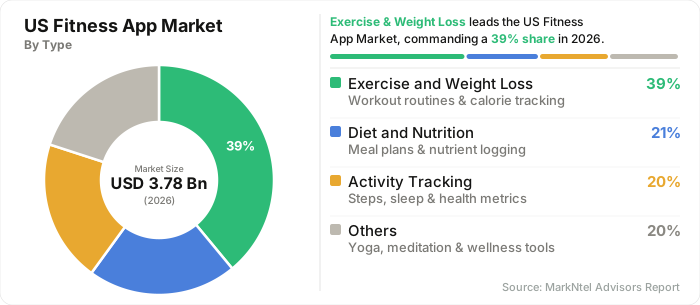
- By type, the exercise and weight loss segment represented a significant share of about 39% in the US Fitness App Market in 2026.
- By device type, the smartphones segment represented a significant share of about 65% in the US Fitness App Market in 2026.
- Leading fitness app companies in the US Market are Apple Inc., Google LLC (Alphabet Inc.), Samsung Electronics Co., Ltd., Nike, Inc., Adidas AG, Under Armour, Inc., Peloton Interactive, Inc., Garmin Ltd., Strava, Inc., MyFitnessPal, Inc., Azumio, Inc., Noom, Inc., Calm.com, Inc., Freeletics GmbH, Zwift Inc., and Others.
Market Insights & Analysis: US Fitness App Market (2026-32):
The US Fitness App Market size was valued at approximately USD 2.98 billion in 2025 and is projected to grow from USD 3.78 billion in 2026 to USD 7.18 billion by 2032. Along with this, the market is estimated to grow at a CAGR of around 11.29% during the forecast period, i.e., 2026-32.
The U.S. fitness app market is poised for sustained growth, driven primarily by rising health awareness and increasing adoption of digital wellness solutions. With a growing emphasis on preventive healthcare, lifestyle management, and physical activity, consumers are increasingly relying on apps to track exercise, monitor nutrition, and manage overall wellness. Between 2024 and 2026, approximately 24.7% of adults in the Northeast were physically inactive, below the national average, reflecting regional variation in health behavior. To address inactivity, initiatives like the CDC’s Active People, Healthy Nation℠ promote community programs, parks, and walking trails. At the same time, awareness campaigns encourage individuals to integrate fitness apps into their preventive health routines, supporting both digital engagement and healthier lifestyles.
In the Midwest, adult inactivity stands at 25.2%, close to the U.S. average. Here, workplace wellness programs, community campaigns, and regional health initiatives drive engagement, emphasizing structured exercise routines and the use of tracking tools. Future investments beyond 2025, including employer incentives, regional partnerships, and wellness infrastructure, are expected to further increase fitness app adoption by promoting goal-oriented, preventive care, and personalized exercise routines.
Another key growth factor is AI-driven personalization, which enhances engagement and outcomes through tailored recommendations. Apps now leverage artificial intelligence to deliver customized workout plans, nutrition guidance, and real-time feedback based on user behavior and health metrics. For instance, Google’s Fitbit app introduced a Gemini-powered AI Personal Health Coach, currently in public preview for U.S. Fitbit Premium users. This conversational AI generates personalized fitness plans, sleep guidance, and wellness insights according to each user’s goals and activity patterns, providing adaptive, individualized coaching .
Future investment and government initiatives are expected to accelerate market growth. The U.S. Department of Health and Human Services announced a campaign promoting the widespread adoption of wearable health devices to monitor vital metrics such as heart rate and glucose. By linking device data directly to digital platforms, this initiative strengthens the integration of fitness apps into daily health management, reinforcing both engagement and preventive care .
Overall, with rising health awareness, regional wellness initiatives, AI-powered personalization, and government-backed wearable integration, the U.S. fitness app market is expected to experience robust adoption. These factors collectively enhance user engagement, improve health outcomes, and establish digital fitness solutions as integral to preventive healthcare and lifestyle management.
US Fitness App Market Recent Developments:
- 2025: Apple expanded its Fitness+ platform with new programming, including a progressive strength training plan, pickleball conditioning, workshop‑style yoga, and breath meditation. It also added special Artist Spotlight playlists and deeper collaboration with Strava, enhancing tracking and community engagement for subscribers.
- 2025: WHOOP launched its next‑generation wearables, WHOOP 5.0 and WHOOP MG in May 2025, featuring improved health and fitness tracking with over 14 days of battery life, a sleeker design, and advanced insights like Healthspan metrics, heart screening with ECG, and blood pressure data, expanding personalized wellness monitoring .
US Fitness App Market Scope:
| Category | Segments |
|---|---|
| By Type | (Exercise and Weight Loss, Diet and Nutrition, Activity Tracking, Others), |
| By Operating Platform | (Android, iOS, Other Platforms), |
| By Device Type | (Smartphones, Tablets, Wearable Devices), |
| By Application | (Health & Activity Tracking, Training & Personal Coaching, Engagement & Social Features, Wellness & Preventive Care), |
| By Revenue Model | (Subscription-Based, Freemium, Ad Supported, One-Time Purchase), |
| By End User | (Individual Consumers, Fitness Professionals, Healthcare Providers & Clinics, Gyms/Fitness Centres), |
US Fitness App Market Driver:
Rising Health Awareness Augmenting Market Growth
A primary driver of India’s executive education market is the leadership capability gap, reflecting a structural misalignment between the skills leaders currently possess and those required to navigate strategic, digital, and organizational transformations. Across industries, senior executives face deficits in critical competencies, including digital fluency, strategic decision-making, and change management. Executive education programs are increasingly designed to address these gaps, equipping leaders to manage complex, fast-evolving business environments effectively.
Government data underscores the urgency of this challenge. At the 5th National Conference of Chief Secretaries, officials highlighted that 73% of India’s workforce possesses only basic education, while overall employability remains around 54.8%, signaling significant shortfalls in managerial and leadership capacity as organizations scale and modernize. The conference further reported a 63% talent shortage in IT, engineering, and services roles, emphasizing the need for capable leadership to drive technological and organizational transformation. In high-tech domains, shortages in advanced roles such as AI, cloud computing, and cybersecurity range between 25% and 60%, amplifying the pressure on leaders to upskill themselves and their teams.
Regionally, the South, encompassing Karnataka, Tamil Nadu, Andhra Pradesh, and Telangana, illustrates this gap vividly. Despite employability rising to 56.35% in 2026, leadership skills continue to constrain digital adoption. Initiatives such as IIM Visakhapatnam’s 2026 training of 504 gazetted officers under the Rashtriya Gram Swaraj Abhiyan demonstrate targeted efforts to strengthen governance and leadership capacities.
Looking beyond 2025, programs under the Skill India Digital Hub and the National Education Policy (NEP) are expected to expand executive reskilling and leadership development through public–private partnerships, ensuring sustained demand for high-quality executive education.
Overall, addressing leadership capability gaps is critical for organizational competitiveness, digital transformation, and workforce effectiveness. This persistent gap will continue to drive growth in India’s executive education market.
US Fitness App Market Trend:
AI‑Driven Personalization Gaining Traction
AI-driven personalization is revolutionizing the fitness app market by delivering tailored health and wellness guidance based on individual behavior and preferences. A prime example is Noom’s June 2024 launch of advanced AI features, including photo, text, and voice-based food logging, along with the AI health assistant Welli. These tools allow users to log meals effortlessly, with the system automatically identifying ingredients and portion sizes, reducing manual effort and improving adherence.
Welli further enhances the experience by offering real-time, on-demand guidance tailored to each user’s habits, goals, and lifestyle. Handling routine queries allows human coaches to focus on motivational support and behavioral interventions, improving engagement and health outcomes.
Noom’s AI integration reflects a broader industry-wide shift toward data-driven, highly personalized digital wellness solutions. Algorithms dynamically adapt recommendations based on user behavior, making fitness and nutrition guidance more effective than static programs. Government agencies, including the CDC, support the use of digital tools to promote preventive health and lifestyle management.
Overall, by combining AI-powered personalization with human coaching, apps like Noom enhance user engagement, adherence, and health outcomes, positioning AI as a key driver of growth in the U.S. fitness app market.
US Fitness App Market Opportunity:
Corporate Wellness Programs Offering Ample Growth Opportunities
Corporate wellness programs represent a substantial growth opportunity for the U.S. fitness app market, as organizations increasingly integrate health technology into employee benefits. According to the CDC’s Work@Health initiative, structured workplace wellness programs effectively promote physical activity, healthy eating, and preventive care, reducing risk factors for chronic conditions such as heart disease, diabetes, and obesity, which collectively account for approximately 86% of total U.S. healthcare expenditures.
Currently, nearly 46% of U.S. worksites offer wellness programs targeting fitness, nutrition, and stress management, highlighting a receptive environment for digital health integration .
Fitness apps complement these initiatives by providing activity tracking, guided workouts, behavioral nudges, and personalized feedback, aligning with CDC-recommended strategies for promoting sustained physical activity among employees.
Looking beyond 2025, federal emphasis on preventive health and employer-driven wellness investment is expected to grow, driving higher adoption of digital fitness solutions. Integrating apps into corporate programs enhances engagement, enables measurable health outcomes, and contributes to workforce productivity, while reducing long-term healthcare costs.
Overall, as employers increasingly embed health technology into corporate wellness strategies, fitness apps will become indispensable tools for fostering employee well-being, driving engagement, and supporting measurable improvements in organizational health outcomes.
US Fitness App Market Challenge:
Data Privacy & Security Concerns
Data privacy and security remain a critical challenge in the U.S. fitness app market, as these platforms collect highly sensitive personal information, including activity, sleep, heart rate, and lifestyle data. Unlike healthcare providers regulated under HIPAA, many standalone fitness apps are not legally bound by stringent federal privacy protections, creating potential risks in how user data is stored, processed, and shared.
A recent instance highlighting this challenge occurred in August 2025, when Whoop Inc. faced a proposed class‑action lawsuit for allegedly sharing personal health and activity data with a third-party analytics partner without explicit user consent. This incident underscores the ongoing vulnerabilities in digital wellness platforms and the potential for regulatory, legal, and reputational consequences .
Government agencies, including the Federal Trade Commission (FTC) and the U.S. Department of Health and Human Services (HHS), continue to issue guidance to help digital health and fitness app developers implement robust privacy policies and security safeguards. However, the lack of unified national standards for fitness and wellness data creates gaps that can compromise user trust and inhibit adoption.
Conclusion: As fitness apps expand in functionality and data collection, addressing privacy and security gaps through transparent policies, robust cybersecurity measures, and regulatory compliance will be crucial to sustaining user confidence and supporting long-term market growth.
US Fitness App Market (2026-32) Segmentation Analysis:
The US Fitness App Market study of MarkNtel Advisors evaluates & highlights the major trends and influencing factors in each segment. It includes predictions for the period 2026–32 at the country level. Based on the analysis, the market has been further classified as;
Based on Type:
- Exercise and Weight Loss
- Diet and Nutrition
- Activity Tracking
- Others
The Exercise and Weight Loss segment dominates the U.S. fitness app market, capturing 39% of the total market size. This prominence is fueled by the growing focus on preventive health and lifestyle management, particularly among millennials and Gen Z, who prioritize convenient, data-driven solutions to maintain fitness goals. These apps offer structured workout plans, calorie tracking, and personalized routines, appealing to users seeking measurable progress. Social sharing features, gamification, and integration with wearable devices further enhance engagement, creating a sense of community and accountability. Market players like Nike Training Club, Peloton, and Freeletics have leveraged these trends to expand subscriber bases and retain users through regular content updates. Additionally, the pandemic-induced shift toward at-home fitness and hybrid routines has solidified exercise-focused apps as essential tools for maintaining health, making this segment highly profitable and central to industry growth.
Based on Device Type:
- Smartphones
- Tablets
- Wearable Devices
Smartphones lead device adoption in the U.S. fitness app market, accounting for 65% of usage, due to their portability, connectivity, and multifunctional capabilities. Unlike tablets or wearables, smartphones offer a single, ubiquitous platform for app access, notifications, video streaming, and integration with other health devices. Users can track workouts, monitor nutrition, and engage with community challenges seamlessly on a device they carry everywhere. The convenience of real-time feedback, GPS tracking, and app interoperability increases retention and daily engagement. Additionally, smartphone penetration in the U.S. exceeds 85% of adults, creating a vast potential user base. Leading fitness apps such as MyFitnessPal, Strava, and Noom prioritize smartphone-first interfaces with optimized UX, push notifications, and seamless syncing with wearables, solidifying smartphones as the primary enabler for fitness app adoption and revenue growth.
US Fitness App Market (2026-32): Regional Projection
The U.S. fitness app market is dominated by the South region, including states such as Texas, Florida, and Georgia. This region leads due to a combination of high smartphone penetration, growing health awareness initiatives, and rising adoption of digital wellness solutions among both urban and suburban populations. About 27.5% of adults in the South remain physically inactive, the highest among U.S. regions, according to CDC data.
To address this, federal and local programs focus on education, community-based activity initiatives, and accessible wellness campaigns. Investments in safer walking and biking routes, fitness-friendly community centers, and long-term preventive health programs beyond 2025 are expected to drive fitness app adoption for structured exercise, social engagement, and real-time health monitoring . Similar to Tier-1 urban centers in India, where hospitals like AIIMS Delhi, HCG Bengaluru, Fortis, Apollo, and Aster DM Healthcare invest heavily in medical technology, the South’s infrastructure and health-focused investments make it a fertile ground for fitness apps.
US Fitness App Market Competitive Landscape
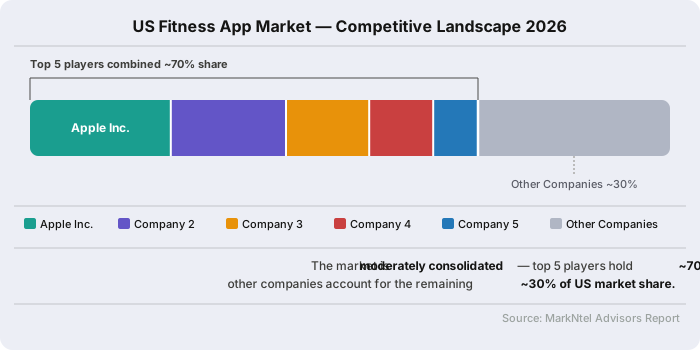
The market is moderately consolidated, with the top five players accounting for nearly 70% of the total market share. Leading companies include Apple Inc., Google LLC (Alphabet Inc.), Samsung Electronics Co., Ltd., Nike, Inc., and Peloton Interactive, Inc.
Key Fitness App Companies
- Apple Inc.
- Google LLC (Alphabet Inc.)
- Samsung Electronics Co.
- Ltd.
- Nike, Inc.
- Adidas AG
- Under Armour, Inc.
- Peloton Interactive, Inc.
- Garmin Ltd.
- Strava, Inc.
- MyFitnessPal, Inc.
- Azumio, Inc.
- Noom, Inc
- Calm.com, Inc.
- Freeletics GmbH
- Zwift Inc.
- Others
Gain a Competitive Edge with Our US Fitness App Market Report:
- The US Fitness App Market Report by MarkNtel Advisors provides a detailed & thorough analysis of market size & share, growth rate, competitive landscape, and key players. This comprehensive analysis helps businesses gain a holistic understanding of the market dynamics & make informed decisions.
- This report also highlights current market trends & future projections, allowing businesses to identify emerging opportunities & potential challenges. By understanding market forecasts, companies can align their strategies & stay ahead of the competition.
- The US Fitness App Market Report aids in assessing & mitigating risks associated with entering or operating in the market. By understanding market dynamics, regulatory frameworks, and potential challenges, businesses can develop strategies to minimize risks & optimize their operations.
*Reports Delivery Format - Market research studies from MarkNtel Advisors are offered in PDF, Excel and PowerPoint formats. Within 24 hours of the payment being successfully received, the report will be sent to your email address.
Frequently Asked Questions
- Market Segmentation
- Introduction
- Product Definition
- Research Process
- Assumptions
- Executive Summary
- US Fitness App Market Policies, Regulations, and Product Standards
- US Fitness App Market Trends & Developments
- US Fitness App Market Dynamics
- Growth Factors
- Challenges
- US Fitness App Market Hotspot & Opportunities
- US Fitness App Market Outlook, 2022-2032F
- Market Size & Outlook
- By Revenues (USD Million)
- Market Share & Outlook
- By Type- Market Size & Forecast 2022-2032, USD Million
- Exercise and Weight Loss
- Diet and Nutrition
- Activity Tracking
- Others
- By Operating Platform- Market Size & Forecast 2022-2032, USD Million
- Android
- iOS
- Other Platforms
- By Device Type- Market Size & Forecast 2022-2032, USD Million
- Smartphones
- Tablets
- Wearable Devices
- By Application- Market Size & Forecast 2022-2032, USD Million
- Health & Activity Tracking
- Training & Personal Coaching
- Engagement & Social Features
- Wellness & Preventive Care
- By Revenue Model- Market Size & Forecast 2022-2032, USD Million
- Subscription-Based
- Freemium
- Ad Supported
- One-Time Purchase
- By End User- Market Size & Forecast 2022-2032, USD Million
- Individual Consumers
- Fitness Professionals
- Healthcare Providers & Clinics
- Gyms/Fitness Centres
- By Region- Market Size & Forecast 2022-2032, USD Million
- Northeast
- South
- Midwest
- West
- By Company
- Competition Characteristics
- Market Share & Analysis
- By Type- Market Size & Forecast 2022-2032, USD Million
- Market Size & Outlook
- US Exercise and Weight Loss App Market Outlook, 2022-2032
- Market Size & Outlook
- By Revenues (USD Million)
- Market Share & Outlook
- By Operating Platform- Market Size & Forecast 2022-2032, USD Million
- By Device Type- Market Size & Forecast 2022-2032, USD Million
- By Application- Market Size & Forecast 2022-2032, USD Million
- By Revenue Model- Market Size & Forecast 2022-2032, USD Million
- By End User- Market Size & Forecast 2022-2032, USD Million
- By Region- Market Size & Forecast 2022-2032, USD Million
- Market Size & Outlook
- US Diet and Nutrition App Market Outlook, 2022-2032
- Market Size & Outlook
- By Revenues (USD Million)
- Market Share & Outlook
- By Operating Platform- Market Size & Forecast 2022-2032, USD Million
- By Device Type- Market Size & Forecast 2022-2032, USD Million
- By Application- Market Size & Forecast 2022-2032, USD Million
- By Revenue Model- Market Size & Forecast 2022-2032, USD Million
- By End User- Market Size & Forecast 2022-2032, USD Million
- By Region- Market Size & Forecast 2022-2032, USD Million
- Market Size & Outlook
- US Activity Tracking App Market Outlook, 2022-2032
- Market Size & Outlook
- By Revenues (USD Million)
- Market Share & Outlook
- By Operating Platform- Market Size & Forecast 2022-2032, USD Million
- By Device Type- Market Size & Forecast 2022-2032, USD Million
- By Application- Market Size & Forecast 2022-2032, USD Million
- By Revenue Model- Market Size & Forecast 2022-2032, USD Million
- By End User- Market Size & Forecast 2022-2032, USD Million
- By Region- Market Size & Forecast 2022-2032, USD Million
- Market Size & Outlook
- US Fitness App Market Key Strategic Imperatives for Success & Growth
- Competitive Outlook
- Company Profiles
- Apple Inc.
- Business Description
- Product Portfolio
- Collaborations & Alliances
- Recent Developments
- Financial Details
- Others
- Google LLC (Alphabet Inc.)
- Business Description
- Product Portfolio
- Collaborations & Alliances
- Recent Developments
- Financial Details
- Others
- Samsung Electronics Co., Ltd.
- Business Description
- Product Portfolio
- Collaborations & Alliances
- Recent Developments
- Financial Details
- Others
- Nike, Inc.
- Business Description
- Product Portfolio
- Collaborations & Alliances
- Recent Developments
- Financial Details
- Others
- Adidas AG
- Business Description
- Product Portfolio
- Collaborations & Alliances
- Recent Developments
- Financial Details
- Others
- Under Armour, Inc.
- Business Description
- Product Portfolio
- Collaborations & Alliances
- Recent Developments
- Financial Details
- Others
- Peloton Interactive, Inc.
- Business Description
- Product Portfolio
- Collaborations & Alliances
- Recent Developments
- Financial Details
- Others
- Garmin Ltd.
- Business Description
- Product Portfolio
- Collaborations & Alliances
- Recent Developments
- Financial Details
- Others
- Strava, Inc.
- Business Description
- Product Portfolio
- Collaborations & Alliances
- Recent Developments
- Financial Details
- Others
- MyFitnessPal, Inc.
- Business Description
- Product Portfolio
- Collaborations & Alliances
- Recent Developments
- Financial Details
- Others
- Azumio, Inc.
- Business Description
- Product Portfolio
- Collaborations & Alliances
- Recent Developments
- Financial Details
- Others
- Noom, Inc.
- Business Description
- Product Portfolio
- Collaborations & Alliances
- Recent Developments
- Financial Details
- Others
- Calm.com, Inc.
- Business Description
- Product Portfolio
- Collaborations & Alliances
- Recent Developments
- Financial Details
- Others
- Freeletics GmbH
- Business Description
- Product Portfolio
- Collaborations & Alliances
- Recent Developments
- Financial Details
- Others
- Zwift Inc.
- Business Description
- Product Portfolio
- Collaborations & Alliances
- Recent Developments
- Financial Details
- Others
- Apple Inc.
- Company Profiles
- Disclaimer
MarkNtel Advisors follows a robust and iterative research methodology designed to ensure maximum accuracy and minimize deviation in market estimates and forecasts. Our approach combines both bottom-up and top-down techniques to effectively segment and quantify various aspects of the market. A consistent feature across all our research reports is data triangulation, which examines the market from three distinct perspectives to validate findings. Key components of our research process include:
1. Scope & Research Design At the outset, MarkNtel Advisors define the research objectives and formulate pertinent questions. This phase involves determining the type of research—qualitative or quantitative—and designing a methodology that outlines data collection methods, target demographics, and analytical tools. They also establish timelines and budgets to ensure the research aligns with client goals.
2. Sample Selection and Data Collection In this stage, the firm identifies the target audience and determines the appropriate sample size to ensure representativeness. They employ various sampling methods, such as random or stratified sampling, based on the research objectives. Data collection is carried out using tools like surveys, interviews, and observations, ensuring the gathered data is reliable and relevant.
3. Data Analysis and Validation Once data is collected, MarkNtel Advisors undertake a rigorous analysis process. This includes cleaning the data to remove inconsistencies, employing statistical software for quantitative analysis, and thematic analysis for qualitative data. Validation steps are taken to ensure the accuracy and reliability of the findings, minimizing biases and errors.

4. Data Forecast and FinalizationThe final phase involves forecasting future market trends based on the analyzed data. MarkNtel Advisors utilize predictive modeling and time series analysis to anticipate market behaviors. The insights are then compiled into comprehensive reports, featuring visual aids like charts and graphs, and include strategic recommendations to inform client decision-making
We offer flexible licensing options to cater to varying organizational needs. Choose the pricing pack that best suits your requirements:
Buy Now Inquire Before Buying
 Request Customization
 Talk to our Consultant







