

US Dropshipping Market Research Report: Growth Drivers & Forecast (2026-2032)
By Product Type (Fashion & Apparel, Electronics & Media, Toys Hobby & Do It Yourself (DIY), Furniture & Appliances, Food & Personal Care, Beauty & Cosmetics, Home & Kitchen, Others ... ), By Destination (Domestic, International), By Organization Size (Small and Medium Enterprises, Large Enterprises), By Business Model (Business-to-Consumer (B2C), Business-to-Business (B2B), Consumer-to-Consumer (C2C)), and others Read more
- ICT & Electronics
- Apr 2026
- Pages 135
- Report Format: PDF, Excel, PPT
US Dropshipping Market
Projected 20.93% CAGR from 2026 to 2032
Study Period
2026-2032
Market Size (2026)
USD 112.35 Billion
Market Size (2032)
USD 351.41 Billion
Base Year
2025
Projected CAGR
20.93%
Leading Segments
By Product Type: Fashion & Apparel
US Dropshipping Market Report Key Takeaways:
- The US Dropshipping market size was valued at USD 92.91 billion in 2025 and is projected to grow from USD 112.35 billion in 2026 to USD 351.41 billion by 2032, exhibiting a CAGR of 20.93 % during the forecast period.
- By product type, the fashion & apparel segment represented a significant share of about 35% in the US Dropshipping Market in 2026.
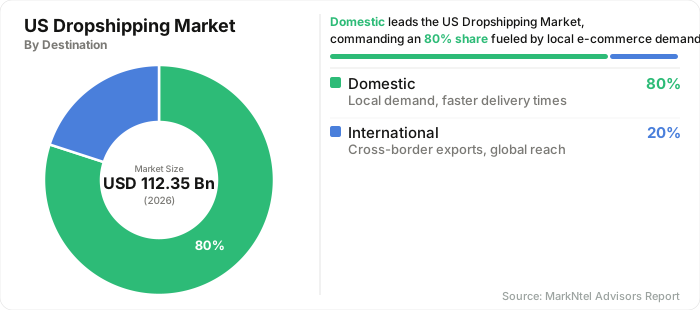
- By destination, the domestic segment presented a significant share of about 80% in the US Dropshipping Market in 2026.
- Leading companies in the US market are Spocket, Inc., CJ Dropshipping Co., Ltd., Doba, Inc., DropCommerce Inc., Trendsi Inc., TopDawg, Inc., Megagoods, Inc., Go Direct Inc., DSers Ltd., Zendrop, Inc., AutoDS Ltd., Wholesale2B, Inc., Worldwide Brands, Inc., and Others.
Market Insights & Analysis: US Dropshipping Market (2026-32):
The US Dropshipping Market size was valued at around USD 92.91 billion in 2025 and is projected to grow from USD 112.35 billion in 2026 to USD 351.41 billion by 2032. Along with this, the market is estimated to grow at a CAGR of around 20.93% during the forecast period, i.e., 2026-32.
The US Dropshipping Market is projected to expand steadily, driven by the rapid expansion of e-commerce, increasing integration of AI and automation tools to enhance operational efficiency, and a strategic shift toward private-label and branded products to improve margins and customer retention.
According to the U.S. Census Bureau, U.S. retail e-commerce sales reached USD 1,233.7 billion in 2025, registering 5.4% year-over-year growth, compared to total retail growth of 3.5%. This consistent outperformance highlights a structural shift toward online channels rather than temporary demand spikes.
Quarterly data further reinforces this trajectory, with e-commerce sales reaching USD 316.1 billion in Q4 2025, growing 5.3% year-over-year, while total retail expanded by only 2.7%. Earlier trends also confirm this momentum, as Q1 2024 e-commerce sales stood at USD 289.2 billion, reflecting a robust 8.6% annual increase.
Regional dynamics further strengthen the outlook. The Southern U.S. has emerged as the largest and fastest-growing e-commerce region, with online sales increasing from approximately USD 125 billion to USD 185 billion by 2025, driven by population growth and rising disposable income.
Meanwhile, the Western region continues to lead in technological adoption, with e-commerce sales expanding from USD 110 billion to USD 150 billion during the same period, supported by a strong digital ecosystem and tech-savvy consumers . These regional trends create favorable conditions for dropshipping, particularly due to high-volume demand and price-sensitive customer segments.
Additionally, non-store retail, primarily e-commerce, recorded approximately 10.9% year-over-year growth in early 2026, significantly outpacing overall retail performance . This category includes online-only and marketplace-driven sellers, directly aligning with the dropshipping model and indicating growing acceptance of inventory-light retail structures.
Technological advancements are also transforming the market. The integration of AI and automation tools enables sellers to optimize product selection, pricing strategies, demand forecasting, and customer engagement. Automation further streamlines order processing, inventory synchronization, and customer service, reducing operational complexity and enhancing scalability. As these tools continue to evolve, dropshipping businesses are becoming increasingly data-driven and efficient.
Simultaneously, the expansion into private-label and branded products is reshaping the competitive landscape. By leveraging third-party fulfillment while introducing customized offerings, sellers can achieve higher margins, stronger pricing control, and improved brand differentiation. Partnerships with manufacturers, combined with emerging AI-driven sourcing solutions and domestic production capabilities, are expected to simplify private-label scaling in the coming years.
The convergence of strong e-commerce growth, technological integration, and private-label expansion is driving the evolution of the U.S. dropshipping market. These factors collectively enhance scalability, profitability, and long-term sustainability, positioning the market for sustained growth.
US Dropshipping Market Recent Developments:
- 2026: FedEx has launched a same-day delivery service in the U.S. in partnership with OneRail, offering two-hour and end-of-day delivery options. The initiative leverages a network of over 1,000 delivery providers to enhance last-mile efficiency amid rising demand for faster e-commerce fulfillment.
- 2025: Amazon announced a USD 4 billion investment to expand its U.S. rural delivery network by 2026, aiming to enhance shipping speeds and boost demand in smaller towns. The initiative will scale operations to 200+ delivery stations, enabling delivery of over 1 billion additional packages annually across 13,000 zip codes.
US Dropshipping Market Scope:
| Category | Segments |
|---|---|
| By Product Type | (Fruit Juice (Fresh Juice, Fortified Juice, Fruit Nectars (High Concentration (40%–50% fruit content), Medium Concentration (30%–39% fruit content), Low Concentration (25%–29% fruit content))), Vegetable Juice, Fruit and Vegetable Blends), |
| By Source | (Not from Concentrate (NFC), From Concentrate (FC)), |
| By Packaging | (Cartons (Tetra Pak) (Single-Serve Packs, Family Packs), PET Bottles (Small-Size Bottles, Large-Size Bottles), Glass Bottles, Cans, Others), |
| By Distribution Channel | (Off-Trade (Retail) (Supermarkets & Hypermarkets, Convenience Stores, Traditional Grocery), On-Trade (HoReCa) (Hotels, Restaurants & Cafes), Online Retail), |
| By End User | (Household, Hotels, Restaurants, and Cafes (HoReCa), Institutional, Industrial), |
US Dropshipping Market Driver:
Expanding E-commerce Sector Augmenting Market Growth
The steady rise in e-commerce penetration across the United States is a key driver accelerating the growth of the dropshipping market. According to the U.S. Census Bureau, e-commerce accounted for 16.4% of total U.S. retail sales in 2025, up from 16.1% in 2024, reflecting a consistent increase in consumer reliance on online purchasing channels.
Quarterly data further reinforces this trend, with penetration reaching 16.6% in Q4 2025, highlighting sustained digital dominance in retail consumption. This structural shift toward online shopping directly benefits dropshipping, as the model aligns with inventory-light, digital-first retail operations.
Regional dynamics further strengthen this driver. The Northeast region demonstrates particularly strong e-commerce intensity, contributing approximately 21% of U.S. online purchase intent activity, along with the highest purchase intent rate of around 5.8%. High urbanization levels, advanced digital infrastructure, and strong purchasing power contribute to higher conversion rates and frequent online transactions. Such conditions create an ideal ecosystem for dropshipping businesses, which depend on digitally active consumers seeking product variety and convenience.
As digital adoption deepens and regional demand intensifies, dropshipping platforms can scale efficiently without significant inventory investments, leveraging growing online traffic and consumer engagement.
Rising e-commerce penetration and strong regional digital demand are expanding the addressable market for dropshipping. These factors enhance transaction volumes and customer reach, driving sustained growth in the U.S. dropshipping market.
US Dropshipping Market Trend:
Integration of AI and Automation Tools
The integration of artificial intelligence (AI) and automation is emerging as a transformative trend in the U.S. dropshipping market, significantly enhancing operational efficiency and decision-making capabilities.
As per the U.S. Census Bureau, AI adoption among businesses reached 78% in 2024, up sharply from 55% in 2023, indicating a rapid shift toward automation-driven operations. This widespread adoption reflects the growing reliance on data-driven technologies to optimize business performance across the e-commerce ecosystem.
In the context of dropshipping, AI tools are increasingly utilized for product selection, dynamic pricing, demand forecasting, and personalized marketing. Automation further streamlines backend processes such as order management, inventory synchronization, and customer service, reducing manual intervention and operational costs. These capabilities enable sellers to scale efficiently while maintaining competitiveness in a fast-paced digital retail environment.
A notable example is Amazon, which introduced an AI-powered tool called “Amelia” to support sellers. The system automates critical functions, including inventory management, sales tracking, and advertising optimization, while also providing real-time insights and resolving operational issues such as shipment delays without human involvement. This highlights the growing role of AI in simplifying complex e-commerce workflows.
AI and automation are reshaping dropshipping into a more efficient and scalable model. As adoption continues to rise, these technologies will drive productivity, reduce costs, and accelerate market growth in the U.S. dropshipping sector.
US Dropshipping Market Opportunity:
Expansion into Private Label and Branded Products
The evolution of dropshipping in the United States is increasingly shifting toward private-label and branded product models, offering a strong opportunity for sellers to enhance profitability and long-term sustainability.
Unlike traditional dropshipping, which relies on selling generic third-party products, private labeling allows sellers to establish unique brand identities while still leveraging third-party fulfillment networks. This approach enables greater pricing control, improved margins, and stronger customer loyalty through differentiated offerings.
In practice, U.S.-based dropshippers, particularly in high-demand categories such as skincare, are collaborating with contract manufacturers to develop custom-branded formulations. These manufacturers handle production, inventory, and shipping, allowing sellers to operate asset-light businesses while building recognizable brands. This model significantly improves repeat purchase rates and customer retention compared to generic product reselling.
Looking ahead, advancements in AI-driven product sourcing and the expansion of domestic manufacturing ecosystems beyond 2025 are expected to further streamline private-label adoption. These developments will reduce supplier discovery time, optimize product selection, and shorten delivery cycles, making branded dropshipping more accessible to small and mid-sized sellers.
Private labeling is transforming dropshipping into a brand-centric business model with higher scalability and profitability. As consumer preference shifts toward value-driven and differentiated products, this opportunity is poised to accelerate sustained growth in the U.S. dropshipping market.
US Dropshipping Market Challenge:
Supply Chain & Shipping Concerns Impeding Market Growth
Supply chain and shipping inefficiencies remain a critical challenge in the U.S. dropshipping market, primarily due to reliance on third-party logistics providers and limited operational control. Dropshippers depend on external suppliers and carriers for inventory handling and delivery, making it difficult to ensure consistent fulfillment performance.
A key instance highlighting this issue is carrier-level performance during peak periods. For example, in 2024, on-time delivery rates dropped to 91.8% for FedEx and 90.4% for USPS, implying that nearly 8–10% of shipments were delayed even among major U.S. logistics providers. Such delays are further amplified in dropshipping, where additional processing time from suppliers often located overseas extends delivery timelines beyond standard expectations.
Moreover, fragmented supply chains involving multiple intermediaries increase the risk of miscommunication, order inaccuracies, and inventory mismatches. Domestic logistics constraints, including last-mile delivery inefficiencies and capacity limitations during high-demand seasons, further elevate shipping costs and delay risks. These factors collectively impact customer satisfaction, increase return rates, and pressure seller margins.
Overall, persistent delivery delays and supply chain fragmentation reduce reliability in dropshipping operations. These challenges weaken customer trust and increase operational costs, ultimately limiting scalability and slowing growth in the U.S. dropshipping market.
US Dropshipping Market (2026-32) Segmentation Analysis:
The US Dropshipping Market study of MarkNtel Advisors evaluates & highlights the major trends and influencing factors in each segment. It includes predictions for the period 2026–32 at the country level. Based on the analysis, the market has been further classified as;
Based on Product Type:
- Fashion & Apparel
- Electronics & Media
- Toys Hobby & Do It Yourself (DIY)
- Furniture & Appliances
- Food & Personal Care
- Beauty & Cosmetics
- Home & Kitchen
- Others
The fashion & apparel segment dominates the US Dropshipping market, accounting for approximately 35% of the total market value, due to its high demand, fast product turnover, and strong alignment with online retail trends.
The category benefits from frequent product refresh cycles driven by changing consumer preferences, seasonal trends, and influencer-led demand, making it ideal for dropshipping models that thrive on flexibility and rapid product updates.
Additionally, fashion products typically require lower upfront investment compared to categories like electronics or furniture, enabling sellers to offer a wide variety of styles, sizes, and price points without holding inventory. This diversity supports higher customer engagement and repeat purchases.
The rise of social commerce and mobile shopping has further accelerated growth, as platforms like Instagram and TikTok drive impulse buying behavior, particularly in clothing and accessories.
Another key factor is the ease of customization and private labeling in apparel, allowing dropshippers to build niche brands and differentiate offerings. Compared to other segments, logistics for fashion items are relatively simpler due to lighter weight and standardized packaging, reducing shipping complexities and costs.
Overall, the combination of high consumer demand, trend-driven purchasing, low entry barriers, and scalability makes fashion & apparel the leading segment, significantly contributing to the expansion of the U.S. dropshipping market.
Based on Destination:
- Domestic
- International
The domestic segment dominates the US Dropshipping market, accounting for about 80% of total market volume, driven by superior fulfillment efficiency, regulatory simplicity, and alignment with evolving consumer expectations.
U.S. consumers increasingly demand expedited delivery, with preference shifting toward 2–5 days shipping windows, which domestic suppliers are better equipped to meet compared to international counterparts. This capability significantly enhances customer satisfaction, reduces order cancellations, and strengthens seller credibility.
From an operational perspective, domestic sourcing eliminates complexities associated with cross-border trade, including customs procedures, import duties, and documentation requirements. This results in more predictable delivery timelines and cost structures, enabling dropshippers to maintain pricing transparency and operational consistency. Additionally, domestic supply chains are less exposed to geopolitical disruptions and international logistics volatility, further improving reliability.
The expansion of U.S.-based warehousing and fulfillment networks has also reinforced this dominance. Advanced third-party logistics (3PL) infrastructure supports faster order processing, efficient inventory coordination, and optimized last-mile delivery.
Moreover, simplified return and exchange processes within the domestic market enhance post-purchase experience, particularly for high-volume categories. Overall, the domestic segment’s ability to deliver speed, reliability, and operational stability positions it as the primary growth driver within the U.S. dropshipping market.
US Dropshipping Market Competitive Analysis
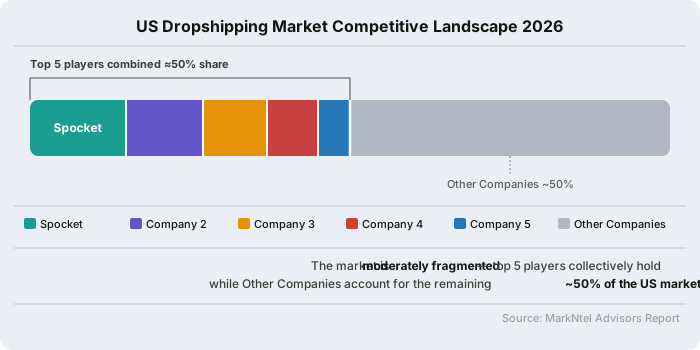
The U.S. dropshipping market is highly fragmented, with players such as Spocket, Inc., CJ Dropshipping Co., Ltd., Doba, Inc., DropCommerce Inc., Trendsi Inc., and others competing through platform capabilities, supplier networks, and automation tools. The top five companies collectively hold around 50% market share, indicating intense competition, low entry barriers, and strong presence of emerging and niche providers.
Key Dropshipping Companies in US
- Spocket, Inc.
- CJ Dropshipping Co., Ltd.
- Doba, Inc.
- DropCommerce Inc.
- Trendsi Inc.
- TopDawg, Inc.
- Megagoods, Inc
- Go Direct Inc.
- DSers Ltd.
- Zendrop, Inc.
- AutoDS Ltd.
- Wholesale2B, Inc
- Worldwide Brands, Inc
- Others
Gain a Competitive Edge with Our US Dropshipping Market Report:
- The US Dropshipping Market Report by MarkNtel Advisors provides a detailed & thorough analysis of market size & share, growth rate, competitive landscape, and key players. This comprehensive analysis helps businesses gain a holistic understanding of the market dynamics & make informed decisions.
- This report also highlights current market trends & future projections, allowing businesses to identify emerging opportunities & potential challenges. By understanding market forecasts, companies can align their strategies & stay ahead of the competition.
- The US Dropshipping Market Report aids in assessing & mitigating risks associated with entering or operating in the market. By understanding market dynamics, regulatory frameworks, and potential challenges, businesses can develop strategies to minimize risks & optimize their operations.
*Reports Delivery Format - Market research studies from MarkNtel Advisors are offered in PDF, Excel and PowerPoint formats. Within 24 hours of the payment being successfully received, the report will be sent to your email address.
Frequently Asked Questions
- Market Segmentation
- Introduction
- Product Definition
- Research Process
- Assumptions
- Executive Summary
- US Dropshipping Market Policies, Regulations, and Product Standards
- US Dropshipping Market Trends & Developments
- US Dropshipping Market Dynamics
- Growth Factors
- Challenges
- US Dropshipping Market Hotspot & Opportunities
- US Dropshipping Market Outlook, 2022-2032F
- Market Size & Outlook
- By Revenues (USD Million)
- Market Share & Outlook
- By Product Type- Market Size & Forecast 2022-2032, USD Million
- Fashion & Apparel
- Electronics & Media
- Toys Hobby & Do It Yourself (DIY)
- Furniture & Appliances
- Food & Personal Care
- Beauty & Cosmetics
- Home & Kitchen
- Others
- By Destination- Market Size & Forecast 2022-2032, USD Million
- Domestic
- International
- By Organization Size- Market Size & Forecast 2022-2032, USD Million
- Small and Medium Enterprises
- Large Enterprises
- By Business Model- Market Size & Forecast 2022-2032, USD Million
- Business-to-Consumer (B2C)
- Business-to-Business (B2B)
- Consumer-to-Consumer (C2C)
- By Region- Market Size & Forecast 2022-2032, USD Million
- Northeast
- Midwest
- South
- West
- By Company
- Competition Characteristics
- Market Share & Analysis
- By Product Type- Market Size & Forecast 2022-2032, USD Million
- Market Size & Outlook
- US Fashion & Apparel Dropshipping Market Outlook, 2022-2032
- Market Size & Outlook
- By Revenues (USD Million)
- Market Share & Outlook
- By Destination- Market Size & Forecast 2022-2032, USD Million
- By Organization Size- Market Size & Forecast 2022-2032, USD Million
- By Business Model- Market Size & Forecast 2022-2032, USD Million
- By Region- Market Size & Forecast 2022-2032, USD Million
- Market Size & Outlook
- US Electronics & Media Dropshipping Market Outlook, 2022-2032
- Market Size & Outlook
- By Revenues (USD Million)
- Market Share & Outlook
- By Destination- Market Size & Forecast 2022-2032, USD Million
- By Organization Size- Market Size & Forecast 2022-2032, USD Million
- By Business Model- Market Size & Forecast 2022-2032, USD Million
- By Region- Market Size & Forecast 2022-2032, USD Million
- Market Size & Outlook
- US Toys Hobby & Do It Yourself (DIY) Dropshipping Market Outlook, 2022-2032
- Market Size & Outlook
- By Revenues (USD Million)
- Market Share & Outlook
- By Destination- Market Size & Forecast 2022-2032, USD Million
- By Organization Size- Market Size & Forecast 2022-2032, USD Million
- By Business Model- Market Size & Forecast 2022-2032, USD Million
- By Region- Market Size & Forecast 2022-2032, USD Million
- Market Size & Outlook
- US Furniture & Appliances Dropshipping Market Outlook, 2022-2032
- Market Size & Outlook
- By Revenues (USD Million)
- Market Share & Outlook
- By Destination- Market Size & Forecast 2022-2032, USD Million
- By Organization Size- Market Size & Forecast 2022-2032, USD Million
- By Business Model- Market Size & Forecast 2022-2032, USD Million
- By Region- Market Size & Forecast 2022-2032, USD Million
- Market Size & Outlook
- US Food & Personal Care Dropshipping Market Outlook, 2022-2032
- Market Size & Outlook
- By Revenues (USD Million)
- Market Share & Outlook
- By Destination- Market Size & Forecast 2022-2032, USD Million
- By Organization Size- Market Size & Forecast 2022-2032, USD Million
- By Business Model- Market Size & Forecast 2022-2032, USD Million
- By Region- Market Size & Forecast 2022-2032, USD Million
- Market Size & Outlook
- US Beauty & Cosmetics Dropshipping Market Outlook, 2022-2032
- Market Size & Outlook
- By Revenues (USD Million)
- Market Share & Outlook
- By Destination- Market Size & Forecast 2022-2032, USD Million
- By Organization Size- Market Size & Forecast 2022-2032, USD Million
- By Business Model- Market Size & Forecast 2022-2032, USD Million
- By Region- Market Size & Forecast 2022-2032, USD Million
- Market Size & Outlook
- US Home & Kitchen Dropshipping Market Outlook, 2022-2032
- Market Size & Outlook
- By Revenues (USD Million)
- Market Share & Outlook
- By Destination- Market Size & Forecast 2022-2032, USD Million
- By Organization Size- Market Size & Forecast 2022-2032, USD Million
- By Business Model- Market Size & Forecast 2022-2032, USD Million
- By Region- Market Size & Forecast 2022-2032, USD Million
- Market Size & Outlook
- US Dropshipping Market Key Strategic Imperatives for Success & Growth
- Competitive Outlook
- Company Profiles
- Spocket, Inc.
- Business Description
- Product Portfolio
- Collaborations & Alliances
- Recent Developments
- Financial Details
- Others
- CJ Dropshipping Co., Ltd.
- Business Description
- Product Portfolio
- Collaborations & Alliances
- Recent Developments
- Financial Details
- Others
- Doba, Inc.
- Business Description
- Product Portfolio
- Collaborations & Alliances
- Recent Developments
- Financial Details
- Others
- DropCommerce Inc.
- Business Description
- Product Portfolio
- Collaborations & Alliances
- Recent Developments
- Financial Details
- Others
- Trendsi Inc.
- Business Description
- Product Portfolio
- Collaborations & Alliances
- Recent Developments
- Financial Details
- Others
- TopDawg, Inc.
- Business Description
- Product Portfolio
- Collaborations & Alliances
- Recent Developments
- Financial Details
- Others
- Megagoods, Inc.
- Business Description
- Product Portfolio
- Collaborations & Alliances
- Recent Developments
- Financial Details
- Others
- Go Direct Inc.
- Business Description
- Product Portfolio
- Collaborations & Alliances
- Recent Developments
- Financial Details
- Others
- DSers Ltd.
- Business Description
- Product Portfolio
- Collaborations & Alliances
- Recent Developments
- Financial Details
- Others
- Zendrop, Inc.
- Business Description
- Product Portfolio
- Collaborations & Alliances
- Recent Developments
- Financial Details
- Others
- AutoDS Ltd.
- Business Description
- Product Portfolio
- Collaborations & Alliances
- Recent Developments
- Financial Details
- Others
- Wholesale2B, Inc.
- Business Description
- Product Portfolio
- Collaborations & Alliances
- Recent Developments
- Financial Details
- Others
- Worldwide Brands, Inc.
- Business Description
- Product Portfolio
- Collaborations & Alliances
- Recent Developments
- Financial Details
- Others
- Spocket, Inc.
- Company Profiles
- Disclaimer
MarkNtel Advisors follows a robust and iterative research methodology designed to ensure maximum accuracy and minimize deviation in market estimates and forecasts. Our approach combines both bottom-up and top-down techniques to effectively segment and quantify various aspects of the market. A consistent feature across all our research reports is data triangulation, which examines the market from three distinct perspectives to validate findings. Key components of our research process include:
1. Scope & Research Design At the outset, MarkNtel Advisors define the research objectives and formulate pertinent questions. This phase involves determining the type of research—qualitative or quantitative—and designing a methodology that outlines data collection methods, target demographics, and analytical tools. They also establish timelines and budgets to ensure the research aligns with client goals.
2. Sample Selection and Data Collection In this stage, the firm identifies the target audience and determines the appropriate sample size to ensure representativeness. They employ various sampling methods, such as random or stratified sampling, based on the research objectives. Data collection is carried out using tools like surveys, interviews, and observations, ensuring the gathered data is reliable and relevant.
3. Data Analysis and Validation Once data is collected, MarkNtel Advisors undertake a rigorous analysis process. This includes cleaning the data to remove inconsistencies, employing statistical software for quantitative analysis, and thematic analysis for qualitative data. Validation steps are taken to ensure the accuracy and reliability of the findings, minimizing biases and errors.

4. Data Forecast and FinalizationThe final phase involves forecasting future market trends based on the analyzed data. MarkNtel Advisors utilize predictive modeling and time series analysis to anticipate market behaviors. The insights are then compiled into comprehensive reports, featuring visual aids like charts and graphs, and include strategic recommendations to inform client decision-making
We offer flexible licensing options to cater to varying organizational needs. Choose the pricing pack that best suits your requirements:
Buy Now Inquire Before Buying
 Request Customization
 Talk to our Consultant







