

UK Water and Wastewater Pump Market Research Report: Trends, Forecast & Opportunities (2026-2032)
By Types of Pumps (Centrifugal Pump (Overhung Pump (Vertical Inline, Horizontal End Suction), Split Case Pump (Single/Two Stage, Multistage), Vertical Pump (Turbine (Solid handling ... , Nonsolid handling), Axial, Mixed Flow), Submersible Pump (Solid Handling, Non-solid Handling)), Positive Displacement Pump (Diaphragm Pump, Piston Pump, Gear Pump, Lobe Pump, Progressive Cavity Pump, Screw Pump, Vane Pump, Peristaltic Pump)), By End User (Municipal water and wastewater, Industrial water and wastewater), By Application (Water, Wastewater) Read more
- Environment
- Apr 2026
- Pages 125
- Report Format: PDF, Excel, PPT
UK Water and Wastewater Pump Market
Projected 4.4% CAGR from 2026 to 2032
Study Period
2026-2032
Market Size (2026)
USD 412 Million
Market Size (2032)
USD 534 Million
Base Year
2025
Projected CAGR
4.4%
Leading Segments
By Types of Pumps: Centrifugal Pump
UK Water and Wastewater Pump Market Report Key Takeaways:
- UK Water and Wastewater Pump Market size was valued at around USD 391 million in 2025 and is projected to grow from USD 412 million in 2026 to USD 534 million by 2032, exhibiting a CAGR of 4.4% during 2026-2032.
- In 2025, Centrifugal pumps lead the UK water and wastewater pump market due to their high efficiency in high-volume transfer, low costs, and simple maintenance.
- In 2025, the municipal water & wastewater segment captured 54.22% of the UK water and wastewater pump market. Meanwhile, the industrial water and wastewater segment is poised to be the fastest-growing end-user category, with a projected 3.76% CAGR during 2026-32.
- Leading companies in the UK water and wastewater pump industry are ITT, Kirloskar Brothers Limited, Dover, Flowserve, Sulzer AG, KSB, Xylem, Grundfos, Ebara, Franklin Electric, Pentair PLC, and others.
- The demand is expected to be primarily driven by replacement units. However, new demand is likely to experience a slowdown due to rising energy costs, which are adversely affecting end-user expansion plans.
Market Insights & Analysis: UK Water and Wastewater Pump Market (2026-32):
The UK Water and Wastewater Pump Market size was valued at around USD 391 million in 2025 and is projected to grow from USD 412 million in 2026 to USD 534 million by 2032, exhibiting a CAGR of 4.4% during 2026-2032.
The UK water infrastructure landscape is experiencing one of the largest capital investment cycles in recent history, anchored by Ofwat’s approval of a USD 130 billion+ framework for water and wastewater infrastructure investment from 2025 to 2030, representing a significant increase in utility spending on treatment works, distribution networks, and related equipment replacement and upgrades. This planned expenditure will sustain demand for pumps and associated components across municipal and industrial water systems.
Market dynamics are further shaped by a strong focus on renewals and enhancements of aging assets. The regulator’s latest plans involve enhancing water quality compliance, reducing environmental discharges, and upgrading treatment capacities, all of which require the replacement and installation of modern pumping solutions designed for efficiency and automation. In parallel, programmes such as the USD 65.76 billion (£48 billion) RAPID water security investment signal long-term demand for bulk transfer and reservoir pumping infrastructure.
Moreover, growth in the forecast period is also supported by broader regulatory and economic drivers: utilities face rising costs to meet tightening performance standards, while the UK government and regulators signal increasing investment commitments to address infrastructure backlog and environmental performance. A recent UK National Audit Office report estimated the need for USD 396 billion of investment over 25 years to upgrade water infrastructure, indicating extended demand for pumping and related mechanical systems beyond AMP8. Collectively, these aging infrastructure upgrades and regulatory-driven investment programs remain the significant catalysts sustaining market expansion.
UK Water and Wastewater Pump Industry Recent Developments:
- 2026: Dŵr Cymru Welsh Water announced it is scaling up the deployment of Flygt Concertor intelligent wastewater pumps across its wastewater network following successful trials, strengthening operational resilience, reducing energy consumption, and supporting efficiency improvements across UK wastewater infrastructure.
- 2025: Thames Water and Xylem upgraded around 130 small sewage pumping stations across southeast England within 32 weeks, delivering about four sites per week. The project replaced ageing pumps, panels and pipework at facilities that had seen little investment for 20–30 years, and was shortlisted for the 2025 Water Industry Awards, setting a new benchmark for large‑scale, asset‑based pump upgrades across the country.
| Category | Segments |
|---|---|
| By Types of Pumps | (Centrifugal Pump (Overhung Pump (Vertical Inline, Horizontal End Suction), Split Case Pump (Single/Two Stage, Multistage), Vertical Pump (Turbine (Solid handling, Nonsolid handling), Axial, Mixed Flow), Submersible Pump (Solid Handling, Non-solid Handling)), Positive Displacement Pump (Diaphragm Pump, Piston Pump, Gear Pump, Lobe Pump, Progressive Cavity Pump, Screw Pump, Vane Pump, Peristaltic Pump)), |
| By End User | (Municipal water and wastewater, Industrial water and wastewater), |
| By Application | (Water, Wastewater) |
UK Water and Wastewater Pump Market Driver:
AMP8-Led Capital Intensity in Wastewater Infrastructure
The foremost driver of growth in the UK water and wastewater pump market is the AMP8 (Asset Management Plan 8) investment cycle covering 2025–2030, formally announced by UK water utilities following regulatory determinations ahead of its commencement in April 2025. AMP8 represents one of the most capital-intensive regulatory periods to date, with a pronounced shift toward wastewater system resilience, environmental compliance, and long-term asset performance recovery. This investment cycle is structured and enforced by Ofwat, making capital deployment mandatory rather than discretionary for UK water companies.
A clear illustration of AMP8’s scale is reflected in Anglian Water’s Major Projects Framework tender, which underpins a multi-billion-pound capital programme spanning AMP8 and beyond. This framework is designed to accelerate the delivery of large-scale wastewater and coastal water improvement schemes, including storm overflow mitigation, pumping station upgrades, and hydraulic capacity expansion. Such projects inherently require extensive deployment of high-capacity submersible pumps, wet-weather pumping systems, and modernized pump stations capable of handling variable and extreme flow conditions.
Furthermore, AMP8 introduces outcome-based performance commitments linked to sewer flooding incidents, pollution events, and service reliability. These obligations compel utilities to replace ageing pumping assets, add redundant pumping capacity, and adopt more reliable, control-enabled pump solutions. As a result, demand is rising not only in terms of pump volumes but also in average unit value, as utilities prioritize durability, energy efficiency, and operational resilience over lowest-cost procurement.
Additionally, the structural characteristics of the UK wastewater network amplify this impact. Dense urban development, flat topography in many regions, and legacy sewer designs result in heavy reliance on pumped conveyance rather than gravity-led systems. Consequently, AMP8’s front-loaded wastewater expenditure translates directly into accelerated pump replacement cycles, expanded installations, and long-term framework-based procurement. Collectively, these factors position regulatory capital programmes under AMP8 as the single most influential growth engine for the UK water and wastewater pump market.
UK Water and Wastewater Pump Market Trend:
Rapid Adoption of Intelligent & Self-Optimizing Pump Systems
A defining trend reshaping the UK water and wastewater pump market is the transition from conventional mechanical pumps to intelligent, self-optimizing pumping systems that integrate digital controls, sensing, and adaptive operation. UK utilities are no longer treating pumps as standalone mechanical assets; instead, they are increasingly procuring performance-managed systems that actively reduce energy consumption, minimise clogging, and limit unplanned downtime across wastewater networks.
This shift is being driven by mounting operational pressures, including skilled workforce shortages, sustained energy cost inflation, and heightened regulatory scrutiny on asset efficiency and service reliability. Wastewater pumping stations in the UK operate under highly variable inflow conditions and increasing solids loads, making fixed-speed and manually monitored pumps operationally inefficient. Consequently, utilities are favoring pumps equipped with embedded intelligence, variable-speed control, and real-time fault detection to meet outcome-based performance targets. This evolving preference is being reinforced by supplier innovation aligned with UK wastewater operating realities. For instance:
- In 2024, Xylem expanded its Flygt Concertor intelligent wastewater pumping portfolio with the launch of the Concertor 6030 model, offering adaptive performance control, improved energy efficiency, and reduced maintenance intervention.
As utilities increasingly integrate intelligent pumps with SCADA platforms and predictive maintenance frameworks, procurement is shifting toward whole-life cost optimization. This trend is accelerating market penetration for advanced pump technologies while steadily displacing conventional fixed-speed configurations across UK installations.
UK Water and Wastewater Pump Market Challenge:
Lengthy Procurement Cycles and Rigid Framework
Despite strong underlying demand, the UK water and wastewater pump market faces a significant challenge in the form of prolonged procurement cycles and rigid framework-based purchasing structures. Most major pump purchases are channeled through multi-year utility frameworks, where supplier entry barriers are high and switching opportunities are infrequent. This limits competitive dynamism and slows the adoption of newer pump technologies, even when performance benefits are clear.
Additionally, public-sector procurement rules emphasizing compliance, risk avoidance, and standardization often result in extended approval timelines, delaying project execution and deferring pump replacement decisions. Smaller and innovative manufacturers struggle to gain traction due to extensive qualification requirements, reference obligations, and conservative asset assurance processes.
Supply chain volatility and cost inflation further complicate procurement, as utilities are reluctant to approve price revisions mid-framework. As a result, manufacturers face margin pressure and unpredictable order timing, constraining capacity planning. Until procurement models evolve to better reward innovation and speed, this structural friction would continue to restrict the pace of market growth, even in an environment of strong regulatory and environmental drivers.
UK Water and Wastewater Pump Market (2026-32): Segmentation Analysis
The UK Water and Wastewater Pump Market study of MarkNtel Advisors evaluates & highlights the major trends and influencing factors in each segment. It includes predictions for the period 2026–2032 at the country level. Based on the analysis, the market has been further classified as:
Based on Types of Pumps:
- Centrifugal Pump
- Overhung Pump
- Vertical Inline
- Horizontal End Suction
- Split Case Pump
- Single/Two Stage
- Multistage
- Vertical Pump
- Turbine
- Overhung Pump
- Solid Handling
- Non-Solid Handling
-
- Axial
- Mixed Flow
- Submersible Pump
- Solid Handling
- Non-solid Handling
-
- Positive Displacement Pump
- Diaphragm Pump
- Piston Pump
- Gear Pump
- Lobe Pump
- Progressive Cavity Pump
- Screw Pump
- Vane Pump
- Peristaltic Pump
- Others
Based on pump type, centrifugal pumps led the UK water and wastewater pump market in 2025, driven by their efficiency in high-volume fluid transfer, lower capital costs, and simplified maintenance requirements. Their widespread adoption across municipal water supply, wastewater treatment plants, and flood management systems continues to underpin market leadership. Additionally, their compatibility with variable-speed drives supports energy optimization, aligning with UK utilities’ efficiency and carbon-reduction objectives.
Looking ahead, centrifugal pumps are projected to retain dominance through the forecast period, supported by sustained investments in network modernization, replacement of ageing pumping infrastructure, and rising demand for smart, energy-efficient pumping solutions. Moreover, continuous product innovations, such as enhanced hydraulic designs and integrated digital monitoring, further strengthen their lifecycle cost advantage
Based on End User:
- Municipal water and wastewater
- Industrial water and wastewater
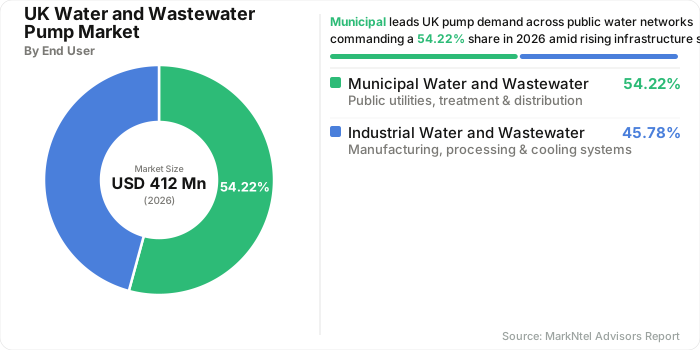
Based on end user, the municipal water & wastewater segment dominated the UK water and wastewater pump market in 2025, accounting for 54.22% of total revenue, primarily driven by sustained public investment in drinking water supply, wastewater treatment upgrades, and ageing infrastructure replacement. Additionally, stricter environmental regulations and resilience planning against flooding and climate variability continue to support steady demand from municipal utilities. Moreover, large-scale modernization programs emphasize energy-efficient and smart pumping systems, reinforcing the segment’s market leadership.
Looking ahead, the industrial water & wastewater segment is expected to be the fastest-growing end-user category, registering a projected CAGR of 3.76% during 2026–2032. This growth is supported by expanding industrial activities, tighter effluent discharge norms, and rising adoption of on-site wastewater treatment and water reuse systems. Furthermore, industries are increasingly investing in advanced pumping solutions to optimize operational efficiency and ensure regulatory compliance.
Gain a Competitive Edge with Our UK Water and Wastewater Pump Market Report:
- The UK Water and Wastewater Pump Market Report by MarkNtel Advisors provides a detailed & thorough analysis of market size & share, growth rate, competitive landscape, and key players. This comprehensive analysis helps businesses gain a holistic understanding of the market dynamics & make informed decisions.
- This report also highlights current market trends & future projections, allowing businesses to identify emerging opportunities & potential challenges. By understanding market forecasts, companies can align their strategies & stay ahead of the competition.
- The UK Water and Wastewater Pump Market Report aids in assessing & mitigating risks associated with entering or operating in the market. By understanding market dynamics, regulatory frameworks, and potential challenges, businesses can develop strategies to minimize risks & optimize their operations.
Frequently Asked Questions
- Market Segmentation
- Introduction
- Product Definition
- Research Process
- Assumptions
- Executive Summary
- UK Water and Wastewater Pump Market Policies, Regulations, and Product Standards
- UK Water and Wastewater Pump Market Trends & Developments
- UK Water and Wastewater Pump Market Dynamics
- Growth Factors
- Challenges
- UK Water and Wastewater Pump Market Hotspot & Opportunities
- UK Water and Wastewater Pump Market Outlook, 2022-2032F
- Market Size & Outlook
- By Revenues (USD Million)
- Market Share & Outlook
- By Types of Pumps- Market Size & Forecast 2022-2032, USD Million
- Centrifugal Pump
- Overhung Pump
- Vertical Inline
- Horizontal End Suction
- Split Case Pump
- Single/Two Stage
- Multistage
- Vertical Pump
- Turbine
- Solid handling
- Nonsolid handling
- Axial
- Mixed Flow
- Turbine
- Submersible Pump
- Solid Handling
- Non-solid Handling
- Overhung Pump
- Positive Displacement Pump
- Diaphragm Pump
- Piston Pump
- Gear Pump
- Lobe Pump
- Progressive Cavity Pump
- Screw Pump
- Vane Pump
- Peristaltic Pump
- Centrifugal Pump
- By End User- Market Size & Forecast 2022-2032, USD Million
- Municipal water and wastewater
- Industrial water and wastewater
- By Application- Market Size & Forecast 2022-2032, USD Million
- Water
- Wastewater
- By Company
- Competition Characteristics
- Market Share & Analysis
- By Types of Pumps- Market Size & Forecast 2022-2032, USD Million
- Market Size & Outlook
- UK Centrifugal Water and Wastewater Pump Market Outlook, 2022-2032
- Market Size & Outlook
- By Revenues (USD Million)
- Market Share & Outlook
- By End User- Market Size & Forecast 2022-2032, USD Million
- By Application- Market Size & Forecast 2022-2032, USD Million
- Market Size & Outlook
- UK Positive Displacement Water and Wastewater Pump Market Outlook, 2022-2032
- Market Size & Outlook
- By Revenues (USD Million)
- Market Share & Outlook
- By End User- Market Size & Forecast 2022-2032, USD Million
- By Application- Market Size & Forecast 2022-2032, USD Million
- Market Size & Outlook
- UK Water and Wastewater Pump Market Key Strategic Imperatives for Success & Growth
- Competitive Outlook
- Company Profiles
- ITT
- Business Description
- Product Portfolio
- Collaborations & Alliances
- Recent Developments
- Financial Details
- Others
- Kirloskar Brothers Limited
- Business Description
- Product Portfolio
- Collaborations & Alliances
- Recent Developments
- Financial Details
- Others
- Dover
- Business Description
- Product Portfolio
- Collaborations & Alliances
- Recent Developments
- Financial Details
- Others
- Flowserve
- Business Description
- Product Portfolio
- Collaborations & Alliances
- Recent Developments
- Financial Details
- Others
- Sulzer AG
- Business Description
- Product Portfolio
- Collaborations & Alliances
- Recent Developments
- Financial Details
- Others
- KSB
- Business Description
- Product Portfolio
- Collaborations & Alliances
- Recent Developments
- Financial Details
- Others
- Xylem
- Business Description
- Product Portfolio
- Collaborations & Alliances
- Recent Developments
- Financial Details
- Others
- Grundfos
- Business Description
- Product Portfolio
- Collaborations & Alliances
- Recent Developments
- Financial Details
- Others
- Ebara
- Business Description
- Product Portfolio
- Collaborations & Alliances
- Recent Developments
- Financial Details
- Others
- Franklin Electric
- Business Description
- Product Portfolio
- Collaborations & Alliances
- Recent Developments
- Financial Details
- Others
- Pentair PLC
- Business Description
- Product Portfolio
- Collaborations & Alliances
- Recent Developments
- Financial Details
- Others
- ITT
- Company Profiles
- Disclaimer
MarkNtel Advisors follows a robust and iterative research methodology designed to ensure maximum accuracy and minimize deviation in market estimates and forecasts. Our approach combines both bottom-up and top-down techniques to effectively segment and quantify various aspects of the market. A consistent feature across all our research reports is data triangulation, which examines the market from three distinct perspectives to validate findings. Key components of our research process include:
1. Scope & Research Design At the outset, MarkNtel Advisors define the research objectives and formulate pertinent questions. This phase involves determining the type of research—qualitative or quantitative—and designing a methodology that outlines data collection methods, target demographics, and analytical tools. They also establish timelines and budgets to ensure the research aligns with client goals.
2. Sample Selection and Data Collection In this stage, the firm identifies the target audience and determines the appropriate sample size to ensure representativeness. They employ various sampling methods, such as random or stratified sampling, based on the research objectives. Data collection is carried out using tools like surveys, interviews, and observations, ensuring the gathered data is reliable and relevant.
3. Data Analysis and Validation Once data is collected, MarkNtel Advisors undertake a rigorous analysis process. This includes cleaning the data to remove inconsistencies, employing statistical software for quantitative analysis, and thematic analysis for qualitative data. Validation steps are taken to ensure the accuracy and reliability of the findings, minimizing biases and errors.

4. Data Forecast and FinalizationThe final phase involves forecasting future market trends based on the analyzed data. MarkNtel Advisors utilize predictive modeling and time series analysis to anticipate market behaviors. The insights are then compiled into comprehensive reports, featuring visual aids like charts and graphs, and include strategic recommendations to inform client decision-making
We offer flexible licensing options to cater to varying organizational needs. Choose the pricing pack that best suits your requirements:
Buy Now Inquire Before Buying
 Request Customization
 Talk to our Consultant







