

Saudi Arabia Vitamin C Serum Market Research Report: Trends & Forecast (2026-2032)
By Formulation Type (Pure Ascorbic Acid, Stabilized Derivatives, Blended Serum), By Concentration Level (Below 10%, 10% – 20%, Above 20%), By Type (Mass, Premium, Luxury), By Appli ... cation (Anti-aging & Wrinkle Reduction, Brightening & Radiance Enhancement, Hyperpigmentation & Dark Spot Treatment, Acne & Blemish Control, Sun Damage Repair & Protection), By Distribution Channel (Hypermarkets & Supermarkets, Specialty Stores, Pharmacies & Drugstores, Online, Others), By Packaging Type (Dropper Bottles, Pump Bottles, Ampoules), and others Read more
- FMCG
- Apr 2026
- Pages 135
- Report Format: PDF, Excel, PPT
Saudi Arabia Vitamin C Serum Market
Projected 8.22% CAGR from 2026 to 2032
Study Period
2026-2032
Market Size (2026)
USD 17.8 Million
Market Size (2032)
USD 28.6 Million
Base Year
2025
Projected CAGR
8.22%
Leading Segments
By concentration level: 10%–20%
Saudi Arabia Vitamin C Serum Market Key Takeaways
- The Saudi Arabia Vitamin C Serum market was valued at USD 16.4 million in 2025 and is expected to witness consistent growth, reaching USD 28.6 million by 2032 from USD 17.8 million in 2026, at a CAGR of 8.22% during the forecast period.
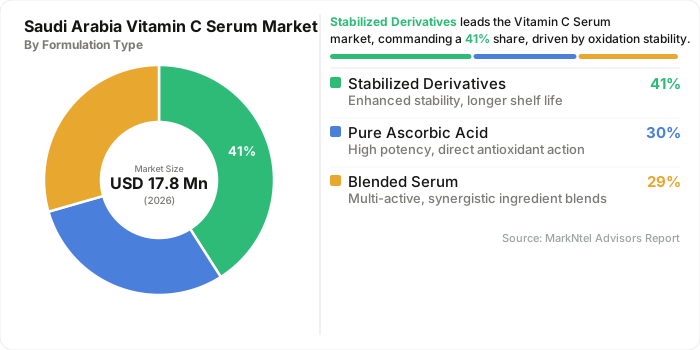
- Based on formulation type, stabilized derivatives are anticipated to maintain a dominant position, accounting for around 41% of the market share in 2026.
- By concentration level, the 10%–20% segment is projected to lead the market, capturing approximately 58% share in 2026.
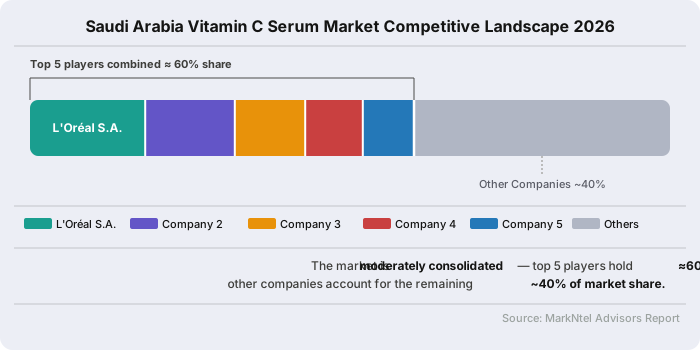
- The market exhibits a moderately consolidated structure, with the top five players collectively contributing nearly 60% of the overall market share.
Saudi Arabia Vitamin C Serum Market Size and Outlook
The Saudi Arabia Vitamin C Serum market size stood at USD 16.4 million in 2025 and is projected to rise to USD 17.8 million in 2026, further expanding to nearly USD 28.6 million by 2032. Along with this, the market is estimated to grow at a CAGR of around 8.22% during the forecast period, i.e., 2026-32.
The growth is significantly attributed to the rising environmental oxidative stress, evolving skin biology research, and formulation innovation in dermocosmetic skincare. Recent scientific findings highlight that ultraviolet (UV) exposure significantly increases reactive oxygen species (ROS) in the skin, triggering oxidative stress that accelerates cellular aging, reduces skin vitality, and contributes to dullness and uneven tone. ROS are highly reactive molecules that damage proteins, lipids, and DNA in skin cells, reinforcing the need for antioxidant-based skincare interventions such as Vitamin C serums .
Within this biological context, Vitamin C acts as a key antioxidant that neutralizes reactive oxygen species and supports collagen synthesis and skin repair mechanisms, making it one of the most important active ingredients in modern skincare formulations. This scientific foundation is directly influencing product development strategies in Saudi Arabia, where high UV exposure and hot climatic conditions amplify oxidative stress on the skin.
As a result, the market for skincare is shifting decisively toward high-performance, multi-active Vitamin C serum formulations, combining stabilized Vitamin C derivatives with complementary actives such as niacinamide, hyaluronic acid, peptides, and ferulic acid. These blended systems are increasingly preferred because they deliver multi-dimensional skin benefits including brightening, hydration, anti-aging, and barrier protection, while also improving formulation stability under extreme environmental conditions.
In Saudi Arabia’s high-temperature environment, where skincare products are frequently exposed to elevated heat during logistics, retail storage, and consumer use, formulation stability has become a critical performance parameter. This is accelerating the transition away from pure L-ascorbic acid toward stabilized antioxidant skincare products designed for longer shelf life, reduced oxidation, and improved efficacy retention.
Additionally, the demand for beauty industry is further witnessing strong expansion in dermocosmetic-grade skincare solutions, where pharmacy-led recommendations and dermatologist-influenced purchasing behavior are reinforcing demand for clinically validated formulations. These products are increasingly positioned as science-backed anti-aging skincare solutions and hyperpigmentation treatment products, aligning with rising consumer awareness of early preventive skincare.
Saudi Arabia Vitamin C Serum Market Key Indicators
- Saudi Arabia’s cosmetics sector operates under the SFDA’s mandatory GHAD notification system aligned with GSO 1943 standards, requiring pre-market product registration, safety assessment, and documentation compliance before commercialization. This regulatory framework establishes high entry barriers, limiting the presence of unregistered or informal brands while strengthening the position of compliant multinational and regional players. As a result, the Vitamin C serum category is increasingly concentrated within formally approved dermocosmetic brands, enhancing product traceability, quality assurance, and organized retail penetration across the Kingdom.
- Saudi Arabia’s population exceeds 35 million, with over 70% of citizens below the age of 35, creating a digitally connected and skincare-aware consumer base. This demographic structure supports widespread engagement with ingredient-led skincare trends, including antioxidant-based formulations such as Vitamin C. The large youth cohort significantly expands the addressable consumer pool, supporting sustained adoption of serum-based skincare routines across both online and offline retail channels.
- The Vitamin C serum category in Saudi Arabia demonstrates clear price tiering across mass and premium segments, with products ranging from approximately USD 10–20 in entry-level offerings to above USD 100 in premium dermocosmetic brands. This pricing dispersion is influenced by formulation type (pure L-ascorbic acid vs stabilized derivatives), concentration levels, packaging technology, and brand positioning. The presence of a wide pricing spectrum reflects strong premiumization and consumer segmentation, enabling brands to target both value-conscious and high-income consumers within the market.
- Female participation in Saudi Arabia’s labor force has increased to around 36%, with employment levels reaching approximately 31.8% in 2024, reflecting growing economic inclusion and independent purchasing capacity among women. This structural shift is contributing to higher discretionary spending on personal care and treatment-oriented skincare products, including Vitamin C serums. The trend is particularly evident in urban areas, where working women are driving demand for preventive and corrective skincare solutions through both retail and digital beauty platforms.
Saudi Arabia Vitamin C Serum Market Scope
| Category | Segments |
|---|---|
| By Formulation Type | (Pure Ascorbic Acid, Stabilized Derivatives, Blended Serum), |
| By Concentration Level | (Below 10%, 10% – 20%, Above 20%), |
| By Type | (Mass, Premium, Luxury), |
| By Application | (Anti-aging & Wrinkle Reduction, Brightening & Radiance Enhancement, Hyperpigmentation & Dark Spot Treatment, Acne & Blemish Control, Sun Damage Repair & Protection), |
| By Distribution Channel | (Hypermarkets & Supermarkets, Specialty Stores, Pharmacies & Drugstores, Online, Others), |
| By Packaging Type | (Dropper Bottles, Pump Bottles, Ampoules), |
Saudi Arabia Vitamin C Serum Market Growth Drivers
High UV Exposure & Skin Damage Concerns
Saudi Arabia’s Vitamin C Serum industry is increasingly driven by strong environmental and health-related factors that are accelerating demand for anti-aging skincare solutions and antioxidant-rich formulations. The country’s consistently high ultraviolet (UV) exposure creates a significant burden on skin health, making protective skincare a necessity rather than a cosmetic choice. A national study conducted between August 2024 and January 2025 confirms that elevated UV index levels in Saudi Arabia significantly increase the risk of photo-induced skin damage, including cellular DNA damage, which is a primary cause of pigmentation, dullness, and premature aging .
This growing concern is directly boosting demand for hyperpigmentation treatment products, particularly Vitamin C serums known for their antioxidant and brightening properties. For instance, stabilized formulations such as Babé Antiox 15% Vitamin C Serum, enriched with ferulic acid and hyaluronic acid, are designed to reduce oxidative stress, improve skin tone, and protect against environmental aggressors like UV radiation, pollution, and blue light exposure .
In addition, rising awareness of long-term UV-related health risks further strengthens market growth. Data from the Saudi Cancer Registry indicates that skin cancer accounts for approximately 2.2% of all new cancer cases in the Kingdom, with UV exposure identified as a key contributing factor.
Overall, the combination of environmental stress, increasing dermatological awareness, and rising demand for preventive skincare is driving strong adoption of Vitamin C-based antioxidant formulations in Saudi Arabia. This positions anti-aging skincare solutions and hyperpigmentation treatment products as key growth segments in the evolving dermocosmetic landscape.
Recent Trends
Rise of High-Performance Multi-Active Vitamin C Formulations
The Saudi Arabia vitamin C serum industry is increasingly shaped by a shift toward high-performance, multi-functional skincare formulations. Products such as Alpha Plus Vitamin C Serum exemplify this transition, highlighting the growing consumer preference for clinical-strength actives. The use of high-concentration vitamin C, often combined with stabilized derivatives like 3-O-Ethyl Ascorbic Acid, reflects rising demand for enhanced efficacy and longer product stability, particularly suited to the region’s hot climatic conditions .
In addition, there is a clear trend toward multi-active formulations, where vitamin C is blended with complementary ingredients such as niacinamide, hyaluronic acid, and peptides. This approach addresses multiple skin concerns, including pigmentation, dehydration, and early signs of aging, within a single product, aligning with consumer demand for simplified yet effective skincare routines. Furthermore, the market is witnessing the expansion of dermocosmetic products, bridging the gap between pharmaceutical-grade skincare and beauty products, often distributed through pharmacies and dermatology channels.
Another emerging trend is the focus on gentle yet potent formulations, with products being free from harsh additives while maintaining high efficacy. Overall, these developments indicate a strong movement toward science-backed, climate-adapted, and multifunctional skincare solutions in Saudi Arabia.
Saudi Arabia Vitamin C Serum Market Opportunities and Challenges
Thermal Instability of L-Ascorbic Acid and Regulatory Tightening Driving Demand for Stabilized Halal Vitamin C Serums
L-ascorbic acid instability presents a structural challenge in Saudi Arabia’s Vitamin C Serum industry due to its strong sensitivity to heat and oxidation, particularly in L-ascorbic acid skincare formulations. Scientific evidence shows that L-ascorbic acid degrades rapidly above 25°C, with accelerated breakdown at 40°C conditions, leading to loss of efficacy in antioxidant skincare products and visible discoloration of formulations. In Saudi Arabia, where ambient temperatures remain high, logistics and retail environments often lack temperature-controlled storage, this instability significantly reduces product shelf life, consistency, and consumer trust. At the same time, evolving regulatory oversight by the Saudi Food and Drug Authority is increasing compliance requirements through mandatory Product Information File (PIF) documentation, ingredient traceability, and conformity assessment processes, further raising reformulation costs and market entry barriers for cosmetic brands relying on unstable actives.
However, this combined climatic and regulatory pressure is simultaneously unlocking a high-value opportunity in the halal cosmetics market Saudi Arabia. The limitations of pure L-ascorbic acid are accelerating demand for thermally stable Vitamin C derivatives such as ascorbyl glucoside and sodium ascorbyl phosphate, which maintain efficacy under high-temperature conditions and offer improved oxidation resistance. This shift is further strengthened by Saudi Arabia’s strategic push toward a halal-certified beauty ecosystem. In May 2024, the Halal Products Development Company invested in Believe, a halal cosmetics manufacturer, reinforcing the Kingdom’s ambition to become a global hub for halal beauty products . This initiative reflects growing institutional support for alcohol-free, compliant, and stabilized skincare formulations.
As a result, the convergence of heat instability, regulatory tightening, and halal market expansion is transforming a formulation challenge into a strong growth opportunity for SFDA-compliant, thermally stable, and halal-certified Vitamin C serums in Saudi Arabia.
Segmentation Insights
Stabilized Vitamin C Derivatives Emerge as the Leading Segment in Serum Formulations
Stabilized Derivatives contribute approximately 41% share of the overall volume in the Saudi Arabia Vitamin C serum market, due to their superior resistance to oxidation, heat stability, and longer shelf life under harsh environmental conditions. In contrast to pure ascorbic acid, derivatives such as ascorbyl glucoside and sodium ascorbyl phosphate maintain structural integrity even when exposed to elevated temperatures commonly experienced across Saudi retail storage, logistics networks, and consumer usage environments. This makes them more reliable in real-world conditions where temperature control is inconsistent. Their formulation advantage also aligns with increasing regulatory expectations under the Saudi Food and Drug Authority framework, which emphasizes product stability, safety documentation, and quality consistency through Product Information File requirements.
Additionally, stabilized derivatives offer improved compatibility with alcohol-free and gentle skincare systems, which are highly preferred in sensitive-skin and dermocosmetic segments. Their ability to reduce irritation while maintaining antioxidant efficacy has strengthened their adoption across both pharmacy-led and premium skincare channels. As a result, brands are increasingly reformulating away from unstable pure L-ascorbic acid toward derivative-based systems that ensure performance consistency, regulatory compliance, and suitability for Saudi Arabia’s high-temperature environment, making stabilized derivatives the most commercially dominant type in the market. Based on formulation type, the scope has been segmented into
- Pure Ascorbic Acid
- Stabilized Derivatives
- Blended Serum
10%–20% Concentration Segment Leading the Vitamin C Serum Market
The 10%–20% concentration range accounts for approximately 58% share, due to its optimal balance between efficacy, safety, and formulation stability. This concentration band is widely considered the “functional therapeutic range,” delivering visible brightening, antioxidant protection, and anti-aging benefits without the irritation risks associated with higher-strength formulations above 20%.
In Saudi Arabia, this segment is particularly dominant because consumers increasingly prefer dermatologist-recommended, tolerable skincare products suited for long-term use in harsh climatic conditions. High ambient temperatures and increased skin sensitivity due to environmental exposure further reinforce demand for moderate-strength formulations that minimize oxidative stress on the skin barrier. From a formulation perspective, this range is also more stable, especially when paired with stabilized Vitamin C derivatives, ensuring better performance consistency under real-world storage and distribution conditions. Additionally, the segment aligns well with regulatory expectations set by the Saudi Food and Drug Authority, which prioritizes product safety, stability, and documented efficacy. Pharmacies and dermocosmetic retailers strongly promote this concentration level as the standard recommendation for most consumers, further reinforcing its dominance. As a result, the 10%–20% segment captures the highest market share due to its strong alignment with efficacy, tolerability, stability, and regulatory-compliant formulation practices in Saudi Arabia. The key concentration level mapped in the study involves
- Below 10%
- 10% – 20%
- Above 20%
Saudi Arabia Vitamin C Serum Industry Competitive Analysis
The Saudi Arabia Vitamin C serum market is moderately consolidated, with a mix of global dermocosmetic leaders and premium skincare brands operating across pharmacy, specialty retail, and online channels. The top players, including L'Oréal S.A., Estée Lauder Companies Inc., Procter & Gamble Co., Beiersdorf AG, and Johnson & Johnson, collectively account for approximately 60% of the market share, reflecting a competitive landscape driven by strong pharmacy penetration, regulatory entry barriers, and dominance in stabilized and clinically formulated skincare products.
Key Companies Operating in Vitamin C Serum Market
- L'Oréal S.A.
- Estée Lauder
- Procter & Gamble Co.
- Johnson & Johnson
- Beiersdorf AG
- Unilever PLC
- SkinCeuticals,
- Paula's Choice LLC
- Amorepacific Corporation
- ZO Skin Health Inc
- Others
Saudi Arabia Vitamin C Serum Industry News and Recent Developments
2025 – e.l.f. Beauty Expands Retail Presence Across Saudi Arabia via Sephora
In November 2025, e.l.f. Beauty expanded its presence across the GCC, including Saudi Arabia, through a strategic retail partnership with Sephora, strengthening its international distribution footprint. The expansion introduced its ingredient-led skincare portfolio, including Vitamin C-based formulations, into premium and mass-accessible retail environments.
Impact Analysis: This development enhances product accessibility across price segments, intensifies competition within the serum category, and accelerates the adoption of ingredient-focused skincare among younger consumers. It also supports the expansion of omnichannel beauty retail, strengthening the availability and visibility of Vitamin C serums in Saudi Arabia.
Frequently Asked Questions
- Market Segmentation
- Introduction
- Product Definition
- Research Process
- Assumptions
- Executive Summary
- Saudi Arabia Vitamin C Serum Market Policies, Regulations, and Product Standards
- Saudi Arabia Vitamin C Serum Market Trends & Developments
- Saudi Arabia Vitamin C Serum Market Dynamics
- Growth Factors
- Challenges
- Saudi Arabia Vitamin C Serum Market Hotspot & Opportunities
- Saudi Arabia Vitamin C Serum Market Outlook, 2022-2032F
- Market Size & Outlook
- By Revenues (USD Million)
- Market Share & Outlook
- By Formulation Type- Market Size & Forecast 2022-2032, USD Million
- Pure Ascorbic Acid
- Stabilized Derivatives
- Blended Serum
- By Concentration Level- Market Size & Forecast 2022-2032, USD Million
- Below 10%
- 10% – 20%
- Above 20%
- By Type- Market Size & Forecast 2022-2032, USD Million
- Mass
- Premium
- Luxury
- By Application- Market Size & Forecast 2022-2032, USD Million
- Anti-aging & Wrinkle Reduction
- Brightening & Radiance Enhancement
- Hyperpigmentation & Dark Spot Treatment
- Acne & Blemish Control
- Sun Damage Repair & Protection
- By Distribution Channel- Market Size & Forecast 2022-2032, USD Million
- Hypermarkets & Supermarkets
- Specialty Stores
- Pharmacies & Drugstores
- Online
- Others
- By Packaging Type- Market Size & Forecast 2022-2032, USD Million
- Dropper Bottles
- Pump Bottles
- Ampoules
- By Region- Market Size & Forecast 2022-2032, USD Million
- East
- West
- South
- Central
- By Company
- Competition Characteristics
- Market Share & Analysis
- By Formulation Type- Market Size & Forecast 2022-2032, USD Million
- Market Size & Outlook
- Saudi Arabia Pure Ascorbic Acid Market Outlook, 2022-2032
- Market Size & Outlook
- By Revenues (USD Million)
- Market Share & Outlook
- By Concentration Level- Market Size & Forecast 2022-2032, USD Million
- By Type- Market Size & Forecast 2022-2032, USD Million
- By Application- Market Size & Forecast 2022-2032, USD Million
- By Distribution Channel- Market Size & Forecast 2022-2032, USD Million
- By Packaging Type- Market Size & Forecast 2022-2032, USD Million
- By Region- Market Size & Forecast 2022-2032, USD Million
- Market Size & Outlook
- Saudi Arabia Stabilized Derivatives Market Outlook, 2022-2032
- Market Size & Outlook
- By Revenues (USD Million)
- Market Share & Outlook
- By Concentration Level- Market Size & Forecast 2022-2032, USD Million
- By Type- Market Size & Forecast 2022-2032, USD Million
- By Application- Market Size & Forecast 2022-2032, USD Million
- By Distribution Channel- Market Size & Forecast 2022-2032, USD Million
- By Packaging Type- Market Size & Forecast 2022-2032, USD Million
- By Region- Market Size & Forecast 2022-2032, USD Million
- Market Size & Outlook
- Saudi Arabia Blended Serum Market Outlook, 2022-2032
- Market Size & Outlook
- By Revenues (USD Million)
- Market Share & Outlook
- By Concentration Level- Market Size & Forecast 2022-2032, USD Million
- By Type- Market Size & Forecast 2022-2032, USD Million
- By Application- Market Size & Forecast 2022-2032, USD Million
- By Distribution Channel- Market Size & Forecast 2022-2032, USD Million
- By Packaging Type- Market Size & Forecast 2022-2032, USD Million
- By Region- Market Size & Forecast 2022-2032, USD Million
- Market Size & Outlook
- Saudi Arabia Vitamin C Serum Market Key Strategic Imperatives for Success & Growth
- Competitive Outlook
- Company Profiles
- L'Oréal S.A.
- Business Description
- Product Portfolio
- Collaborations & Alliances
- Recent Developments
- Financial Details
- Others
- Estée Lauder
- Business Description
- Product Portfolio
- Collaborations & Alliances
- Recent Developments
- Financial Details
- Others
- Procter & Gamble Co.
- Business Description
- Product Portfolio
- Collaborations & Alliances
- Recent Developments
- Financial Details
- Others
- Johnson & Johnson
- Business Description
- Product Portfolio
- Collaborations & Alliances
- Recent Developments
- Financial Details
- Others
- Beiersdorf AG
- Business Description
- Product Portfolio
- Collaborations & Alliances
- Recent Developments
- Financial Details
- Others
- Unilever PLC
- Business Description
- Product Portfolio
- Collaborations & Alliances
- Recent Developments
- Financial Details
- Others
- SkinCeuticals,
- Business Description
- Product Portfolio
- Collaborations & Alliances
- Recent Developments
- Financial Details
- Others
- Paula's Choice LLC
- Business Description
- Product Portfolio
- Collaborations & Alliances
- Recent Developments
- Financial Details
- Others
- Amorepacific Corporation
- Business Description
- Product Portfolio
- Collaborations & Alliances
- Recent Developments
- Financial Details
- Others
- ZO Skin Health Inc.
- Business Description
- Product Portfolio
- Collaborations & Alliances
- Recent Developments
- Financial Details
- Others
- Others
- L'Oréal S.A.
- Company Profiles
- Disclaimer
MarkNtel Advisors follows a robust and iterative research methodology designed to ensure maximum accuracy and minimize deviation in market estimates and forecasts. Our approach combines both bottom-up and top-down techniques to effectively segment and quantify various aspects of the market. A consistent feature across all our research reports is data triangulation, which examines the market from three distinct perspectives to validate findings. Key components of our research process include:
1. Scope & Research Design At the outset, MarkNtel Advisors define the research objectives and formulate pertinent questions. This phase involves determining the type of research—qualitative or quantitative—and designing a methodology that outlines data collection methods, target demographics, and analytical tools. They also establish timelines and budgets to ensure the research aligns with client goals.
2. Sample Selection and Data Collection In this stage, the firm identifies the target audience and determines the appropriate sample size to ensure representativeness. They employ various sampling methods, such as random or stratified sampling, based on the research objectives. Data collection is carried out using tools like surveys, interviews, and observations, ensuring the gathered data is reliable and relevant.
3. Data Analysis and Validation Once data is collected, MarkNtel Advisors undertake a rigorous analysis process. This includes cleaning the data to remove inconsistencies, employing statistical software for quantitative analysis, and thematic analysis for qualitative data. Validation steps are taken to ensure the accuracy and reliability of the findings, minimizing biases and errors.

4. Data Forecast and FinalizationThe final phase involves forecasting future market trends based on the analyzed data. MarkNtel Advisors utilize predictive modeling and time series analysis to anticipate market behaviors. The insights are then compiled into comprehensive reports, featuring visual aids like charts and graphs, and include strategic recommendations to inform client decision-making
We offer flexible licensing options to cater to varying organizational needs. Choose the pricing pack that best suits your requirements:
Buy Now Inquire Before Buying
 Request Customization
 Talk to our Consultant







