

Indonesia Mushroom Market Research Report: Forecast (2025-2030)
Indonesia Mushroom Market Size, Trends and Outlook By Type (Button Mushrooms, Shiitake Mushrooms, Oyster Mushrooms, Exotic & Medicinal Mushrooms), By Form (Fresh Mushrooms, Dried M ... ushrooms, Processed Mushrooms), By Application (Culinary, Pharmaceutical / Nutraceutical, Cosmetics & Personal Care, Others), By Distribution Channel (Traditional Wet Markets, Modern Retail, Online Sales/E-commerce, Specialty Organic Stores) and Others Read more
- Food & Beverages
- Jul 2025
- Pages 118
- Report Format: PDF, Excel, PPT
Market Insights & Analysis: Indonesia Mushroom Market (2025-30)
The Indonesia mushroom market is experiencing robust growth, driven by increasing health awareness, expanding vegetarian and vegan lifestyles, and a growing demand for plant-based protein alternatives. As one of Southeast Asia’s largest agricultural economies, Indonesia is poised to become a key player in the global mushroom industry.
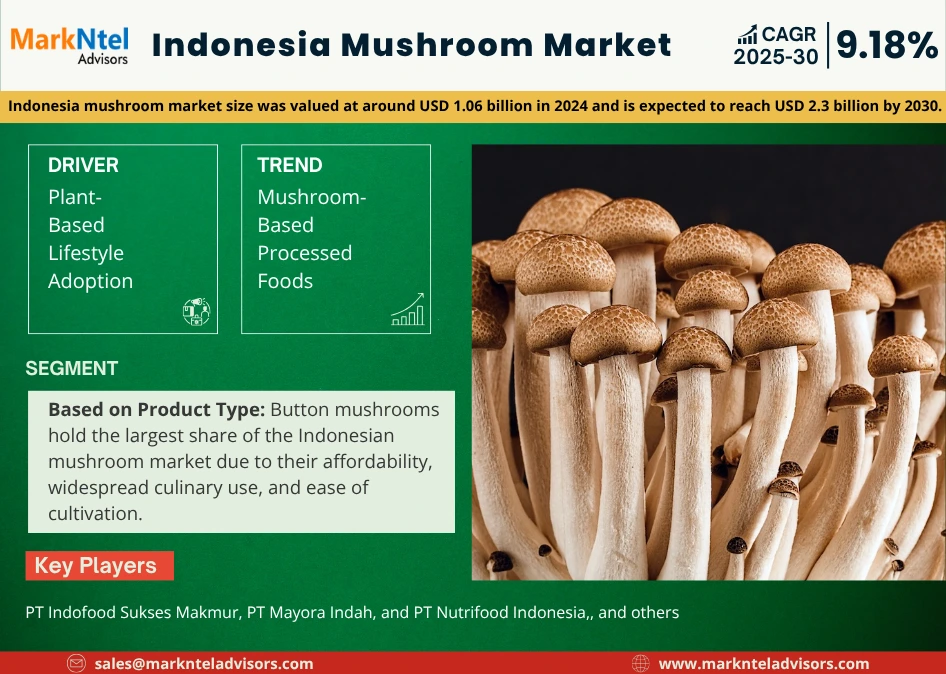
The mushroom industry in Indonesia has evolved significantly in recent years. Traditionally known for varieties like shiitake, oyster, and wood ear mushrooms, the market is now expanding into functional and medicinal mushrooms such as reishi, cordyceps, and lion’s mane. According to industry analysis, the Indonesia mushroom market size was valued at around USD 1.06 billion in 2024 and is expected to reach USD 2.3 billion by 2030. Along with this, the market is estimated to grow at a CAGR of around 9.18% during the forecast period, i.e., 2025-30, driven by both domestic consumption and export potential.
| Report Coverage | Details |
|---|---|
| Historical Years | 2020–23 |
| Base Years | 2024 |
| Forecast Years | 2025–30 |
| Market Value in 2024 | USD 1.06 Billion |
| Market Value by 2030 | USD 2.3 Billion |
| CAGR (2025–30) | 9.18% |
| Leading Region | Java |
| Top Key Players | PT Indofood Sukses Makmur, PT Mayora Indah, and PT Nutrifood Indonesia,, and others |
| Segmentation | By Type (Button Mushrooms, Shiitake Mushrooms, Oyster Mushrooms, Exotic & Medicinal Mushrooms), By Form (Fresh Mushrooms, Dried Mushrooms, Processed Mushrooms), By Application (Culinary, Pharmaceutical / Nutraceutical, Cosmetics & Personal Care, Others), By Distribution Channel (Traditional Wet Markets, Modern Retail, Online Sales/E-commerce, Specialty Organic Stores) and Others |
| Key Report Highlights |
|
*Boost strategic growth with in-depth market analysis - Get a free sample preview today!
Indonesia Mushroom Market Key Drivers:
- Health & Wellness Trends: As consumers prioritize immune-boosting foods, mushrooms are becoming a staple in daily diets, valued for their low fat, high fiber, and antioxidant-rich profiles.
- Plant-Based Lifestyle Adoption: The shift toward vegetarian and vegan diets in urban centers like Jakarta, Surabaya, and Bandung has fueled demand for protein-rich mushrooms.
- Agro-Economic Support: Government initiatives supporting organic farming, agritech, and rural entrepreneurship are encouraging mushroom cultivation across provinces like West Java, East Java, and Central Java.
- Functional Mushroom Demand: There is growing awareness and usage of medicinal mushrooms for cognitive, immune, and anti-inflammatory benefits, especially among the youth and wellness-focused consumers.
Indonesia Mushroom Market Trends:
- Mushroom-Based Processed Foods: A rise in mushroom snacks, powders, teas, and meat alternatives is reshaping consumer habits.
- Urban Mushroom Farming: Innovative farming methods like hydroponics and vertical farming are gaining traction in urban areas.
- E-Commerce Penetration: Online platforms are making fresh and organic mushrooms more accessible to households and restaurants.
- Sustainability Focus: Mushrooms’ low environmental impact is drawing eco-conscious consumers and investors.
Challenges and Opportunities in Indonesia Mushroom Market:
While the market outlook remains positive, the industry faces challenges such as:
- Supply Chain Gaps: Limited cold chain infrastructure affects the shelf-life and freshness of mushrooms.
- Knowledge Gaps: Lack of farmer training in advanced cultivation methods and pest management.
- Price Fluctuations: Seasonal price volatility for both raw mushrooms and value-added products.
Segmentation Analysis of the Indonesia Mushroom Market (2025-30)
The Indonesia Mushroom Market study of MarkNtel Advisors evaluates & highlights the major trends and influencing factors in each segment. It includes predictions for the period 2025–2030 at the national level. Based on the analysis, the market has been further classified as:
By Product Type:
Button mushrooms hold the largest share of the Indonesian mushroom market due to their affordability, widespread culinary use, and ease of cultivation. However, shiitake and oyster mushrooms are quickly gaining ground, driven by growing consumer interest in plant-based protein and Asian fusion cuisine.
There is also a steady rise in exotic mushroom varieties, including enoki and maitake, particularly in urban centers like Jakarta, Bandung, and Surabaya, where health trends and gourmet cooking are influencing buying behavior.
By Form:
Consumers still overwhelmingly prefer fresh mushrooms, but the rising popularity of dried and processed mushroom products—such as powders, capsules, and snacks—is undeniable. These forms cater to health-conscious individuals and supplement users looking for convenient and long-lasting options.
Processed mushrooms are also penetrating export markets, contributing to Indonesia’s agricultural diversification.
By Region:
Java, particularly West Java and Central Java, remains the production and consumption hub for mushrooms in Indonesia. The region benefits from favorable climatic conditions, skilled labor, and better infrastructure.
However, Eastern Indonesia—including Sulawesi and Papua—is emerging as a promising zone for mushroom cultivation, supported by government initiatives and land availability. This presents new opportunities for agritech investors and sustainable farming practices.
Top Indonesia Mushroom Market Leading Companies: Players, Analysis & Future Outlook
Companies such as Java Mushrooms, Tropica Organic, and Mushindo Agro are leading the domestic scene, while import-export companies explore regional markets like Singapore, Malaysia, and South Korea
Gain a Competitive Edge with Our Indonesia Mushroom Market Report
- Indonesia Mushroom Market by MarkNtel Advisors provides a detailed & thorough analysis of market size & share, growth rate, competitive landscape, and key players. This comprehensive analysis helps businesses gain a holistic understanding of the market dynamics & make informed decisions.
- This report also highlights current market trends & future projections, allowing businesses to identify emerging opportunities & potential challenges. By understanding market forecasts, companies can align their strategies & stay ahead of the competition.
- Indonesia Mushroom Market Report aids in assessing & mitigating risks associated with entering or operating in the market. By understanding market dynamics, regulatory frameworks, and potential challenges, businesses can develop strategies to minimize risks & optimize their operations.
*Reports Delivery Format - Market research studies from MarkNtel Advisors are offered in PDF, Excel and PowerPoint formats. Within 24 hours of the payment being successfully received, the report will be sent to your email address.
Frequently Asked Questions
Indonesia Mushroom Market Insights, 2020–2030F
1. Market Segmentation
2. Introduction
2.1 Overview of Indonesia's Mushroom Industry
2.2 Market Relevance and Scope
3. Market Definition
3.1 Definition of Mushroom Types
3.2 Classification by Form, Application, and Distribution
4. Research Methodology
4.1 Primary Research Sources
4.2 Secondary Research Sources
4.3 Market Estimation and Forecasting Model
4.4 Data Validation and Assumptions
5. Assumptions & Limitations
5.1 Key Assumptions
5.2 Research Limitations
6. Executive Summary
6.1 Key Highlights
6.2 Market Snapshot (2024–2030F)
6.3 Strategic Insights for Stakeholders
7. Indonesia Mushroom Market Trends & Insights
7.1 Current Market Trends
7.2 Rising Demand for Functional & Medicinal Mushrooms
7.3 Organic & Sustainable Farming Trends
7.4 Mushroom Integration in F&B and Wellness Products
8. Indonesia Mushroom Market Dynamics
8.1 Growth Drivers
8.2 Challenges & Restraints
8.3 Market Opportunities
8.4 Regulatory Environment Impact
9. Indonesia Mushroom Market Hotspots & Opportunities
9.1 Key Growth Regions
9.2 Investment-Ready Segments
9.3 Value-Added Mushroom Product Opportunities
10. Indonesia Mushroom Market Supply Chain Analysis
10.1 Production Lifecycle
10.2 Cold Chain & Logistics
10.3 Distribution & Retail Flow
11. Indonesia Mushroom Market Regulation & Policy
11.1 Agricultural Policies & Subsidies
11.2 Organic Certification Guidelines
11.3 Food Safety Regulations
11.4 Import/Export Regulations
12. Indonesia Mushroom Market Outlook, 2020–2030F
12.1 Market Size & Forecast – By Revenue (USD Million)
12.2 Market Size & Forecast – By Volume (Metric Tons)
13. Market Share & Analysis
13.1 By Type
- Button Mushrooms – Market Size & Forecast, 2020–2030F
- Shiitake Mushrooms – Market Size & Forecast, 2020–2030F
- Oyster Mushrooms – Market Size & Forecast, 2020–2030F
- Exotic & Medicinal Mushrooms – Market Size & Forecast, 2020–2030F
13.2 By Form
- Fresh Mushrooms
- Dried Mushrooms
- Processed Mushrooms (Canned, Powder, etc.)
13.3 By Application
- Culinary
- Pharmaceutical / Nutraceutical
- Cosmetics & Personal Care
- Others (Biodegradable Materials, etc.)
13.4 By Distribution Channel
- Traditional Wet Markets
- Modern Retail (Supermarkets, Hypermarkets)
- Online Sales / E-commerce
- Specialty Organic Stores
13.5 By Region
- Java
- Sumatra
- Kalimantan
- Sulawesi
- Rest of Indonesia
14. Competitive Landscape & Market Share Analysis
14.1 Market Structure & Characteristics
14.2 Market Share of Leading Players
14.3 Competitive Benchmarking
15. Segment-Specific Market Outlook, 2020–2030F
15.1 Button Mushroom Market
- Revenue & Volume Forecast
- Key Producers and Trends
15.2 Oyster Mushroom Market
- Revenue & Volume Forecast
- Regional Demand Analysis
15.3 Shiitake & Medicinal Mushroom Market
- Revenue & Volume Forecast
- Export Trends & Wellness Industry Applications
16. Indonesia Mushroom Market – Strategic Imperatives for Success
16.1 Expansion Strategies for Growers
16.2 Value Chain Optimization
16.3 Branding, Packaging & Differentiation
16.4 Technology Adoption (Indoor Farming, AI in Agriculture)
17. Company Profiles & Competitive Outlook
17.1 PT Indo Agro Niaga
- Company Overview
- Product Portfolio
- Distribution Network
- Recent Developments
17.2 Javara Indigenous Indonesia
- Company Overview
- Specialty Mushroom Products
- Export Presence
- Financial Overview
17.3 Agro Boga Utama
- Business Profile
- Strategic Alliances
- Domestic Market Presence
17.4 Local and Regional Mushroom Farms
- Production Capacity
- Market Reach
- Technology Use
17.5 Other Key Players
18. Disclaimer
MarkNtel Advisors follows a robust and iterative research methodology designed to ensure maximum accuracy and minimize deviation in market estimates and forecasts. Our approach combines both bottom-up and top-down techniques to effectively segment and quantify various aspects of the market. A consistent feature across all our research reports is data triangulation, which examines the market from three distinct perspectives to validate findings. Key components of our research process include:
1. Scope & Research Design At the outset, MarkNtel Advisors define the research objectives and formulate pertinent questions. This phase involves determining the type of research—qualitative or quantitative—and designing a methodology that outlines data collection methods, target demographics, and analytical tools. They also establish timelines and budgets to ensure the research aligns with client goals.
2. Sample Selection and Data Collection In this stage, the firm identifies the target audience and determines the appropriate sample size to ensure representativeness. They employ various sampling methods, such as random or stratified sampling, based on the research objectives. Data collection is carried out using tools like surveys, interviews, and observations, ensuring the gathered data is reliable and relevant.
3. Data Analysis and Validation Once data is collected, MarkNtel Advisors undertake a rigorous analysis process. This includes cleaning the data to remove inconsistencies, employing statistical software for quantitative analysis, and thematic analysis for qualitative data. Validation steps are taken to ensure the accuracy and reliability of the findings, minimizing biases and errors.

4. Data Forecast and FinalizationThe final phase involves forecasting future market trends based on the analyzed data. MarkNtel Advisors utilize predictive modeling and time series analysis to anticipate market behaviors. The insights are then compiled into comprehensive reports, featuring visual aids like charts and graphs, and include strategic recommendations to inform client decision-making
We offer flexible licensing options to cater to varying organizational needs. Choose the pricing pack that best suits your requirements:
Buy Now Inquire Before Buying
 Request Customization
 Talk to our Consultant







