Global Liquid Fertilizer Market Research Report: Size, Share, Trends & Forecast (2026-2032)
By Type (Nitrogen, Phosphorus, Potassium, Micronutrients), By Crop Type (Cereals & Grains, Fruits & Vegetables, Oilseeds & Pulses, Turf & Ornamentals), By Application Method (Soil ... Application, Foliar Application, Fertigation), By Formulation (Solution, Suspension), and others Read more
- Chemicals
- Apr 2026
- Pages 410
- Report Format: PDF, Excel, PPT
Global Liquid Fertilizer Market
Projected 10.28% CAGR from 2026 to 2032
Study Period
2026-2032
Market Size (2026)
USD 5.12 Billion
Market Size (2032)
USD 9.21 Billion
Largest Region
Asia-Pacific
Projected CAGR
10.28%
Leading Segments
By Type: Nitrogen
Global Liquid Fertilizer Market Report Key Takeaways:
- The Global Liquid Fertilizer Market size was valued at around USD 4.98 billion in 2025 and is projected grow from USD 5.12 billion in 2026 to USD 9.21 billion by 2032, exhibiting a CAGR of 10.28% during the forecast period.
- Asia-Pacific holds the largest market share of about 36.42% in the Global Liquid Fertilizer Market in 2026.
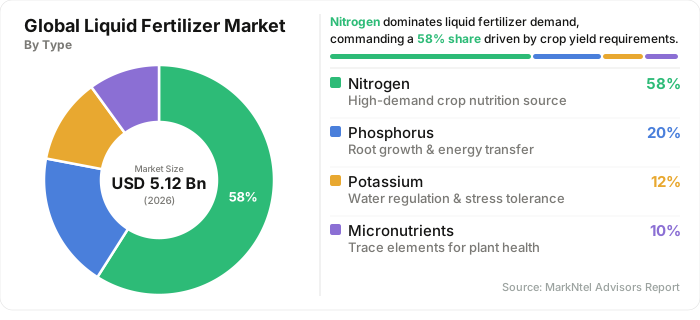
- By Type, the Nitrogen segment represented a significant share of about 58% in the Global Liquid Fertilizer Market in 2026.
- By Application Method, the Soil Application segment presented a significant share of about 51% in the Global Liquid Fertilizer Market in 2026.
Market Insights & Analysis: Global Liquid Fertilizer Market (2026-32):
The Global Liquid Fertilizer Market size was valued at around USD 4.98 billion in 2025 and is projected grow from USD 5.12 billion in 2026 to USD 9.21 billion by 2032, exhibiting a CAGR of 10.28% during the forecast period, i.e., 2026-32.
The Global Liquid Fertilizer Market has demonstrated steady growth, supported by rising agricultural intensity and sustained fertilizer consumption worldwide. According to the Food and Agriculture Organization, global fertilizer use reached approximately 190 million tonnes of nutrients, reflecting consistent demand for crop inputs. Liquid fertilizers have gained importance due to faster nutrient absorption and compatibility with modern irrigation systems. Their increasing adoption in high-value crops has strengthened their role in improving productivity and nutrient-use efficiency.
Current market conditions are shaped by strong demand from commercial farming and large-scale agricultural operations. The FAO indicates that Asia accounts for nearly 56% of global fertilizer consumption, highlighting a concentrated demand base . In North America, the United States Department of Agriculture reports that over 90% of corn acreage utilizes nitrogen fertilizers, including liquid forms. These trends indicate that large-scale commercial farms and mechanized agriculture remain the primary end users driving market demand.
Government policies and industry investments are further accelerating market expansion across regions. The European Commission’s sustainability targets aim to bring at least 25% of farmland under sustainable practices by 2030 , encouraging efficient fertilizer use. Additionally, Yara International ASA is advancing investments in low-emission ammonia and sustainable fertilizer production , while Nutrien Ltd. is optimizing its portfolio through a ~USD 600 million divestment, enabling reinvestment into core fertilizer operations and efficiency improvements .
Looking ahead, the market outlook remains positive due to increasing food demand and regional growth opportunities. Brazil’s agricultural output exceeded 160 million tonnes of soybeans, indicating rising input intensity in Latin America. Meanwhile, fertilizer use in Sub-Saharan Africa remains below 25 kg per hectare compared to the global average, highlighting significant untapped potential. Continued investments in irrigation infrastructure, sustainable farming practices, and advanced nutrient delivery systems are expected to sustain long-term demand for liquid fertilizers globally.
Global Liquid Fertilizer Market Recent Developments:
- 2025 : Yara South Asia advanced trials of new liquid-based fertilizers and micronutrient solutions in 2025, including potash-based liquid products for fruit crops. These innovations aim to improve crop quality and nutrient efficiency, although commercialization timelines depend on regulatory approvals in India.
- 2025: Kugler Company announced the launch of K-CARB ProStart™, a low-salt, high-ortho liquid starter fertilizer designed to enhance early crop growth. The product integrates micronutrients and fulvic for improved soil health and nutrient uptake, and supports both in-furrow and foliar application, enabling efficient one-pass farming operations.
Global Liquid Fertilizer Market Scope:
| Category | Segments |
|---|---|
| By Type | (Nitrogen, Phosphorus, Potassium, Micronutrients), |
| By Crop Type | (Cereals & Grains, Fruits & Vegetables, Oilseeds & Pulses, Turf & Ornamentals), |
| By Application Method | (Soil Application, Foliar Application, Fertigation), |
| By Formulation | (Solution, Suspension), |
Global Liquid Fertilizer Market Driver:
Rising Global Food Demand
Rising global food demand has emerged as the most influential structural driver of fertilizer consumption, directly expanding agricultural input requirements worldwide. The United Nations projects the global population to reach approximately 8.5 billion by 2030, intensifying pressure on food systems . In response, the Food and Agriculture Organization estimates global cereal production reached over 3 billion tonnes in 2025, marking a record high . This sustained increase in food production reflects a direct response to rising consumption needs and growing dietary demand.
This driver has intensified in recent years due to rising food consumption and supply pressures across both developed and developing economies. FAO data indicates global cereal utilization approaching approximately 2.9 billion tonnes, demonstrating strong and consistent consumption levels. Regions such as Asia-Pacific, which account for more than half of global fertilizer usage, continue to scale agricultural output to meet demand. Large commercial farms, particularly in North America and Asia, are adopting high-efficiency fertilizers, including liquid formulations, to maximize productivity and meet rising food requirements.
Importantly, rising food demand is materially expanding market volume rather than influencing short-term pricing dynamics, as it necessitates continuous increases in agricultural output. The OECD and FAO project global agricultural production to grow by approximately 14% by 2034, driven primarily by productivity gains . This structural shift compels farmers to intensify fertilizer application, particularly efficient nutrient solutions such as liquid fertilizers. As governments invest in irrigation, sustainable farming, and yield optimization, demand for liquid fertilizers is expected to expand steadily in alignment with long-term food security objectives.
Global Liquid Fertilizer Market Trend:
Shift Toward Specialty Liquid Fertilizers
The shift toward specialty liquid fertilizers has accelerated due to increasing emphasis on nutrient efficiency, sustainability, and precision agriculture. Governments and international bodies are promoting balanced fertilization to reduce environmental impact and improve productivity. The Food and Agriculture Organization continues to emphasize improved nutrient-use efficiency as a key priority in modern agriculture. This has driven demand for advanced liquid formulations enriched with micronutrients, biostimulants, and performance-enhancing compounds.
This trend is fundamentally reshaping industry dynamics by shifting focus from bulk fertilizers to high-value, technology-driven solutions. Coromandel International Limited introduced Fertinex, a water-soluble fertilizer designed for fertigation with advanced signaling technology to improve nutrient uptake. Similarly, Verdesian Life Sciences launched multiple nutrient-use efficiency products, including biostimulants and micronutrient liquid formulations . Additionally, Liquiadubos inaugurated a new liquid fertilizer plant in Portugal, highlighting growing investments in localized and specialty production.
The trend is expected to persist as structural constraints such as limited arable land and sustainability mandates continue to influence agricultural practices. The OECD and FAO project agricultural output growth driven by productivity gains, reinforcing the need for efficient fertilizers. As fertigation and precision farming expand globally, specialty liquid fertilizers are becoming integral to modern agriculture, driving long-term market transformation and sustained demand growth.
Global Liquid Fertilizer Market Opportunity:
Rising Demand for High-Value Crops
The rising demand for high-value crops such as fruits and vegetables is creating a strong structural opportunity for new entrants in the liquid fertilizer market. The Food and Agriculture Organization reports that global fruit and vegetable production has exceeded approximately 2.1 billion tonnes, reflecting sustained growth driven by changing dietary preferences and income levels. Governments are also encouraging crop diversification toward horticulture through targeted programs. This shift has increased demand for precision nutrient solutions, particularly liquid fertilizers.
This opportunity translates directly into market demand as high-value crops require controlled and efficient nutrient application to maintain quality, yield, and shelf life. For instance, India reported horticulture production of approximately 362 million tonnes, surpassing food grain output, indicating a clear transition toward high-value agriculture. These crops are highly sensitive to nutrient imbalances, driving adoption of fertigation and foliar liquid fertilizers. This creates a strong cause-and-effect linkage between crop diversification and increased demand for specialty fertilizers.
The opportunity is particularly advantageous for emerging players, as the segment allows differentiation through innovation and crop-specific solutions. Unlike bulk fertilizers, specialty liquid fertilizers require customization, enabling smaller companies to compete effectively. Increasing government support for horticulture and rising export demand for high-value crops further strengthen this opportunity. As agricultural systems continue shifting toward value-based production, new entrants can capture niche segments and scale operations in the evolving liquid fertilizer market.
Global Liquid Fertilizer Market Challenge:
Storage and Handling Constraints
Storage and handling constraints remain a critical structural barrier in the liquid fertilizer market due to the need for specialized infrastructure and logistics systems. Liquid fertilizers require corrosion-resistant tanks, controlled environments, and dedicated transport networks, unlike solid alternatives. The Food and Agriculture Organization reports that fertilizer supply chains remain vulnerable to disruptions, with logistics and distribution systems playing a key role in availability. These requirements significantly increase operational complexity and handling costs across the value chain.
This challenge is further intensified by pricing pressures linked to logistics and infrastructure inefficiencies. According to FAO, global fertilizer prices averaged approximately USD 437 per tonne in 2025, while liquid nitrogen fertilizers such as UAN were priced around USD 400–460 per tonne in 2026, reflecting cost sensitivity. The World Bank notes that fertilizer access is constrained by transport, storage, and distribution inefficiencies, particularly in developing regions. In India, government reports also emphasize the need to strengthen warehousing and last-mile delivery systems.
These constraints materially restrict market expansion by raising entry barriers and limiting scalability for new participants. High capital investment in storage facilities, safety compliance, and transport infrastructure discourages adoption, especially among smaller players. Additionally, elevated prices driven by logistics challenges reduce affordability for farmers, directly impacting demand. As a result, storage and handling limitations continue to hinder efficient distribution and slow the overall growth potential of the liquid fertilizer market.
Global Liquid Fertilizer Market (2026-32) Segmentation Analysis:
The Global Liquid Fertilizer market study of MarkNtel Advisors evaluates & highlights the major trends and influencing factors in each segment. It includes predictions for the period 2026–32 at the global level. Based on the analysis, the market has been further classified as;
Based on Type:
- Nitrogen
- Phosphorus
- Potassium
- Micronutrients
The nitrogen segment dominates the Global Liquid Fertilizer Market, accounting for approximately 58% of total demand, primarily because nitrogen is the most essential and widely consumed nutrient for crop growth. According to the Food and Agriculture Organization, global fertilizer consumption reached around 190 million tonnes of nutrients, with nitrogen representing the largest share due to its critical role in plant development and yield formation. Staple crops such as rice, wheat, and corn, which constitute the majority of global food production, require high nitrogen input, sustaining large-scale and recurring demand across major agricultural economies.
Industrial production capacity and formulation flexibility further reinforce nitrogen’s dominance in liquid fertilizers. Nitrogen-based products such as UAN (urea ammonium nitrate) are highly compatible with liquid application methods, including fertigation and foliar spraying, making them suitable for both conventional and precision farming systems. Major producers such as Nutrien Ltd. and CF Industries Holdings Inc. have established large-scale nitrogen production infrastructure, ensuring a consistent global supply. Additionally, companies such as Solugen have secured investments of approximately USD 50 million to expand production of liquid ammoniacal nitrogen fertilizers, reflecting continued industry focus and capital allocation toward nitrogen-based solutions.
Furthermore, nitrogen fertilizers benefit from well-established agronomic validation and widespread farmer familiarity, reducing adoption barriers compared to other nutrients. Their immediate impact on crop productivity, versatility across multiple crop types, and compatibility with advanced application methods make them indispensable in modern agriculture. This combination of high consumption volume, scalable production, continuous investment, and broad applicability ensures that nitrogen maintains its leading position in the global liquid fertilizer market.
Based on Application Method:
- Soil Application
- Foliar Application
- Fertigation
The soil application segment dominates the Global Liquid Fertilizer Market, accounting for approximately 51% of total demand, primarily because it aligns with the large-scale nature of global agriculture. According to the World Bank, global agricultural land exceeds approximately 4.8 billion hectares, including around 1.5 billion hectares of arable land, most of which is managed under conventional farming systems . Such vast cultivated areas require application methods that can efficiently cover large fields, making soil application the most practical and scalable approach for liquid fertilizers.
This dominance is further reinforced by the prevalence of rain-fed agriculture and limited irrigation infrastructure across major farming regions. A significant portion of global farmland does not have access to advanced systems such as drip or sprinkler irrigation, restricting the adoption of fertigation. Soil application, in contrast, integrates seamlessly with existing farm equipment such as sprayers and tractors, enabling farmers to apply nutrients without additional capital investment or operational complexity, particularly in developing economies.
Additionally, soil application provides flexibility in nutrient management across diverse crop types and growth stages, ensuring consistent nutrient availability in the root zone. It supports both bulk and specialty liquid fertilizers, enhancing its adaptability across regions. While advanced techniques such as fertigation are gaining traction in high-value crops, the combination of scalability, infrastructure independence, and operational efficiency ensures that soil application continues to dominate the global liquid fertilizer market.
Global Liquid Fertilizer Market (2026-32): Regional Projection
The Asia-Pacific region dominates the Global Liquid Fertilizer Market, accounting for approximately 36.42% of total demand, primarily because it represents the largest agricultural production base globally. According to the Food and Agriculture Organization, the region contributes a significant share of global crop output, supported by extensive cultivation of staple crops such as rice, wheat, and maize. Countries such as India and China account for a substantial portion of global agricultural activity, driving consistent and high-volume fertilizer consumption.
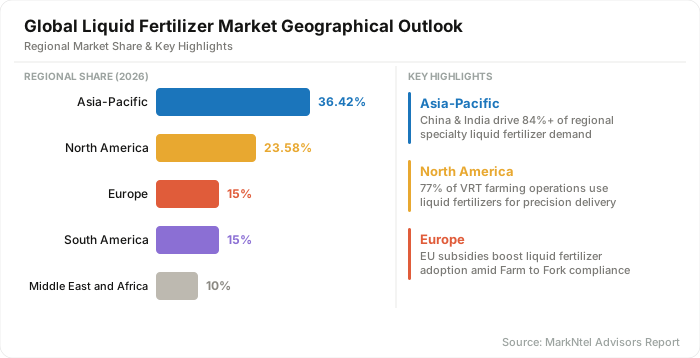
This dominance is further reinforced by the region’s vast farming population and labor-intensive agricultural systems. FAO data indicates that approximately 70% of the world’s family farmers are concentrated in the Asia-Pacific, while the region also accounts for a major share of global agricultural employment . This large farmer base creates continuous demand for fertilizers across both smallholder and commercial farming systems. High cropping intensity and multiple harvest cycles further increase nutrient requirements, strengthening the need for efficient fertilizer solutions, including liquid formulations.
Additionally, Asia-Pacific benefits from increasing agricultural modernization and strong government support for productivity enhancement. Initiatives promoting micro-irrigation, balanced fertilization, and sustainable farming practices are accelerating the adoption of liquid fertilizers across the region. Combined with large-scale production, a vast farming workforce, and supportive policy frameworks, these factors collectively position Asia-Pacific as the leading region in the global liquid fertilizer market.
Global Liquid Fertilizer Market Competitive Landscape
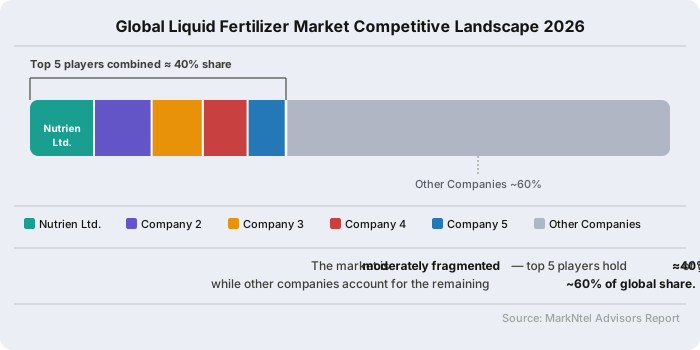
The market is moderately fragmented, with the top five players accounting for approximately 40% of the total market share. Leading companies include Nutrien Ltd., Yara International ASA, CF Industries Holdings Inc., ICL Group Ltd., and EuroChem Group AG.
Key Companies Producing Liquid Fertilizer
- Nutrien Ltd.
- Yara International ASA
- CF Industries Holdings Inc.
- ICL Group Ltd.
- EuroChem Group AG
- Sociedad Química y Minera de Chile (SQM)
- Haifa Group
- COMPO EXPERT GmbH
- AgroLiquid
- Brandt Inc.
- Kugler Company
- Coromandel International Limited
- Indian Farmers Fertiliser Cooperative Limited (IFFCO)
- Zuari Agro Chemicals Ltd.
- FoxFarm Soil & Fertilizer Company, Ltd.
- Other
Gain a Competitive Edge with Our Global Liquid Fertilizer Market Report:
- Global Liquid Fertilizer Market Report by MarkNtel Advisors provides a detailed & thorough analysis of market size & share, growth rate, competitive landscape, and key players. This comprehensive analysis helps businesses gain a holistic understanding of the market dynamics & make informed decisions.
- This report also highlights current market trends & future projections, allowing businesses to identify emerging opportunities & potential challenges. By understanding market forecasts, companies can align their strategies & stay ahead of the competition.
- Global Liquid Fertilizer Market Report aids in assessing & mitigating risks associated with entering or operating in the market. By understanding market dynamics, regulatory frameworks, and potential challenges, businesses can develop strategies to minimize risks & optimize their operations.
*Reports Delivery Format - Market research studies from MarkNtel Advisors are offered in PDF, Excel and PowerPoint formats. Within 24 hours of the payment being successfully received, the report will be sent to your email address.
Frequently Asked Questions
- Market Segmentation
- Introduction
- Product Definition
- Research Process
- Assumptions
- Executive Summary
- Global Liquid Fertilizer Market Policies, Regulations, and Product Standards
- Global Liquid Fertilizer Market Trends & Developments
- Global Liquid Fertilizer Market Dynamics
- Growth Factors
- Challenges
- Global Liquid Fertilizer Market Hotspot & Opportunities
- Impact of Ongoing Military Conflicts on the Liquid Fertilizers Market
- Russia- Ukraine Conflict
- Iran- Israel War
- Global Liquid Fertilizers Market Cost & Production Analysis, 2026
- Region-Wise Production of Liquid Fertilizers
- Top Manufacturers & Their Production Capacity
- Region-wise Price Trend of Liquid Fertilizers Raw Materials, 2022-2032
- Urea
- Ammonium nitrate
- Ammonium sulfate
- Urea-ammonium nitrate (UAN)
- Phosphoric acid
- Ammonium polyphosphate
- Potassium chloride
- Potassium nitrate
- Potassium sulfate
- Calcium nitrate
- Magnesium sulfate
- Sulfuric acid
- Micronutrient salts (zinc, iron, manganese, copper, boron, molybdenum)
- Chelating agents (e.g., EDTA)
- Region-Wise Production of Liquid Fertilizers
- Global Liquid Fertilizer Market Outlook, 2022-2032F
- Market Size & Outlook
- By Revenues (USD Million)
- By Quantity Sold (Tons)
- Market Share & Analysis
- By Type- Market Size & Forecast 2022-2032, USD Million & Tons
- Nitrogen
- Phosphorus
- Potassium
- Micronutrients
- By Crop Type- Market Size & Forecast 2022-2032, USD Million & Tons
- Cereals & Grains
- Fruits & Vegetables
- Oilseeds & Pulses
- Turf & Ornamentals
- By Application Method- Market Size & Forecast 2022-2032, USD Million & Tons
- Soil Application
- Foliar Application
- Fertigation
- By Formulation- Market Size & Forecast 2022-2032, USD Million & Tons
- Solution
- Suspension
- By Region
- North America
- South America
- Europe
- The Middle East & Africa
- Asia-Pacific
- By Company
- Competition Characteristics
- Market Share & Analysis
- By Type- Market Size & Forecast 2022-2032, USD Million & Tons
- Market Size & Outlook
- North America Liquid Fertilizer Market Outlook, 2022-2032F
- Market Size & Outlook
- By Revenues (USD Million)
- By Quantity Sold (Tons)
- Market Share & Analysis
- By Type- Market Size & Forecast 2022-2032, USD Million & Tons
- By Crop Type- Market Size & Forecast 2022-2032, USD Million & Tons
- By Application Method- Market Size & Forecast 2022-2032, USD Million & Tons
- By Formulation- Market Size & Forecast 2022-2032, USD Million & Tons
- By Country
- The US
- Canada
- Mexico
- Rest of North America
- The US Liquid Fertilizer Market Outlook, 2022-2032F
- Market Size & Outlook
- By Revenues (USD Million)
- By Quantity Sold (Tons)
- Market Share & Analysis
- By Type- Market Size & Forecast 2022-2032, USD Million & Tons
- By Crop Type- Market Size & Forecast 2022-2032, USD Million & Tons
- By Application Method- Market Size & Forecast 2022-2032, USD Million & Tons
- By Formulation- Market Size & Forecast 2022-2032, USD Million & Tons
- Market Size & Outlook
- Canada Liquid Fertilizer Market Outlook, 2022-2032F
- Market Size & Outlook
- By Revenues (USD Million)
- By Quantity Sold (Tons)
- Market Share & Analysis
- By Type- Market Size & Forecast 2022-2032, USD Million & Tons
- By Crop Type- Market Size & Forecast 2022-2032, USD Million & Tons
- By Application Method- Market Size & Forecast 2022-2032, USD Million & Tons
- By Formulation- Market Size & Forecast 2022-2032, USD Million & Tons
- Market Size & Outlook
- Mexico Liquid Fertilizer Market Outlook, 2022-2032F
- Market Size & Outlook
- By Revenues (USD Million)
- By Quantity Sold (Tons)
- Market Share & Analysis
- By Type- Market Size & Forecast 2022-2032, USD Million & Tons
- By Crop Type- Market Size & Forecast 2022-2032, USD Million & Tons
- By Application Method- Market Size & Forecast 2022-2032, USD Million & Tons
- By Formulation- Market Size & Forecast 2022-2032, USD Million & Tons
- Market Size & Outlook
- Market Size & Outlook
- South America Liquid Fertilizer Market Outlook, 2022-2032F
- Market Size & Outlook
- By Revenues (USD Million)
- By Quantity Sold (Tons)
- Market Share & Analysis
- By Type- Market Size & Forecast 2022-2032, USD Million & Tons
- By Crop Type- Market Size & Forecast 2022-2032, USD Million & Tons
- By Application Method- Market Size & Forecast 2022-2032, USD Million & Tons
- By Formulation- Market Size & Forecast 2022-2032, USD Million & Tons
- By Country
- Brazil
- Argentina
- Rest of South America
- Brazil Liquid Fertilizer Market Outlook, 2022-2032F
- Market Size & Outlook
- By Revenues (USD Million)
- By Quantity Sold (Tons)
- Market Share & Analysis
- By Type- Market Size & Forecast 2022-2032, USD Million & Tons
- By Crop Type- Market Size & Forecast 2022-2032, USD Million & Tons
- By Application Method- Market Size & Forecast 2022-2032, USD Million & Tons
- By Formulation- Market Size & Forecast 2022-2032, USD Million & Tons
- Market Size & Outlook
- Argentina Liquid Fertilizer Market Outlook, 2022-2032F
- Market Size & Outlook
- By Revenues (USD Million)
- By Quantity Sold (Tons)
- Market Share & Analysis
- By Type- Market Size & Forecast 2022-2032, USD Million & Tons
- By Crop Type- Market Size & Forecast 2022-2032, USD Million & Tons
- By Application Method- Market Size & Forecast 2022-2032, USD Million & Tons
- By Formulation- Market Size & Forecast 2022-2032, USD Million & Tons
- Market Size & Outlook
- Market Size & Outlook
- Europe Liquid Fertilizer Market Outlook, 2022-2032F
- Market Size & Outlook
- By Revenues (USD Million)
- By Quantity Sold (Tons)
- Market Share & Analysis
- By Type- Market Size & Forecast 2022-2032, USD Million & Tons
- By Crop Type- Market Size & Forecast 2022-2032, USD Million & Tons
- By Application Method- Market Size & Forecast 2022-2032, USD Million & Tons
- By Formulation- Market Size & Forecast 2022-2032, USD Million & Tons
- By Country
- The UK
- Germany
- France
- Italy
- Switzerland
- BENELUX
- Rest of Europe
- The UK Liquid Fertilizer Market Outlook, 2022-2032F
- Market Size & Outlook
- By Revenues (USD Million)
- By Quantity Sold (Tons)
- Market Share & Analysis
- By Type- Market Size & Forecast 2022-2032, USD Million & Tons
- By Crop Type- Market Size & Forecast 2022-2032, USD Million & Tons
- By Application Method- Market Size & Forecast 2022-2032, USD Million & Tons
- By Formulation- Market Size & Forecast 2022-2032, USD Million & Tons
- Market Size & Outlook
- Germany Liquid Fertilizer Market Outlook, 2022-2032F
- Market Size & Outlook
- By Revenues (USD Million)
- By Quantity Sold (Tons)
- Market Share & Analysis
- By Type- Market Size & Forecast 2022-2032, USD Million & Tons
- By Crop Type- Market Size & Forecast 2022-2032, USD Million & Tons
- By Application Method- Market Size & Forecast 2022-2032, USD Million & Tons
- By Formulation- Market Size & Forecast 2022-2032, USD Million & Tons
- Market Size & Outlook
- France Liquid Fertilizer Market Outlook, 2022-2032F
- Market Size & Outlook
- By Revenues (USD Million)
- By Quantity Sold (Tons)
- Market Share & Analysis
- By Type- Market Size & Forecast 2022-2032, USD Million & Tons
- By Crop Type- Market Size & Forecast 2022-2032, USD Million & Tons
- By Application Method- Market Size & Forecast 2022-2032, USD Million & Tons
- By Formulation- Market Size & Forecast 2022-2032, USD Million & Tons
- Market Size & Outlook
- Italy Liquid Fertilizer Market Outlook, 2022-2032F
- Market Size & Outlook
- By Revenues (USD Million)
- By Quantity Sold (Tons)
- Market Share & Analysis
- By Type- Market Size & Forecast 2022-2032, USD Million & Tons
- By Crop Type- Market Size & Forecast 2022-2032, USD Million & Tons
- By Application Method- Market Size & Forecast 2022-2032, USD Million & Tons
- By Formulation- Market Size & Forecast 2022-2032, USD Million & Tons
- Market Size & Outlook
- Switzerland Liquid Fertilizer Market Outlook, 2022-2032F
- Market Size & Outlook
- By Revenues (USD Million)
- By Quantity Sold (Tons)
- Market Share & Analysis
- By Type- Market Size & Forecast 2022-2032, USD Million & Tons
- By Crop Type- Market Size & Forecast 2022-2032, USD Million & Tons
- By Application Method- Market Size & Forecast 2022-2032, USD Million & Tons
- By Formulation- Market Size & Forecast 2022-2032, USD Million & Tons
- Market Size & Outlook
- BENELUX Liquid Fertilizer Market Outlook, 2022-2032F
- Market Size & Outlook
- By Revenues (USD Million)
- By Quantity Sold (Tons)
- Market Share & Analysis
- By Type- Market Size & Forecast 2022-2032, USD Million & Tons
- By Crop Type- Market Size & Forecast 2022-2032, USD Million & Tons
- By Application Method- Market Size & Forecast 2022-2032, USD Million & Tons
- By Formulation- Market Size & Forecast 2022-2032, USD Million & Tons
- Market Size & Outlook
- Market Size & Outlook
- The Middle East & Africa Liquid Fertilizer Market Outlook, 2022-2032F
- Market Size & Outlook
- By Revenues (USD Million)
- By Quantity Sold (Tons)
- Market Share & Analysis
- By Type- Market Size & Forecast 2022-2032, USD Million & Tons
- By Crop Type- Market Size & Forecast 2022-2032, USD Million & Tons
- By Application Method- Market Size & Forecast 2022-2032, USD Million & Tons
- By Formulation- Market Size & Forecast 2022-2032, USD Million & Tons
- By Country
- Saudi Arabia
- UAE
- Qatar
- Turkey
- Israel
- South Africa
- Egypt
- Rest of the Middle East & Africa
- Saudi Arabia Liquid Fertilizer Market Outlook, 2022-2032F
- Market Size & Outlook
- By Revenues (USD Million)
- By Quantity Sold (Tons)
- Market Share & Analysis
- By Type- Market Size & Forecast 2022-2032, USD Million & Tons
- By Crop Type- Market Size & Forecast 2022-2032, USD Million & Tons
- By Application Method- Market Size & Forecast 2022-2032, USD Million & Tons
- By Formulation- Market Size & Forecast 2022-2032, USD Million & Tons
- Market Size & Outlook
- UAE Liquid Fertilizer Market Outlook, 2022-2032F
- Market Size & Outlook
- By Revenues (USD Million)
- By Quantity Sold (Tons)
- Market Share & Analysis
- By Type- Market Size & Forecast 2022-2032, USD Million & Tons
- By Crop Type- Market Size & Forecast 2022-2032, USD Million & Tons
- By Application Method- Market Size & Forecast 2022-2032, USD Million & Tons
- By Formulation- Market Size & Forecast 2022-2032, USD Million & Tons
- Market Size & Outlook
- Qatar Liquid Fertilizer Market Outlook, 2022-2032F
- Market Size & Outlook
- By Revenues (USD Million)
- By Quantity Sold (Tons)
- Market Share & Analysis
- By Type- Market Size & Forecast 2022-2032, USD Million & Tons
- By Crop Type- Market Size & Forecast 2022-2032, USD Million & Tons
- By Application Method- Market Size & Forecast 2022-2032, USD Million & Tons
- By Formulation- Market Size & Forecast 2022-2032, USD Million & Tons
- Market Size & Outlook
- Turkey Liquid Fertilizer Market Outlook, 2022-2032F
- Market Size & Outlook
- By Revenues (USD Million)
- By Quantity Sold (Tons)
- Market Share & Analysis
- By Type- Market Size & Forecast 2022-2032, USD Million & Tons
- By Crop Type- Market Size & Forecast 2022-2032, USD Million & Tons
- By Application Method- Market Size & Forecast 2022-2032, USD Million & Tons
- By Formulation- Market Size & Forecast 2022-2032, USD Million & Tons
- Market Size & Outlook
- Israel Liquid Fertilizer Market Outlook, 2022-2032F
- Market Size & Outlook
- By Revenues (USD Million)
- By Quantity Sold (Tons)
- Market Share & Analysis
- By Type- Market Size & Forecast 2022-2032, USD Million & Tons
- By Crop Type- Market Size & Forecast 2022-2032, USD Million & Tons
- By Application Method- Market Size & Forecast 2022-2032, USD Million & Tons
- By Formulation- Market Size & Forecast 2022-2032, USD Million & Tons
- Market Size & Outlook
- South Africa Liquid Fertilizer Market Outlook, 2022-2032F
- Market Size & Outlook
- By Revenues (USD Million)
- By Quantity Sold (Tons)
- Market Share & Analysis
- By Type- Market Size & Forecast 2022-2032, USD Million & Tons
- By Crop Type- Market Size & Forecast 2022-2032, USD Million & Tons
- By Application Method- Market Size & Forecast 2022-2032, USD Million & Tons
- By Formulation- Market Size & Forecast 2022-2032, USD Million & Tons
- Market Size & Outlook
- Egypt Liquid Fertilizer Market Outlook, 2022-2032F
- Market Size & Outlook
- By Revenues (USD Million)
- By Quantity Sold (Tons)
- Market Share & Analysis
- By Type- Market Size & Forecast 2022-2032, USD Million & Tons
- By Crop Type- Market Size & Forecast 2022-2032, USD Million & Tons
- By Application Method- Market Size & Forecast 2022-2032, USD Million & Tons
- By Formulation- Market Size & Forecast 2022-2032, USD Million & Tons
- Market Size & Outlook
- Market Size & Outlook
- Asia-Pacific Liquid Fertilizer Market Outlook, 2022-2032F
- Market Size & Outlook
- By Revenues (USD Million)
- By Quantity Sold (Tons)
- Market Share & Analysis
- By Type- Market Size & Forecast 2022-2032, USD Million & Tons
- By Crop Type- Market Size & Forecast 2022-2032, USD Million & Tons
- By Application Method- Market Size & Forecast 2022-2032, USD Million & Tons
- By Formulation- Market Size & Forecast 2022-2032, USD Million & Tons
- By Country
- China
- Japan
- India
- South Korea
- Indonesia
- Australia
- Singapore
- Vietnam
- Rest of Asia-Pacific
- China Liquid Fertilizer Market Outlook, 2022-2032F
- Market Size & Outlook
- By Revenues (USD Million)
- By Quantity Sold (Tons)
- Market Share & Analysis
- By Type- Market Size & Forecast 2022-2032, USD Million & Tons
- By Crop Type- Market Size & Forecast 2022-2032, USD Million & Tons
- By Application Method- Market Size & Forecast 2022-2032, USD Million & Tons
- By Formulation- Market Size & Forecast 2022-2032, USD Million & Tons
- Market Size & Outlook
- Japan Liquid Fertilizer Market Outlook, 2022-2032F
- Market Size & Outlook
- By Revenues (USD Million)
- By Quantity Sold (Tons)
- Market Share & Analysis
- By Type- Market Size & Forecast 2022-2032, USD Million & Tons
- By Crop Type- Market Size & Forecast 2022-2032, USD Million & Tons
- By Application Method- Market Size & Forecast 2022-2032, USD Million & Tons
- By Formulation- Market Size & Forecast 2022-2032, USD Million & Tons
- Market Size & Outlook
- India Liquid Fertilizer Market Outlook, 2022-2032F
- Market Size & Outlook
- By Revenues (USD Million)
- By Quantity Sold (Tons)
- Market Share & Analysis
- By Type- Market Size & Forecast 2022-2032, USD Million & Tons
- By Crop Type- Market Size & Forecast 2022-2032, USD Million & Tons
- By Application Method- Market Size & Forecast 2022-2032, USD Million & Tons
- By Formulation- Market Size & Forecast 2022-2032, USD Million & Tons
- Market Size & Outlook
- South Korea Liquid Fertilizer Market Outlook, 2022-2032F
- Market Size & Outlook
- By Revenues (USD Million)
- By Quantity Sold (Tons)
- Market Share & Analysis
- By Type- Market Size & Forecast 2022-2032, USD Million & Tons
- By Crop Type- Market Size & Forecast 2022-2032, USD Million & Tons
- By Application Method- Market Size & Forecast 2022-2032, USD Million & Tons
- By Formulation- Market Size & Forecast 2022-2032, USD Million & Tons
- Market Size & Outlook
- Indonesia Liquid Fertilizer Market Outlook, 2022-2032F
- Market Size & Outlook
- By Revenues (USD Million)
- By Quantity Sold (Tons)
- Market Share & Analysis
- By Type- Market Size & Forecast 2022-2032, USD Million & Tons
- By Crop Type- Market Size & Forecast 2022-2032, USD Million & Tons
- By Application Method- Market Size & Forecast 2022-2032, USD Million & Tons
- By Formulation- Market Size & Forecast 2022-2032, USD Million & Tons
- Market Size & Outlook
- Australia Liquid Fertilizer Market Outlook, 2022-2032F
- Market Size & Outlook
- By Revenues (USD Million)
- By Quantity Sold (Tons)
- Market Share & Analysis
- By Type- Market Size & Forecast 2022-2032, USD Million & Tons
- By Crop Type- Market Size & Forecast 2022-2032, USD Million & Tons
- By Application Method- Market Size & Forecast 2022-2032, USD Million & Tons
- By Formulation- Market Size & Forecast 2022-2032, USD Million & Tons
- Market Size & Outlook
- Singapore Liquid Fertilizer Market Outlook, 2022-2032F
- Market Size & Outlook
- By Revenues (USD Million)
- By Quantity Sold (Tons)
- Market Share & Analysis
- By Type- Market Size & Forecast 2022-2032, USD Million & Tons
- By Crop Type- Market Size & Forecast 2022-2032, USD Million & Tons
- By Application Method- Market Size & Forecast 2022-2032, USD Million & Tons
- By Formulation- Market Size & Forecast 2022-2032, USD Million & Tons
- Market Size & Outlook
- Vietnam Liquid Fertilizer Market Outlook, 2022-2032F
- Market Size & Outlook
- By Revenues (USD Million)
- By Quantity Sold (Tons)
- Market Share & Analysis
- By Type- Market Size & Forecast 2022-2032, USD Million & Tons
- By Crop Type- Market Size & Forecast 2022-2032, USD Million & Tons
- By Application Method- Market Size & Forecast 2022-2032, USD Million & Tons
- By Formulation- Market Size & Forecast 2022-2032, USD Million & Tons
- Market Size & Outlook
- Market Size & Outlook
- Global Liquid Fertilizer Market Key Strategic Imperatives for Success & Growth
- Competitive Outlook
- Company Profiles
- Nutrien Ltd.
- Business Description
- Product Portfolio
- Collaborations & Alliances
- Recent Developments
- Financial Details
- Others
- Yara International ASA
- Business Description
- Product Portfolio
- Collaborations & Alliances
- Recent Developments
- Financial Details
- Others
- CF Industries Holdings Inc.
- Business Description
- Product Portfolio
- Collaborations & Alliances
- Recent Developments
- Financial Details
- Others
- ICL Group Ltd.
- Business Description
- Product Portfolio
- Collaborations & Alliances
- Recent Developments
- Financial Details
- Others
- EuroChem Group AG
- Business Description
- Product Portfolio
- Collaborations & Alliances
- Recent Developments
- Financial Details
- Others
- Sociedad Química y Minera de Chile (SQM)
- Business Description
- Product Portfolio
- Collaborations & Alliances
- Recent Developments
- Financial Details
- Others
- Haifa Group
- Business Description
- Product Portfolio
- Collaborations & Alliances
- Recent Developments
- Financial Details
- Others
- COMPO EXPERT GmbH
- Business Description
- Product Portfolio
- Collaborations & Alliances
- Recent Developments
- Financial Details
- Others
- AgroLiquid
- Business Description
- Product Portfolio
- Collaborations & Alliances
- Recent Developments
- Financial Details
- Others
- Brandt Inc.
- Business Description
- Product Portfolio
- Collaborations & Alliances
- Recent Developments
- Financial Details
- Others
- Kugler Company
- Business Description
- Product Portfolio
- Collaborations & Alliances
- Recent Developments
- Financial Details
- Others
- Coromandel International Limited
- Business Description
- Product Portfolio
- Collaborations & Alliances
- Recent Developments
- Financial Details
- Others
- Indian Farmers Fertiliser Cooperative Limited (IFFCO)
- Business Description
- Product Portfolio
- Collaborations & Alliances
- Recent Developments
- Financial Details
- Others
- Zuari Agro Chemicals Ltd.
- Business Description
- Product Portfolio
- Collaborations & Alliances
- Recent Developments
- Financial Details
- Others
- FoxFarm Soil & Fertilizer Company
- Business Description
- Product Portfolio
- Collaborations & Alliances
- Recent Developments
- Financial Details
- Others
- Others
- Business Description
- Product Portfolio
- Collaborations & Alliances
- Recent Developments
- Financial Details
- Others
- Nutrien Ltd.
- Company Profiles
- Disclaimer
MarkNtel Advisors follows a robust and iterative research methodology designed to ensure maximum accuracy and minimize deviation in market estimates and forecasts. Our approach combines both bottom-up and top-down techniques to effectively segment and quantify various aspects of the market. A consistent feature across all our research reports is data triangulation, which examines the market from three distinct perspectives to validate findings. Key components of our research process include:
1. Scope & Research Design At the outset, MarkNtel Advisors define the research objectives and formulate pertinent questions. This phase involves determining the type of research—qualitative or quantitative—and designing a methodology that outlines data collection methods, target demographics, and analytical tools. They also establish timelines and budgets to ensure the research aligns with client goals.
2. Sample Selection and Data Collection In this stage, the firm identifies the target audience and determines the appropriate sample size to ensure representativeness. They employ various sampling methods, such as random or stratified sampling, based on the research objectives. Data collection is carried out using tools like surveys, interviews, and observations, ensuring the gathered data is reliable and relevant.
3. Data Analysis and Validation Once data is collected, MarkNtel Advisors undertake a rigorous analysis process. This includes cleaning the data to remove inconsistencies, employing statistical software for quantitative analysis, and thematic analysis for qualitative data. Validation steps are taken to ensure the accuracy and reliability of the findings, minimizing biases and errors.

4. Data Forecast and FinalizationThe final phase involves forecasting future market trends based on the analyzed data. MarkNtel Advisors utilize predictive modeling and time series analysis to anticipate market behaviors. The insights are then compiled into comprehensive reports, featuring visual aids like charts and graphs, and include strategic recommendations to inform client decision-making
We offer flexible licensing options to cater to varying organizational needs. Choose the pricing pack that best suits your requirements:
Buy Now Inquire Before Buying
 Request Customization
 Talk to our Consultant